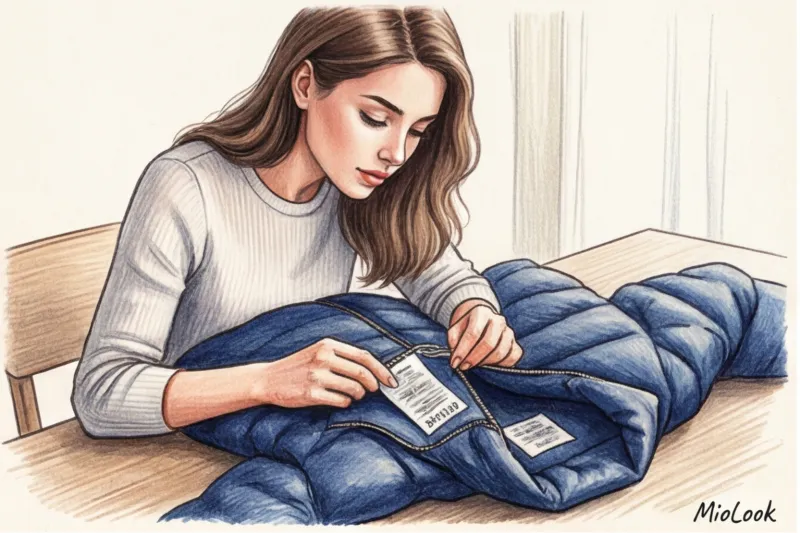
Early in my stylist career, I made a classic wardrobe mistake: I irreparably ruined my first premium Uniqlo +J down jacket. I had no idea back then, How to wash a down jacket in a washing machine , and simply tossed it in the drum with a capsule of regular detergent at 40 degrees. The result? The jacket bunched up into one tight ball, the nylon was covered in whitish streaks, and the volume was gone forever. Now, after 12 years of managing my wardrobes, I can easily wash even delicate items from Acne Studios at home.

We have already talked in more detail about a conscious approach to things in our a complete guide to proper clothing care In this article, we'll debunk outdated myths (spoiler: throw away the tennis balls) and explore a clear, technologically advanced laundry algorithm that will save you hundreds of euros on dry cleaning.
Dry Cleaning vs. Home Care: Why We're Afraid to Wash Our Outerwear
Let's do the math. One of my clients, Anna, was terrified of washing her €350 winter jacket. She took it to the dry cleaner twice each season, spending about €40-50 per session. Over three years, she spent almost the cost of the jacket on care. Sound familiar?
Fear of washing machines is fueled by the "Dry Clean Only" label. But I'll let you in on a professional secret: for 80% of mass-market and mid-market brands, this symbol is simply a legal safeguard against customer complaints, not an actual ban.
According to the official Gore-Tex Care Guidelines (updated 2024), harsh chemicals like perchloroethylene (a key ingredient in dry cleaning) will break down the factory-applied water-repellent finish (DWR) much faster than gentle machine washing at home.
Dry cleaning doesn't "revive" down; it simply chemically removes stains. Properly applied home washing, on the other hand, restores the natural filler's natural elasticity.
Access to MioLook for €0.99 — one-time payment
A smart AI stylist will select the perfect look.
Get access — €0.99 onceThe Secret Foundation: Read the Fabric Composition, Not the Labels
Successful washing starts before you even open the machine door. Understanding the materials is key. Natural down and synthetic fibers behave completely differently in water.
What's inside: If you have natural filling, look for the Fill Power rating (the elasticity of the down) on the tag. A basic rating is 500, while a premium rating is 700–900. The higher the rating, the faster the down will regain its shape, but the more gently you need to rinse out the detergent. If the filling is bio-down (Sorona), Thinsulate, or hollowfiber, relax—these materials are forgiving of almost any mistakes, except high temperatures.
Preparing for washing - checklist:
- Empty your pockets (one forgotten receipt will leave a permanent stain on light-colored fabric).
- Close all zippers, snaps, and Velcro fasteners. An open metal zipper in the drum acts like a grater on thin nylon.
- Turn the jacket inside out. This will protect the outer hardware and membrane coating from chafing.
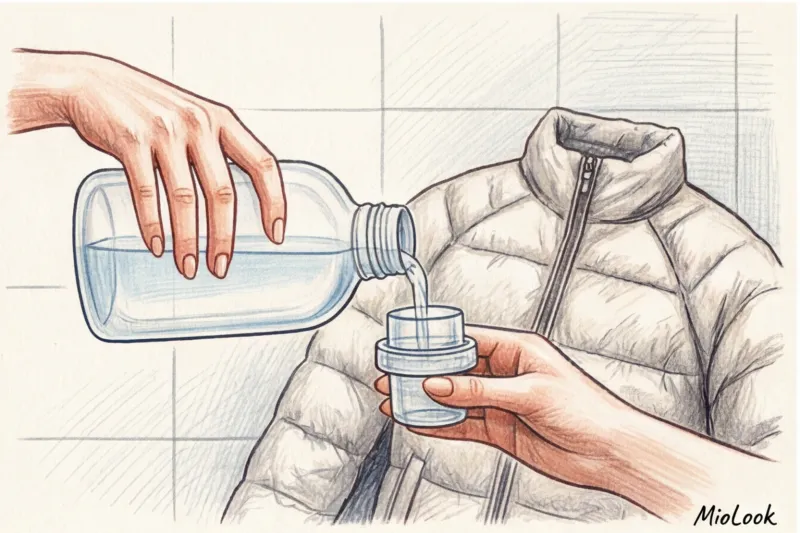
- Treat greasy areas (collars from foundation, cuffs, pocket edges). Wet them with water and apply a drop of liquid gel, gently rubbing in with a silicone brush. Never use bar soap. - it instantly clogs the pores of the fabric.
Step-by-step instructions for washing a down jacket in a washing machine
Washing a bulky winter garment is like running an algorithm in an app: miss one step, and the system will return an error. The main rule of loading: a down jacket is selfish. It should be washed alone. No "drum neighbors" like sweaters or jeans. The jacket needs maximum space to fall freely in the water.
Choosing a product: why dry powder is strictly prohibited
If you've ever taken a dark down jacket covered in white stains out of the washing machine, know this: 90% of the time, it's the fault of your dry laundry detergent.
Regular powder crystals simply don't dissolve completely at 30 degrees Celsius. They penetrate the dense nylon of the face fabric, become lodged in the down, and emerge as a whitish crust during drying. Use only liquid enzyme gels or specialized shampoos for down/membrane fabrics (they cost around €10-15, but they last for several years).
Another strict no-no is fabric softeners. Fabric softeners coat the down fibers with an invisible silicone film. This causes the down fibers to stick together, lose their fill power, and no longer retain heat.
Machine settings: temperature, mode, and spin
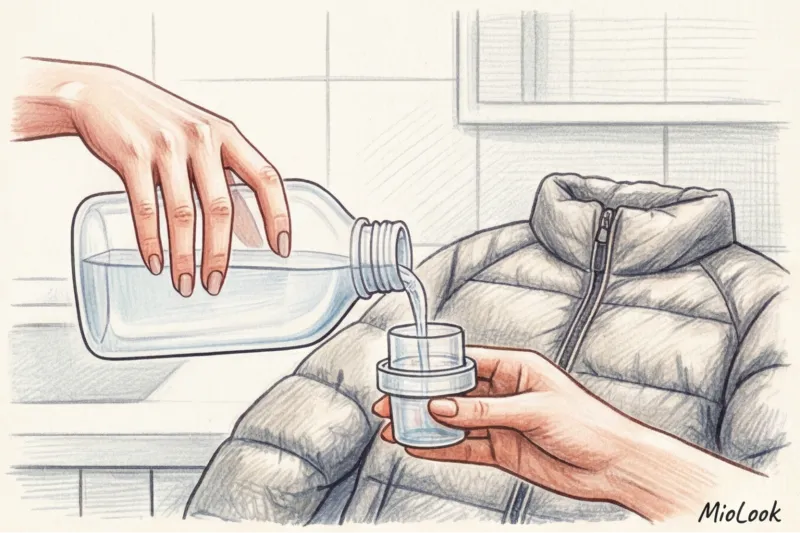
No fiddling with the settings. Your goal is to simulate a light tropical downpour, not a storm.
- Temperature: Strictly 30°C. Hotter water will melt the fabric's water-repellent finish and wash out the natural oils from the down (which will make it brittle and start to leak through the seams).
- Mode: If there is no special “Down Jacket” mode, select “Delicate Wash” or “Wool”.
- Spin: 400–600 rpm is a safe maximum. If you set it to 1000 rpm, the centrifugal force will simply rupture the internal baffles.
- Rinsing: Always run 2-3 additional rinse cycles. The water should be completely clear, without any trace of foam.
Your perfect look starts here
Join thousands of users who look flawless every day with MioLook.
Get access — €0.99 onceTennis Ball Myth: What Actually Prevents Clumping
It's time to debunk one of the internet's most persistent pieces of advice. Google "how to wash a down jacket in a washing machine," and every other article will tell you to throw three tennis balls in the drum. Don't do it.
A tennis ball weighs about 60 grams. When wet, it becomes a heavy projectile that hits wet, vulnerable fabric at high speed. In modern lightweight down jackets (such as those from Uniqlo or COS), the internal baffles that hold the down in place are made of a fine mesh. Heavy balls easily tear these baffles. Furthermore, cheap tennis balls often bleed, leaving neon yellow marks on light-colored fabrics.
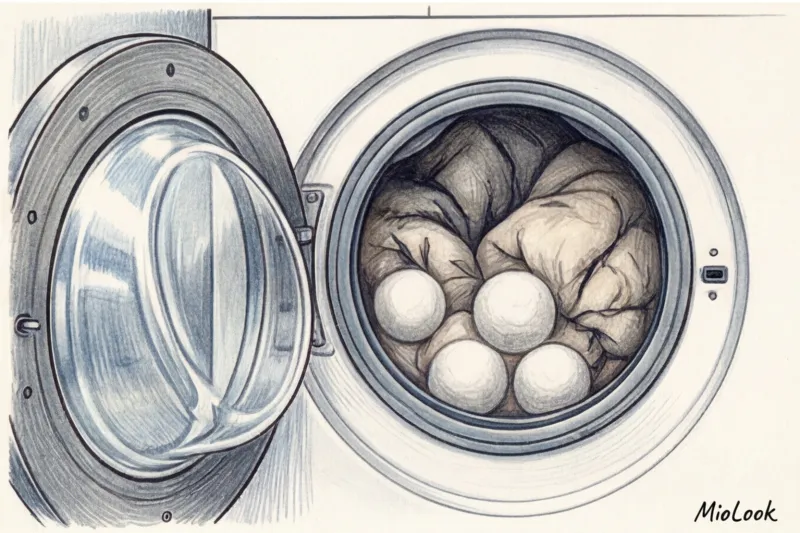
Alternative: Special wool dryer balls made from New Zealand wool. According to the WGSN Fabric Care Report (2023), wool dryer balls create the necessary micro-shocks to fluff up the filling, while still being soft, lightweight, and absorbing excess moisture during the drying process.
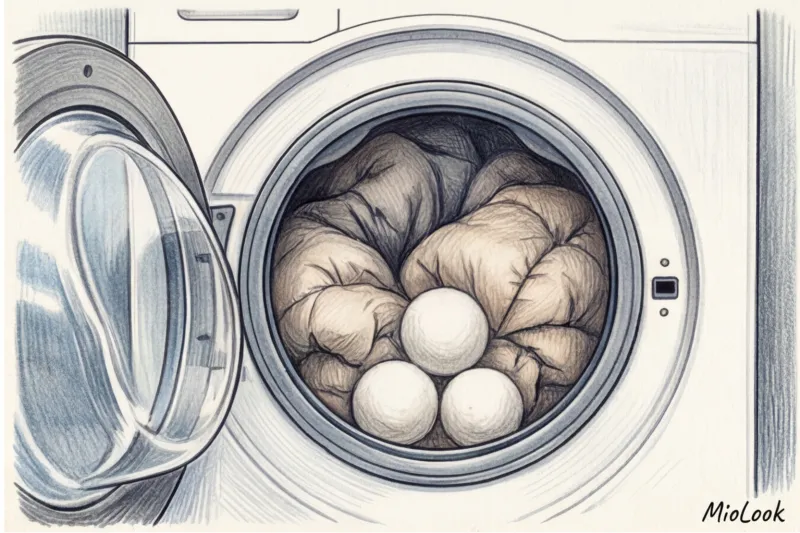
Drying is 90% of success: forget about radiators and towels
Washing is only 10% of the job. The real battle happens during the drying stage. And here we encounter another fatal mistake: drying clothes flat on a terry towel.
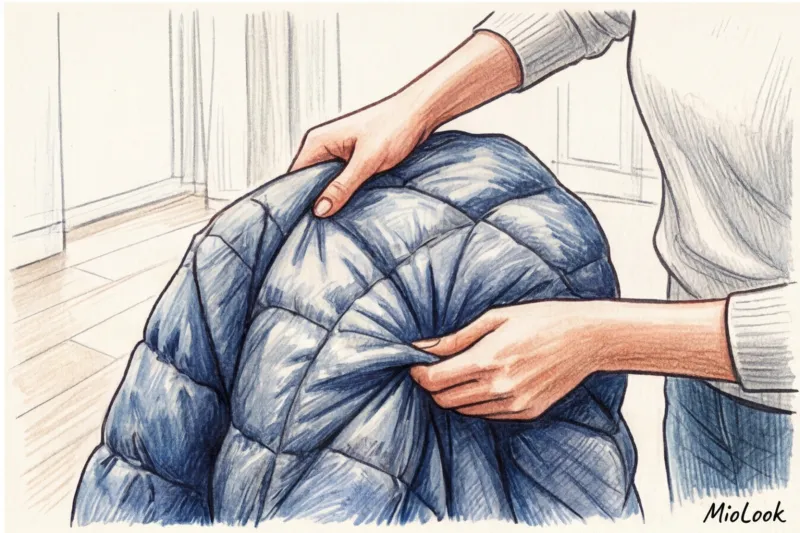
Humidity, room heat, and lack of ventilation inside a down jacket lying on a towel create the perfect recipe for bacteria to thrive. The down literally begins to rot, emitting a pungent, musty odor that's impossible to get rid of.
Ideal scenario: Tumble dry on the "Synthetics" or "Cool" setting with wool balls. The process will take 2-3 hours, but the jacket will come out bulkier than the day you bought it.
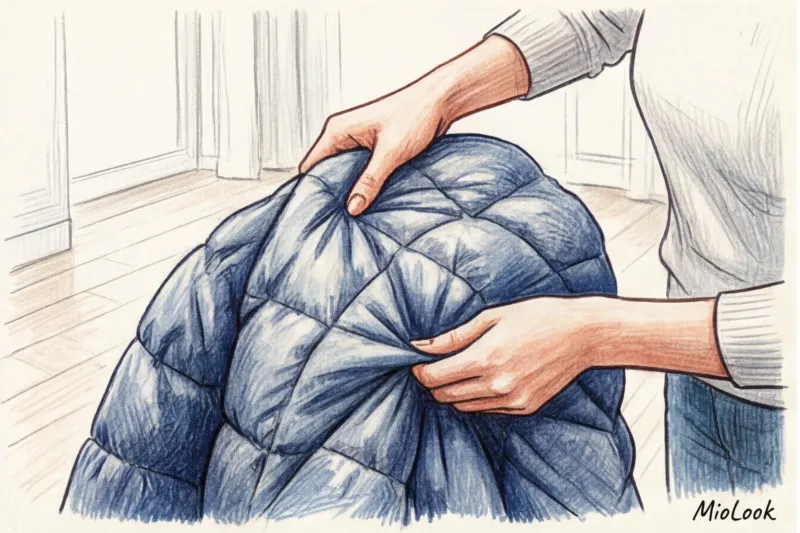
Manual method: If you don't have a dryer, hang your down jacket on a wide plastic hanger in a well-ventilated area (not in direct sunlight or on a radiator!). Now, here's my personal life hack: every 2-3 hours, approach the jacket and actively feel each quilted section. If you feel a tight ball inside, break it up with your fingers, as if you were kneading a piece of play dough. Shake the jacket by the hem and collar, alternating directions.
Correcting Mistakes: How to Remove Stains and Save a Clumped Down Jacket
Even professionals make mistakes. If you take out your jacket and notice problems, don't panic. Almost anything can be fixed if you act quickly.
- Yellow spots on light fabric: This isn't dirt. It's natural goose or duck fat that was released from the down during too-long a drying cycle. Solution: repeat a quick wash with a liquid detergent and dry as quickly as possible (using a hairdryer on a cool setting).
- White stains: This is unrinsed gel. If there are only a few stains, simply wipe them off with a damp microfiber cloth. If the jacket is completely covered, run it through an additional rinse cycle without detergent.
- The fluff was bunched up into hard clumps: Try a vacuum trick. Remove the brush attachment, turn the vacuum on medium power, and run the tube over the matted areas from the back. The air flow will help fluff up the feathers inside the compartments.
Important limitation: This advice only works for high-quality down. If you bought an ultra-budget €30 jacket that contains chopped chicken hair or down waste, no vacuum cleaner will restore its original structure. In such cases, dry cleaning is even less helpful—the item has simply reached the end of its useful life.
Checklist: Proper seasonal storage of a winter capsule
Once the season is over and the down jacket is perfectly washed, it needs to be properly "hibernated." And here we encounter the main enemy of high-tech items: vacuum bags.
By pumping air out of the bag, you break the fragile structure of natural down. After 4-5 months under this pressure, the fill power rating drops irreversibly. The jacket will become thin and lose its warmth, even if you try to fluff it up.
Storage rules:
- Use only wide hangers (suit hangers) to prevent the shoulder line from stretching under the weight of the jacket.
- Pack the item in a fabric bag made of breathable cotton or spunbond. Avoid plastic covers from the dry cleaner, as they don't allow the fabric to breathe and may cause it to yellow.
- Digitize your winter capsule in MioLook By adding a photo of your down jacket to the app, you'll always remember which scarves and shoes it pairs with, and you won't have to rummage through your closet at the first frost. Read more about how technology helps you manage your belongings in our article about electronic wardrobe.
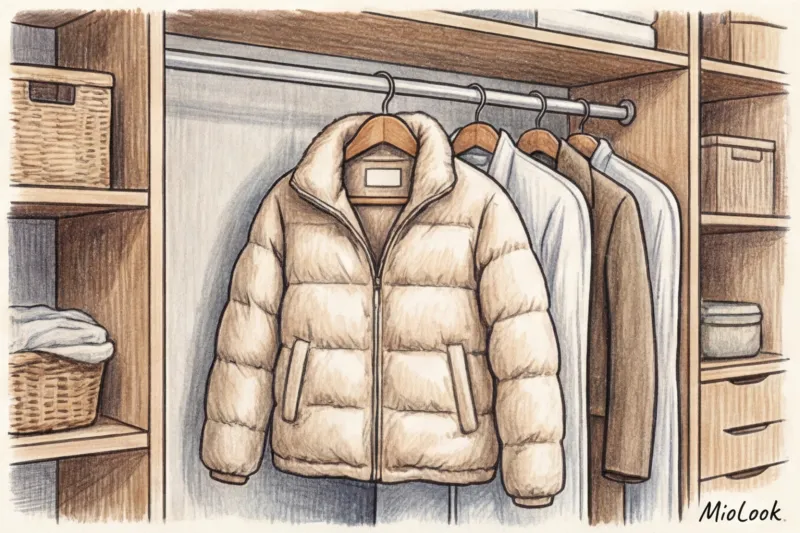
Washing a down jacket isn't a gamble, but a precise process. By understanding the composition of your garment and eschewing harsh chemicals in favor of liquid gels and wool dryer balls, you gain complete control over your wardrobe. And most importantly, knowing the proper care protocols gives you the freedom to buy light-colored outerwear without worrying about breaking the bank on maintenance.