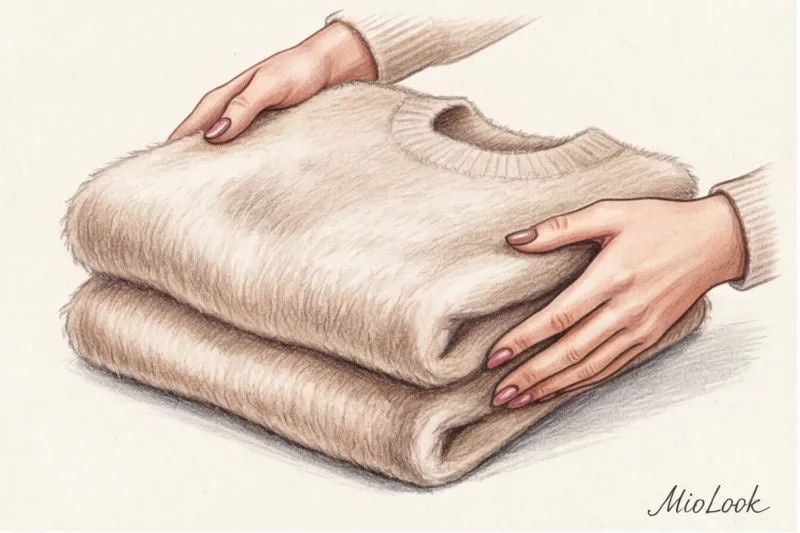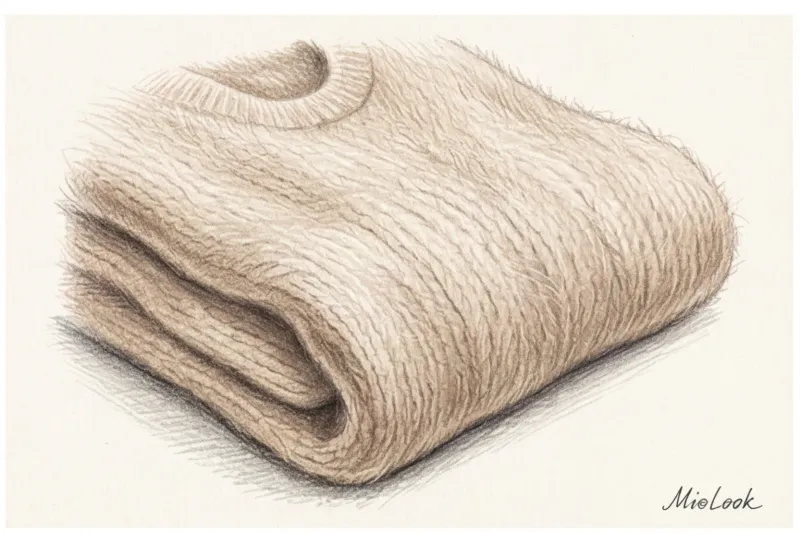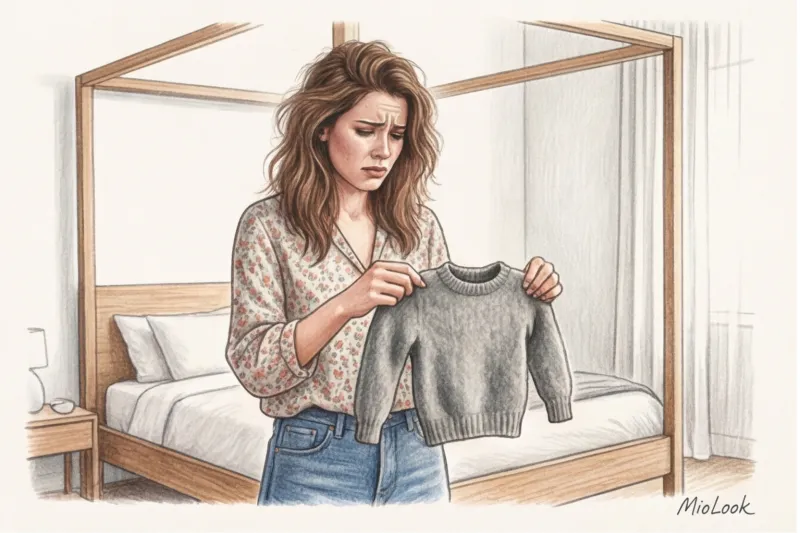
A couple of months ago, a client came to me in utter despair. She was holding a luxurious basic COS sweater in a gorgeous camel shade. Or rather, what was left of it: after an accidental wash at 40 degrees, it had turned into a thick, inflexible XS armor, barely big enough for an eight-year-old. Trying to save her beloved garment, she generously steamed it with hot iron, completely "welding" the wool protein and permanently locking it into its doll-size form.
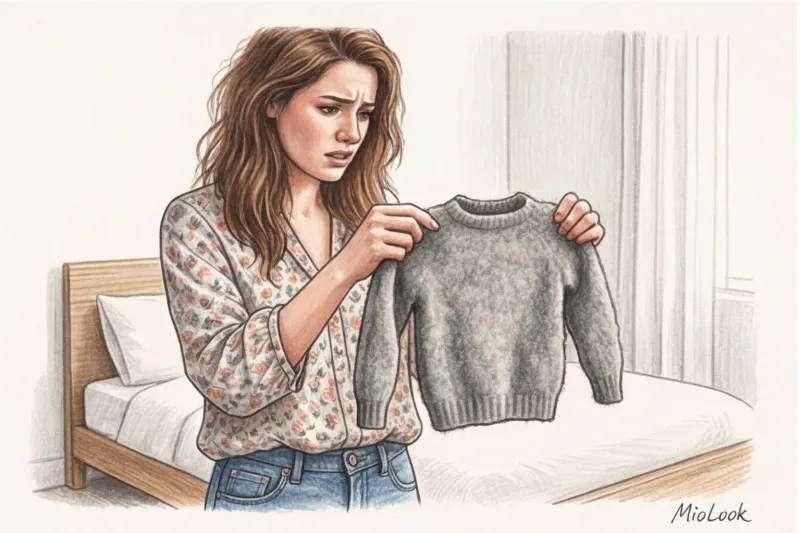
If you have My sweater shrank after washing. How can I stretch it? "Return it" is the first search query you type when looking at a damaged investment. The internet will instantly offer you dozens of "miracle" folk remedies: from soaking in hydrogen peroxide to aggressively stretching it on a terry towel. Over 12 years of working as a stylist and reviewing hundreds of European wardrobes, I've seen the results of these experiments. Spoiler: most of them only finish off delicate knitwear.
Unlike typical articles that promise to save any item, we'll be realistic. In this article, I'll demonstrate a professional method for "blocking" knitwear, used by tailors and stylists. We'll explore the physics of the process and understand why hair conditioner doesn't "nourish" wool, but works entirely differently. Incidentally, we've covered the nature of this most delicate wool in detail in our complete guide: How to Choose Quality Cashmere: Stylists' Tips.
Stylist's diagnosis: has your sweater shrunk after washing or is it irreversibly felted?
According to the British organization WRAP (2023), approximately 25% of woolen items are thrown away within the first year of use due to fatal care errors. Before wasting time on resuscitation, we need to conduct a thorough diagnosis. In the professional community, we distinguish between two concepts: reversible shrinkage and irreversible felting.
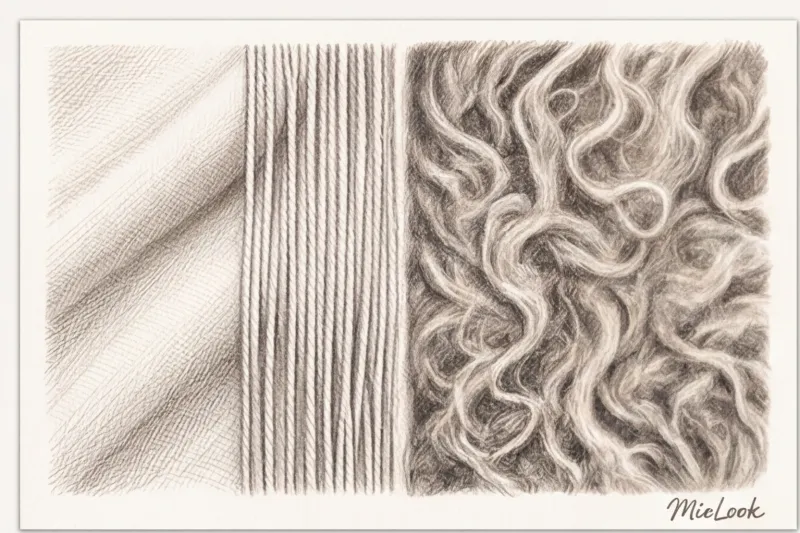
Under a microscope, natural wool fiber resembles a pine cone covered in scales. When there's a sudden change in water temperature (for example, washing in warm water and rinsing in ice water) and intense friction in the washing machine drum, these scales open and cling tightly to each other. This is felting. The more expensive and pure the fiber (for example, 100% cashmere or fine merino), the faster this process will occur. Cheap sweaters with 50% acrylic shrink much less often simply because the smooth plastic fibers have nothing to cling to.
"A wet wool thread with open scales can stretch up to 30% of its original length without breaking. But if the scales are already tightly bonded together, any mechanical force will simply tear the fabric."
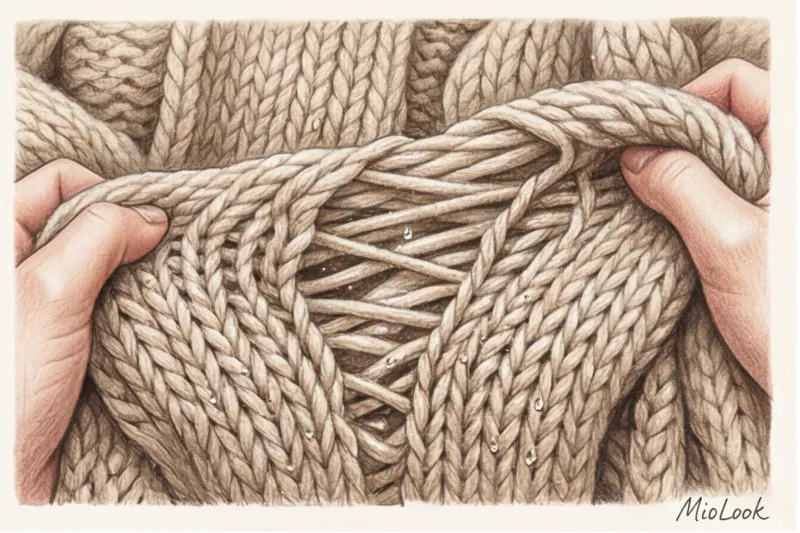
To understand if there is a chance, I always use professional "tension test" Carefully grab the damp section of the sweater (preferably the side seam) with both hands and gently tug it back and forth. If you feel stiff resistance and the fabric feels like a thick carpet or felt boot under your fingers, the process is irreversible. If the thread gives way and retains at least a minimal amount of elasticity, you have a chance to save the sweater.
Your perfect wardrobe starts here.
Tired of losing your favorite items and forgetting what to wear them with? A smart AI stylist will help you digitize your wardrobe and create dozens of new looks from what's already in your closet.
Get access — €0.99 onceA sweater shrank after washing: how to stretch it using the professional buyers' method
Forget about drying on a terry towel. A towel has a textured surface, absorbs moisture unevenly, and doesn't allow for a firm hold on the edges of the garment. The result will be elongated sides and a crooked neckline. Buyers and cutters use wet-heat treatment (WHT) and blocking.
We'll need a "relaxing solution." A popular myth is that hair conditioner "nourishes" hair. This is unscientific: shorn hair is dead keratin protein, and it's impossible to "nourish" it. The secret lies in silicones (look for dimethicone). Silicones coat each fiber, creating a slippery film. This dramatically reduces friction between the interlocking scales and allows us to mechanically separate them under tension.
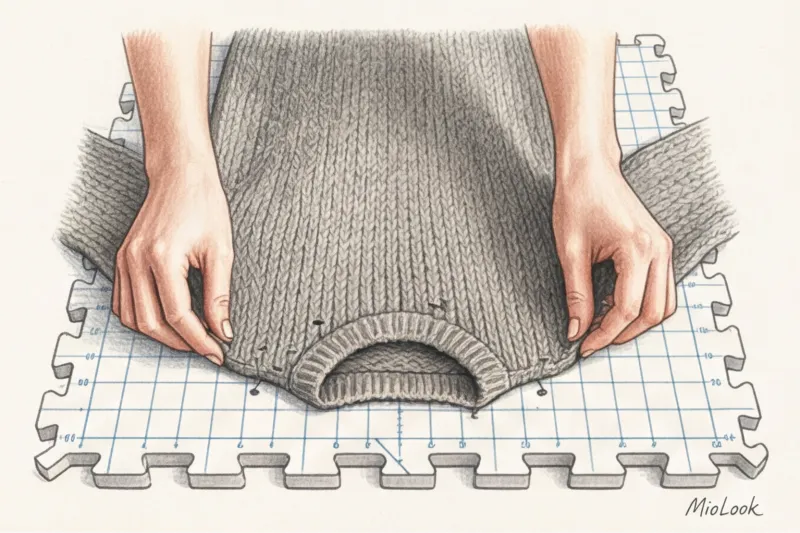
Step-by-step rescue algorithm:
- Fill a basin with cool water. The temperature should be exactly 30°C (86°F) (the water should feel slightly cooler than your body temperature). According to The Woolmark Company, water above 30°C combined with detergent will cause shrinkage.
- Dissolve 3-4 tablespoons of silicone-based hair conditioner in water. Stir thoroughly to avoid lumps.
- Submerge the sweater in water. Don't squeeze or rub! Let it sit for 20-30 minutes to allow the fibers to fully soak in the silicone lubricant.
- Remove the sweater by gathering it into a ball (never pull it by the shoulders or sleeves—the wet garment will stretch under its own weight). Gently squeeze out the water using a squeezing motion, without twisting.
Blocking Technique: Restoring Proportions
Now the most important thing is fixation. For your work surface, use special mats for blocking knits, a yoga mat, or construction foam covered with a smooth cotton sheet.
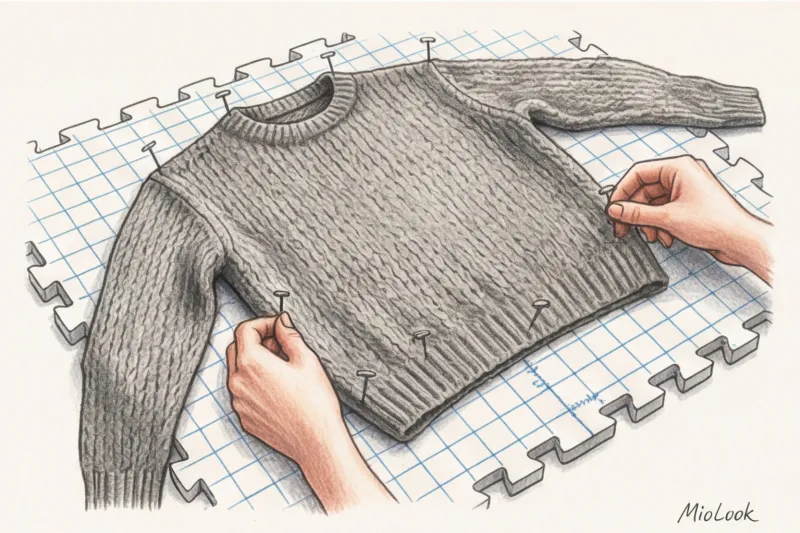
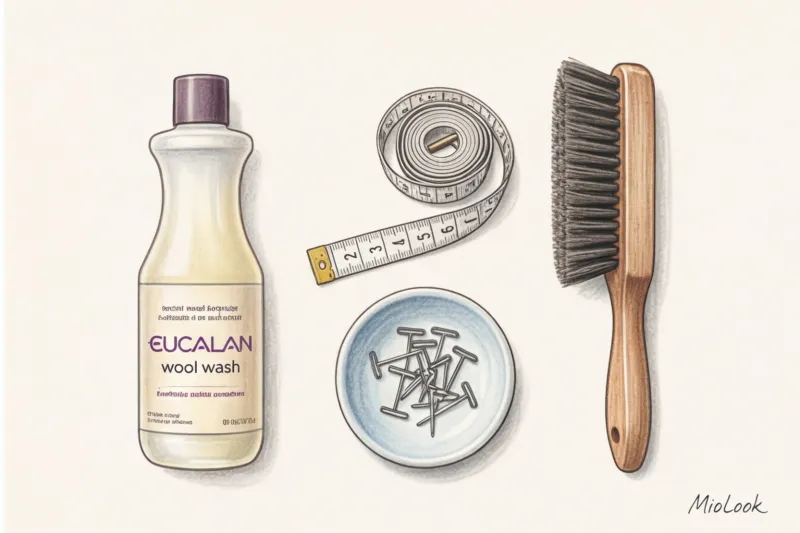
For this project you will need T-pins. Critical: They must be stainless steel! Regular pins will rust in wet wool within a couple of hours and leave permanent rust stains on your light-colored Massimo Dutti jumper.
Use a measuring tape. If you simply pull the sweater by eye, one sleeve will be longer than the other. First, pin the shoulder seams. Then the neckline. Only then, begin gently, millimeter by millimeter, pulling the side seams and hem, pinning every 3-4 centimeters. To prevent the sleeves from becoming "bell-shaped," stretch them lengthwise, not widthwise, pinning the cuffs.
Features of saving different compositions: cashmere, merino, mass-market blends
You can't apply the same tension to different fabrics. What a thick cardigan from Zara can withstand will permanently tear the fine web of premium knitwear.
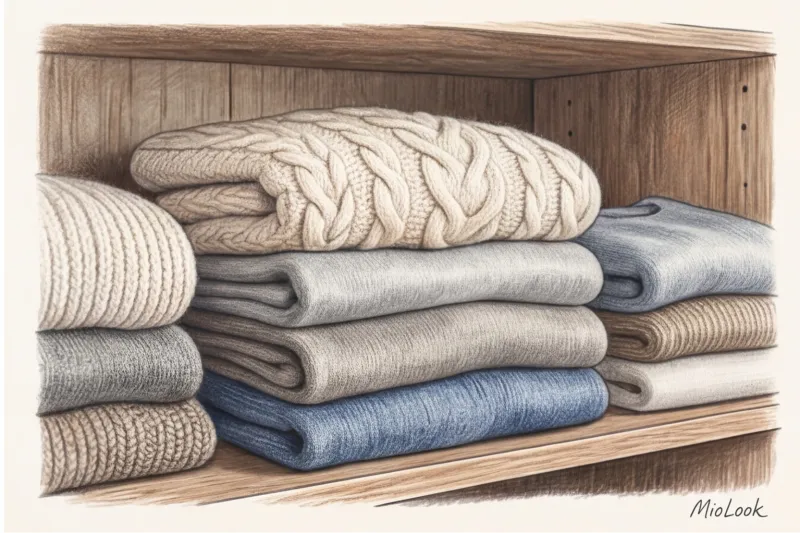
- Cashmere: Cashmere fiber is thinner than a human hair (approximately 14-19 microns). When wet, it is extremely fragile. Shrunken cashmere must be stretched with surgical precision, barely touching the fabric. Never pull on a single layer—grasp the fabric with both hands.
- Merino: Merino stretches well thanks to its natural springiness. However, it has a tricky habit of becoming misshapen at the neckline. When blocking a merino sweater, pay close attention to the collar: gather it tightly, otherwise you'll end up with a plunging neckline instead of a round neckline.
- Blends (wool + acrylic/polyester/nylon): As I mentioned above, these items shrink less often. But if shrinkage does occur (for example, if you throw an item in a hot dryer), restoring its shape will be nearly impossible. Plastic fibers (polyester, acrylic) melt and change their molecular memory when exposed to high temperatures. Silicone conditioner is useless here—plastic doesn't absorb moisture.
Ready to overhaul your wardrobe?
Keep all your looks in one place. Add your saved items to your virtual closet and let AI create fresh outfits for you.
Get access — €0.99 onceThree main myths about knitwear restoration that will ruin your garment
In my practice, I often see the consequences of advice from women's forums. Let's examine common mistakes based on the chemical properties of wool.
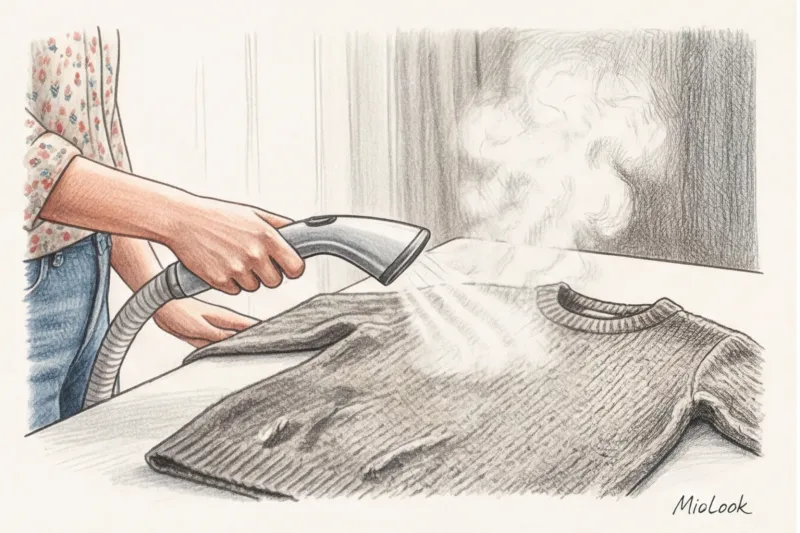
Myth 1: “You need to put a wet sweater on yourself and walk around until it dries.”
This is a surefire way to get pneumonia and ruin your clothes. Wet knitwear stretched over bulky areas (elbows, chest, shoulders) will stretch out and form bubbles. You'll end up with a shapeless sack with elbows stretched out, rather than your true size.
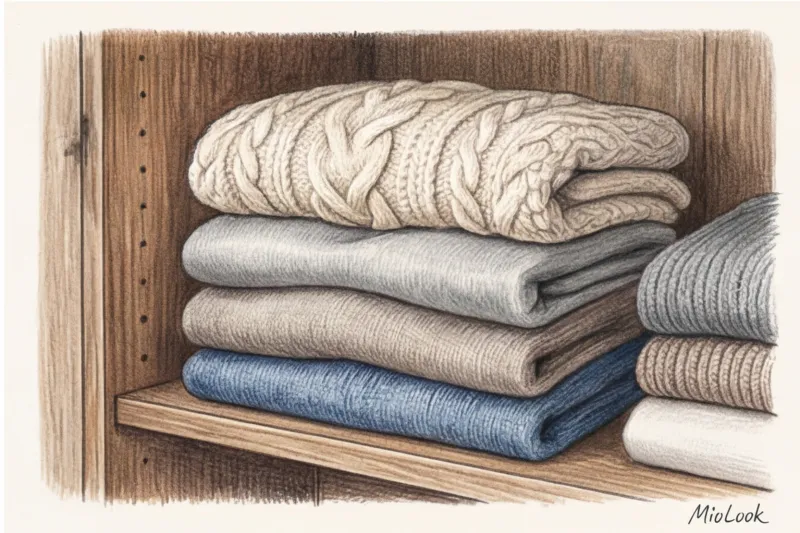
Myth 2: “Go over it thoroughly with a steam iron, stretching it with your hands.”
This is exactly what my client at the beginning of the article did. Keratin (the protein in wool) simply shrinks when exposed to steam without the firm pinning. You're literally "cooking" the fabric. Steam can be used only at the final stage, when the item has already dried on the mat in a blocked state, and then - holding the iron at a distance of 5 cm from the fabric (the so-called "steaming" without touching).
Myth 3: “Soak in vinegar or hydrogen peroxide”
Hydrogen peroxide destroys the pigment (the garment will become stained) and aggressively dries out the fiber. Vinegar in a weak concentration is sometimes used to fix the color, but it has no effect on the elasticity of the wool scales. This is a waste of time and will leave your sweater with a lingering marinade smell.
Plan B: What to do if wool has turned into dense felt
I always tell my clients the truth: we're not magicians. Sometimes you have to admit defeat. If the tension test fails, the stitches are no longer visible, and the fabric is stiff, the item will never be returned to your business or casual wardrobe. And that's okay.
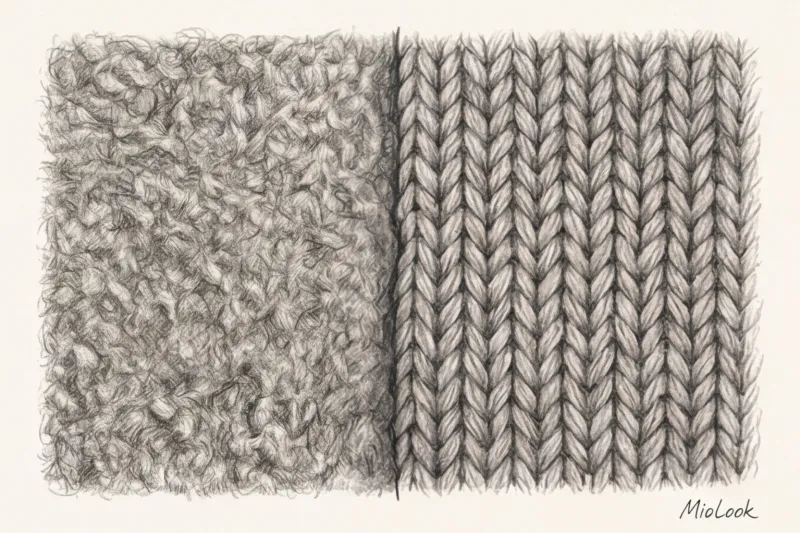
Every item should have its place in your wardrobe. Storing a ruined sweater "just in case" is a waste of space. However, throwing away 100% natural wool is not environmentally friendly.
What to do with such an item? Felted wool is a wonderful, warm, and dense material that doesn't fray at the edges. A ruined sweater can be turned into luxurious insoles for winter shoes, covers for heating pads, decorative pillowcases for hygge-inspired sofa cushions, or pet beds.
Important rule: Don't donate items that have shrunk to the point of felting to charity or relief funds. Dense, felted knitwear doesn't provide as much warmth as looser knitwear (it doesn't retain air pockets), and it's stiff and uncomfortable to wear. It's best to take it to specialized textile recycling centers.
A stylist's checklist: how to wash knitwear so it never shrinks again
I hope you've mastered the sweater stretching process. To avoid buying blocking mats and fiddling with pins again, check out my personal rules for caring for investment knits.
- Ignore the "machine wash" symbol on premium items. Even the "wool" cycle in expensive washing machines involves spinning the drum. And any friction with wet wool means the scales risk clumping. I only wash cashmere, alpaca, and merino by hand, using gentle, squeezing motions.
- Use only special means. No powders! They contain enzymes that literally dissolve protein fibers (after all, enzymes are designed to break down protein stains from food). Look for liquid gels with the Woolmark logo.
- Follow the "one temperature" rule. This is the most important point. The wash and rinse water must be exactly the same temperature (cool). If you wash in 30°C water and rinse under cold running tap water (10°C), the sweater will shrink instantly due to the temperature shock.
- Dry horizontally only. Buy a special hanging rack for drying sweaters (it attaches to a rod in the bathroom). Never place knitwear on a hot radiator—it's guaranteed to kill the fibers.
Treat wool knitwear like your own hair. You wouldn't wash your hair with laundry detergent and boiling water or rub it on a washboard, would you? The only difference is that your hair will grow back, while your favorite Massimo Dutti sweater, alas, won't. Take care of your clothes, invest in quality, and care for them properly.