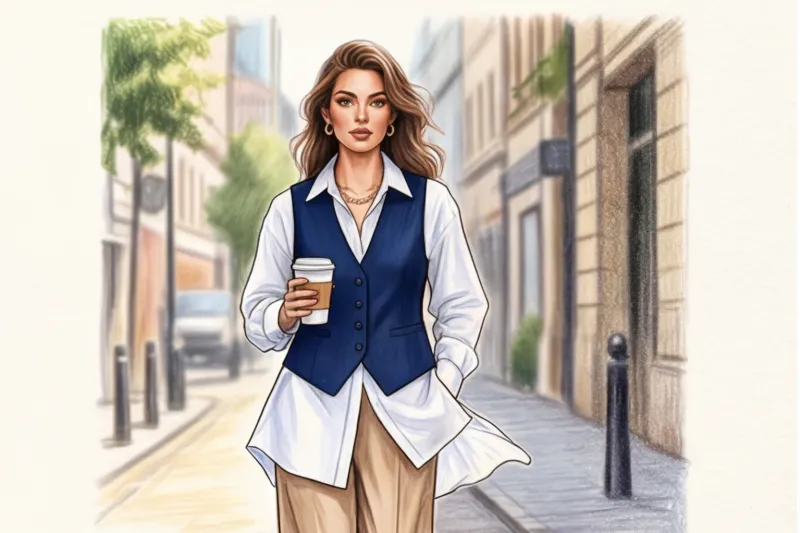
What to Wear with a Women's Vest: The Anatomy of the Perfect Layered Look
Have you ever wondered why a basic white shirt and straight trousers look like a Milan Fashion Week street style shot on some women, while on others they look like the uniform of a tired bank clerk? The difference lies not in the brand of the shirt or the price of the trousers. The secret lies in the architecture of the look. And the key instrument of this architecture is the vest.
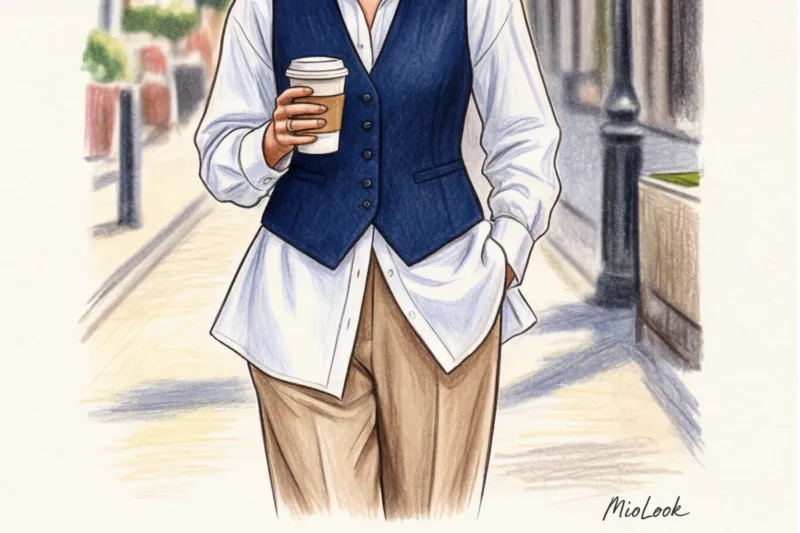
The human eye is designed to be bored by gliding over flat, uniform surfaces. We subconsciously focus on volumetric variations, interplay of textures, and complex lines. We discussed the mechanics of this visual perception in more detail in our The complete guide to layering In short: by layering things on top of each other, you force others to look at you.
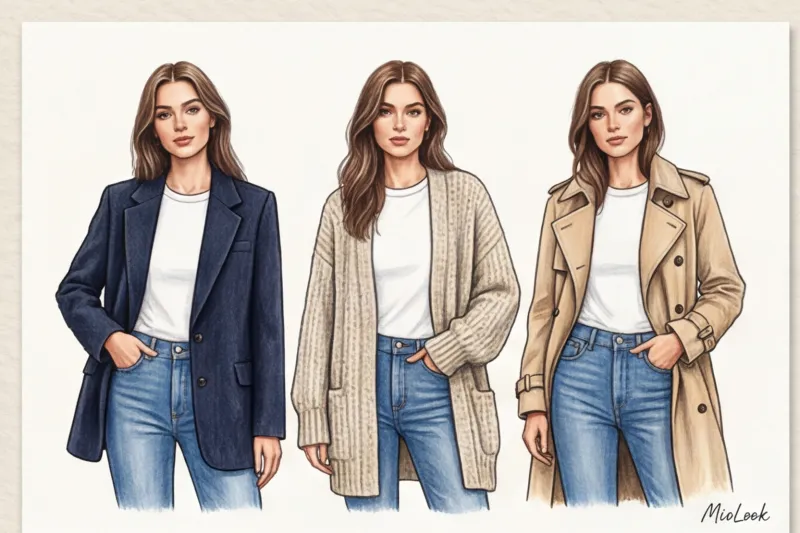
Italian fashionistas, whose Mediterranean style I so love to integrate into my clients' wardrobes, use the golden rule of three layers. The first layer is the base (a T-shirt, shirt, or turtleneck). The second is the structure (a vest, which provides structure). The third is the outer contour (a coat, trench coat, or relaxed jacket).
I had a telling case in my practice. A woman came to me with the following request: "I want to look classy, but I hate jackets; they restrict my movement." We took her favorite, but frankly boring, silk blouse and layered it with a matte wool vest in a men's cut. Magic happened. The rough, dense texture of the wool instantly "calmed" the glossy sheen of the silk, removing any excessive formality. The question of... What to wear with a women's vest , fell away by itself - it became that very missing piece of the puzzle that turned a set of things into finished image.
Suit Vest: From Strict Classics to Relaxed Mediterranean Chic
Let's look at the numbers. According to the WGSN analytical agency (2024 report), the trend for "Sartorial Styling" (a return to tailoring) has propelled women's three-piece suits to top sales worldwide. But you and I don't necessarily need to buy a whole three-piece suit at once. Historically, thanks to Yves Saint Laurent in the 1970s, the men's vest migrated into the women's wardrobe as a manifestation of freedom and confidence.
The hottest style trend these days is wearing a suit vest with nothing on. But how do you make it look expensive and not like you forgot to put on a shirt?
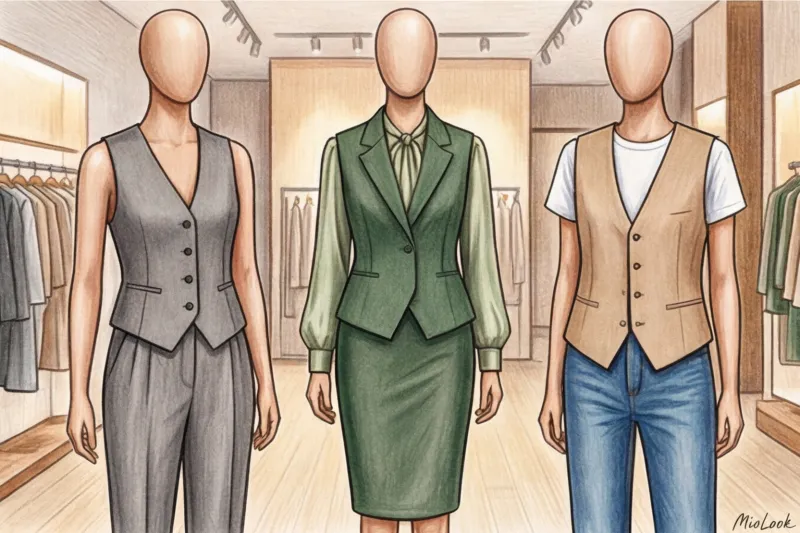
- Correct armhole: Choose styles with armholes that don't drop too low. Your underwear shouldn't be visible when you raise your arm.
- Neckline: A V-neck should end at or just above the cleavage. Anything lower is provocative and inappropriate for daytime wear.
- Fabric composition: This is critical. I categorically advise against pure linen (it'll wrinkle after five minutes in a taxi) or 100% polyester (it'll feel like you're in a greenhouse). Look for blended fabrics: wool with 30-50% viscose or heavy cotton with elastane. Such a piece will cost €60-120 in the mid-price range, but it will look premium.
Office and Business Meeting Look Formulas
For a conservative dress code (Business Formal), a vest is a legitimate way to bypass boring rules. If you have strict dress code requirements, here are two proven formulas:
- Status elegance: A graphite suit vest + a basic black turtleneck (180 g/m² cotton) + palazzo pants to match the vest. This creates a continuous color line.
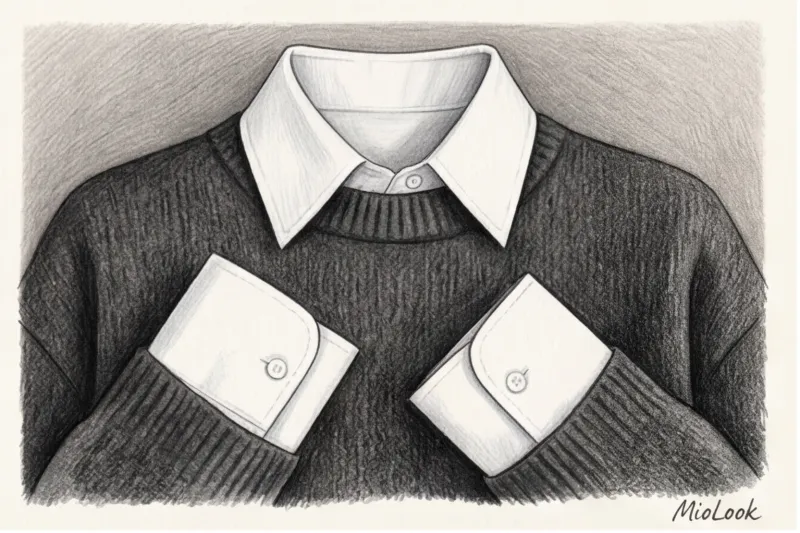
- Intellectual chic: Vest + oversized shirt (be sure to roll up the cuffs to show off your thin wrists) + A-line midi skirt + leather loafers.
How to Wear a Smart Vest in Everyday Life (Smart Casual)
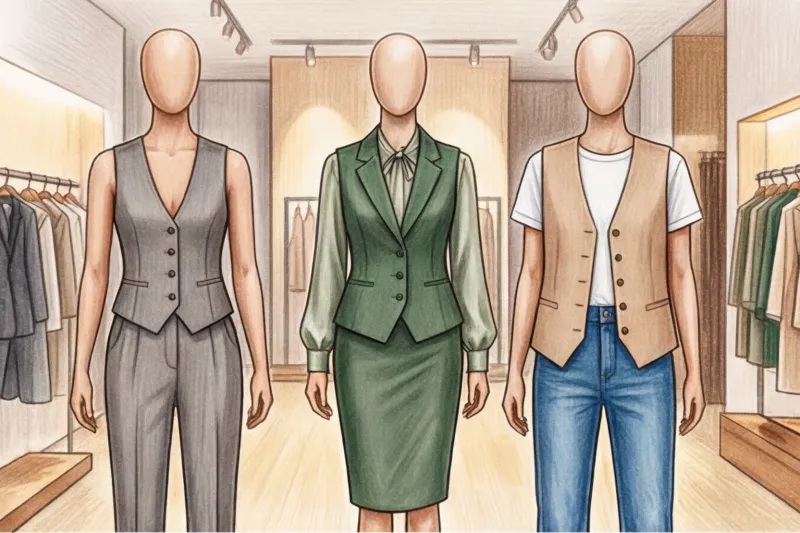
Outside the office, a vest creates a contrasting style. Imagine a classic fine wool suit vest, straight-leg blue jeans (no fading), and minimalist white sneakers. This approach takes the edge off a formal outfit.
In the summer heat of +30°C, an unbuttoned linen vest thrown over a basic tank top is the perfect alternative to a jacket. And in the evening, simply swap out jeans for a silk slip skirt, add a large pendant on a long chain, and you're ready for dinner.
Your perfect look starts here
Not sure what to pair with a vest from your closet? Upload it to the MioLook app, and our smart algorithm will curate dozens of stylish combinations for you using your own items.
Get access — €0.99 onceKnitted vest: cozy texture and play on contrasts
Knitted vests have long since ceased to be associated with school uniforms or grandfathers' wardrobes. According to research by the Lyst platform (2024), searches for "chunky knit vest" have increased by 47% compared to last year. But be careful with knitwear.
"The texture of the knit directly affects the perception of your body size. A smooth, tight machine knit creates a more sculpted silhouette. However, voluminous cables, arans, and bobbles will visually add half a size to your bust and waist."
Personal stylist advice: When choosing a neckline, consider your proportions. If you have a round face, a short neck, or a large bust (C cup and up), a V-neck is your best bet. It will elongate your bust. A crew neckline is only suitable for petite women with smaller busts.
My favorite bohemian-chic look is to layer a chunky ecru knit vest over a flowy floral midi dress. The chunky yarn accentuates the delicate chiffon. Add suede Cossack boots, and the look is complete.

Oversized vs. Crop: How to Choose the Perfect Fit
There is geometry at work here that cannot be ignored:
- Crop vests (short): They finish at the waist. They're the perfect pair for high-waisted trousers and jeans. They artificially elevate the waistline, creating the illusion of endlessly long legs. Limitation: Never wear them with low-waisted trousers unless you want to create the effect of a figure being cut in half.
- Oversized models (from the men's shoulder): They conceal the hips. To maintain a feminine touch, be sure to expose the skin's most delicate areas: roll up the sleeves of your underlayer to the elbows and choose cropped trousers that reveal the ankles.
- Models with side slits: A secret tool for those with wide hips. Slits relieve tension on the hips, creating a more relaxed gait.
The main myth: "A vest makes the figure look boxy and adds volume."
If I get the same question hundreds of times during my consultations, it's time to debunk the myth. Most women are afraid of layering, thinking, "One layer means a size 44, three layers means a size 48." This is a misconception.
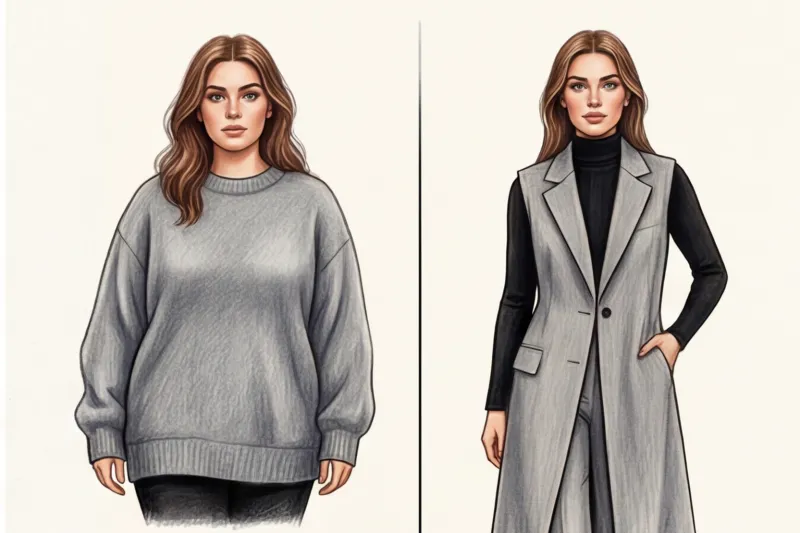
I had a case in my practice: a client was preparing for an important public presentation at an IT conference. She wanted to hide her tummy and appear slimmer, so she brought a thick, shapewear cardigan to the fitting, which hugged every fold. I suggested a counterintuitive solution: we dressed her in a basic white T-shirt and layered it with a structured, elongated graphite vest. We left it unbuttoned.
What happened? The unbuttoned flaps of the thick fabric vest created two powerful parallel vertical lines along the torso. The viewer's eye only noticed the light expanse of white T-shirt visible between the flaps. These vertical lines "cut off" the sides, and the client visually lost about 5 kilograms in one second, without the use of uncomfortable shapewear.
The "closed groin" rule: If you have a pear-shaped figure (large hips), your long vest should either end above the widest point of your hips or cover your groin. A vest with a hem that cuts across the widest part of your hips will make them look larger.
Styling Mistakes: What You Shouldn't Wear with a Women's Vest
As much as we love this wardrobe staple, there are times when it can ruin an entire look. Here are the mistakes I regularly see on the streets, but which the glossy magazines never mention:
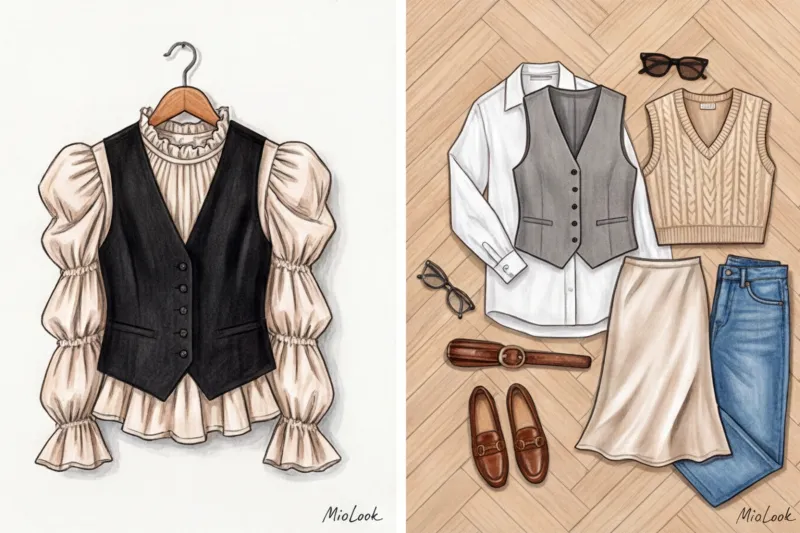
- Volume conflict. You're trying to pull a skimpy, form-fitting vest over a full, oversized shirt with pleats, puffed sleeves, or ruffles. The result: the shirt is crumpled, unsightly bubbles of fabric are sticking out of the armholes, and you look like you've outgrown your clothes. Rule: The top layer should always be more voluminous and denser than the bottom one.
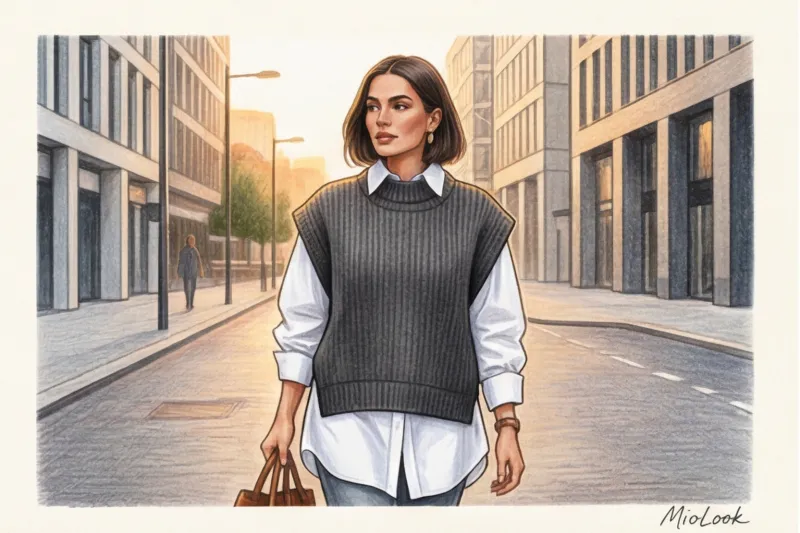
- Treacherous thin knitwear. If you wear a knit vest over a shirt and the buttons, placket seams, and collar of the underlying layer are visible, it looks sloppy. Choose a tightly knit.
- The "waiter uniform" effect. This happens when you pair a black cropped vest with shiny buttons with a fitted white shirt and a black knee-length pencil skirt. To avoid this, choose deep, sophisticated colors (chocolate, burgundy, khaki, graphite), matte horn hardware that matches the fabric, and a modern, relaxed fit at the bottom.
Access to MioLook for €0.99 — one-time payment
A smart AI stylist will analyze your figure and suggest which vest styles and layered outfits will suit you best, concealing flaws and highlighting your best features.
Get access — €0.99 onceMioLook's Guide: 5 Steps to Integrating a Vest into Your Capsule Wardrobe
Adding just one well-fitting vest, according to the laws of fashion math, increases the number of combinations of 10 basic items by 30-40%. This dramatically reduces the cost-per-wear (CPOW) of your usual shirts and dresses. Here's how to do it right:
- Step 1: Inventory the bottoms. Check the fit of your pants and skirts. If most of them are high-waisted, look for a crop vest. If they're mid-waisted, look for a classic straight-waist, hip-length waist.
- Step 2: Selecting the first basic vest. Don't buy black! Start with graphite, taupe, or camel. They look much more refined in daylight and pair better with denim. A good basic pairing at a mass-market store will cost around €40–€80.
- Step 3: Create a "carousel of images". Use the virtual wardrobe feature in MioLook Take a photo of your new vest, add it to the app, and create five completely different outfits: with jeans, with a dress, with a turtleneck, with a T-shirt, and naked.
- Step 4: Selecting accessories. A sleek V-neck vest is the perfect canvas for jewelry. Wear it with tiered chains or pendants on a long chain. A small silk square can be tucked into the breast pocket of a suit vest.
- Step 5: Analyze proportions. Take a selfie in a full-length mirror. If you feel your legs are looking shorter, unbutton the bottom button of your vest—this will create an inverted V, lengthening your legs.
Layering isn't scary. It's not about wrapping yourself up or hiding. Think of a vest as a stylistic framework that holds your look together. Once you try wearing one over your usual boring base, you'll never want to go back to flat, two-piece outfits again.