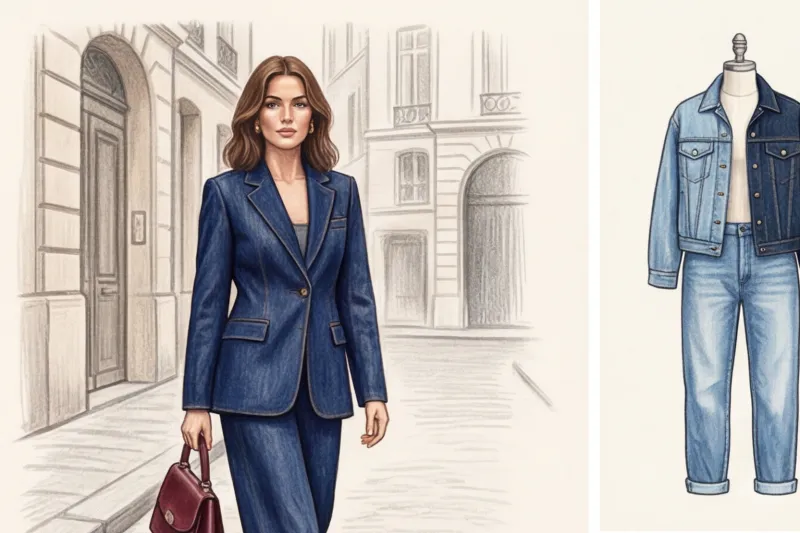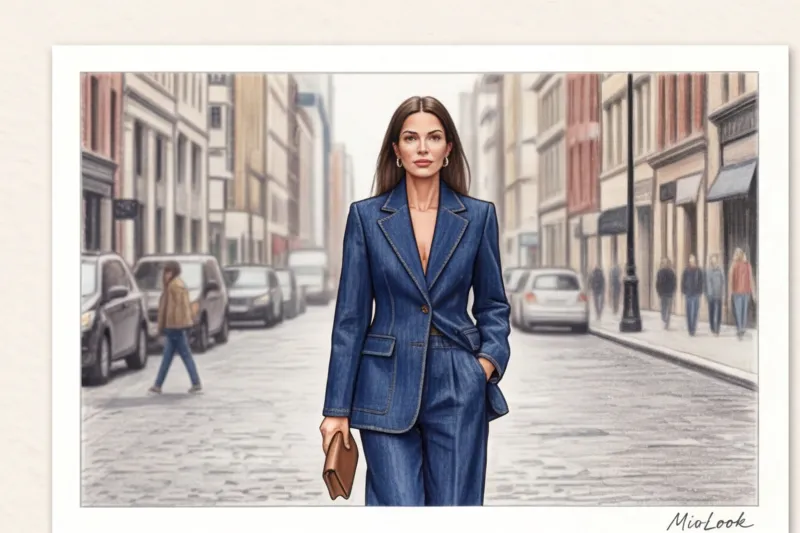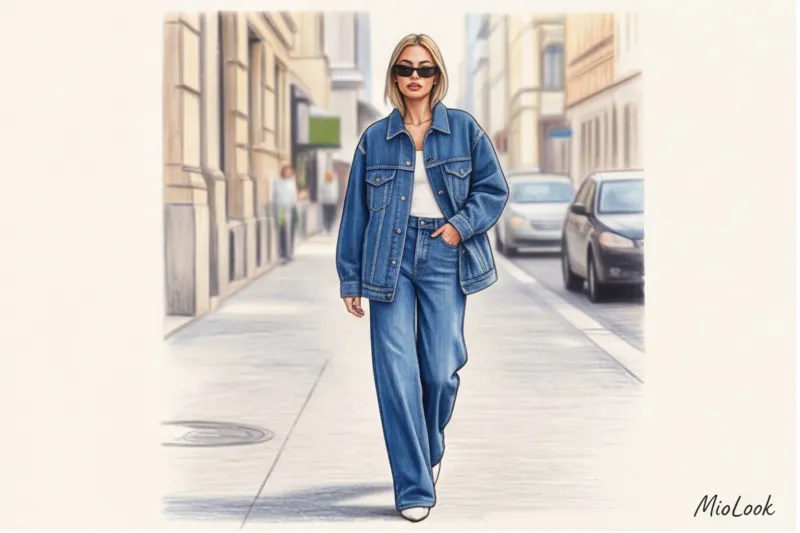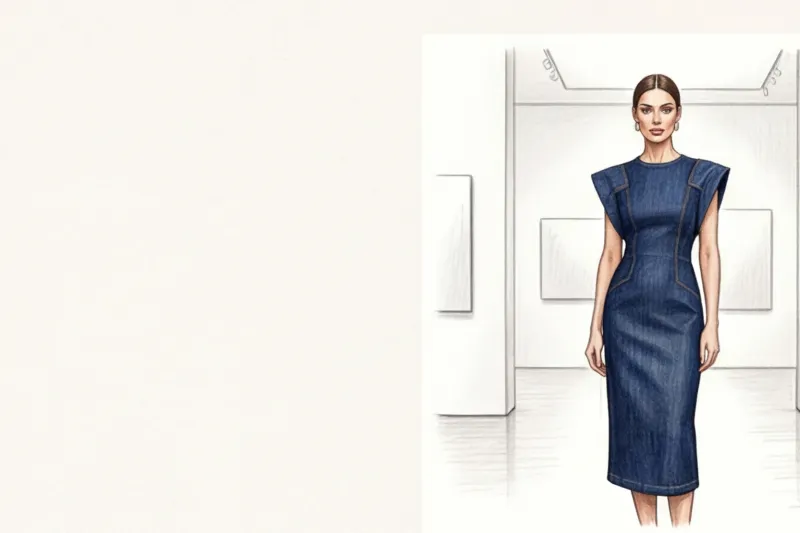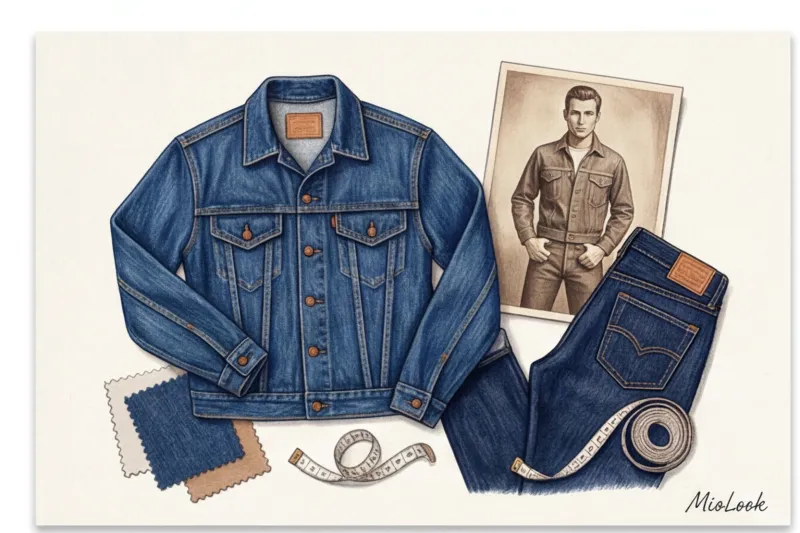
Last Tuesday, my client stood in front of the huge mirror in the fitting room, irritably pulling off her brand-new denim jacket. "Sofia, I look like a painter in overalls!" she sighed. And she was absolutely right. Trying to create the perfect all-denim look, she spent three hours finding a jacket that would match her favorite straight-leg jeans tone-on-tone.
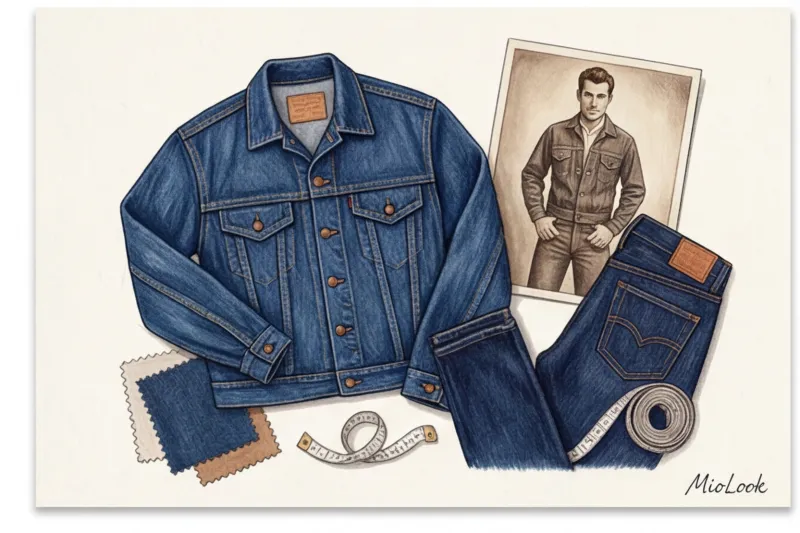
This is the most common and most fatal mistake I see in my styling practice. The desire to match denim tops and bottoms in the same shade and texture kills the visual depth of an outfit. Instead of an elegant silhouette, you end up with a flat, dull uniform.
We discussed the architecture of color in more detail in our complete guide: Monochrome Wardrobe: How to Create a Stylish Capsule But denim is a very special material. It requires playing with contrasting density, understanding the weave of the threads, and the careful distribution of volumes. Today, we'll explore how to tame monochrome denim so it looks classy, expensive, and modern.
The Anatomy of the Perfect "Canadian Tuxedo": Why Total Denim Is Back in Trend
To understand how to wear head-to-toe denim today, you need to look back in time. In 1951, the famous singer Bing Crosby was denied entry to a luxury Canadian hotel because he was wearing jeans and a denim jacket—the attire of lumberjacks and gold prospectors. Upon learning of this, designers at the Levi's historical archive created a proper tuxedo for him... made entirely of denim. Thus was born the term "Canadian tuxedo," forever changing the game.
For a long time, the all-denim look was considered either a work uniform or a relic of the 2000s. But today, this look is experiencing a renaissance thanks to the concept of a true monochrome wardrobe. Modern denim monochrome is more than just comfortable weekend wear. It's a true architectural statement, based on the expansion of related shades of blue.
When you wear denim from top to bottom, you create a powerful vertical line of color. This continuous line visually elongates, slims, and cohesively unifies your look. But the magic only works if you avoid the main pitfall that 9 out of 10 shoppers fall into.
The Biggest Mistake in a Total Denim Look (And Why a Perfect Color Match Will Forgive You)
Buying a "ready-made suit" made of denim in a single color and weight is the worst thing you can do to your silhouette. A perfect match without contrasting textures deprives your figure of dynamic movement.
It's all about how fabric reflects light. If you wear a jacket and jeans made of the same fabric, the light is distributed evenly, erasing the natural shadows and curves of your body. You become one big blue blob. Add cheap dyes and synthetic additives to the mix, and the situation becomes disastrous.
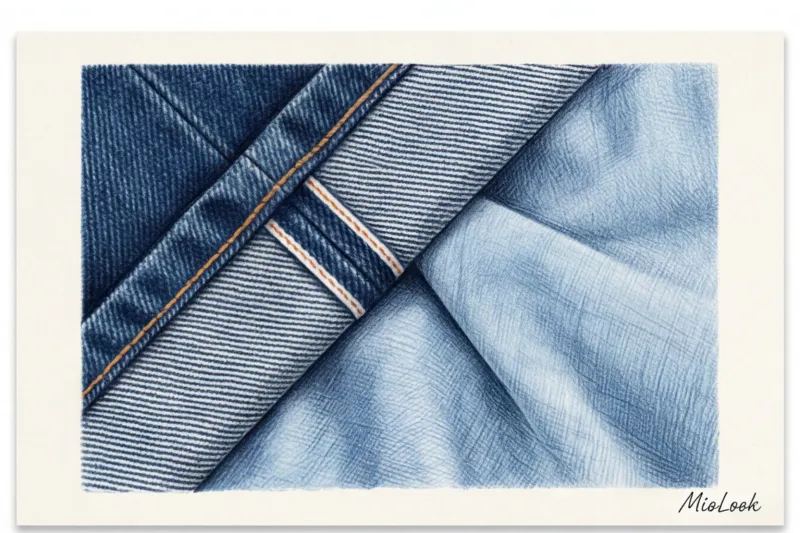
Over 12 years of working with fabrics, I've developed a strict rule: denim with more than 10% polyester looks flat in monochrome. Synthetics create a cheap, unnatural sheen that instantly cheapens the entire look.
Choose pieces that create subtle contrasts: different shades of the same color palette, varying degrees of distressing, or different weave densities. It's this contrast that draws the eye along the figure, noting nuances and creating the illusion of a sophisticated, expensive outfit.
Texture Play: How Fabric Density (Ounces) Changes the Silhouette
When I teach clients how to determine the quality of denim by touch, the first test in the fitting room is the ounce test. Denim density is measured in ounces per square yard (oz), and this metric dramatically changes how a garment fits.
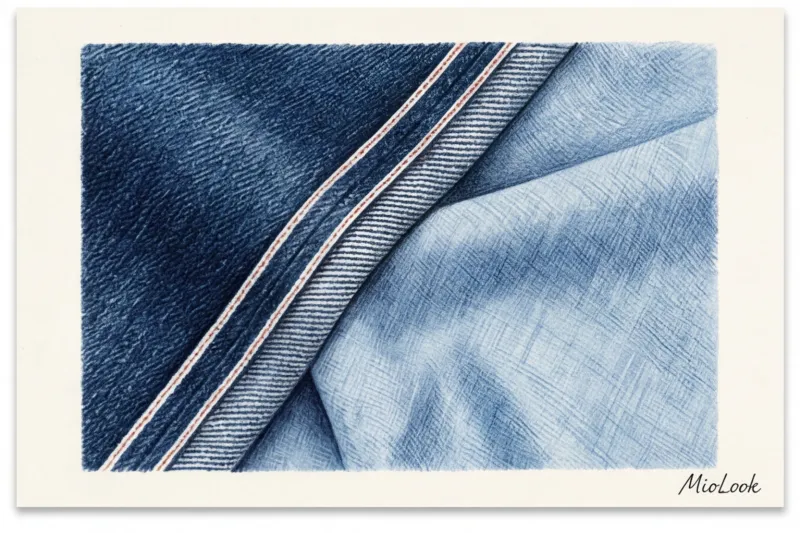
- For the bottom (jeans, skirts): The ideal weight is 12–14 oz. This is a heavy, structured cotton that works like a corset. It cinches the hips, doesn't accentuate cellulite, and maintains the shape of the knees.
- For the top (shirts, tops): The optimal weight is 6–8 oz (often chambray or lightweight denim). If you wear a 14 oz shirt, you'll look like a medieval knight in armor—the fabric will simply stiffen and visually add two sizes to your shoulders.
The rule of balance is simple: a heavy bottom for structure and a light top for a graceful shoulder girdle. Also pay attention to the direction of the twill weave—the diagonal ribs in the fabric. The combination of right-handed weave on jeans and left-handed weave on a shirt adds that subtle yet noticeable micro-dynamics.
Access to MioLook for €0.99 — one-time payment
A smart AI stylist will select the perfect look based on your measurements and the items in your wardrobe.
Get access — €0.99 onceThe perfect monochrome denim formula for this season
Forget about pairing skinny jeans with a fitted waist-length jacket—it's a no-no. Today's monochrome denim is all about loose fits and complex shapes. Here are three combinations that look flawless:
1. Denim trench coat + wide palazzo pants. A monumental, flowing look. A long trench coat in flowing denim (approx. 10 oz) creates a dramatic vertical line, while matching palazzo pants conceal the shoes, visually elongating the legs. Perfect for a spring urban capsule wardrobe.
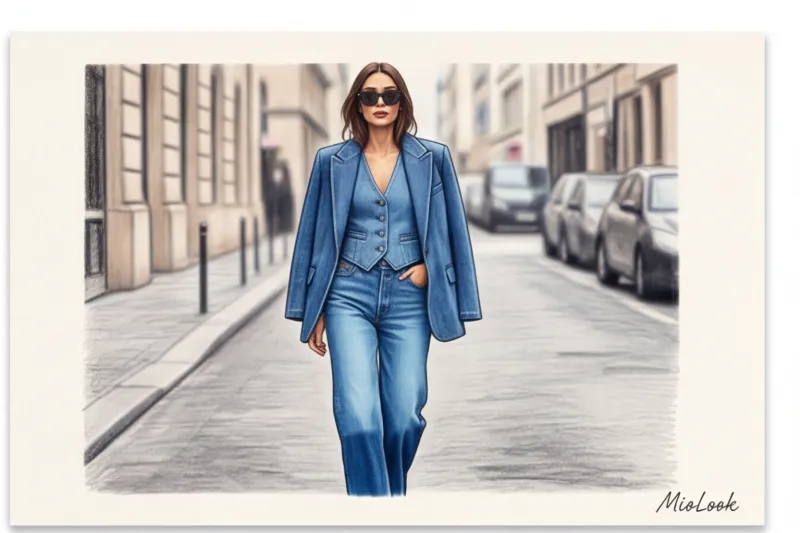
2. A strict denim shirt + a maxi skirt with a slit. Swap your usual jeans for a long, straight skirt. Tuck your shirt (make sure it's made of a thinner denim) in. A deep front slit will add a lighter touch to the heavy fabric.
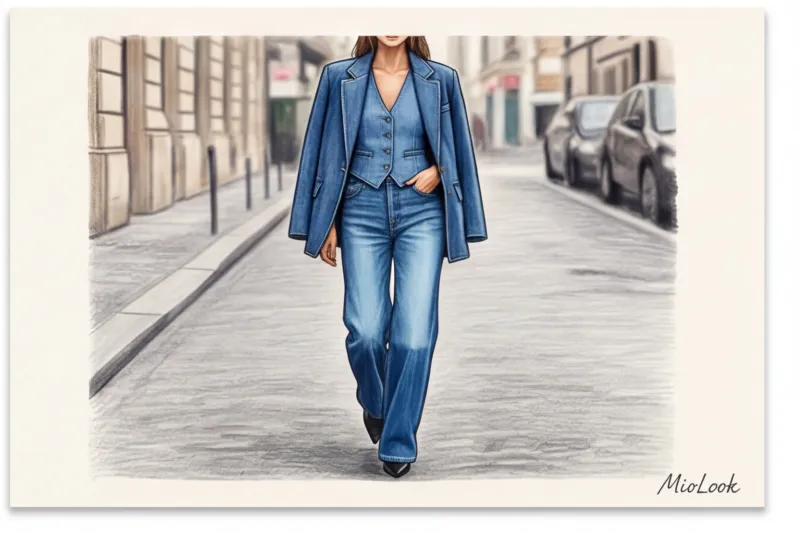
3. Denim vest on a naked body + straight jeans. A heavy denim suit vest worn over bare skin takes the workwear edge down a notch and adds a touch of evening elegance. It's a great option for a Friday dress code at an IT company.
Indigo and Raw Denim for a sophisticated look
If you're looking for the ultimate classy look, consider Raw Denim. This fabric hasn't been washed or processed after dyeing. It has a deep, almost inky indigo color and a distinctive, rugged finish.
Raw denim is absolutely not suitable for those looking for softness from the first day of wear—it requires breaking in. But its unique property is that over time, it develops individual creases to perfectly fit your body. Dark, unwashed denim easily integrates into a smart casual dress code, easily replacing classic wool trousers.
Gradient transitions: temperature contrast of blue
If you're wary of monochromatic colors, try a gradient. The safest and most flattering combination for your figure is a light-colored top and dark jeans. A light blue shirt will draw attention to your face, while indigo jeans will visually slim your hips.
But be careful with temperature contrast. Don't mix a decidedly cool, icy blue with a warm, rusty vintage blue (with a pronounced yellowish undertone). Without a transition element, this junction will be jarring.
Sustainable Denim: How to Read Labels and Why It Matters to Your Style
We can't talk about high-quality denim without ignoring the environment. According to the Global Water Partnership, traditionally producing one pair of jeans requires approximately 7,000 liters of water—the equivalent of what one person drinks in 10 years. Fortunately, the industry is rapidly changing.
When working with brands, I always pay attention to how the distressed effect is achieved. Cheap mass-market jeans priced at €30–€50 often use sandblasting, a toxic process that causes silicosis in workers. Furthermore, the harsh chemicals destroy the cotton fibers, so these jeans wear out between the legs within a single season.
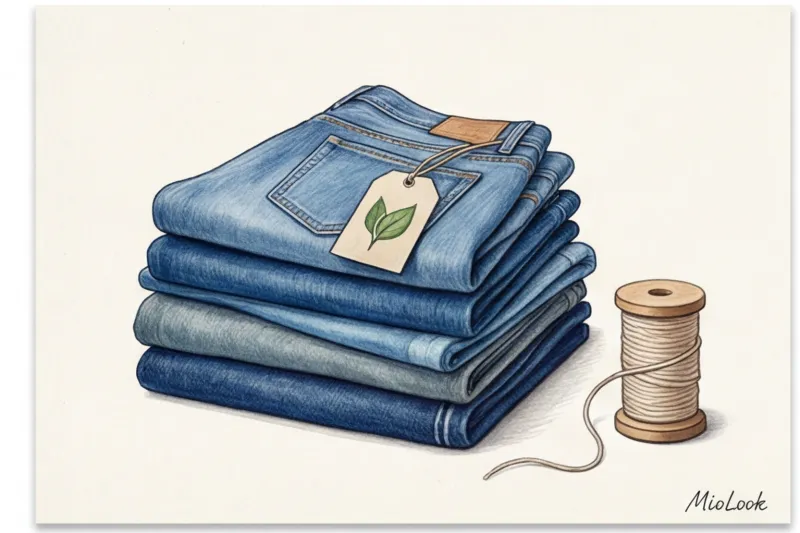
As an expert, I recommend looking for the following markers on labels:
- Ozone washing and laser fading: These innovative technologies reduce water consumption by 80% and do not damage the fabric's structure. As noted in a 2023 study by Candiani, the world's most sustainable denim manufacturer, lasers can create realistic abrasions without compromising durability.
- GOTS (Global Organic Textile Standard) Certificate: Guarantees that the cotton is grown without pesticides. Organic denim is softer to the touch and hypoallergenic.
- Recycled cotton: Often mixed with virgin for strength.
Eco-friendly jeans are an investment. Yes, they start at €120–€200, but they last 7–10 years, maintaining their original appearance, while cheaper alternatives end up in landfill after a year. High-quality, dense fabric always shrinks more and creates that luxurious silhouette.
Styling Rules: How to Avoid Looking Like a Handyman in Total Denim
Even the most impeccable eco-friendly denim can look proletarian if you don't pay attention to the details. Denim is the canvas, and accessories set the tone.
The main rule: incorporate contrasting textures. Denim has a matte, rough surface. To add a playful touch, add smooth leather (a stiff belt, a structured bag), silk (a neck braid or a bag handle), or luxurious suede.
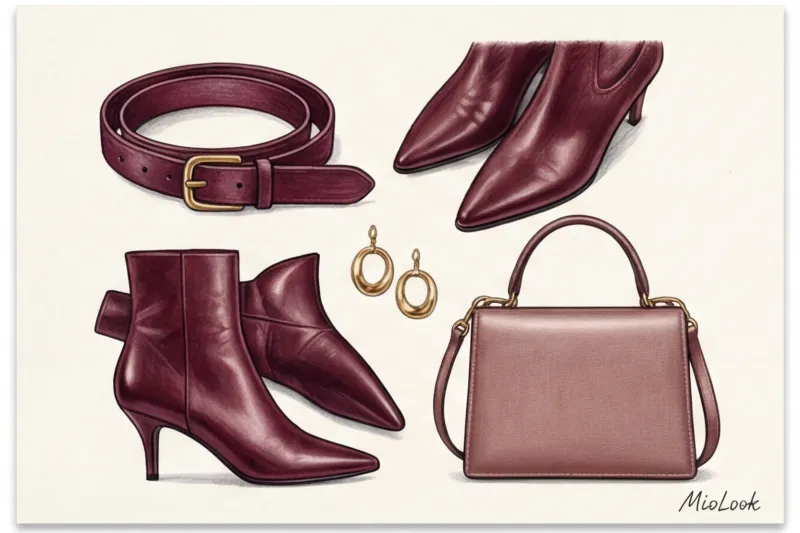
Hardware plays a huge role. Metal buttons and copper rivets on jeans should complement your jewelry. If your jacket has distressed silver buttons, complement them with chunky silver earrings or a chain bracelet.
Shoes radically change the overall look of an outfit:
- Rough boots or Cossack boots take the look into a Western or grunge style.
- Pointed-toe leather pumps or elegant slingbacks with micro-heels instantly elevate total denim to the level of urban chic.
Last but not least, total denim requires impeccable grooming. A polished hairstyle (a sleek bun or voluminous but neat waves) and clean, fresh makeup are essential. A slightly casual hairstyle paired with the work fabric will create the impression that you've truly just finished a renovation.
Your perfect look starts here
Take a photo of your denim items, and MioLook will suggest dozens of new combinations you never even thought of.
Get access — €0.99 onceChecklist: Putting together a flawless total denim look in the fitting room
To make sure this knowledge doesn't just remain theory, here's a concrete algorithm I give my clients before they go shopping. After you take a few denim items into the fitting room, run them through this checklist:
- Assess the density by touch. Rub the fabric between your fingers. The bottom should be firmer and stiffer than the top. If the shirt is stiffer than the jeans, consider upgrading to a different size or style.
- Check the temperature undertone. Place the items next to each other in natural light (move away from the fitting room toward a window, if possible). Avoid pairing a distinctly cool, washed-out blue with a warm, dirty indigo unless there's a neutral layer between them, like a white T-shirt.
- Break the joint at the waist. If the top and bottom are similar in color, a contrasting border is essential. Use a leather belt (3-4 cm wide) with a prominent metal buckle. This will restore the correct proportions to the silhouette.
- Dynamic test. Sit on a chair, raise your arms, and take a long step. High-quality denim (especially raw) will restrict your movement for the first few days, but it shouldn't create unnatural, jagged bulges on your knees and elbows.
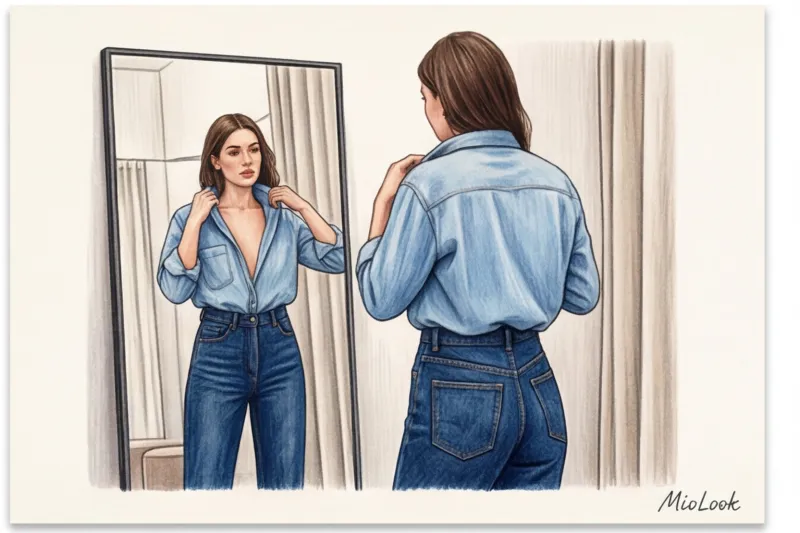
If you're unsure how new items will fit into your wardrobe, digitize your potential purchase right in the fitting room with MioLook The AI assistant will analyze the shade and suggest which items in your closet will work best with it.
Monochrome denim isn't an attempt to hide in a safe, familiar fabric. It's a bold, architectural statement. Treat denim not as an everyday uniform, but as a noble material that demands a play of textures, volumes, and a classy edge. Stop searching for perfect color matches, allow shades to clash, and your look will gain the depth that distinguishes true style from boring mass-market fare.