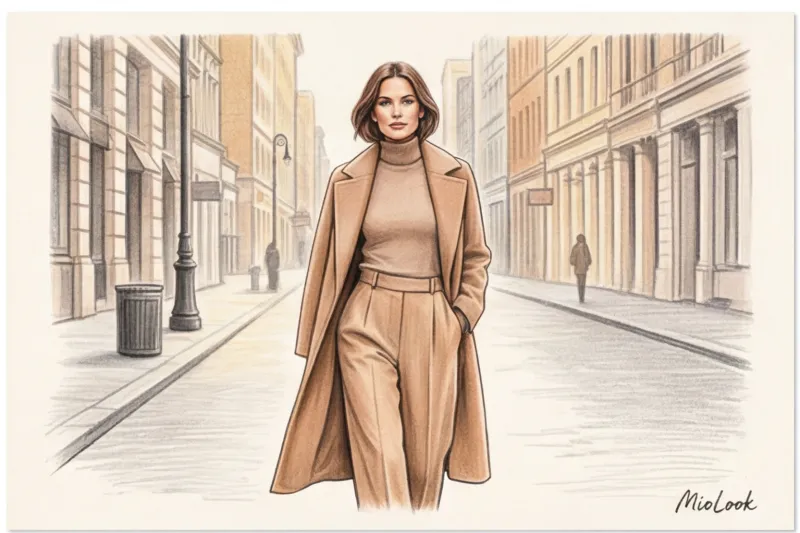
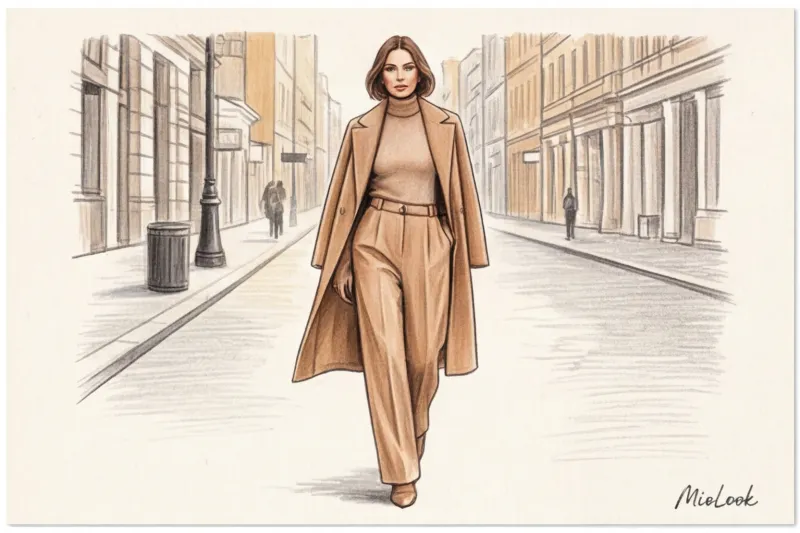
Every season before the Max Mara show in Milan, I witness the same captivating scene. Dozens of guests gather at the entrance, most of them dressed in camel shades from head to toe. But not a single outfit blends into a dull blob. At this moment, you understand especially clearly: the art of style lies not in the quantity of bright colors, but in the ability to manipulate light and form. If you're wondering, How to create a monochrome look To make it look truly expensive, forget the advice to "just wear one color." It doesn't work. Monochrome is an architectural technique based on the physics of light and textural clashes.
I wrote more about the psychology of color and how brands shape our preferences in our a complete guide to fashionable colors in clothing But today we'll go further. We'll explore monochrome not as a trend, but as a tool for impression management that will stay with you forever.
The Anatomy of Luxury: Why Monochrome Always Looks Classy
Professional stylists use the term "color column." It's a continuous vertical line of color that has no horizontal lines that "cut" the figure in half (as a contrasting belt or a white blouse with black pants would). This optical illusion visually adds 3 to 5 centimeters of height and smooths out any subtleties in the figure, creating an elongated, stately silhouette.
Historically, all-over color has always been a marker of elite status. From the architectural couture of Cristóbal Balenciaga in the mid-20th century to the modern, austere collections of The Row by the Olsen sisters, the rejection of color conveys confidence. A person dressed in a complex, creamy monochrome doesn't need to shout about themselves with bright prints. Their clothes speak in a whisper, but that whisper is heard by all.
"True monochrome isn't about searching for identical pieces. It's about a delicate interplay of tones, where one shade flows seamlessly into another, creating a gradient effect rather than a uniform look."
The mathematics of wardrobe is also interesting. WGSN's consumer behavior study (2024) confirms what I've been telling my clients for years: clothes in a cohesive color palette increase the number of possible combinations by 40% compared to randomly purchased, colorful items. It's not just aesthetics; it's a brilliant investment.
The main rule: how to create a monochrome image based on textural conflict
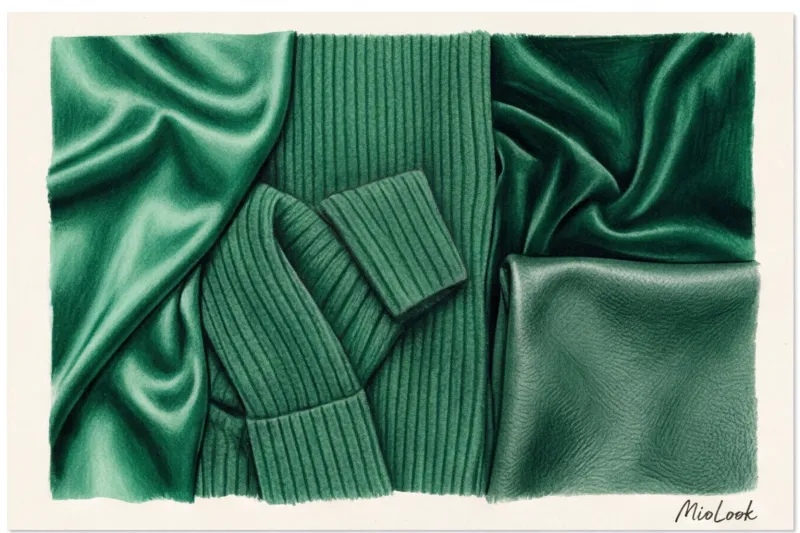
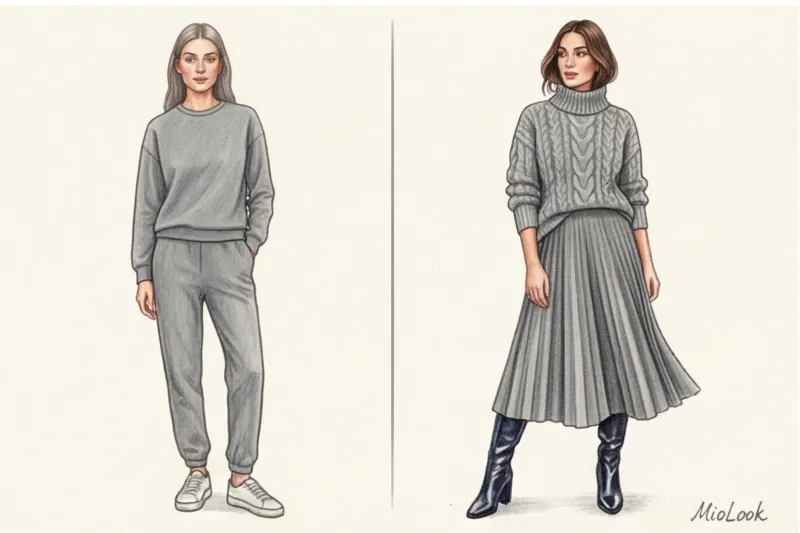
The most common mistake I see beginners make is an obsessive attempt to match a jacket tone-on-tone with trousers made of a similar smooth fabric. The result is a flat silhouette reminiscent of a flight attendant uniform or hospital pajamas. Expensive monochrome is based on the law of light refraction.
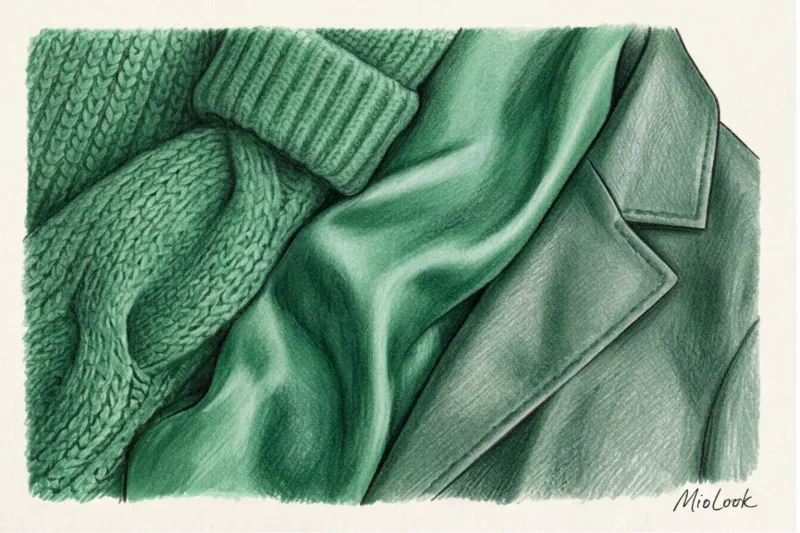
According to textile laboratories, different fibers react completely differently to the same dye. Smooth threads of natural silk or satin reflect up to 70% of incident light, creating highlights. The porous structure of matte wool, cashmere, or suede, on the other hand, absorbs light, giving the color incredible depth. How to create the perfect monochrome look? You need to juxtapose these contrasts in a single outfit.
Access to MioLook for €0.99 — one-time payment
A smart AI stylist will select the perfect look based on your textures and shades in just a few seconds.
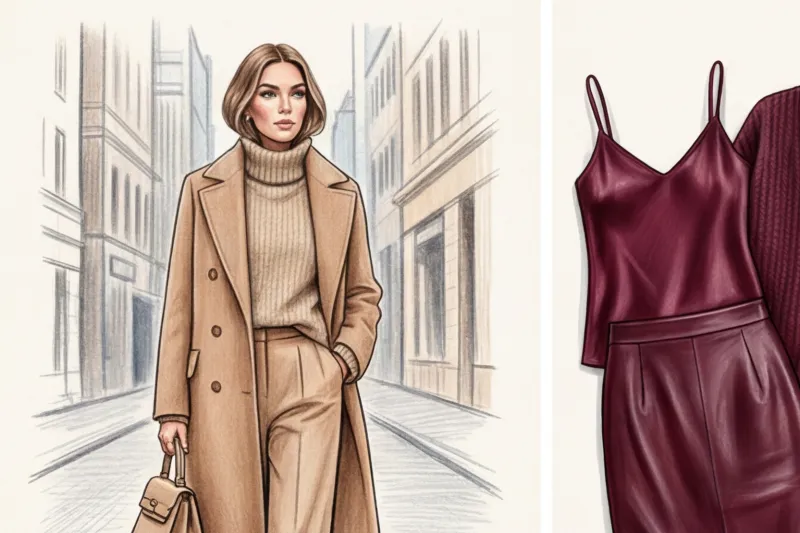
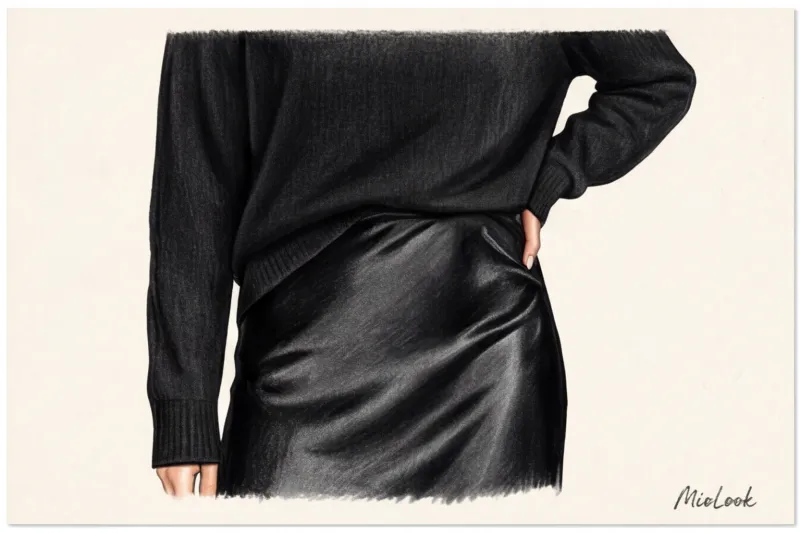
Get access — €0.99 onceWe used this technique on a recent shoot: a voluminous matte sweater made of 100% Mongolian cashmere and a flowing slip skirt made of dense silk. Both pieces were in a dark chocolate shade. The contrast in texture created a stunning 3D effect: the silk shimmered as she moved, while the cashmere cast a cozy, absorbing shadow. Jille Sander brilliantly used the same principle in her archival collections from the 90s, which are still considered the epitome of minimalism.
3D Volume Formula: The Three-Layer Rule
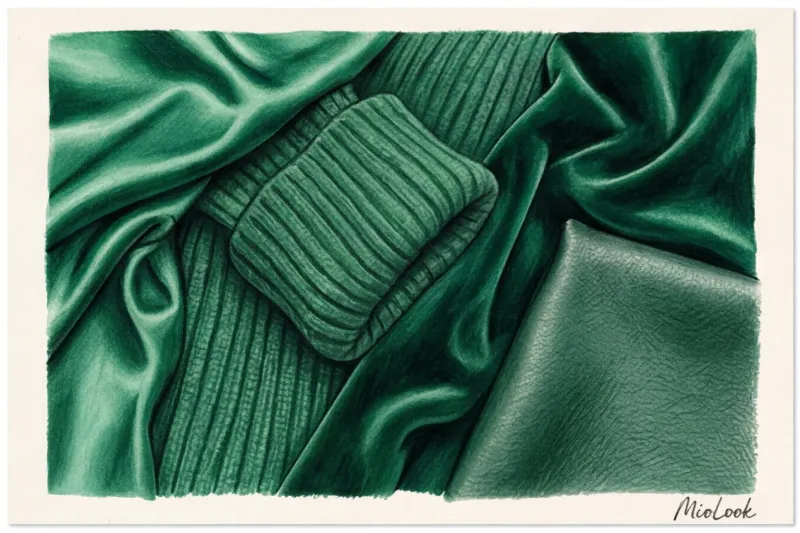
To avoid a flat spot, use the three-layer rule, varying not only the fabric but also the undertone temperature (mix cool beige with warm caramel):
- Base layer: a thin, flowing or translucent texture that is closest to the body (silk top, viscose turtleneck, thin cotton).
- Structural layer: dense, matte fabric that holds its shape well (jacket made of suit wool, trousers made of thick denim, leather shirt).
- Textured accent: an element with a pronounced relief, pile or shine (a bag made of embossed leather, suede shoes, an alpaca coat).
A Dangerous Trap: Why All-Black Often Looks Cheap
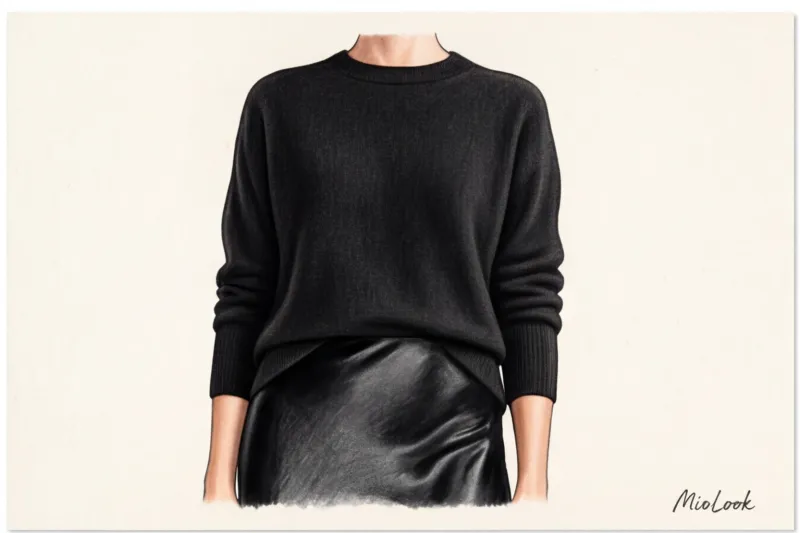
It's generally accepted that black is the safest choice. "Wear all black; it's slimming and always appropriate," goes a popular but extremely harmful myth. In my experience, I've found that all-black is the most difficult and dangerous color to achieve in a monochrome look.
The problem lies in the chemistry of dyes and the physics of fabrics. Achieving a truly deep, charcoal black on inexpensive materials is technologically challenging. In daylight, fading black cotton takes on a dirty, rusty or reddish undertone. Cheap black polyester has a telltale blue-green tint. When you wear a black cotton T-shirt, a polyester blazer, and mass-market jeans, in the sun this "monochrome" transforms into an untidy mishmash of faded rust, green, and gray.
Furthermore, matte black is a magnet for dust, lint, and pet hair. The slightest speck ruins the illusion of luxury. Alternatively, if you're not ready to invest in premium silk or high-quality wool, I always recommend clients choose deep navy, wet asphalt, or dark chocolate. These shades conceal fabric imperfections, don't fade as readily, and automatically elevate the look.
Choosing a palette to suit your wardrobe and needs
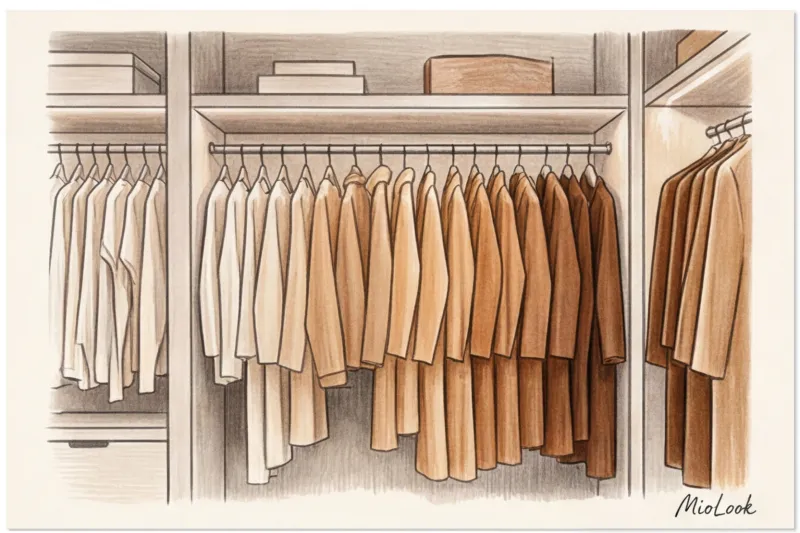
Color is a signal you send to others before you even say hello. Monochrome amplifies this signal many times over.
Light monochrome (creamy, ecru, pearl gray). In the industry, it's often referred to as the "millionaire's wife" aesthetic. White and cream shades are impractical for the subway and slush, and that's precisely why they scream status. They show that you drive a car and aren't burdened by dirty work. Start your first monochrome look with these shades—they forgive most mistakes when it comes to texture combinations.
Pastel monochrome (pistachio, lavender, dusty blue). These shades create a fresh effect and have a powerful rejuvenating effect, illuminating the face. However, there is an important limitation: it doesn't work For women with very contrasting features (for example, porcelain skin and black hair), if the pastel is placed directly on the face without revealing a décolleté. Pastel monochrome can "wash out" a contrasting face, making it appear washed out.
Complex deep colours (burgundy, emerald, terracotta). An excellent foundation for building a strong personal brand. If you're performing on stage or giving important presentations, a wine-colored monochrome three-piece suit will make you unforgettable. Unlike a loud scarlet, burgundy maintains its distance but commands attention.
Your perfect look starts here
Join thousands of users who look flawless every day with MioLook. Scan your items, and AI will assemble the perfect capsules.
Get access — €0.99 onceAccessories and Makeup: How to Avoid Ruining the Monochromatic Harmony
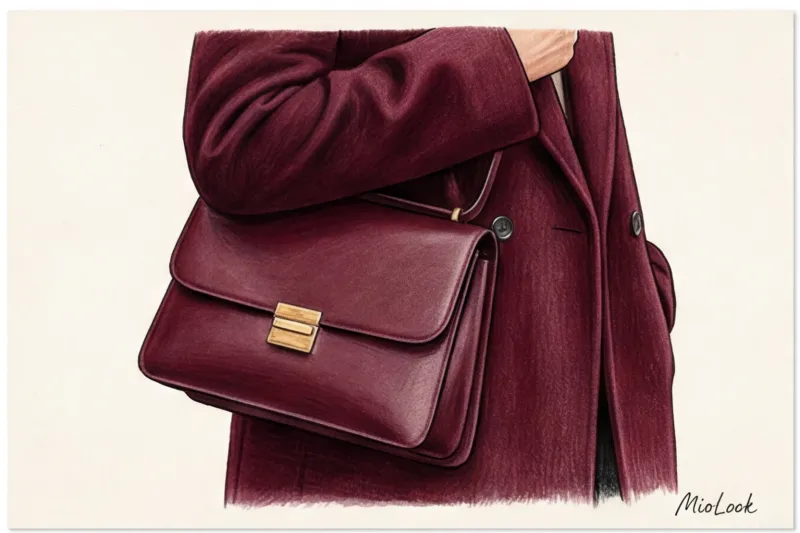
The devil is in the details. When the foundation of a look is flawless, the wrong bag or ill-timed makeup can ruin the whole magic.
Should you match your shoes and bag exactly to your outfit? Not necessarily. Shoes can be a couple of shades darker (this visually "grounds" the silhouette) or have a contrasting texture (patent leather against matte cashmere). As for jewelry, in a monochrome look, metal hardware takes on the role of a full-fledged, independent color. A cool gray monochrome is luxuriously highlighted by solid silver, while a warm beige is enhanced by yellow gold. For more information on how to mix metals effectively, read our article on combination of gold and silver , and tips on choosing a necklace are in the material about What jewelry to wear with a turtleneck.
"In a closed-off monochrome look, your own bare skin acts as another color. It relieves the stress of excess fabric."
This is one of my favorite styling tips. If you're wearing a chunky, solid-color sweater and matching pants, be sure to roll up the sleeves to reveal your slender wrists, or choose shoes that reveal your ankles (negative space). Leather will break up the pop of color and add a touch of lightness.
Makeup in a monochrome look also requires adjustment. Since the color column creates a powerful, unified blob, facial features can get lost in the background. You'll need more defined, graphic lines: well-defined eyebrows, defined lash line, or a bold lipstick. A slight carelessness here can result in a pale appearance.
Checklist: 5 Steps to Creating an Expensive Monochromatic Look
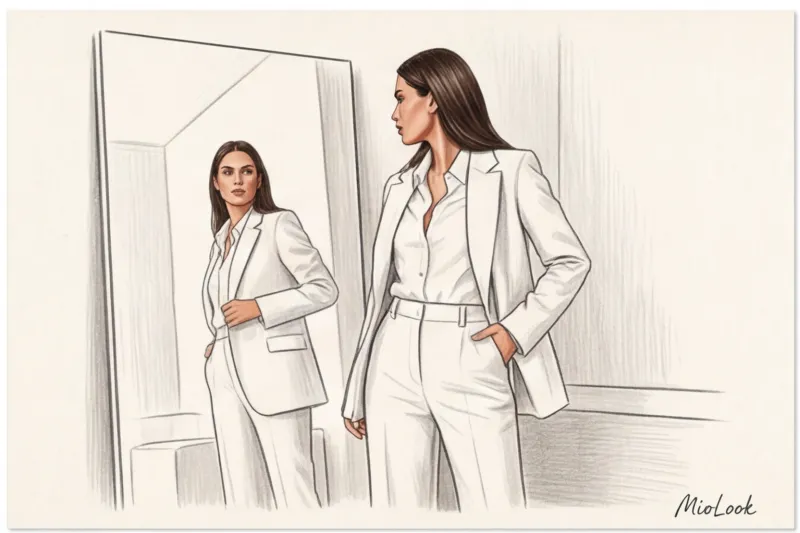
So, how can you put theory into practice today? I've developed an algorithm I use to work with clients' wardrobes:
- Cabinet inspection. No need to rush to the store. Find the color you already have most of. Often, this is a basic beige, blue, or gray. Choose this color as your base.
- Selecting a base. Choose bottoms (trousers with a density of at least 200 g/m² or a formal skirt) and a top. It's okay if they're slightly different in tone.
- Adding texture. This is a crucial step. If your trousers and shirt are matte (cotton, suiting fabric), add a glossy element: a silk scarf, patent leather loafers, or a smooth leather bag.
- Second layer integration. Throw a chunky knit jacket or cardigan in the same color palette over your shoulders. It's the second layer that creates the desired 3D volume.
- The final touch. Expose your wrists, add structured jewelry (bangles, geometric earrings), and make sure your makeup is bold enough to keep your face from getting lost in your clothes.
Creating a monochromatic look isn't about hiding in one safe color. It's about daring to make one hue resonate at different frequencies. By mastering the art of mixing smooth silk with coarse wool, and icy gray with warm graphite, you'll gain a tool that transforms even budget pieces into a luxurious wardrobe. Start small: open your closet, choose two items of the same color but different textures, and see how your reflection in the mirror changes.