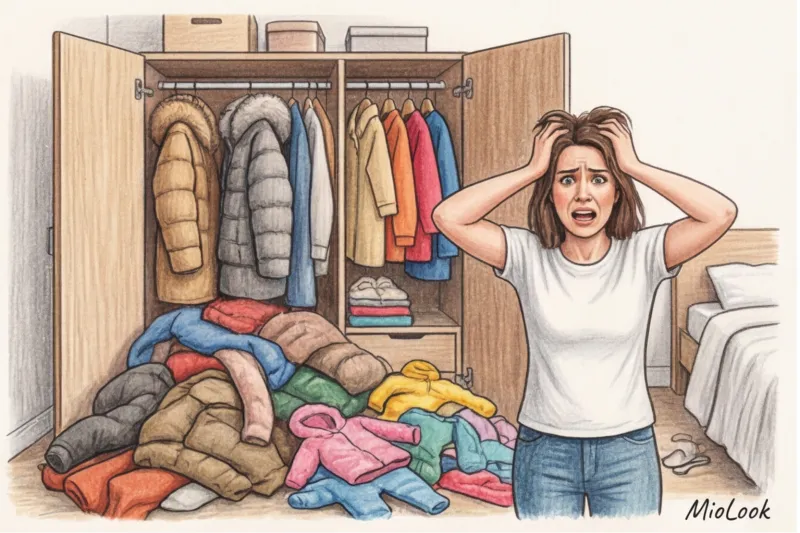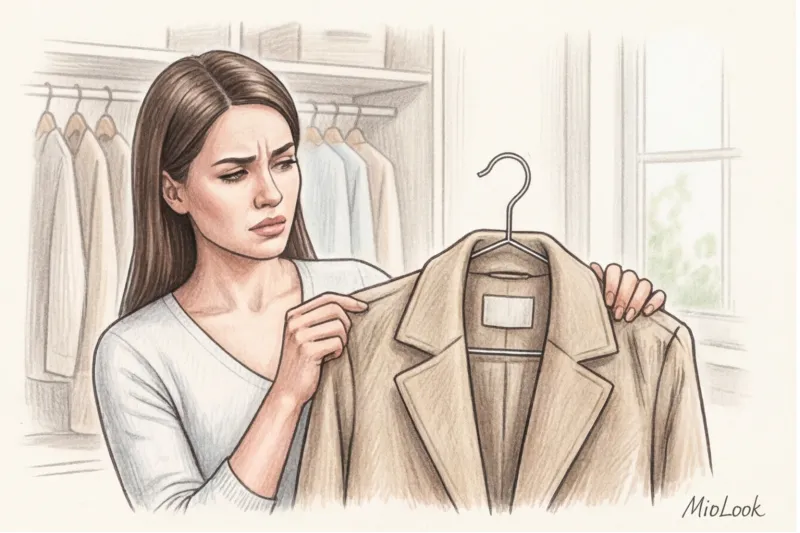
Over twelve years of working as a stylist and wardrobe organizer in Europe, I've thrown away tens of thousands of euros' worth of clothing. Or rather, my clients have. We'd open our closets in October, pull out our spring and summer stash, and I'd see the same picture: misshapen jacket shoulders, yellow stains on once-white cotton, and irreversibly felted cashmere. About 30% of the items were thrown away simply because they'd spent six months in the wrong conditions.
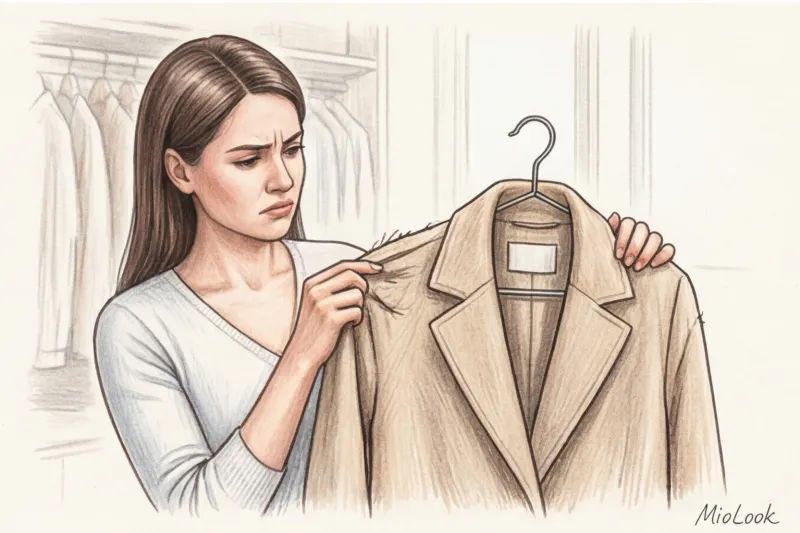
Know, How to store seasonal clothes — it's not just a skill of a tidy housewife. It's a financial strategy. We discussed this in more detail in our the complete guide to eco-friendly clothing care Today I'll tell you why traditional wardrobe preservation methods are actually slowly killing your clothes, and how to do it right so your favorite coat lasts five years instead of just one season.
The Cost of Mistake: Why Storing Seasonal Clothes Is More Important Than Dry Cleaning
Let's do the math. You buy a great wool coat from Massimo Dutti for €250. You wear it 50 times per season—the cost per wear (CPR) is €5. If you wear it for five years, that figure drops to €1. But if in the spring you hang this heavy coat on a thin wire hanger from the dry cleaner and push it into the back of your closet, by November the shoulder line will have stretched out so much that the coat will lose its shape. You'll wear it a couple more times, feel uncomfortable, and buy a new one. The actual cost per wear will skyrocket.
Modern mid-market brands (Zara, & Other Stories, COS) actively use blended fabrics—for example, 70% viscose and 30% polyester. These materials look great on a mannequin, but are incredibly difficult to hold. Under their own weight or in tight spaces, they form hard creases that even a professional steamer can't remove.
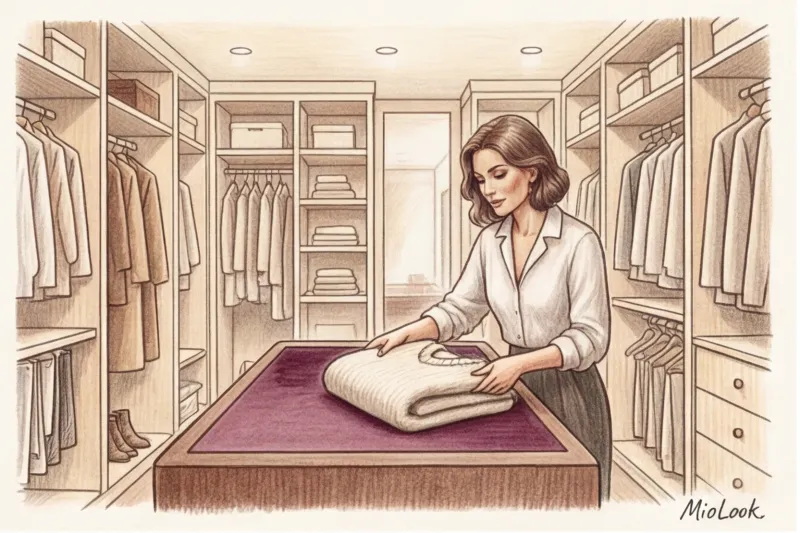
The biggest mistake I see all the time is perceiving the change of seasons as an attempt to "simply shove things away so they don't get in the way." This is fundamentally the wrong approach. A closet isn't a trash bin, but a safe for your style investments.
The Wardrobe's Main Enemy: Why Vacuum Bags Kill Clothes
Open any popular organization blog, and you'll be advised to buy a mountain of vacuum bags. As a stylist, I can tell you: vacuum bags are the worst thing you can do to your everyday wardrobe.
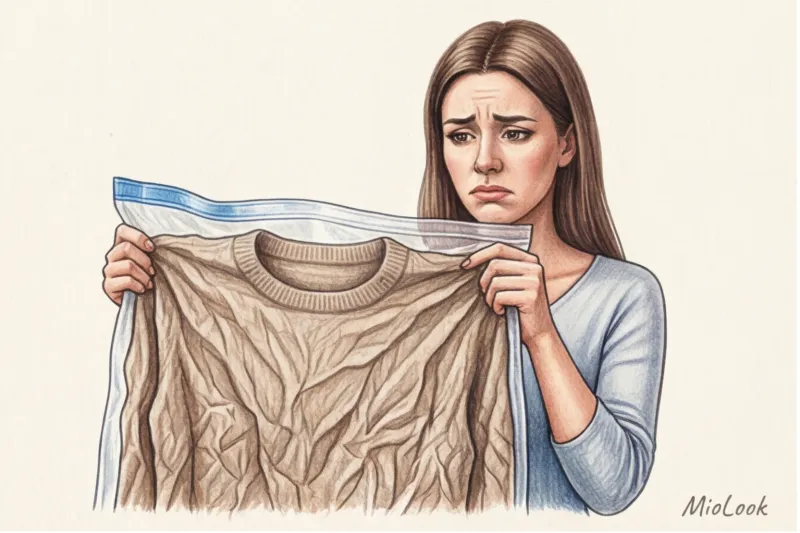
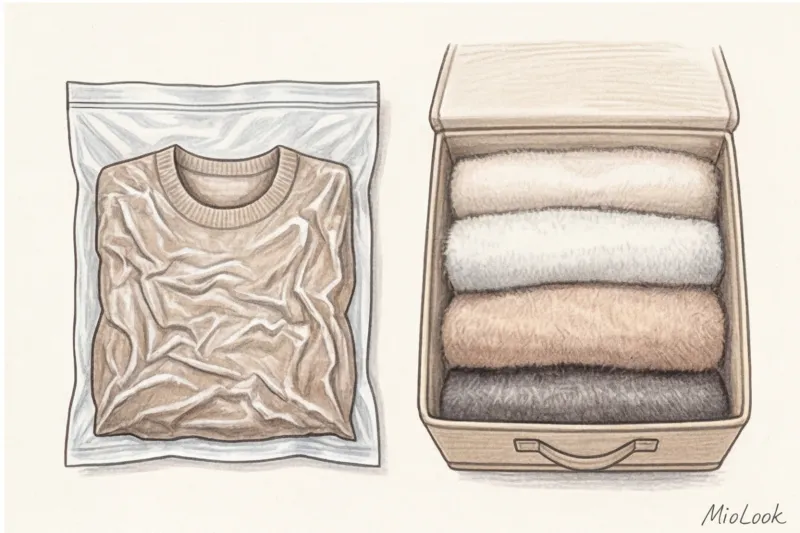
One of my clients in Munich "saved space" by packaging a luxurious COS cashmere sweater worth around €150. Six months later, we pulled out a flat, stiff piece of felt from the plastic. The mechanics of damage are simple: pressure flattens animal fibers (wool, silk, cashmere, down). They literally live off the air inside the thread. By depriving them of oxygen and compressing them for months, you break the very structure of the yarn.
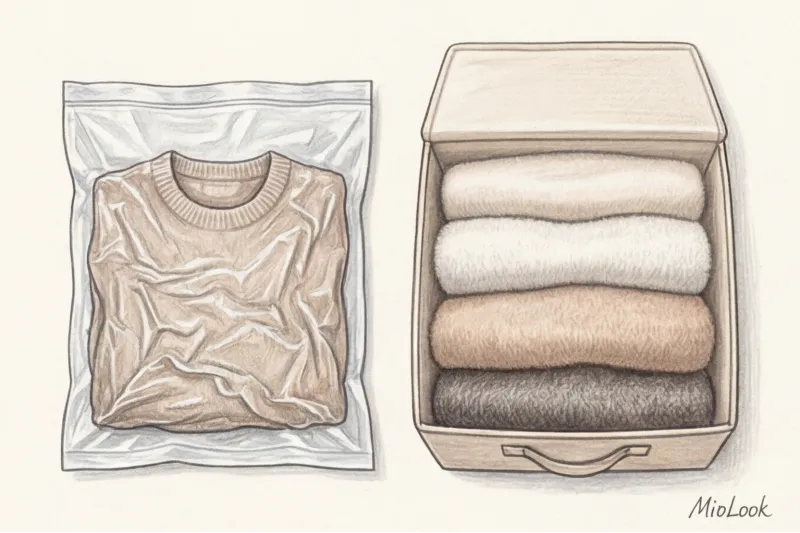
Moreover, a vacuum creates the risk of a greenhouse effect. According to textile restorer standards, the optimal humidity for storing clothing is 45–55%. Even the slightest temperature change in a plastic bag causes micro-condensation to form. The result? Mold, which is impossible to remove with any chemicals.
Exceptions: What can be vacuumed?
Every rule has exceptions. Vacuum drying is only safe for items that don't have a porous natural structure:
- Ski suits made of membrane and synthetic insulation (although down jackets with natural feathers are a definite no-no).
- Sportswear made of 100% polyester or fleece.
- Synthetic blankets, guest pillows and bed linen.
Organize your wardrobe wisely
Tired of forgetting what's on the top shelves? Digitize your wardrobe with a smart app.
Get access — €0.99 onceBasic preparation: what to do before putting things away for six months
Do you know the golden rule of stylists? Only spotlessly clean fabric goes in the closet. Don't keep even a sweater you've worn once if you plan to put it away until next winter.
This is where chemistry comes into play. Invisible traces of sweat, microscopic skin particles, and deodorant contain proteins and salts. After 3-4 months of storage in a dark, warm closet, these oxidize. That's why you take out a white T-shirt you put away clean and find yellow stains in the armpit area. According to the Textile Care Institute, oxidized stains older than 6 months are 100% set in the fibers and are nearly impossible to remove without damaging the fabric.
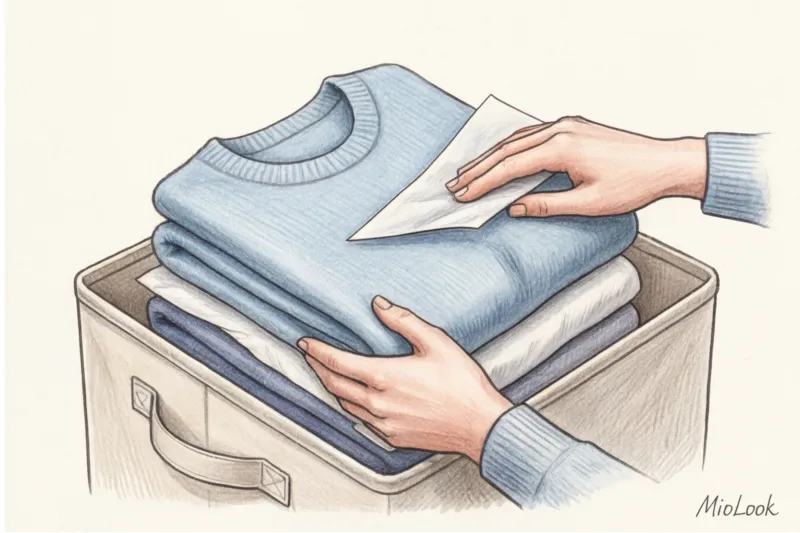
Moreover, protein residue is a major delicacy for clothes moths. They prefer clean wool much less than wool stained with your perfume and sweat.
"Mend before storing, not after. Sew on a button, remove pilling with a machine, and fix a torn welt on a shoe before storing. Come spring, you'll have neither the time nor the inclination—you simply won't wear the item."
The last step in the preparation phase: dry thoroughly. After washing or dry cleaning, let the item hang in a ventilated area for at least 24 hours. Remove any plastic covers from the dry cleaner immediately—they are intended for transport only, not storage.
How and where to store seasonal clothes: choosing the right trunks and covers
Plastic containers like IKEA's SAMLA are great for cords and children's toys, but they're dangerous for natural fabrics due to the lack of ventilation. My go-to options are trunks made of spunbond (a breathable non-woven fabric), heavy-duty cotton, or linen.
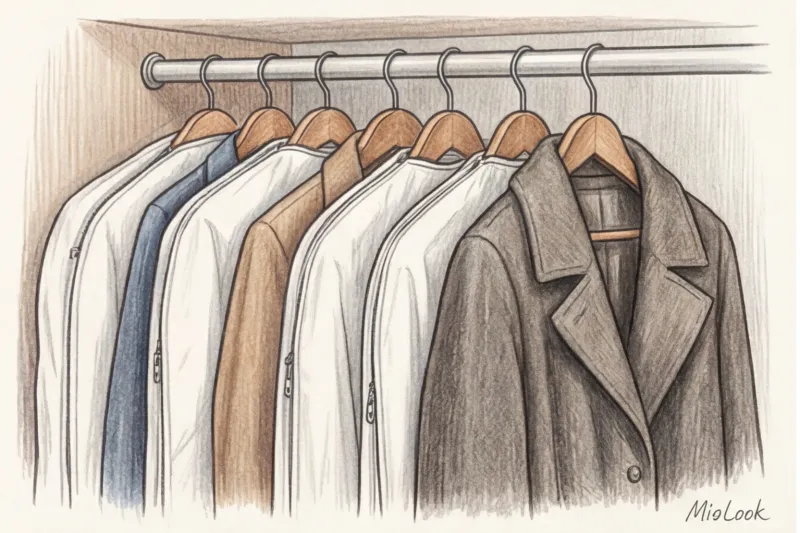
For knitwear, I recommend rolling instead of stacking. Firstly, you can see all the items at a glance (if the case has a clear window). Secondly, creases won't form at the folds. Hanging heavy sweaters on hangers is strictly prohibited—their own weight will cause them to stretch 10-15 cm in a couple of months.
For outerwear, use voluminous fabric covers with sheer inserts. A coat made of natural wool should be able to "breathe," otherwise it will acquire the musty smell of an old chest.
Hangers Matter: The Anatomy of a Hanger
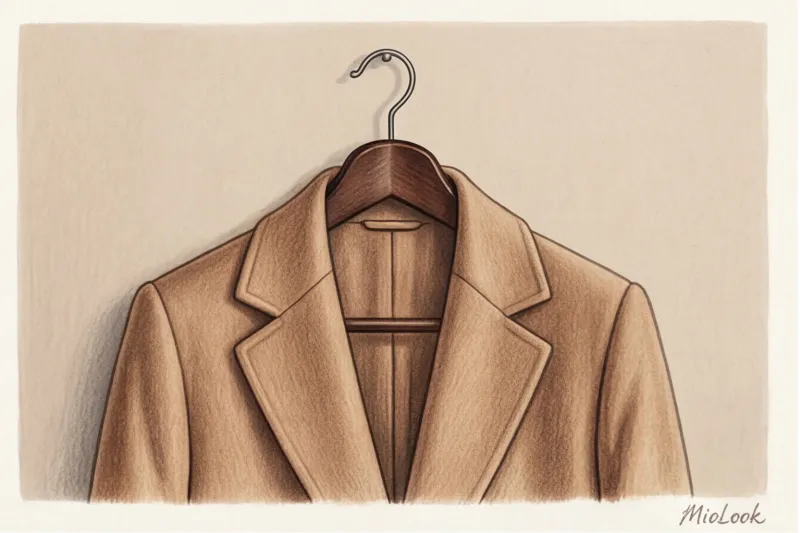
Thin metal or cheap plastic hangers are only suitable for lightweight shirts. Jackets, trench coats, and coats require wide wooden hangers. Pay attention to the size: the hanger width should exactly match the shoulder seam of your garment. If the hanger is too short, the sleeve will appear "bubbled," while if it's too long, the sleeve itself will become deformed.
Your personal AI stylist
Not sure what to pair with your seasonal wardrobe? MioLook will help you find the perfect looks from your existing wardrobe.
Try MioLookProper storage of seasonal shoes: saving leather and shape
Footwear requires just as much attention as clothing. Have you ever noticed how your winter boots sometimes develop a whitish coating and the soles start to peel off by the next season? This is due to urban chemicals, which slowly corrode the leather and glue if not washed off before storage.
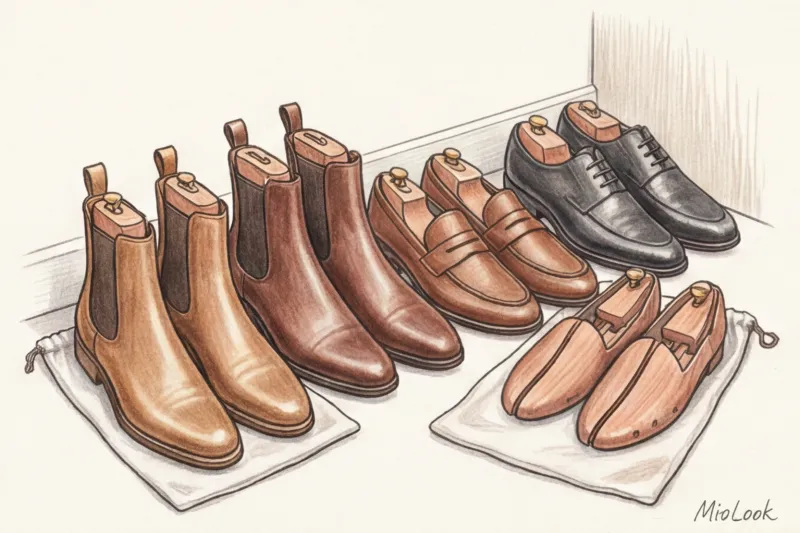
My professional tip: invest in unvarnished cedar shoe trees (you can find them on the budget market for €15-25). Not only do they maintain the toe shape and prevent creasing, but they also act as a natural absorbent. Cedar draws residual moisture from the lining and neutralizes odors. If you don't have shoe trees, stuff the toe box tightly with clean paper. Just don't use newspaper—the printing ink may bleed onto the light-colored lining.
It's best to store shoes in fabric dust bags. If you use cardboard boxes, make sure they have ventilation holes.
Moth and Damp Repellent: Eco-Friendly Methods for Your Closet
Please forget about mothballs. Not only do they leave a toxic smell reminiscent of a Soviet communal apartment on your clothes, but they are also considered hazardous to health in many countries.
A modern alternative is the same old cedar rings and sachets of dried lavender or cloves. But there's an important technical detail that fragrance manufacturers don't mention: essential oils don't kill moth larvae. They only repel adult moths, preventing them from laying eggs. If the item is already infested (that's why we talked about washing it!), lavender won't save it.
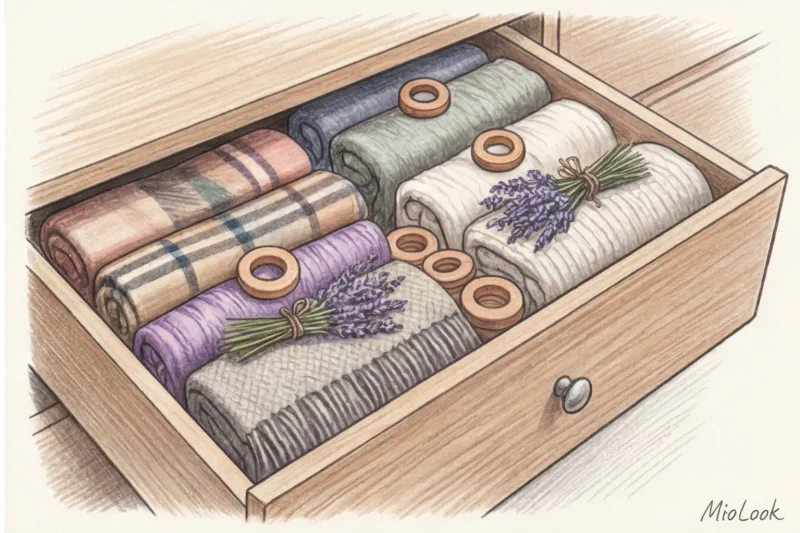
To ensure cedar rings last for years, they should be lightly sanded with fine sandpaper once a season—this opens the wood's pores and renews the release of essential oils.
Use silica gel to control humidity. Don't throw away those little packets that come with new bags or shoes—toss them in the bottom of your cashmere and silk suitcases.
A practical checklist: how to change your wardrobe for the season in one weekend
To prevent the process from dragging on for weeks, I've developed a strict algorithm for my clients. Turn on a podcast, pour yourself a coffee, and follow these steps:
- Complete detox. Be honest: if you haven't worn that sweater this winter, it doesn't belong in your summer closet. Sell it, donate it, or throw it away.
- Dry cleaning and laundry. Sort the remaining items. Dry clean any stains, and wash the rest on a delicate cycle. Be sure to trim away any pilling.
- Dusting the cabinet. While your clothes are drying, wipe the shelves with a mild soap solution. Make sure the cabinet is completely dry before loading.
- Packing by weight. The "heavy on the bottom, light on the top" principle will prevent your delicate fabrics from wrinkling. Place heavy hoodies and cardigans on the bottom of the trunk, and thin cashmere on top.
- Marking. Label your trunks ("Winter: Wool," "Ski," "Summer: Silk"). You'll thank yourself in six months.

To help you remember what you have stashed away in those outermost trunks, I recommend creating a digital copy of your closet. Take photos of your items before packing and upload them to MioLook app When it's time to put together looks for the new season, you'll already have a ready-made base on your phone.
Ready to get started?
Try the MioLook free plan—no commitments. Digitize your wardrobe in just a few clicks.
Get access — €0.99 onceA change of season isn't a punishment, but a spa treatment for your wardrobe. Spending a weekend properly sorting and preserving your clothes will not only free up space in your bedroom but also ensure that your favorite pieces will be back in pristine condition six months from now. Treat your clothes with respect, and they will repay you with impeccable appearance.