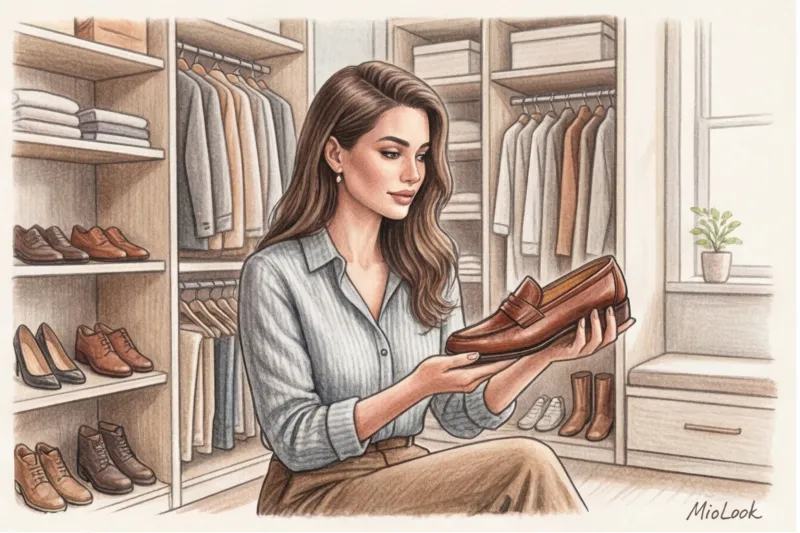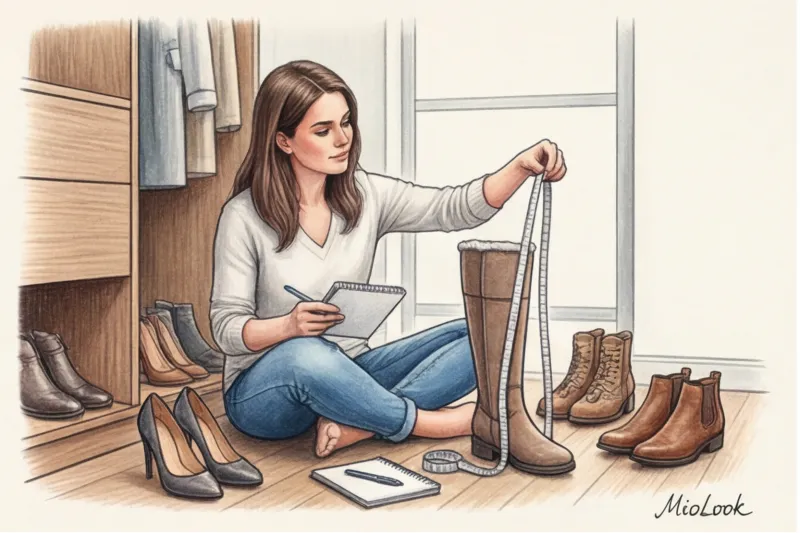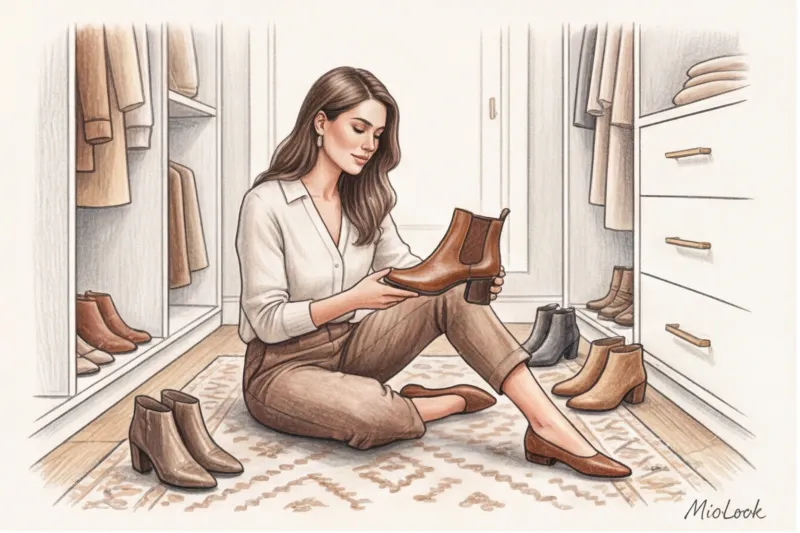
Have you ever pulled out your favorite autumn ankle boots after a long summer only to discover a strange white coating, dry leather, and stiff creases? This is a pain I see in every third client. We spend hours and substantial budgets choosing the perfect pair, but we forget that the magic of style ends where improper care begins.
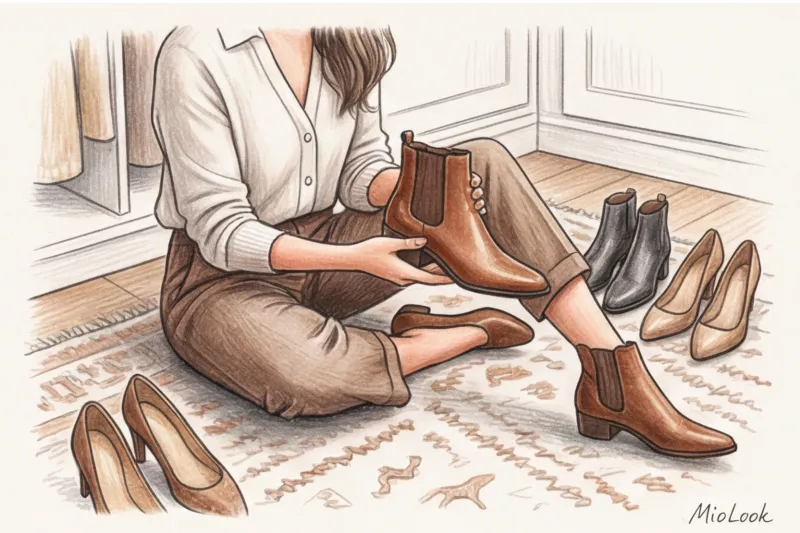
If you want to know, How to properly store shoes Forget boring cleaning instructions. Let's turn this process into a true "wardrobe spa"—a mindful ritual that will extend the life of your favorite pieces. We've covered the foundation of style in more detail in our A complete guide to a basic shoe wardrobe and creating the perfect capsule wardrobe , and today we’ll talk about how to protect and preserve this capsule.
An Investment, Not a Routine: Why It's Important to Know How to Properly Store Shoes
Your approach to seasonal wardrobe rotation reveals your level of style awareness. When we talk about quality essentials, we always keep in mind the Cost Per Wear formula. Imagine: you bought a pair of luxurious leather loafers for $200. If you wear them 100 times, the cost per wear is only $2. But if, due to improper winter storage, the leather cracks and you wear them only 10 times, each wear will cost you $20. The math is ruthless.
According to a 2023 study by the international association The Leather Working Group, up to 40% of irreversible damage to genuine leather and last deformations occur during the "dormant" period—that is, during off-season storage. Shoes deteriorate not when you walk on the pavement, but when they sit in unsuitable conditions for months.
There's also a powerful psychological aspect to this. Over 12 years of working as a stylist, I've developed an ironclad rule: a tidy closet equals a tidy mind when getting ready in the morning. When each pair of clothes is well-groomed, in shape, and ready for the moment, you get ready faster and feel more confident.
Access to MioLook for €0.99 — one-time payment
A smart AI stylist will select the perfect look based on your wardrobe.
Get access — €0.99 onceThe Biggest Mistake: Why Stylists Throw Away Their Original Cardboard Boxes
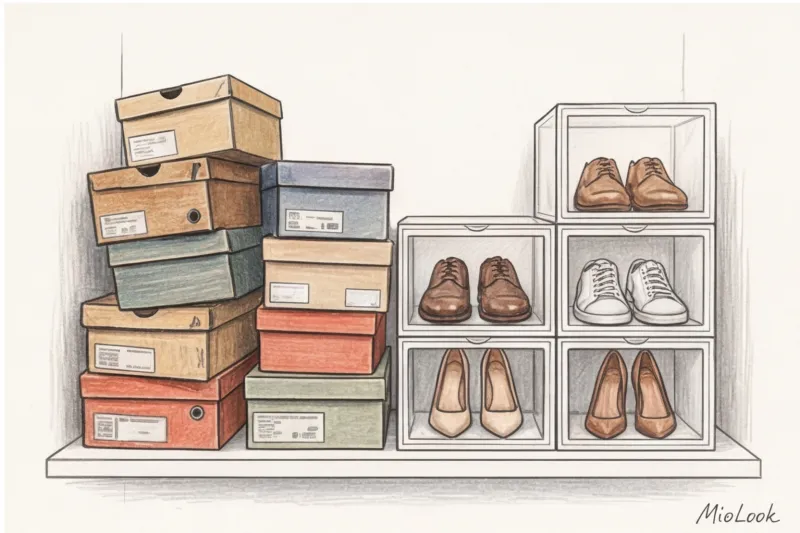
Now I’m going to say something that shocks many of my clients: Storing shoes in their original cardboard boxes is a crime against your wardrobe. Yes, even if it's a luxurious, sturdy box from Prada or Jimmy Choo with a beautiful logo.
Let me tell you a story from my experience. My client, Anna, bought a stunning pair of taupe suede boots. In the spring, she carefully folded them into their original box and put them on the top shelf of her walk-in closet, which was adjacent to a cool wall of the house. In the fall, we opened the box and discovered that the suede was covered in mold stains. Why did this happen?
Cardboard is a sponge. It instantly absorbs moisture from the air, reacts to the slightest temperature changes, and creates an ideal environment for mold growth and insects. Furthermore, cardboard boxes of varying sizes create an incredible visual noise.
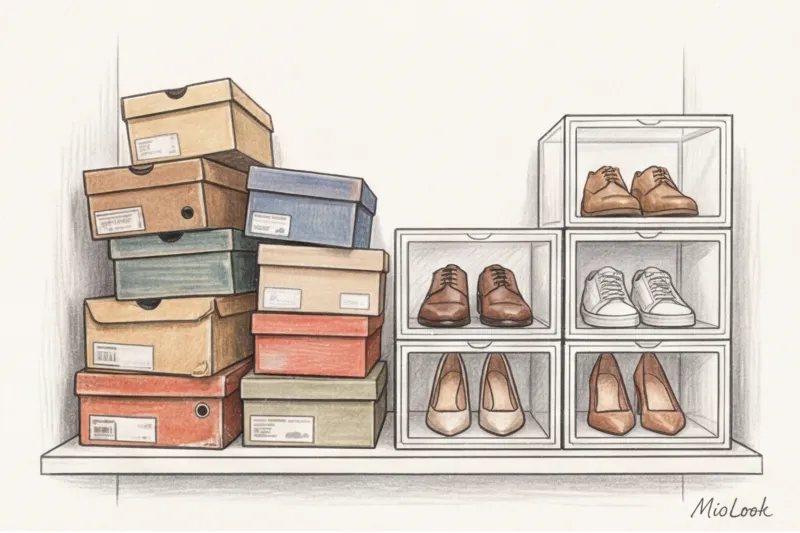
The second problem is the "blind spot" effect. If you can't see your shoes, your brain erases them from your working memory. You forget you already have the perfect burgundy ankle boots and go shopping for similar ones. Switching to transparent storage systems once saved me not only stress but also about 15 minutes every morning.
Preparing for Hibernation: 3 Essential Steps Before Putting Away Your Shoes
In premium shoe boutiques and workshops, the storage preparation process follows a strict formula: Cleansing + Nutrition + Shape = Infinite shoe life Never, under any circumstances, store shoes with traces of street dust in the closet. Even microscopic particles of chemicals can corrode the top layer of leather within six months.
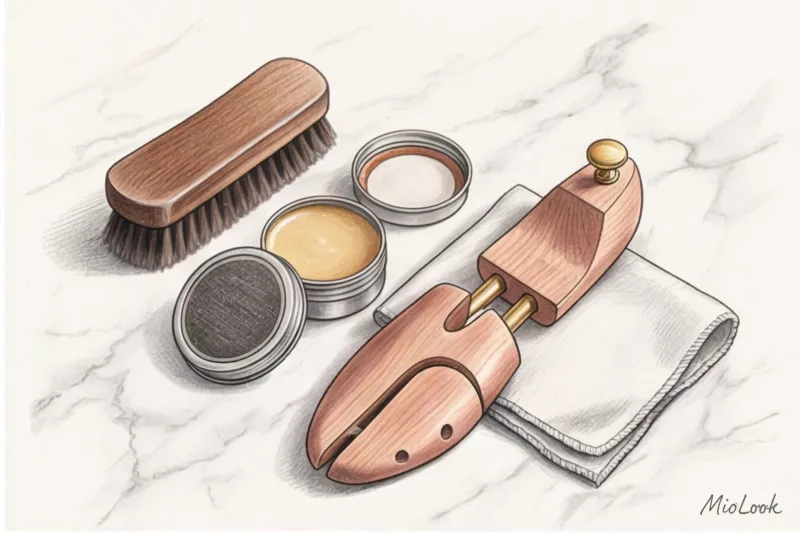
Deep cleaning and nutrition of materials
Smooth leather and fleecy materials require completely different approaches:
- Smooth skin: First, brush with a soft horsehair brush. Then apply a cleansing lotion, followed by a nourishing cream (I always recommend products based on natural beeswax, like Saphir Medaille d'Or). Let the cream soak in for at least an hour, then buff.
- Suede and nubuck: No creams! Use a special crepe brush (with rubber bristles) to lift the pile and remove dust. For heavy soiling, use a foam cleaner, and generously treat with a water-repellent spray before packing.
An important nuance: Shoes should dry only at room temperature. Avoid radiators or hair dryers—heating too quickly can cause leather to dry out and crack.
Shoe trees: wooden blocks versus crumpled newspaper
Forget grandma's method with crumpled newspaper. Printing ink can bleed onto the light-colored backing, and the paper itself doesn't provide the necessary tension, causing deep creases at the toes.
Your best investment is shoe trees made of unvarnished cedar. Why cedar? Unvarnished wood acts as a natural absorbent: it draws out residual moisture (sweat) from the inside, deodorizes shoes, and straightens the leather, restoring its original shape.
"A fair disclaimer: heavy wooden shoe trees are a lifesaver for leather loafers and oxfords, but they are NOT suitable for soft fabric sneakers, knit ankle boots, or delicate satin shoes (like Manolo Blahniks). Cedar can permanently stretch these materials. For these, use soft, acid-free tissue paper."
Your perfect look starts here
Join thousands of users who look flawless every day with MioLook.
Get access — €0.99 onceClimate control in the closet: where and how to properly store off-season shoes
According to Florentine leather artisans (in particular, experts from the renowned Stefano Bemer school), the ideal conditions for natural leather are a temperature of 18–22°C and humidity of 45–55%. I understand that few people will place a humidifier directly in their closet, but it's important to follow these basic rules.
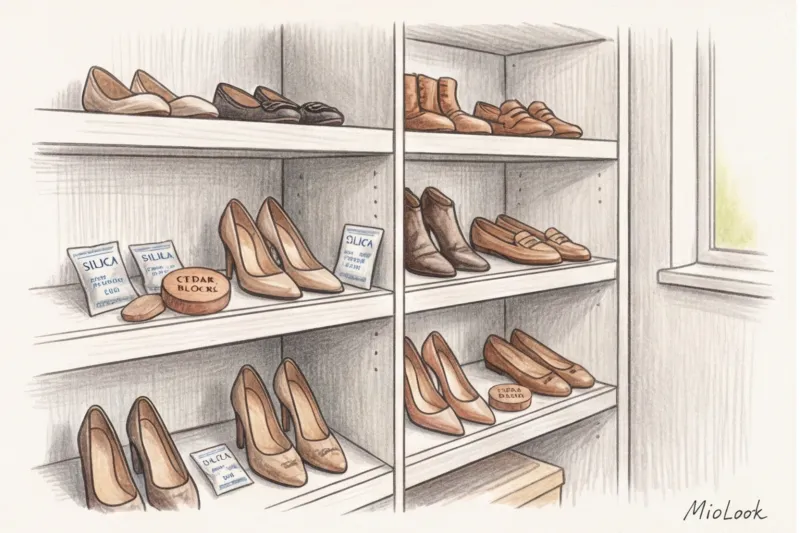
Never store shoes in tightly sealed plastic bags. Leather is a breathable material. Plastic creates a greenhouse effect, which inevitably leads to the glue drying out and a musty odor. If you use panniers, they should be made of breathable cotton or spunbond.
My personal life hack: throw a couple of silica gel packets (the same ones you usually throw away when buying new bags) and a small sachet of lavender or a piece of cedar wood into each bag or dust bag. This will protect against moths and keep them fresh until next season.
Specifics of materials and styles: from delicate suede to high boots
Winter and demi-season footwear require a special approach due to their size and specific insulation.
How to Maintain the Shape of Tall Boots (Over-the-Knee and Pipe Boots)
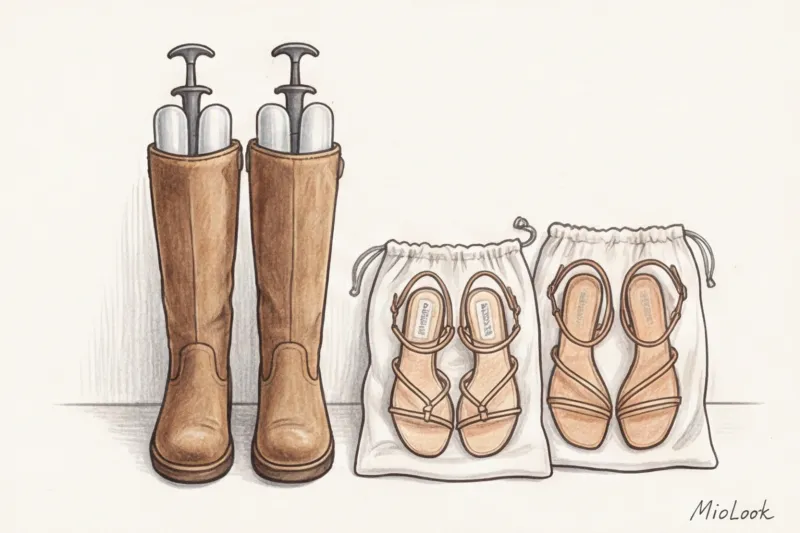
The most common injury to tall boots is a fold in the ankle area, which occurs when the shaft collapses under its own weight. To prevent this, use special inflatable boot trees or flexible plastic inserts. If you don't have these handy, roll a thick glossy magazine into a tube and insert it inside.
It's best not to store soft suede thigh-high boots at all. Ideally, they should be placed horizontally in a spacious cotton dust bag to prevent creasing.
Caring for light-colored shoes and textile sneakers
Light-colored shoes are afraid of light. Ultraviolet radiation is the main enemy of white rubber and shoe glue. Storing them on open shelves is precisely why white sneaker soles turn a telltale yellow by the following summer. Store them only in complete darkness.
Regarding washing fabric sneakers: yes, they can be machine washed, but only on a delicate cycle at a temperature no higher than 30°C and without spinning. Hot water destroys the adhesive layer, and after "sleeping," the soles may simply fall off during your first walk.
Space Organization: Visual Order in the MioLook Style
We've reached my favorite stage—aesthetics. As I mentioned, we're getting rid of the mismatched cardboard. What should we replace it with?
The ideal solution is identical clear acrylic drop-front boxes with ventilation holes. They stack on top of each other, creating a smooth wall through which each pair can be seen. Your closet will instantly look like the display case of an expensive boutique. For those who prefer closed storage in cotton dust bags, there's a beautiful trick: attach a Polaroid photo of the pair inside to each bag.
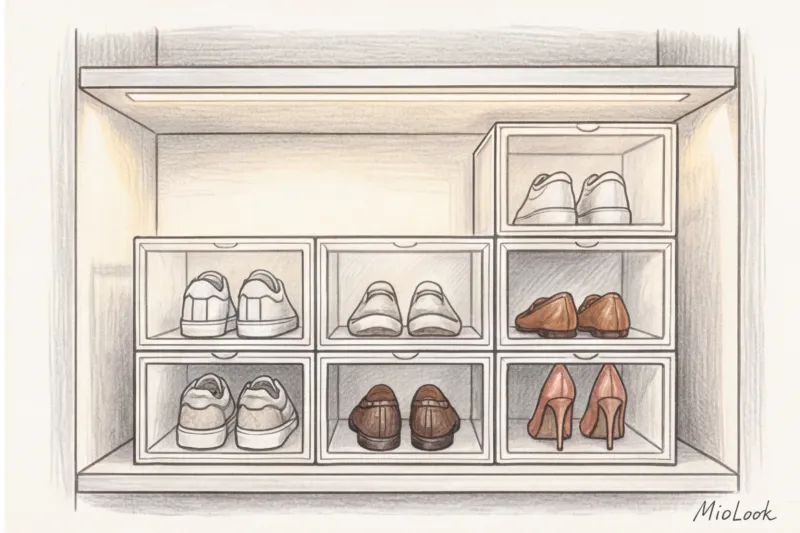
But the real game-changer in wardrobe management is digitalization. When you put out-of-season shoes on the top or back shelves, you physically lose access to them. To always keep track of your assets, I recommend using smart wardrobe feature in the MioLook app You simply take a photo of your items once. The app removes the background, catalogs your shoes, and even when your winter boots are hidden away in the attic, the AI stylist continues to consider them when planning your future looks.
Ready to get started?
Try a free plan—no commitment—and get organized to suit your style.
Get access — €0.99 onceChecklist: The Perfect Seasonal Shoe Rotation in 60 Minutes
To make the process less daunting, I've broken it down into five concrete steps. Turn on your favorite podcast, pour yourself a glass of wine or a cup of good coffee, and let's do it this weekend:
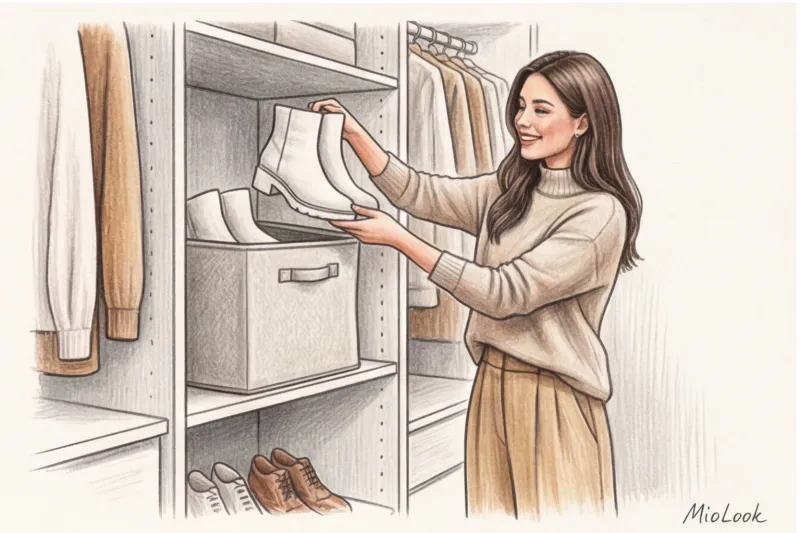
- Audit (10 minutes): Be honest with yourself. If you haven't worn those uncomfortable ankle boots even once this past season, sell them or donate them. Don't dwell on the mistakes of the past.
- Sorting and repair (10 minutes): Set aside any pairs that need maintenance, heel replacement, or dry cleaning, and immediately put them in your bag for tomorrow's errands.
- Cleansing and nourishing (20 minutes): Brush, apply cream to smooth leather, spray protection on suede.
- Formation (5 minutes): Insert cedar shoe trees into leather shoes and tissue paper into delicate and textile shoes.
- Packing and placement (15 minutes): Place shoes in clear boxes or breathable dust bags (adding silica gel) and put them on the back shelves, freeing up space for the coming season.
Proper shoe storage isn't a tedious chore; it's a sign of respect for yourself and your belongings. Implement this simple checklist, and you'll forget about unpleasant surprises with the changing seasons forever, and your favorite shoes will last for years, looking like they just came out of the boutique.