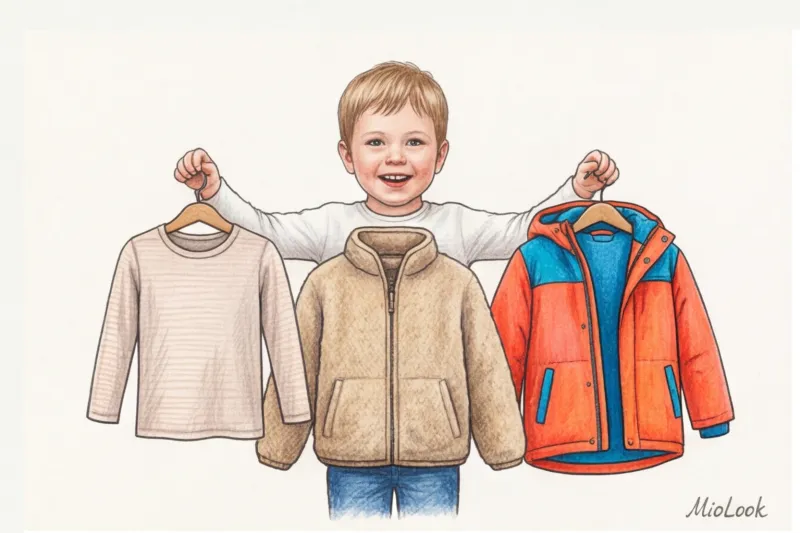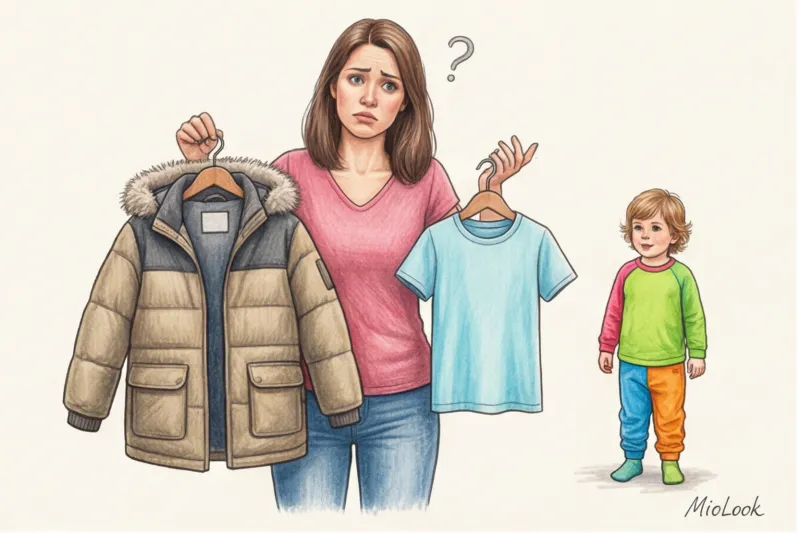
One day, a client—a successful art director from Milan—called me in a state of utter despair. She had just spent almost €900 on a stunning, heavy designer down jacket for her four-year-old son, but the child absolutely refused to wear it. He looked like an adorable, yet completely immobile, Michelin Man, who would be covered in sweat after five minutes of running, and freezing in his own humidity after another ten. It was at that moment that we sat down and completely rethought what the jacket should be like. winter wardrobe for a child.
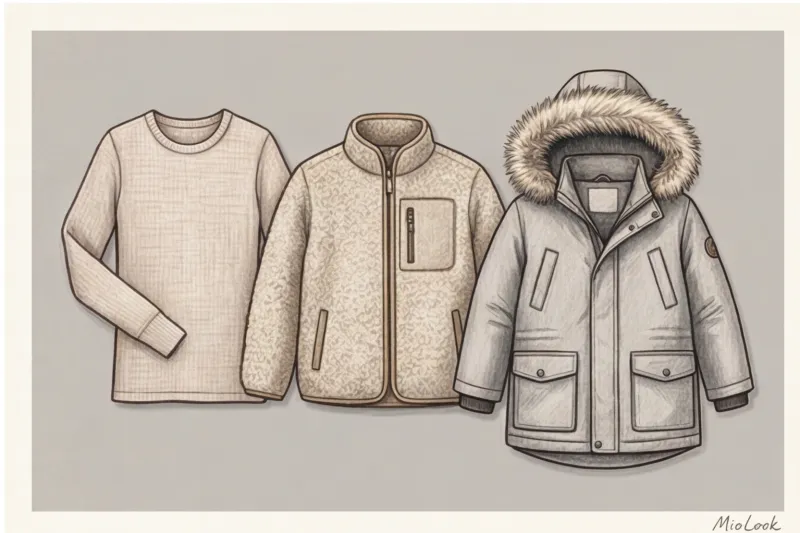
Instead of buying individual, bulky, and incredibly thick items, we turned to an investment approach: creating a high-tech layering system. We discussed the basic principles of this method in more detail in our The complete guide to a children's capsule wardrobe Today, I want to take a detailed look at the anatomy of the ideal winter capsule, one that will not only keep your child healthy but also provide a great return on investment.
Thicker doesn't mean warmer: Debunking the biggest myth about children's winter wardrobe
The most common mistake I see new mothers make is trying to find "that one thick jacket" that will solve all their problems. But physics works differently. Heavy jackets restrict movement, disrupt biomechanics, and lead to overheating. The baby sweats, the moisture stays on the skin, and the slightest breeze guarantees hypothermia.
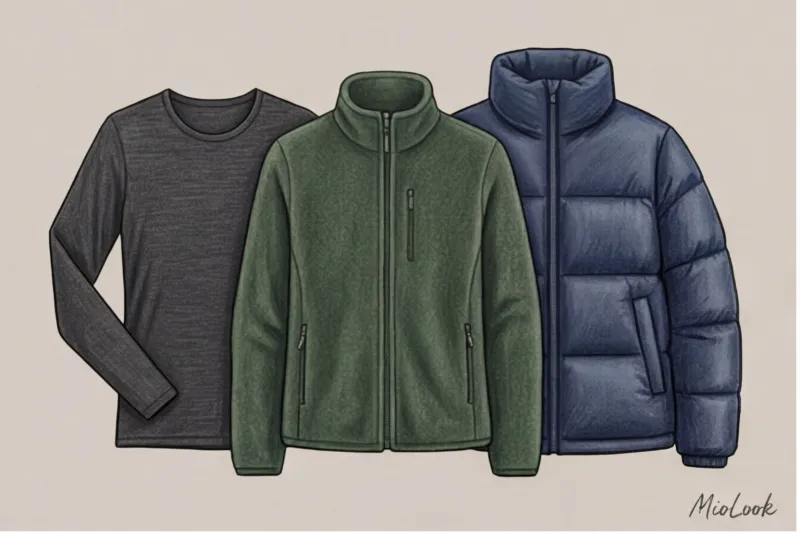
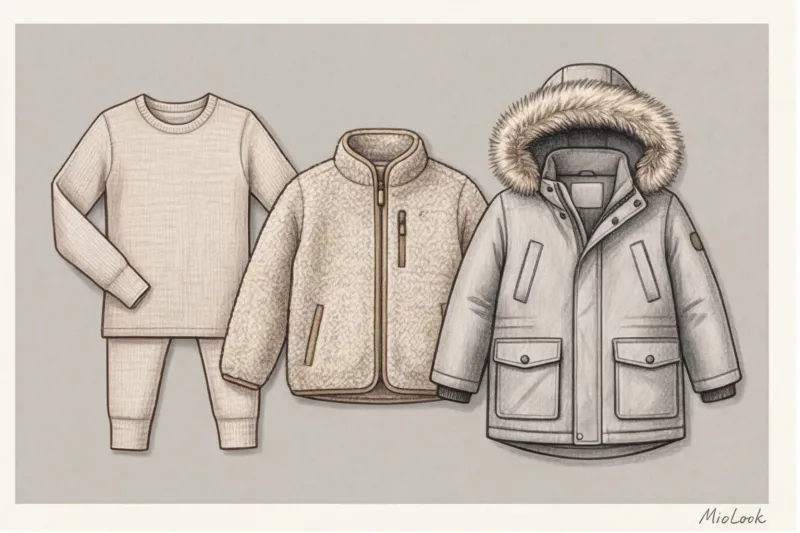
The secret of the European (particularly Scandinavian) approach to children's clothing lies not in the thickness of the fabric, but in the retention of warm air. between Layers. The layering effect creates an air cushion that acts like a thermos. When we replaced that designer €900 down jacket with a well-designed three-layer system (merino wool, high-tech fleece, and a lightweight membrane), the time it took to get ready for kindergarten was cut in half, and the tantrums completely stopped.
Access to MioLook for €0.99 — one-time payment
A smart AI stylist will select the perfect look based on layering and your climate.
Get access — €0.99 onceThe First Layer: Why Cotton Is the Winter Capsule's Main Enemy
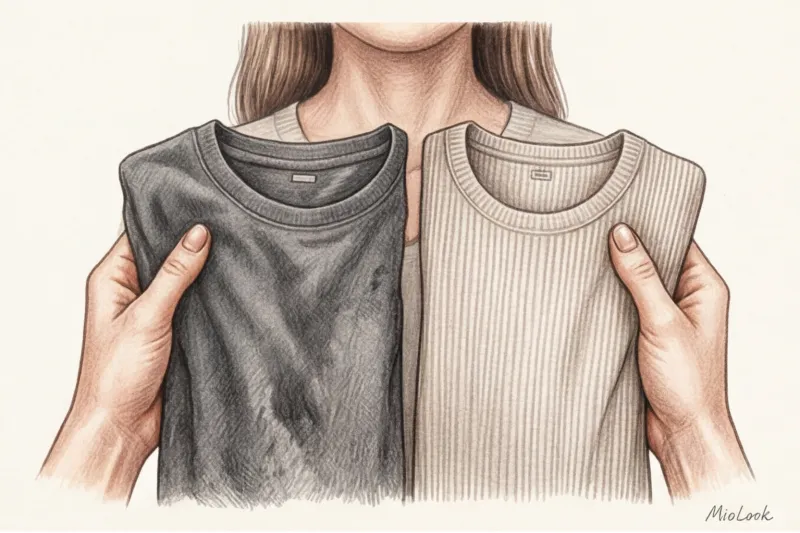
Now I'm going to say something that will shock many parents: put away 100% cotton until summer Despite the universal love for "natural, breathable cotton," it can be dangerous in winter. According to WGSN research (2023) on sports and outdoor materials, wet cotton conducts heat away from the body 25 times faster than dry wool. It absorbs sweat, cools instantly, and stays cool under a jacket.
"A cotton T-shirt under a snowsuit is like an ice pack on your baby's back."
The ideal investment for a base layer is merino wool or a blend of it and silk. Yes, a high-quality set of merino wool thermal underwear will cost around €60–€90. But let's calculate the cost-per-wear. Merino wool has natural antibacterial properties—it doesn't need to be washed after each wear; simply airing it out is sufficient. A child will wear one such set 100 times over the winter (€0.60 per wear). Meanwhile, three cheap cotton long-sleeved T-shirts for €20 each will lose their shape after the fifth wash and leave the child cold.
For super-active children who don't walk, but rather run, a high-quality synthetic material—technological polyester, which instantly wicks moisture away into a second layer—is an excellent alternative.
The second layer: a status investment in warmth and comfort
While the first layer wicks away moisture, the second layer's job is to retain the warmth generated by the child's body. Here, we have two favorites: technical fleece and premium knit.
- Fleece: Forget cheap, squeaky material that irritates your hair. Look for Polartec—a premium fleece that doesn't pill and boasts superior breathability.
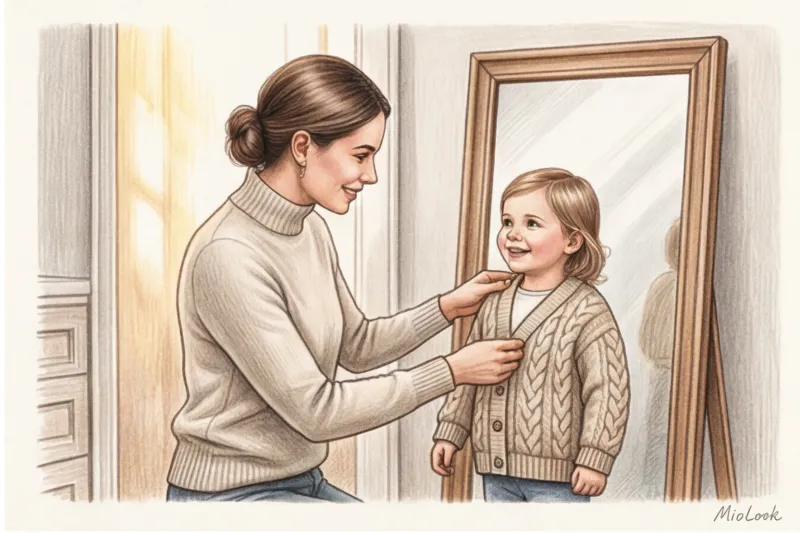
- Knitwear: Knitted cardigans and sweaters. The ideal composition is 70–80% wool (or alpaca) and 20–30% nylon for durability.
When working with premium Italian children's clothing brands, I always emphasize the quality of the yarn twist. A well-cut, tightly knit cardigan made from high-quality yarn (for example, in the €80–€150 range) is a statement piece that looks beautiful at a family dinner and works flawlessly under a jacket. Moreover, such items can be passed down from older to younger children without losing their original appearance.
Ready to get started?
Try a free plan—no commitments. Digitize your kids' wardrobe in just a few clicks.
Get access — €0.99 onceOuterwear: How to Choose Protection That Will Pay for Itself
For children under 4-5, a one-piece snowsuit is ideal—it prevents snow from getting behind their lower back during falls. For older children, I always recommend a separate set (jacket + pants with suspenders), as this allows them to take off the jacket in the car or at the mall.
As a stylist, I teach my clients to read children's outerwear labels as carefully as they would legal contracts. Here are three numbers you must check:
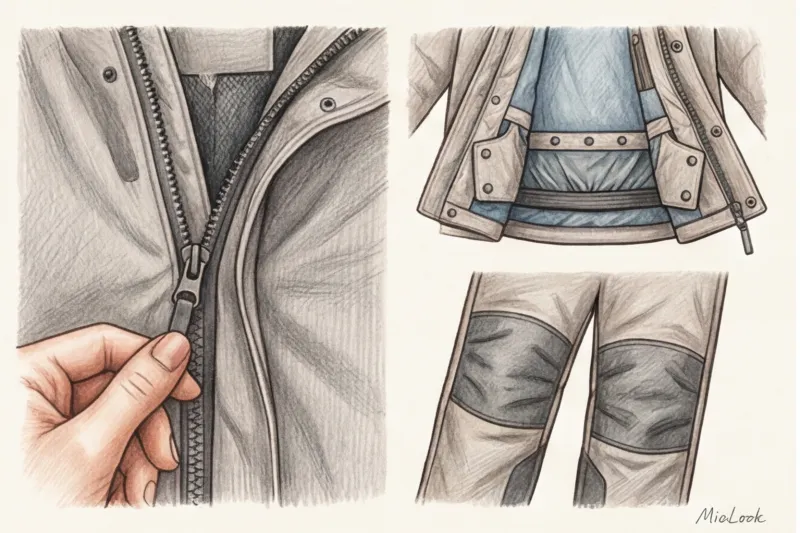
- Water resistance (from 5000 to 15000 mm of water column). A rating of 10,000 mm means that a child can literally sit in a puddle of melted snow and remain dry.
- Vapor permeability (from 5000 g/m²/24h). This is the ability of the fabric to “breathe” and release vapor from the first and second layers to the outside.
- Wear resistance (Martindale test). For active kids, look for a rating of 40,000 cycles on the knee and buttock areas.
Membrane vs. down: which is better?
For temperatures down to -15°C, active walks, hills, and slush, the membrane (Gore-Tex and its equivalents) is unrivaled. It's lightweight, thin, and durable.
When do you really need natural down? Only if you have a baby who sleeps in a stroller, or if you live in a region with severe frosts (below -20°C) without high humidity. Fair warning: Down performs terribly in wet snow—it clumps together and loses its warmth. If you do invest in a down jacket, check the fill power (FP). An excellent level is 600+, while premium is 800+. And never buy cheap down jackets (under €100)—the down will start to migrate after the first wash, and the seams will remain cold.
Premium Accessories: How Details Shape Your Look and Protect You from the Cold
Children's accessories are often the source of savings, often purchased at the supermarket as random hats. This ruins both the capsule's aesthetics and its functionality.
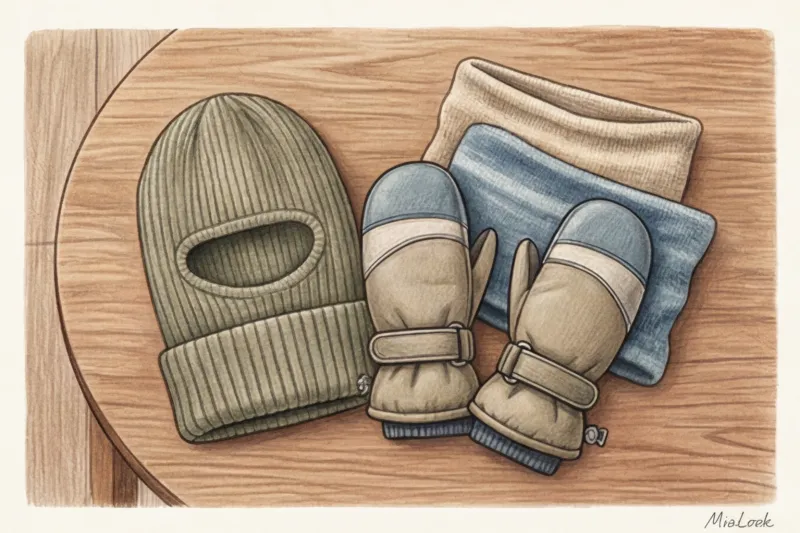
Forget long, bulky scarves—they're dangerous on playgrounds and uncomfortable under a jacket. The ideal solution is a balaclava made of cashmere or merino wool with a cotton lining on the forehead (to prevent itching) and extra padding on the ears. For hands, wear only technical gauntlets with a membrane over thin wool gloves.
The aesthetic of luxurious minimalism in children's clothing is based on a rejection of flashy neon prints in favor of deep, refined shades: wine, emerald, camel, and graphite. Choose a single color palette for accessories, and they will perfectly complement any jacket in your wardrobe.
Winter footwear: the anatomy of warmth and fatal mistakes when choosing
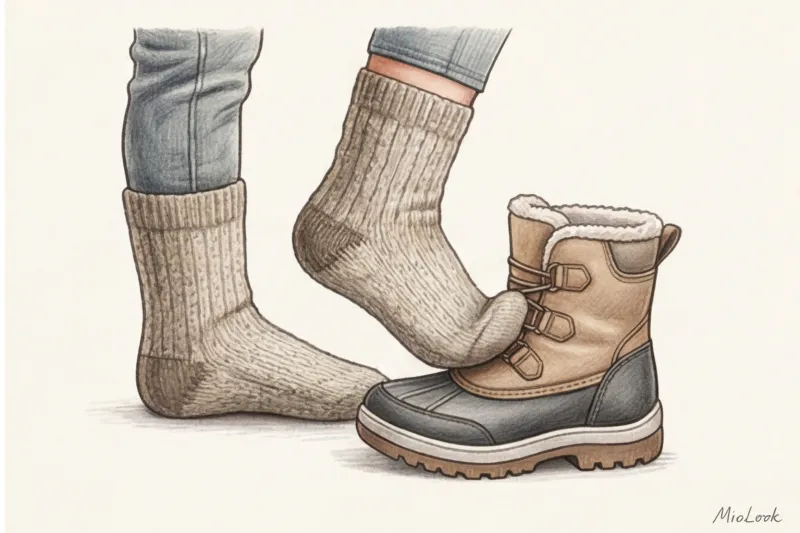
Perhaps the most dangerous myth passed down from generation to generation is: "I'll buy boots two sizes bigger to wear with thick wool socks." During a consultation with a leading pediatric podiatrist in 2024, I received clear confirmation: feet get cold in shoes that are too big. stronger.
Why does this happen? The air gap only functions as an insulator when its volume is optimal—exactly 1-1.5 cm of space. If there's more space, the body simply can't warm this volume of cold air, and the biomechanics of the stride are disrupted, reducing blood microcirculation.
Pay attention to the technological features: a thick thermoplastic elastomer (TPE) sole and a foil-lined insole that reflects cold from the ground and returns warmth to the foot. Separate footwear by function: aesthetically pleasing leather boots with sheepskin lining for trips to friends or the mall, and membrane snow boots (dutiks) for conquering snowdrifts.
The Winter Capsule Matrix: A Checklist for Conscious Parents
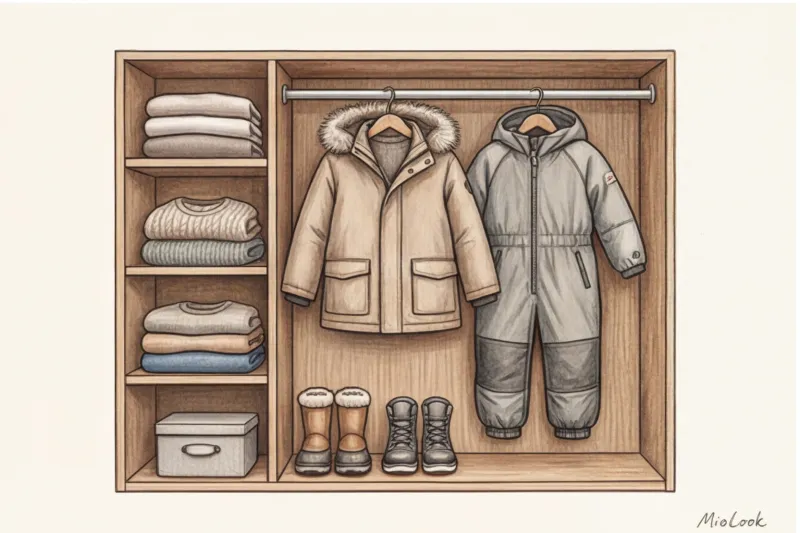
So, how many items exactly do you need for a complete winter capsule? Here's the exact formula that works for 90% of my clients:
- 2 sets of thermal underwear (one in the wash/airing, the other on the child)
- 2 mid-layers (1 fleece sweater for sports + 1 elegant wool cardigan for the city)
- 1 membrane suit (or separate set) for outdoor use
- 1 basic city coat or down jacket (optional, for going out)
- 1 warm hat-helmet + 1 beanie (for the car)
- 2 pairs of waterproof mittens
Color formula: 3 neutral shades (e.g., navy, gray melange, beige) + 2 accent shades (mustard, burgundy). To avoid shopping chaos, I recommend clients digitize their baby items in the app. MioLook This eliminates the typical problem of buying a third gray sweater on sale, completely forgetting there aren't any matching basic trousers. Visualizing the capsule collection on your phone before going to the store saves hundreds of euros.
Your perfect wardrobe starts here.
Join thousands of users who save time and money every day with MioLook's smart capsule planner.
Get access — €0.99 onceCaring for your tech: How to preserve your investment
An investment approach differs from mindless consumption by proper care. You can buy the best membrane coverall for €200, but if you wash it with regular dry detergent, you'll ruin it forever. Powder crystals clog the membrane's micropores, and it stops "breathing."
Use only liquid detergents for membrane fabrics and wash at a temperature no higher than 30°C without spinning. Wash merino wool with special shampoos containing lanolin and dry horizontally on a towel.
With proper care, premium items remain in perfect condition. At the end of the season, they can easily be resold on resale platforms for 50-60% of the original price. Therefore, the real cost of owning a quality item is lower than regularly purchasing cheap, disposable alternatives.

Creating a winter wardrobe for your child shouldn't be a game of roulette or a budgetary test. Dress your children not according to the weather outside, but according to their activity level. Invest in the right base layer, rely on high-tech fabrics, and remember: warmth isn't about the weight of the jacket; it's about proper air circulation, which we create with our own hands.