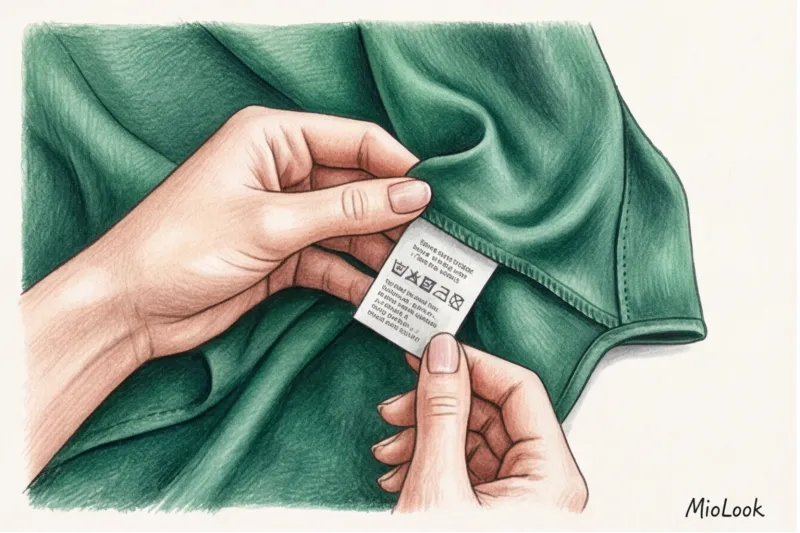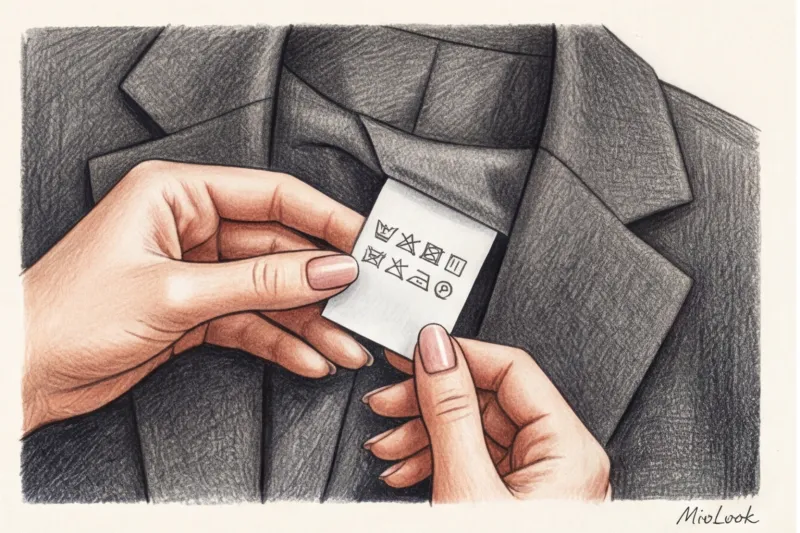
How many euros do you throw into your washing machine drum every month? After 12 years as a personal stylist, I've learned one thing: it's not cheap fabric that ruins a wardrobe, but improper care. When we buy excellent basic trousers at COS or a silk blouse at Massimo Dutti, we look at the price tag. But the real "financial contract" with the garment is sewn on the inseam. The right one Decoding laundry symbols on clothes It's more than just a household skill. It's your primary budgeting tool.
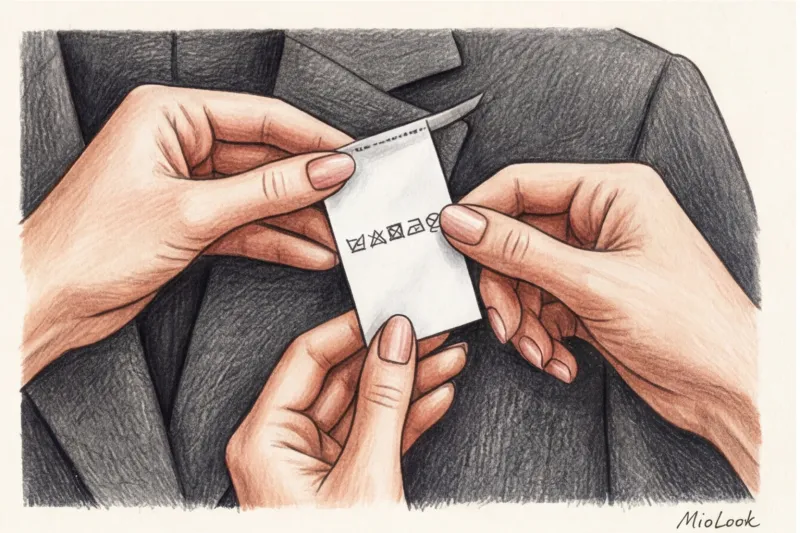
We talked in more detail about the philosophy of taking care of things in our the complete wardrobe care guide And today I want to show you how to read these encrypted symbols through the eyes of a stylist and closet auditor.
Access to MioLook for €0.99 — one-time payment
A smart AI stylist will select the perfect look from your items and help you organize your smart wardrobe.
Get access — €0.99 onceWhy laundry symbols on clothes are your financial insurance
I had a case in point: a client bought a luxurious, heavy viscose suit from Massimo Dutti for €150. The fit was perfect, the sheen was exquisite. After the first wear, she threw the pants in the washing machine at her usual 40 degrees instead of the recommended 30, and even set the spin cycle to 1000 rpm. The result? The fabric shrank two sizes, the seams were distorted, and the fibers were covered in a stiff fuzz. €150 was reduced to a rag in a single 45-minute cycle.
The European approach to style has a golden concept: Cost-per-wear (CPW). Divide the price of an item by the number of days you wear it.
If you bought basic wool trousers from &OtherStories for €100 and ruined them by improper washing after five wears, the cost per wear is €20. That's unreasonably high. But if you care for them according to the instructions and they last three years (say, 100 wears), the CPW drops to €1. That's where the real savings lie.
Laundry Symbols: Decoding the GINETEX Basic Alphabet
Have you ever noticed that clothing tags from Paris, Stockholm, and Tokyo look exactly the same? Thanks to GINETEX (International Textile Labeling Association) standards and the ISO 3758 protocol. This visual language was created back in the 1960s to overcome language barriers.
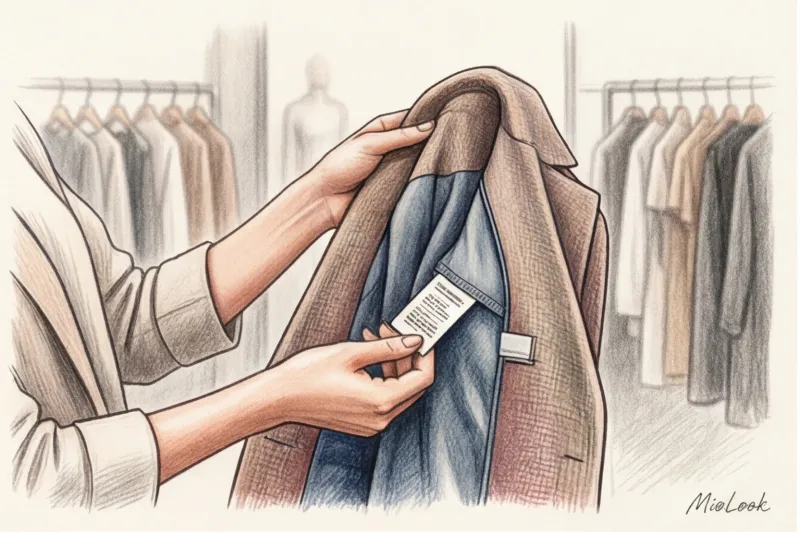
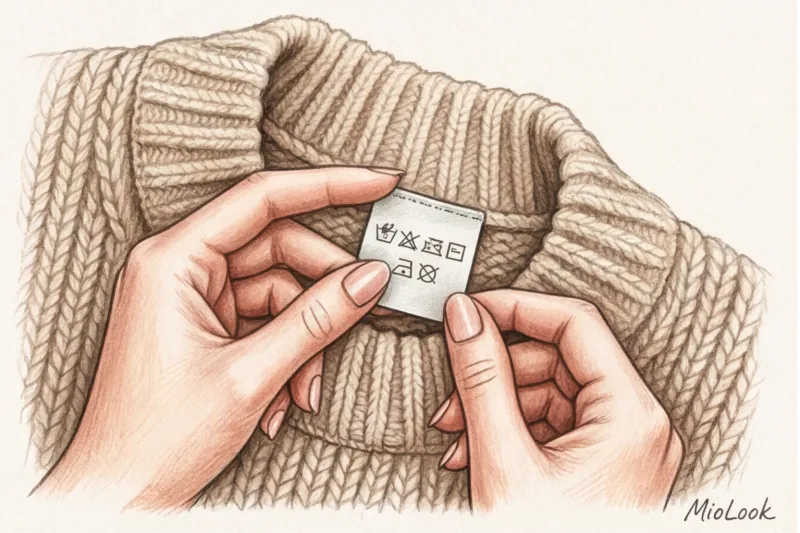
The logic for reading a label is always the same—it's read from left to right, like a book. First comes washing, then bleaching, drying, ironing, and finally professional cleaning. As a stylist, I always check the inside of a garment in the fitting room. If an inexpensive everyday viscose top for €30 requires only hand washing and drying flat, I know the client won't bother with it, and it will simply end up in the laundry basket.
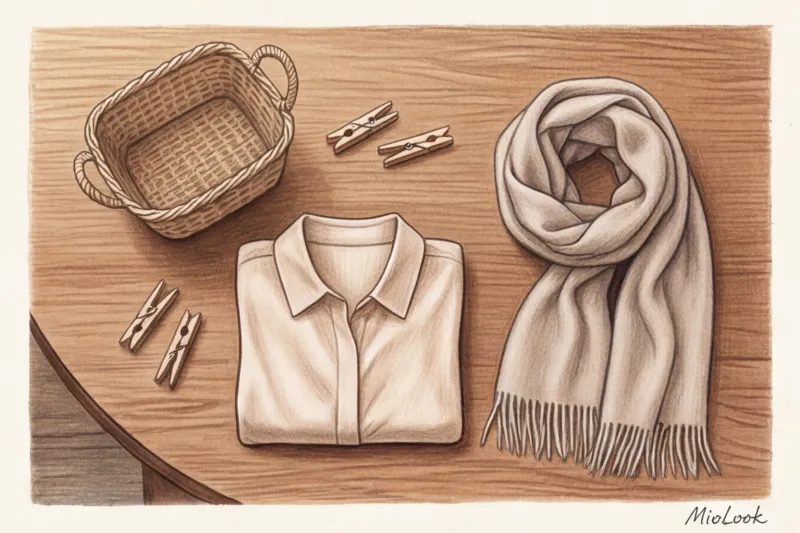
Wash (Base): Temperature and Delicates
The biggest misconception: the numbers in the basin (30, 40, 60) are a recommendation. No, it is absolute temperature maximum If the label says 40, it means that the item will wash even better and is safer for the fibers at 30 degrees.
- A regular basin: wash without restrictions (cotton with a density of 180 g/m², linen).
- A basin with one line at the bottom: Delicate cycle. The mechanical impact of the drum should be reduced, and the spin speed should not exceed 800 rpm.
- A basin with two lines: extra delicate cycle (for example, for mixed wool).
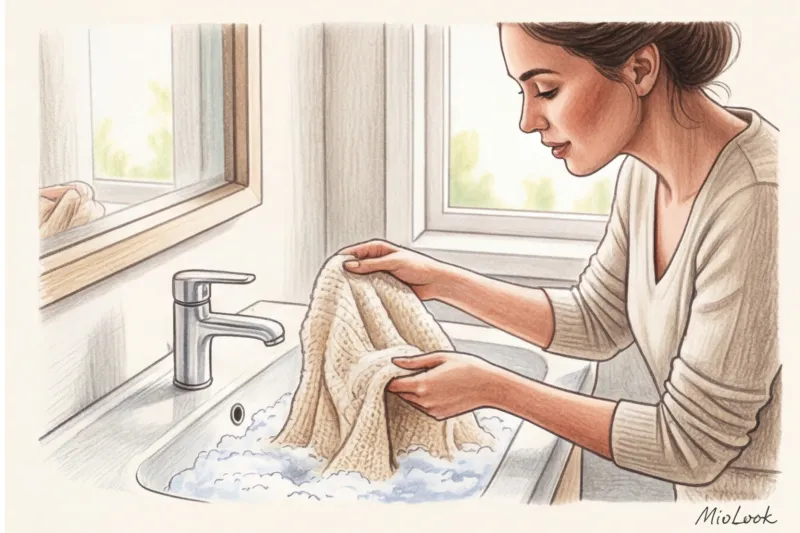
- Hand in the basin: Hand wash only. Temperature not exceeding 30°C. Do not wring or twist.
If you are not sure, How to wash delicate items , such as silk or fine modal, always choose cold water.
Drying (Square) and Ironing (Iron): How to Avoid Ruining Your Silhouette
Drying is responsible for maintaining the garment's shape. A square with a circle inside means it's tumble-dried. The dots inside the circle indicate the temperature (one for delicate, two for standard).
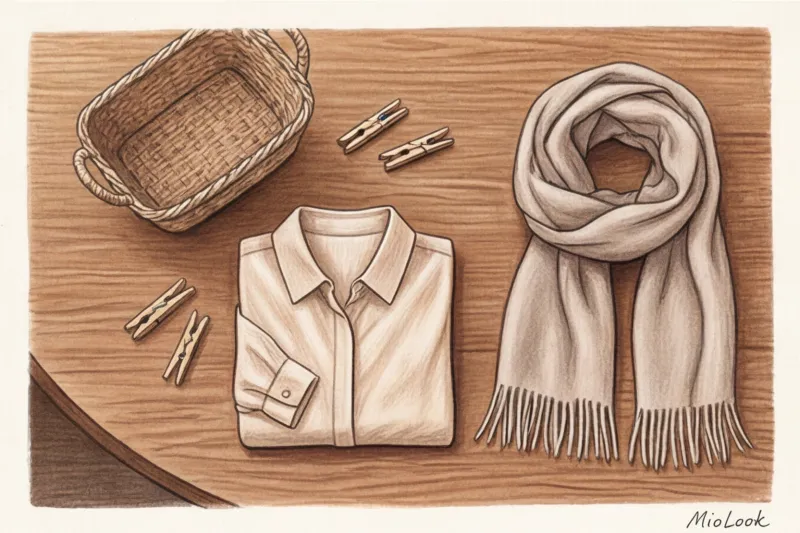
But for the premium mass market, squares without circles are more important:
- Square with a horizontal line: Dry only flat in a straightened out state (otherwise the knitwear will stretch under its own weight).
- Square with vertical lines: hang dry without spinning.
- Oblique lines in the corner: Dry only in the shade, direct sunlight will burn the pigment (especially critical for black cotton).
The dotted iron works based on the heat resistance of individual fibers. One dot (up to 110°C) is for synthetics, silk, and delicate viscose. Two dots (up to 150°C) are for basic wool and blended fabrics. Three dots (up to 200°C) are for heavy cotton and linen.
Dry Cleaning Myth: When You Can Ignore the Round Symbol on the Tag
It's time to reveal the biggest industry secret. The letters P (Perchloroethylene) and F (Freon) inside a circle are technical instructions for the dry cleaner, not for you. But the most interesting thing concerns the empty circle symbol (or the circle with a cross) – "dry clean only."
European mid-market brands (Zara, Mango, & Other Stories) often slap this symbol on perfectly ordinary items made of polyester or thick wool. Why? It's their legal defense. It's cheaper for the brand to say "dry clean only" than to pay for mass returns from customers who washed a wool jumper at 60 degrees.
Personal experience: I save over €300 a year on dry cleaning by hand-washing some of my tumbled items. Pure wool sweaters and heavy viscose-polyester pants handle a delicate hand wash with shampoo very well.
But there is a hard limitation (when this trick DOESN'T work):
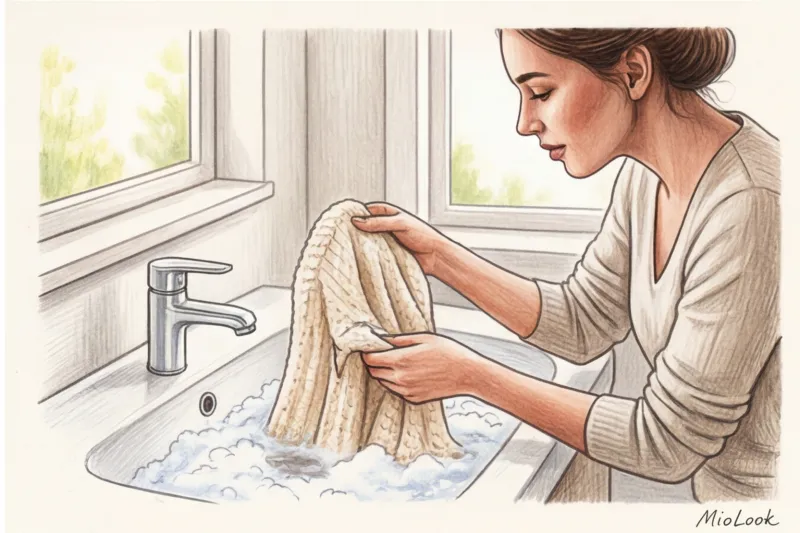
Never wash items with a rigid frame in water. If it's a structured jacket with shoulder pads, the water will dissolve the interlining (the layer inside the lapels), causing the jacket to bubble, which no iron can fix. Also off-limits at home are natural velvet, complex items with acetate linings, and pleats.
Your perfect look starts here
Join thousands of users who look flawless every day with MioLook. Upload your items, and we'll show you how to wear them.
Get access — €0.99 once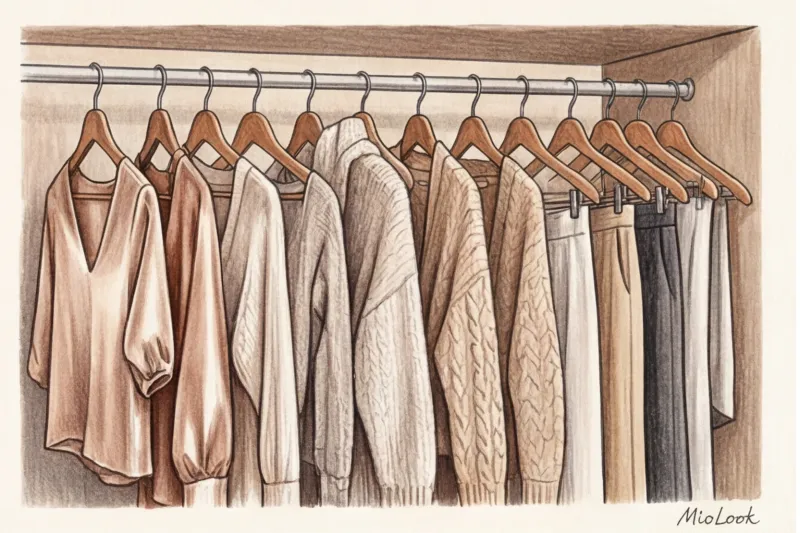
Mass-market features: caring for delicate fabrics from Zara and COS
According to a McKinsey study (2024), the share of viscose and lyocell in mid-market brand collections has grown by 40% over the past five years. This is environmentally friendly, but it requires new skills.
Viscose: When wet, viscose loses up to 50% of its strength, becoming stiff and brittle. The mechanical friction of the drum will damage a viscose blouse faster than high temperatures. Wash it in a spacious bag at the lowest setting, and after washing, gently stretch it out lengthwise by hand while it's still damp.
Wool blend (with acrylic): The main problem with these sweaters is pilling. This occurs not due to poor quality, but rather due to the friction of fibers of different densities. Turn these sweaters inside out and wash them with liquid detergent. The powder granules act as an abrasive, causing pilling.
Modal and lyocell (Tensel): Fabrics with a beautiful peach finish. If you wash a lyocell shirt at 1000 rpm, it will develop whitish creases that won't iron out. Reduce the spin speed to 600 rpm.
Katarzyna's Checklist: 5 Steps to Machine Washing
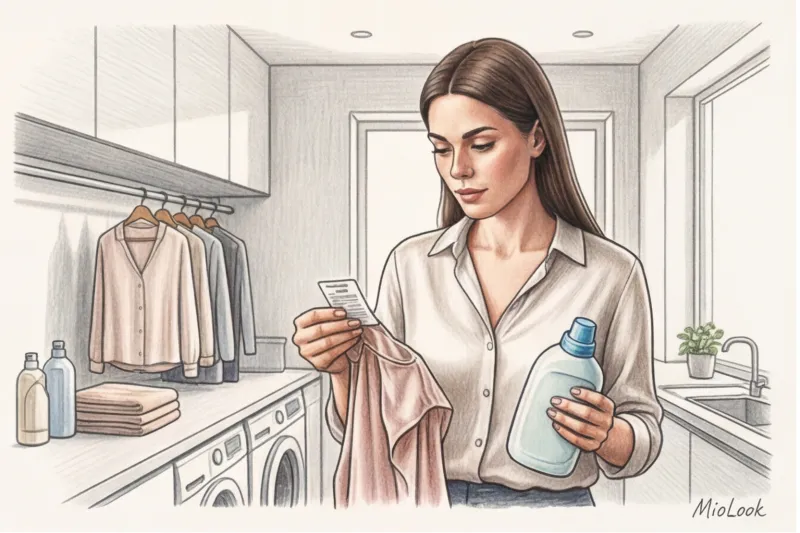
Instead of sighing over ruined clothes, integrate this five-minute routine before every wash cycle. If you are forming capsule wardrobe , gentle care is the basis.
- Sorting by texture, not just by color. Never wash heavy jeans (especially those with heavy fittings) with thin cotton t-shirts. The friction of the denim will wear the jersey through to holes in a couple of months.
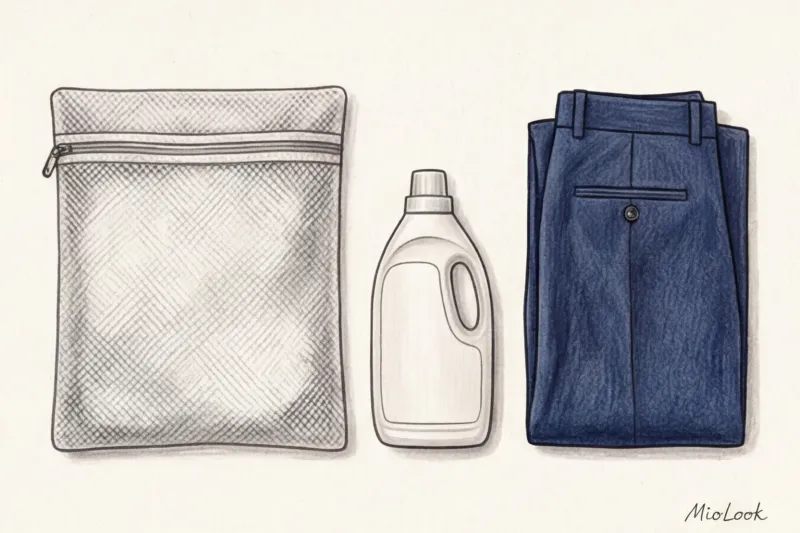
- Back side and zippers. Turn items inside out to preserve the outer layer. Keep all zippers and buttons closed to prevent them from catching on adjacent items.
- Total protection. Use mesh laundry bags. They're an absolute must-have for any knitwear, lingerie, or items with delicate trim. Basic knitwear wardrobe can't live long without them.
- Liquid products. Avoid using powder for dark and mixed fabrics. Liquid gel doesn't leave white streaks and is more gentle on pigment.
- Turnover down. For 80% of everyday laundry (unless it's bed linen or towels), spinning at 600–800 rpm is sufficient.
Organize your wardrobe to wash less and wear longer
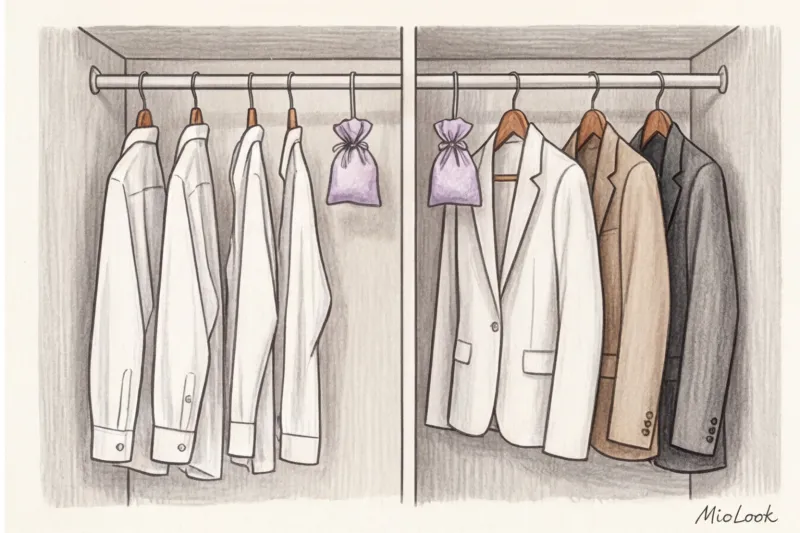
The best wash is the one you never did. There's an unspoken rule in the industry: clothes need to rest. The fibers of natural fabrics (especially wool and heavy cotton) require 24 to 48 hours to regain their original shape after wear.
If you've worn a wool jacket or a quality jumper once and it has no physical stains, don't throw it in the laundry basket. Hang it on a suitable hanger (never use thin metal hangers from the dry cleaner, as they stretch the shoulders) and let it air out in the room, preferably near an open window. Fresh air is excellent for neutralizing odors.
For conscious wardrobe Special textile refresher sprays based on essential oils work great. They refresh items and allow you to postpone washing for a few more washings. And steaming kills bacteria just as well as washing machines.
Ready to get started?
Try the MioLook plan for free—no commitments required. Organize your closet virtually.
Get access — €0.99 onceEvery time you want to cut the "prickly paper" from the seam of your new blouse, stop for a second. The laundry symbols on your clothes are a guide to the return on your investment in style. Read them, reduce your spin cycle, invest in liquid detergents, and your basic wardrobe will look like it came from an expensive boutique even after three years of heavy wear.