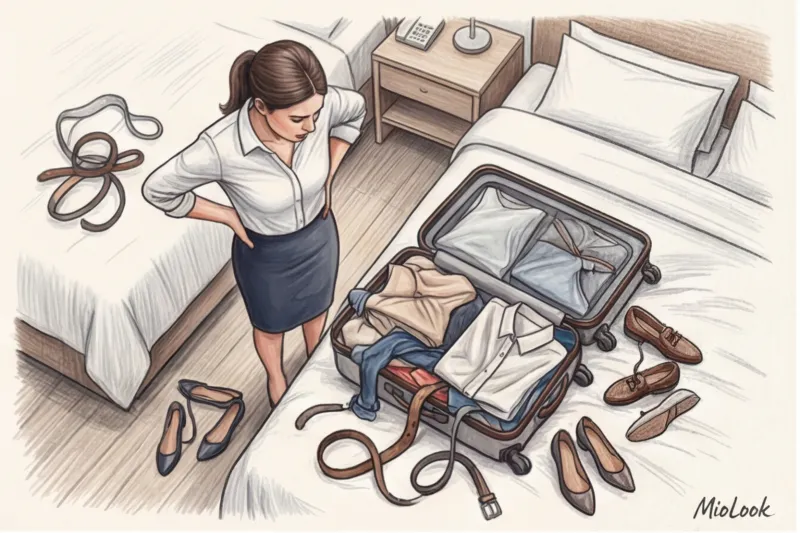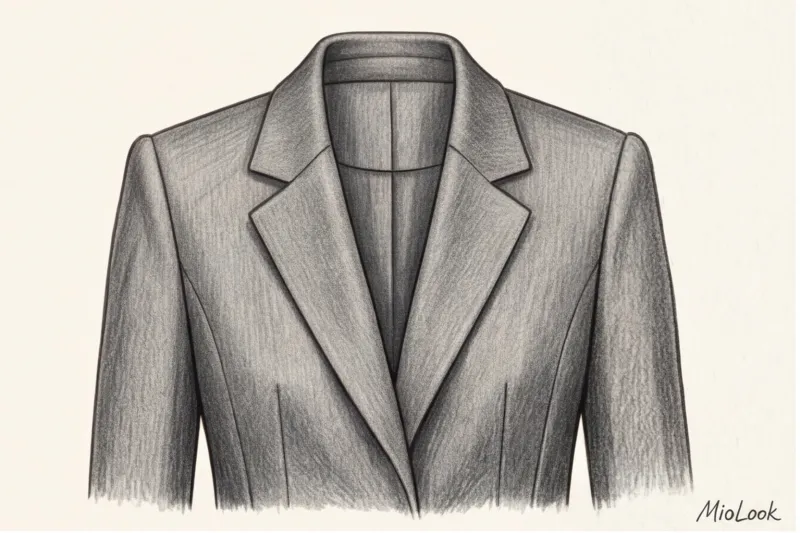
Imagine this: you're flying to Milan for crucial negotiations. You open your suitcase in your hotel room and pull out your immaculate €200 wool Massimo Dutti jacket, but it looks like you've slept in it for a week. The lapels are askew, the shoulders are dented, and the fabric is covered in stiff creases. The meeting is exactly one hour away. Panic, attempts to iron the garment with the hotel iron, shiny scorch marks on the fabric... Sound familiar?
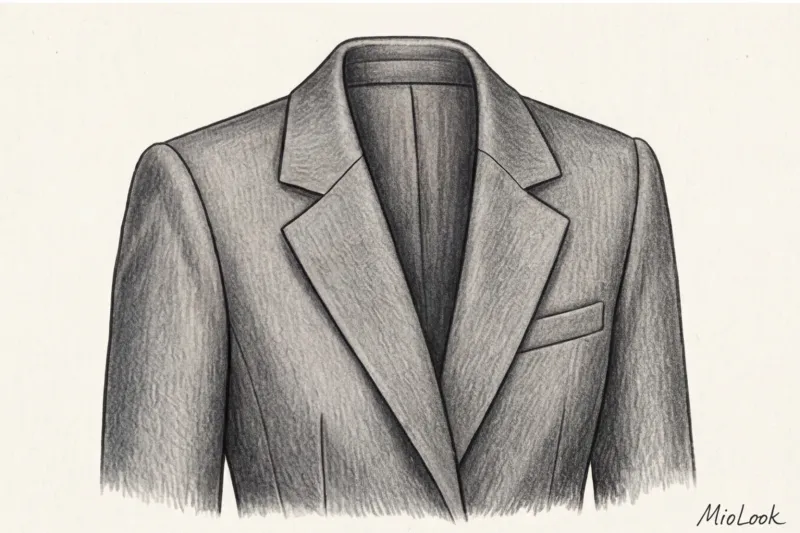
The standard suitcase-packing life hacks that migrate from blog to blog are written either for T-shirts or men's jackets. But women's tailoring operates according to different rules. In 12 years of working as a personal stylist, I've learned one thing: how to pack a jacket in a suitcase without wrinkling isn't a matter of neatness, it's a matter of understanding the garment's geometry.
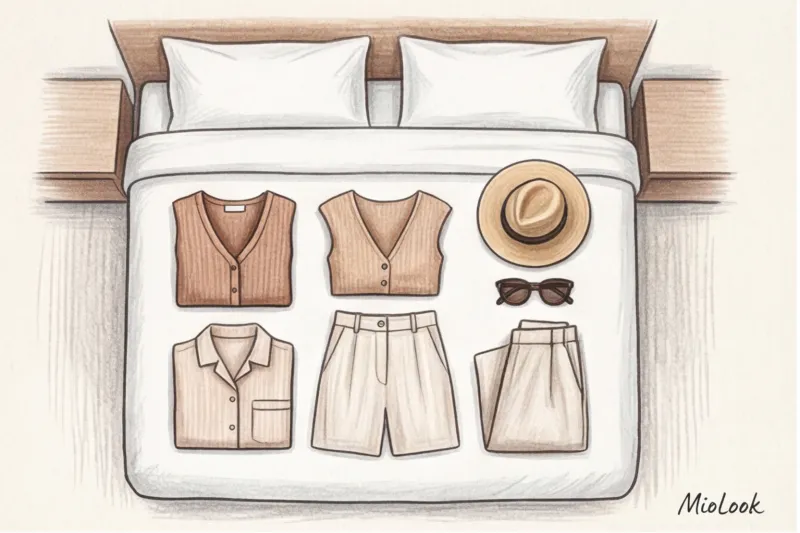
Before you start packing, it's important to think through the basics of your trip. We covered this in more detail in our The complete capsule travel guide for women , where we've collected universal image formulas. Today, we'll discuss exclusively the technique of transporting complex, structured items.
The Anatomy of a Women's Jacket: Why Standard Internet Life Hacks Ruin Your Clothes
According to the Fashion Institute of Technology (London College of Fashion, 2023 study), over 60% of classic clothing deformations occur not during wear, but rather during improper storage and transportation. Why does this happen?
Unlike a men's jacket, which often has a more straight cut, a women's jacket is a complex architectural construction. To ensure the fabric fits the figure, designers use darts, raised seams, and a sophisticated interfacing system.
The main invisible enemy of the traveler is dublerin This is the adhesive backing found inside the collar, lapels, and cuffs. When you mindlessly bend a structured jacket from COS or & Other Stories, you literally break this framework. Under extreme pressure in a suitcase, the adhesive backing develops microcracks. A bubble or crease appears in the fabric that no iron can remove—the garment is ruined forever.
A soft knit cardigan and a stiff wool jacket require radically different approaches. Treat the jacket not as fabric, but as a fragile plastic structure.
The Rolling Myth: How to Kill a Business Suit in One Flight
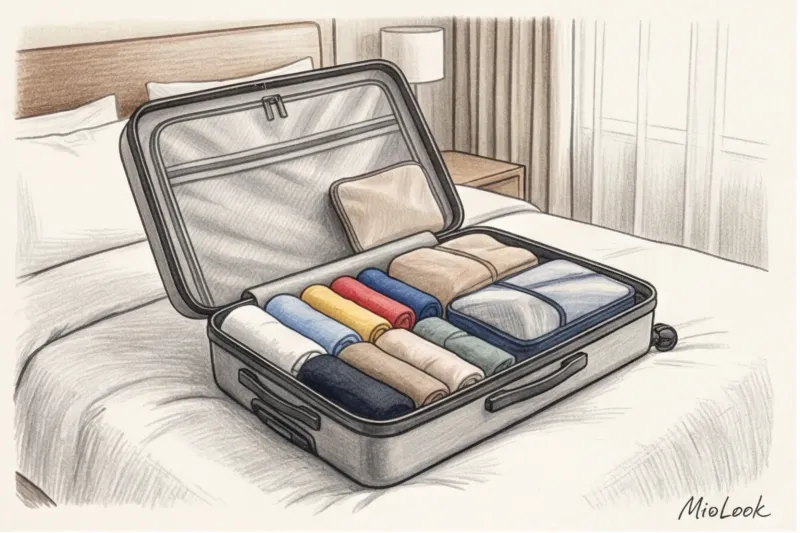
Let's settle this once and for all: the Marie Kondo method (tightly rolling clothes into rolls to save space) is an absolute disaster for a business wardrobe. Yes, it's a brilliant solution for jeans, basic T-shirts, and underwear. But for a jacket, it's a death sentence.
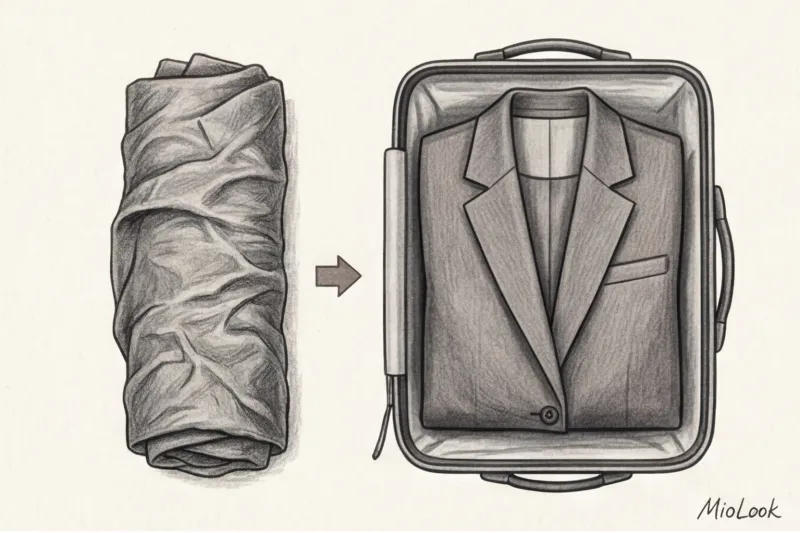
One of my clients, the founder of an IT startup, once "saved space" before a pitch to investors in Berlin. She tightly rolled up her favorite suit, made of heavy crepe. When she unrolled it, the shoulder pads were twisted at an unnatural angle, and the lining wrinkled, pulling the main fabric taut. She had to wear a basic turtleneck to perform because the jacket was beyond repair.
When you twist other items under pressure, you create dozens of sharp corners where they shouldn't be. The lining (usually viscose or polyester) wrinkles three times faster than the main fabric, and it's this lining that ultimately "pulls" the entire silhouette.
Access to MioLook for €0.99 — one-time payment
A smart AI stylist will help you digitize your wardrobe and select the perfect outfits for your business trip, so you only pack what you'll actually wear.
Get access — €0.99 onceHow to Fold a Jacket in a Suitcase Without Wrinkling: 3 Stylist's Tips
The key rule for proper packaging is to minimize folds and create soft cushions. Fabric should not rub against itself, and unavoidable folds should be cushioned with soft clothing (such as T-shirts).
Method #1: Shoulder to Shoulder (for stiff jackets and oversized clothes)
This is the gold standard for flight attendants and frequent travelers. This method is ideal for heavy wool jackets (€150 and up), where maintaining the shoulder line is crucial.
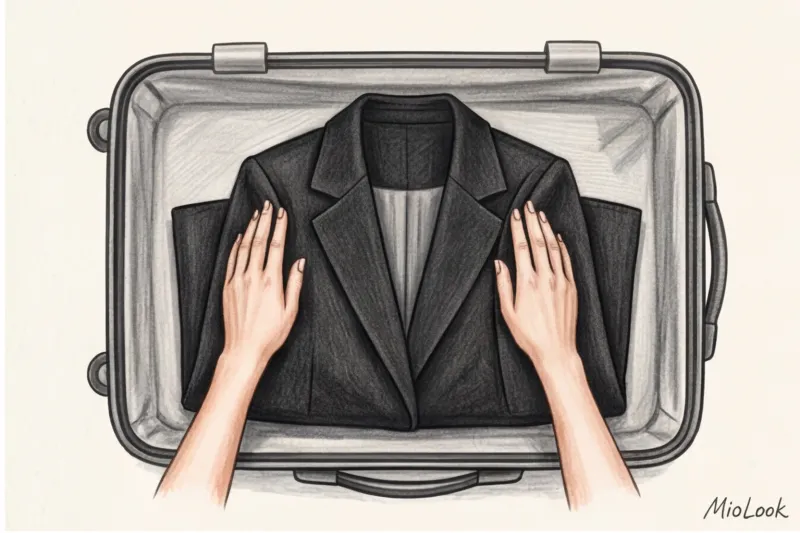
- Turn one shoulder of the jacket inside out (don't touch the sleeve, turn only the shoulder itself with the shoulder pad).
- Place the second (non-inverted) shoulder inside the first. Now the jacket is folded in half along the back, and its lapels fit perfectly together.
- Align the lapels so they don't curl.
- Place a pair of soft T-shirts in the center (where the horizontal fold will be).
- Fold the jacket in half so that the T-shirts are on the inside.
This method prevents the shoulder pads from deforming because they protect each other.
Method #2: "Capsule pillow" (for soft tissues)
If your jacket is made from a viscose blend, a fine summer wool (like those in H&M Premium collections), or has a soft construction without stiff shoulders, use the wrapping technique.
The trick is to avoid any hard folds. You take a "core"—a stack of soft items (sweaters, knit tops, underwear in an organizer). Lay the jacket face down on the bed, with your arms folded over the back. Place your soft "core" in the center, and literally wrap the jacket around it. The large bend radius prevents the fabric from creasing.
Method #3: Garment bag in carry-on luggage (for premium fabrics)
Did you know you can use a soft garment bag inside a regular cabin-size suitcase? It's my favorite trick for really expensive suits.
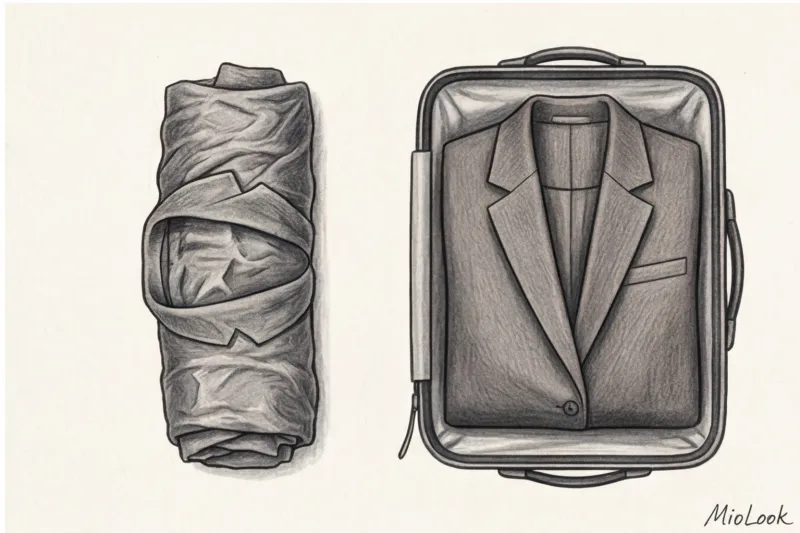
You leave the suit on a hanger inside a thin travel garment bag. You pack everything into the suitcase, filling it to the brim. And on top, as the very last layer, you place the garment bag folded in half. An important nuance: Never use heavy wooden hangers when traveling—they'll crush the fabric. Use thin but durable plastic or velvet hangers.
Perfect Wraps: How to Style Business Trousers and Skirts
We've sorted out the jacket, but wrinkled trousers will ruin the look just as much. The physics of creases is simple: creases appear where there's a sharp bend under the pressure of weight. Our goal is to remove that weight.
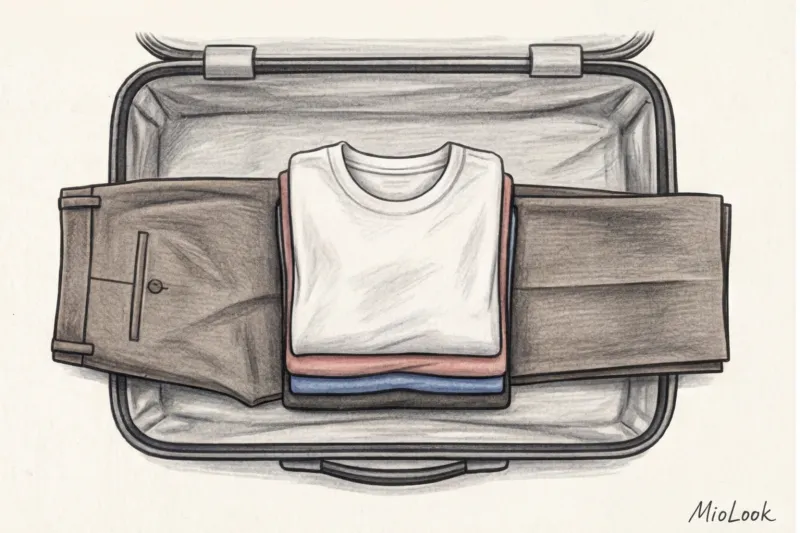
I use the overlap technique:
- Place the trousers at the very bottom of the suitcase so that the top part of the trousers lies inside and the legs hang freely outside the suitcase onto the table.
- Start placing the rest of your things on top (cosmetic bag, shoes in covers, t-shirt rolls).
- When the suitcase is almost full, fold the hanging legs of the trousers up, covering the entire stack.
If you're transporting a silk skirt or a pencil skirt made of delicate fabric, place regular tissue paper between the layers. The paper will absorb any friction, keeping the fabric smooth.
Fabrics Decide: Which Suits Forgive Mistakes During Shipping?
Trust me, 80% of your success in maintaining your appearance depends not on how you fold your suit, but on what it's made of.
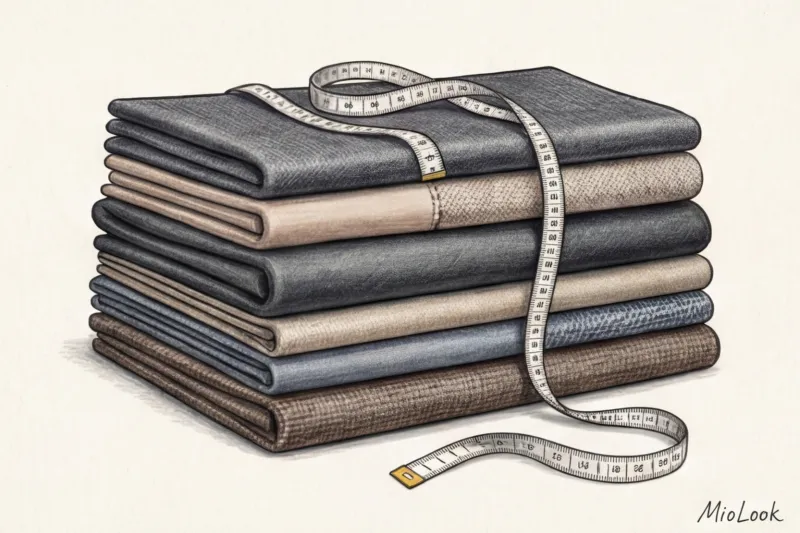
If you regularly fly on business trips, look for the following mark on the tags: High-Twist Wool or Super 100s / 120s According to the international agency WGSN (2024 Travelwear Report), highly twisted yarn acts like a spring: it straightens out on its own in a humid environment in just 2-3 hours. Such suits are often found in the mid-price range (€150-€250).
- Synthetics (blends with polyester and elastane): It's a double-edged sword. Mass-market suits (Zara, Mango for €60-€90) with a 50%+ polyester content are virtually wrinkle-free in a suitcase. But they're incredibly hot and uncomfortable during a long flight or stressful negotiations.
- Viscose: It wrinkles a lot, but it steams out in seconds. A good compromise for summer trips.
- Linen and thick cotton: Absolutely not for airplanes. Save your linen suits for the office in your city. You won't be able to iron them in a hotel without a high-pressure iron.
Your perfect look starts here
Not sure which items go best together? Take a photo of your clothes, and MioLook will create stylish outfits for you in just a few clicks.
Try MioLookRescue plan: what to do if the suit is damaged
Sometimes miracles don't happen: your flight was delayed, your suitcase was thrown onto the conveyor belt, your things were packed too tightly. You take out your jacket, and it's wrinkled. What should you do?
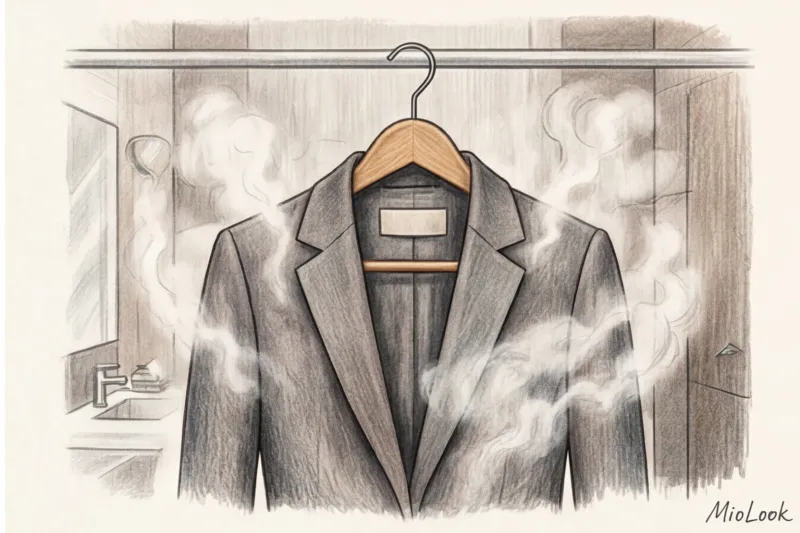
The main rule for a stylist: never touch a business suit with a hotel iron! The soleplates of these irons are often coated with carbon deposits, and rusty water pours out of the holes. One wrong move and you'll leave a cheap, shiny mark (lasa) on the fabric that's impossible to remove.
Instead, use the "tropical shower" technique:
- Hang your suit in the bathroom on the correct hanger (not by the loop on the hook!).
- Turn the shower on to maximum temperature, close the door and leave for 15 minutes.
- Turn off the water and let the suit hang in the wet steam for another 10 minutes.
- Be sure to hang the item in a dry room with an open window for 30-40 minutes until completely dry. If you put on a suit that's damp from steam, it will wrinkle within five minutes.
When this advice does NOT work: A tropical shower is powerless against 100% linen, thick cotton, and heavy denim. It only works on wool, viscose, and silk.
If you travel frequently, invest in a compact handheld steamer (good models start at €40). It's the best investment in your business image.
Checklist: Packing a Suitcase with a Business Suit in 15 Minutes
I love systems and algorithms. My clients use this checklist before flights to London or Milan. The whole thing takes no more than 15 minutes.
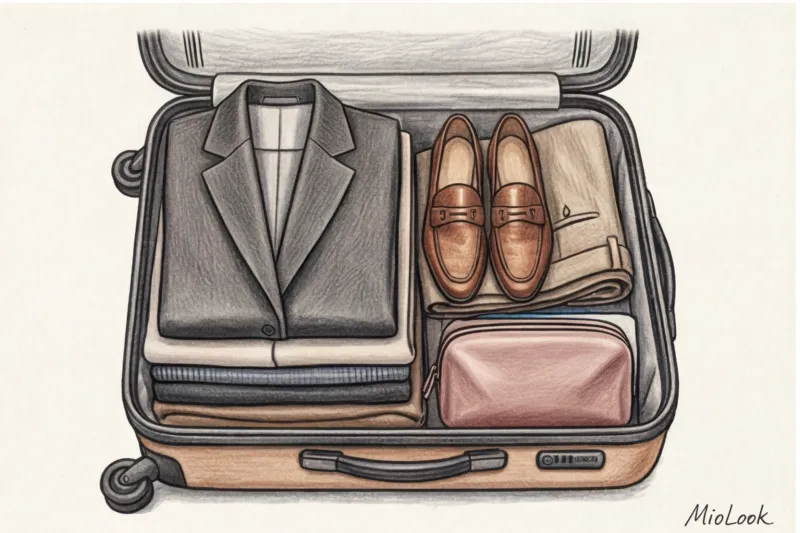
- Preparation: Button up all the buttons on your jacket, check and empty your pockets (a pen left in a pocket can dent the fabric).
- Layer 1 (Base): Place shoes (in bags), a cosmetic bag, and thick jeans on the bottom between the ribs of the suitcase. Create a flat surface.
- Layer 2 (Bottom Buffer): Lay out the trousers with the edges hanging down (overlapping method).
- Layer 3 (Filling): Place knitwear, underwear, and rolled-up T-shirts.
- Layer 4 (Closing the Buffer): Roll the legs of your trousers over the items.
- Layer 5 (Top): Place the jacket shoulder-to-shoulder. It should be on top, with nothing pressing down on it!
The golden rule: your suitcase should be packed tightly, but not too tightly. If things move around freely inside, they'll get crushed from friction. If the lid closes only when you sit on it, they'll get crushed from compression.
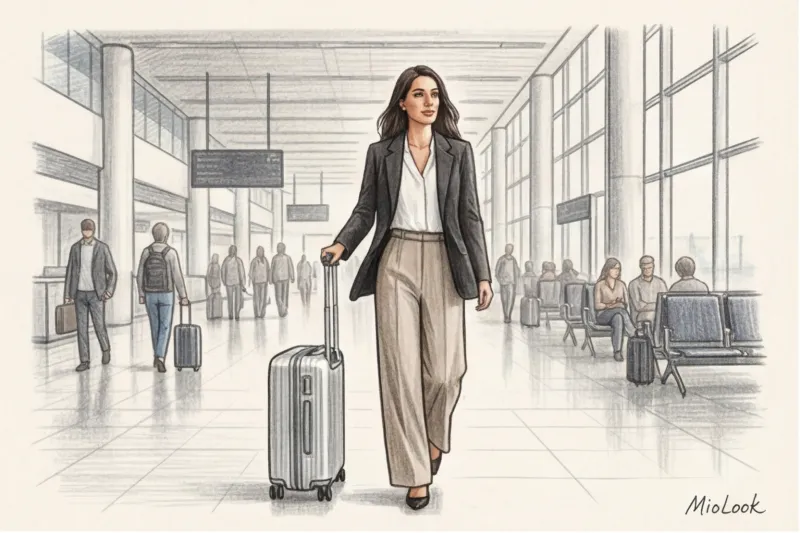
Maintaining a flawless appearance on a business trip isn't magic, but rather simple physics and knowledge of fabric properties. Next time you're packing, don't try to roll your jacket into a tube. Spend three minutes on the "shoulder to shoulder" method, and upon arrival, you'll have an extra hour for a cup of coffee instead of struggling with the hotel iron.