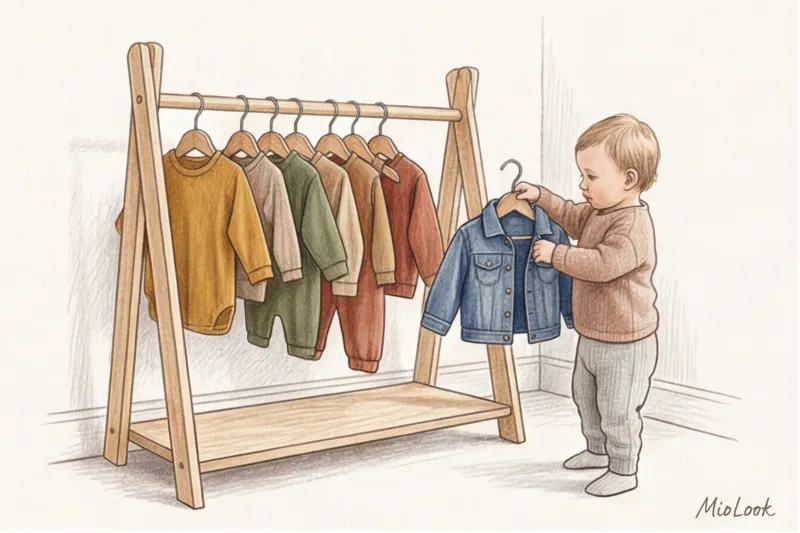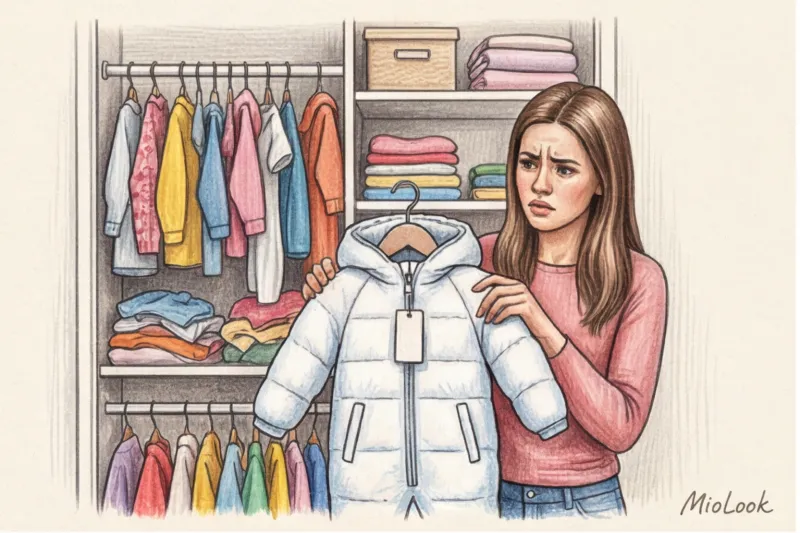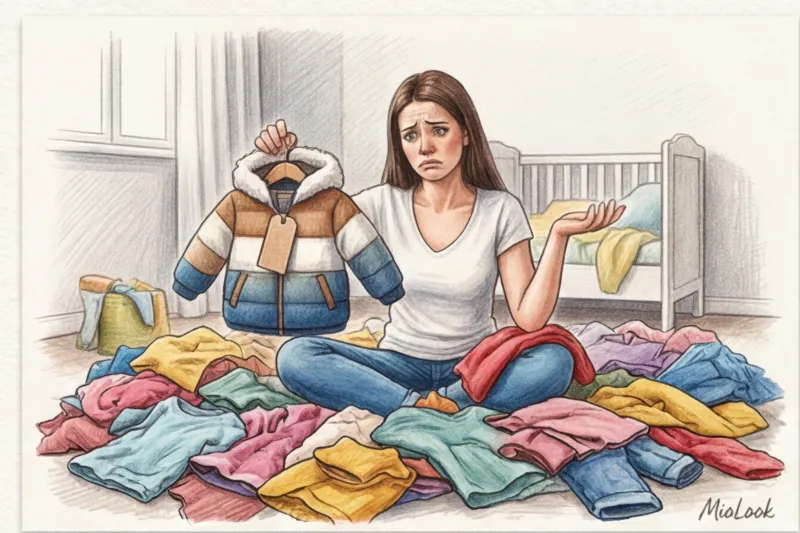
Three brand-new winter overalls. With tags. In perfect shades of mustard, deep blue, and powder. My client, a mother of two children close in age, sat on the floor in front of this treasure and cried. Why? Because both children had already outgrown them while the overalls were happily waiting their time in a vacuum-sealed "seasonal bag" under the bed.
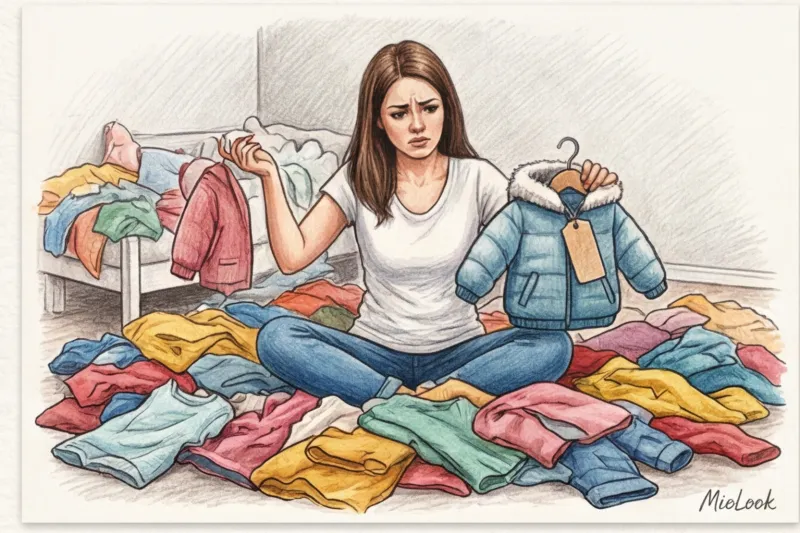
If you are looking for an answer to the question, How to organize a child's wardrobe , I suggest you forget about the aesthetically pleasing folding of T-shirts in transparent containers, according to Marie Kondo's method. Physical sorting is just cosmetic work. Children's clothing is a dynamic database with unpredictable variables, like sudden growth spurts. We've already discussed the architecture of such systems in more detail in our A complete virtual wardrobe guide for the whole family , but a children's shelf requires a completely different, almost mathematical approach.
Why Traditional Storage Methods No Longer Work
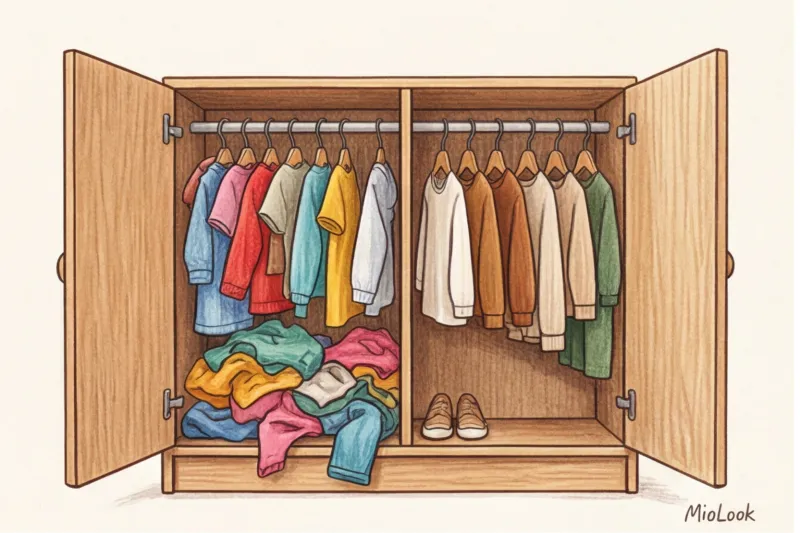
We're used to thinking that if things are neatly arranged on shelves, our wardrobe is under control. But transparent containers only hide the problem of blind consumption. You see a stack of sweaters, but you can't remember which ones are too tight and which ones were bought "for growth."
In my practice, I constantly encounter the phenomenon of "clothes with tags." Parents sincerely believe that by buying clothes for future use during seasonal sales, they're saving money. This is a huge misconception. Buying for future use without keeping track of them digitally isn't saving, it's a trap. Statistics show that up to 30% of such purchases are never worn: when the right season arrives, the child experiences a growth spurt, and the item is hopelessly too small. Or, conversely, it's still too big, and winter is already over.
The numbers confirm this chaos. According to a major 2023 report on unused clothing by WRAP (Waste and Resources Action Programme), the average family actively uses only 20-30% of their children's wardrobe. Pediatricians explain this simply: during the first two years of life, a child goes through up to 4-5 sizes. You physically can't keep track of this amount of information in your head.
Your perfect look starts here
Join thousands of users who manage their entire family's wardrobe stress-free every day with MioLook.
Get access — €0.99 onceHow to organize a child's wardrobe in an app: step-by-step instructions
The transition from physical chaos to digital order daunts many of my clients. It seems like they'll have to spend a week photographing every pair of socks. I always set a strict limit here: we do not digitize Underwear, socks, and pajamas that already have applesauce stains. The app is designed for managing your database and looks, not for inventory management.
Start with the "one shelf" rule. Don't throw everything out of the closet at once. Create a child profile in MioLook and take only seasonal outerwear or only school uniform.
Professional life hack: During your initial audit, sort clothes not by season, but by your child's current height in centimeters. What fits now goes into the base. What's too small goes into a resale or donation box. What's too big goes on a separate virtual shelf called "Grow In."
Auditing and Digitization: Secrets to Properly Photographing Children's Items
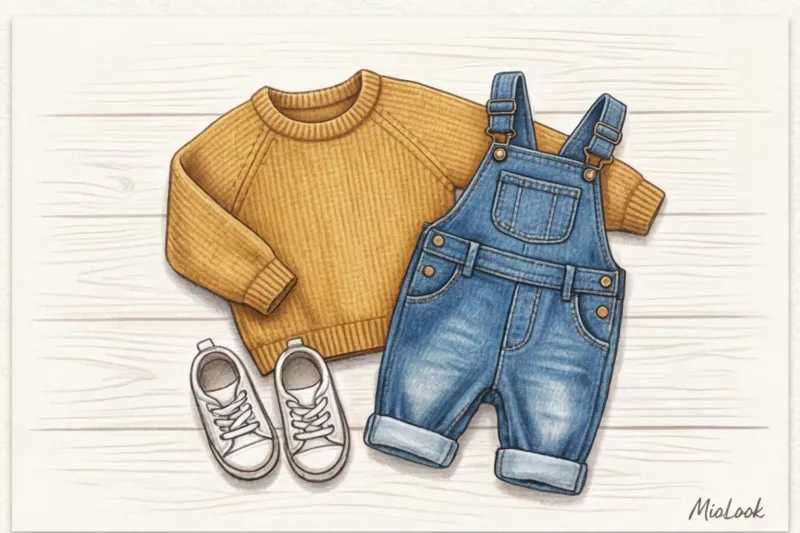
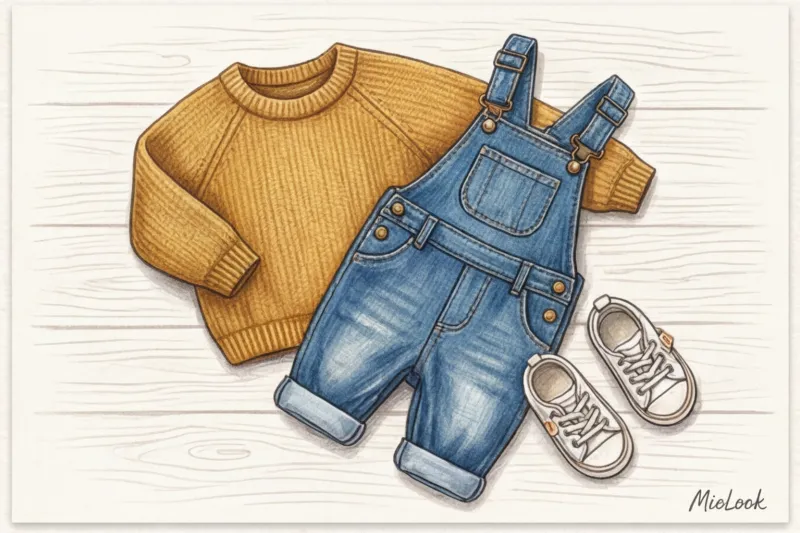
When photographing children's items, you need to take them quickly. Use the flat-lay technique. Place the item on a plain background (light laminate or white poster board are great) near a window in the morning. Artificial light distorts colors, and the app's built-in AI works best for clipping (removing the background) in high-contrast daytime shots.
And another golden rule: take photos of your clothes immediately after ironing. A wrinkled item in the app photo will subconsciously repel you, and you'll be less likely to add it to your laundry capsules.
Smart Size Tracking System: Overcoming the "Brand Pattern Trap"
If you think a 3-year size at Zara and H&M are the same, you're in for an unpleasant surprise. There's no one-size-fits-all approach to children's fashion.
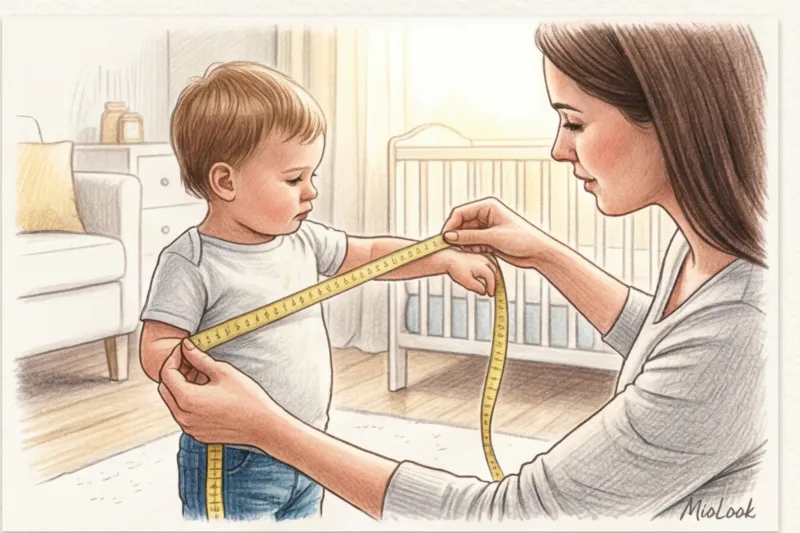
Over 10 years of work, I've developed a clear pattern of size charts that my clients enter into the app's tagging system:
- Scandinavian brands (Lindex, Reima, Molo): They always come with a 6 cm allowance. If the tag says 104 cm, the item can be worn up to 110 cm.
- Spanish brands (Zara, Mango Kids): often run a whole size small, especially in the shoulders and sleeve length.
- French brands (Jacadi, Petit Bateau): sewn for very thin children (narrow patterns).
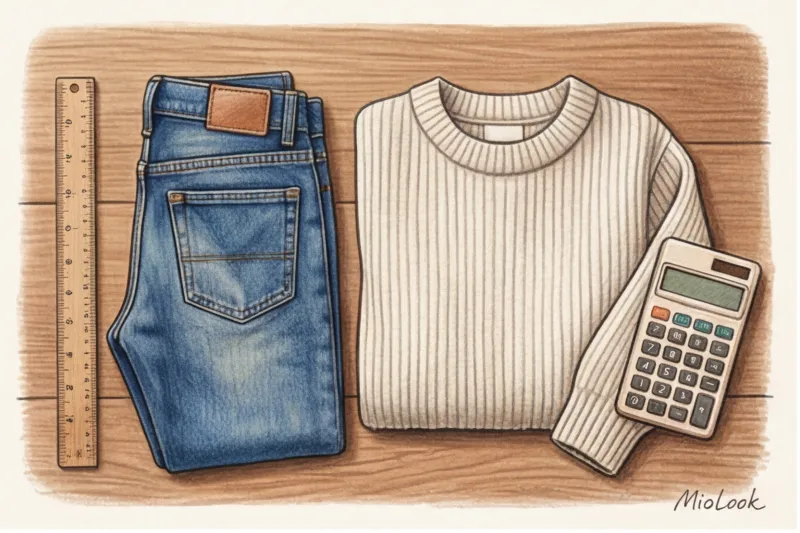
How can you organize your child's wardrobe with these nuances in mind? Don't just enter the size from the tag in the app. Measure the sleeve length from the shoulder and the inseam of the pant leg with a regular measuring tape. Add these measurements to the item description. Now, if your child grows 3 centimeters, you don't have to re-measure the entire closet—you can simply filter the database by measurements and immediately see what's time to pull out from the virtual "Grow In" shelf.
Access to MioLook for €0.99 — one-time payment
A smart AI stylist will find the perfect look for you and your children. It takes into account your sizes and creates capsule collections in just a few clicks.
Get access — €0.99 onceBaby capsule: myth or salvation for a working mother?
We often talk about creating a capsule wardrobe For adults, this concept works differently for children. The main mistake parents make is trying to copy the adult capsule formula (3 "tops" to 1 "bottom").
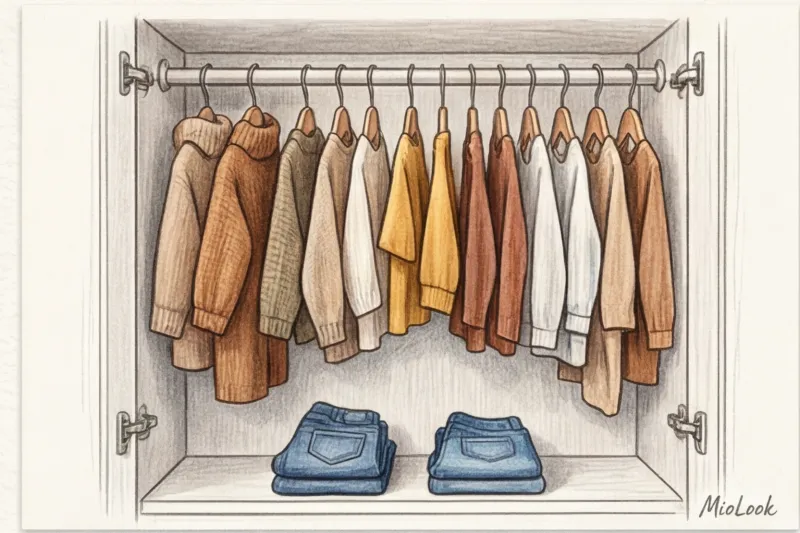
Children get dirty. While an adult might wear the same jeans three days in a row, changing shirts, a toddler will throw the whole set in the wash after just one outing. Therefore, the correct formula for children is an equal or even greater number of bottoms and tops, but all of them should be perfectly coordinated.
In the app, I recommend creating three separate mini-capsules: "Kindergarten" (the most comfortable items without complicated fasteners), "Walk/Playground" (durable, non-staining fabrics), and "Going Out." The real magic begins in the morning: you simply open the app, choose a ready-made outfit from the "Kindergarten" capsule, and delegate the preparation to dad or a nanny. No phone calls asking: "What tights should I wear with this green dress?".
Color Coordination for Toddlers
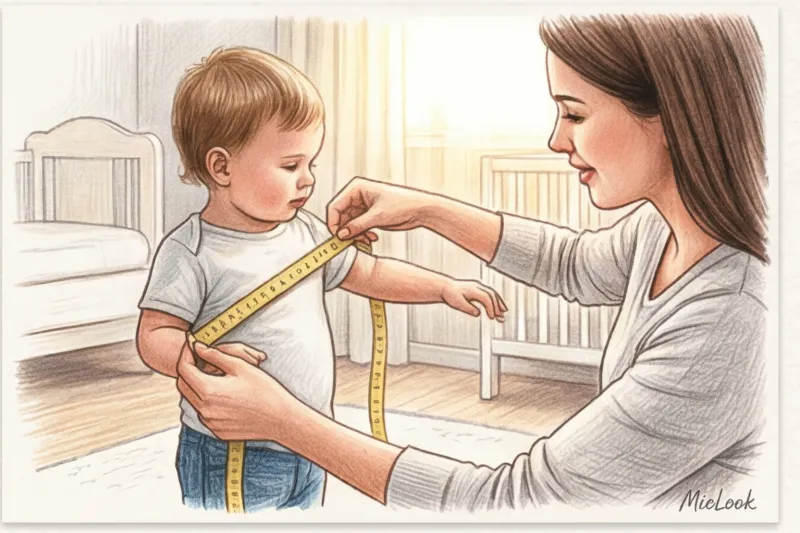
To make the capsule collection work, choose two or three base shades (for example, navy blue, beige, and denim) and two accent colors for the current season (for example, terracotta and mustard). If you buy an item that doesn't match at least three items from the current digital collection, it's a waste of money. The app will visually highlight this discrepancy before you even go to the checkout.
Ecology and Budget: How a Virtual Wardrobe Pays for Itself
Children's fast fashion is aggressive. We're pressured to buy more, brighter, more often. But when your wardrobe is digitized, rational consumption kicks in.
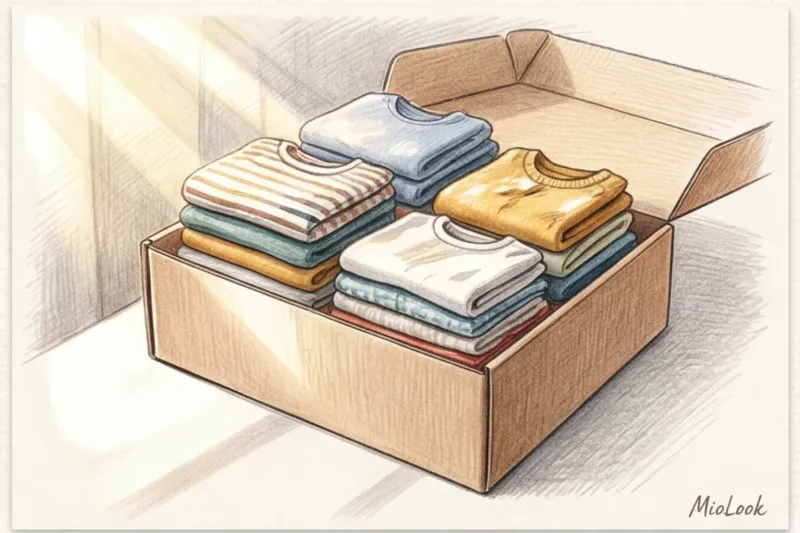
Let's do the math. The average high-quality children's sweater costs between €30 and €50. If the app lets you notice early that you already have two similar sweaters in the right size and avoid buying a third, you've already saved money. On average, my clients save about €150–€200 per season on duplicate items.
But the real bonus comes when the child outgrows the items. You already have high-quality photos on a light background (you took them when adding them to the database), the brand, the composition, and the actual measurements in centimeters. Listing an item on Avito or Vinted literally takes two minutes. In my clients' experience, the resale rate increases by 80% because the platforms' algorithms promote items with good photos and accurate measurements better.
Checklist: 5 minutes a week to maintain the system
Any system is useless without support. How can you organize your child's wardrobe so that it's always in order? Create a habit: 5 minutes on Sunday evenings.
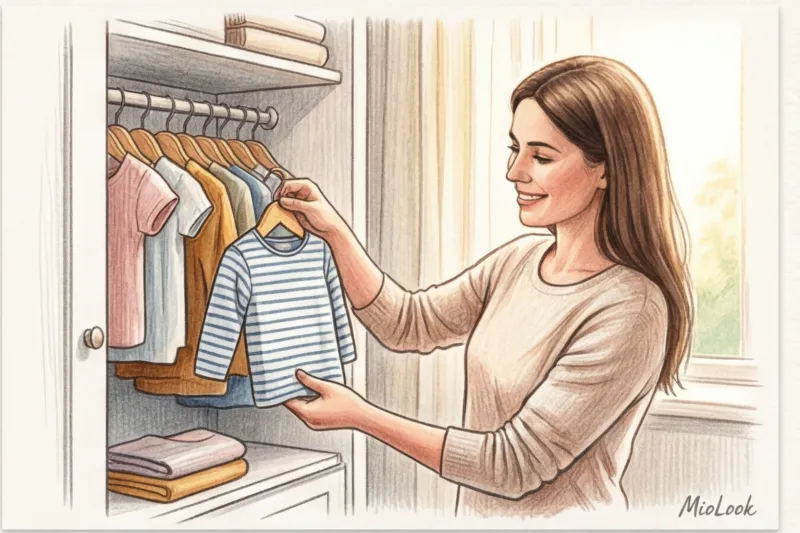
Here's my weekly routine I give to clients:
- Status revision: Ask yourself: has your child complained this week that something is too tight? If so, find the item in the app and swipe it from "Wearable" to "Too Little." Physically transfer the item to the donation box.
- Weather check: Check the forecast for the week ahead. If a sharp cold snap is expected, check the "Grow In" section and see if it's time to transition your mid-season jacket into a more active wardrobe.
- Forming a shopping list: Analyze your gaps. If you see that three pairs of pants have been marked "low," don't buy another T-shirt on sale. Add the pants to your virtual shopping list.
"An electronic wardrobe doesn't take up your time; it invests it in calm mornings and a saved budget. You stop managing chaos and start managing data," says Camille Durand.
Ready to stop wasting money in your closet? Start with one shelf today.
Ready to get started?
Try the MioLook plan for free—no commitments required. Digitize your child's first capsule right now.
Get access — €0.99 once