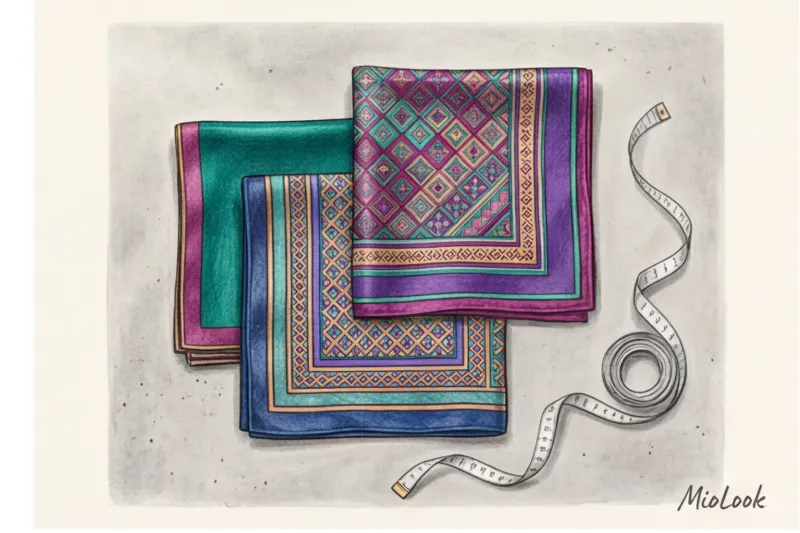
Let's be honest: when most women hear the phrase "scarf top," they immediately conjure up images of a resort promenade, denim micro-shorts, and the panicky fear that one deep breath will cause the whole thing to come undone. For a long time, the silk bob was perceived solely as a vacation staple or a beach pareo.
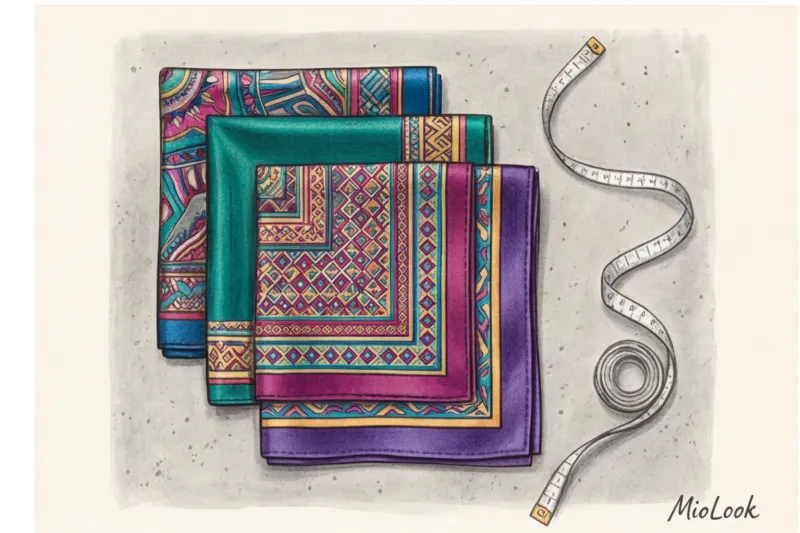
But as a practicing stylist, I categorically disagree. High-quality silk is a stunning architectural element of an urban wardrobe. Over 12 years of working with European clients, I've learned one thing: every purchase should be 200% worth its place in the closet. Search for information on How to make a top from a scarf , it is worthwhile not only before a trip to the sea, but also to incorporate this technique into strict office or evening outfits.
I have already talked in more detail about basic work with accessories and color correction of the portrait area in our The complete guide to the art of stylish scarf styling Today, we'll explore advanced techniques: hidden fixation, proper fabric tension, and complex urban layering formulas.
Basic Math: How to Choose the Right Scarf for Your Top
Don't try to create a candy-like look out of thin polyester bought in a subway station. Architecture requires a proper foundation. When you wear a scarf instead of a blouse, the fabric takes on a tremendous visual and physical load.
"The biggest mistake is ignoring fabric density. For clothing, silk needs to be at least 14-16 momme thick. Anything thinner will be treacherously see-through and distort at the seams," state the standards of textile institutes, and I subscribe to every word.
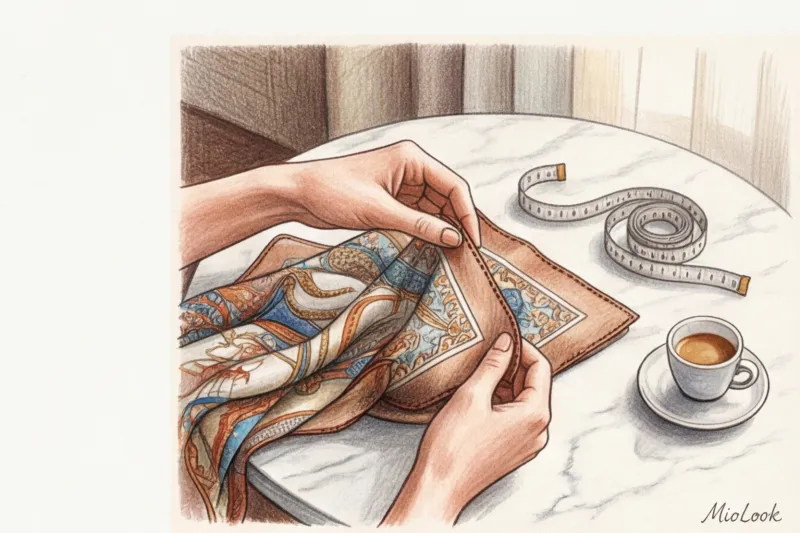
The second critical point is size. A classic bob (like vintage Hermès or basic Massimo Dutti lines) is 90x90 cm. I have to be honest: this size for creating a top only works up to a Russian size 46 (EU 38). If you have a full bust or are plus-size, a 90x90 square simply won't be enough to tie a secure knot. Look for oversized sizes: 110x110 or 120x120 cm. Zara and COS often feature these in their spring limited collections.
From a budget perspective, it's pure math. A great silk scarf in a European mass-market store will cost you €40-60. A basic top made of natural silk of similar quality will cost from €150. Moreover, a scarf gives you at least four different cut options.
Your perfect look starts here
Digitize your scarves and accessories and let AI help you incorporate them into your everyday looks.
Get access — €0.99 onceStylist's Guide: How to Make a Scarf Top (4 Urban Ways)
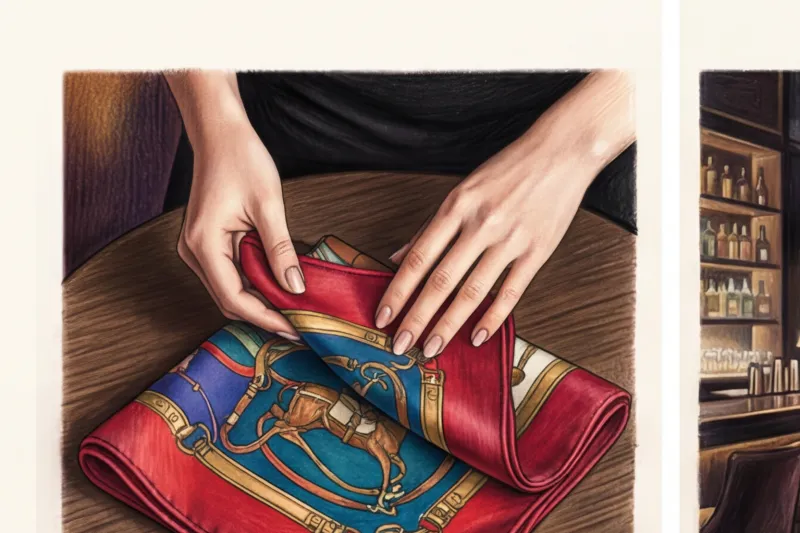
Before we move on to the patterns, remember the golden rule: iron your scarf before each use. Creases along the fold line immediately reveal the handicraft nature and cheapen the look. Ideally, use a steamer after you've secured the fabric to your body.
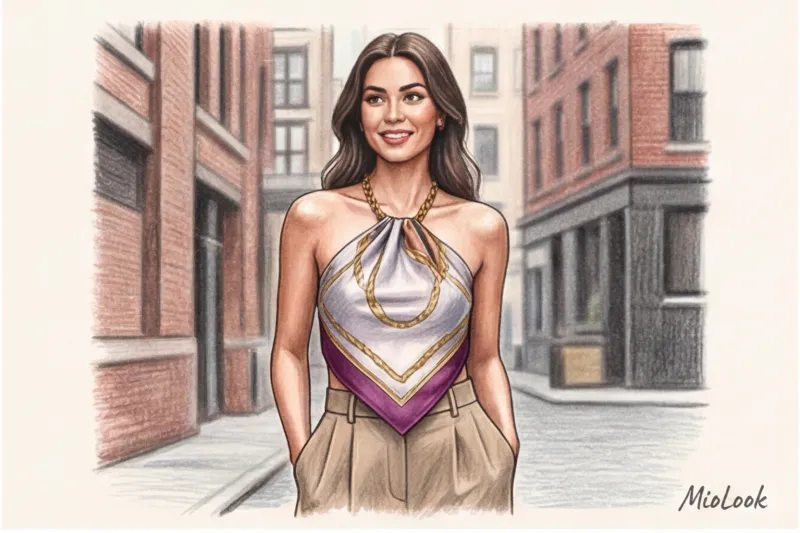
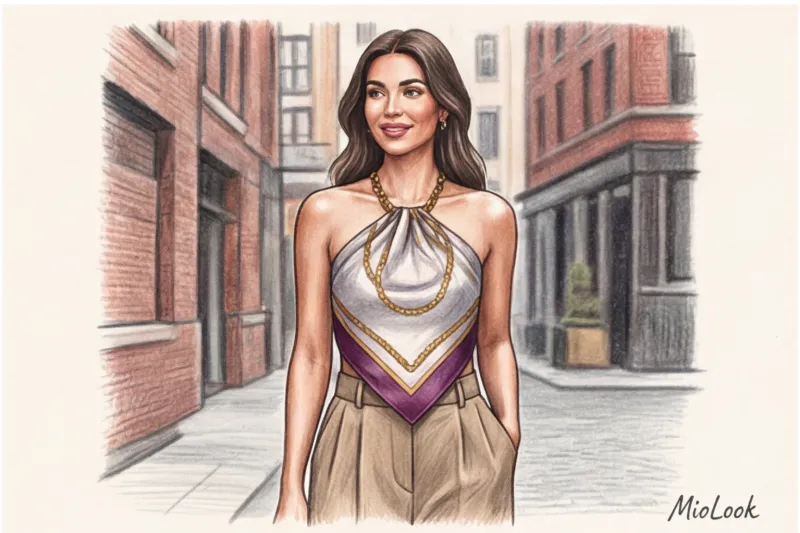
Method 1: Architectural Halter Neck on a Chain
Tight knots around my neck instantly give me a migraine. In 2019, I discovered a brilliant solution that I now use for all my client shoots: we replace the knot with a jewelry chain.
- Take a large chain necklace (gold or silver) and fasten it around your neck.
- Fold the scarf into a triangle.
- Thread the top two sharp corners under the chain from front to back and tie them in a neat little knot (or secure with a brooch).
- Wrap the lower ends around your waist and secure them at your lower back.
It looks incredibly expensive. The metal relieves the tension in the silk, the fabric drapes beautifully across the chest, and the neck doesn't get tired.
Method 2: Classic bandeau without knots on the chest
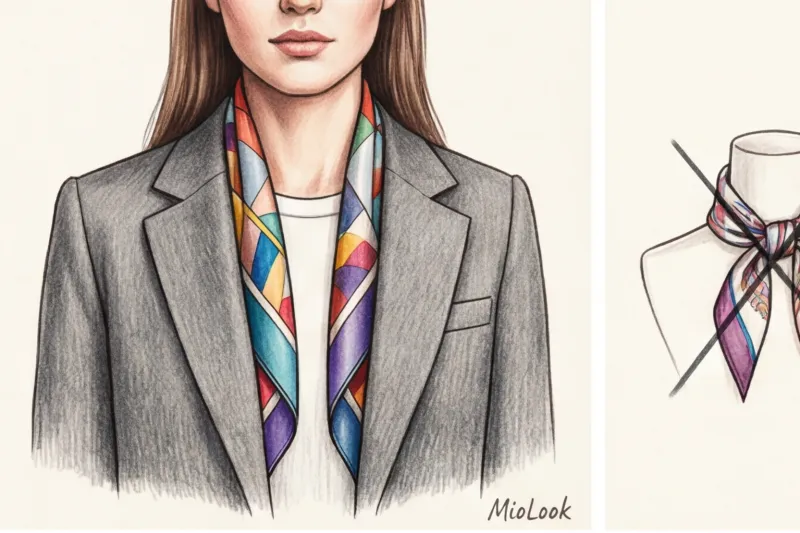
An ideal option for formal looks under an unbuttoned jacket. Fold the scarf diagonally into a wide, even strip. Wrap it around your chest. And here's the secret: avoid making a bulky knot at the back if you plan to wear a jacket over it (it will create an unsightly "hump"). Tie the ends together with a flat, straight knot or use two overlapping safety pins.
Method 3: One-shoulder asymmetry
A diagonal line visually elongates the silhouette and makes the shoulders appear more delicate. Fold the square in half to form a rectangle. Wrap it around your torso under your arms. Leave the two ends at your back, and pull the two front ends up toward one shoulder. To secure them, use a special metal scarf ring—this will add a touch of polish and eliminate the awkward knot.
Method 4: Corset top over basic clothes
If you look back at YSL's 1970s archives, you'll see how masterfully silk was used over other garments. It's a lifesaver for offices with a relaxed dress code or for situations where revealing shoulders is inappropriate.
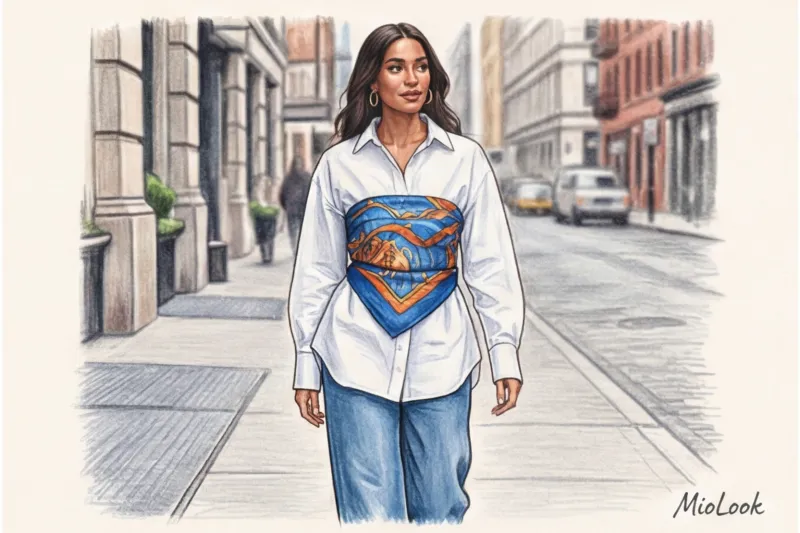
Wear a basic white men's shirt (heavy cotton) or a thin cashmere long-sleeve top. Fold a scarf into a triangle, wrap it around your waist (point down, like a classic corset), and tie it tightly at the back. This instantly adds structure to an oversized shirt and accentuates your waist.
The main secret: underwear and invisible fixation (to keep the top from slipping down)
Here I must debunk the biggest and most damaging myth. Most girls believe that to keep a scarf from falling off, you just need to tie it tighter. This is fundamentally wrong.
A tight knot pulls the silk along the bias, distorting the expensive material. Moreover, it digs into the body, creating rolls on the back of even the slenderest women. Once, at a summer corporate party in Rome, my client almost suffered an embarrassing accident: the tension caused the thin silk to slip along the seam near the chest. What saved us? Something that's always in my stylist's kit: fashion tapes (double-sided body tape).
Instead of choking yourself with knots, create a comfortable tension and tape the fabric to your body at key points (collarbones, décolletage, and underarms). The fabric will lie perfectly flat, like a second skin.
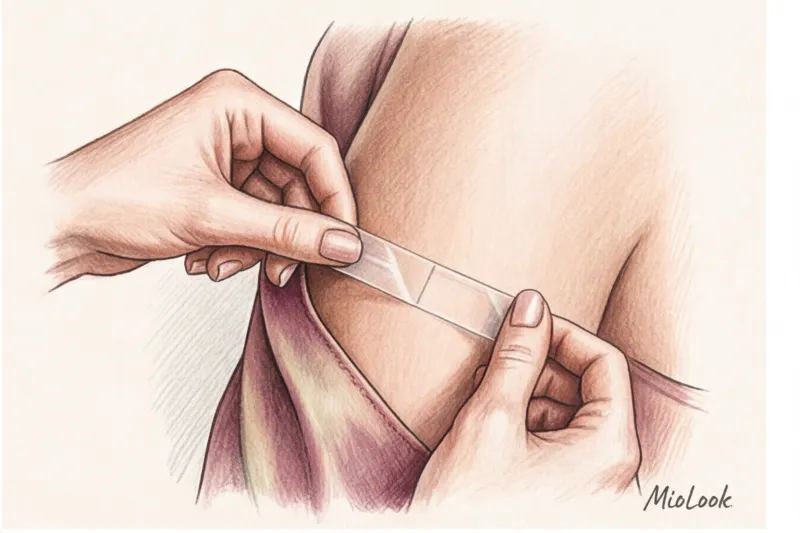
As for bras, silicone pads (pasties) work best. Strapless bras have a rigid frame that often shows through the soft silk, ruining the aesthetics.
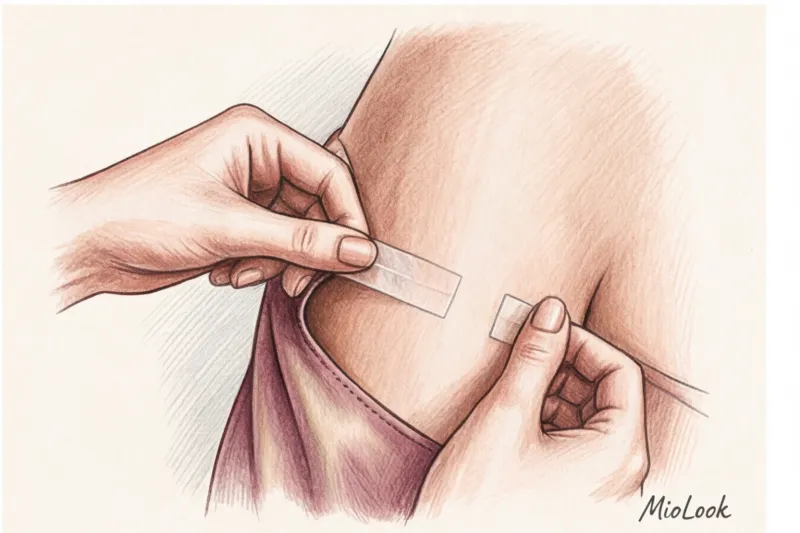
Important limitation: This tip doesn't work for everyone. If you have a D cup or larger, wearing a silk bandeau without a supportive bra can be physically uncomfortable. In that case, choose option #4 (wearing a corset over a shirt).
Don't know what to wear with your favorite scarf?
Upload photos of your items into the app, and the AI stylist will create dozens of new combinations for you in just a few seconds.
Get access — €0.99 onceDangerous Mistakes: Why Your Look Resembles a Beach Pareo
The line between "stylish city girl" and "lost tourist" is very thin. I often see these unfortunate blunders on the streets.
- Combination with denim micro shorts. Save that for the beach bar. In the city, a silk top requires a closed, voluminous bottom to balance out the open top.
- Synthetic shine. If you choose polyester, it will create a greenhouse effect in hot weather. Red spots will appear on your skin, and the cheap sheen in daylight will ruin the look. Don't skimp on fabric.
- Abandoned labels. A protruding white tag with the ingredients and washing instructions is a disaster. Carefully trim them off with nail scissors. Take a photo of the tag with your phone if you're worried about forgetting the care instructions.
- An exposed strip of belly is out of place. If the scarf is too small, a gap of 5-10 centimeters will form between the top and pants. This often looks out of place in urban outfits.
Smart Wardrobe: What to Wear with a Silk Top to Look Expensive
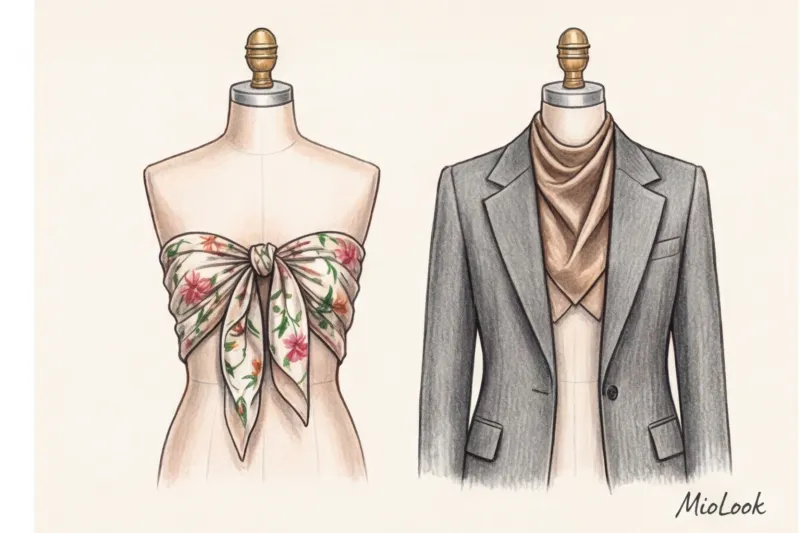
To make a scarf look like a designer piece, we need to play with contrasting textures. Smooth, shiny, and flowing silk only looks luxurious against something dense, matte, and stiff.
The analytical agency WGSN introduced the term in its report on trends for 2024 soft tailoring (soft tailoring) is exactly the aesthetic we're aiming for. Pair a flowy halter top with a men's oversized suit jacket in heavy wool (with wide shoulders) and high-waisted palazzo pants. It's the perfect smart casual look for a restaurant or an art exhibition.
Another powerful combo: dark silk and thick, unwashed denim in a straight cut. No ripped knees or rhinestones—just clean lines.
Checklist: 5 steps before leaving the house in a scarf top
My approach to style is always systematic. Before you open the front door, do this one-minute audit in front of the mirror:
- Translucent test. Stand by a window in natural daylight. Are you sure the fabric doesn't reveal any anatomical details?
- Movement test. Raise your arms, lean forward, and pretend to reach for a cup of coffee. Is there any tugging? Is the structure moving upward?
- Checking the nodes. If you used knots, make sure they are flat (double) and not bulky lumps.
- Fixation. Are the tapes applied? Are the pins (if any) fastened on the inside?
- Balance of volumes. If the top is open and tight (bandeau), the bottom must be loose and elongated (maxi skirt, wide trousers).
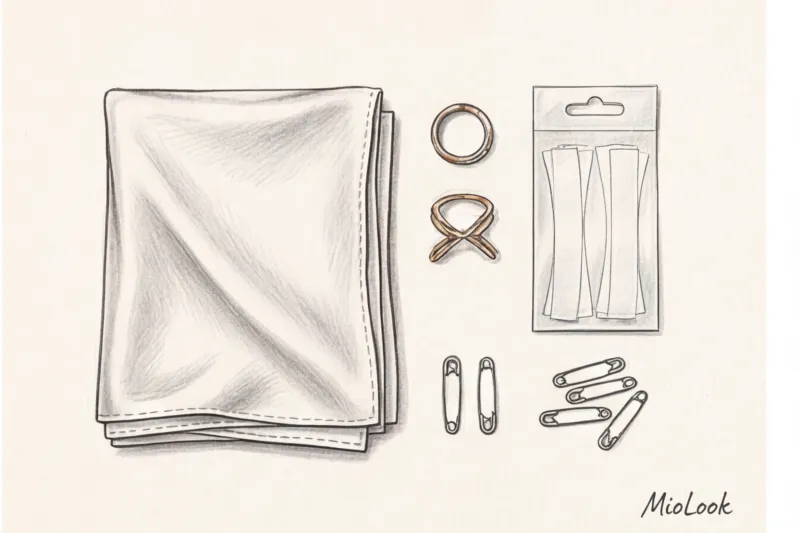
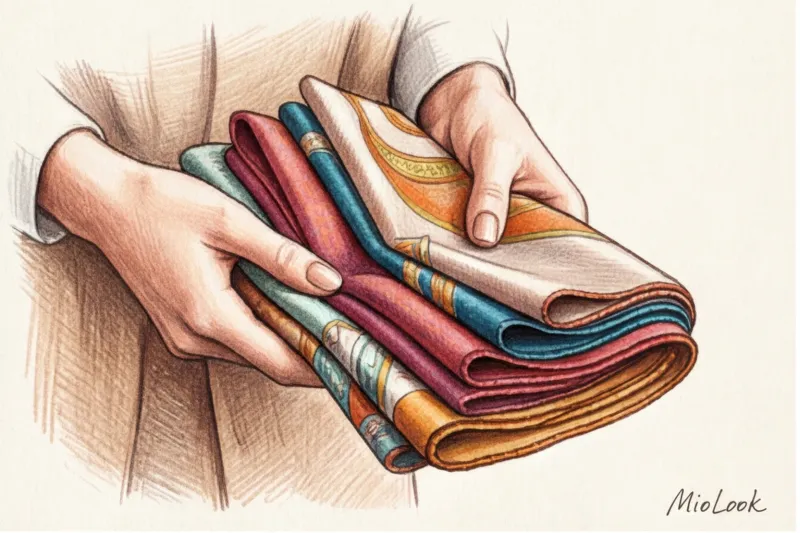
Think of your silk scarf not just as an accessory gathering dust while waiting for spring, but as a construction kit. With a little practice and a couple of quality tapes, you'll have a luxurious top that looks like a million bucks and costs a fraction of its designer counterparts. The key is to experiment and always maintain good posture: silk doesn't tolerate slouching.