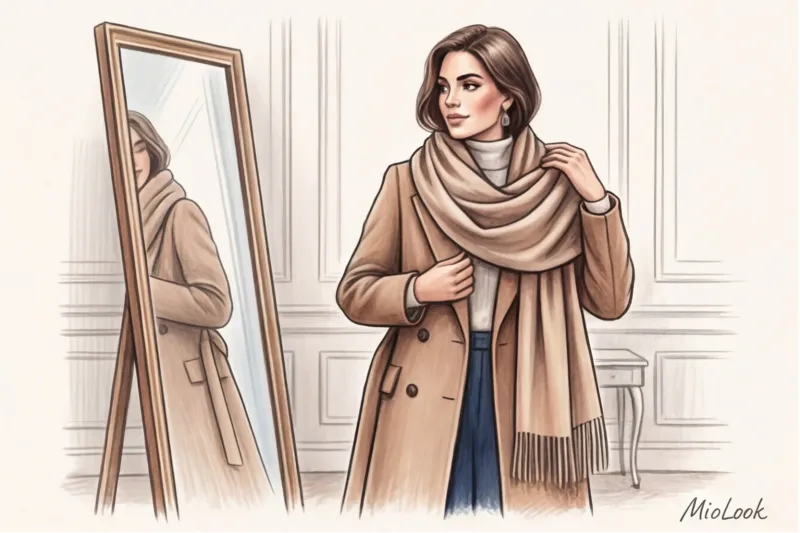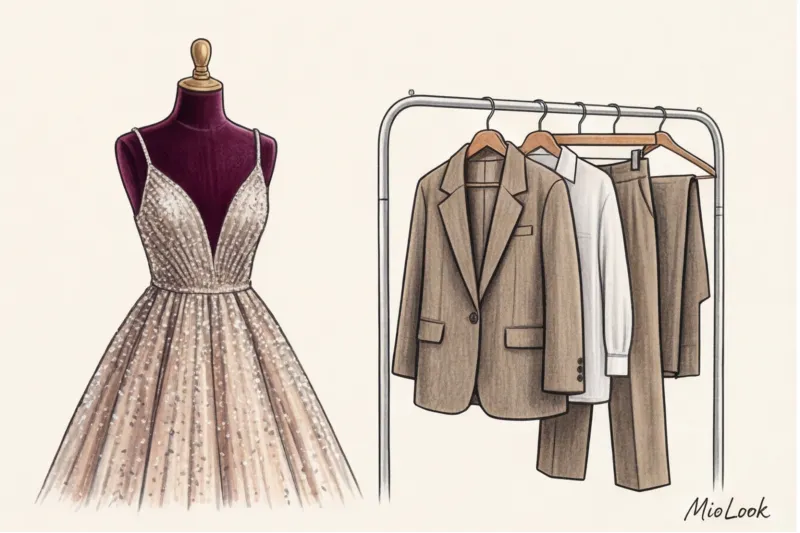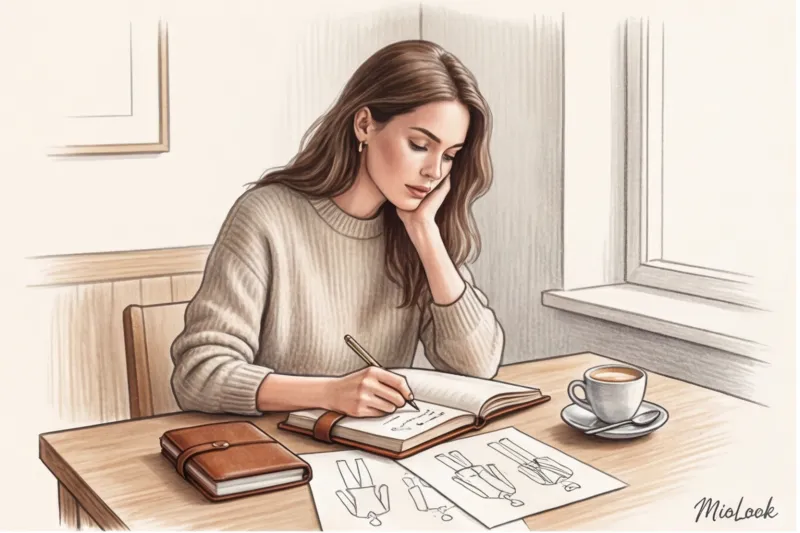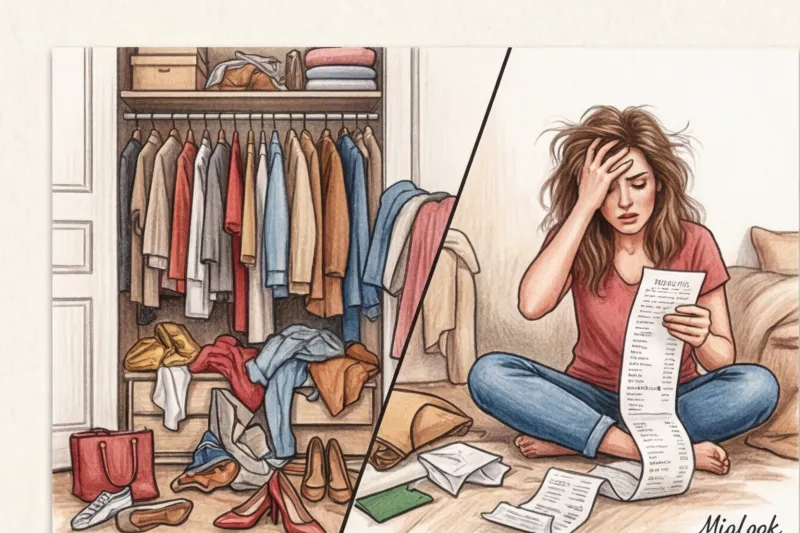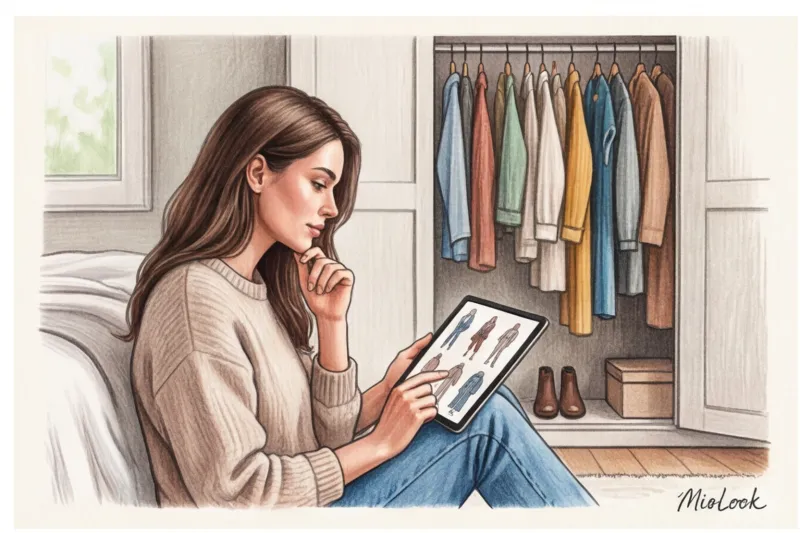
Have you ever noticed the paradox: your saved Pinterest album looks like the wardrobe of an old-money heiress vacationing in Como, while your real closet is a warehouse of identical gray hoodies and basic jeans? We spend hours scrolling through pretty pictures, but when it comes to shopping, our hands habitually reach for the familiar, boring, and safe.
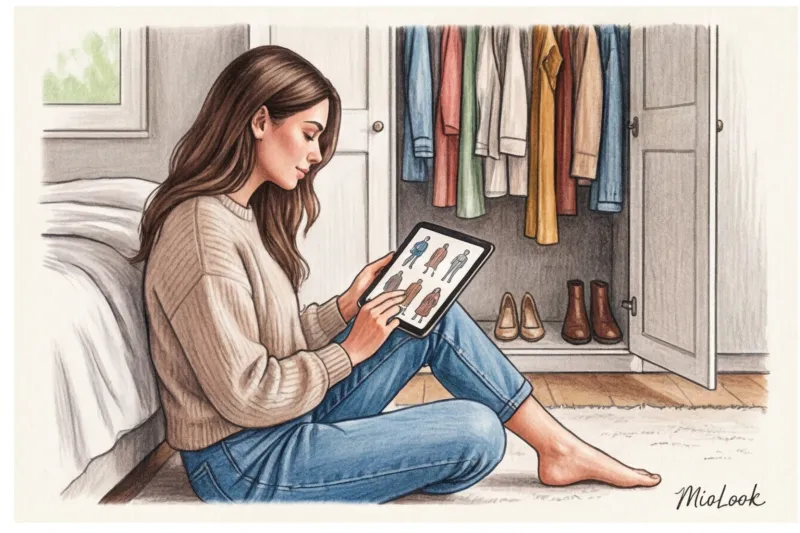
The problem lies in the very approach to visualization. Most people perceive a mood board as a wish list or an abstract inspiration board. As an expert in fabrics and sustainable fashion, I offer a different perspective: before How to make a clothing mood board , you need to understand that this isn't a fantasy, but a rigorous engineering blueprint for your future wardrobe. And if this blueprint ignores the laws of physics, climate, and your schedule, it will inevitably lead to impulsive purchases and disappointment.
Why You Need a Mood Board When Changing Your Style: From Fantasies to Wardrobe Architecture
When we crave change, our first instinct is to throw out everything old and buy something completely new. This is the dangerous illusion of a "clean slate." According to a 2023 report by the Ellen MacArthur Foundation, it is impulsive, emotional purchases that lead to millions of tons of textile waste being sent to landfills every year. Items are bought on a whim, worn a few times, and then end up as dead weight on the shelves.
A structured mood board acts as a safety net. It protects you from spontaneous shopping and helps you see a system. Instead of buying random items, you begin to build connections between what you plan to buy and what's already hanging in your closet. We've covered more about how to approach this process sustainably in our The complete guide to changing your style without breaking the bank.
The "Glossy Image" Fallacy: Why Regular Pinterest Boards Are Harming Your Style
It sounds counterintuitive, but the standard Pinterest board is your real style's worst enemy. It collects glossy images divorced from the laws of physics and your daily routine, encouraging you to buy clothes for a life you don't live.
"In behavioral psychology, there's a concept called the 'empathy gap.' While we're comfortably on the couch with our phone, we're unable to predict our actual physical needs in the future. We buy clothes for our 'fantasy' selves, ignoring our real selves."
I had a revealing experience in my practice. My client, Anna, had put together a stunning mood board: flowing silk skirts, unbuttoned lightweight trench coats, and elegant mules with thin heels. The aesthetic was off the charts. There was just one problem: Anna lived in a rainy and windy climate, commuted to the office by metro every day, and picked up her two children from daycare. Inspired by the references, she spent over €800 on items she wore exactly once. The thin silk became staticky and stuck to her feet on the subway, and the open mules were impossible to chase after the toddlers in.
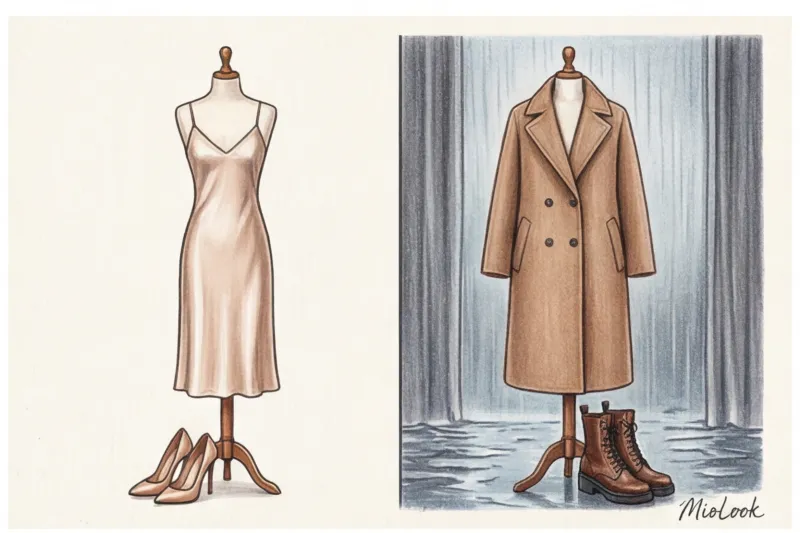
A WGSN study (2024) confirms this trend: up to 60% of user-saved images on social media are completely inappropriate for their climate and body type. Furthermore, studio photos distort reality. What looks like a heavy, structured jacket in a retouched photo often turns out to be cheap polyester that wrinkles at the first glance, while the perfect fit on the model is ensured by dozens of hidden pins.
Your perfect look starts here
Join thousands of users who look flawless every day with MioLook. A smart algorithm will help you transform your moodboard ideas into a real wardrobe.
Get access — €0.99 onceStep-by-step instructions: how to create a smart clothing mood board
To make a mood board a working tool, I use the 70/30 rule. 70% of the images should reflect your routine (work, walks, commutes, home), and only 30% can be reserved for fantasy, evening outings, and vacations. Here's an algorithm that will help you create a realistic concept.
Step 1. Texture and Fabric Analysis: The Physics of Your Style
Never just stick to styles. Start looking for macro photos of fabrics. Add close-ups to your mood board: coarse English tweed, smooth silk with a weight of 19mm+, heavy denim (12-14 oz), fluffy cashmere. Your style is defined not so much by the cut as by the quality of the material.
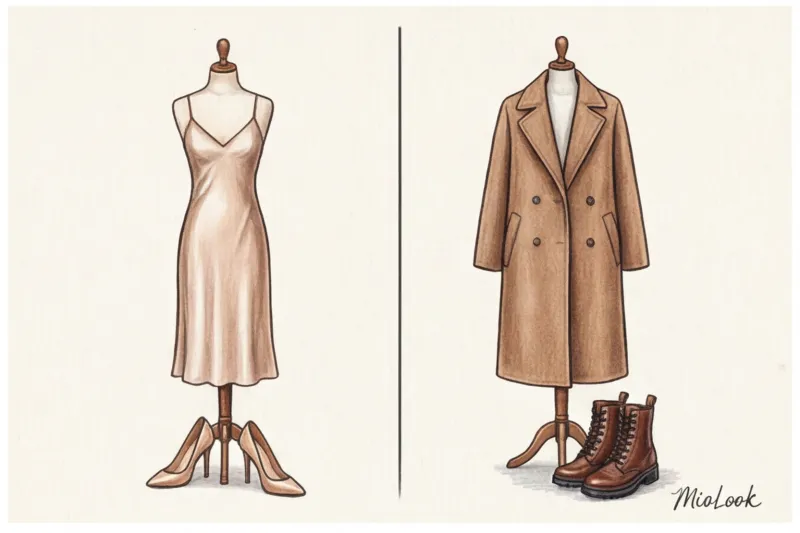
Use the rule of contrasting textures. A look looks rich and deep when it juxtaposes opposites: matte with shiny, smooth with rough. For example, dense wool works beautifully with flowing viscose. You can read more about the mechanics of such combinations in the article about combination of textures in clothing.
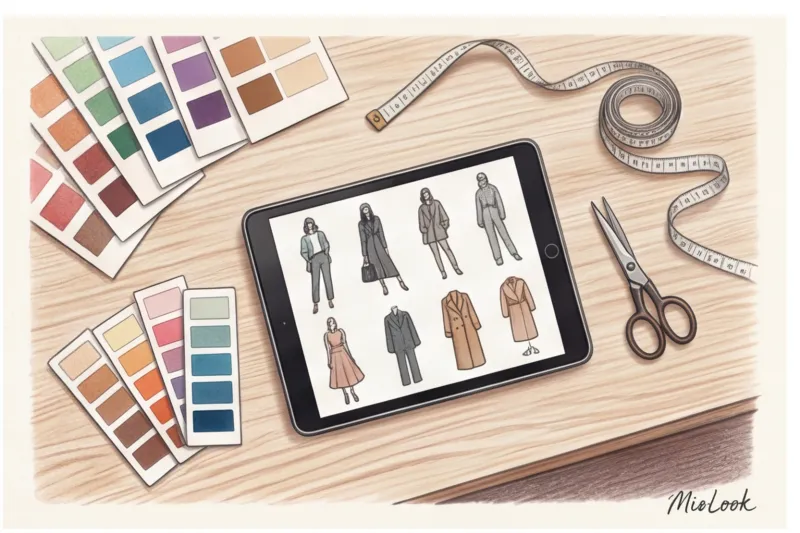
Step 2: Color Palette: Integrating What's Already in Your Closet
The key to an eco-friendly style update is to avoid buying everything from scratch. Choose two or three of your favorite, high-quality pieces from your current closet (for example, a pair of well-fitting Massimo Dutti trousers or a basic cashmere sweater). Photograph them and build your palette around them.
Look for "bridge colors"—shades that will connect your old pieces with your new style. If you have a lot of black and want to transition to a warm autumn palette, a deep dark chocolate or rich olive could be your bridge.
Step 3: Detailing the cut, silhouettes, and layering
Instead of abstract looks, look for specific formulas. For example, "loose top + structured bottoms + statement shoes" or "fitted bottom layer + oversized blazer." Consider lengths (midi, maxi, crop) based on your usual footwear.
Fair Limit: This formula with a bulky jacket WON'T work if you choose a top layer made of thin, flimsy knitwear (less than 200 g/m²). Thin fabric doesn't hold its shape, sags at the shoulders, and creates a sloppy silhouette, visually cheapening the entire look, no matter how expensive it is.
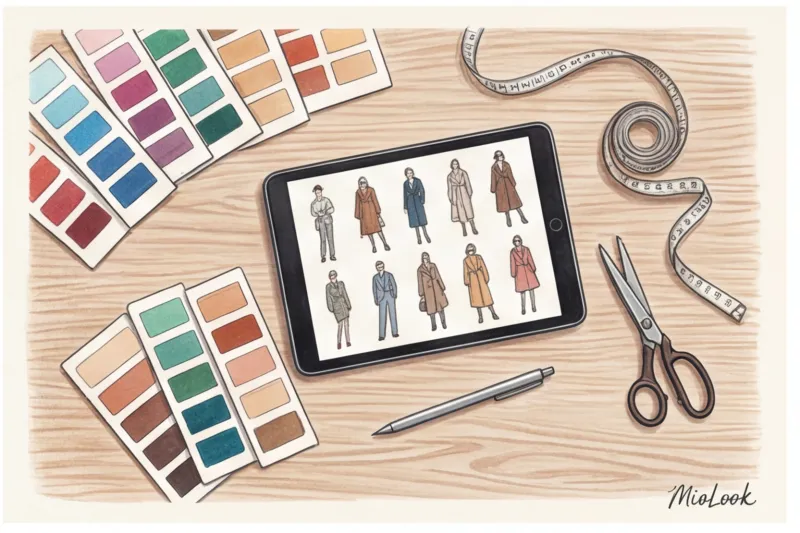
From digital to tangible: adding tactility to your wardrobe mood board
We live in a digital world, but we wear clothes on our physical bodies. After 12 years as a stylist, I've realized that to stop buying things that don't last, we need to bring tactility back into shopping.
Before heading to the store or ordering online, I recommend my clients create a "texture box." Collect scraps of old clothes, skeins of yarn, pieces of thick leather, and samples of the right denim. This is the physical embodiment of your mood board. When you go to the store (whether it's a budget-friendly item or a brand like COS or Arket, where the average price for a quality jumper ranges from €90-€150), you can literally compare the item to your standard by touch.
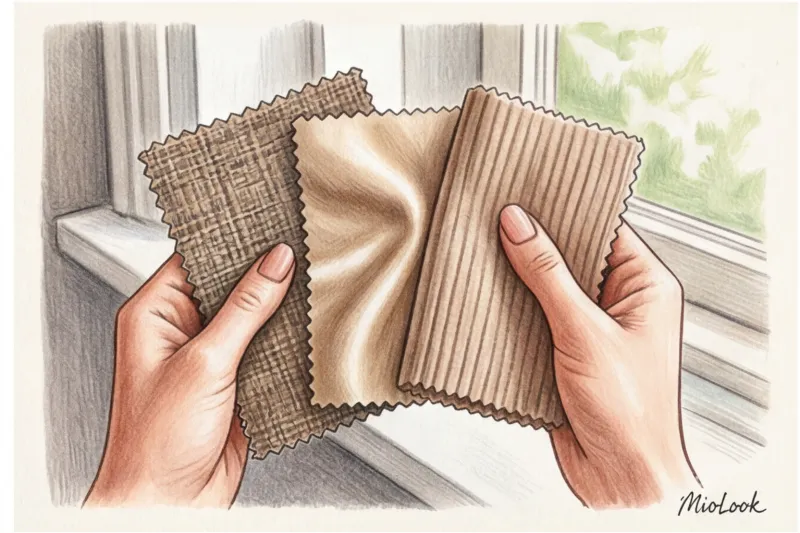
This hybrid approach is a trend among professional stylists. Tactile memory helps discard low-quality polyester and acrylic items in seconds, simply by running your hand over them, without even looking at the price tag.
Ready to get started?
Try the free plan—no commitments. MioLook will create everyday looks based on your preferences and color type.
Get access — €0.99 onceChecklist: Auditing Your Mood Board Before Buying
So, you've put together the perfect inspiration board. Before you add these ideas to your online shopping cart, put each image through a rigorous audit. Ask yourself four questions:
- Climate test: Is this look suitable for the weather in my city? Can I wear it for more than two weeks a year?
- Activity test: Can I wear this for 8 hours? Will this cut allow me to lift my arms, walk quickly, or sit at my desk without discomfort?
- Compatibility test: Does this particular item go well (color, texture, proportion) with the three bottoms or tops I already own?
- Care test: Am I willing to dry clean this complex jacket for €20 every month, or do I need something that can be washed at home on a delicate cycle?
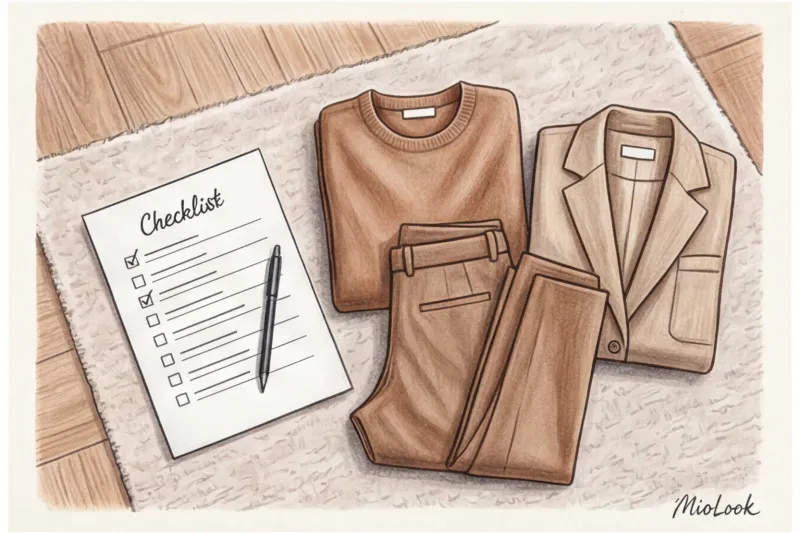
If a mood board image fails any of these tests, delete it ruthlessly. It will remain a beautiful photo, but it will become a nuisance in your closet.
Digitizing a New Style: Transferring a Mood Board to the MioLook App
Once the concept is verified, filtered, and grounded in reality, the integration stage begins. This is where technology comes in. Keeping all the ideas, colors, and textures in your head is difficult, especially when you're standing in front of a rack of clothes.
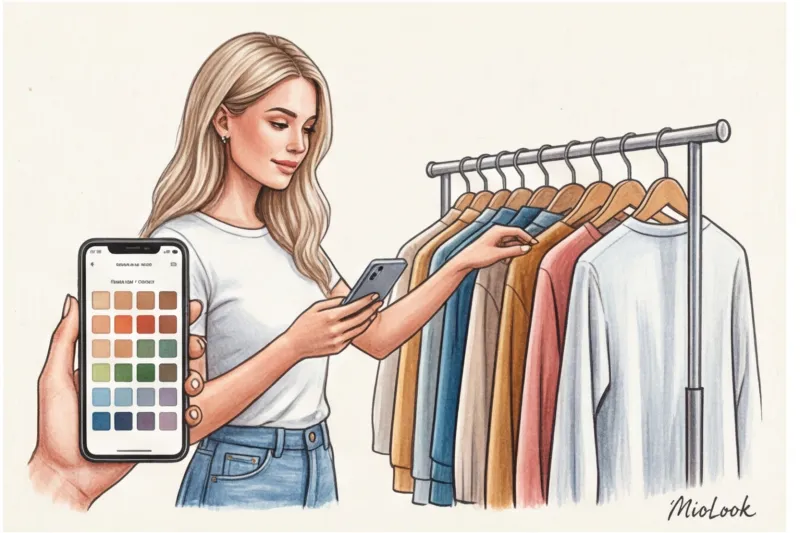
Using the app MioLook You can digitize your new style. Upload your best references to the smart wardrobe. Artificial intelligence will analyze your uploaded clothing database and find similar combinations among your existing items. The app acts as a personal pocket stylist, ensuring you stay on track and creating capsule wardrobes right on your phone, saving you time in the morning.
A mood board isn't just pretty pictures on a screen. It's a strategic plan for investing in your comfort and confidence. Start treating it as a design tool, and you'll see your closet fill with pieces that not only look amazing on the hanger but also perform flawlessly in real life.