Picture this: a chic woman walks into an expensive restaurant, gracefully removes her winter coat, and... her hair flies up with an electric crackle, clinging to her face and the collar of her dress. The entire magic of her high-status look is ruined in a second. And it's not a lack of taste that's to blame, but the cheap polyester lining.
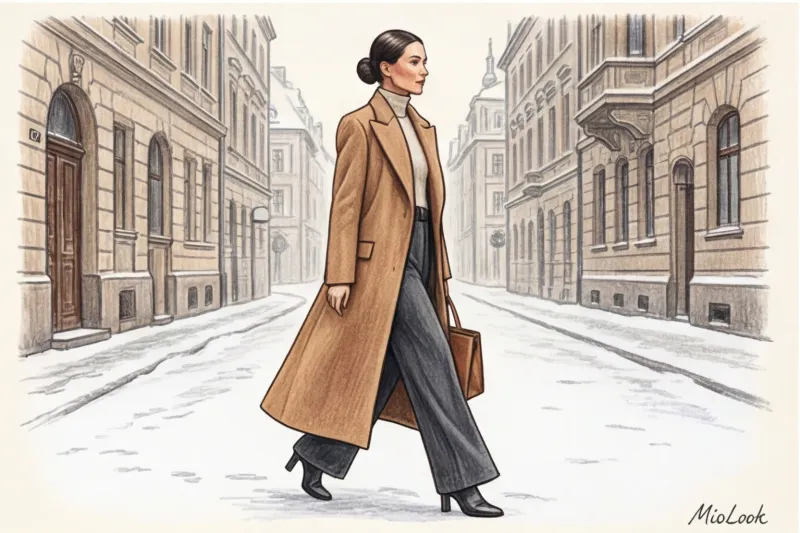
As a practicing stylist, I see this every winter. Girls spend huge amounts of money on brands, but miss the fundamental rules of a winter wardrobe. The question is, How to look expensive in winter , is not solved by logos, but by understanding the architecture of cuts, the mathematics of fabrics, and competent work with textures.
We have already talked in more detail about the global approach to premium sound of things in our a complete guide to a status wardrobe in adulthood In this article, we'll explore the specifics of winter: how to put together a look that exudes confidence, protects against European slush, and looks like a million bucks without overspending.
Winter Silhouette Architecture: How to Look Expensive in Winter Without Overpricing
The first rule of a status wardrobe is visual calm. Winter clothes are inherently voluminous, and if they're shapeless, you'll look like a "cabbage." Status demands clean lines and clear geometry.
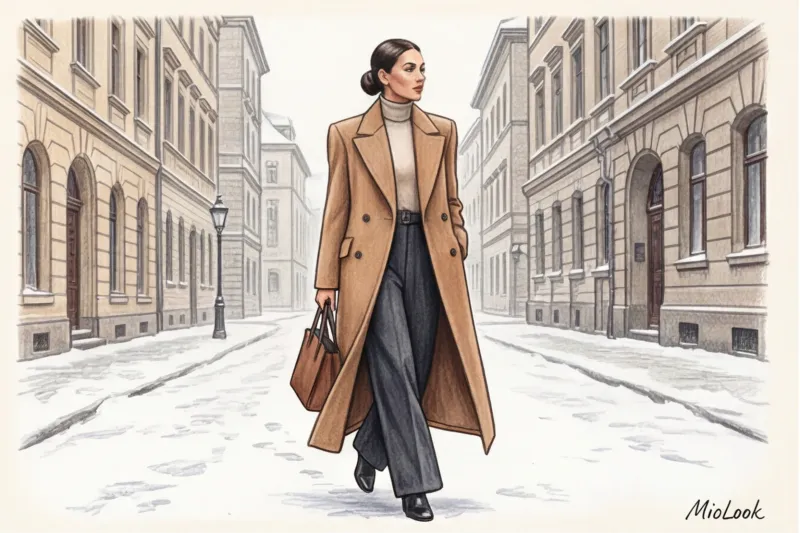
The length of outerwear is crucial. A knee-length coat cuts the figure in half, shortens the legs, and instantly throws your look into the 2010s aesthetic. For a refined silhouette, choose a midi (to mid-calf) or a confident maxi.
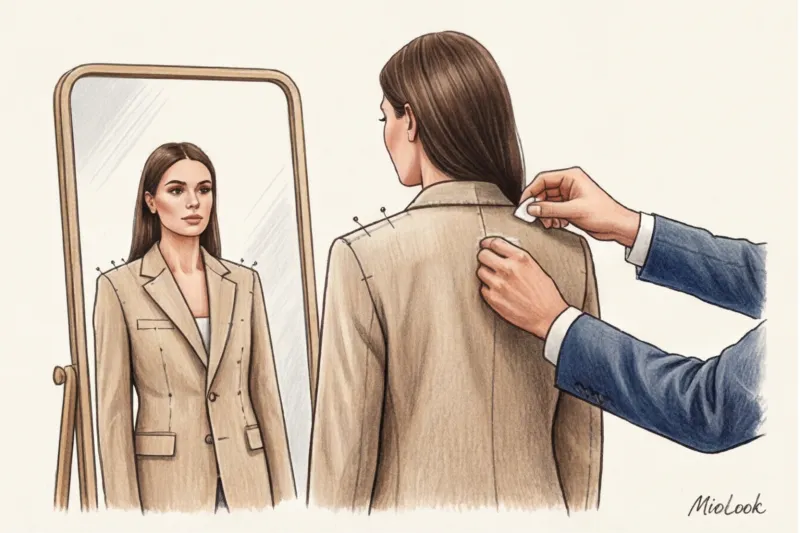
According to WGSN's 2024/2025 outerwear trends report, the focus has finally shifted to architectural shoulders. And herein lies the secret.
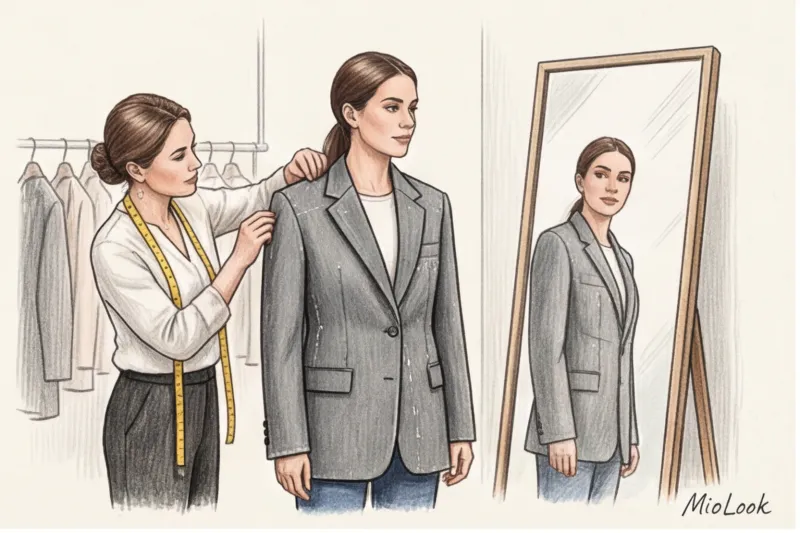
- Set-in sleeve With a sharp shoulder line, it creates a strict, put-together look. It's ideal for a business dress code and visually elongates the figure.
- Raglan sleeve gives a relaxed elegance but requires softer fabrics.
If you wear jackets (and it's hard to imagine status without them), try on outerwear only on your most voluminous jacket. The coat's armhole shouldn't break the jacket's shoulder—it looks sloppy and cheap.
The Anatomy of a Status Coat: The Composition That "Keeps You Alive"
The most common myth my clients bring to me is: "Katarzyna, I'm ready to invest in a 100% cashmere coat for the winter." I always dissuade them from this idea.
A fact confirmed by the Textile Institute's technological standards: pure cashmere is the worst choice for everyday wear in urban winters. It's incredibly tactile, but it quickly wears out on the sleeves, becomes misshapen in humidity, and requires constant, expensive dry cleaning. Save cashmere for sweaters and scarves.
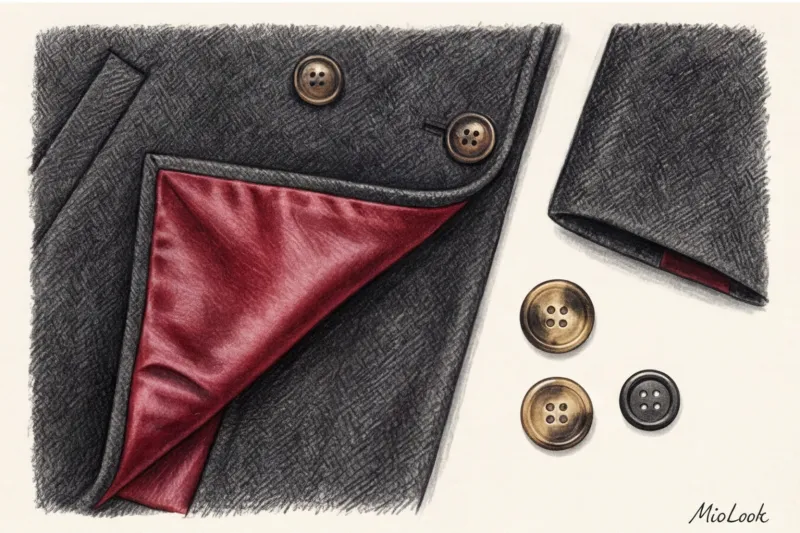
The formula for the ideal winter coat fabric that will last 5-7 years without losing its appearance looks like this:
- 70–80% wool (base for warmth)
- 10–20% polyamide (synthetics are your friend here, they reinforce the fabric and hold its shape)
- 5–10% cashmere (for softness and noble shine)
And returning to the story from the beginning of the article—always check the lining! Ideally, 100% viscose or cupro. Polyester doesn't breathe, creates a greenhouse effect, and accumulates static electricity.
"In the fitting room, I make all my clients do the 'crease test.' Crinkle the hem of your coat in your fist for 10 seconds and then release. If the fabric remains wrinkled, leave the item in the store. High-quality wool blends straighten out almost instantly."
A secret stylist trick: upgrading your hardware
Why does the Zara coat I bought for €200 regularly get more compliments than my colleagues' designer pieces? The secret is in the details.
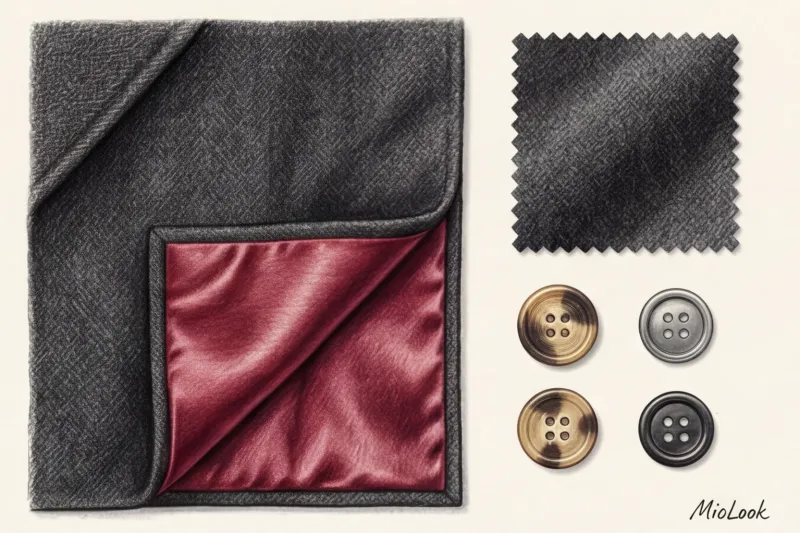
Cheap hardware is a dead giveaway of mass-market products. Even premium lines like Massimo Dutti and COS often use flat, dull plastic. Replacing these buttons with ones made of natural horn, coconut, or heavy metal costs around €15–€20 at a tailor's, but visually adds a €500 premium to the item.
Access to MioLook for €0.99 — one-time payment
A smart AI stylist will select the perfect winter look based on your preferences and outerwear.
Get access — €0.99 onceAn expensive down jacket is not an oxymoron: rules for choosing one
My clients (often top managers or business owners) regularly complain, "I can't wear a coat in the slush, but in a down jacket I feel like a teenager on a slide." This is a solvable problem.
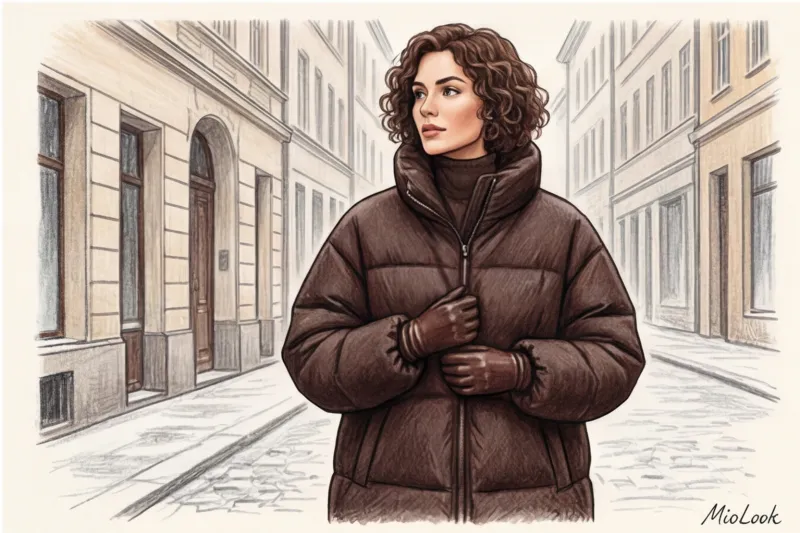
An expensive down jacket can exist if you avoid the typical sporty elements when choosing it. First of all, say "no" to glossy finishes. Matte, slightly velvety textures look much more refined.
The second rule is hidden hardware and absolute minimalism. Contrasting zippers, oversized logos on the sleeves, and an abundance of pockets cheapen the look. The fastening should be concealed under a magnetic or snap placket.
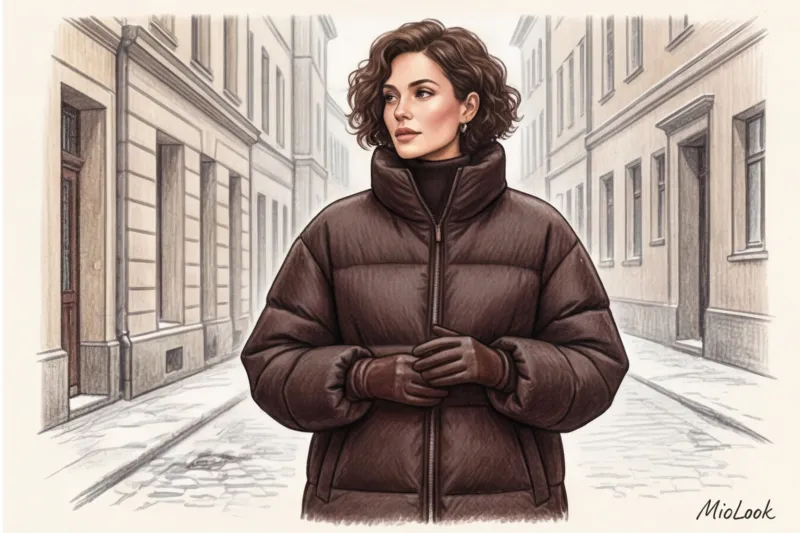
I also recommend following the "caterpillar rule": avoid tight horizontal quilting. Choose wide blocks (at least 15 cm) or a completely smooth surface that conceals the down filling.
As for color, forget about utilitarian black—it often looks dull. Replace it with dark chocolate, deep graphite, inky blue, or elegant khaki.
Winter Accessories That Show Off Class (Or Lack Of It)
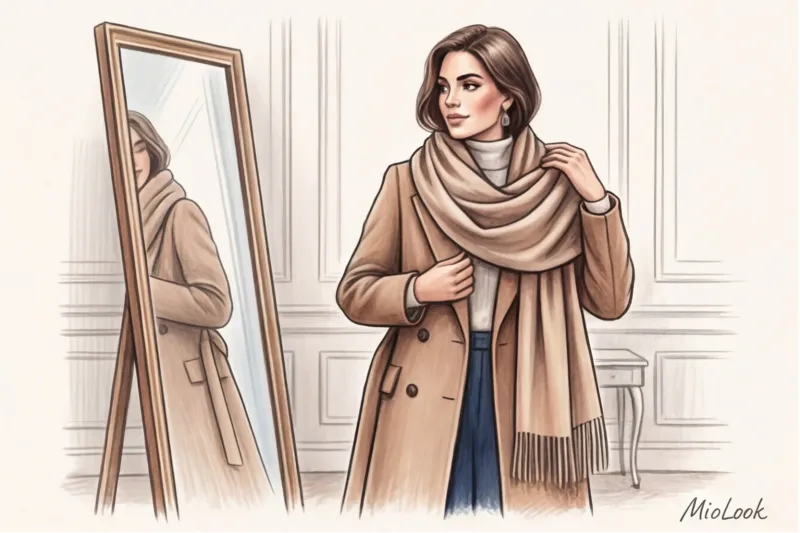
If you want to instantly dull your look, try wearing a ready-made hat, scarf, and gloves set knitted from the same yarn, tone-on-tone. This is absolute bad taste and betrays a lack of stylistic imagination.
Status is born in the art of textural contrast. Your accessory selection should be complex. For example:
- Smooth leather gloves in a deep burgundy shade
- Fluffy oatmeal cashmere scarf
- Thick ribbed wool beanie hat in graphite
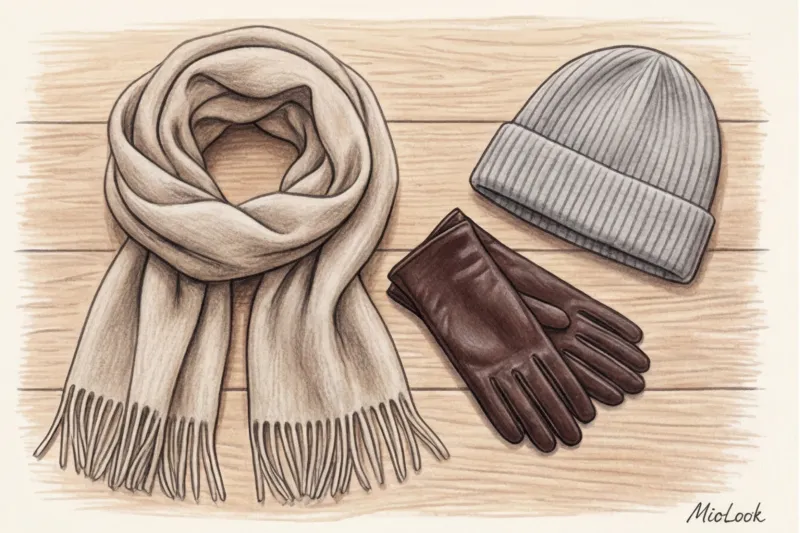
The size of the scarf matters. Short, narrow scarves don't provide warmth and look lonely. Choose voluminous stoles (at least 180 x 60 cm) that create a beautiful, rich drape around the face.
By the way, to avoid wasting your morning trying on clothes in front of the mirror, I recommend digitizing your accessories. By adding them to MioLook wardrobe , you can visually combine different textures of hats and scarves with outerwear right on your phone while drinking your morning coffee.
Pilling and snags are status killers
Even a Loro Piana scarf, costing an exorbitant amount of money, will look like it costs €5 if it's covered in pilling. A garment's care is more important than its tag.
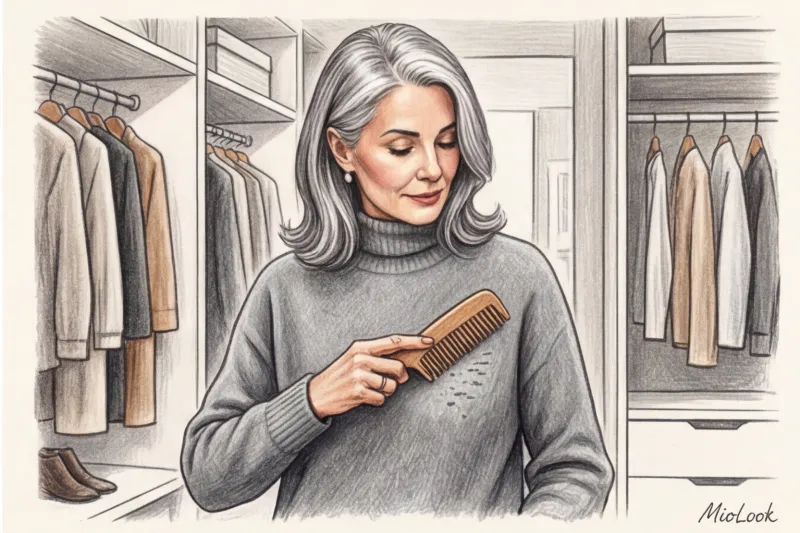
Every woman should have two tools in her arsenal: a high-quality electric depilling machine for thick wool and a special cashmere comb for delicate down. Treating items biweekly is a routine essential for maintaining an "expensive" look.
Shoes and bags in cold weather: protection from reagents and slush
In winter, the rule of volume contrast works flawlessly. Your outerwear is soft and voluminous (like a robe coat or a down jacket), meaning the bag you carry should have a rigid, architectural shape. Soft hobo bags against a down jacket transform the silhouette into a shapeless cloud.
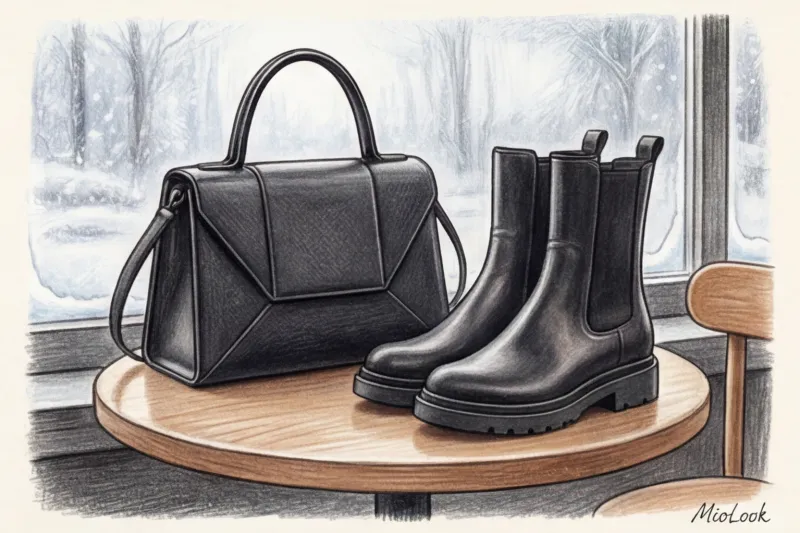
Shoes are a sign of your practicality. Suede over-the-knee boots look luxurious in winter only if you're only moving from your car to the front door. In the real world, when the sidewalks are covered in slush and chemicals, suede is a sign of detachment. Choose smooth leather.
Sole thickness is another consideration. Thin soles freeze within 15 minutes, leaving the shoes looking forlorn against a heavy winter upper. The perfect balance is a thick rubber sole with tread, which provides both warmth and proportional support.
Your perfect look starts here
Join thousands of users who look flawless every day and organize their looks with MioLook.
Get access — €0.99 onceKatarzyna's Checklist: 5 Steps to a State-of-the-Art Winter Wardrobe Without Breaking the Bank
To put all this theory into practice, I've prepared a pragmatic action plan for you before (or during) the winter season:
- Inspection of lining and composition. Don't buy a coat without checking the tag. Look for 70%+ wool and viscose/cupro inside.
- Budget for the studio. Always allow €30–50 on top of the cost of a mass-market coat for adjusting the sleeve length (it should reach the thumb bone) and replacing plastic buttons.
- Steaming the sets. Get out all your winter accessories. Mix them up, so leather, cashmere, and chunky knits create contrasting textures.
- Care as an investment. Before the first frost, buy some water-repellent impregnation, cedar shoe trees, and an anti-pilling machine.
- Focus on architecture. If you're unsure about the color or brand, choose the one that best holds the shape of your shoulder and creates a clear vertical line.
Being stylish in winter isn't about braving the cold for the sake of beauty or spending thousands of euros on designer labels. True class comes from a pragmatic approach: staying warm, comfortable, and maintaining a flawless silhouette even in the heaviest snowfall.