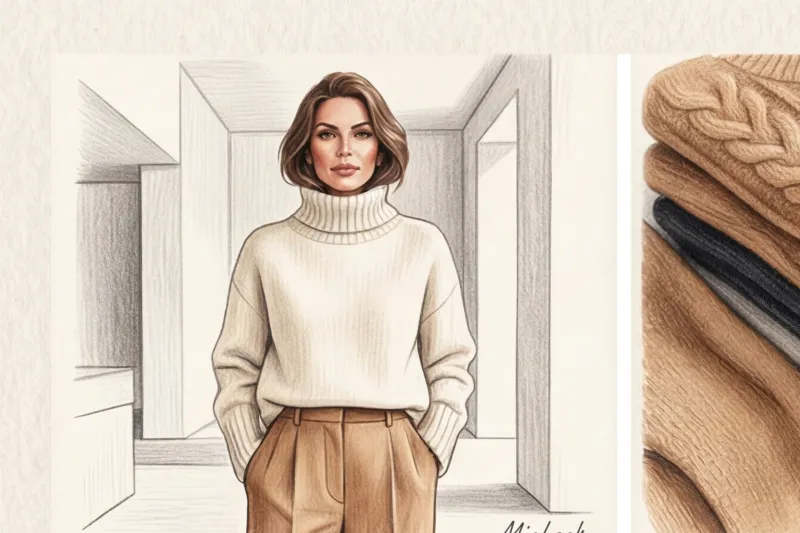
A client once came to me in tears over something she thought should have brought her nothing but joy. She'd spent €500 on a 100% cashmere sweater from a famous brand. On the mannequin, it looked like the epitome of luxury. But on her? "Isabella, I look like I just got out of bed and forgot to take off my pajamas," she said, looking in the mirror. And she was right.
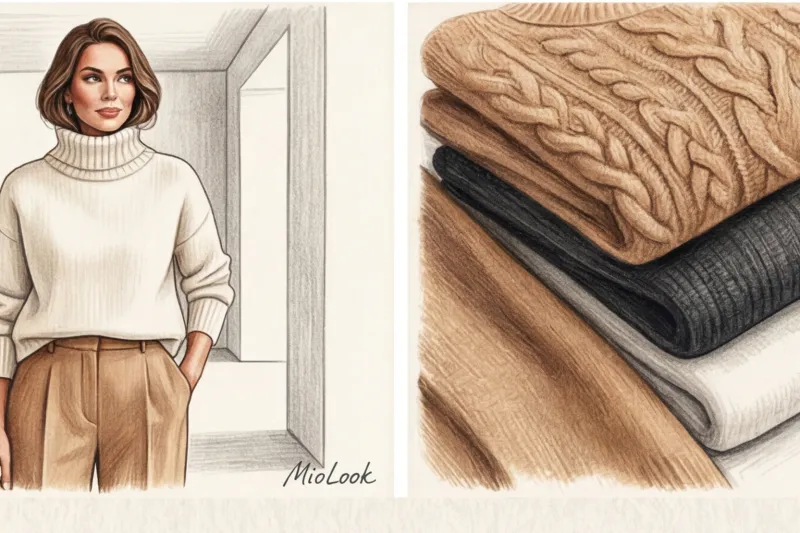
We removed that shapeless, expensive cashmere and replaced it with a chunky wool blend jumper from a mass-market store for €80. The effect was immediate: the shoulders straightened, the silhouette tightened, and the look looked like it had been put together by Loro Piana stylists. What's the secret? The answer lies in... How to look expensive in knitwear , without relying solely on the price tag.
We have already discussed in more detail the basics of forming such a base in our a complete guide to a basic knitwear wardrobe , but today I want to go further. We're not talking about shopping, but about style engineering. Forget clichés like "just buy cashmere." True chic requires contrast, a knowledge of textures, and an ability to work with proportions.
How to look expensive in knitwear: the "Architecture of Comfort" rule
When you analyze the collections of such "quiet luxury" behemoths as The Row or Brunello Cucinelli, you'll notice one common detail. Their knitwear never hangs limp. It has what I call architecture of comfort.
The main enemy of elegance in the cold season is the pajama effect. It occurs when soft, loose fabric completely obeys gravity and the contours of your body, highlighting every fold and bra strap. A luxurious look starts with form.
I had a telling case in my practice. While sorting through a client's fall/winter capsule wardrobe, we laid out five sweaters on the bed. I kept only two. Why? They had a rigid engineering base:
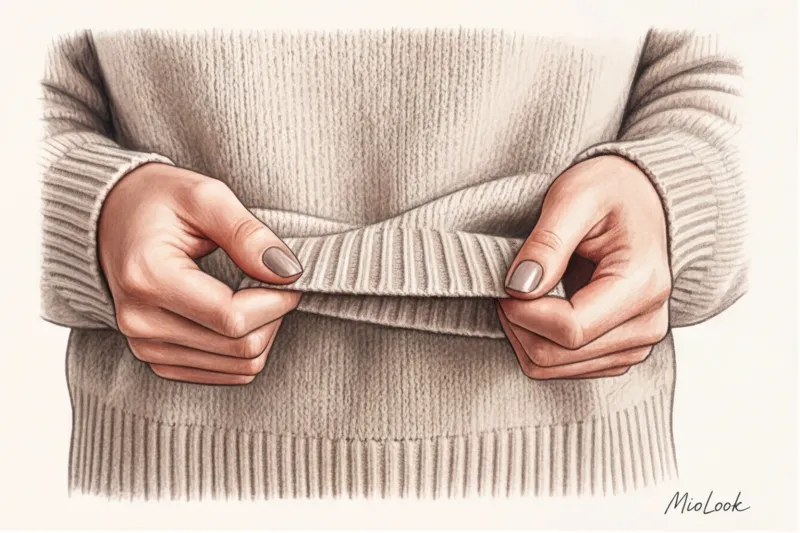
- Thick elastic cuff: It allows you to pull the sleeves up, exposing the wrists, and securely holds them there.
- Clear shoulder line: The seam should either be perfectly positioned (for a classic jumper) or have an exaggerated, deliberately oversized drop. Anything in between looks like you've chosen the wrong size.
- High knitting density: The fabric should not be see-through even in the light.
By investing in a piece that holds its shape, you dramatically reduce your Cost Per Wear (CPOW). A €150 jumper that makes you look like a goddess 60 days a year is much more affordable than a shapeless €30 piece.
Your perfect look starts here
Join thousands of users who look flawless every day with MioLook.
Get access — €0.99 onceThe Anatomy of a Statement Sweater: Texture, Composition, and Shades
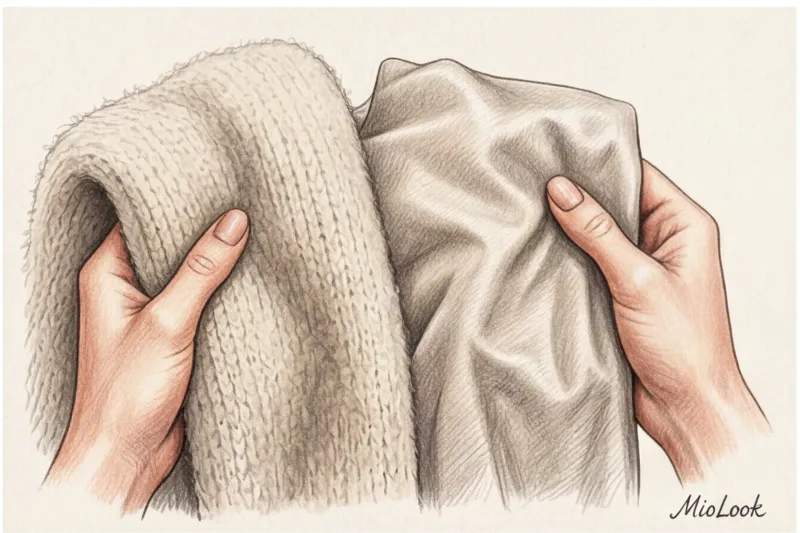
How can you visually distinguish a piece that will enhance your status from one that will ruin it? Just look at the consistency of the stitches. In a quality garment, the stitches lie in neat rows, like soldiers, creating a monolithic fabric.
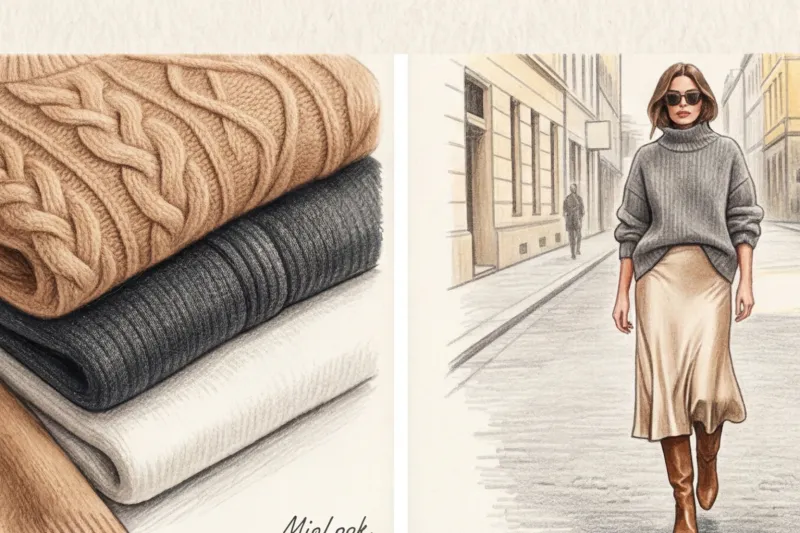
Color plays a colossal role in visual psychology. According to research by the Pantone Color Institute (2024), consumers subconsciously associate unbleached, natural shades with eco-friendliness and premium appeal. The "Old Money" palette isn't just a trend; it's a tool for manipulating perception:
- Deep graphite (looks more complex and more expensive than black);
- Camel and warm caramel;
- Milky, ecru and butter shades;
- Dark chocolate.
Light knitwear always looks more prestigious than dark one because it conveys a message to the world: "My lifestyle allows me to wear impractical, easily soiled clothes.".
Debunking the 100% Cashmere Myth
This is probably my most unpopular opinion as a stylist, but I have to say it: thin, cheap, mass-market cashmere is the worst investment in your wardrobe.
"The myth that any tag that says '100% Cashmere' automatically makes you a style icon is the biggest marketing ploy of the decade."
What happens to cashmere that costs €70–100? To cut costs, manufacturers use short fibers and a loose twist. As a result, after three days of wear, the item becomes covered in pills, stretches out at the elbows, and clings to everything you want to hide. By the way, if you're looking for advice on... How to hide broad shoulders , thin cashmere is absolutely contraindicated for you - it will only emphasize the massiveness of the top.
What to look for instead? Ideal blends. Cotton combined with merino (for example, 70/30) produces incredible density. And adding 10–20% high-quality polyamide or nylon to sheep's wool isn't a crime against style, but a guarantee that, according to quality standards (such as Woolmark's requirements for dimensional stability), your garment will survive many winters without shrinking.
Styling Magic: Techniques That Multiply the Value of Your Look by 10
The main rule of an expensive look is the law of contrasting textures. Remember: we never wear soft with soft. Sweater + knit joggers = you're going for a walk with the dog. Sweater + structured leather skirt = you're a street style heroine.
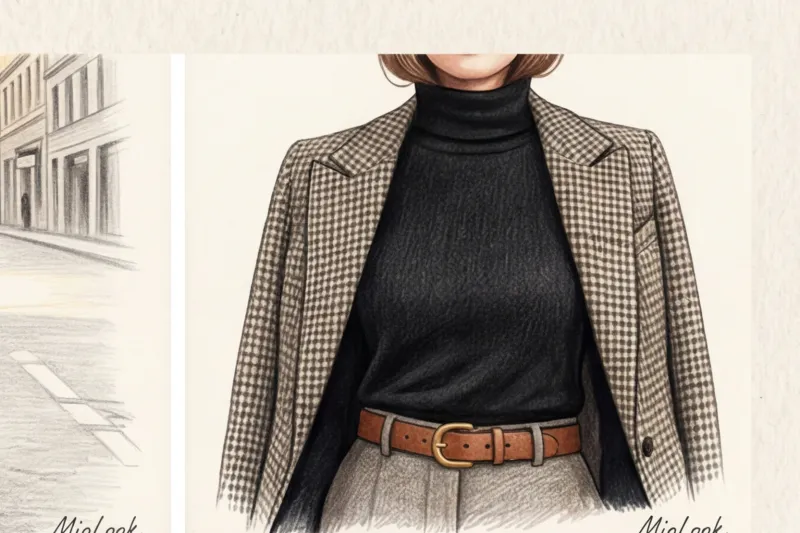
In my practice, I use two foolproof formulas:
- Scandinavian chic: A chunky knit sweater + a flowing silk slip skirt + rugged leather tube boots with a sturdy heel. The rough wool accentuates the softness of the silk, while the boots ground the look.
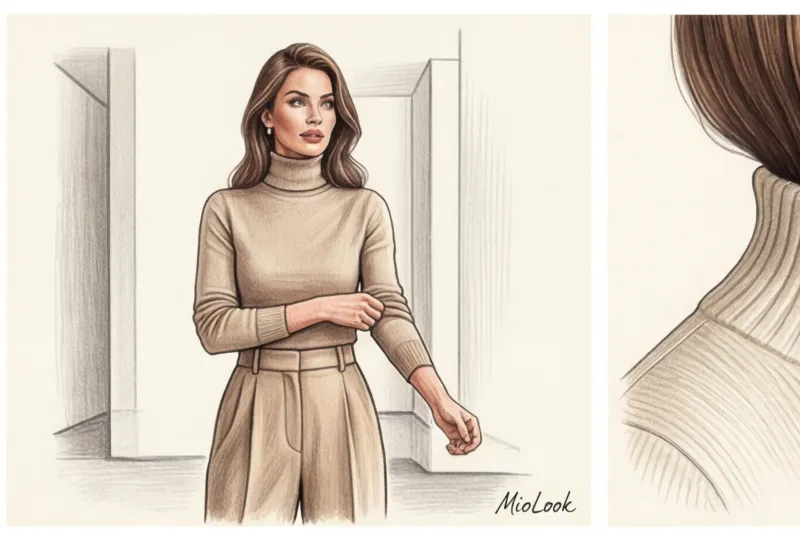
- Urban minimalism: Smooth thin turtleneck (wool with silk) + structured oversized men's jacket + palazzo trousers with pleats.
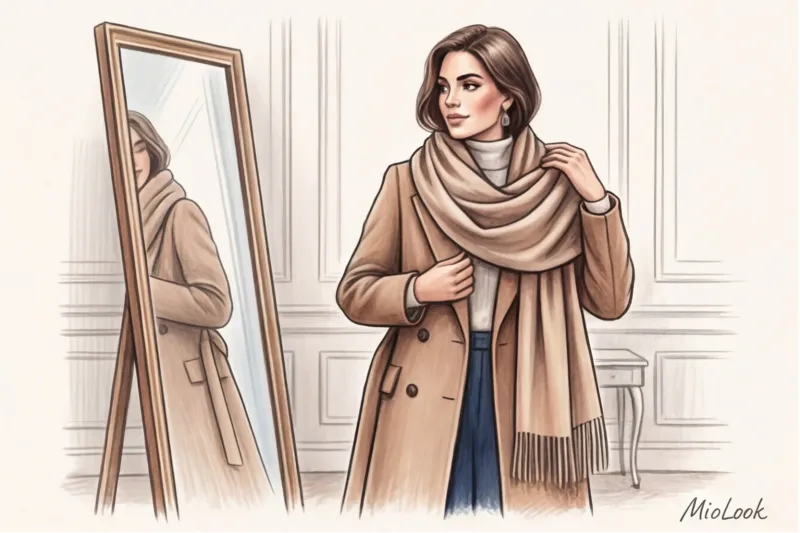
And now for my favorite Mediterranean trick, which I love to use on the Italian streets: skip the sweater and drape it casually over a structured wool coat or a classic trench coat, tying the sleeves in a loose knot. This creates layering and that "I didn't try to look amazing, it just happened" vibe.
Access to MioLook for €0.99 — one-time payment
A smart AI stylist will select the perfect look based on your textures and silhouettes.
Get access — €0.99 onceThe art of the correct turn
How many times have you tried to tuck a thick winter sweater into your jeans and ended up with a weird bump in your stomach? Tucking in thick knitwear completely is an aesthetic crime.
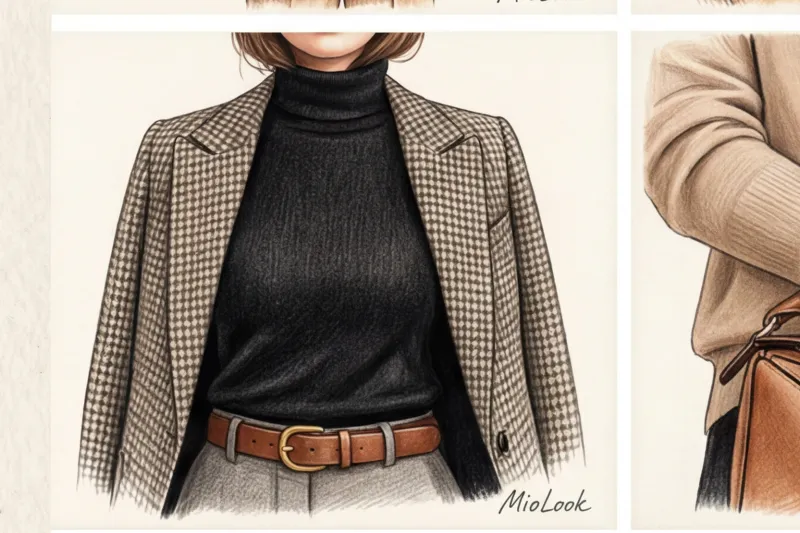
Use the "French tuck" technique: tuck only 5-7 centimeters of fabric in the front, either directly in the center or slightly to the side, leaving the back hanging loosely. This defines the waistline while maintaining a relaxed look.
Secret trick of stylists: If your sweater is too long, place a thin, smooth belt (leather or chain) around your waist over it, then pull the fabric up so it hangs over the belt, completely hiding it. You'll get the perfect cropped silhouette with a flattering drape. But be careful: this trick doesn't work on thin ribbed turtlenecks—they'll bunch up. If your goal is - visually make the waist thinner This method, using a draped, thick fabric, will create the desired volume at the top, contrasting with the narrow bottom.
Game-Changing Accessories
The most common mistake I see women make on the street is wearing a cozy, oversized sweater and carrying a soft hobo bag or a shapeless tote bag. There's nothing to catch the eye, and the look just floats.
Knitwear requires a rigid counterweight. You need structured bags with rigid geometric shapes (square, trapezoid, baguette with a clear frame). The same goes for shoes: loafers with a pointed or chopped square toe will work a thousand times better than round, soft ballet flats.
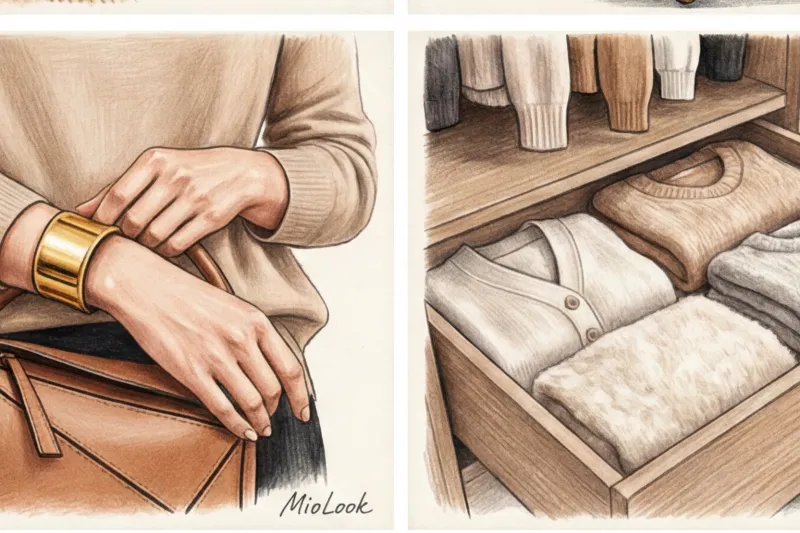
Jewelry deserves special attention. To make a sweater look like a million bucks, add chunky yet understated pieces. My absolute favorite of recent seasons is a smooth, rigid cuff bracelet in gold or silver, worn right over the sleeve A smooth turtleneck or jumper. This is a technique Saint Laurent stylists constantly use, and it flawlessly transforms a boring basic into high fashion.
Caring for knitwear: what instantly reveals cheapness
No amount of styling can save a garment that looks unkempt. Let's be realistic: pilling happens. And it's not always a sign of a bad garment.
According to textile lab reports, even premium 100% merino or cashmere costing €1,000 will pill in areas of intense friction (under the arms, where it touches a bag). The difference is that high-quality items are easy to remove pills from. A high-quality pill remover is the most cost-effective gadget in your home.
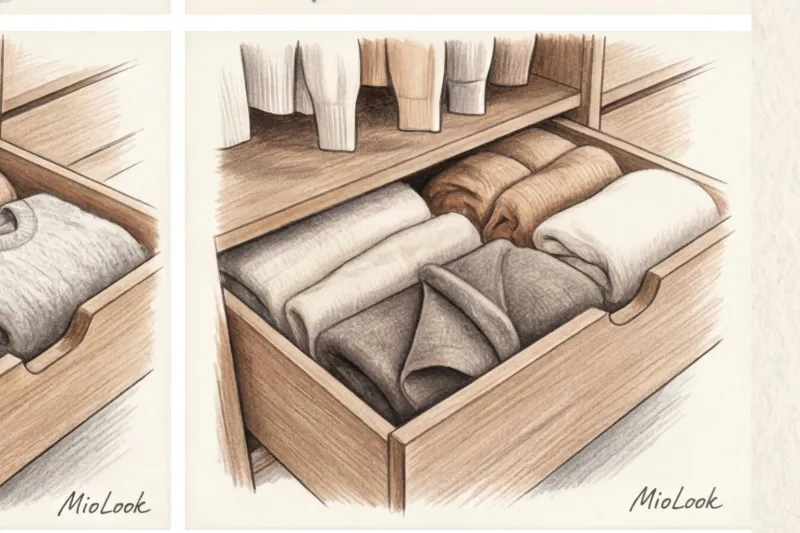
What really ruins an expensive uniform is improper washing and storage. Remember the golden rules of care:
- Never dry knitwear vertically. Only when laid out on a horizontal surface on a towel.
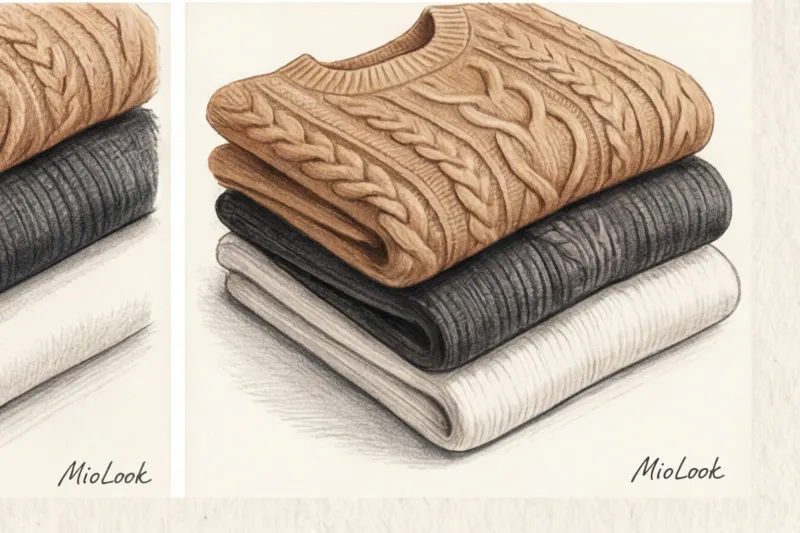
- No hangers. Storing sweaters on hangers stretches the shoulder line, leaving unsightly earlobes, and distorts the neckline. Only neat stacks on closet shelves are suitable.
- The 24-hour rule. Wool is a living, resilient material. Let your sweater "rest" for at least a day after wearing, and the fibers will naturally regain their original springiness.
Ready to get started?
Try a free plan—no commitments. Add your sweaters to your virtual wardrobe.
Get access — €0.99 onceChecklist: 5 steps to a status look in a simple jumper
So, let's put all this knowledge together. Before leaving the house, go through this list:
- Check the density: Your underwear or body contours should not show through the knitting.
- Integrate contrasting texture: If the top is wool, the bottom should be made of silk, thick denim, leather or suiting fabric.
- Add rigidity: Incorporate a structured element into your look, whether it's a belt with a chunky buckle or trousers with crisp creases.
- Expose your wrists: Pull your sleeves up slightly. Thin wrists peeking out from the voluminous sleeves are that "elegance zone" that makes the silhouette appear fragile.
- Complete the architecture: Take a rigid frame bag and add a drop of metal (earrings or a bracelet).
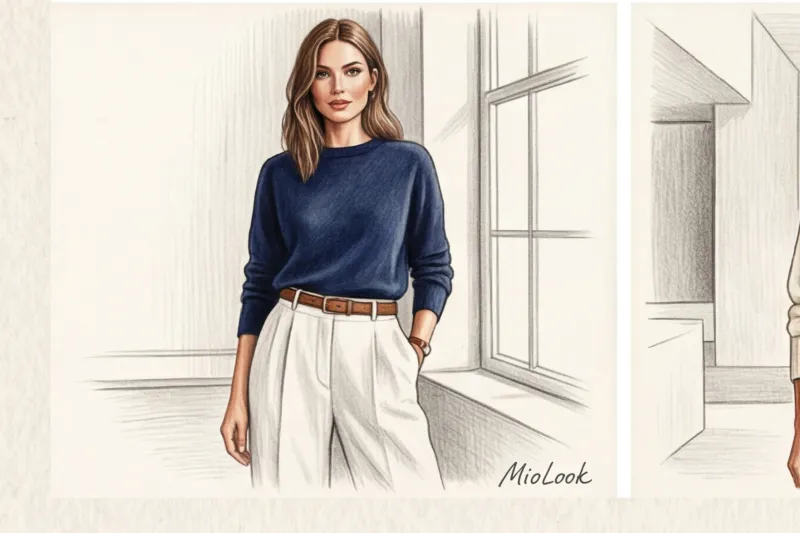
Sometimes it can be difficult to put together such a combination from existing items. At such moments, I always advise my clients to delegate the routine to technology. By uploading your clothes to the app MioLook , you'll let the AI stylist analyze textures and suggest those very contrasting combinations we talked about today, saving you hours of morning thinking in front of your closet.
Confidence is your best accessory
Ultimately, true elegance isn't about the array of brands in your closet. It's when clothes serve you, not you serve them. When a sweater doesn't force you to slouch or constantly tug at the hem, but rather, fosters a noble posture.
I urge you to open your fall/winter wardrobe this evening. Conduct an honest inventory. Ruthlessly get rid of (or relegate to loungewear) items with that famous "pajama effect." Keep only those sweaters and turtlenecks that have a clear design, the right blend or dense natural fabric, and a refined shade.
Even if you only have two sweaters left, they're already the perfect base. Create your own cozy architecture every day, play with contrasts, and you'll notice how not only your appearance changes, but also the dignity with which you carry yourself in this world.