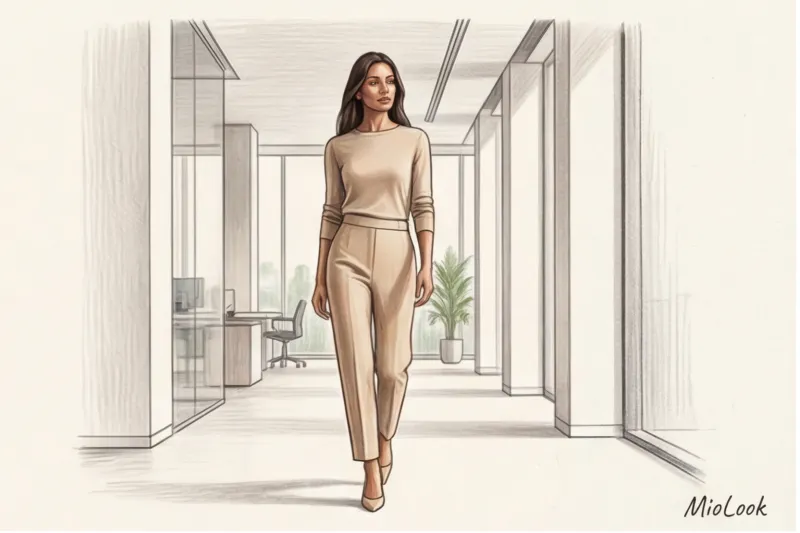
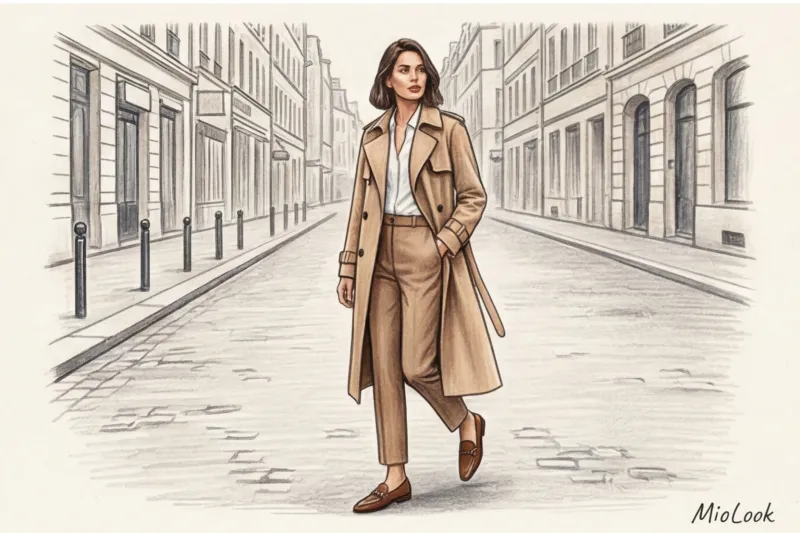
Over 12 years of working as a personal stylist, I've learned one hard and fast rule: anything that looks like wealth is always perceived as fake. You've probably noticed this on the streets of European capitals: a woman walks by in a simple beige trench coat, devoid of any logo, and you intuitively know she's a wealthy person. Next comes a girl, covered head to toe in shiny monogrammed buckles, but her look screams insecurity, not status.
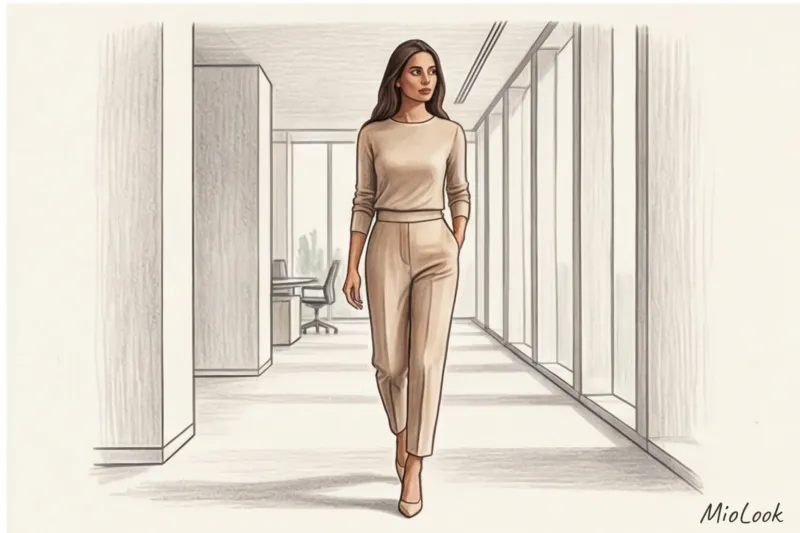
What's the secret? Why does one outfit look like a million dollars, while another, even purchased for a lot of money, makes its owner feel cheaper? The answer lies not in price tags, but in the architecture of cuts, the mathematics of wardrobe, and simple neurobiology. I discussed the mechanisms of perception in more detail in our The Complete Guide to Psychology: How Clothing Affects First Impressions , but today we'll narrow our focus. We'll dive deep into how to look expensive while staying within the budget of European mass-market brands like COS, Zara, or Massimo Dutti.
The Neurobiology of Status: Why the Brain Reads One Image as "Expensive" and Another as "Cheap"
Research in the laboratory of psychologist Alexander Todorov (Princeton University) has proven that our brains form assessments of a person's status, competence, and attractiveness within the first milliseconds of eye contact. When we scan someone's silhouette, we're not assessing the brand (the label is simply invisible from that distance). We're assessing cognitive load.
There is a concept among high-end stylists Visual Quietness This is a complete absence of distracting details, flashy prints, and logos. The brain is lazy: the easier it is to process an image, the more "correct" and, therefore, prestigious it seems. The answer to the eternal female question "how to look expensive" is the art of managing others' attention, not showing off a bank statement.
Visual noise effect
Evolutionarily, an abundance of small details (numerous zippers, rhinestones, ruffles, contrasting stitching) is perceived as fuss and a sign of low social rank. Status has historically been associated with monumentality, calm, and clean lines. If your outfit causes your interlocutor's eye to jump from the gold buckle to the leopard print, and from there to the intricate drapery, you create visual noise. True status is solidity.
Your perfect look starts here
Join thousands of users who look flawless every day with the help of smart capsule selection.
Get access — €0.99 onceThe Biggest Myth of Status: Why Logos and Mass-Market "Quiet Luxury" Don't Work
One of the most dangerous trends of recent years is the attempt to replicate the "Old Money" aesthetic with cheap items. It's counterintuitive, but trying to look like an aristocrat in a €40 Zara jacket makes the look as cheap as possible.
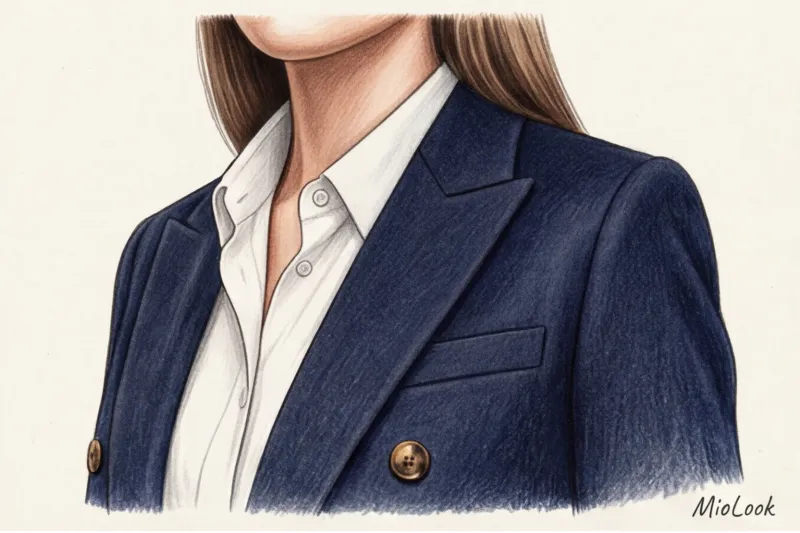
The problem lies in the materials. Cheap, loose tweed, imitating Chanel, falls apart at the seams after a month. But the biggest culprit is the hardware. Mass-market brands skimp on buttons and zippers. Shiny plastic buttons the color of samovar gold can ruin even a decent wool blend.
In my experience, this rule works flawlessly: I always, without exception, cut off the original plastic buttons from jackets from H&M, Mango, and Zara. I go to a haberdashery, buy a set of natural horn, metal, or mother-of-pearl buttons (these cost about €8-€15), and sew them on. This simple manipulation instantly increases the visual value of the garment by €200.
As for logos, they're a marker of insecurity. When you wear a belt with a huge Gucci buckle, it's as if you're asking the brand to share its status with you. Truly expensive items are recognized by their cut, not by the letters on the chest.
Cut Architecture: The Number One Secret to Looking Expensive on Any Budget
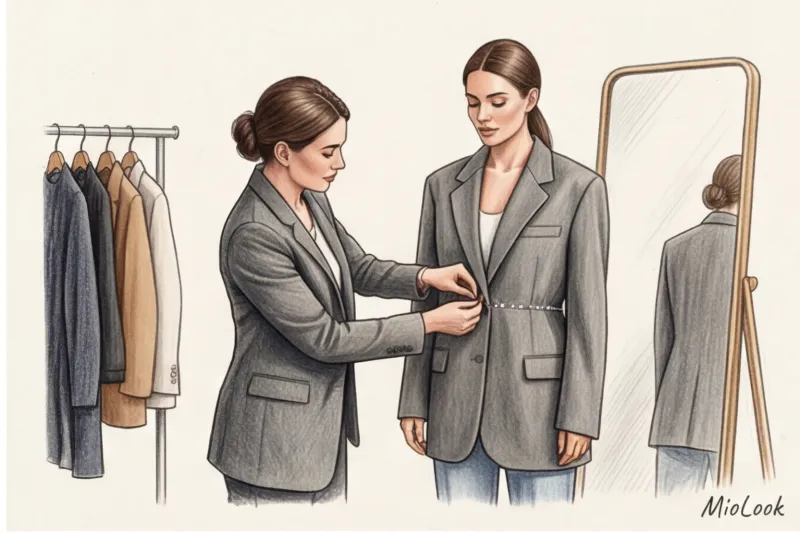
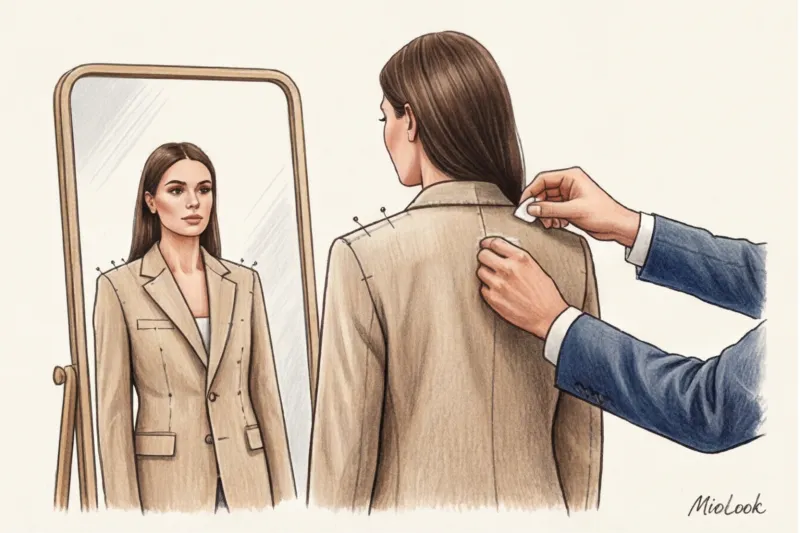
According to the principles of sartorial elegance developed by the British Guild of Tailors, 80% of a garment's perceived value depends on the fit at the shoulder and the correct sleeve length. If the shoulder seam hangs down and the sleeve covers half the palm, the garment looks like it's been worn by an older sister.
One of my clients, a successful top manager, loved buying jackets from luxury boutiques (with price tags ranging from €1,500 to €2,000). But at boardroom meetings, she looked out of place and disorganized. The reason? She's unusually tall, and the sleeves of all her jackets were 3 centimeters too long. Once we took her basic jacket to a tailor and shortened the sleeves to the wristbone, her figure's proportions were elongated, and her look acquired that all-important, classy edge.
The mathematics of style are inexorable: a basic blazer from H&M for €50, plus a tailored fit for €20, will always look like €500. And a luxury jacket that doesn't fit will always remain an expensive mistake. Don't forget the "air" rule: there should be space between your body and the fabric. A semi-fitted silhouette is the foundation of a classy wardrobe. Overly tight pieces cheapen the look, robbing it of mystery and dignity.
Investing in a Tailor
There are clear rules about what can and should be altered, and what can't. Feel free to bring your trousers (to be shortened, to be made shorter at the waist), dresses (to be made deeper at the darts), and sleeves to a tailor. But never Don't buy a jacket or coat that doesn't fit properly in the shoulders. Re-cutting the shoulder line and adding a shoulder pad will cost so much and distort the proportions of the garment that it's easier to just look for something in your size. By the way, if you're concerned about proportions, I recommend checking out our article on How to hide broad shoulders with clothing.
Access to MioLook for €0.99 — one-time payment
A smart AI stylist will select the perfect look based on your individual proportions and your existing wardrobe.
Get access — €0.99 onceTextures that deceive the eye: fabrics with high status
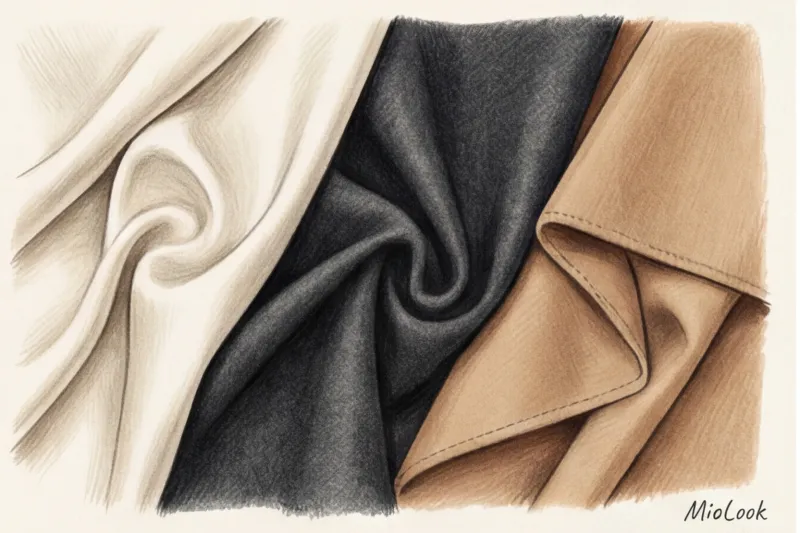
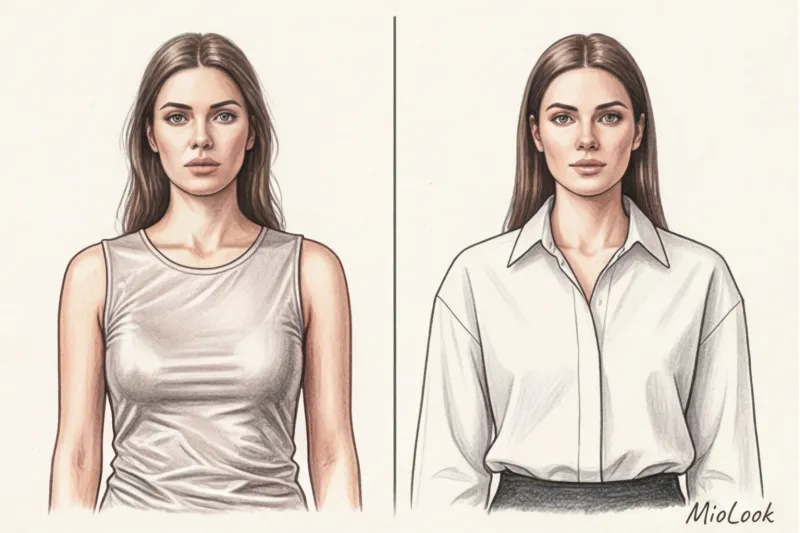
The second most important detail after the cut is the fabric. The main enemy of a luxurious impression is the satin sheen of cheap polyester. Shiny fabrics reflect light and highlight the slightest imperfections in the cut and figure. Matte, noble textures (heavyweight cotton from 180 g/m², merino wool, matte silk) absorb light, creating a deep, rich color.
How do you find "diamonds" in stores like Massimo Dutti or & Other Stories? Read the labels and apply the 20% rule. Don't be fanatical about 100% wool. For trousers or a jacket, a 15-20% polyamide or elastane blend is a boon. This blend holds its shape better, wrinkles less, and doesn't stretch out at the knees. However, if the synthetic content is more than 30%, the garment will quickly become pilled.
Practitioner instructions: While in a store, squeeze the edge of a pant leg or the hem of a jacket in your fist for 10 seconds. If the fabric straightens out and remains smooth, take it. If it's heavily creased, leave it on the hanger. In real life, you'll be sitting in an office, in a taxi, at business lunches, and wrinkled clothes will ruin all the status quo.
Well-groomed appearance is the main marker: an “expensive” image does not begin with clothes
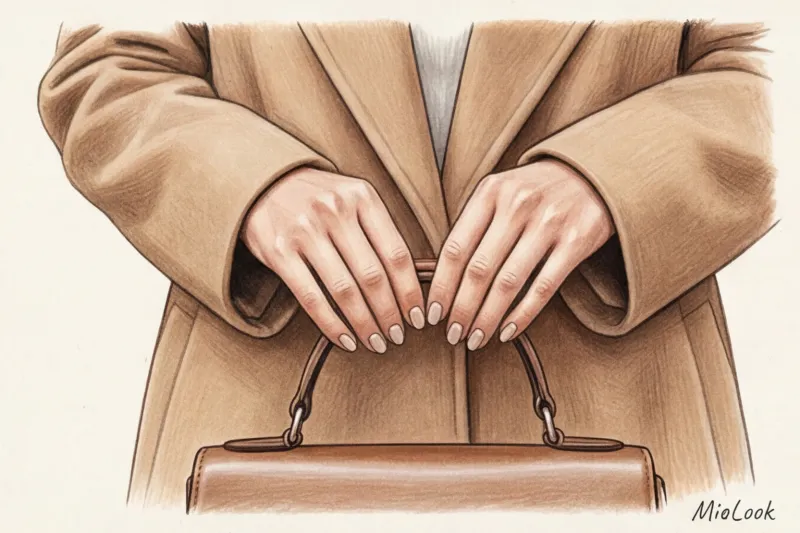
You can wear a flawless €1,000 silk blouse, but if it's wrinkled, you'll look like you spent the night at the train station. Status is all about attention to detail.
There is an unspoken rule of "three points of grooming" that people pay attention to subconsciously:
- Shoes: Perfect cleanliness, no scuffs on the toes and fresh heels.
- Hair: freshness, pure color and neat, tight cut ends.
- Hands: A clean manicure. No polish looks more classy than a chipped edge or a three-millimeter-thick gel polish.
I often repeat a rather harsh phrase to my clients: "Better a perfect haircut, clear skin, and an ironed white T-shirt from H&M for €10 than a Dior bag and two-centimeter-long gray roots." Clothes are just a frame; the painting is you.
Your most important wardrobe investments shouldn't be new shoes, but a powerful handheld steamer and a high-quality lint remover. A quick steaming run over a sweater before heading out takes just two minutes, but the difference in feel is dramatic.
Status Accessories: Where to Invest
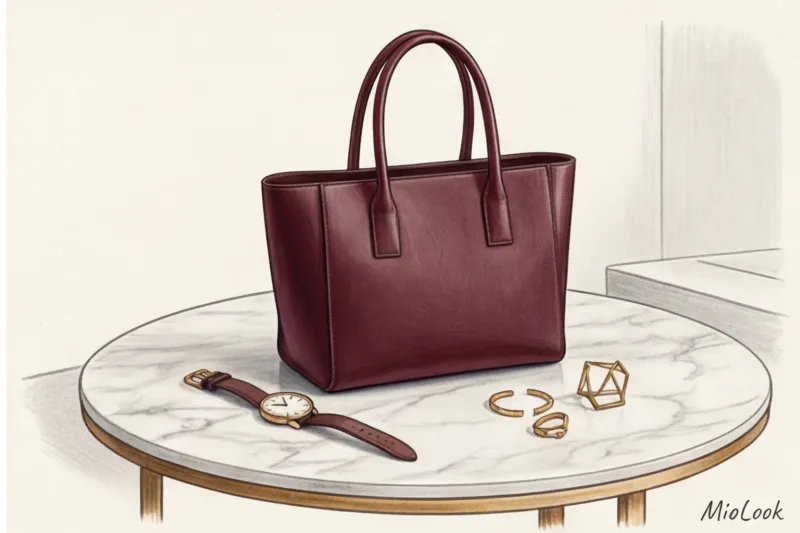
While clothes can be mass-market, it's harder to save on accessories. However, this doesn't mean you need to take out loans to buy Hermès bags. The key to selection of status accessories lies in their geometry.
Bags: A rigid form always wins over a soft one. Shapeless shoppers made of thin leather, which collapse like a deflated balloon when placed on a table, convey a relaxed (sometimes excessive) air. Structured bags (totes) made of thick leather subconsciously convey order and control. In the mid-price segment (in the €250–€500 range), brands like Polene, Coccinelle, and APC offer architectural bags that look every bit as "heavyweight luxury."
Shoes: A pointed or almond-shaped toe always looks more elegant and expensive than a round one. Choose smooth, matte leather. Suede is beautiful, but in the harsh European autumn climate, it loses its appearance within a couple of weeks, and worn suede is a death sentence for a classy look.
Decorations: Forget jewelry sets (parures) where earrings, a ring, and a necklace are all designed in the same style. Today, this looks old-fashioned and forced. Today, the wealthy woman opts for simple, accent pieces—for example, a vintage watch on a leather strap or smooth metal drop earrings without a scattering of small stones.
Katarzyna's Checklist: 5 Steps to a Fashionable Wardrobe Without Debt
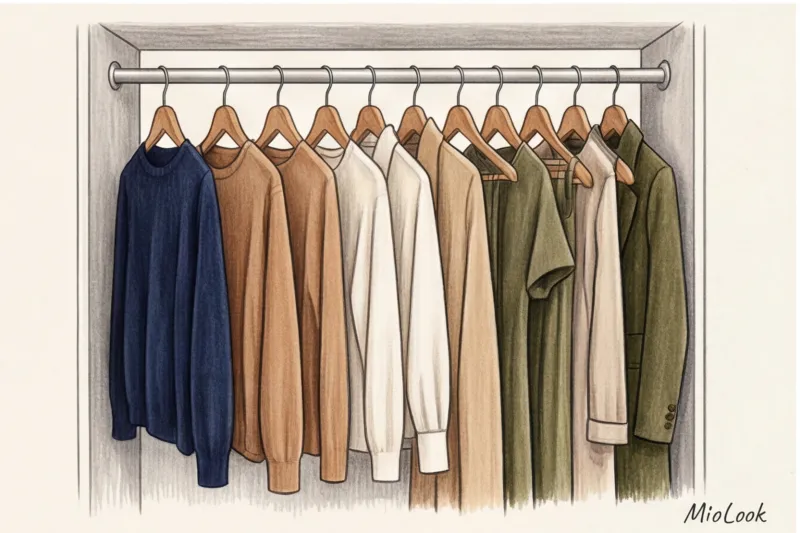
To summarize, I'd like to give you a step-by-step action plan. This is the checklist we begin working with clients with during the first consultation:
- Merciless revision. Remove anything from your closet that's out of style: sweaters with intractable pilling, black pants that have turned gray after washing, jeans with stretched knees. One tired item can ruin the entire ensemble.
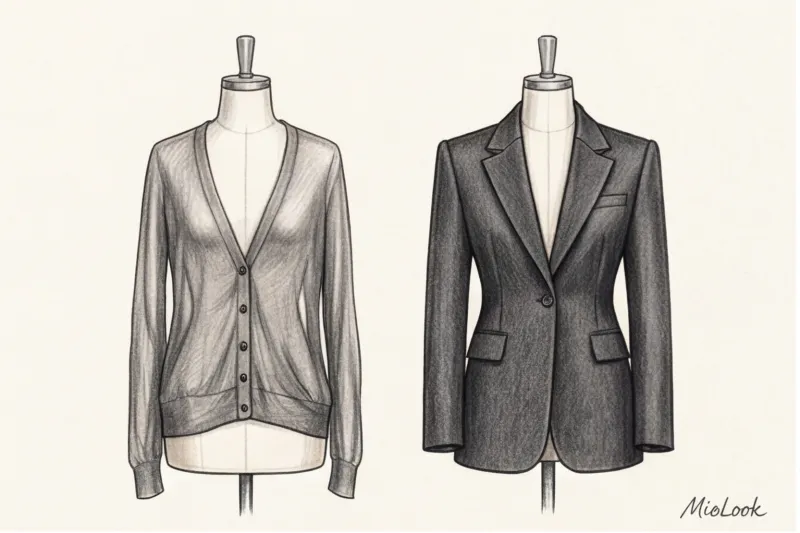
- Upgrade of fittings. Check out your basic jackets, cardigans, and trench coats. Replace flimsy plastic with buttons made from natural materials.
- Implementing a care routine. Place your steamer in a visible location, rather than hiding it in a closet. Make using it a daily habit.
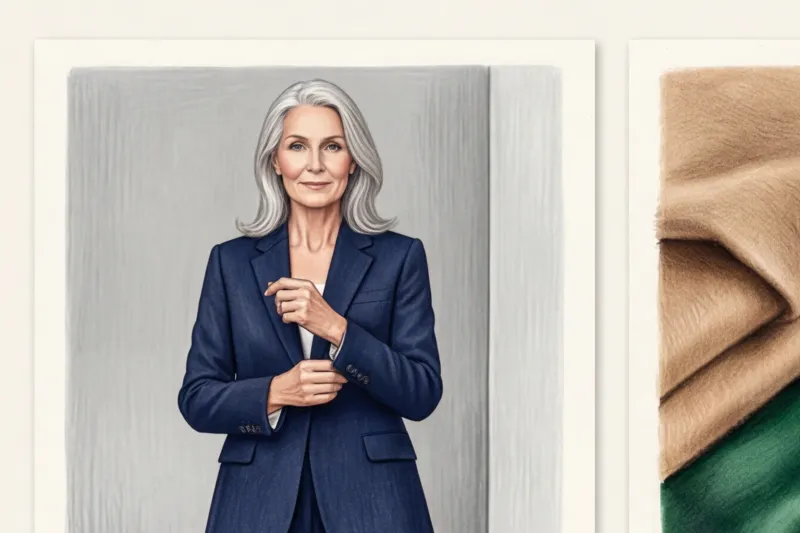
- Transition to a "rich" palette. Save the neon colors for the gym. Create a base in shades historically considered elegant: Camel, Navy, Ivory, Emerald, Burgundy.
- Finding your master. Find a good tailor near you. Get your favorite pants tailored to your shape, and you'll be amazed at how your reflection in the mirror changes.
Ready to get started?
Try the MioLook free plan—no commitments required. Organize your closet virtually and create iconic looks in just a few clicks.
Get access — €0.99 onceConclusion: status is the absence of fuss
An expensive look isn't a display of financial means. It's a demonstration of respect for oneself and others. Status is born from the intersection of discipline (well-groomed clothes) and physical comfort.
When nothing's pinching you, you don't have to constantly tug at your sleeves, the fabric feels comfortable, and the chest isn't overlaid with a logo, you automatically change your body language. You project inner confidence and calm. Clothes are just high-quality packaging, a tool that should work for you, not you for them. Invest in the right cut, maintain clean lines, and your wardrobe will always look impeccable, no matter how much you spend on shopping.