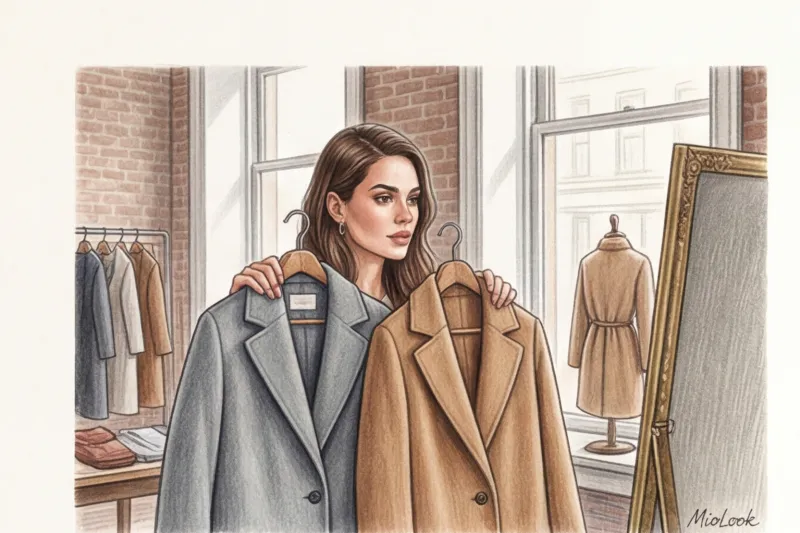
One of my clients was literally crying in the fitting room. A month ago, she bought a premium 100% cashmere coat for a hefty sum, and now she has unsightly bald spots and pilling on her chest and left thigh. The culprit? The seat belt in her car. When asked, How to choose a good wool coat Most people expect advice to look for the coveted "100% wool" tag and base color. But as a textile expert and stylist, I can tell you: sometimes the ideal composition isn't pure wool at all, and the quality of a garment lies far beyond the face fabric.
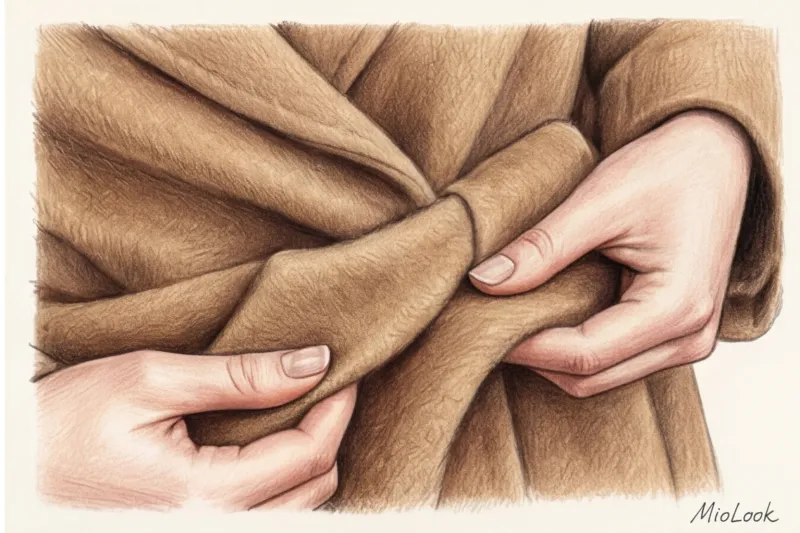
Today, we won't be talking about abstract trends. We'll examine a coat as an engineering construct. I'll teach you how to feel interlining, check the viability of seams, and distinguish a high-status item from a mass-market item based on one small detail that no one notices.
The Anatomy of Fabric: How to Choose a Good Wool Coat Without Overpaying for Marketing
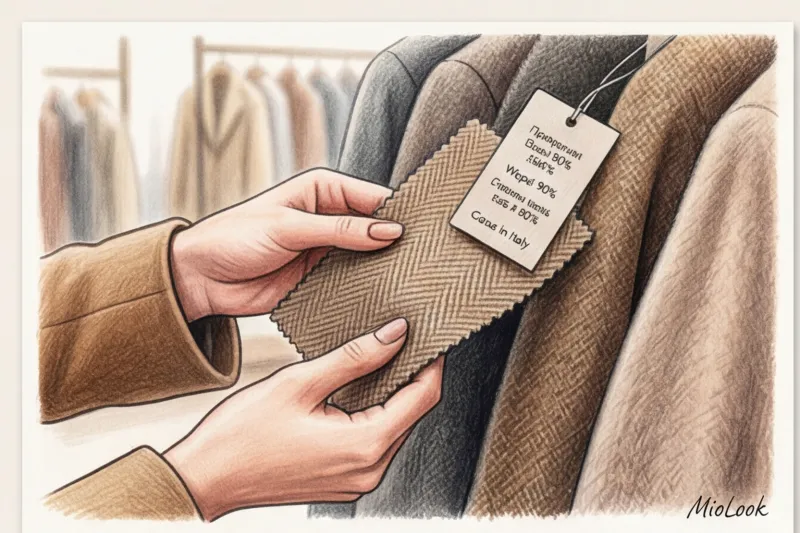
Price tags and a big brand name no longer guarantee quality. According to The Woolmark Company's 2023 report, the share of low-quality recycled wool in the mid-market segment has grown by 40%. Manufacturers have learned to chemically soften cheap raw materials to make them appear luxurious in stores. But after the first wet snow, such fabric turns into stiff felt.
Let's break down the labels so you know what you're paying for:
- Virgin wool — the most elastic and durable. It has not been processed, so the thread retains its natural springiness.
- Merino — fine-wool sheepskin. Excellent balance of softness and wear resistance.
- Alpaca - seven times warmer than sheep's wool and practically does not form pellets (pilling), since its fiber is smoother.
- Cashmere — a luxury for tactile maniacs, but absolutely unsuitable for harsh daily loads.
The first rule I instill in my clients: weigh the coat in your hands The optimal fabric weight for a full-fledged winter garment is 500–700 g/m². If a winter coat feels light as a feather, it's likely a demi-season item that will freeze you at -5°C, despite all the salespeople's promises.
The 100% Wool Myth: When Synthetics Save the Day
Now here's a counterintuitive fact that often sparks debate: 100% wool or cashmere are poor choices for an everyday urban coat, especially if you drive or carry a crossbody bag with a stiff strap.
"Pure wool has low tensile strength. Adding just 10–20% polyamide (nylon) acts like steel reinforcement in concrete, increasing the fabric's abrasion resistance by 30% and preventing elbows from becoming deformed."
Look for a combination of 80% wool and 20% polyamide on the label. This is the gold standard. But what you should really avoid is acrylic and polyester The base is made of acrylic. Acrylic doesn't provide warmth, but rather creates a "greenhouse" effect, causing you to sweat. It also forms hard balls after just two weeks of wear.
Test drive in the fitting room: checking for peeling propensity
Over 12 years of work, I've developed two simple crash tests that need to be done right in the store (consultants don't like this, but your money is more important):
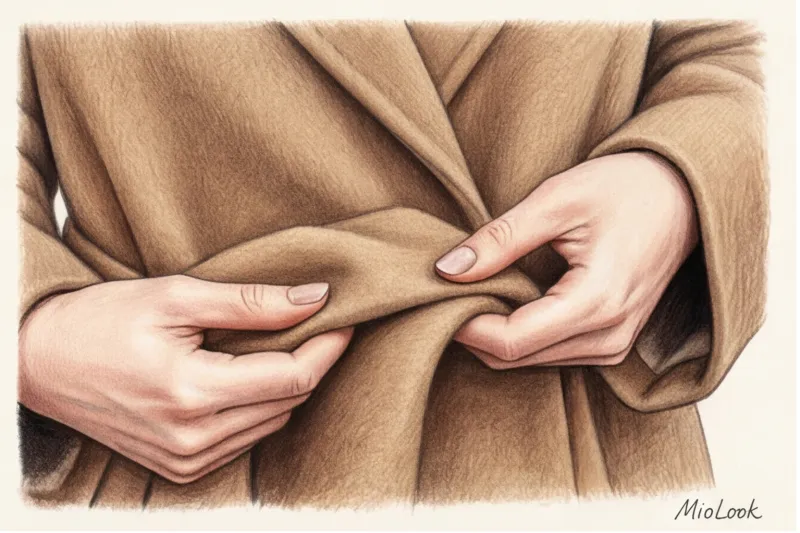
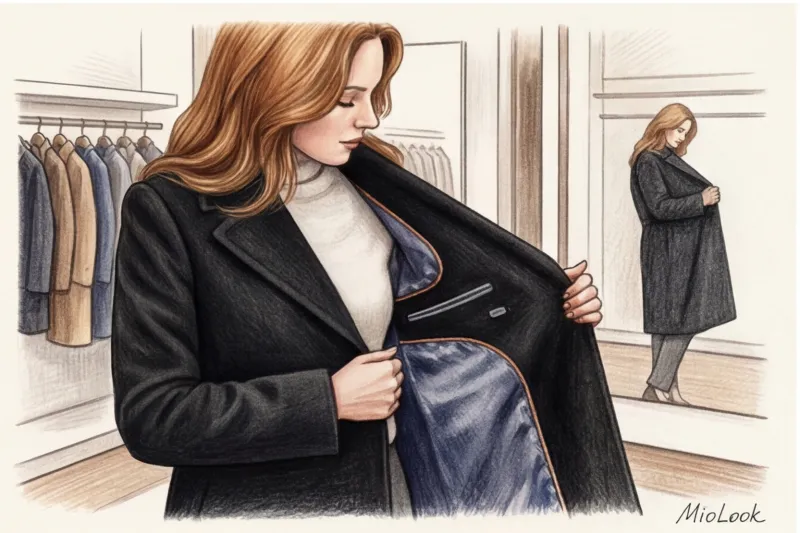
- Crease test. Squeeze the fabric tightly in your fist for 10 seconds and release quickly. If deep, hard creases remain, your coat will look wrinkled every time you get up from your seat on the subway or in the office. High-quality thread is twisted in such a way that it returns to its original shape on its own.
- Friction test. Lightly rub the fabric with damp fingers in an inconspicuous area (for example, the inside hem). If the fibers immediately begin to fluff up and clump, you're dealing with a loose thread that will immediately become covered in pills.
Your perfect wardrobe without mistakes
Forgetting what items you already have in your closet? MioLook will help you digitize your outerwear and create dozens of looks with your new coat before you even buy it.
Get access — €0.99 onceHidden Architecture: Why One Coat Fits Luxuriously While Another Hangs Like a Bag
We often fall in love with a color or texture, forgetting that a coat is a building. And a building needs a foundation. We covered this in more detail in our a complete guide to determining clothing quality , but here I want to focus on outerwear.
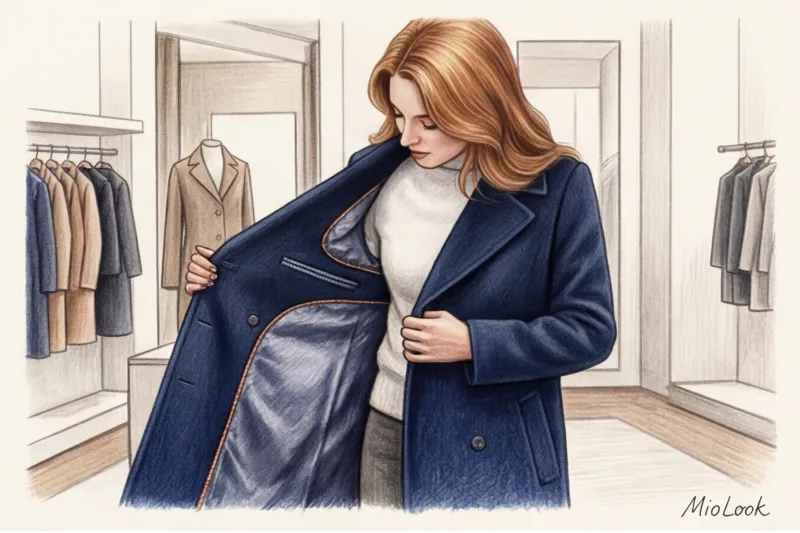
A quality coat holds its shape even on a hanger. It doesn't cling to the figure like a rag, but creates a distinct, complementary silhouette. The price difference between mass-market and premium items often lies in the invisible work of the tailor: constructing a molded shoulder and properly gluing the details.
Duplication and lining
Interlining is a special interlining material between the main fabric and the lining. Cheaper items use a thin, low-quality adhesive. Have you ever noticed how some coats develop "bubbles" on the chest after rain or dry cleaning? That's because the cheap interlining has come loose.
According to the canons of tailoring (for example, Savile Row standards), the areas that must be doubled are the lapels, collar, shoulder line, and hem of the garment. How to check: Feel the lapel with two fingers, then feel the fabric on the back. The lapel should be noticeably tighter and spring back when folded back. If the tightness is the same, the coat will lose its shape within a season.
The inside of luxury: a lining that breathes
A perfect wool coat with a 100% polyester lining is a waste of money. Imagine wearing a luxurious cashmere sweater and wrapping it in a plastic bag. Polyester interferes with wool's thermoregulation: you'll sweat profusely outside when walking briskly and shiver in the cold indoors.
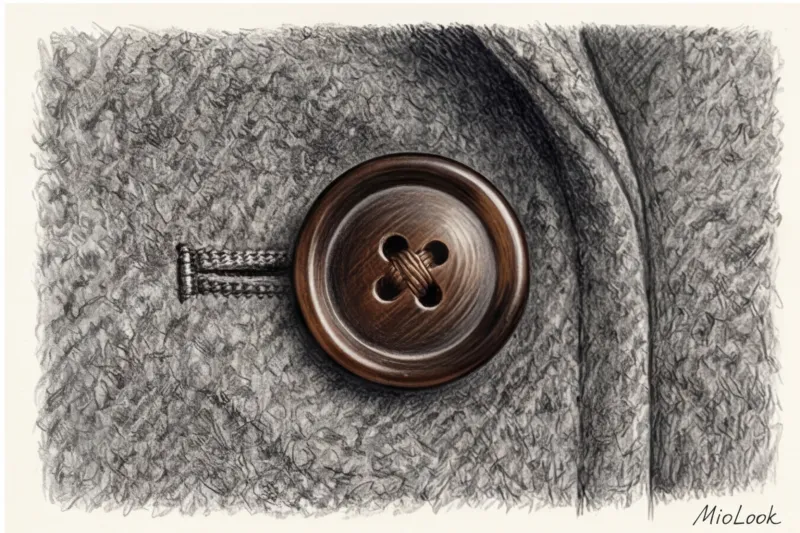
On the lining label look for: viscose, cupro or silk acetate These are breathable materials. Also, pay attention to the inside center of the back. There should be a longitudinal fold of lining fabric (a pleat or "freedom fold"). This is to prevent the lining from tearing along the seam when you suddenly bring your arms together in front of you (for example, when grabbing a steering wheel).
Access to MioLook for €0.99 — one-time payment
A smart AI stylist will analyze your figure and select the perfect outerwear styles that will highlight your best features.
Get access — €0.99 onceCut and fit: investing in timeless relevance
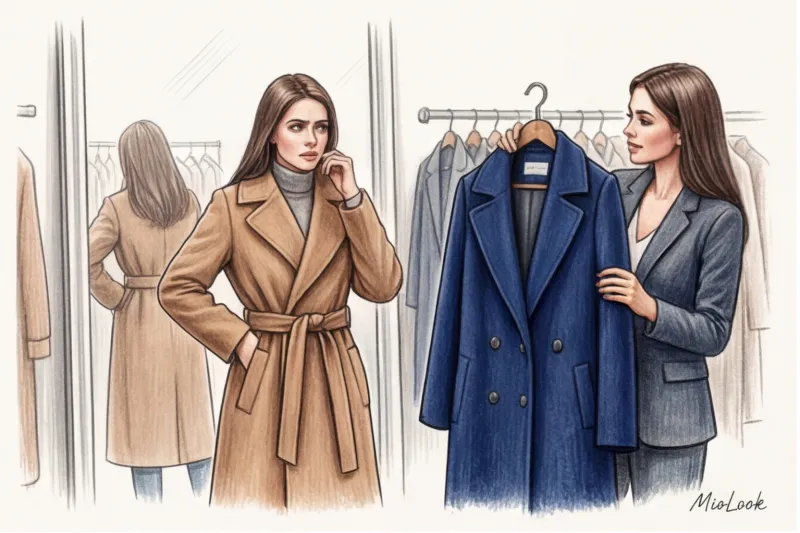
One of the most common problems I encounter during wardrobe audits is a coat bought too tightly. Women try it on over a thin silk blouse, delighted by the fitted silhouette, only to realize in November that their favorite wool sweater simply won't fit underneath.
A modern fit requires volume. A heavy jacket or hoodie should fit comfortably under the coat—this is the basis for layering, without which status wardrobe Unthinkable. As for length, skimpy, mid-thigh styles are hopelessly outdated. Midi (below the knee) and maxi are the safest and most elegant investments, elongating the figure and covering the hems of any dress.
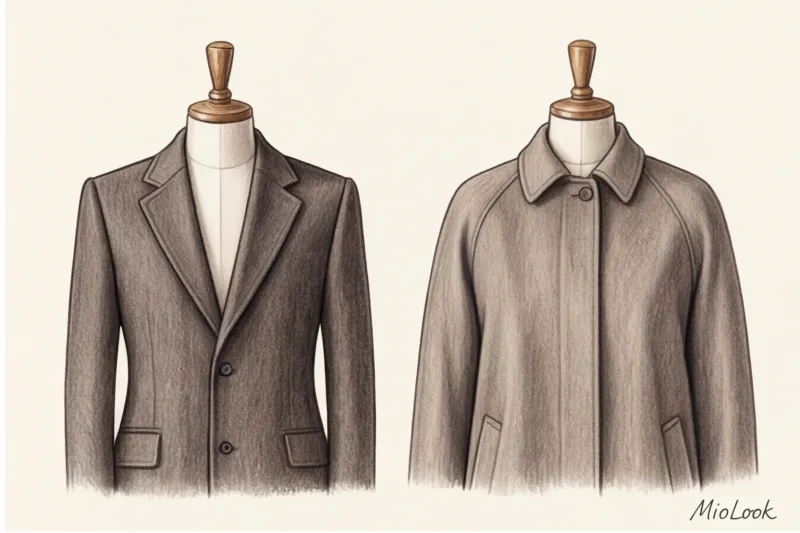
Raglan, set-in sleeves or dropped shoulder?
The choice of shoulder seam determines the mood of your look:
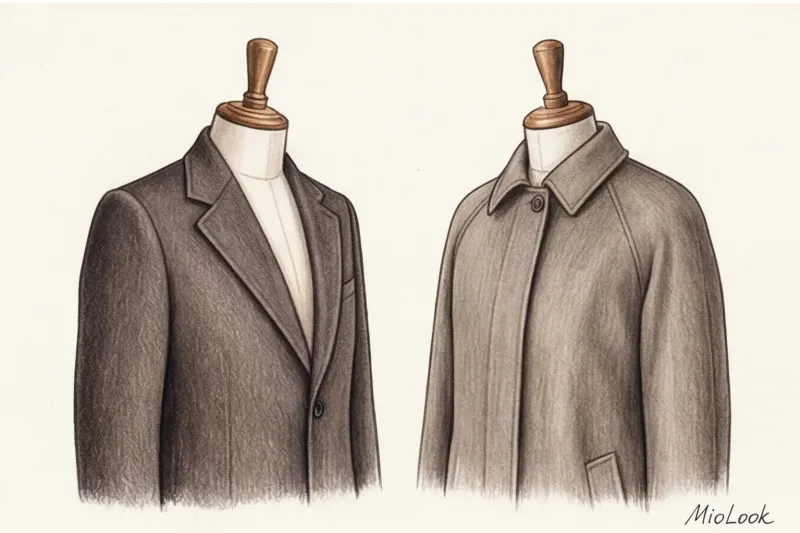
- Set-in sleeve: The seam runs precisely along the anatomical point of the shoulder, creating a clean, composed, and professional silhouette. Limitation: It's difficult to put it on over a jacket with massive shoulder pads.
- Raglan: The seam runs from the neckline to the underarm. The relaxed fit visually softens broad shoulders and easily accommodates any bulky knit.
- Dropped shoulder: Trendy oversized. The shoulder seam slides down onto the forearm. Carefully: If you are short, a too-dropped shoulder in a thick fabric can make your figure look bulky and squat.
Hardware and seams: the devil is in the details
Crooked stitching and loose threads are a sure sign that a brand has skimped on quality control. But there's a secret that instantly reveals a garment's status: the buttons.
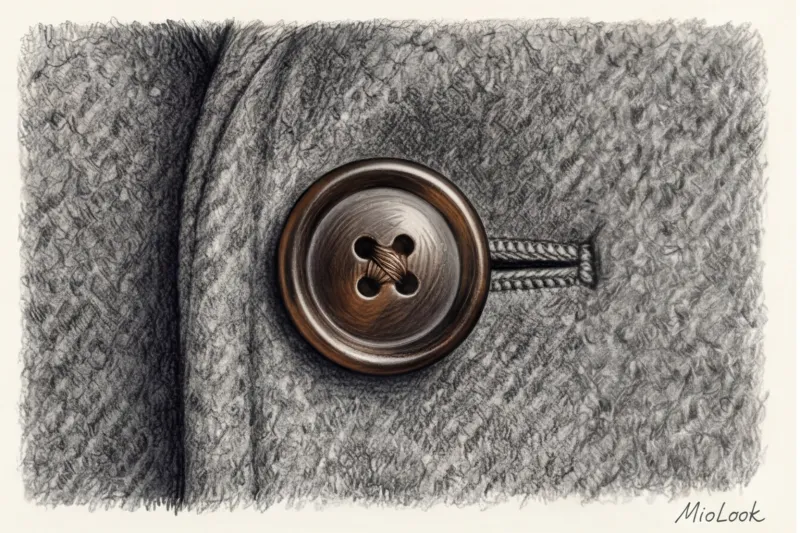
Cheap, shiny plastic will make even cashmere look cheaper. Look for horn, metal, or fabric-covered buttons. But most importantly— how exactly are they sewn on.
A quality coat never has a button sewn flush with the fabric. There must be a "shank" of tightly wound thread 3-5 millimeters high between the button and the lapel. Why? The thickness of the wool lapel and the buttonhole requires space. If the button is sewn flat, the buttoned coat will wrinkle, bunch, and bulge around the fastener. This is a classic tailoring sign: mass-market coats machine-sew buttons flush, while premium coats add a shank.
A Practical Stylist Checklist: 5 Steps to Take Before Buying
To avoid getting lost in the store, save this algorithm and open it on your phone the next time you go shopping:
- Let's study the label. We look for 70-80% wool (merino, alpaca) and 10-20% polyamide. Lining: viscose, cupro, or acetate only. No 100% polyester.
- We are conducting a crash test. Press the fabric in your fist for 10 seconds. Observe how quickly the creases disappear.
- We feel out the architecture. We touch the lapels and collar—they should be tighter than the back and springy. We look for a loose pinch in the back lining.
- We check the fit while moving. Put the coat on over a thick sweater. Raise your arms and bring them together in front of you. If your back is tight and the sleeves ride up above your wrist bone, you need a larger size.
- Let's look at the details. We check that the buttons have a “foot” and that the loops are processed neatly (there should be no threads sticking out of them).
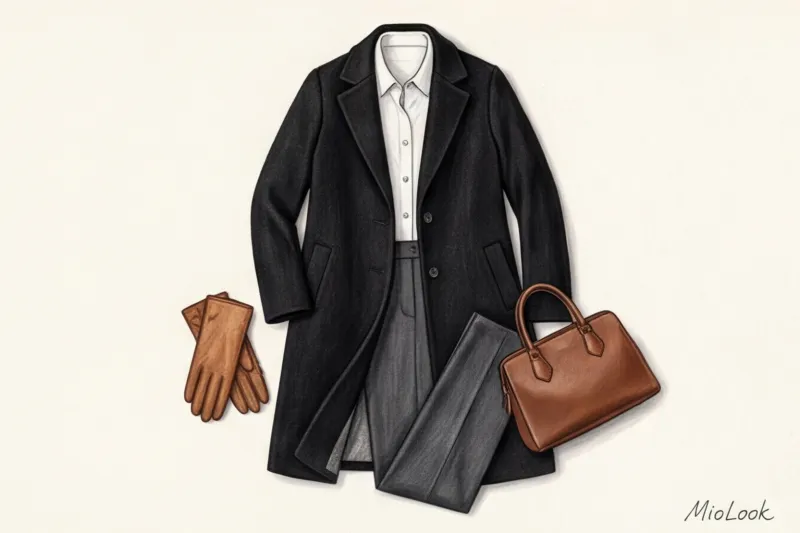
A coat isn't just clothing; it's your winter calling card. During the cold season, it's all people see on the street. Don't be fooled by big names and fleeting trends. Invest in the right design, clever composition, and tailored details. Then, the item will serve you faithfully for 5-10 years, only becoming more refined with each season.