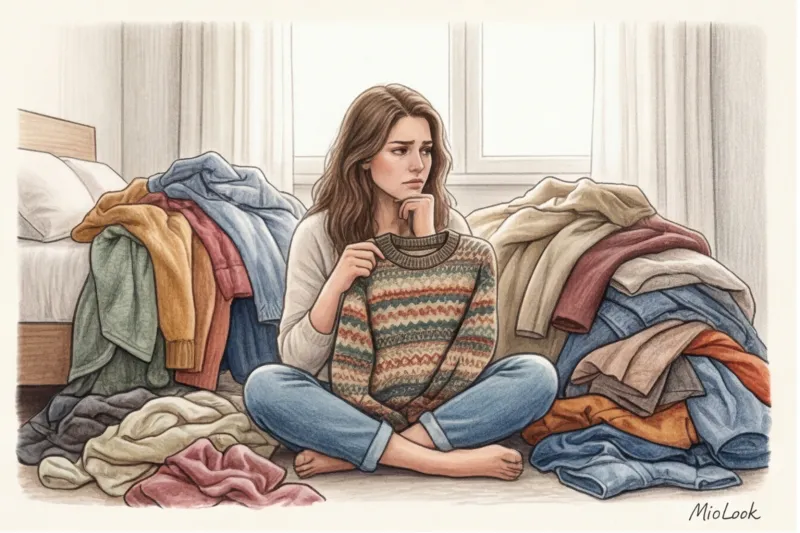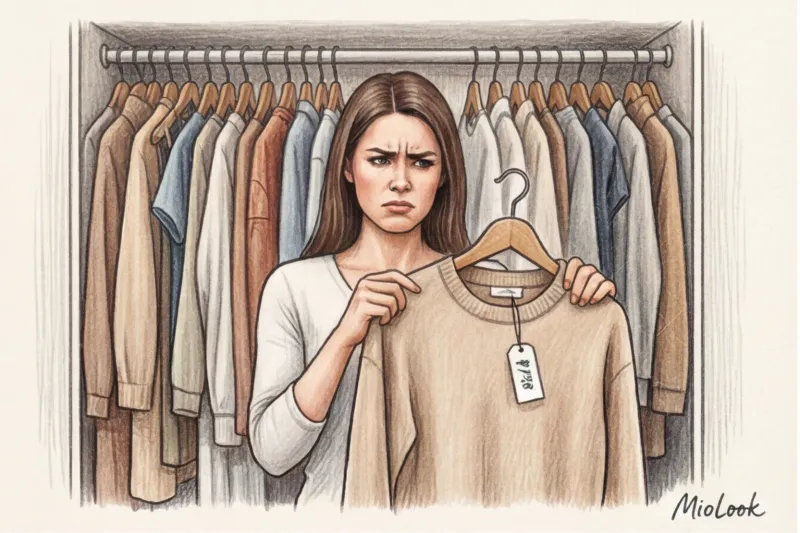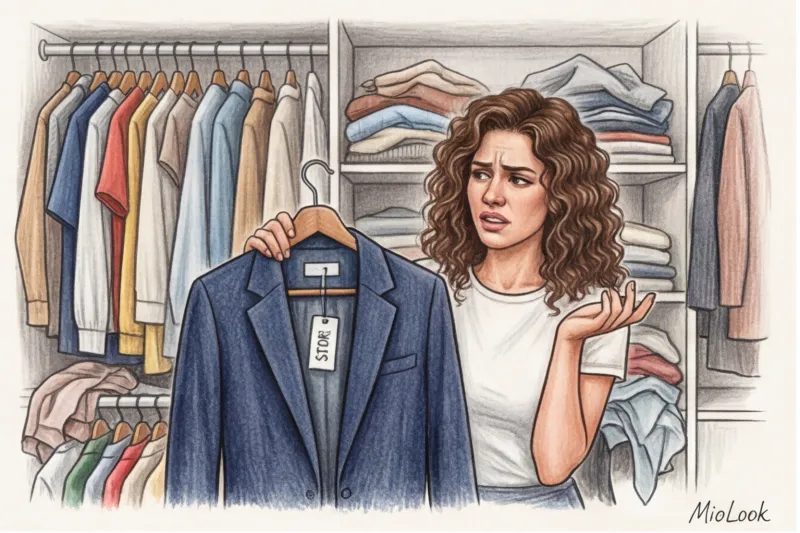
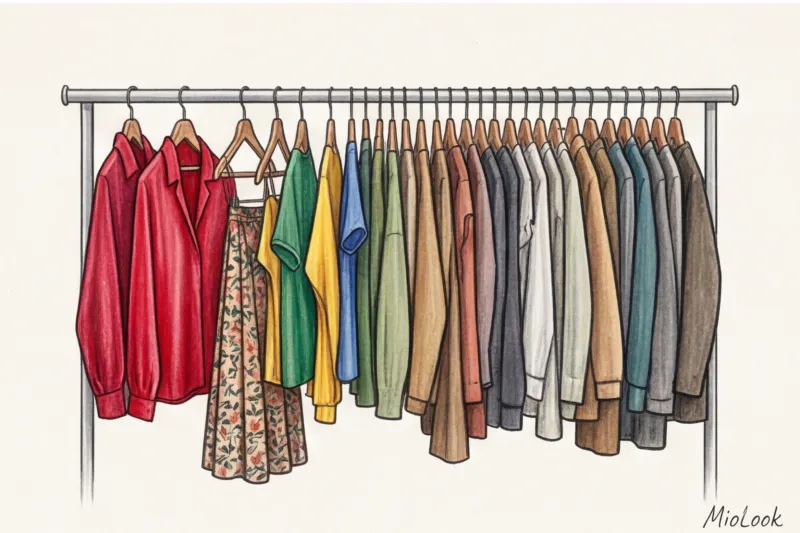
You open the closet door. The rail is crammed with 150 hangers, the shelves are crammed with sweaters, but your pulse quickens with the panicked thought: "I have absolutely nothing to wear." In 12 years as a stylist, I've seen this scene hundreds of times. We live in a paradox: our closets are bursting with clothes, yet we wear the same ones day after day. We discussed the reasons for this phenomenon in more detail in our the complete guide to the psychology of shopping , but today we will focus on practice.
Most articles online suggest sorting through your wardrobe through the lens of emotion: picking up an item and asking yourself if it brings you joy. But what if the question is How to part with old things , does this not inspire you, but rather cause you physical stress and paralysis of choice? My answer: leave the emotions behind. We need rigorous analysis, behavioral economics, and a pragmatic approach.
The Psychology of Clutter: Why We Hold on to Excess
According to a McKinsey study (2024), on average, women wear only 20-30% of their wardrobe. The rest is what's known as "dead capital." But why is it so hard to simply throw out what we don't wear?
The answer lies in our brain. An overflowing closet causes overchoice (Choice paralysis). When your brain has to process over 50 visual cues (of your belongings) in the morning to make a decision, cortisol levels skyrocket. You waste up to 15 minutes of your morning time, depleting your cognitive resources before you even have a cup of coffee.
This is where what Nobel laureate Daniel Kahneman called the "sunk cost fallacy" comes into play. It's physically painful to part with a €500 dress we've worn once. We believe that if we throw it away, we'll officially "lose" the money. In reality, the money was lost in the transaction at the checkout.
"Keeping something you don't wear doesn't return its value to you. It just takes away your square footage and mental energy every morning."
I had a client, a top manager, who saved 40% of her wardrobe for "that perfect figure." Every morning, when she opened her closet, she'd see tight Massimo Dutti skirts and silk blouses a size too small. These items acted as a silent reproach, lowering her self-esteem before she even left the house. This is the concept of the "Illusory Self"—we save clothes for a life we don't live.
Access to MioLook for €0.99 — one-time payment
A smart AI stylist will select the perfect look from what you actually wear.
Get access — €0.99 onceThe Pareto Rule in Wardrobe: The Language of Numbers vs. Emotions
Remember the famous 80/20 rule? It works flawlessly in your wardrobe: you wear 20% of your clothes 80% of the time. To dispel this illusion, I always ask clients to shift their focus from design to mathematics.
Let's count Cost per wear (the price per output). This is the true metric of the value of any thing.
- Scenario A: You bought the perfect basic COS coat for €250. You wore it 100 times in two seasons. Cost per outing = 2.50 €.
- Scenario B: You gave in to an impulse buy on a sale and bought a bright Zara top for €30. You wore it exactly once to a party, and then it settled in your closet. Cost per outing = 30 €.
The math is ruthless: a "cheap" top on sale cost you 12 times more per wear than a quality coat.
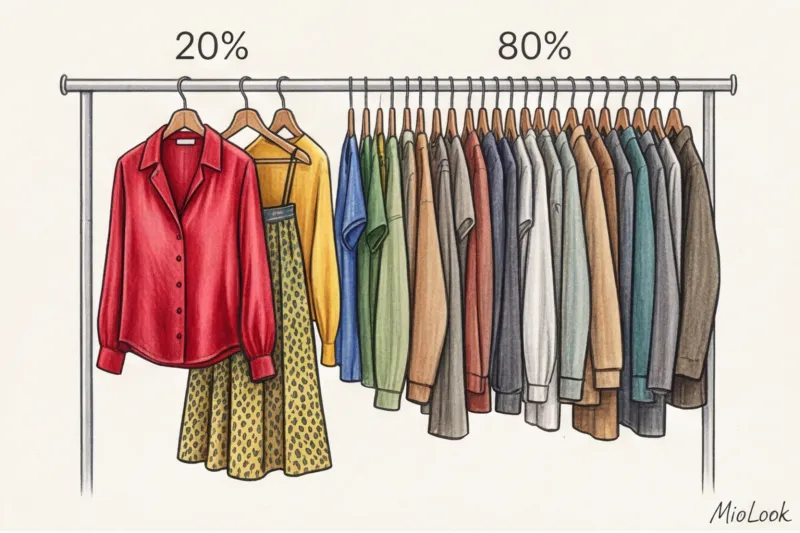
I once conducted a personal experiment. For six months, I meticulously tracked every outfit I wore using an app. The results stunned me: out of 120 items of clothing, 80% of my time was spent on just 15 basic items. As soon as you see those numbers on the screen, the emotional attachment to "that cute skirt" evaporates.
Anti-Advice: Why Popular Decluttering Methods Don't Work
Before we dive into the system, let's explore why popular search engine top tips often lead to impulse shopping relapses.
Myth 1: The “spark of joy” method.
Marie Kondo suggests keeping only what brings pure joy. But what about those expensive, beautiful pumps that are incredibly pleasing to the eye but wear your feet dry within 20 minutes? Aesthetic joy often masks a complete lack of functionality.
Myth 2: “If you haven’t worn it for a year, throw it away.”
This is very dangerous advice. It absolutely does NOT work if you're in a transitional period. Maternity leave, a sudden weight change due to medical reasons, a temporary move to a different climate zone—the context is always more important than the calendar. If you throw out a perfectly good office wardrobe during your remote year, you'll be forced to buy everything again when you return to the office.
Your perfect look starts here
Join thousands of users who look flawless every day with MioLook.
Get access — €0.99 onceThe trap of "home clothes" and dacha exile
The most harmful life hack in the post-Soviet space is to relegate things that have lost their social value to the "home" or "dacha" category. I'll let you in on a secret: this isn't environmentalism; it's psychological cowardice.
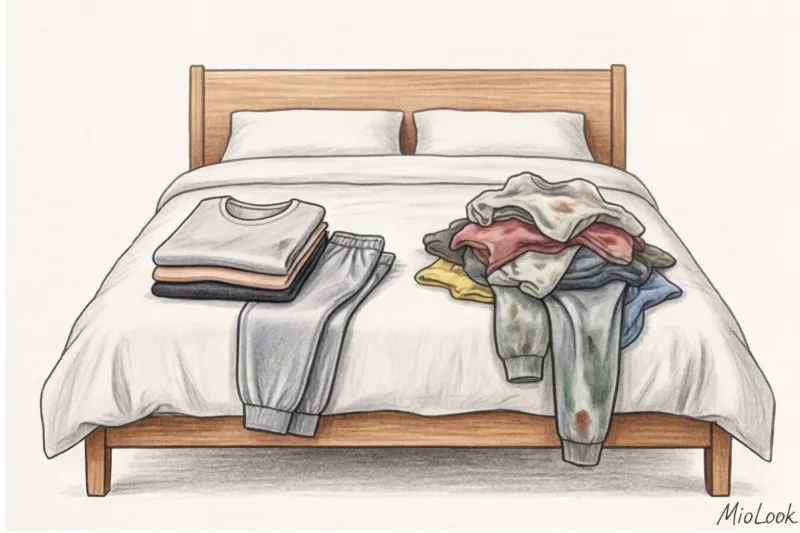
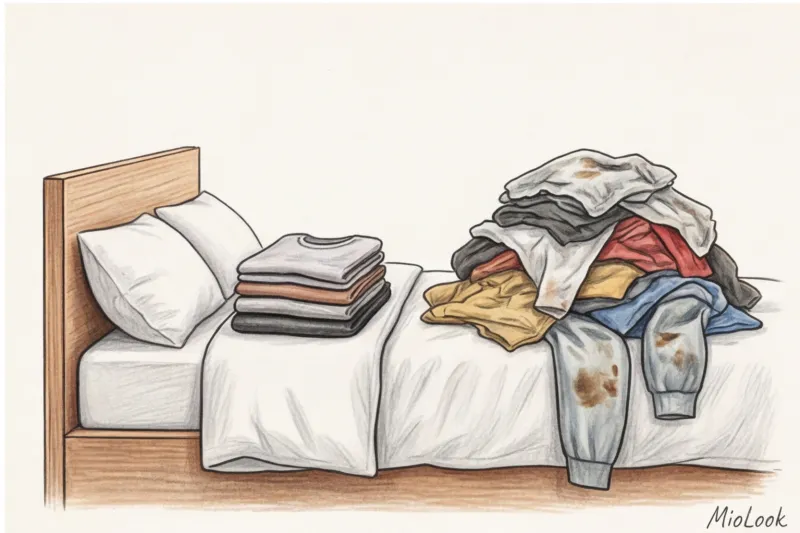
Home is a place where you recharge. When you put on a stretched-out T-shirt with a coffee stain and sweatpants with stretched knees, you're sending a signal to your brain: "When no one sees me, I don't deserve good quality." Loungewear should be made of comfortable materials: cotton with a weight of at least 180 g/m², premium viscose, or silk. Recycle your old clothes; you deserve to look good even when you're alone.
A Pragmatic System: How to Part with Old Clothes Without Regret in 4 Steps
Ready for action? Forget the sentimentality, let's get to the audit.
Step 1: Reality Audit (What You Wear Right Now)
Take out of your closet only those items you've worn in the last 30 days. Look at them carefully. This is your real style. Everything else is your fantasy wardrobe. Recognizing this gap is the first step to recovery.
Step 2: Sort by the Energy metric
Instead of ephemeral "joy," evaluate items by whether they drain or give energy. An item gives energy if it fits perfectly, doesn't require you to suck in your stomach, and pairs well with three other items. An item drains energy if: the mohair is itchy, the skirt requires constant tugging down, or the blouse wrinkles just by looking at it.
Step 3: The Quarantine Box Method
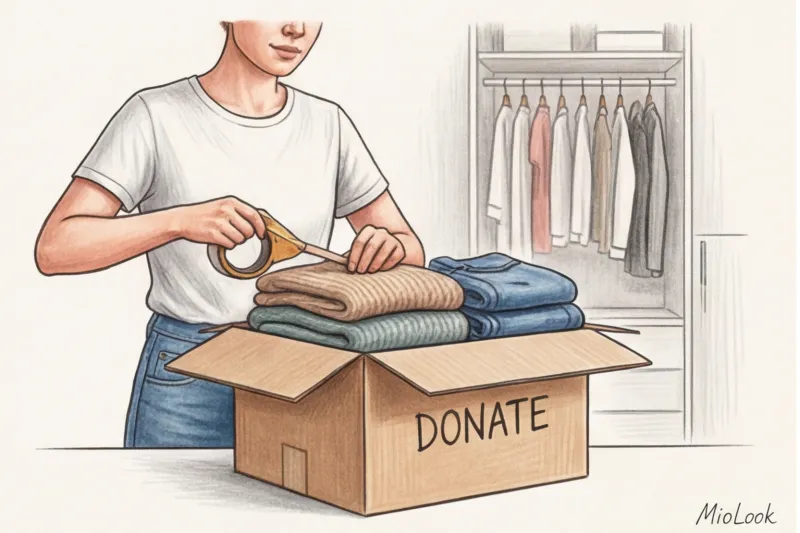
This is my favorite tool for those who are afraid of making mistakes. Take a sturdy cardboard box. Put all the items you don't really need in it. Seal the box with tape (this is important—it creates a physical barrier) and write the date on it: exactly 3 months from now. Put the box out of sight. If you haven't thought about a specific sweater or opened the box to get it for 90 days, feel free to give away its contents without even opening it.
Step 4: Sustainable Recycling (Monetization of Sunk Costs)
Throwing something away is a sign of defeat. Sell it! Platforms like Vinted, Vestiaire Collective, and local resale projects allow you to recoup some of your investment. Sell five unworn sweaters for €20 each and you'll earn €100, which you can invest in a single, perfectly fitting basic item.
How technology is simplifying wardrobe auditing and management
In the digital age, we no longer need to keep everything in our heads. Digitizing a wardrobe is a powerful therapeutic process. When I transform my clients' wardrobes into MioLook , magic happens: tactile attachment is disabled. You look at your things through a smartphone screen, and they become nothing more than data.
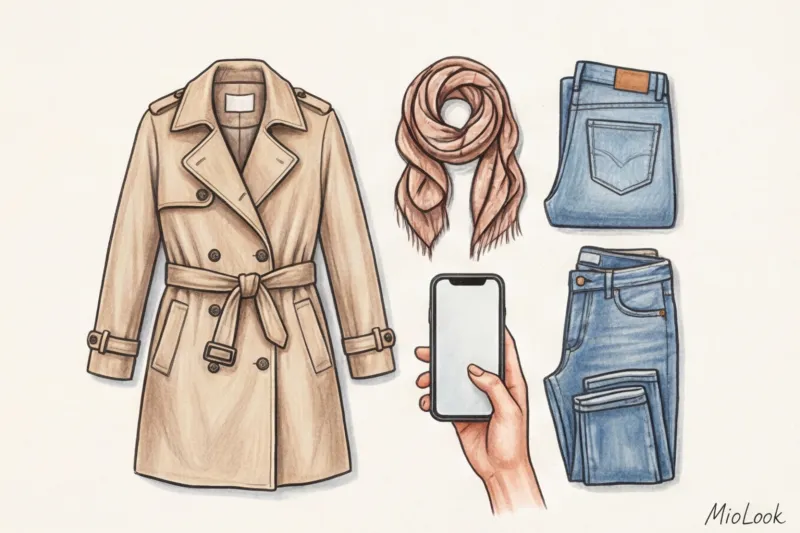
Smart planning with AI helps you spot blind spots. The algorithm will dispassionately show you that you have eight identical blue jeans but no matching jacket. Furthermore, virtual try-ons generate new combinations from those basic items you've long forgotten about, reducing the need to buy new ones.
Ready to get started?
Try the MioLook plan for free—no commitments required. Start digitizing your wardrobe today.
Get access — €0.99 onceLife After the Cleanse: New Rules for Shopping and Smart Consumption
Decluttering your closet is only half the battle. It's far more important not to fill it with random items again. After a thorough audit, you'll need new rules.
- The rule "One in, one out" (one in, one out). Looking to buy a new cardigan? Consider which of your old ones will be leaving your closet. If none, then you don't need a new one.
- Create a "Stop Shopping List". Analyze the items you've gotten rid of. Threw out three floral dresses? Write it on your stop list: "No small flowers, I don't wear them." Got rid of those scratchy synthetics? Write it down: "Check the ingredients, acrylic is prohibited."
- Focus shift. Stop buying "one-night looks." Invest in capsule collections. Every new item should fit into at least three to four existing looks in your closet.

Having free space on your shelves is like a breath of fresh air. By getting rid of clothes that no longer serve you, you make room not only for new things, but also for a new sense of self. Treat your wardrobe not as a museum of past mistakes, but as a functional tool that works to boost your confidence every day. Leave guilt behind—your ideal style is built on math, mindfulness, and self-honesty.