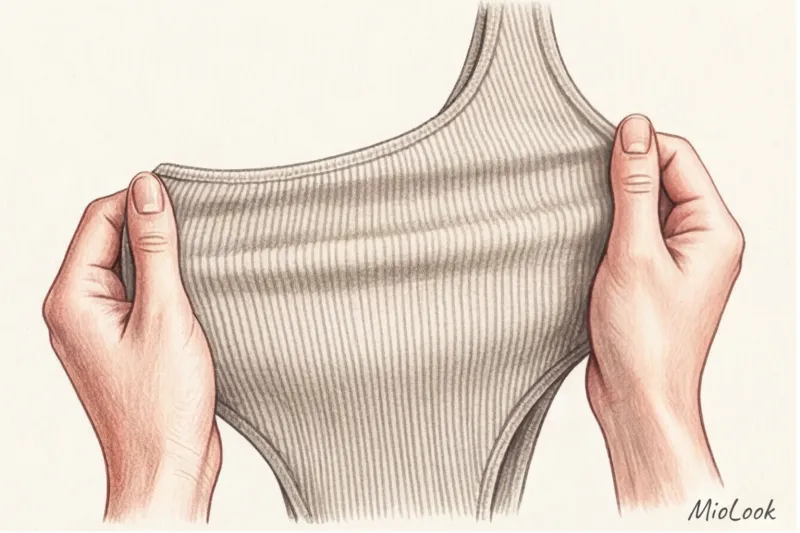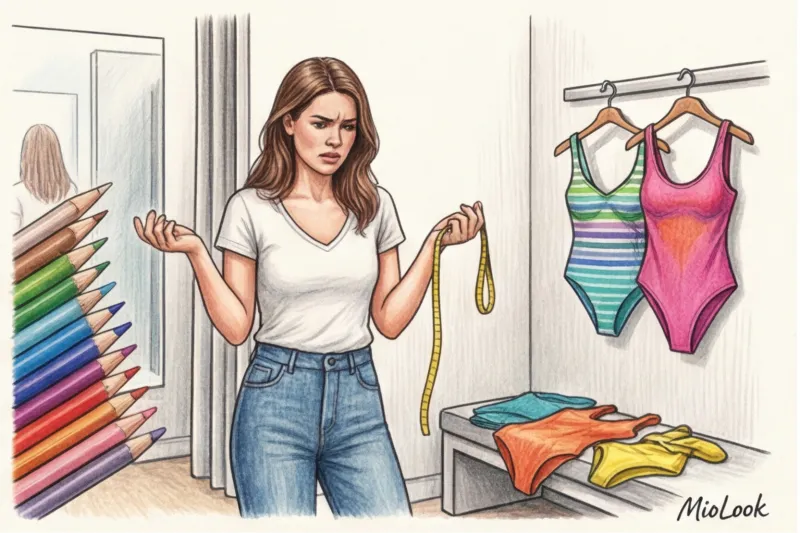
One of my clients, Anna, complained about the same problem every May. She'd buy three to five inexpensive swimsuits for the season, and by August, they'd all become shapeless rags with stretched elastic bands and faded prints. "It's probably the sea salt and sun; there's no getting around it," she sighed. In fact, it wasn't the sea at all. It was textile chemistry and a complete misunderstanding of how elastane works.
After 12 years of working as a stylist and studying sustainable fashion, I've realized the most important thing: a beach wardrobe requires just as much investment savvy as buying a cashmere coat. We've already discussed the concept of smart shopping and macro trends in more detail in our the complete guide to spring-summer fashion trends Today, we'll apply this approach to our beachwear capsule collection. If you're looking for trendy summer swimwear, forget about fast-fashion trends that only last one season. Choose items that will last you at least four years, maintaining a perfect fit.
Summer Swimwear Trends: Macrotrends vs. Beach Fast Food
Search "fashionable summer swimsuits" and you'll likely see hundreds of neon bikinis with a million ties, rings, and aggressive leopard prints. It's classic beach fast food. According to the analytical agency WGSN (2024), the life cycle of such microtrends has shrunk to a record three weeks. You buy a piece for one vacation photo, and by next year it looks hopelessly outdated.
True beachwear is now inextricably linked to the concept of "quiet luxury." Premium brands and conscious local labels emphasize architectural cuts, complex asymmetries, and textured fabrics. A swimsuit with a fine ribbed or crinkled fabric looks more expensive than a flat, smooth polyester because the texture complicates the light's reflection and visually smooths the silhouette.
"Investing in a swimsuit is an investment in your confidence on the beach. Cheap fabric will give away its value the second you leave the water, when it loses its shape and clings to your body," says Sophia Müller.
Three silhouettes that will still be relevant in 5 years
To avoid having to update your beach wardrobe every year, I recommend my clients build a capsule wardrobe around three architectural silhouettes:
- Minimalistic one-piece swimsuit with a square neckline. It perfectly accentuates the collarbones and creates a clean, elegant geometric line. However, I'll be honest: this cut isn't for everyone. If you have a pronounced inverted triangle body shape (broad shoulders), the sharp horizontal line of the bob will only accentuate this feature.
- Retro high waisted swim trunks with high cut thighs. An important point to note: the cutouts should expose the hip bones. This visually lengthens the legs by 5-7 centimeters without cutting into the widest part of the thigh.
- Top bandeau with internal support. Forget classic soft triangle bras that don't hold anything up. Modern bandeau bras feature a hidden corset frame or a thick silicone band that securely holds the breasts in place without visible straps.
Access to MioLook for €0.99 — one-time payment
A smart AI stylist will select the perfect look based on your individual proportions and goals.
Get access — €0.99 onceThe Anatomy of a Quality Swimsuit: What a Stylist Looks for
Most women choose a swimsuit facing a mirror. I always start by turning the garment inside out. The inside tells you more about the quality of the garment than any logo.
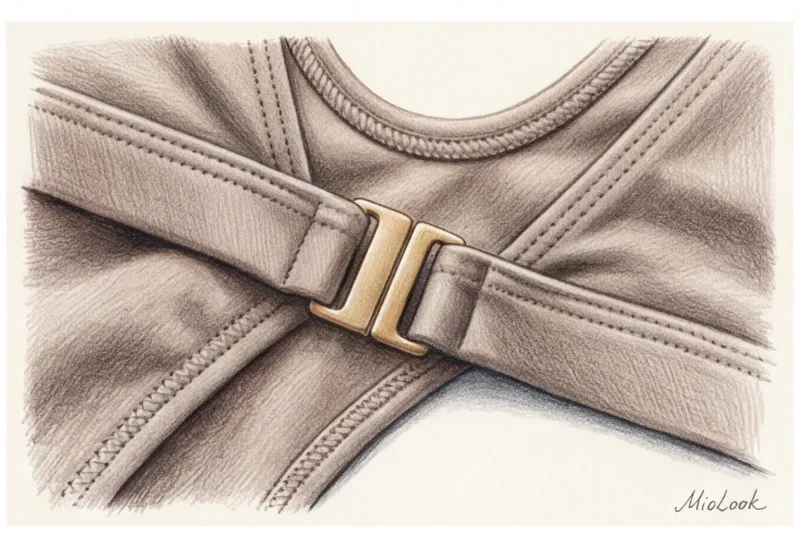
The first rule: no exposed overlock seams. In the premium segment, seams are always hidden (double-face technique) or finished with a soft elastic binding. This is not only a matter of aesthetics but also of your comfort—a stiff seam will chafe damp skin within a couple of hours.
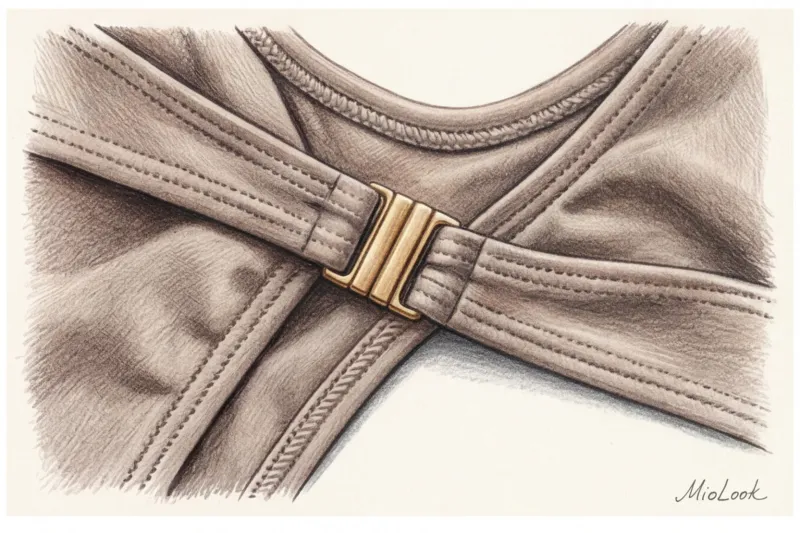
Pay special attention to the hardware. Cheap mass-market items use standard metal alloys painted to look like gold or silver. A single dip in the salty sea is enough to peel the paint and leave rusty stains on the fabric. Look for swimsuits with clasps made of a special Zamak alloy (zinc, aluminum, magnesium, and copper) or coated with hypoallergenic enamel. The clasp should be cool to the touch and have a suitable weight.
Fabric composition: how to calculate durability in the store
The key to a perfect swimsuit is found on the ingredient label. The industry's gold standard is 80% polyamide (nylon) and 20% elastane Why not polyester? Polyester is cheaper to produce, which is why it's favored by mass-market brands, but it lacks stretch, dries more slowly, and fades more quickly when exposed to UV light.
Look for markings on the tags Lycra Xtra Life According to research by LYCRA, standard elastane loses up to 40% of its elasticity after just 120 hours in water. Xtra Life fiber is 5-10 times more resistant to the damaging effects of chlorine and sunscreen than standard elastane.
Summer Swimwear Trends and Sustainable Fashion: Econyl and Repreve
As a textile specialist, I can't ignore the environmental aspect. Swimwear has long been one of the dirtiest industries, producing tons of non-biodegradable plastic. Today, this situation is changing thanks to innovative materials.
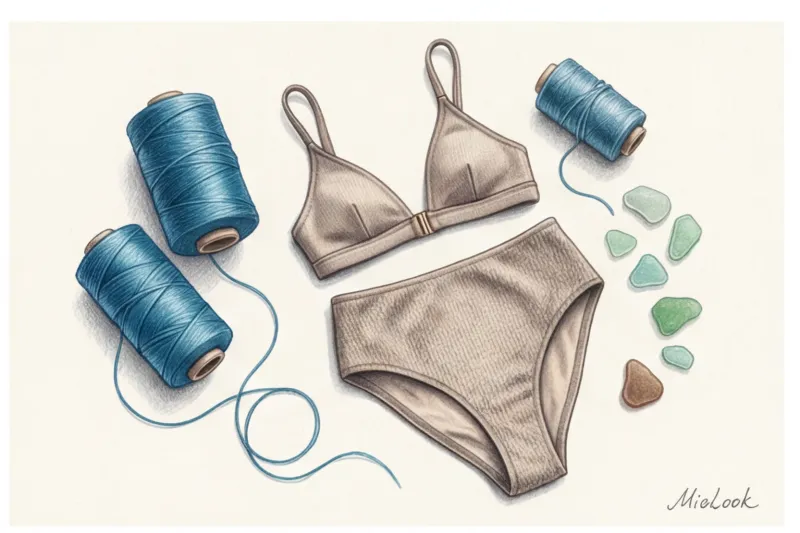
Many of my clients initially wrinkle their noses: "A swimsuit made from recycled plastic? It'll be stiff and uncomfortable!" This is a complete myth. Having personally tested samples for photo shoots, I can confidently say: Econyl regenerated nylon (made from recovered ocean nets and carpet pile) feels even softer and silkier than virgin nylon. Its extrusion process purifies the polymer of impurities, creating a flawlessly smooth thread.
The numbers speak for themselves: according to a 2023 report by Textile Exchange, the production of Econyl nylon reduces the impact on global warming by up to 90% compared to petroleum-based materials. By choosing this swimsuit, you don't sacrifice quality for the sake of ecology—you get a high-tech product that will last longer thanks to the tightly woven yarns.
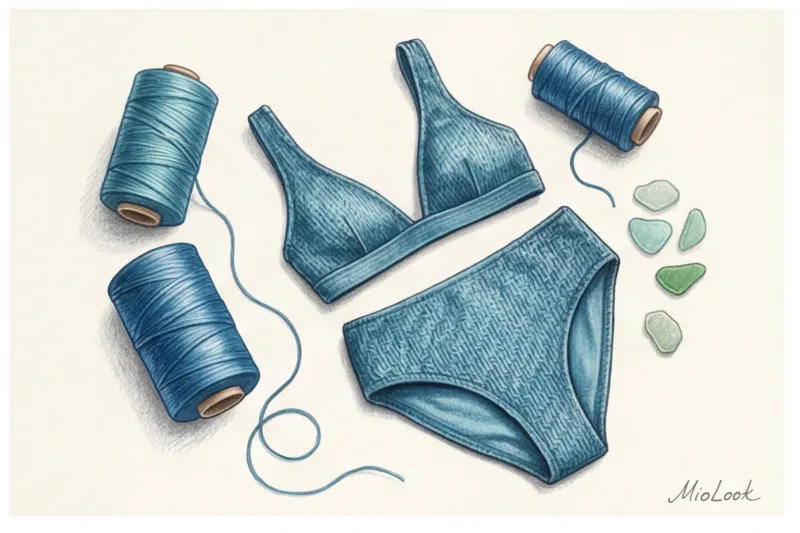
How to choose the perfect model without stereotypes about "body types"
If you ever read glossy magazines in the 2000s, you'll likely remember this devastating advice: "apple-shaped" people should immediately hide their bellies in a one-piece shell-like swimsuit, while "pears" are strictly forbidden from wearing shorts. Forget it.
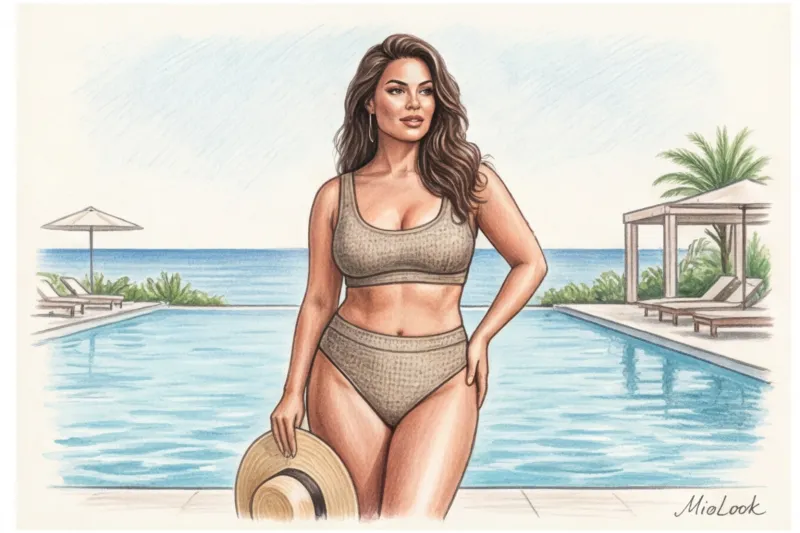
IN MioLook We've long abandoned the fruit-based classification system. Instead of trying to "hide flaws," smart styling works with visual weight, focal points, and fabric density.
Fabric density is your best ally. A paper-thin swimsuit will highlight even the slightest skin imperfections, even ones you didn't even know existed. Choose fabrics with a density of 190 g/m² or higher, with a compression effect or double lining. They create a subtle corset effect without constricting the body.
If you want to visually contour your stomach, avoid those one-piece, draped styles that take three hours to dry. Choose a high-waist, ribbed, or V-neck swimsuit. A V-neck creates a diagonal line, which is always more slimming than any horizontal line.
Your perfect look starts here
Join thousands of users who create a stress-free wardrobe every day with MioLook.
Get access — €0.99 onceChecklist: How to Try on a Swimsuit Correctly
Trying on a swimsuit in a store is fundamentally different from trying on a dress. Buyers use rigorous tests when checking samples at factories. I've adapted them for a regular fitting room:
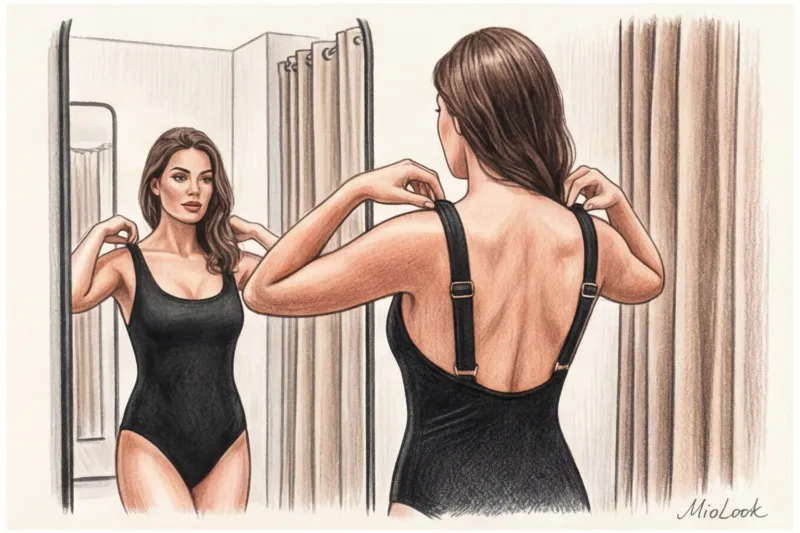
- Tension test. When dry, a swimsuit should fit snugly, just barely uncomfortable (but not painfully digging into your skin). Why? In water, elastane relaxes and the fabric expands by approximately 5-10%. While you might feel "very comfortable and loose" in the fitting room, you risk losing your swimsuit in the sea.
- Test in motion. Never stand rigid in front of a mirror. Lean forward 90 degrees (your breasts shouldn't fall out of the cups), reach up with both arms, and squat down. A quality swimsuit will snap back into place instantly.
- Checking the straps. Slip your top straps off your shoulders. If your top immediately starts to slide down, it's poorly constructed. Up to 80% of your breast weight should be supported by a tight band under your chest, not by the straps. Straps only provide direction and prevent the fabric from shifting.
The Biggest Mistake: Why Swimsuits Stretch Out in One Season
And now for a counterintuitive insight that shocks 9 out of 10 of my clients. What do you do when you return from the beach? Chances are, you wash your swimsuit thoroughly in the sink with soap or throw it in the washing machine with detergent to remove the salt and sand. That's how you're ruining your swimsuit.

Harsh surfactants found in soap and laundry detergents destroy elastane fibers much faster than sea salt. Add hot water to the mix, and you have the perfect recipe for destroying stretch fabric. The elastane literally "melts" and loses its ability to return to its original state.
The second hidden enemy is sunscreen. The chemical filters in SPF react with synthetic fibers, leaving yellow stains and ruining the elastic at the edges of your swimming trunks.
Use the 30 second rule: Immediately after returning from the beach, simply rinse your swimsuit under ice-cold running water for half a minute. No soap. No wringing (just gently ball the fabric to squeeze out the water). Lay it flat to dry in the shade, away from direct sunlight and radiators. Wash it thoroughly with a special mild detergent for delicate fabrics no more than once every 5-7 days of wear.
Choosing a swimsuit isn't a lottery or a compromise with your body. It's the pure physics of materials and the architecture of cut. By stopping chasing seasonal trends and paying attention to fabric density, seam finish, and the quality of the elastane, you'll forget about the annual pre-vacation stress. Invest in the right basics once, care for them with cold water, and your perfect silhouette will last for years to come.