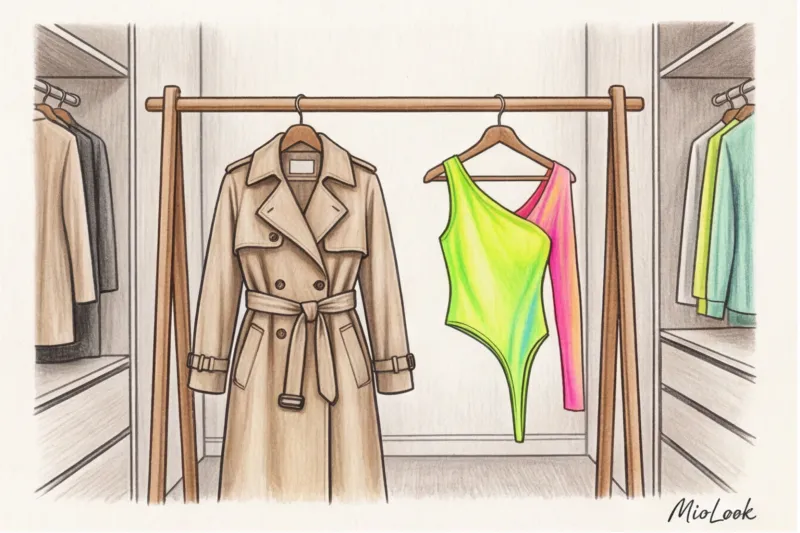
Macrotrends vs. Microtrends: Which Are Really Worth Investing In?
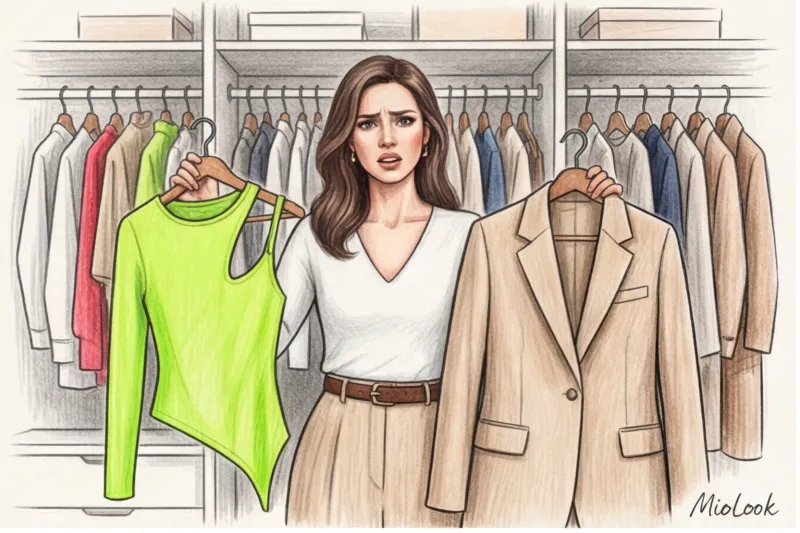
Take a look at your closet. We bet there's at least one item you bought on the wave of viral hype that you've worn exactly once? Perhaps it's a neon top from the Y2K era or a micro skirt that's physically impossible to sit in. Every year, when we begin to study fashion trends spring summer The industry is bombarding us with a deluge of must-have lists. But how can you tell the difference between a passing fad and a smart investment that will elevate your style for years to come?
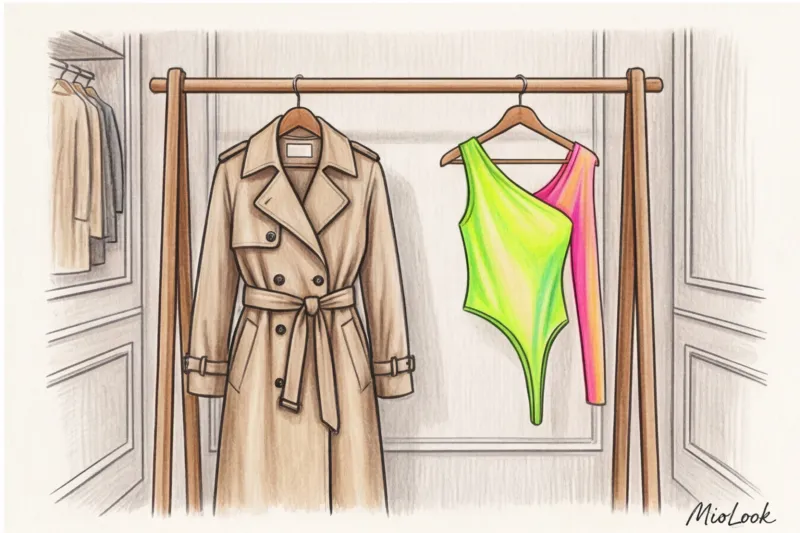
Let's be honest: TikTok's viral aesthetic is the fast food of the fashion world. All these Tomato Girl Summer , mob wife or barbiecore — classic microtrends. They flare up in a couple of weeks, fill social media feeds, and become downright annoying within a month. Buying a wardrobe to match a microtrend is a guaranteed waste of money.
Macrotrends operate entirely differently. They are global shifts in silhouettes, proportions, and how we interact with clothing. For example, the shift from skinny jeans to relaxed palazzo pants, the return of the architectural shoulder, or the global trend toward "quiet luxury." Macrotrends last for 5 to 10 years, gradually transforming from season to season.
That is why real luxury brands always rely on evolution, not revolution in design Take a look at the spring/summer collections of The Row, Loro Piana, or Hermès. You won't see shocking acid shades or ridiculous necklines. Their designs evolve millimeter by millimeter: the shoulder line has dropped slightly, the lapel width has changed by half a centimeter, the fabric has become even more weightless. These are clothes that don't shout about the year they were bought. The premium segment values stability and craftsmanship, not the ability to shock.
"In my consulting practice for buyers at premium boutiques in Milan, we always rely on strict mathematics. When purchasing new collections, exactly 70% of the budget goes toward the 'commercial base with a twist'—impeccably cut pieces that reflect macro trends. Only 30% is allocated to the runway avant-garde, which is used solely to attract attention to the window displays. It's the base that always drives sales and real profit."
This is where my favorite rule comes into play. Cost-Per-Wear (cost per exit) A perfectly tailored summer wool jacket worth €1,500, which you'll wear 100 times over three years, will cost you €15 per occasion. A trendy, mass-market top worth €50, worn once for a photo, is €50 per occasion. It's a paradox, but investing in expensive, well-designed pieces is mathematically more cost-effective.
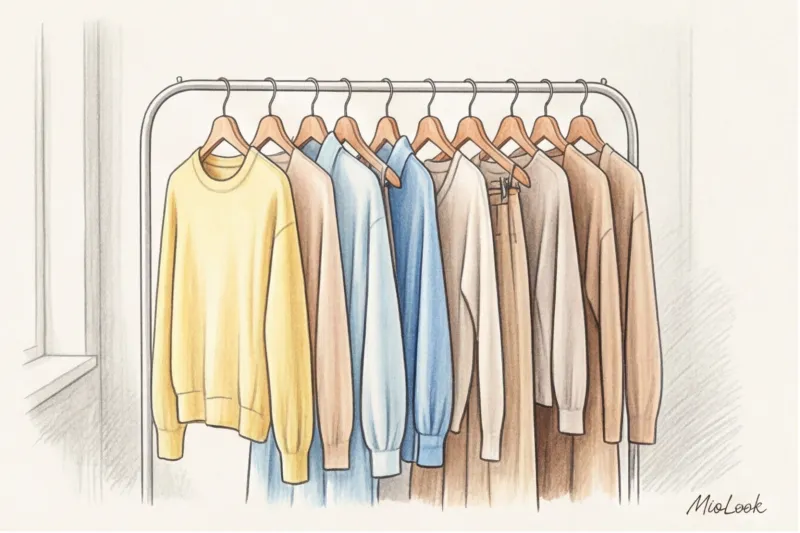
How to integrate current trends into your wardrobe without losing your individuality? Use 80/20 rule Let 80% of your closet be made up of high-quality macro trends and timeless classics, leaving 20% for fashion experiments and bright seasonal accents.
By the way, to avoid getting lost and turning your closet into a hoard of forgotten things, I highly recommend digitizing it. In the app MioLook There's a great wardrobe analysis feature—it'll clearly show you if your wardrobe is skewed toward spontaneous purchases, and it'll help you create looks with new, trendy items based on what you already own.
The Anatomy of a Fashion Cycle: When to Buy to Last
Knowing how a trend works can save you from the most damaging fashion mistakes. According to research by WGSN (the world's leading trend forecaster), any fashion cycle goes through predictable stages: from innovators (niche designers at fashion weeks) and early adopters (influencers) to mass-market brands and, finally, laggards.
How to recognize a trend at its infancy so that it lasts for years to come? Pay attention to the architecture of the cut and the complexity of execution. A true macrotrend always begins with a shape that's difficult and expensive to replicate. If you see complex asymmetry, a deconstruction of basic patterns, or innovative silk draping on the runway, that's a major shift. Invest in such silhouettes at the start from premium brands, and you'll look relevant for the next five years.
But there are also red flags. Indicators of a "cheap" trend that will be hopelessly outdated by August are easy to spot:
- Hyper-recognizable print. If a pattern is so specific that it can be used to identify the season and year of a collection's release (remember the viral checkerboard print), it's a bad investment.
- Cheap imitation of complex textures. Polyester trying to look like liquid silk, or “plastic” eco-leather in unnatural neon shades.
- Excessive replicability. If an item or a specific style appears on every blogger's feed within two weeks, the trend is already dead. Buying it at this stage means you're guaranteed to look outdated by early fall.
Your job is to catch trends at the early adopter stage, when the idea has already taken shape but hasn't yet become a cliché on the shelves of fast fashion stores.
The Main Fashion Trends of Spring/Summer: Catwalk vs. Reality
How many times have you looked at fashion week photos and caught yourself thinking, "This is art, sure, but how would you get into a taxi or go to a business lunch in this?" Recently, one of my regular clients, a top manager at a major IT company, sent me a selection of avant-garde runway looks with the caption: "Julia, if these are the spring/summer fashion trends, then I think I'll spend this season in old jeans.". And I understand her perfectly.
The industry's secret, rarely covered in glossy magazines, is that runway styling is created for virality and a pretty picture. Real fashion, for which customers are willing to pay thousands of euros, is different. If we analyze the collections of the leading trendsetters of minimalism and intellectual chic— Bottega Veneta, The Row and Jil Sander , - we will see a completely different approach to design.
At Bottega Veneta, Mathieu Blasi continues his brilliant experiments with illusion (trompe l'oeil), where what appears to be a simple flannel shirt and basic jeans is actually masterfully crafted from the finest nappa leather. The Olsen sisters at The Row rely on impeccable draping that looks like you threw the fabric on just before stepping out, even though the cutters spent weeks mastering the cut. And Jil Sander returns to the purist lines, where not a single superfluous detail is left untouched. These brands prove that the most important investment today is not a logo, but cut and texture.
"Modern luxury whispers, not shouts. You pay not to be noticed from afar, but for how a piece performs dynamically and how you feel in it."
And these aren't just my observations. According to a large-scale report McKinsey State of Fashion (2024) , purchasing behavior has changed dramatically: over 70% of premium consumers now value durability, quality materials, and versatility over fleeting hype. We're tired of flashy items.
That's why the notorious "quiet luxury" hasn't died, as many critics predicted, but has evolved. This season, it's moving away from boring straight silhouettes and beige cashmere toward complex shapes. Coming to the forefront are asymmetry and deconstruction of basic things The classic men's shirt now features a staggered button line. The basic trench coat is enhanced with an exaggerated yoke on only one side. Midi skirts are given a complex, uneven hem that plays gracefully as you walk. These are garments for those who have already assembled the perfect basics and now want to add some intellectual complexity.
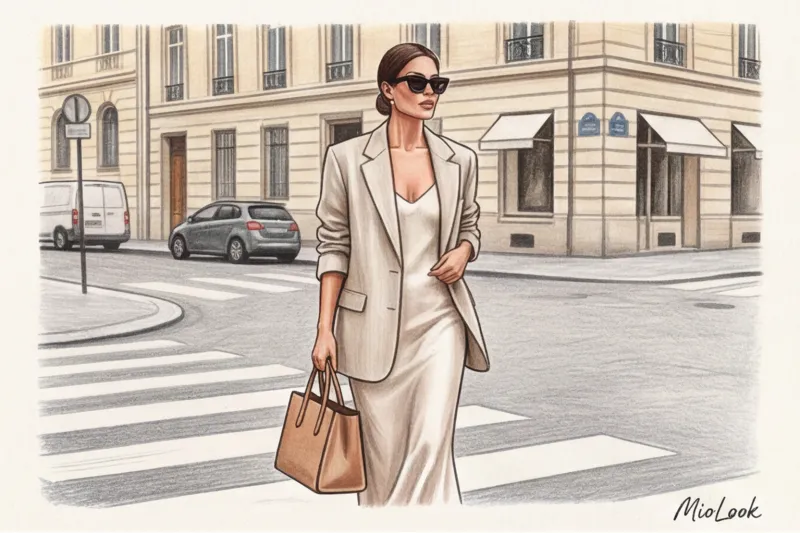
When it comes to current silhouettes, it's all about relaxed tailoring We're seeing a return to sharp shoulder lines (hello, '80s power dressing), but they're offset by absolute fluidity and softness at the bottom of the silhouette. A sharp, architectural jacket with accentuated shoulders is now worn not with a narrow pencil skirt, but with wide, flowing palazzo pants with pleats at the waist. This contrast of hard and soft creates that effortless elegance that's so difficult for mass-market fashion to replicate.
Before investing in a complex asymmetrical jacket or wide-leg trousers, I highly recommend checking how they will fit into your current capsule wardrobe. A pair of MioLook app — Simply upload a photo of the item you want to your digital wardrobe, and a smart algorithm will show you whether you can create at least 3-4 looks with it from what you already own.
Access to MioLook for €0.99 — one-time payment
A smart AI stylist will analyze your wardrobe, select the perfect looks based on new trends, and protect you from impulse purchases.
Get access — €0.99 onceThe Season's Color Palette: How to Incorporate It Without Compromising Your Foundation
Every six months, the Pantone Color Institute releases its authoritative report, and every time I see women make the same mistake: they try to buy a coat or suit in the season's most garish hue and then don't know what to wear it with. This spring/summer, Pantone offers us the rich red Rooibos Tea, the vibrant orange Orangeade, and the watery blue Chambray Blue.
My rule for integrating such colors is simple: Bright trendy shades are spices, not the main dish If you love fiery red, consider wearing patent leather pumps, a structured mini bag, or a silk scarf tied to the handle of your basic bag. Save the bright colors for accessories, where they'll act as accents, elevating the overall look.
But what's really worth investing in are the new, elegant neutral shades for spring and summer:
- Butter (Yellow) — a stunning alternative to harsh, stark white. This soft, warm shade of yellow looks incredibly luxurious on smooth silk and thick linen. It refreshes the complexion and perfectly accentuates a light tan.
- Bitter Chocolate — the new black for the warm season. Unlike black, which often looks heavy and foreign in summer, deep brown adds depth and softness to the look. Pairs luxuriously with gold hardware.
- Sage Green — a muted gray-green shade that has replaced classic khaki. It's less militaristic, more delicate, and pairs perfectly with all shades of beige and off-white.
Practical advice: Try a monochromatic look in a buttery shade (for example, wide-leg cotton pants and a sheer knit top) and add a dark chocolate-colored belt and bag. This combination looks ten times more classy than any dress made from a vibrant, colorful print.
Fabrics and textures as the main fashion investment
During a recent visit to an ancient textile factory in Piedmont, Italy, the chief technologist told me something astonishing: "Mass-market clothing can copy a famous brand's patterns in two weeks. But it would take them years and millions of euros to replicate the way our fabric drapes over the shoulders." This is the key secret of an investment wardrobe: in the premium segment, fabric is always more important than complex design. It's the texture that reveals a garment's true value and determines how elegant it will look.
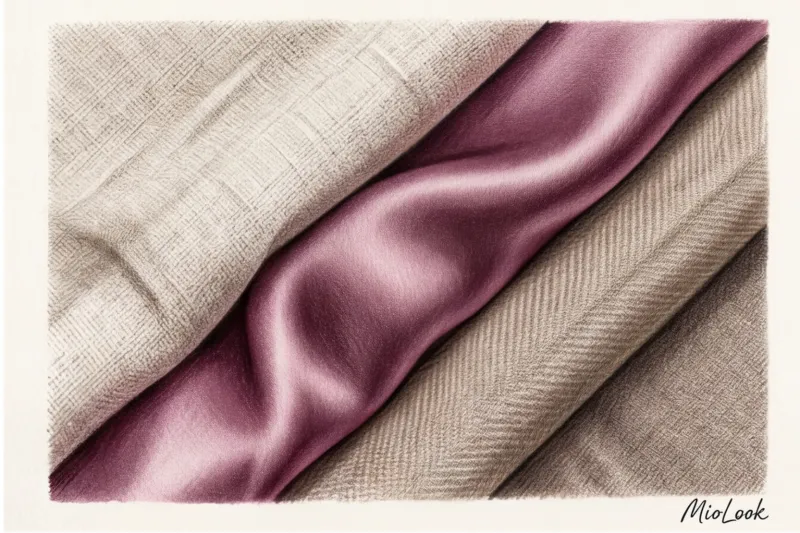
When exploring spring-summer fashion trends, we often get carried away by bright colors and unusual silhouettes, forgetting that lightweight clothing is in closest contact with the skin. This season, I strongly recommend shifting the focus from quantity to tactile quality. Here are three pillars on which a truly luxurious warm-weather wardrobe is built:
- Correct flax. Many women are terrified of linen because of its tendency to wrinkle. It's time to break free from this phobia! A refined wrinkle is a sign of aristocratic relaxation. As an expert, I can tell you: cheap linen (often mixed with synthetics) is thin, itchy, and wrinkles into small, sharp creases, reminiscent of chewed paper. Premium Italian linen has a high thread count. It's heavy, drapes beautifully, and creates large, soft folds that look natural and classy.
- Mulberry silk. Forget about thin rayon that statics with every step. Invest in organic mulberry silk. When buying, always check the density (measured in momme). For dresses and blouses, look for a 16 to 22 momme—this fabric flows like liquid metal, is completely opaque, and has a delicate, muted sheen, not a cheap, glossy sheen.
- Summer wool (Cool wool). It may seem counterintuitive, but wool is one of the best materials for hot weather. Thanks to its special, highly twisted yarn (fresco), the fabric is porous, highly breathable, and virtually wrinkle-free. It's an absolute must-have for office pants and suits.
Practical tip: Always perform the "squeeze test" in the store. Squeeze the edge of the item in your fist for 10 seconds. If the fabric relaxes slowly, leaving a stiff network of wrinkles, leave it on a hanger. High-quality fiber quickly regains its volume.
In addition to smooth, basic textures, the craftsmanship trend has made a triumphant return to the catwalks. In an era of total automation, handcraft has become truly exclusive. Luxury houses have focused on crochet, intricate macramé, and hand-made lace. But be careful: this has nothing in common with flimsy beach cover-ups. Luxury execution implies a rigid, architectural form, the use of heavy cotton threads, and complex geometric patterns.
"Craft pieces require impeccable stylistic balance. If you're wearing a crochet top, pair it with tailored summer wool palazzos rather than denim mini shorts to keep the look urban and elegant."
Integrating such complex, accentuated textures requires a certain amount of foresight. To avoid the hassle of getting ready in the morning, I recommend using MioLook Simply add your new silk skirt or lace top to your virtual wardrobe, and smart algorithms will suggest which basic pieces in your closet will create the most flattering and modern contrast with this texture.
Shoes and Accessories: Where Current Trends Meet Crafts
According to statistics from the research firm Bain & Company last year, most women allocate their shopping budgets according to the residual principle: the lion's share goes toward dresses and suits, while shoes and bags are bought "with change." In my practice, I always encourage my clients to invert this pyramid. My unwavering investment philosophy is this: a bag and shoes make a look. You can wear a simple white cotton T-shirt and your favorite straight jeans, but premium shoes and the right bag will instantly elevate the entire look to the level of understated luxury.
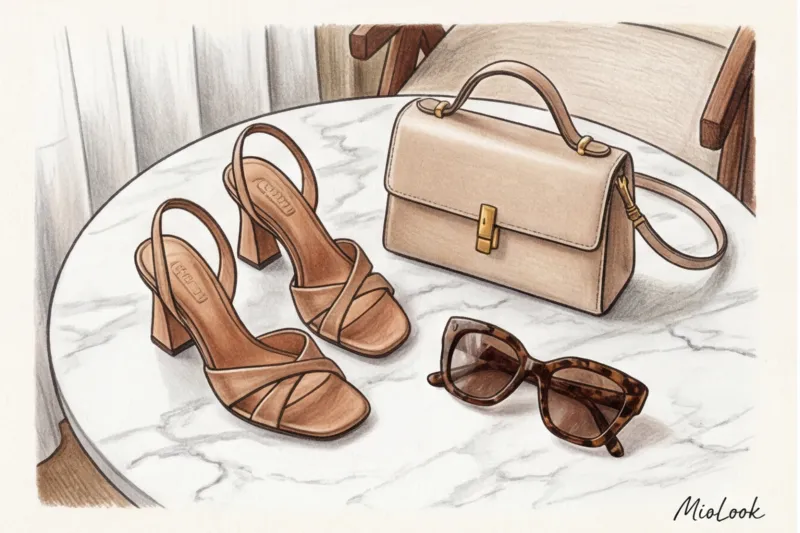
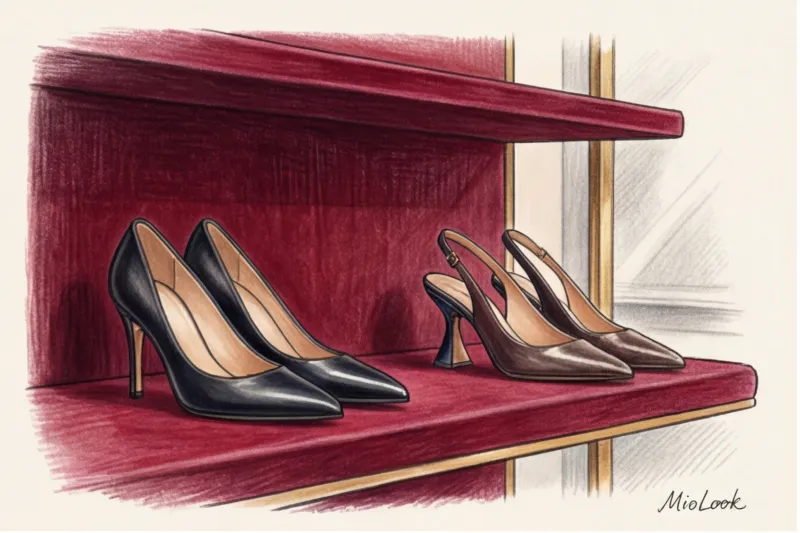
Looking at the spring/summer shoe trends, we see a clear shift away from the oversized platforms of the 2000s. Architectural heels are taking center stage—curved, beveled, or inverted trapezoid, as seen in the latest Prada and Bottega Veneta collections. This is a rare example where complex design is perfectly balanced with anatomical comfort. Two other key highlights of the season are premium suede in deep earthy tones and mesh. Mesh in footwear isn't just a fashion statement, but also a brilliant tool for hot weather: it allows the foot to breathe while maintaining a clean, closed toe. If mesh ballet flats (remember the iconic Alaïa models that buyers are after) seem too bold, opt for suede loafers. Suede instantly adds a touch of luxury to any outfit and contrasts beautifully with smooth summer silk.
The handbag segment has finally abandoned logomania. The era when a large gold logo covering the entire front panel determined a woman's status is officially over. Modern luxury dictates different rules: sculptural shapes and expensive hardware reign supreme. New-wave brands like Savette and Khaite have proven that the ideal bag should resemble an art object. A rigid, geometric frame, matte leather without garish embossing, and clasps crafted using jewelry techniques are your main guidelines. Pay attention to the quality of the stitching and the finish of the leather edge, as these are the details that reveal the true value of the product.
The jewelry wardrobe is also in need of an update. Thin, barely-there invisible chains are giving way to uncompromising statement pieces. The focus is on chunky gold and vintage aesthetics. Large '80s-inspired clip-on earrings, cast cuffs (like those seen at Saint Laurent), and creased metal look luxurious against bare, tanned skin. A single chunky ring or sculpted bracelet worn over the cuff of a linen shirt is far more effective than a scattering of small pendants. If you're not ready to invest in heavy luxury, check out vintage boutiques—there you can find authentic Monet or Napier clip-on earrings that perfectly fit the current trend.
To properly incorporate such active details into your daily routine, I recommend digitizing your basic items in an app. MioLook Artificial intelligence will help you visually assemble outfits and show how a single pair of architectural shoes or a statement vintage brooch can transform the entire wardrobe without the need for additional clothing purchases.
Access to MioLook for €0.99 — one-time payment
Start creating perfect images with the help of artificial intelligence
Get access — €0.99 onceSpring/summer wardrobe myths it's time to discard
Have you ever noticed that as soon as the temperature rises above 20°C, city streets instantly transform into a colorful flowerbed? The ingrained stereotype kicks in: warmer weather means it's time to break out the daisy-print sundresses. However, the paradox is that rejecting typical seasonal clichés instantly sets you apart from the crowd and elevates your look. Let's explore the three main misconceptions that are holding back your style from evolving.
Myth 1: "Summer means floral prints."
"Flowers? In spring? How original!" Miranda Priestly's sarcastic line from the cult film will never go out of style. Mass-market fashion churns out thousands of floral-themed dresses every year, but if you look at the summer collections of "quiet luxury" aficionados (like The Row or Jil Sander), you'll find virtually no prints.
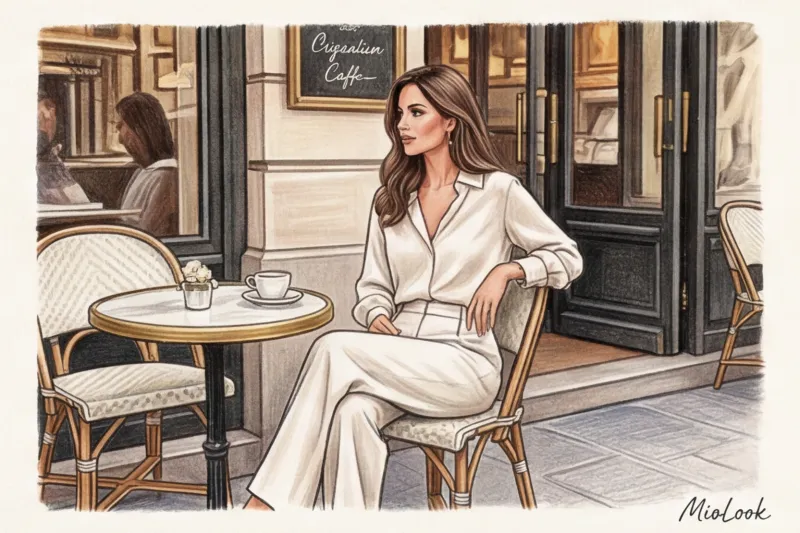
Why does monochrome always look more expensive? A solid, light palette—ecru, pearl, undyed linen—creates a continuous vertical line of color that visually elongates the silhouette. When the eye isn't drawn to the colorful pattern, the quality of the cut and texture of the fabric come to the fore.
Myth 2: "Trendy clothes can't be worn to the office."
Many of my corporate clients believe that current spring-summer fashion trends end where a strict dress code begins. This is a huge misconception. The secret lies in proper adaptation.
Take, for example, the global trend for transparency. In its purest form on the runway, it looks provocative, but in the office, a thick silk organza blouse worn over a matching opaque silk top looks incredibly elegant and perfectly appropriate. The same goes for relaxed tailoring: swap out a stiff, fitted jacket for a voluminous one made of fine tropical wool. You'll remain within the bounds of business etiquette, but the degree of modernity in your look will skyrocket.
Myth 3: "Runway trends are only for tall and thin people."
Over 12 years of working with private clients, I've developed an ironclad rule: there are no trends that only suit models taller than 180 cm. There are just incorrectly constructed proportions.
Worried that trendy oversized or trendy maxi lengths will make you look squat? The trick is in the silhouette. If you choose a voluminous top, be sure to reveal the thinnest parts of your body—your wrists and ankles. A partially tucked hem (the so-called French tuck) also works great for defining the waist without constricting it. Asymmetrical cuts, currently at the peak of popularity, are a brilliant contouring tool: diagonal hemlines or necklines visually slim any figure, breaking up bulky blocks of fabric.
“Style is not blindly copying a mannequin, but the mathematics of proportions, multiplied by an understanding of your body.”
By the way, to avoid buying things that will be difficult to integrate into your proportions later, I recommend uploading your basic images to MioLook app Its "smart wardrobe" algorithms will clearly show you how to pair a new trendy, complex-cut item with it so it works with your figure, not against it.
A practical guide: how to adapt spring/summer fashion trends to your body type
The most bitter disappointment in the fitting room happens when a luxurious piece from the runway turns your figure into a shapeless rectangle. Let's be honest: adapting spring/summer fashion trends to your natural features isn't magic or an innate talent. It's pure geometry and an understanding of the silhouette's focal points.
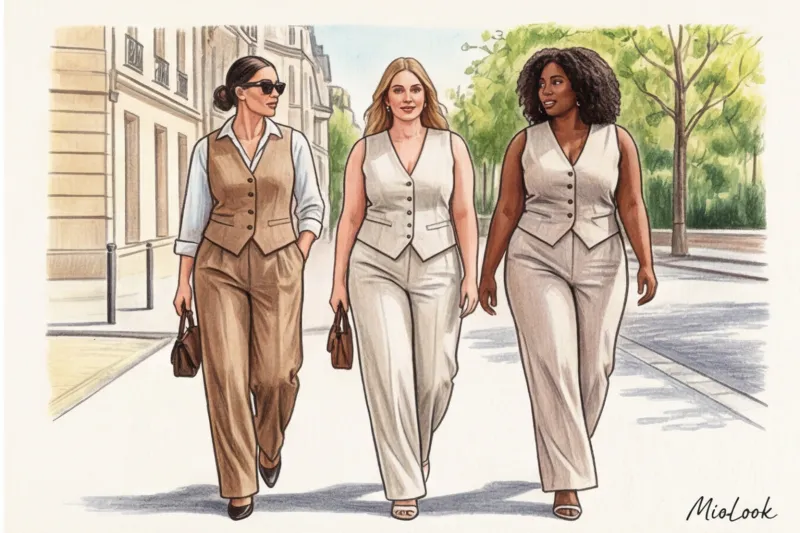
Let's start with the main stumbling block - trendy oversized A common mistake is trying to hide behind size. Let's take a look at the example of wide-leg palazzo pants, which are breaking all popularity records this season. Last month, we put together a capsule collection for a client who is 158 cm tall and was categorically against wide-leg pants, fearing they would make her look even shorter.
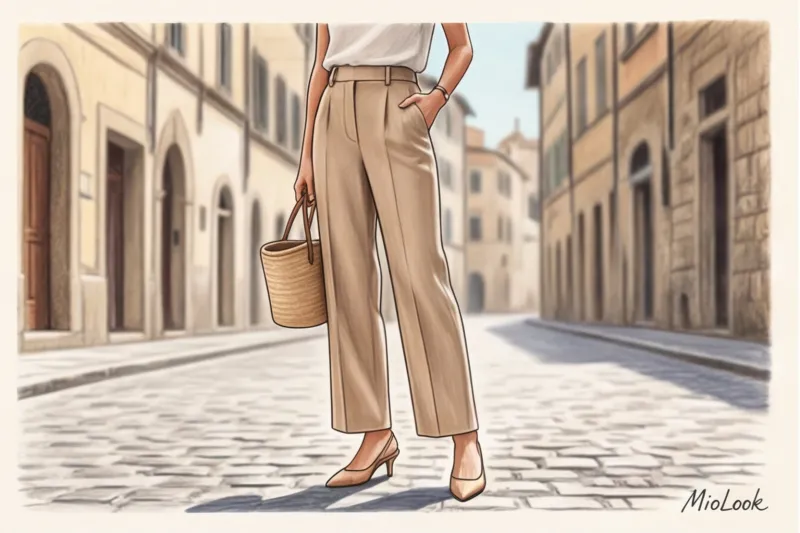
The secret to a perfect palazzo fit isn't the leg width, but the waistline and texture of the fabric. For petite women, we chose a high-waisted style in flowing silk, the length of which completely covered heels. The result? Infinitely long legs. However, for a pear-shaped figure with defined hips, I categorically avoid palazzos made of stiff cotton or heavy linen—they'll be too tight and visually add a couple of sizes. A soft drape (like viscose or fine summer wool) and a strict balance are key: a voluminous bottom calls for a compact, fitted top.
The next correction tool is current cutouts and asymmetry Many are wary of this trend, considering it too revealing for everyday wear. In fact, the diagonal lines and strategic slits work as powerful optical illusions.
If you look closely at the cuts in the Jacquemus or Coperni collections, you'll notice how the sculpted cutouts visually narrow the waist, creating an hourglass effect even on a straight figure. An asymmetrical one-shoulder top is a brilliant solution for those who want to draw attention away from a heavy bottom. The diagonal neckline draws the eye upward, toward the face and collarbones, elongating the entire silhouette.
Your ideal image begins Here
Join thousands of users who look flawless every day with MioLook.
Get access — €0.99 onceFinally, let's talk about maxi length Floor-length skirts and long column dresses dominate shopping lists, but they should be chosen strictly according to your height. Tall women can safely experiment with a dropped waist, a la the 2000s—this will slightly ground the silhouette and balance the proportions of the torso and long legs.
But if you're under 165 cm tall, a low waist in a maxi is your biggest stylistic enemy. Your strategy is to create a continuous vertical line. Opt for monochrome looks with a matching skirt and top, or opt for dresses with a deep V-neck. By the way, to avoid buying items that will later ruin your proportions, I recommend uploading photos of your current clothes to MioLook The app allows you to visualize how a new maxi length will pair with your favorite shoes and jackets, saving you from impulsive and unfortunate spending.
Clothes should complement your figure, not the other way around. If a trend requires you to slouch, suck in your stomach until you're blue in the face, or constantly tug at your clothes, it's a bad investment, no matter how many fashion influencers wear it.
Smart Shopping Checklist: Preparing Your Capsule for the New Season
Professional styling starts not in the boutique, but in your closet. According to ThredUp's 2023 analytical report, approximately 40% of summer clothes bought on impulse are only worn once or twice per season. To prevent the latest spring/summer fashion trends from becoming dead weight on hangers, I always use a strict step-by-step algorithm with my clients. No spontaneous shopping—only cold calculation and a well-thought-out strategy.
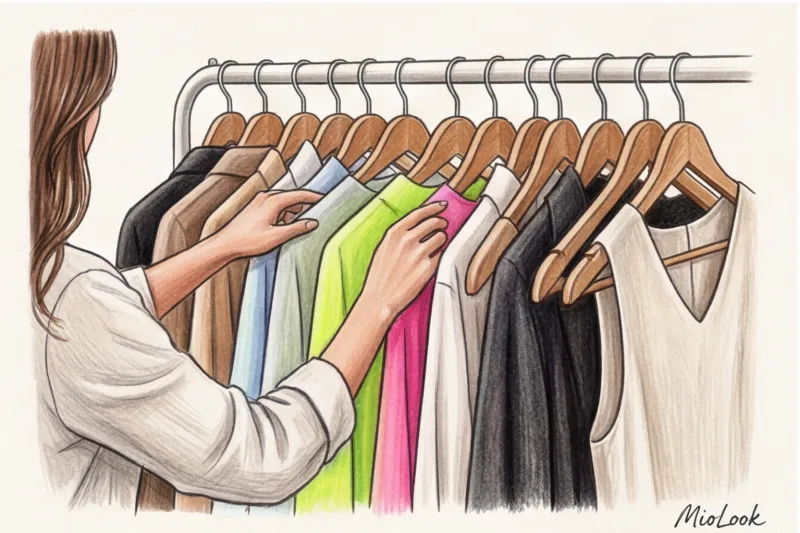
Step one: a ruthless audit of your current wardrobe. Before adding an asymmetrical skirt or a jacket with accent shoulders to your cart, remove all your spring/summer items. Divide them into three categories: your essentials (perfectly tailored items you wear weekly), items that need to be restored (dry cleaned or taken to a tailor), and items for resale. You need to clearly see the canvas on which you'll paint the new season. It's at this stage that I ask my clients to digitize their base. Upload photos of your favorite pants, tops, and jackets to MioLook app This smart wardrobe management system is a better stylist's solution when you reach for that next unwanted T-shirt.
Step two: filtering desires through the “Three images” rule. This is my favorite stylistic axiom when working with trends. The essence is mathematically simple: every new trendy item must fit into three completely different outfits without additional purchases, with the following already hanging in your closet. For example, you've set your sights on a crochet top. Ask yourself: can I wear it with my basic palazzo pants to the office (under a tailored blazer)? With jeans for weekend brunch? With a silk midi skirt for an evening cocktail? If the answer is "no" to any of these questions, the item stays in the store.
Step three: make a shopping list. Forget about bags full of fast-fashion trends that will fade after the first wash. My formula for the perfect seasonal capsule collection is two or three targeted investments in macro trends instead of ten spontaneous purchases. This March, while putting together a wardrobe for a top manager from Zurich, we eschewed a dozen viral microtrends in favor of just three items: a flawless, relaxed-fit summer wool suit, a pair of suede mules with an architectural heel, and a single, sculptural, logo-free bag. These three items instantly elevated the relevance of her entire wardrobe from last year.
Invest in trends that logically complement your style DNA, rather than undermine it. It's better to buy one luxurious piece you'll wear with pride for years than five compromises you'll forget about by August.
Your step for today: Set aside two hours this weekend, take out all your spring/summer clothes, and honestly assess their condition. Only then should you open the websites of your favorite brands with a list of three essential investments.
Conclusion: Your personal style is more important than any trend.
Every six months, the global fashion machine spends hundreds of millions of euros with the sole purpose of making you believe that the items in your closet are suddenly out of fashion. The buzz surrounding new collections is deafening. But the paradox is that the world's most stylish women, whose taste is recognized as exemplary, practically ignore this seasonal hype.
A logical question: why bother studying current spring/summer fashion trends at all if we ultimately arrive at core values? The answer lies in visual intelligence. Knowing runway trends isn't necessary for buying the hottest new items and copying influencers' looks, but solely for training your visual acuity. When you understand the mechanics of design development, you begin to notice important nuances: how the shoulder line of a jacket has changed, why the waist on trousers has shifted slightly lower, what micro-details make a silhouette contemporary. You use trends like exquisite spices, not as a main course, subtly adapting global ideas to your personal code.
Let me cite a revealing figure from a recent Business of Fashion analytical report (2024): the life cycle of a viral microtrend has now shrunk to a record-breaking three to five weeks. Shopping at such a frantic pace means voluntarily condemning yourself to perpetual stylistic dissatisfaction and an overstuffed, yet useless, closet. A trained eye allows you to intuitively distinguish fleeting hype from long-lasting aesthetics. You simply know that elegant draping will remain with us for years to come because it flatters the female figure, while neon micro-tops will disappear from the radar by mid-July.
"True luxury today is the privilege of saying a confident 'no' to 90% of what brands offer. It's the ability to filter even the biggest hits of the season through the rigorous filter of your lifestyle and personal taste."
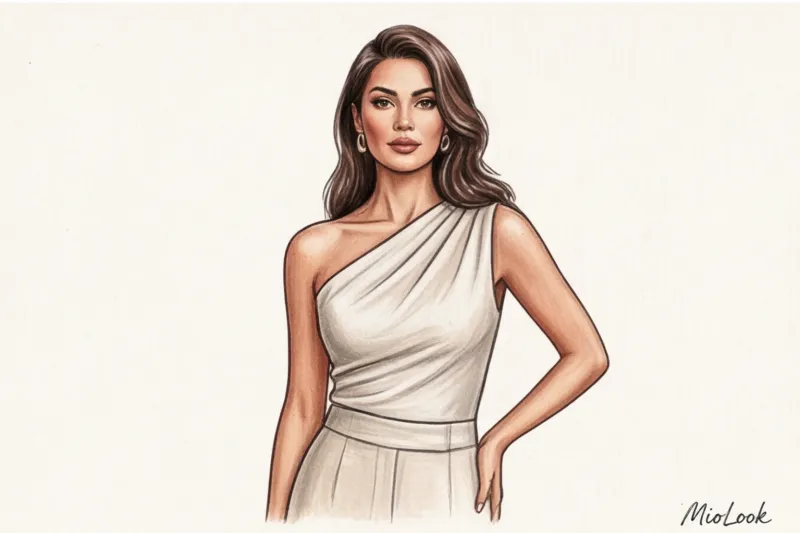
No item, no matter how expensive or ultra-fashionable, will save your look if you feel out of place in it. A dress from the latest runway collection for three thousand euros will look cheap and ridiculous if you have to constantly tug at the hem or slouch because of the unfamiliar cut. Conversely, a perfectly fitting blazer from ten years ago, worn with a straight back and inner calm, conveys status better than any flashy logo. Self-confidence is that invisible, yet absolutely essential accessory of any season, which you can't buy in any boutique on Via Montenapoleone.
That's why I encourage you to embrace radical, conscious consumption. Your wardrobe is your visual calling card, an autobiography written in the language of high-quality fabrics and precise silhouettes. Before adding another trendy item to your cart, take a look at MioLook app Analyze your digital capsule: does this reflect a potential purchase? the real you Will it enhance the things you already truly love and have been wearing for years?
Developing a personal style is a beautiful, lifelong journey, not a sprint from sale to sale. Study fashion, be inspired by designers, play with new textures, but always have the final say. Because trends inevitably fade, but the way you feel in your perfect outfit stays with you forever.
Guide Chapters
Fashionable summer swimsuits: how to choose the perfect model
Stop buying swimsuits for just one season. A stylist with 12 years of experience explains how to choose a high-quality beachwear capsule that will last for years.
Summer Capsule: How to Build the Perfect Wardrobe
Tired of having a full closet and nothing to wear? Learn how to create a premium summer wardrobe with just a few pieces that pair perfectly.