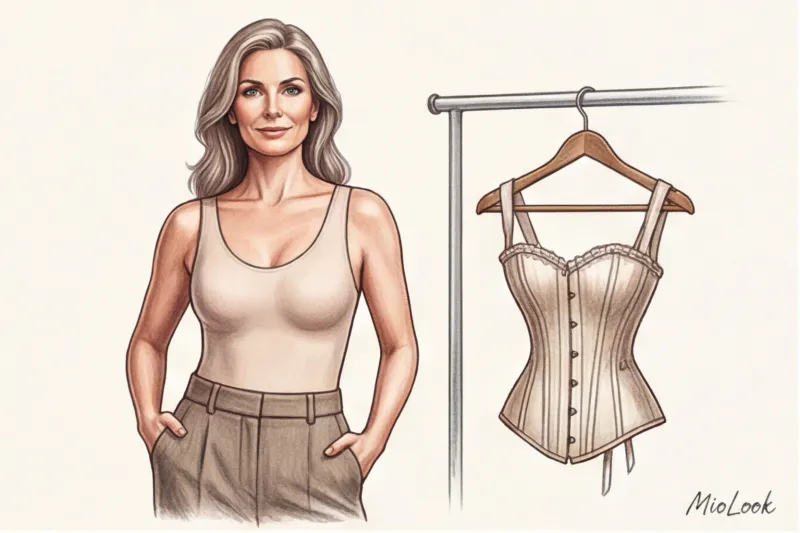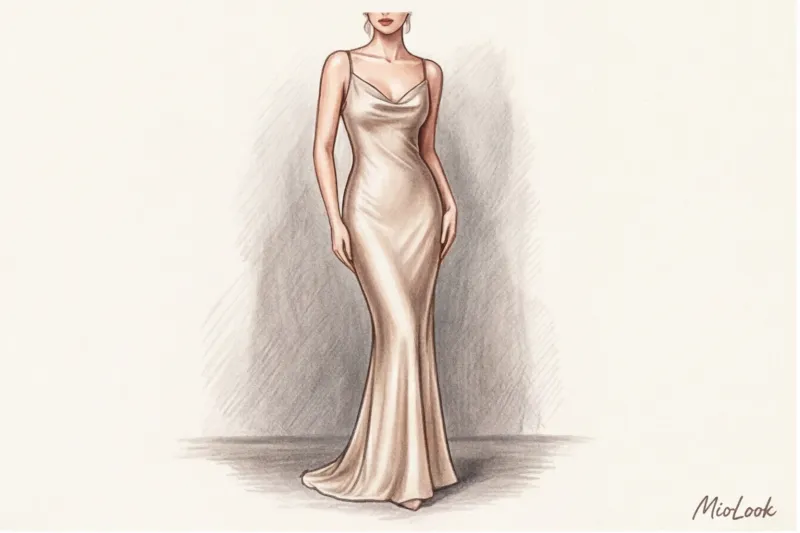
"Sofia, unbutton me, I'm going to faint." These were the words of my client at a charity event three years ago. She was wearing a stunning €1,200 silk pantsuit, but underneath it was a rigid corset, bought a size too small for the sake of a "perfect waist." For the first two hours of the event, she couldn't eat a canapé or take a deep breath. We went to the ladies' room, removed the corset, and—miraculously—her suit fit exactly as the designer intended, because flowing silk demands freedom, not constriction.
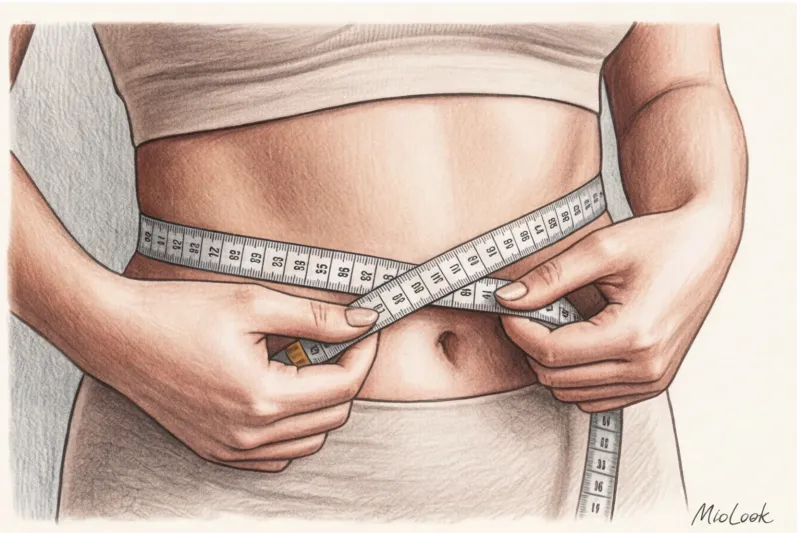
This case perfectly illustrates the main problem with the modern approach to body shaping. We're accustomed to thinking in terms of aggressive "tightening," although the secret to a prestigious, expensive look lies in architectural "smoothing." High-quality shapewear for the abdomen and sides — it's not an instrument of torture, but the engineering foundation of your wardrobe. We discussed the fundamental principles of working with silhouette in more detail in our the complete guide to shapewear for plus-size women.
Let's look at lingerie basics from the perspective of textile science, anatomy, and my 12 years of experience working with a wide variety of body types.
The Myth of Hard Compression: What Should the Ideal Tummy and Side Shapewear Be Like?
The biggest mistake I see in fitting rooms every day is buying underwear that's a size too small. Remember: going smaller won't make you look slimmer. It will create a "squashed sausage" effect.
When you wear something too tight, physics takes over. Your body volume doesn't disappear, it just shifts. Have you squeezed in your stomach? You'll end up with sagging folds above your waist or under your shoulder blades—places where none existed before. Furthermore, tight compression disrupts the design of expensive clothing. Thin knits or viscose will highlight every seam that digs into your skin, completely ruining the aesthetics of your look.
There's also a medical aspect. According to research in phlebology, rigid, improperly selected compression at the waist and pelvis directly blocks lymph flow and impairs blood microcirculation. Swelling at the end of the day, heavy legs, and bloating are often not a consequence of fatigue, but the result of wearing a bodysuit that's too tight. We're shifting our focus: Squeezing (compression) to Smoothing (smoothing).
The Anatomy of Correct Correction: Textile Science and Degrees of Tightening
The magic of lingerie lies not in the brand, but in the polyurethane fibers—elastane (also known as spandex or lycra). Polyamide or nylon fabrics alone don't stretch. It's the percentage of elastane and the way it's woven into the base that determines whether the lingerie will work like a second skin or a spacesuit.
Smart brands (from basics like Uniqlo to premium Spanx or Skims) use intelligent zoning. The fabric has a dense, multi-layered weave on the stomach, and transitions to an ultra-fine, laser-cut mesh at the edges (on the hips and under the bust). This ensures a completely invisible border between the underwear and the skin.
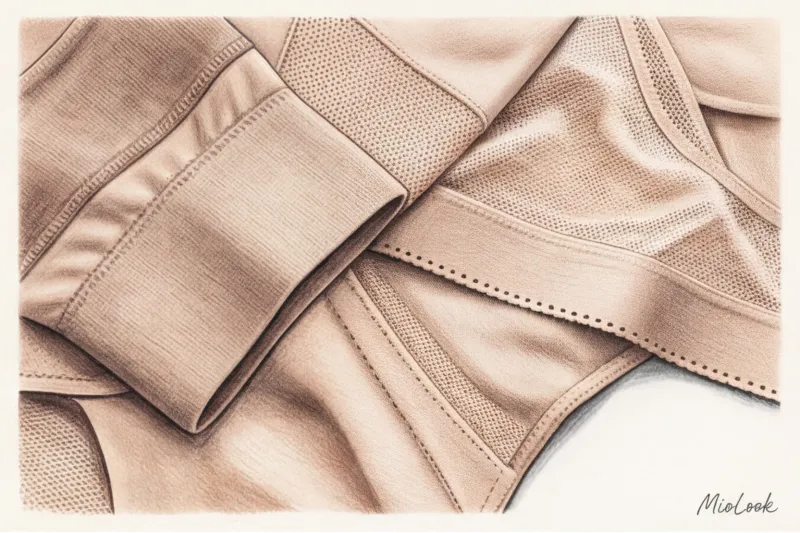
Light to medium (Smoothing) for every day
If you're looking for a basic office wardrobe, flowing viscose dresses, or fine cashmere knits, you'll want a medium level of coverage. The elastane content here typically ranges from 10% to 15%.
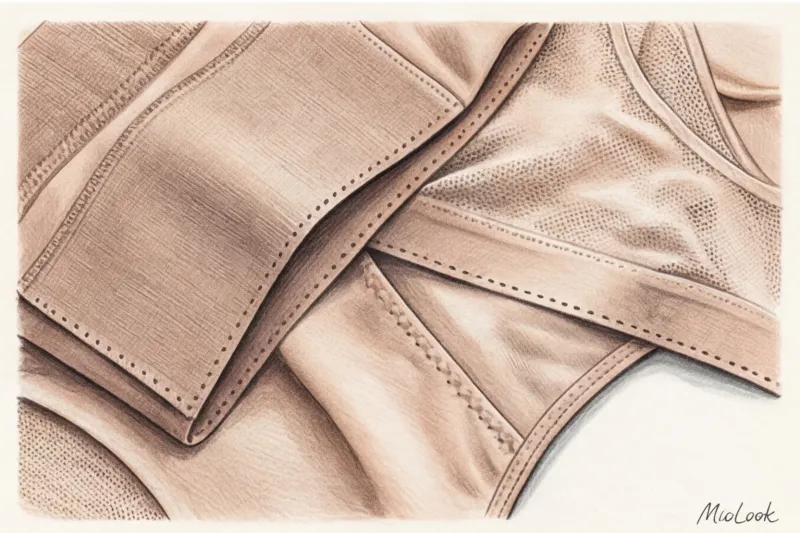
This type of underwear won't reduce your waistline, but it will create a perfect, smooth canvas. It will conceal the contours of your belly button, the lines of regular panties, and minor skin irregularities. This is the only type of compression that's safe to wear full-time (8-10 hours), as it allows the skin to breathe and doesn't put pressure on internal organs.
High compression (Sculpting) for special cases
Here the percentage of elastane reaches 20-30% , and the design often includes additional corset inserts or double abdominal panels. This is the "heavy artillery."
It's ideal for dense fabrics: formal wool suits, sheath evening dresses, and heavy satin. However, this type of compression has a strict limitation: medical guidelines recommend against wearing high-compression underwear for longer than 4-6 hours at a time. This type of compression is best suited for the red carpet, a presentation, or a wedding, not for the office.
Digitize your database
Upload photos of your underwear and clothing to MioLook. Our AI stylist will suggest which dresses will best complement your shapewear.
Get access — €0.99 onceShapes and styles: choosing tummy and waist shapewear for different purposes
Every item in your closet requires its own engineering support. There's no one-size-fits-all product that will work with everything. To avoid confusion while shopping, I always recommend my clients create a virtual wardrobe—for example, in an app. MioLook It's convenient to sort clothes into capsules and immediately mark which underwear goes with them.
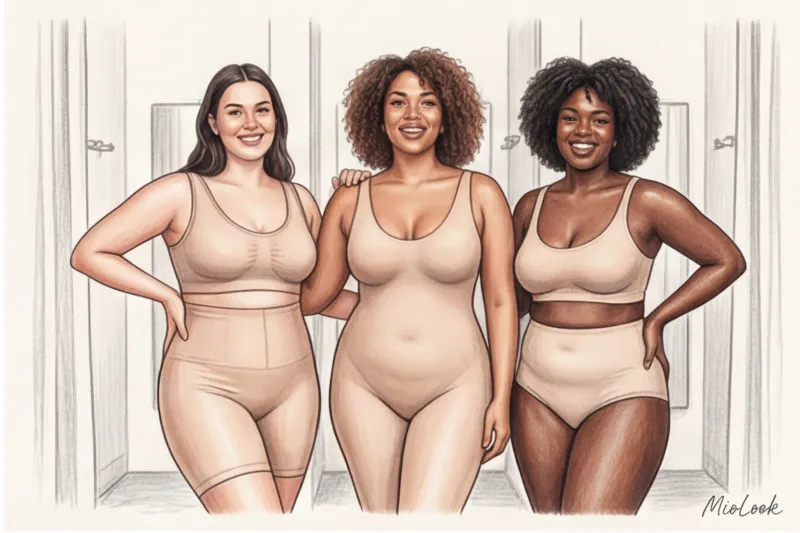
High-waist briefs and shorts
Shorts (mid-thigh length) are an absolute must-have if you wear pencil skirts or flowy summer dresses. They serve a dual purpose: they smooth out your midsection and sides, and most importantly, they protect your inner thighs from painful chafing (chub rub) in the heat.
High-waist briefs (those that reach up to the ribs) work great with pantsuits. However, there's one caveat: they only work for women with a moderate waist-to-hip difference. If your waist is very narrow, the top edge of these briefs will inevitably roll down.
Corrective bodysuits
My personal favorite for any bodycon dress. The bodysuit's main superpower is that it completely solves the problem of the "horizontal fold" at the waist. It simply doesn't have a seam down the middle of the torso—it creates a single, smooth contour from the bust to the hips.
Advice from practice: Always choose a bodysuit with a gusset closure (hook-and-eye or snaps). Pulling it around your neck in a tight bathroom stall is a real pain.
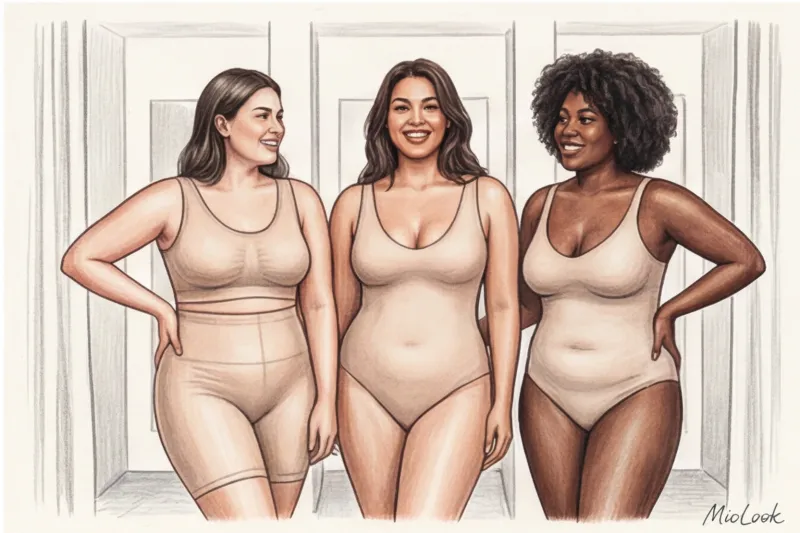
Wardrobe Synergy: How the Fabric of Your Clothes Dictates Your Lingerie Choices
We often blame our figure for a dress that "just doesn't fit right," although the problem lies in the clash of textures. The fabric of your clothes should glide over your underwear, not cling to it.
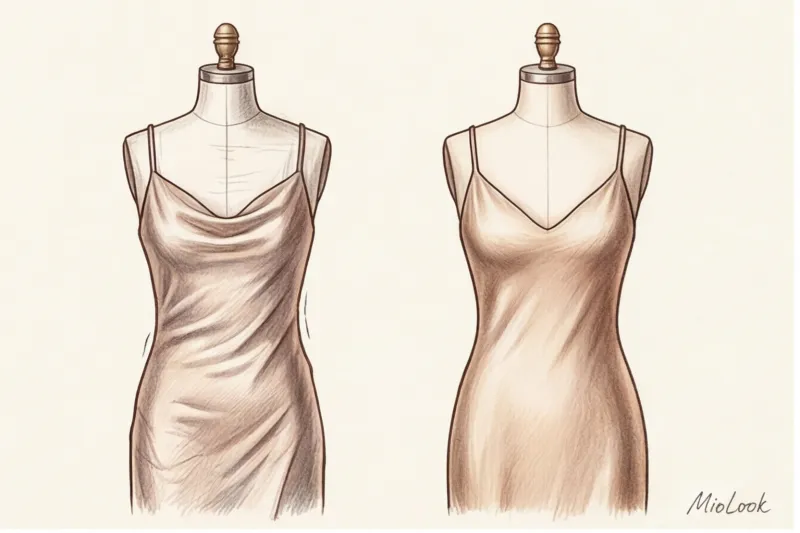
If you're wearing silk, satin, or fine viscose, your underwear should be completely smooth and matte. Any lace on panties or bodysuits will bleed through the thin fabric, creating an uneven texture. However, under heavy tweed, denim, or wool, you can wear more structured styles with stiffeners—the fabric simply won't "read" them.
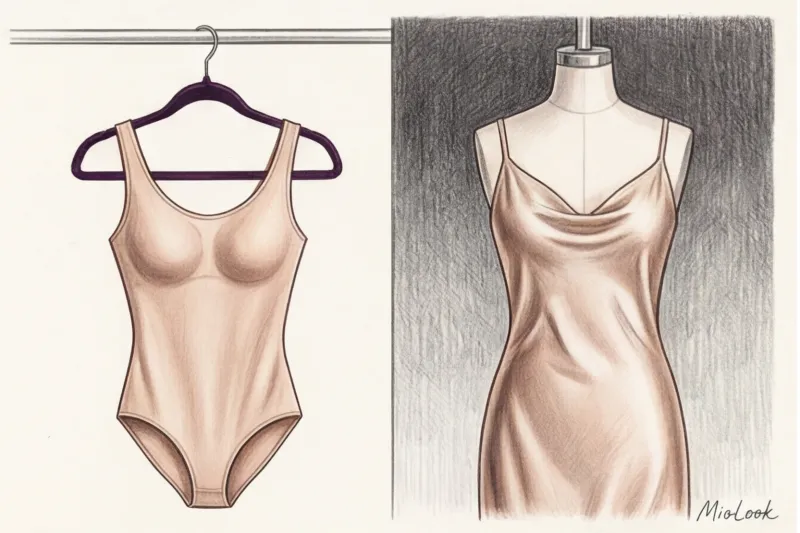
Let's talk about color separately. How often do I see white pants on the street, with white shapewear gleaming beneath them? According to color theory and optics, white on white doubles the pigment density, making the underlying layer brighter than the top. The Pantone Color Institute regularly reminds us: the ideal underwear color to match white and light-colored clothing is a shade as close as possible to your skin tone (nude, beige, coffee). Underwear should mimic your body, making it "invisible."
Smart image selection
Not sure what underwear to wear with your new dress? Trust MioLook: create the perfect outfit in just a few clicks.
Get access — €0.99 onceQuality Test: A Stylist's Fitting Room Checklist
When you go to a lingerie store (and I insist on in-person fittings for your first purchases), use my checklist. If an item doesn't meet even one of the criteria, leave it in the store.
- The presence of silicone tape. A flat silicone strip should run along the top edge of high-waisted briefs and the bottom edge of shorts. This strip "sticks" to the body from the body's heat and prevents the underwear from rolling up as you move. Important: 2-3% of women are allergic to technical silicone, please take this into account.
- Cotton gusset. This is non-negotiable. Shapewear is made of synthetic materials. If the crotch area doesn't have a 100% breathable cotton insert, you risk disrupting your microflora within just one day of wear.
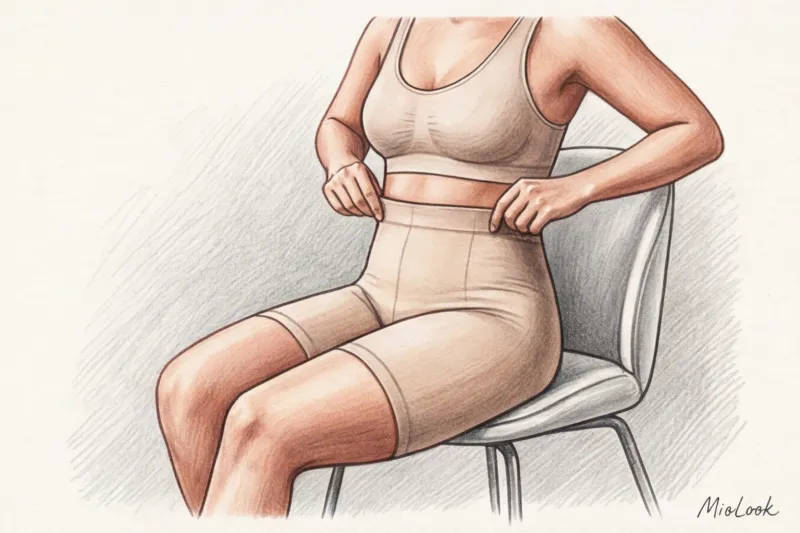
"The Chair Rule": I never let a client leave the fitting room until she's done the crash test. Put on your underwear? Sit on a chair. Bend over as if you were tying your shoelaces. Take a deep breath. If the hem is digging into your ribs or the shorts are riding up, it's not the right fit. We don't stand rigid in real life; we move.
Eco-friendly care: how to protect elastane from deterioration and extend the life of your underwear
As a sustainable fashion advocate, I always consider the durability of items. Quality lingerie (in the €50 to €120 range) is an investment. And more often than not, it's not extra pounds that ruin this investment, but improper washing.
A study by the Hohenstein Institute (2023) revealed exactly how elastic fibers degrade. It turns out that elastane's main enemy is fabric softeners. They coat the polyurethane fibers with a lipid film, causing them to relax and permanently lose their ability to shrink back. Three or four washes with fabric softener, and your shapewear shorts will turn into a shapeless parachute.
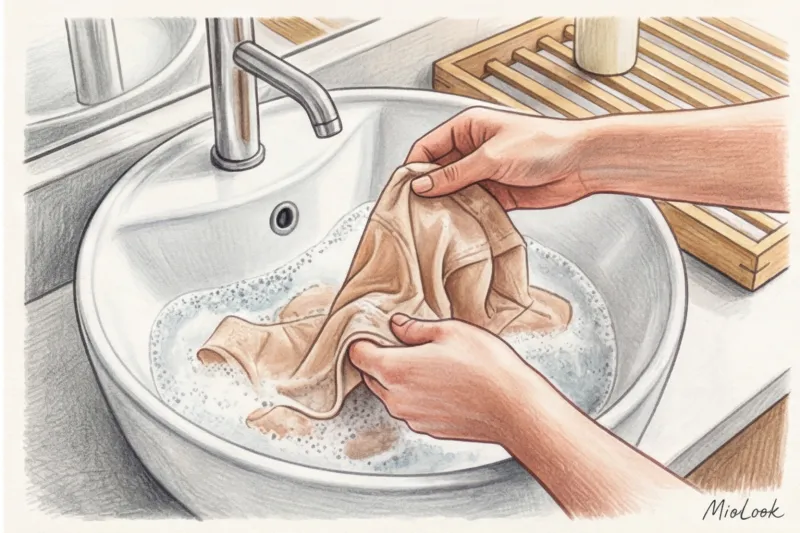
Golden rules for caring for compression garments:
- Cold water only. Strictly up to 30 degrees. Hot water literally melts the plastic structure of elastane.
- Liquid product instead of powder. Powder crystals often get stuck in the dense, multi-layered weave, causing itching.
- No radiators or dryers. Dry your laundry only flat at room temperature. Did you place it on a hot bathtub coil? Throw it away.
With proper care and regular wear (2-3 times a week), a good basic item will last you 6 to 12 months before the fibers begin to naturally degrade. This is a smart and sustainable approach to your wardrobe: it's better to buy one high-tech item and take care of it than to replace cheap alternatives every month.
Think of shapewear not as a way to squeeze yourself into unrealistic standards, but as a smart makeup primer. Primer doesn't change your face; it evens out skin texture so that expensive foundation goes on flawlessly. The same goes for clothing: let a high-quality base smooth your silhouette and make you feel confident every minute.