Recently, a client came to me who genuinely thought she hated running. "Katarzyna, it's just not my thing; everything starts hurting, especially my chest," she complained. When I asked to see what she was wearing, she pulled out a cute but completely shapeless seamless top from H&M. We replaced it with a Shock Absorber bra with a firm hold. A month later, she ran her first 5 kilometers without a single complaint of discomfort.
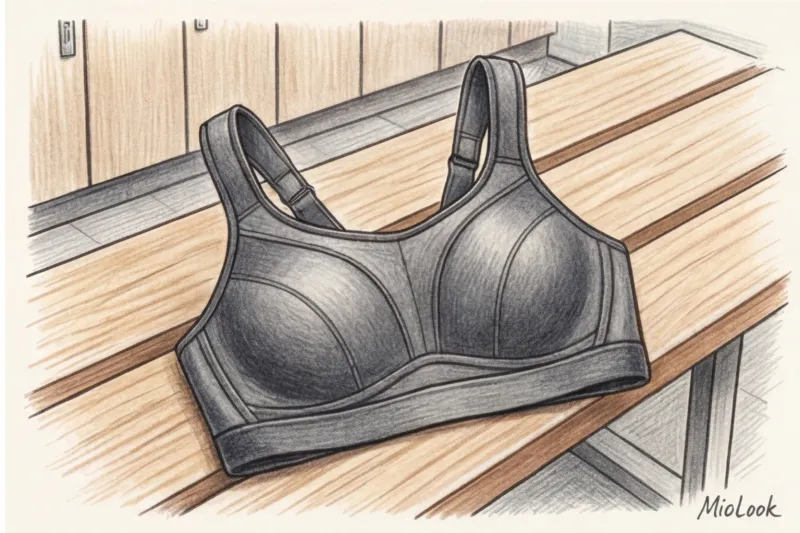
As a personal stylist, I often see the same scenario: women spend hundreds of euros on the perfect cushioned sneakers but skimp on bust support by buying fancy elastic bands from the mass market. But if you want to understand, How to choose a sports bra that actually works, we have to forget about design and look at this wardrobe item from an engineering point of view.
The Anatomy of Support: Why You Shouldn't Work Out in Basic Underwear
Everyday underwear is designed to shape the silhouette while stationary. Sports underwear is designed to absorb kinetic energy. I discussed in more detail why these elements shouldn't be mixed in our The complete guide to a basic lingerie wardrobe A sports bra isn't a basic or a racy accent; it's a strict, functional layer, comparable to an orthopedic insole.
The Breast Health Research Group at the University of Portsmouth has demonstrated a surprising fact in their biomechanical tests. When running or jumping, the breasts don't simply move up and down, as many people think. They follow a complex trajectory, shaped like an inverted figure eight (the infinity sign). Without proper support, the range of this movement can reach 15 centimeters!
"Each such vibration stretches the Cooper's ligaments—the delicate connective tissues that support the breasts. The problem is that these ligaments don't have muscle fibers. Once stretched, they will never contract back. No cream or chest exercises will restore them."
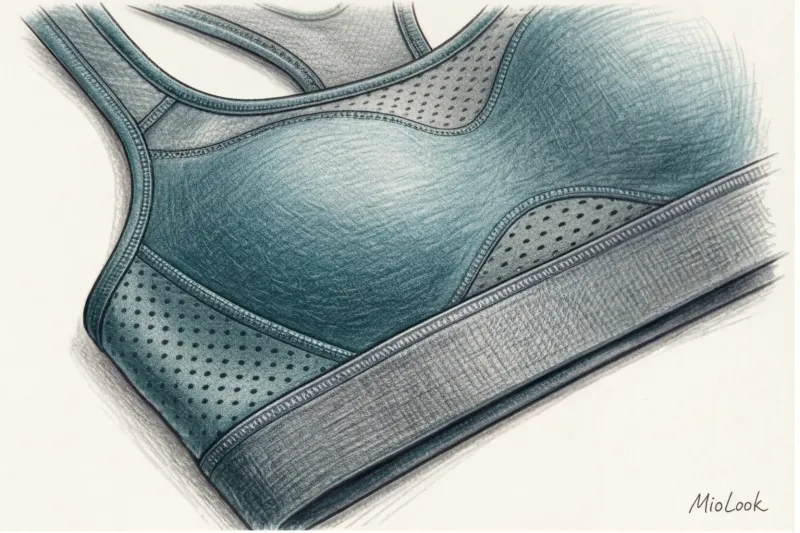
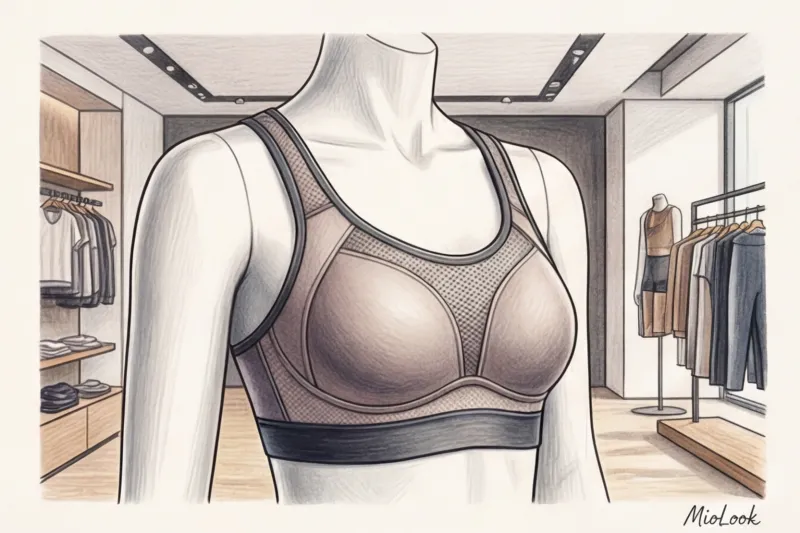
The right top acts as an external exoskeleton. Its architecture rests on three components:
- Wide and thick band under the chest. It is this, and not the straps, that provides 80% of all support.
- Closed armhole. The fabric should reach high enough under the arms to block lateral movement.
- Wide, non-elastic straps. If the straps are easily pulled in your hands, they will not support your chest during a jump.
Access to MioLook for €0.99 — one-time payment
A smart AI stylist will select the perfect look for your workouts and everyday life.
Get access — €0.99 onceCompression or encapsulation: the key to choosing a sports bra
This is my favorite part of the shopping experience because it's where marketing myths are debunked. The fitness industry has led us to believe that a trendy seamless crop top is the perfect solution. But that's a trap. There are two fundamentally different methods of support, and choosing the wrong one will ruin your entire workout.
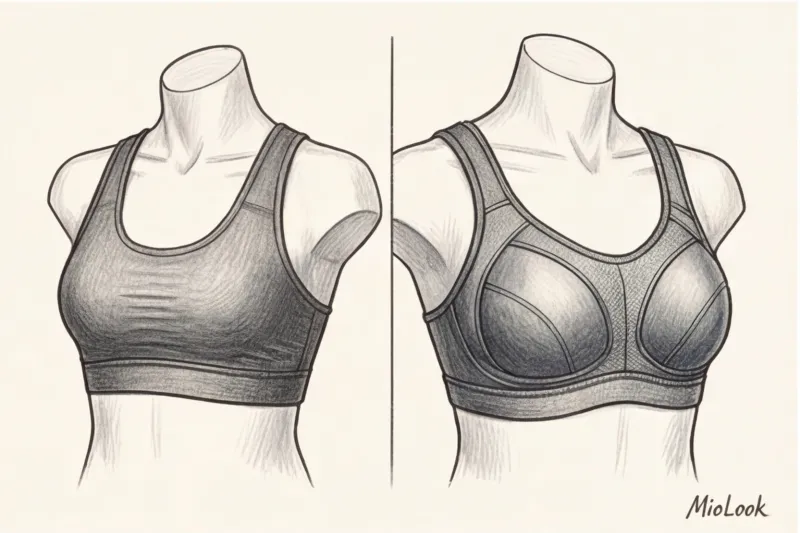
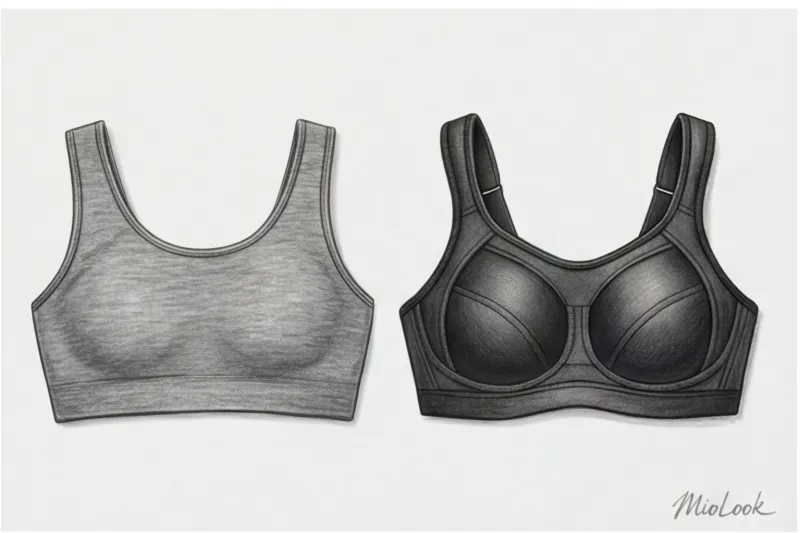
Compression method. These tops work like an elastic bandage—they simply compress the breasts, pressing them against the rib cage like a single monolith. Yes, it looks stylish, like something out of a yoga retreat ad. But compression has a strict limitation: This method only works safely for A and B cup sizes. If you're a size C or larger, tight compression will cut off circulation, create a greenhouse effect in the groin, and still won't hold your figure eight in place while running.
Encapsulation method. This is an engineering approach. In this bra, each breast is placed in a separate, structurally defined cup (capsule). The breasts are not compressed, but supported independently on all sides. If you are a size C or larger, you need encapsulation only , even for quiet yoga.
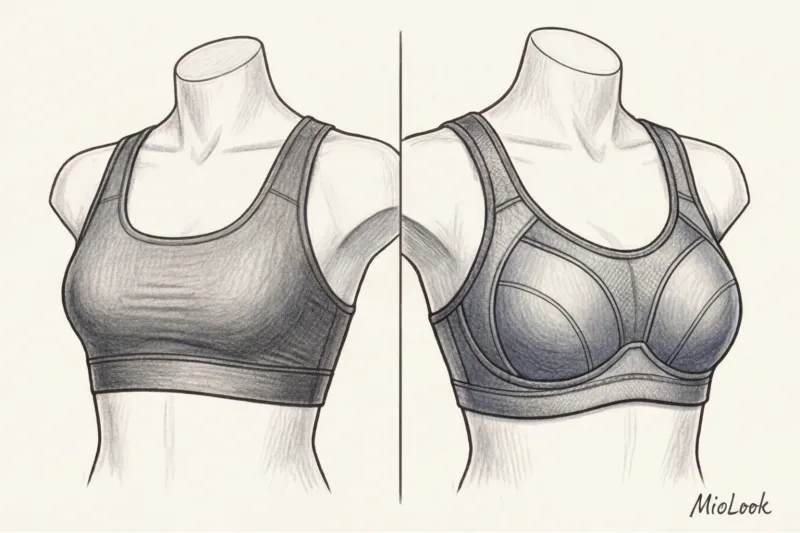
There are also hybrid models that combine encapsulation on the inside with a lightweight compression panel on the outside. These are the gold standard for those wearing sizes D, E, and F who engage in high-intensity training.
Support Levels: Choosing a Bra for Your Workout
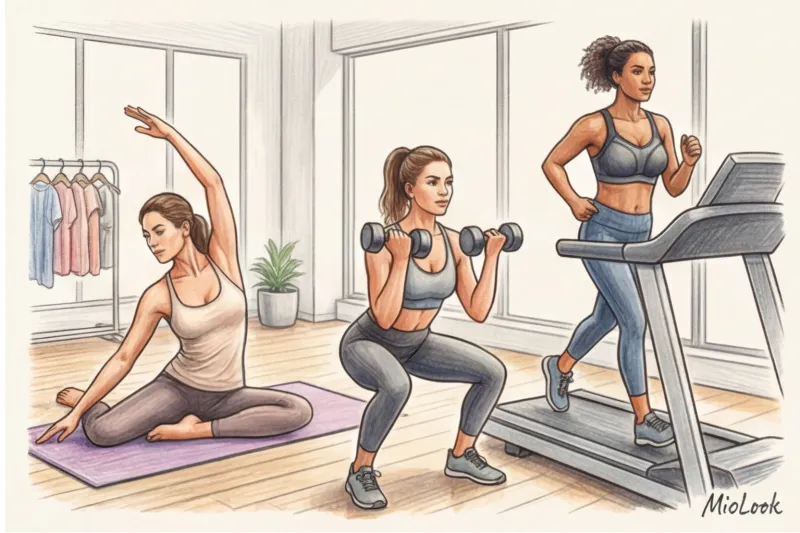
You'll always find the Impact Level marking on the tag of professional sportswear. When choosing a top, don't just choose the color you like, but rather be sure it's tailored to the biomechanics of your sport.
Low Impact: How to Choose a Bra for Yoga, Pilates, and Stretching
For low-impact workouts, freedom of movement and breathing is crucial. Thin spaghetti straps and beautiful weaves at the back are acceptable (but only if you're a size C or smaller).
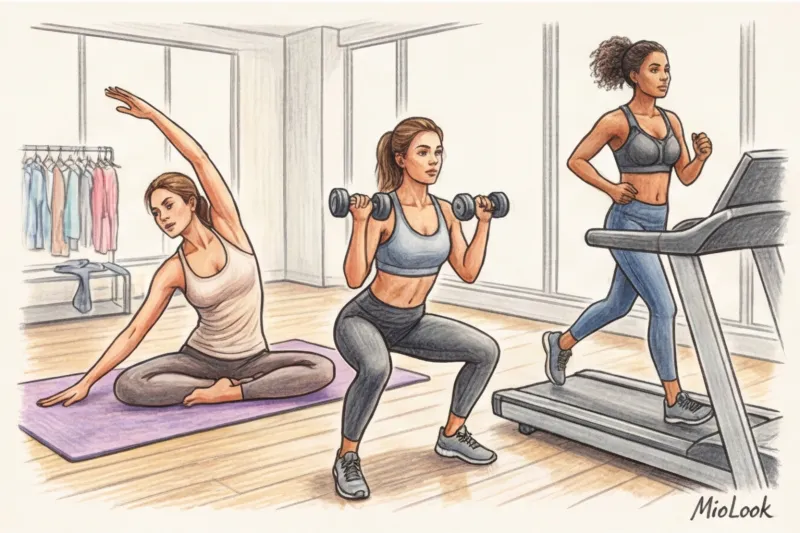
The main rule for yoga: no fittings on the back Fasteners, hooks, and plastic adjusters will dig painfully into your spine when you lie down on the mat in shavasana. Also, pay attention to the fabric. Cotton is your worst enemy here. It absorbs sweat and takes a long time to dry, leaving you cold after your workout. Look for a technical polyamide blend with at least 15% elastane.
Medium Impact: Strength training, dance, and cycling
When you lunge, squat, or dance, your movement pattern constantly changes. This is where the backrest design comes into play.
A T-shaped (Racerback) or X-shaped back isn't just a fashion statement. This crossover transfers the weight of the chest from fragile shoulders to strong back muscles and draws the shoulder blades together, improving posture during exercises. The underbust band in these models should be at least 3-4 centimeters wide. Also, be sure to check the seams: they should be flatlock or hidden, otherwise, vigorous arm swings will cause your underarms to bleed.
High Impact: The Perfect Sports Bra for Running, HIIT, and CrossFit
There are no compromises for running, tennis, and burpees. You need the highest level of protection.
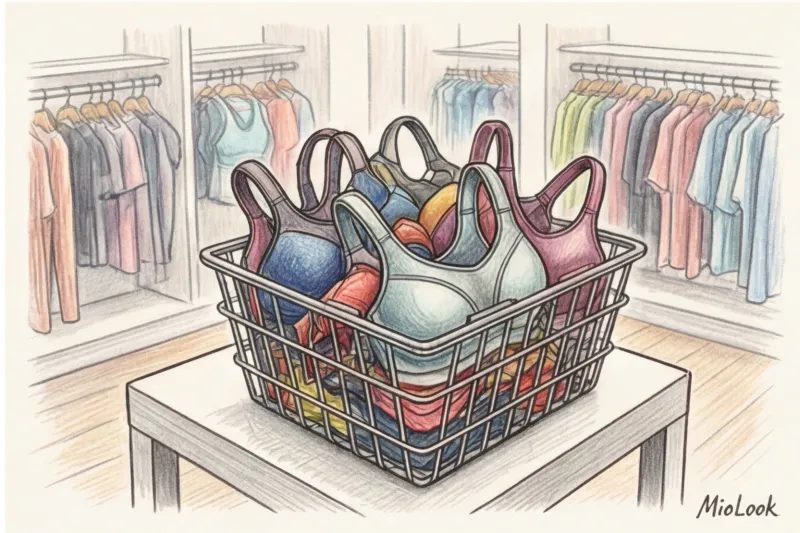
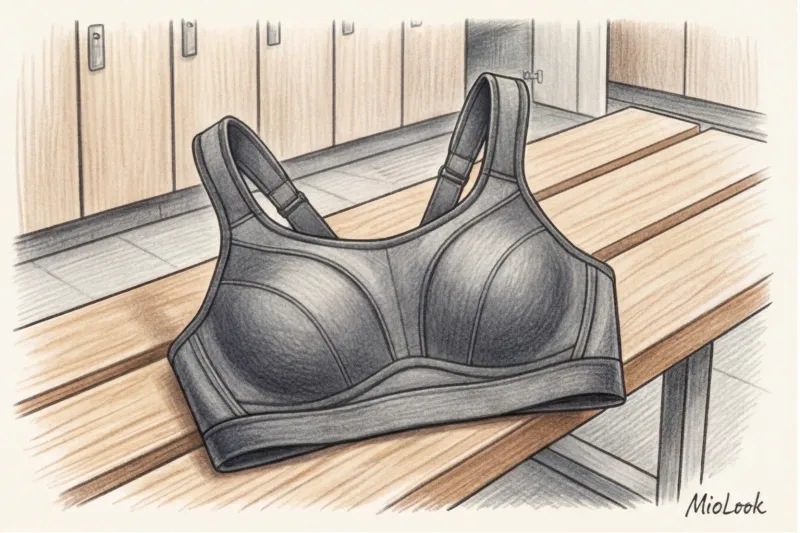
The ideal running bra is always encapsulated or a hybrid. The straps should be firm, wide, and adjustable (with metal or sturdy plastic hooks, no flimsy sliders). Another important detail: a high neckline. This prevents the chest from popping out of the top when landing hard after a jump.
Your perfect look starts here
Join thousands of users who look flawless every day with MioLook. Digitize your wardrobe in just a few clicks.
Get access — €0.99 onceMass-market mistakes: Oysho and H&M versus Shock Absorber and Panache
As a shopper, I often analyze mass-market collections. Brands like Zara, H&M Move, and Oysho make stunningly beautiful pieces. Their palettes are impeccable. But let's be honest: they're great for light fitness, Pilates, and those glamorous mirror selfies at the gym. They fail the treadmill test.
Why? Because developing bra lasts to accommodate larger sizes is expensive. It's more profitable for mass-market brands to produce elastic compression tops in sizes S, M, and L. But a 75D and 85B bust can fit into the same size M on the Zara grid, even though their biomechanics are completely different.
For serious training, I always refer clients to specialized brands: Shock Absorber, Panache Sport, Anita Active Among sports giants, you can trust lines like Nike Alpha or Under Armour High.
Let's calculate the cost per wear. Mass-market elastic for €20-25 loses its supportive properties after 30-40 machine washes. Elastane simply "fatigues." A profile bra from Panache for €70-85 maintains its shape for years, withstanding over 100 harsh washing cycles. Over the course of a year, one expensive top costs you less than three cheap, stretched-out bras, not to mention the saved Cooper bras.
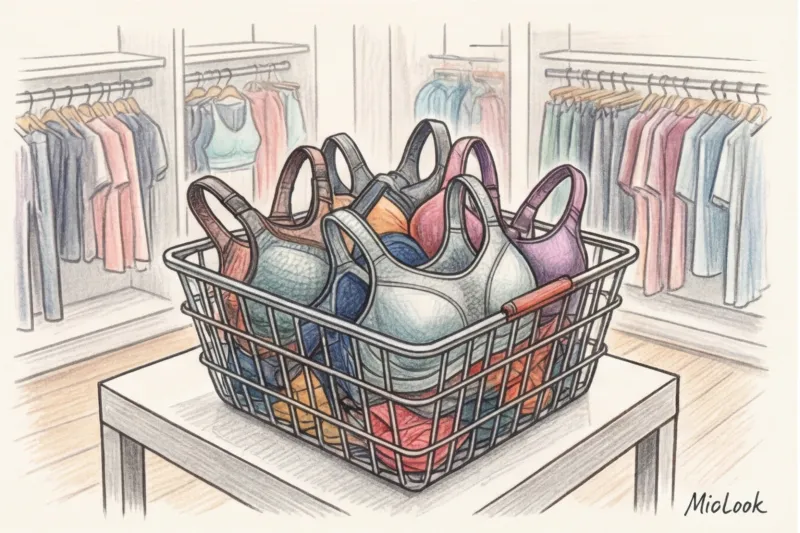
Checklist: 5 Fitting Room Tests Before Buying a Sports Bra
Never buy a sports bra online unless you know the exact model and size of that specific brand. I make my clients do a thorough test drive of every item in the fitting room. Here are 5 steps you should take before you check out:
- Two-finger test. Put on the top and fasten it with the loosest hooks (it will stretch over time, so you'll need some extra room to tighten it). Slide two fingers under the band at the front of your ribs. If your fingers fit easily and you can slide a third through, the band is too big; go smaller. If your fingers don't fit at all, you won't be able to breathe normally at a heart rate of 150.
- Armpit test. Stand up straight and lower your arms. The fabric should not bunch up, and the skin under your arms should not hang over the edge of the top like a roll.
- Fabric rebound test. Pinch the fabric at the cup (center of the chest) and pull. High Impact bras shouldn't have any stretch at all. All the stretch should be in the back and sides, not the front.
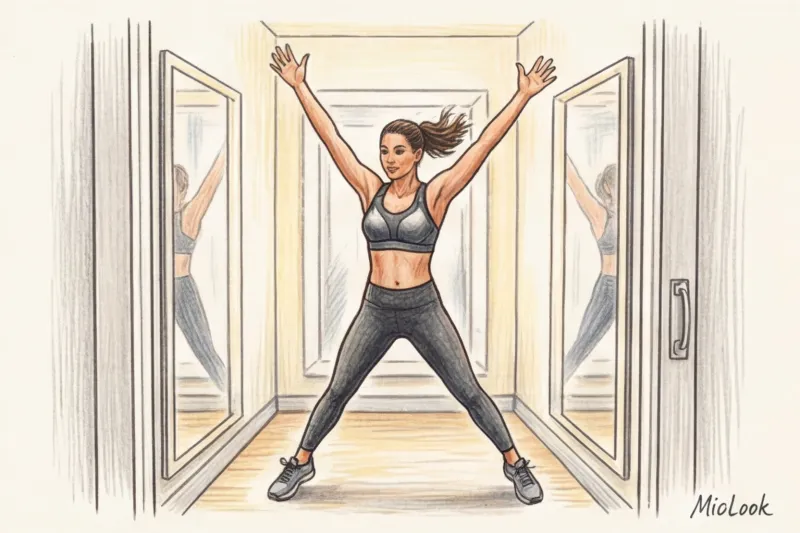
- Jumping Jacks test. Do 10 active jumping jacks with arm swings right in the booth. Don't be shy! This is the only way to truly understand support. A good bra should dampen at least 80% of the vibrations.
- Houdini test (how you do it). Try taking off your top when you're already slightly sweaty from jumping. If it's a one-piece compression top and you're stuck in it with twisted arms, needing assistance, imagine taking it off after an hour of intense CrossFit. Taking off your bra should be comfortable.
A sports bra is your gear, your helmet, and your safety. Choose it with the same care you give to a trainer or running shoes. Investing in quality encapsulation, the right size, and high-tech fabrics will pay off not only in comfort but also in the long-term health of your breasts.