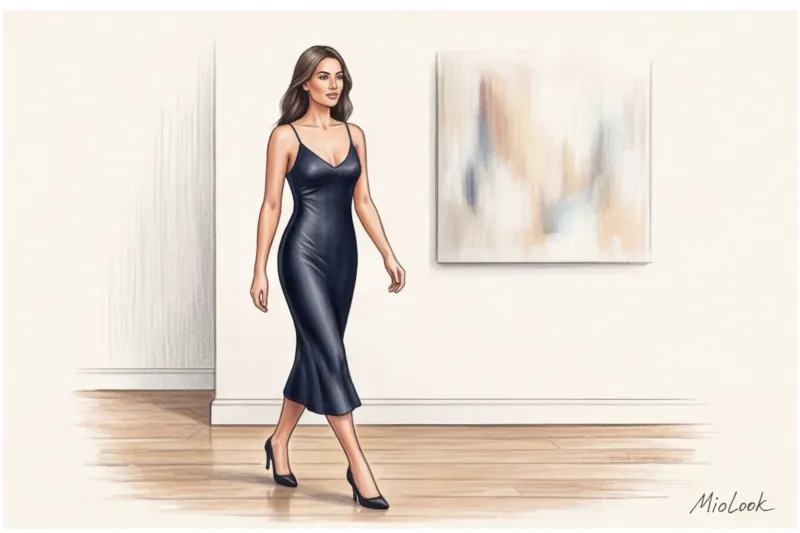
The architecture of a flawless silhouette: where style begins
Recently, a client came to me in a mild panic. She had an important event the next day, and she'd bought a luxurious, deep wine-colored silk slip dress (a brand like Massimo Dutti, around €150), but in the mirror, it was a disaster. The thin fabric treacherously outlined her belly button, the slightest unevenness at her waist, and, worst of all, the ridges of her lace panties. The dress, despite its excellent cut and price, looked sloppy. She was convinced, "I need to lose weight ASAP; this dress isn't for my figure."
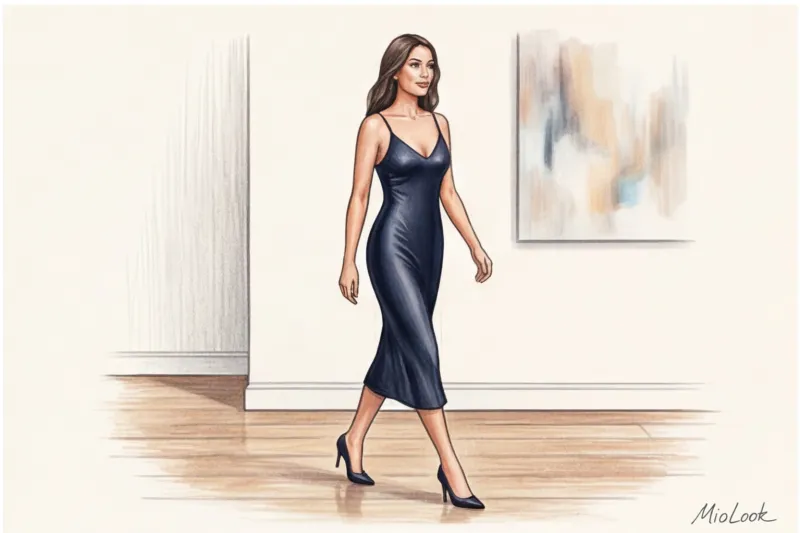
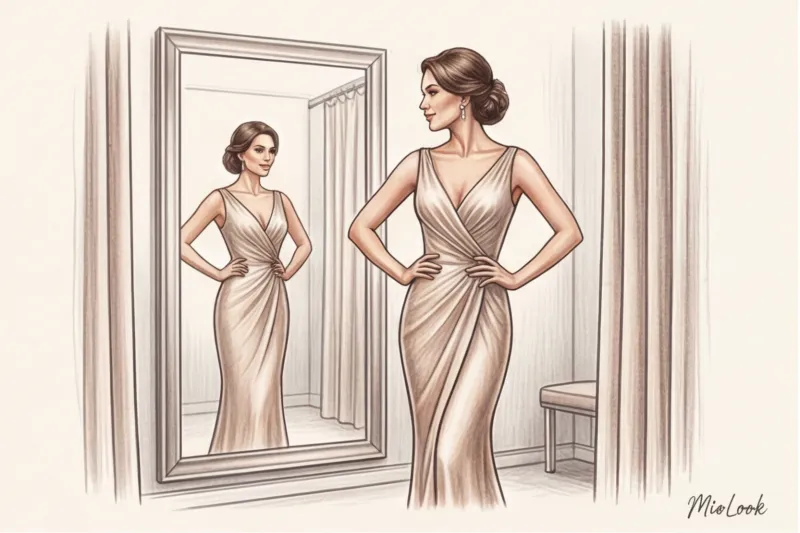
I stopped her and pulled out a pair of smooth, seamless, medium-compression shorts from my style bag. Three minutes later, the client looked in the mirror again—and couldn't believe her eyes. The dress flowed perfectly. The problem wasn't her body. It was the lack of an architectural foundation.
We have already discussed this in more detail in our A complete guide to a basic lingerie wardrobe and building the perfect capsule wardrobe , but today I want to address the most stigmatized part of it.
You don't need to lose weight for clothes. You need to understand, How to choose shapewear to create the perfect smooth canvas that the fabric will glide across instead of tripping over.
Why You Really Need Shapewear (Spoiler: It's Not for Weight Loss)
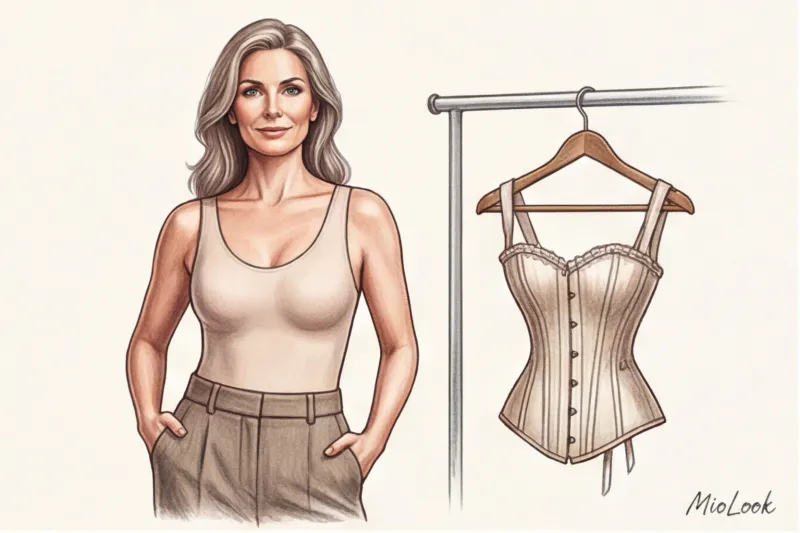
Let's shift the paradigm once and for all. In the 2000s, the industry sold us "shaping" as a punitive tool: squeeze in, hide your belly, tighten your thighs, endure the pain. The modern approach is radically different. Shapewear today isn't about hiding fat, it's about silhouette architecture.
Almost any mass-market item (whether it's €40 Zara trousers or a €50 H&M knit dress) will look significantly more expensive when worn over a high-quality bodysuit. Why? Because a high-quality fit is, above all, about a seamless silhouette.
"High-quality underwear works like a primer under foundation. It evens out the skin's microrelief, smooths out transitions, and allows outerwear to lay flat, without creasing or pulling," says Darina Marchenko.
This is especially critical for three types of textures:
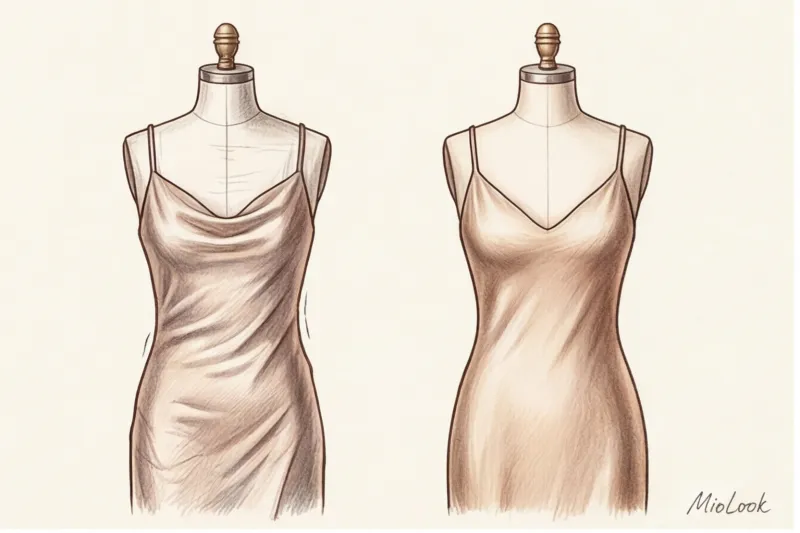
- Silk and satin: instantly produce any seams and elastic bands.
- Fine knitwear and viscose: tend to get caught in folds when walking.
- Light flax: requires not only anti-aliasing, but also correct color geometry (more on that later).
How to choose shapewear: compression levels and their purposes
My clients' biggest fear is "you can't breathe in it." This is true if you're choosing underwear blindly. Compression rating is pure mathematics and materials science, not magic. It all depends on the percentage of elastane (aka spandex or lycra) in the polyamide fabric.
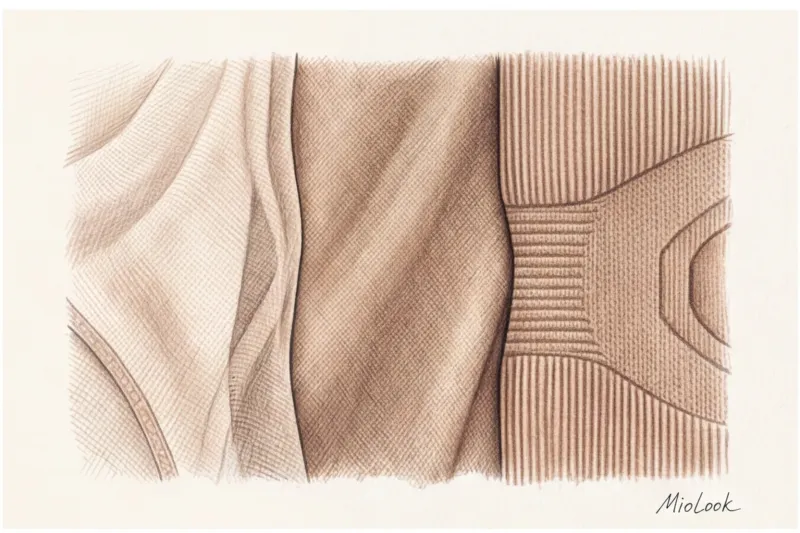
Mild (Smoothing)
Compound: 5–10% elastane.
Task: Remove skin microrelief, hide cellulite under thin trousers, protect the inner thighs from chafing.
Time limit: Until 12 o'clock. This is the basis for every day.
Ideal for: Office wool trousers, casual knitted dresses, turtlenecks.
Intermediate (Modeling)
Compound: 15–20% elastane, often has zonal thickening (for example, tighter knitting in the abdominal area).
Task: Easy redistribution of volumes, formation of a smooth waist curve, posture support.
Time limit: 6–8 hours. It's a comfortable place to work during the day or spend the evening.
Ideal for: Sheath dresses, fitted silhouettes with a belt , flowing skirts.
Strong degree (Sculpting)
Compound: from 20 to 30% elastane, often with the addition of corset bones or non-elastic inserts.
Task: Rigid fixation of shape, change of proportions (visually reduces to one size).
Time limit: Strictly 2-4 hours! And this isn't just a stylist's advice. According to the European Venous Forum (EVF), prolonged wear of tight compression in the pelvic area impairs blood circulation and venous return.
Ideal for: Wedding dresses, red carpets, photo shoots. This lingerie isn't for everyday life; it's for a specific purpose.
Your perfect look starts here
Join thousands of users who look flawless every day with MioLook. Add your basic lingerie to your digital wardrobe!
Get access — €0.99 onceAnatomy of Shape: A Guide to Types of Shapewear
The shape of the cincher is selected exclusively to match the cut of your clothing. There is no one-size-fits-all solution.
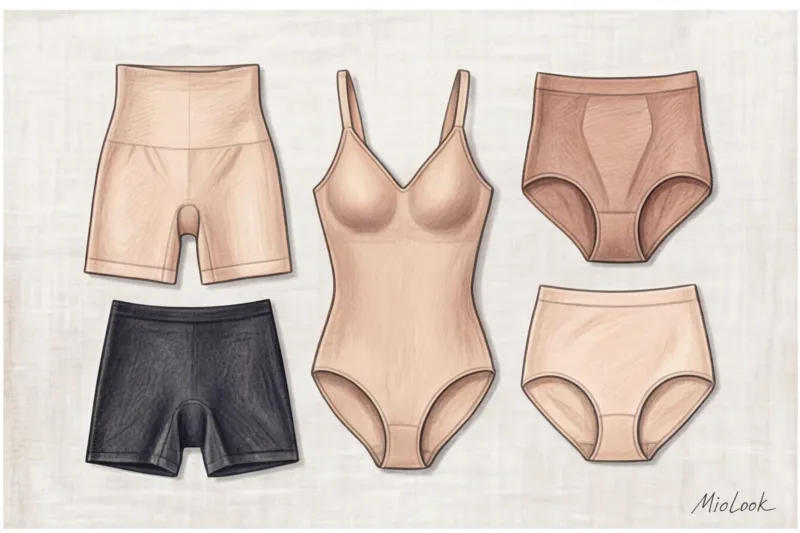
- Shorts and pantaloons: An absolute must-have for summer. They solve the painful problem of chafing on the inner thighs. Stylistic insight: always wear shorts with a tight knit dress, not high-waisted briefs. The hem of the briefs will inevitably cut your buttocks in half, creating an unsightly double bulge. Shorts, on the other hand, sit under the buttock crease, leaving a smooth transition.
- Body and graces: They create a single, continuous line from the chest to the hips. No joins at the waist. But there is a nuance: Bodysuits are tricky for women of non-standard heights. If you're taller than 175 cm (5'8"), most mass-market bodysuits will cut into your shoulders and groin. Look for brands that offer adjustable heights (like the Tall line).
- High-waisted panties: They're great for localized tummy control under A-line pants or skirts. There's a huge risk: if the elastic band at the top isn't tight enough or doesn't have a silicone band, the panties will bunch up under your breasts every time you bend over.
- Combinations (slips): A lifesaver for unlined dresses. They not only smooth out the silhouette but also act as an antistatic agent, preventing the hem from sticking to your tights.
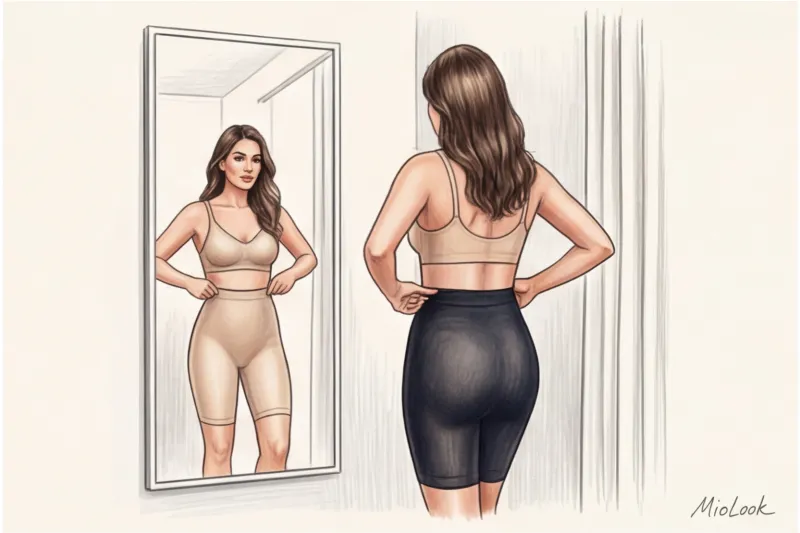
The main myth: “I’ll take a size smaller for a better fit.”
This is probably the most fatal mistake I regularly see when I'm shopping with someone. A woman wears a size L (48), but stubbornly brings a size M (46) or even S (44) shapewear shorts into the fitting room.
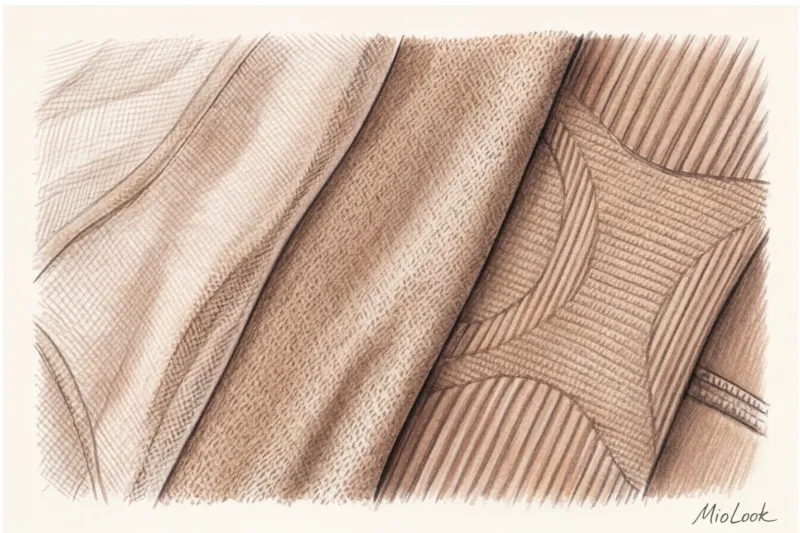
What's happening, from a physics perspective? Fat and skin can't evaporate. If you create excess pressure in one area, the volume will inevitably "leak" into another. By wearing a shapewear that's a size too small, you get the so-called "caterpillar effect": the underwear squeezes your thigh, creating a sharp roll at the bottom, and a tight fold hangs over the elastic band that you didn't even have!
Moreover, small underwear will tend to shrink toward the center as you walk. Shorts will begin to ride up your hips, and high-waisted underwear will slide down.
The golden rule of a stylist: Shapewear is purchased STRICTLY true to size. The compression effect is already built into the manufacturer's design and fabric density. If you want a more pronounced effect, change the compression level (from light to medium), not the size.
Access to MioLook for €0.99 — one-time payment
A smart AI stylist will choose the perfect look for you and suggest the right base for each outfit.
Get access — €0.99 onceColor Geometry: How to Choose the Shade of a Bobby Pin
As a certified colorist, I can say that the classic mass-market beige suits about 15% of women. For the rest, it's either too yellow or too pink. And underwear should be invisible.
If you're wearing white pants and you can see beige underwear underneath, you've chosen the wrong undertone. The contrast between your skin and the color of your underwear creates a shadow that the eye detects.
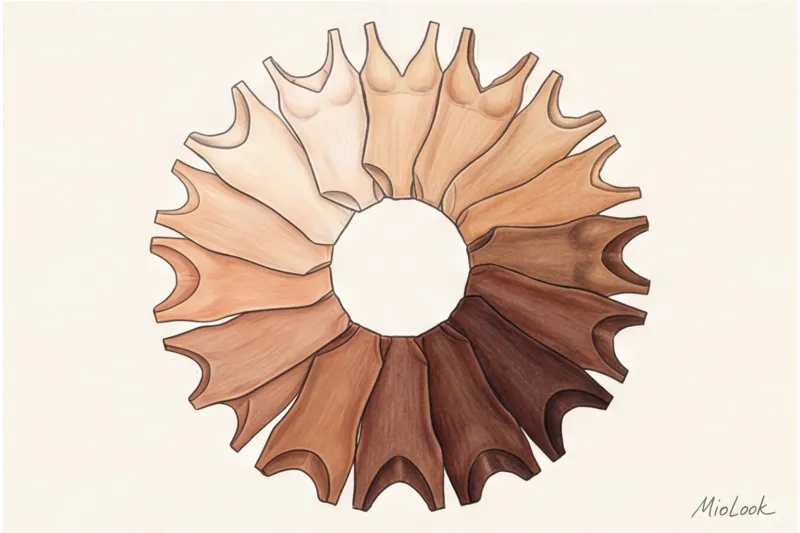
If you have an olive undertone, look for underwear in a grayish-sand shade. If you have a cool pink undertone, you need a dusty rose shade.
A counterintuitive life hack that changes everything:
Many people are surprised when I make them wear smooth red Underwear under white linen trousers or thin white shirts. Sounds crazy? It's simple physics. Red pigment (especially shades close to the color of our blood and capillaries) absorbs light under white fabric almost the same way our skin does. White underwear under white trousers shines like a spotlight due to the double reflection of light. Red underwear dissolves.
As for black shapewear, only buy it if you plan to wear it exclusively under thick black clothing. It will create a stain-like effect under thin fabrics.
Stylist's Checklist: Fitting and Caring for Shapewear
If you're at a lingerie store, don't rush to the checkout. I make my clients do a thorough test drive right in the fitting room.
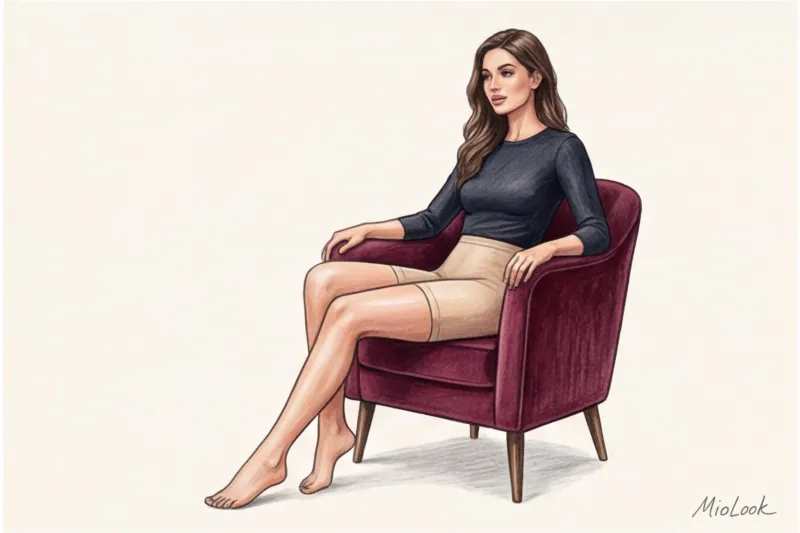
- Motility test: Are you wearing high-waisted shorts? Sit on a chair. Lean forward as if tying your shoelaces. Raise your arms high. If after this manipulation the hem of your underwear has curled up or the shorts are riding up, take them off; this style doesn't suit you. You won't be able to live in them.
- Silicone test: Good lingerie is held in place by thin silicone strips along the edges. Important: Never apply lotion or body oil to areas where the silicone will be applied! It will slide off mercilessly, and the lingerie will not stay in place.
- Chemical Hazard (Washing): Do you know why €70 shapewear often stretches out after a month? It's because of the fabric softener. According to research by elastomer thread manufacturers, silicones in fabric softeners coat elastane, destroying its structure. It loses its ability to return to its original shape. Wash your shapewear only with liquid gel at 30°C and hang it to dry flat, away from radiators.
Summary: Gathering the foundation for a flawless silhouette
Shapewear isn't a sign that something's wrong with your body. It's a sign that you understand how fabric and cut geometry work. You wouldn't lay expensive parquet flooring on a crooked concrete screed, would you? The same applies to fashion.
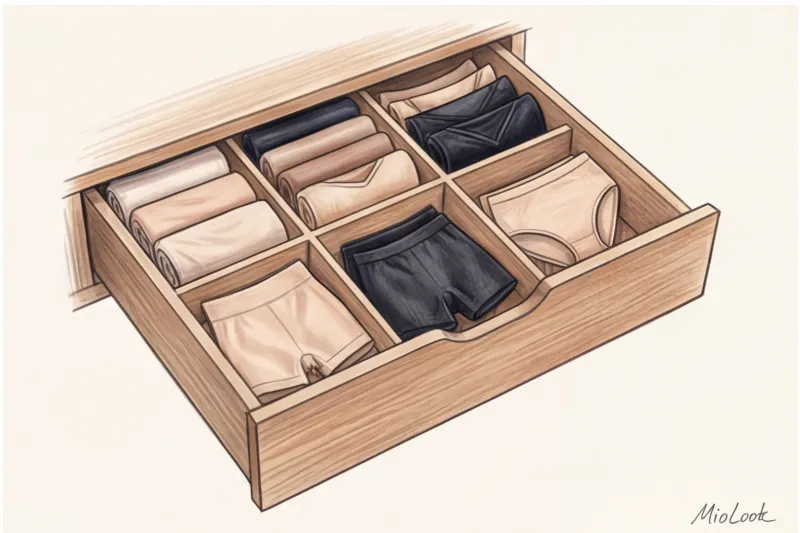
You don't need a chest of drawers full of corsets. To create a smart wardrobe, just minimum functional set:
- One pair of seamless, smooth, medium-stretch shorts (in your perfect skin tone).
- One basic bodysuit (plunge neckline or thin straps).
If you're unsure how to integrate this basic into your everyday looks and which dresses it will go best with, digitize your wardrobe. Add your favorite outfits to MioLook — a smart AI stylist will help you create combinations, taking into account every detail, so you spend no more than 5 minutes getting ready in the morning and look like a million bucks.