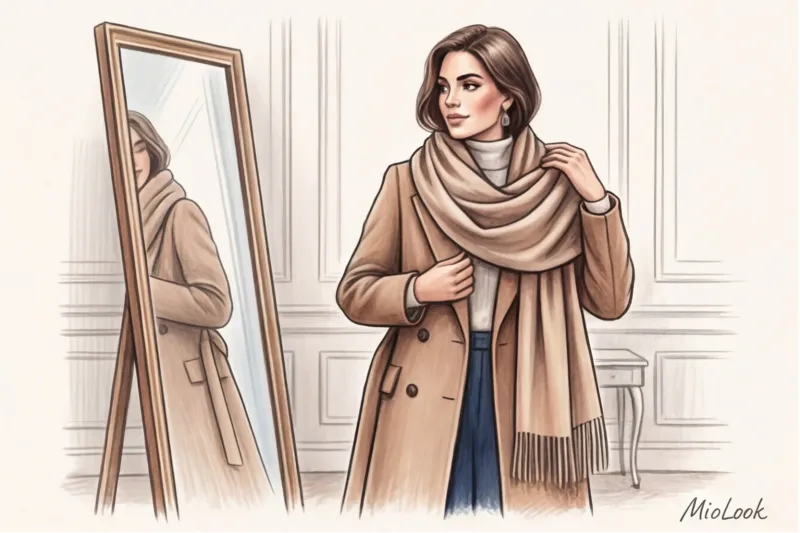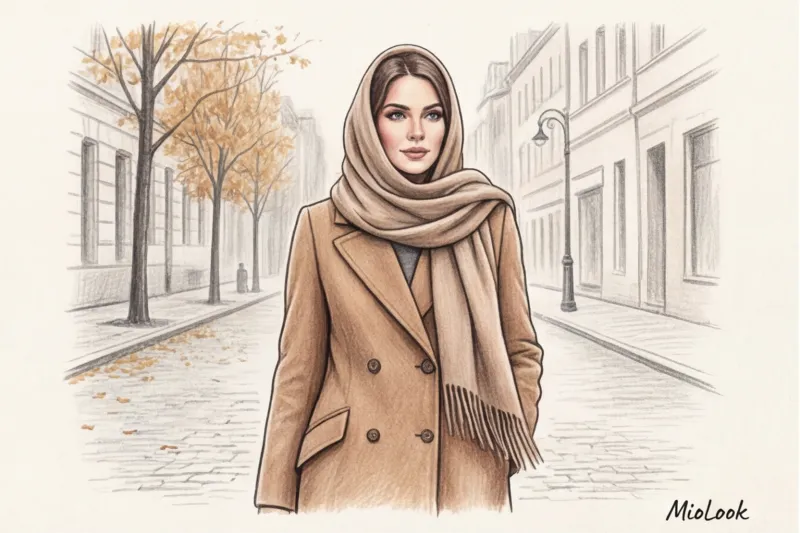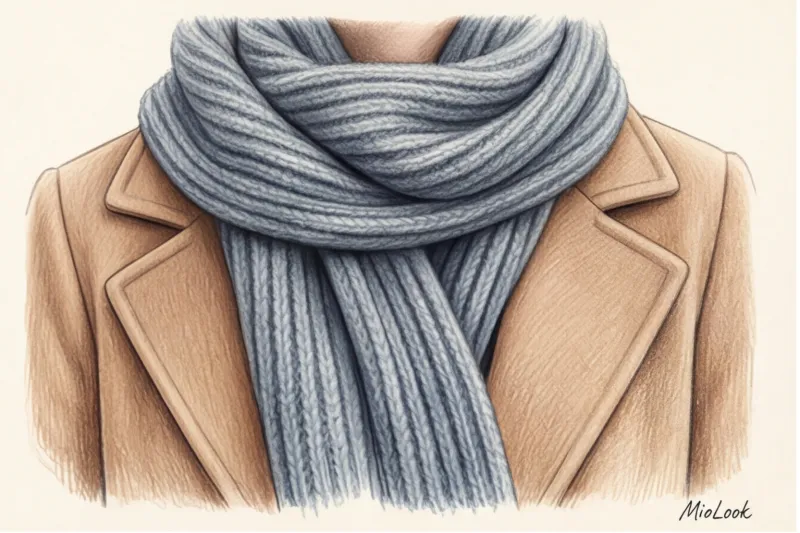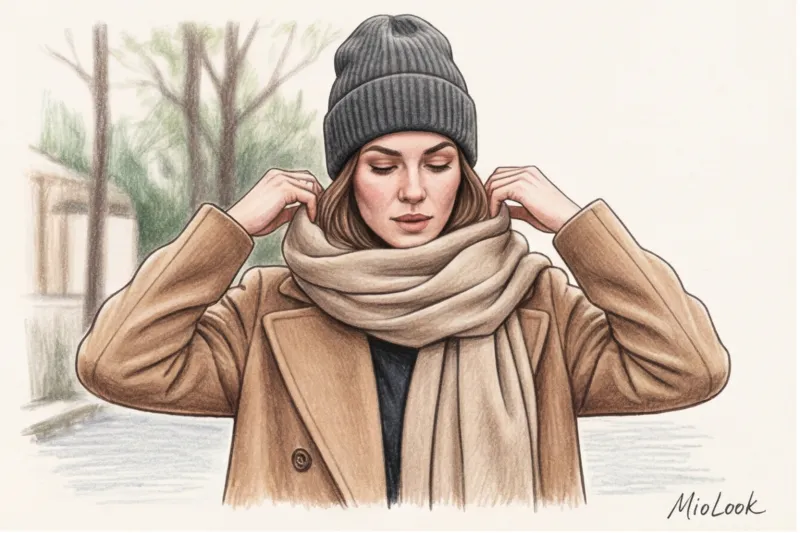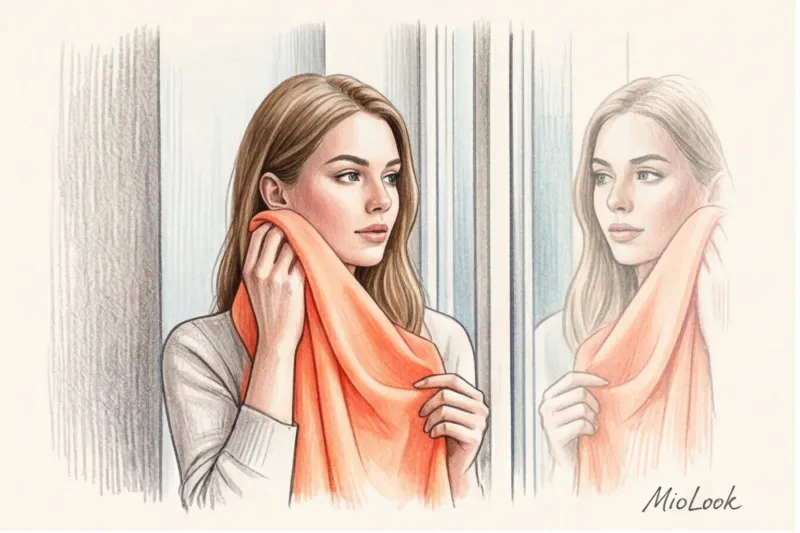
In 12 years of working as a stylist, I've learned one cruel rule: you can buy a luxurious cashmere coat from Max Mara for €2,000, but if there's the wrong shade of color between it and your chin, you'll look like you haven't slept in at least a week. And vice versa: a basic mass-market down jacket starts to look like street style from Fashion Week if you know How to choose the color of a scarf , which literally “turns on” your face.
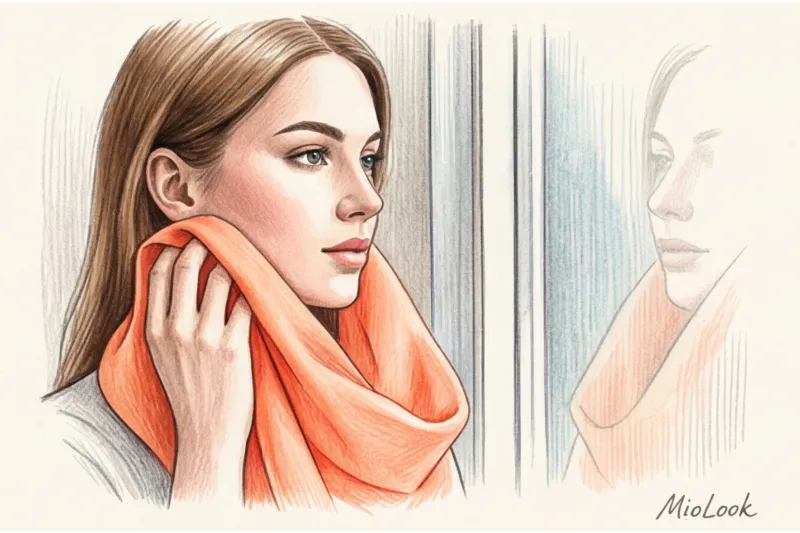
Instead of memorizing outdated lists like "blue for blondes, red for brunettes," I suggest viewing this accessory as an optical tool. A scarf is your personal portable light reflector and "color bridge." We've already discussed how to physically integrate it into your look in our The complete guide to the art of tying a scarf with style , and today we’ll talk about the physics of color.
Face Reflector: How the Magic of the Portrait Zone Works
Think about how professional photographers work. They always place a white or gold softbox underneath to illuminate the model's face, softening the shadows under the eyes and the nasolabial folds. A scarf serves exactly the same purpose.
The physics of color are unforgiving: the fabric 5-10 cm from the chin casts reflections on the skin. According to visual perception studies, this small area determines 80% of how others perceive the freshness and evenness of your complexion. The right shade can visually "shed" 3-5 years without any cosmetology.
"The main rule I teach my clients is: if you absolutely love the color of an item (for example, a trendy lime green jacket), but it makes your face look blemish-free, don't rush to buy it. Simply "pull" the color away from your face with the right scarf."
The paradox is that 65 grams of the right silk or cashmere next to your face completely changes the perception of a two-kilogram coat. It's the cheapest and most effective way to adapt any trend to your appearance.
How to choose a scarf color to suit your face: a modern approach to color
Forget the rigid framework of the "Four Seasons" theory (Winter, Spring, Summer, Fall). Today's color theory is based on the principles described by Johannes Itten in his 1961 Theory of Color Construction, but adapted to modern realities. We consider three parameters: temperature (warm/cool), saturation (bright/muted), and contrast.
How do you know your "temperature"? The popular wrist vein test (blue = cool, green = warm) doesn't work in 40% of cases, in my experience, especially if you have an olive undertone. It's much more reliable to use highlighter shades.
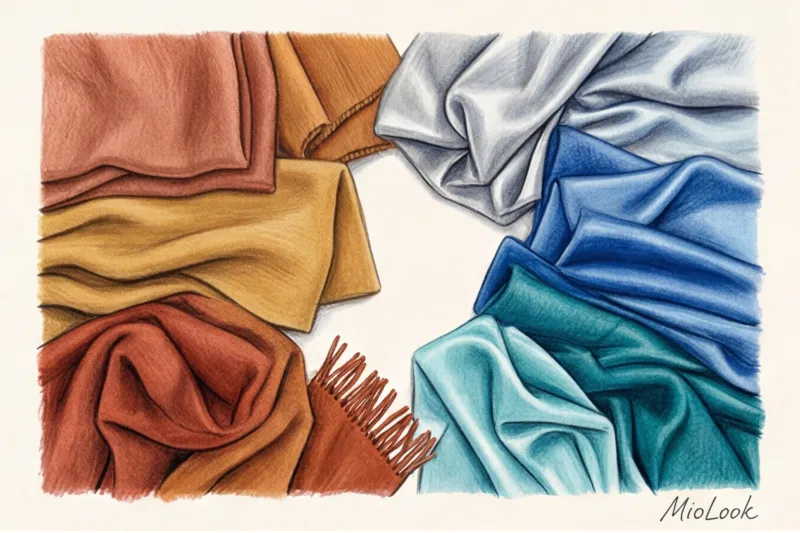
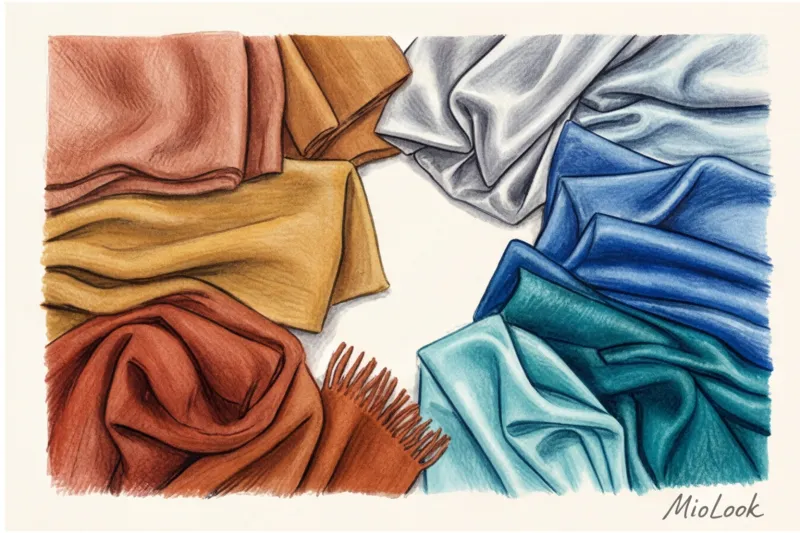
Place a salmon or warm peach-colored cloth on your face (no makeup, in daylight), then an icy pink or fuchsia cloth. The color that makes your eyes pop and makes pigmentation and dark circles less noticeable is your vector. We discussed the mechanics of working with palettes in more detail in the article. 12 Color Types of Appearance.
Fair Limit: There are colors that are extremely demanding on skin tone. Neon yellow, pure white (crystal white), and complex earthy brown require flawless skin with a thick layer of foundation. If you prefer to go makeup-free, choose softer, more "delicious" shades—salmon, emerald, and dusty rose—suit almost everyone.
Access to MioLook for €0.99 — one-time payment
A smart AI stylist will help you choose the perfect look and determine your best colors.
Get access — €0.99 onceA secret for those who don't want to understand color types
If you don't have time to analyze contrast, use a foolproof trick I call the "rule of duplication." Simply choose a scarf that matches your eye color tone-on-tone.
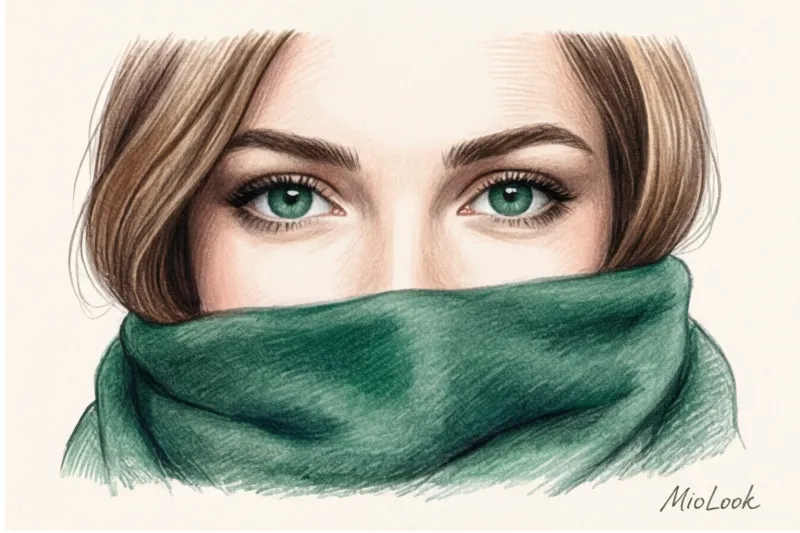
Blue eyes will become piercing against a blue-gray cashmere backdrop, while brown eyes will glow with warm sparkles from a chocolate or terracotta stole. Another option for nude lovers is to choose a shade that matches your natural blush or lip color.
Image Architecture: How to Match a Scarf to Your Outerwear
The scarf sets the tone for the entire look. The same basic gray coat with a black, sleek scarf looks like a formal uniform, but with a voluminous Marsala stole, it becomes relaxed, smart-casual.
A client once came to me with an incredibly beautiful, architecturally tailored trench coat in a sharp mustard color. The problem was, the shade made her porcelain skin look decidedly sallow. She was about to sell it. We "saved" the coat by simply adding a powdery pink cashmere stole for €50. The pink neutralized the coat's yellowness and created the perfect highlighter near her face.
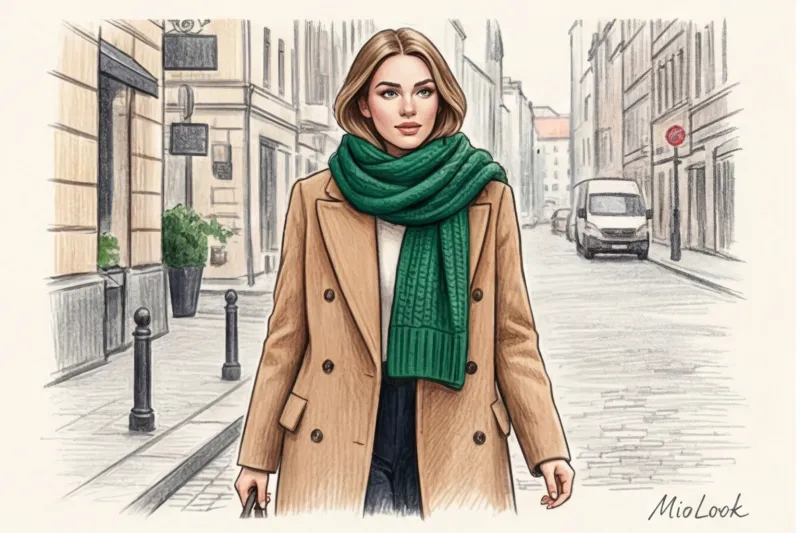
This technique is called the "Color Bridge." If you have a complex jacket, use a scarf with a print that combines both the jacket's color and a shade that perfectly complements your complexion. If you study the archives of the fashion house Hermès, you'll notice their signature trick: in a square, the lightest and most complementary parts of the pattern are always positioned so that they appear closest to the face when draped.
Monochrome vs. Contrast: Which to Choose?
The choice depends on the impression you want to make:
- Monochrome combinations (tonal dressing): The pinnacle of "quiet luxury." A beige coat and a crème brûlée or camel-colored scarf always look expensive and classy.
- Contrast accent: Color blocking for a dynamic effect. A deep navy coat pairs beautifully with a vibrant orange or emerald scarf.
Your perfect look starts here
Join thousands of users who look flawless every day with MioLook.
Get access — €0.99 onceThe Biggest Anti-Trend: Why Matching Hats and Scarves No Longer Work
Here I want to debunk the main stereotype we all fell into back in the 2000s. Buying ready-made "hat + scarf + gloves" sets made from the same yarn, the same color, and the same knit pattern today mercilessly cheapens the look.
Why does this work poorly in terms of style architecture? The same color above and below the neck creates a "monolithic" effect. You visually deprive yourself of your neck and disrupt the proportions of your head and shoulders. Modern style is built on a slight casualness, and a perfect match looks too "trying" and childish.
How to do it correctly?
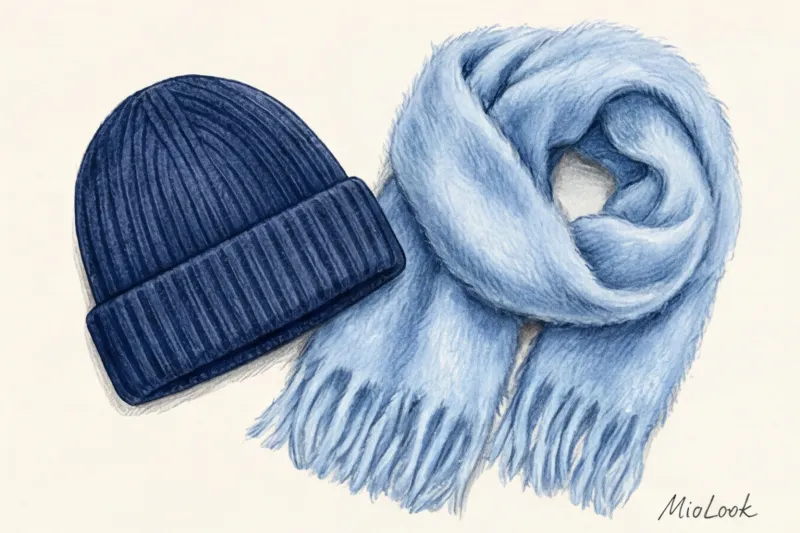
- Related shades: Pair a navy beanie with a light blue or grey-blue scarf.
- Play of textures: If you insist on a single color, the textures should be radically different. A smooth, fine-knit hat paired with a fluffy mohair scarf in the same shade—that's a must.
Checklist: 5 Steps to Buying the Perfect Scarf
To avoid storing clothes with tags in your closet that you "don't know how to wear," run your future purchases through this algorithm:
- Analyze the database. Look at the dominant colors of your outerwear. I recommend my clients digitize their closet in the MioLook app—they can directly on their smartphone screen add a photo of a scarf from an online store to your actual coat and create a collage.
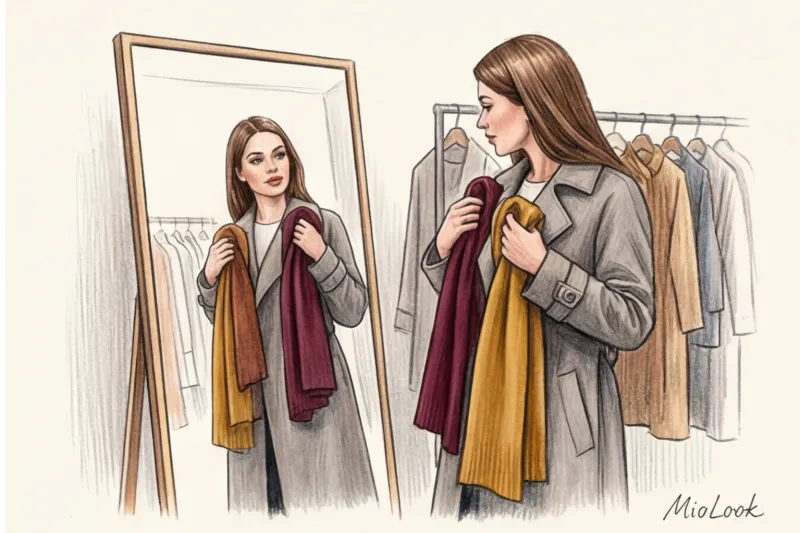
- Ignore the fitting room lights. The yellow light in stores distorts colors. Wear a scarf and stand by the window to see the true picture in daylight.
- Consider the volume. A puffy, voluminous down jacket will eat up a thin silk scarf; thick wool is a must. A classic trench coat, however, calls for flowing cashmere, viscose, or silk.
- Check drapeability. If the fabric is stiff (often the case with cheap polyester), it will break your shoulder line.
- Print scale. A small flower on a girl with large, expressive features will be lost, and gigantic geometry on a petite figure will look like someone else's armor.
Bottom Line: Invest in the Right Shades for Your Face
A scarf has long since ceased to be just a piece of fabric to ward off colds. Today, it's your primary color-correction tool, capable of salvaging a poorly chosen outerwear purchase, highlighting your eyes, and integrating you into any seasonal trend without breaking the bank.
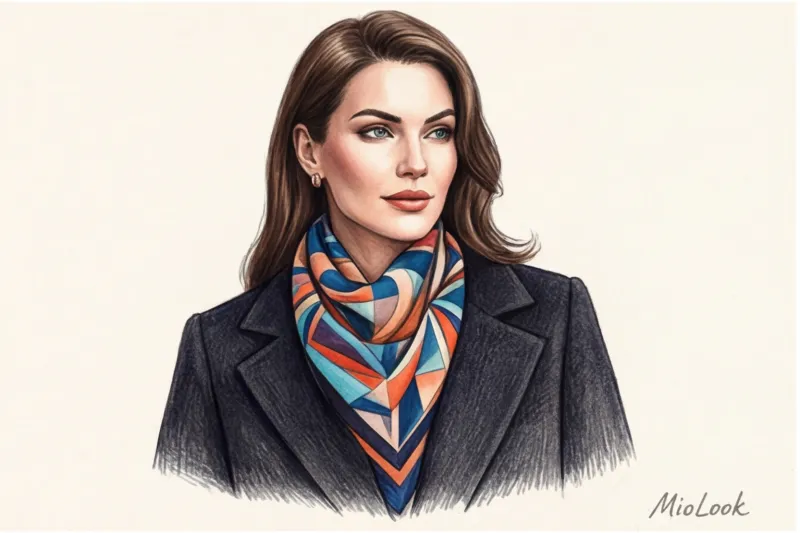
Don't try to force colors that make you look tired. Go through your accessory collection today: photograph them in daylight, upload them to your digital wardrobe, and ruthlessly get rid of any that steal your freshness. Remember: even the most flawless coat will look dull if there's no perfect color bridge between it and your face.
Ready to get started?
Try the MioLook plan for free—no commitments, organize your wardrobe in one click.
Get access — €0.99 once