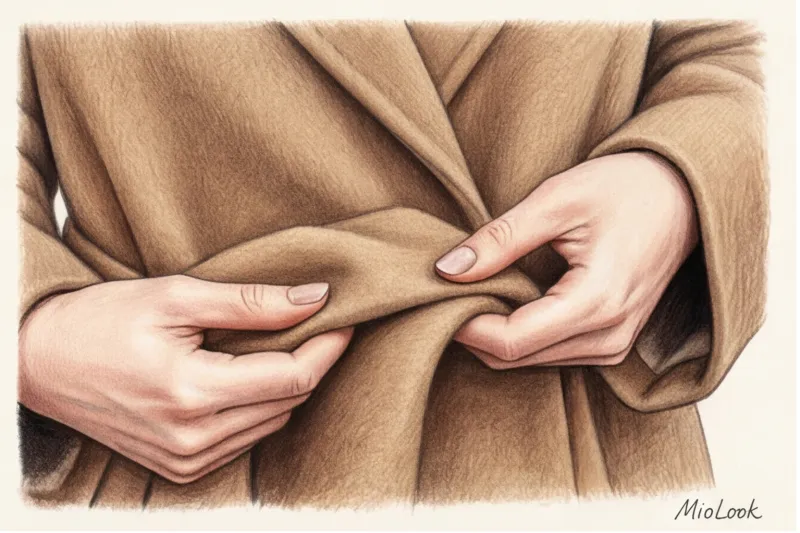
One of my clients bought a luxurious 100% cashmere coat for €2,000 for her office commute. After two weeks of wear, daily contact with a car seatbelt, and friction from a leather crossbody bag, the shoulders and sides were covered in merciless pilling. The €2,000 garment looked like it had been worn for five years. It was then that we both learned a harsh lesson: in outerwear, the status of the fabric often loses out to its architecture and utility.
Hi, I'm Darina Marchenko. Over the years as a stylist, I've learned one thing: we're not taught how to buy complex clothes. We look at the color, the style, and, if we're lucky, the price tag. But before that, How to choose a quality coat , you need to master the skill of "forensic shopping." You should look not at what the brand wants to show you, but at what it is trying to hide. We discussed the basic principles of material analysis in more detail in our the complete guide to fabrics , and today we are dissecting exclusively the coat.
How to Choose a Quality Coat: The Anatomy of Outerwear and Marketer's Pitfalls
According to a McKinsey report (2024) on the state of the fashion industry, the lifespan of everyday clothing has decreased by almost 40% over the past fifteen years. Brands have masterfully mastered the art of imitating quality. Tactile sensations in boutiques today are deceptive: fabrics are treated with silicone softeners to make them feel softer than silk in the fitting room.
The most common pitfall is the product's weight. Many still believe that the heavier the coat, the warmer it is. This is a myth. The heaviness of mass-market coats is often due not to the density of the high-quality wool, but to the kilograms of cheap adhesive material (doublerin) used to bond the loose fabric to keep it somewhat in shape.
The Myth of "100% Cashmere" for Everyday Wear
Let's be honest: 100% cashmere is the worst choice for an everyday city coat. It's a paradox that's hard to swallow when you're ready to invest in a wardrobe. Cashmere is the down of the mountain goat. It's incredibly light, incredibly warm, but its fibers are too delicate for constant friction. Such a coat is made for a high-status occasion: walking from a taxi to a theater box.
For a utilitarian urban feel, look for the ideal ratio: 70–80% dense sheepskin and 10–30% cashmere. The wool will provide durability and support, while the cashmere will add softness, a refined shine, and reduce the overall weight of the garment.
Good and bad synthetics: nylon vs. acrylic
The presence of synthetic ingredients in a product isn't always a sign of the manufacturer's greed. It's important to understand which It's synthetic. Acrylic is our worst enemy. It's a cheap plastic that doesn't insulate, creates a greenhouse effect, and shrinks instantly. If you see 50% acrylic on the tag of a €300 coat, hang it back up.
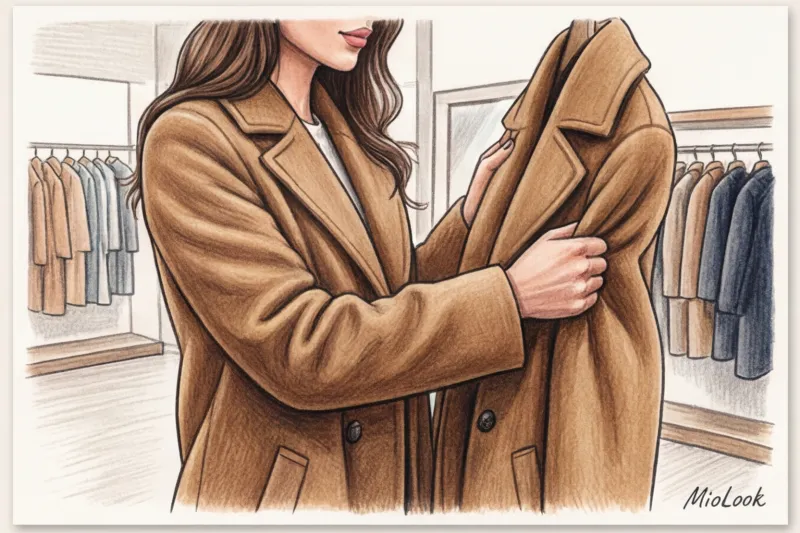
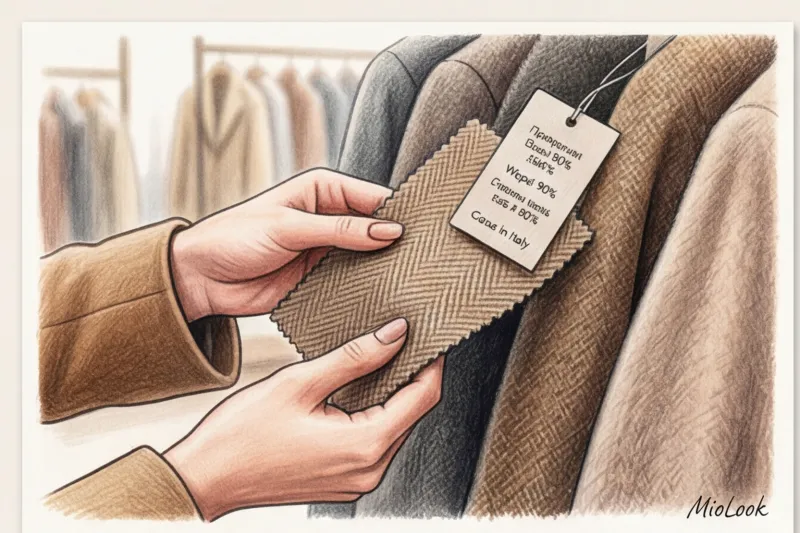
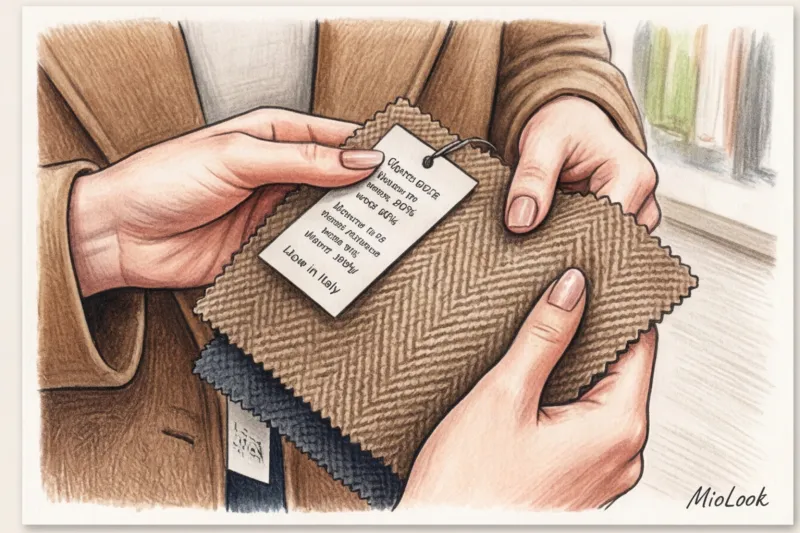
But 10–20% nylon or polyamide in a wool coat is a technological necessity. The smooth synthetic thread acts as reinforcement for the short wool fibers. It prevents the fabric from fraying at the elbows and pockets, while not affecting its thermal capacity at all. Read the composition in descending order: the first two components are what will determine the life of the garment.
Your perfect look starts here
Join thousands of users who look flawless every day with MioLook. A smart wardrobe on your smartphone.
Get access — €0.99 onceWool Guide: How to Determine Fabric Quality by Touch
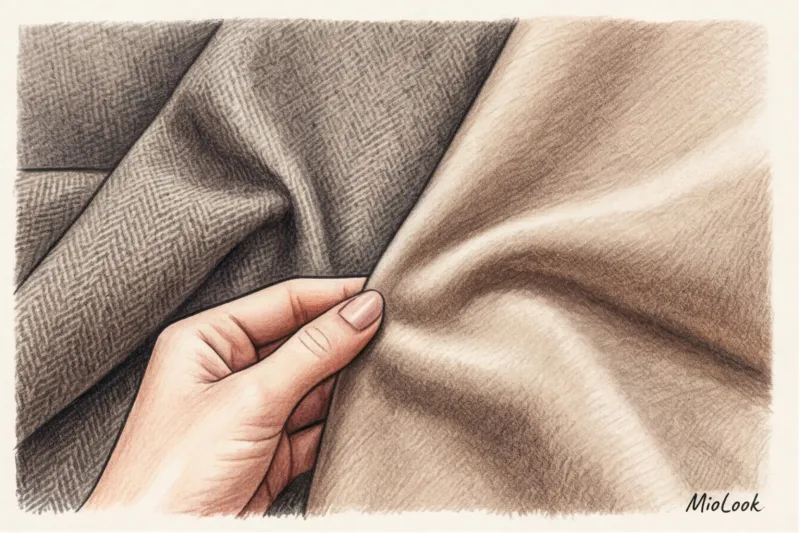
According to quality standards The Woolmark Company The optimal fabric weight for a full-size winter coat ranges from 500 to 700 grams per linear meter. Unfortunately, this parameter is rarely indicated on the tags, so you'll have to rely on your hands.
Look for markings Virgin wool (or Lana Vergine ). This is Virginia wool, meaning it's shorn from a living sheep and hasn't been recycled. It's elastic, vibrant, and highly moisture-repellent (wet snow will simply roll off in beads).
- Alpaca: It has a long pile and a light, silky sheen. It's 7 times warmer than sheep's wool and practically doesn't pill.
- Mohair: Fluffy, voluminous, but can be slightly itchy and leave lint on dark clothing.
- Merino: The smoothest and most elastic wool, ideal for strict business silhouettes.
"A high-quality wool thread is like a spring. If it's dead and flat, the coat will lose its shape after the first season."
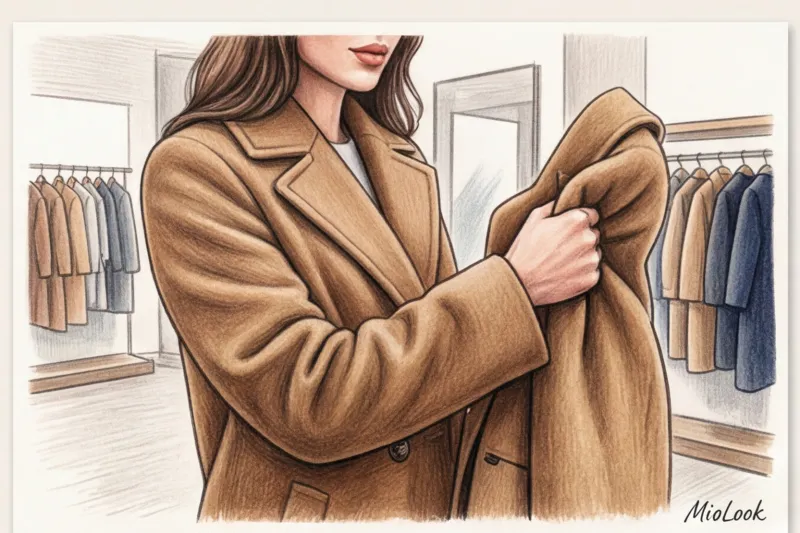
At every shopping trip I teach my clients how to conduct the crush test Right in the fitting room, squeeze the coat sleeve tightly in your fist, hold it for 10 seconds, and then release. A good wool coat will straighten out before your eyes with almost no creases. If the fabric remains wrinkled, it's a low-grade material or has too much viscose in the face layer. Such a coat will be permanently wrinkled on the back after every car ride.
Invisible frame: why one coat is stiff while another flows
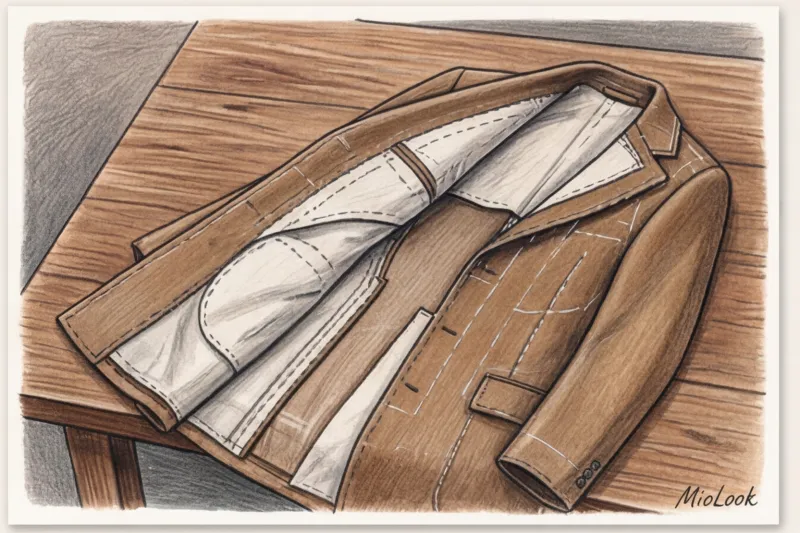
The biggest secret of bespoke tailoring is hidden within. The coat's architecture is built on what lies between the outer fabric and the lining.
In the budget segment (up to €150–200), manufacturers use continuous bonding. The entire backing of the wool is tightly bonded to a rigid interlining under a heat press. Such a coat is stiff and doesn't breathe, and after the first dry cleaning, the bonding may come off, leaving unsightly bubbles on the chest that are impossible to iron out.
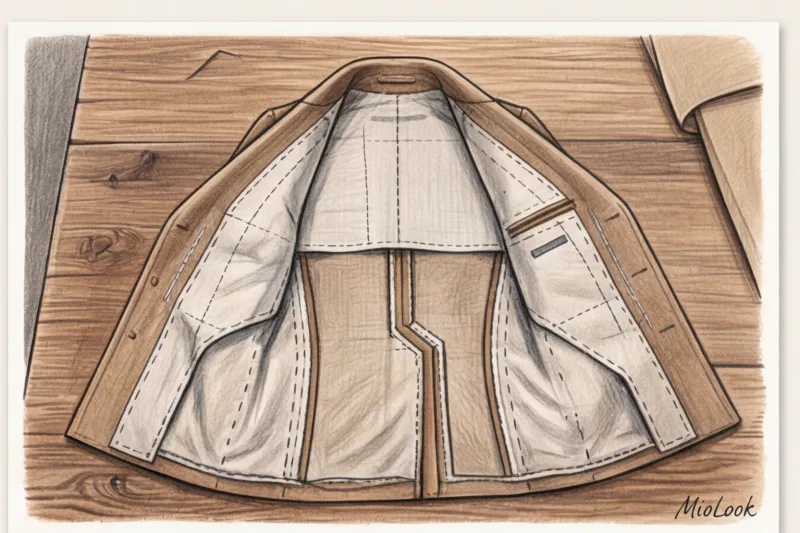
High quality products use canvas — a complex multi-layered construction of horsehair and cotton, sewn (not glued!) to the outer fabric with invisible stitches. How can you test it? Hold the coat's front (the front part near the chest) with both hands and gently rub the layers of fabric between your fingers. If you feel a separate, free-floating layer of stiff fabric inside, congratulations—you have a premium-quality coat. Such a coat will mold to your body over time, like fine leather shoes.
Access to MioLook for €0.99 — one-time payment
A smart AI stylist will select the perfect look for your new outerwear, taking into account what's already in your closet.
Get access — €0.99 onceThe lining is the main indicator of the brand's attitude towards the client.
I always start inspecting any coat from the inside. The lining is a litmus test. A brand can use excellent Italian wool but save a few euros on the lining by using 100% polyester. We also discussed why this is critical in the article. Fabrics that look expensive: a stylist's secrets.
The physics of this process are simple: polyester doesn't allow air to pass through. You put on a wool coat (which should be breathable) and wear a plastic bag underneath. You sweat on public transportation and freeze outside. Worse, polyester accumulates static electricity. Your silk blouses, cashmere sweaters, and dresses will stick to your legs, give you electric shocks, and quickly wear out from the harsh friction.
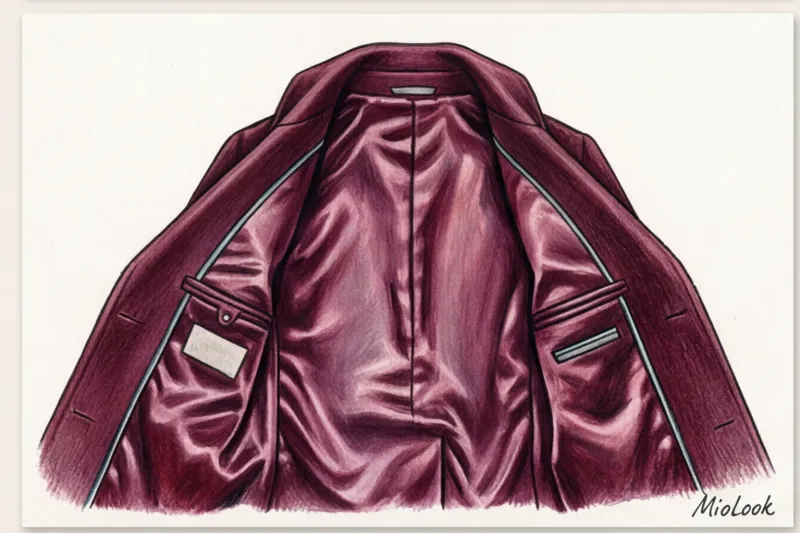
The gold standard for lining fabrics is cupro or dense quality viscose Cupro is made from cellulose (cotton fluff), feels like thick silk, glides easily over any clothing (the coat is easy to put on over bulky sweaters), and wicks away moisture superbly.
Stylist Checklist: 5 Steps Before Hitting the Checkout Counter
Before you whip out your bank card, conduct a final inspection of the item. These details are what differentiate an "okay" item from an exceptional one.
- Armhole test: Never try on a fall/winter coat over a thin T-shirt. Always ask for a thick hoodie or jacket at the store. If the armholes (sleeve openings) are cut too high and narrow, you simply won't be able to lift your arms when wearing a sweater. Leave narrow armholes for light summer raincoats.
- Spline behavior: The back vent should lie flat and overlap when standing. If it spreads like an inverted "L" (or "house") when you're standing, the coat is too tight in the hips, even if it fits perfectly in the shoulders.
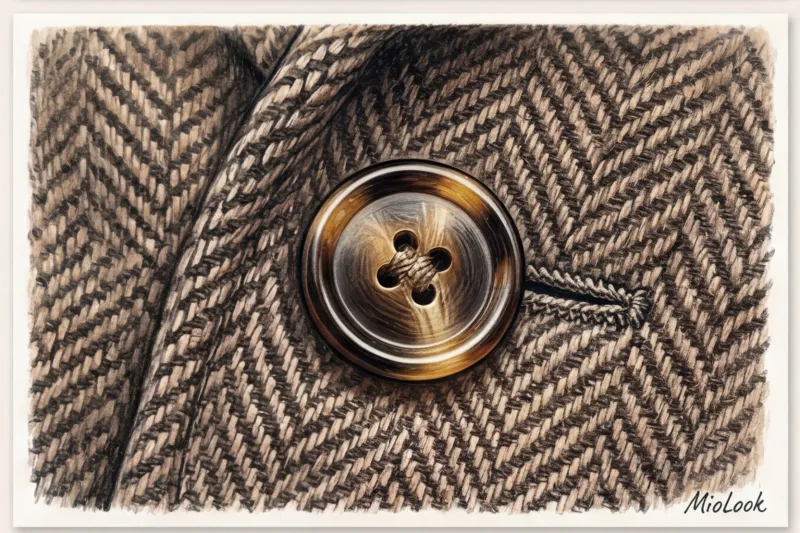
- Fittings: Cheap, shiny plastic buttons can ruin the look of even the most expensive wool. Look for buttons made of natural horn, corozo walnut, or leather.
- Buttonhole overcasting: Look at the buttonholes. In high-quality products, they are tightly sewn, with no loose threads, and the end of the loop has a distinctive "eye" (widening) to ensure the button lies flat and doesn't pull at the fabric.
- Pattern Match: If you're buying a plaid or herringbone coat, look at the side seams, the center back seam, and the pocket stitching. Reputable brands spend more fabric on cutting to ensure the pattern lines line up perfectly at the seams.
Integrating a Coat into Your Wardrobe and Calculating Cost Per Wear
A coat is an investment. And like any investment, it should pay off. I encourage my clients to think in terms of Cost per Wear (price per one exit).
Imagine two scenarios. You buy a trendy coat of dubious quality for €150, wear it 10 times a season, and then it falls apart. The cost per wear is €15. Alternatively, you find an impeccable basic Virginia wool coat for €500. You wear it 40 times a season for 4 seasons. The cost per wear is only €3.12. The math of quality always wins.
For the investment to work, the coat color should complement 80% of your wardrobe. Don't go for a bright fuchsia if you don't have a good understanding of your color palette (more details in our article about basic things are out of fashion ). Camel, graphite, deep navy (dark blue) or dark chocolate are colors that will elevate any look.
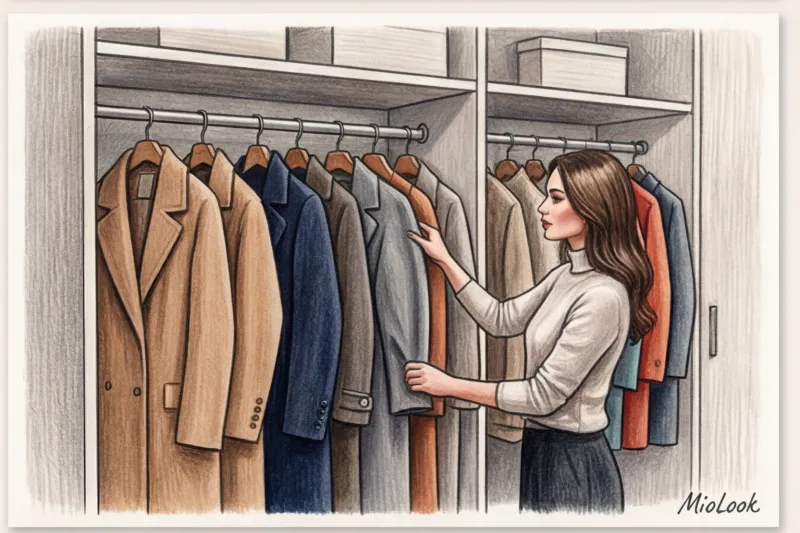
To avoid making a mistake with the combination before purchasing, I recommend taking a photo of the coat in the fitting room and uploading it to the app. MioLook Artificial intelligence will instantly analyze your digital capsule and show you whether you can create at least 5-7 looks with this item from what you already own.
Remember the most important thing: a quality coat doesn't just keep you warm. It adjusts your posture, defines the architecture of your entire silhouette, and conveys your attitude before you even utter a word. Choose it meticulously, like a detective, and it will reward you with years of impeccable service.