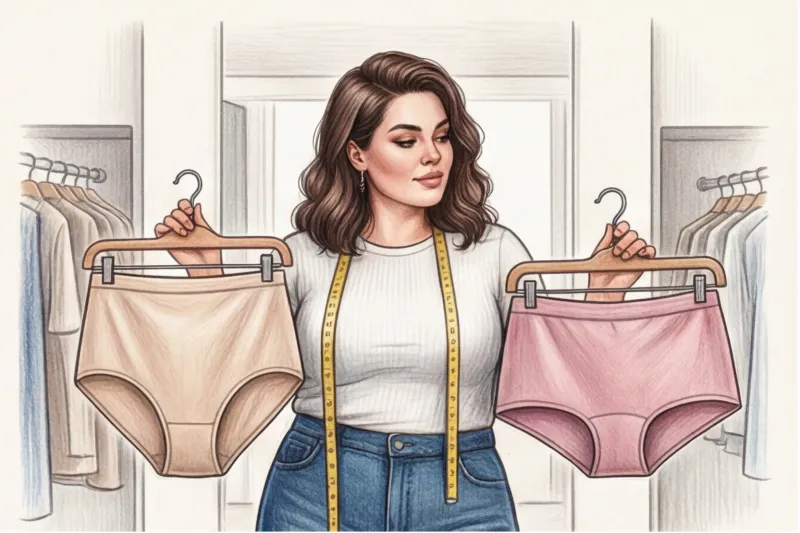
Have you noticed how most articles advise plus-size women to hide in giant cotton "parachutes"? As a stylist, I'm categorically against this outdated approach. Most style guides focus on dresses and jackets, forgetting that even the most expensive clothes will look sloppy if they're not layered properly. And when clients ask me in despair, " How to choose women's panties in large sizes “So that it’s both beautiful and comfortable?” I always start not with the lace, but with the architecture of the silhouette.
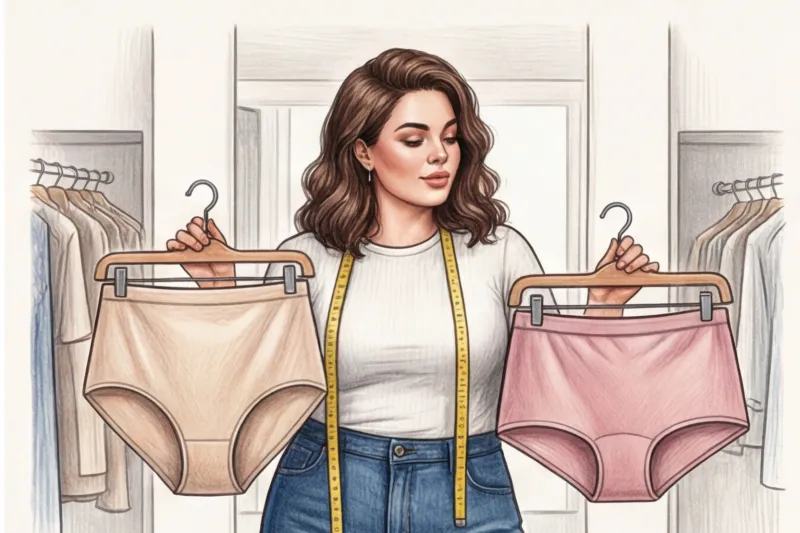
Your underwear is your foundation. If the foundation is slipping, the whole structure will slip. We've already discussed a comprehensive approach to silhouette building in more detail in our the complete guide to shapewear for plus-size women But today I want to discuss the most basic, everyday item that can either visually take 5 kilograms off your weight or add treacherous rolls where they were never there.
Silhouette architecture: why are plus-size women's panties so difficult to choose?
The main problem in the modern lingerie market is a technological process called "pattern graduation." Mass-market brands producing sets for €10–€15 take a basic size S pattern and simply mathematically scale it up in a computer program. This is a catastrophic mistake.
The plus-size woman's figure doesn't grow linearly. Its anatomy requires a completely different distribution of fabric tension. According to classic lingerie design principles (Lingerie Design Principles, updated 2023), for sizes XL and above, the side seam angle and hip opening height must be adjusted. When this isn't done, we experience the classic "caterpillar effect"—tight elastic digs into the body, creating rolls even on a toned and toned stomach.
"In 90% of cases, the rolls above the elastic band of panties are not due to excess weight, but to the incorrect tension vector of the elastane and the manufacturer saving fabric."
Your perfect look starts here
Join thousands of users who look flawless every day with MioLook. Our smart AI stylist will help you choose the perfect wardrobe for your body type.
Get access — €0.99 onceThe Anatomy of the Perfect Base: What a Stylist Looks for
In my experience, switching from "simply comfortable" panties to technologically advanced ones completely changes the fit of trousers. I always teach my clients: basic underwear should act as a good, smoothing makeup primer. Its purpose isn't to constrict you to the point of breathlessness (leave that to rigid red-carpet corsets), but to create a perfectly smooth surface for the dress's fabric to glide over.
To eliminate VPL (Visible Panty Lines), use flatlock seams or laser-cut edges. If the edge is simply folded over and stitched with thick thread, it will look like a raised border under thin suit pants.
Gusset width and hip cut vector
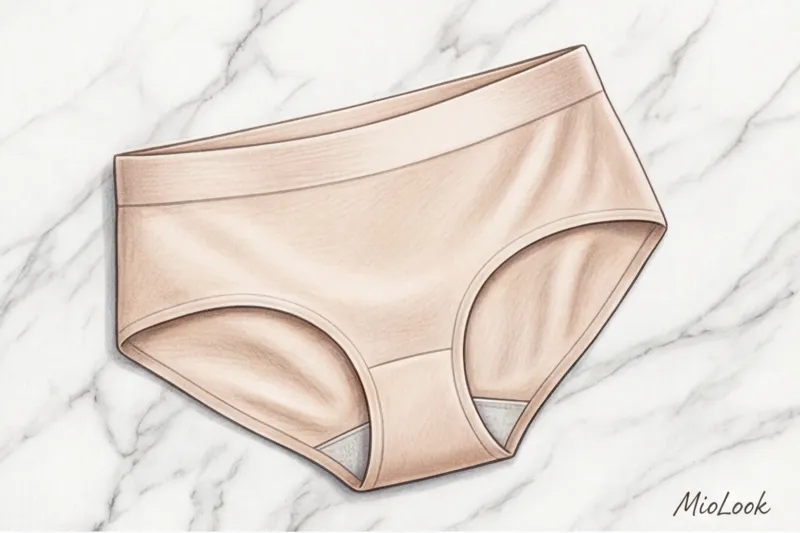
Let's talk numbers. The standard gusset width in mass-market clothing is around 4.5–5 cm. For plus-size figures, this is critically inadequate: the underwear begins to shift, bunch up, and cut into the body when walking. Look for brands that offer a wider gusset of 7–8 cm. This ensures a stable fit and prevents chafing.
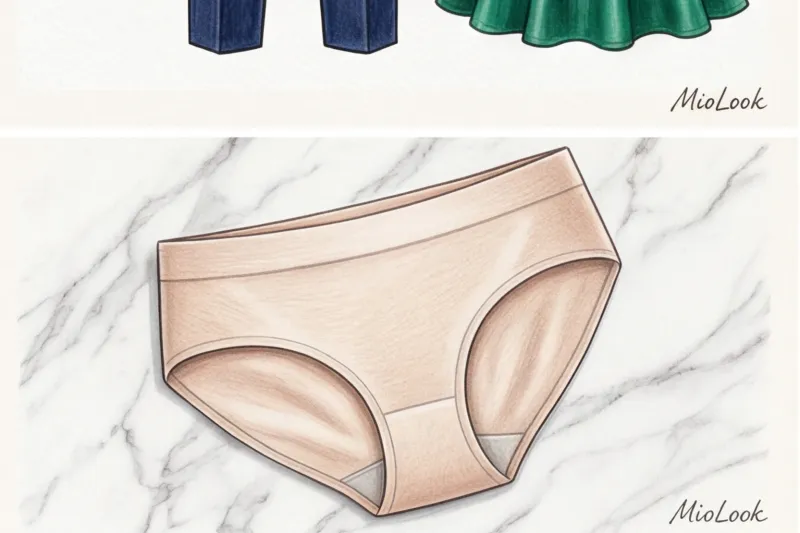
The second secret is the French cut (a high cut on the thigh that reveals the hipbone). It's counterintuitive, but true: the lower and more horizontal the cut on the thigh (like classic briefs), the more it cuts off the widest part of the leg, visually shortening it and creating a fold. A high French cut elongates the leg and rests where there's the least subcutaneous tissue, creating a flawlessly smooth silhouette.
Fabrics with Intelligence: Why 100% Cotton Is Letting You Down
It's time to debunk the biggest underwear myth. "Wear only 100% cotton" is hopelessly outdated advice. Yes, pure cotton is great for sleeping. But under pants or a skirt, it works against you. Cotton is a rough fabric. Your outerwear literally clings to it, ruining the beautiful drape and gathering in static creases.
Furthermore, a WGSN textile market study (2024) shows that pure cotton has zero stretch recovery (the ability of a fabric to return to its original state after being stretched). After three hours of wear, cotton panties stretch out on the buttocks and bunch up under jeans.
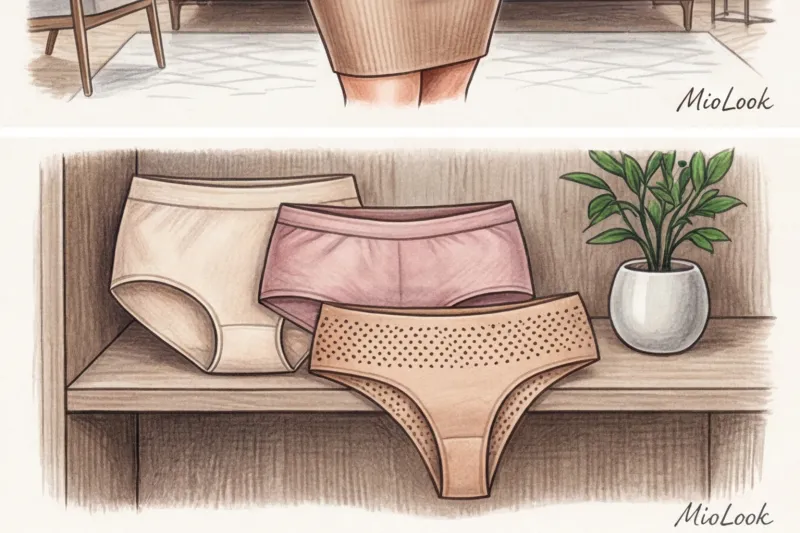
The ideal composition of basic underwear:
- 80% smooth microfiber, polyamide or modal (for sliding outerwear);
- 15–20% elastane (for a snug but soft fit);
- 100% cotton gusset (for hygiene).
By the way, to tidy up your linen drawers and create the right base, I recommend using wardrobe digitization feature in the MioLook app When you see your entire collection on the screen, it becomes clear which invisible styles you're missing to complement your new light-colored pants.
Style breakdown: from everyday comfort to an invisible base
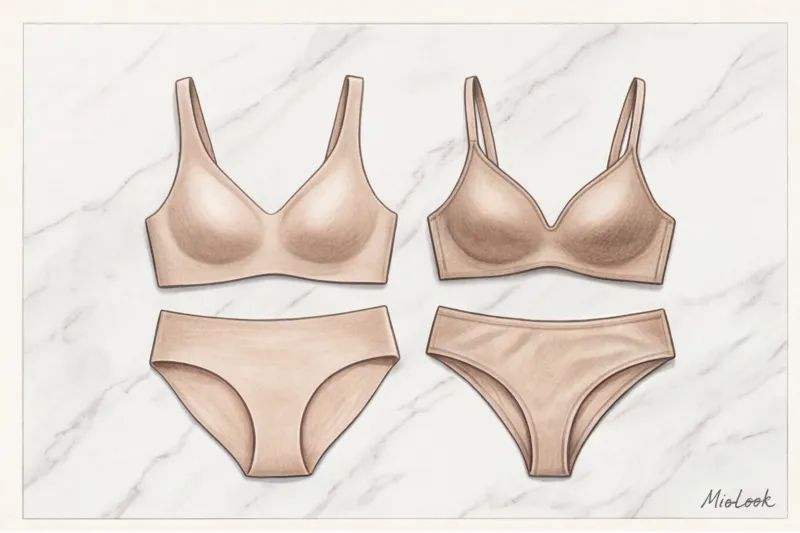
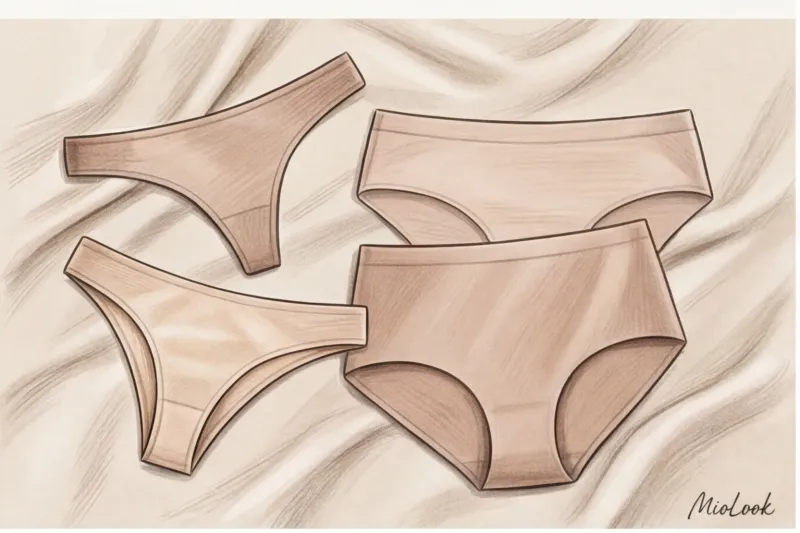
A lingerie wardrobe, like a full wardrobe, requires variety. The same pair of panties won't work equally well under thick jeans as they do under thin, flowing silk. Here are three essential styles that every woman with curves should own.
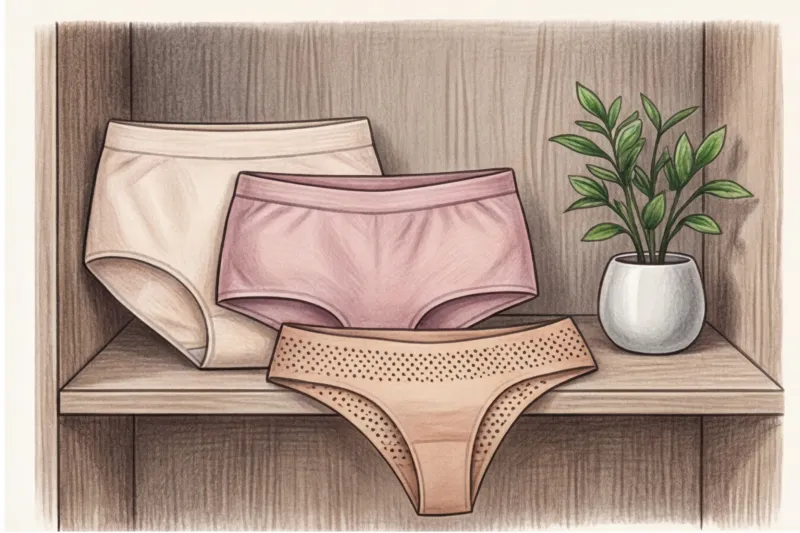
High-waisted slips and maxis
A classic, but with an important caveat: the ideal belt height should reach exactly to the navel or 1–2 cm above it. If the belt ends mid-abdomen, it will inevitably roll down under the belly when sitting on a chair, causing extreme discomfort.
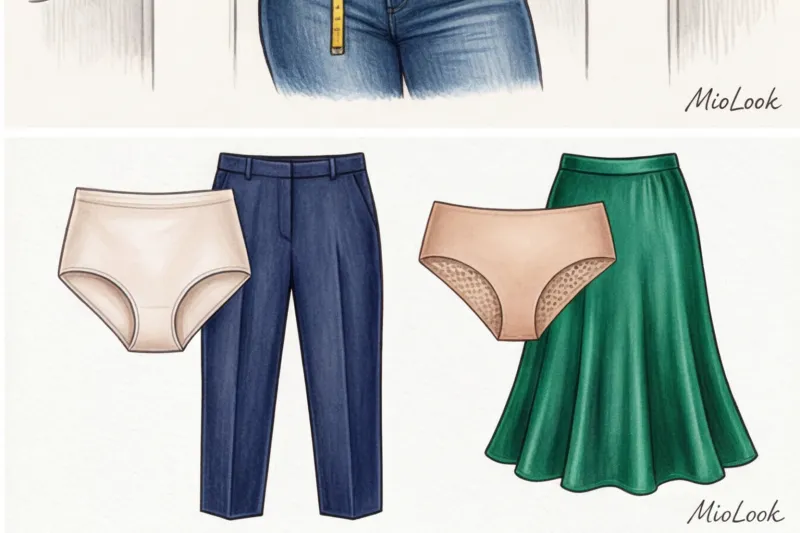
Pay attention to the width of the elastic band. A thin elastic band (less than 1 cm) acts as a tourniquet. You need a wide, soft elastic band at least 3 cm wide—it distributes pressure over a larger area of skin and doesn't leave marks.
Boxer shorts: relief from chafing
In summer, thin microfiber shorts are an absolute must-have, saving you from painful chub rubs (chafing on the inner thighs). But there's a strict technical detail: the hem of the shorts should end below the widest part of your thigh.
When it does NOT work: Avoid wearing shorts under thin, light-colored suit pants. Even seamless shorts tend to roll up slightly when walking up stairs, and this roll will be clearly visible through the thin fabric of the pants.
Busting the myth: Thongs and Brazilians for plus-size women
Many of my new clients are taken aback when I suggest they try on a thong. "Thongs aren't for plus-size women!" they declare. This misconception dates back to the 2000s, when thongs were stiff strings topped with a triangle of lace.
Modern laser-cut thongs and Brazilian bras are the best invisible underwear for bodycon dresses. The secret to a perfect fit for a plus-size figure: a V-shaped top (it hugs the natural curve of the waist) and wide side panels (at least 5–7 cm, instead of thin laces). They sit on the hips without digging into the sides.
Access to MioLook for €0.99 — one-time payment
A smart AI stylist will select the perfect look for you, taking into account your body shape.
Get access — €0.99 onceWardrobe Formulas: How to Match Lingerie to Specific Outfits
One of my clients once brought in a stunning emerald, heavy silk skirt for a wardrobe review. "It makes me look fat, bunching up at the hips," she complained. The skirt cost about €180, but it fit terribly. I asked her to change her regular cotton briefs with a thick elastic band for a seamless microfiber thong with a silicone-coated edge. The result? A visual loss of 5 kilograms in one minute, without any dieting. The skirt simply flowed down her figure, unhindered by the raised seams.
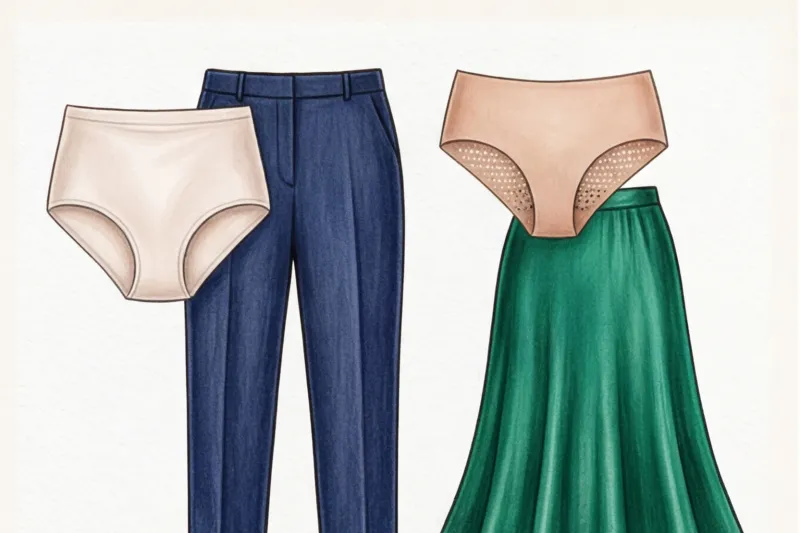
Here are my tried and tested combination formulas that you can test out when putting together looks MioLook:
- For office suits and thick trousers: Seamless briefs or maxis made of smooth microfiber. The trouser fabric glides over the body, allowing for maximum freedom of movement.
- For silk slip dresses and thin knitwear: Only thongs or Brazilians with laser-cut, seamless edges (bonded seams). Any other cut will create unnecessary definition on the buttocks.
- For casual Friday with flowy summer dresses: These ultra-thin nude microfiber shorts will keep you comfortable no matter the wind.
Stylist Checklist: 5 Signs of a Perfect Fit
How do you know in the fitting room that you've found "those" basic panties? I recommend putting them on, doing a few squats, bending over, and checking yourself against this list:
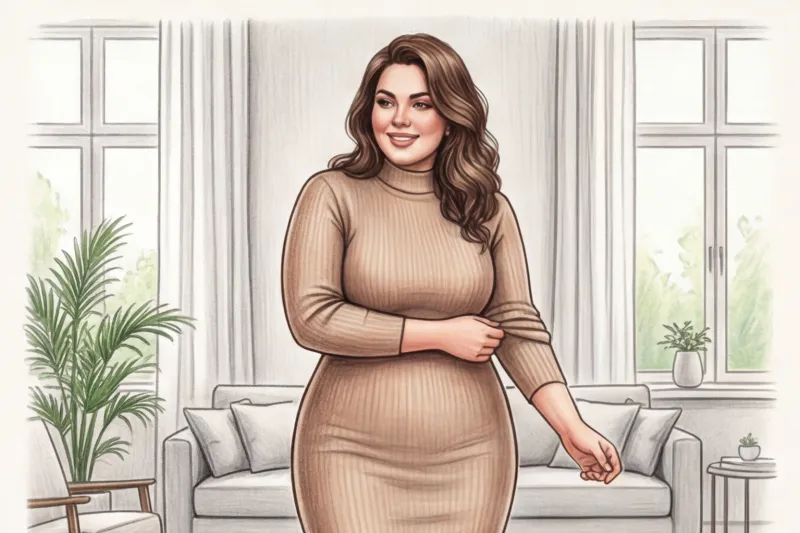
- The elastic does not form a "canopy". The skin above the waistband should lie flat. If even the slightest fold forms, it's the wrong size or the elastane is too stiff. High-quality base layers (usually in the €25–€45 price range) use soft materials that stretch in all four directions.
- There is no need to adjust your panties. Just stood up from a chair or stepped out of the car and don't feel like tugging your underwear down? Bingo, the pattern is yours.
- There is no "four buttocks" effect. The back seam shouldn't cut the gluteal muscle in half. If this happens, choose a Brazilian or laser cut.
- Instant shape restoration. Gently pull the fabric on your thigh and release. It should snap back into place without leaving a "bubble."
- Zero static. Run your hand through the trouser fabric over your underwear. The fabric should slide like ice.
My main advice: stop treating basic underwear as an afterthought. You shouldn't have to endure digging elastic or adjusting puckered seams throughout the day. By choosing the right construction, microfiber over stiff cotton, and smart fits, you're not investing in underwear—you're investing in the flawless fit of your favorite wardrobe.