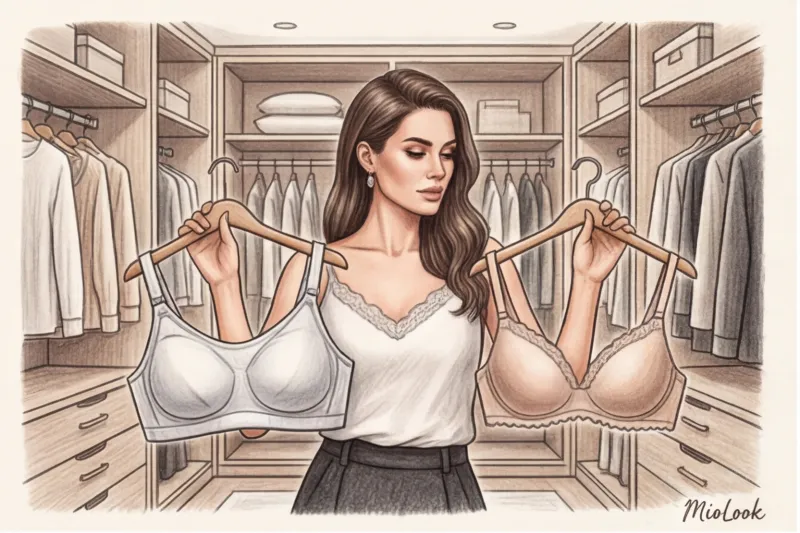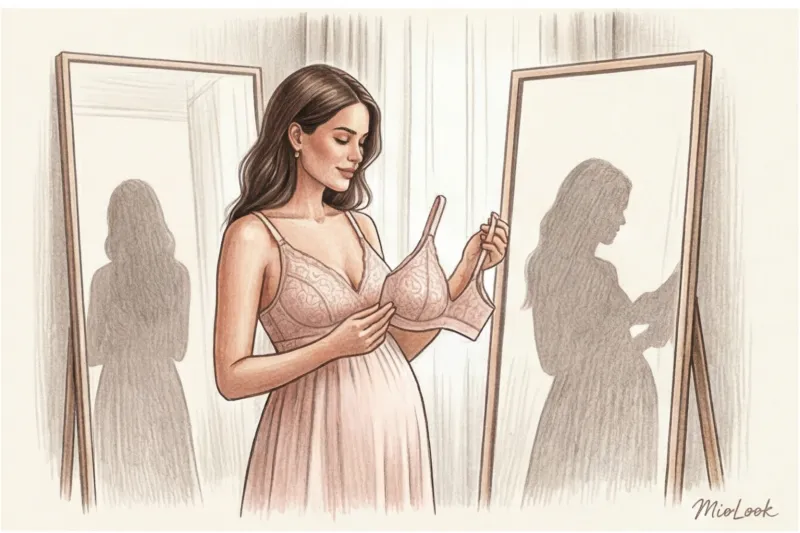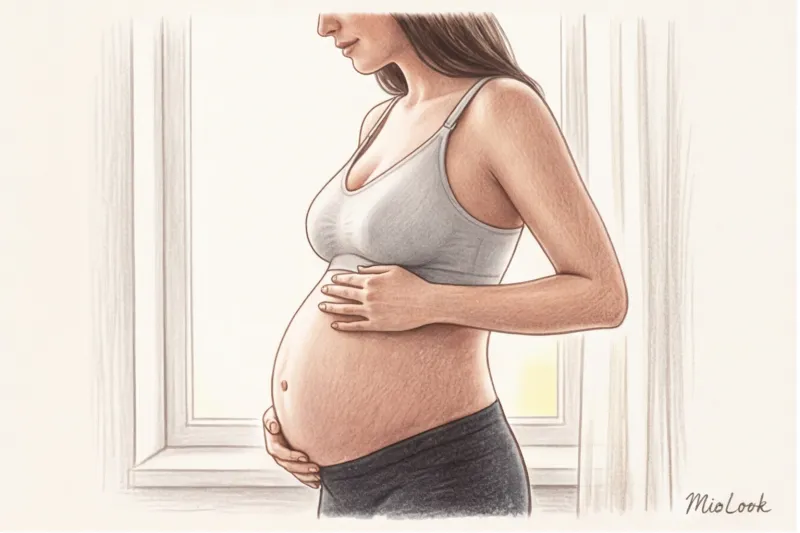
One of my clients, Anna, made a classic mistake in her fourth month of pregnancy: she bought five expensive bras (averaging €80 each), simply choosing her usual size with a larger cup. By the eighth month, none of them fit her back, and by the time she was discharged from the hospital, they didn't even hold half the volume. More than €400 in bras ended up in the back of her dresser drawer.
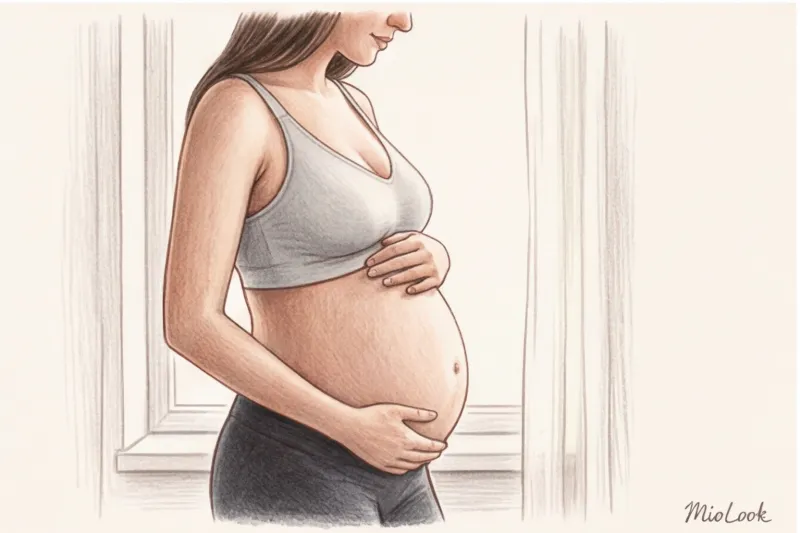
When it comes to maternity lingerie, we somehow continue to think in terms of old size charts, forgetting that our bodies during this period aren't just "a few extra pounds." It's a complex biomechanical system that changes its geometry. We've already discussed the architecture of basic patterns in more detail in our A complete guide to choosing lingerie online using AI , but the period of expecting a child requires a completely different approach.
I propose viewing the choice of underwear not as a temporary medical necessity, but as an investment in an adaptive wardrobe. Let's examine this process from the perspective of textile engineering and physiology.
The Anatomy of Change: Why the Old Rules of Recruitment No Longer Work
Did you know that your rib cage can expand by 5-10 centimeters during pregnancy, even if you haven't gained much weight? The hormone relaxin is responsible. According to clinical studies on the physiology of pregnancy, its main function is to soften the pelvic ligaments and cartilage in preparation for childbirth. But relaxin isn't selective. It also relaxes the cartilaginous joints of the ribs, allowing the diaphragm to expand to make room for the growing uterus.
This is why women often experience discomfort not from a tight cup, but from the suffocating pressure of a band. The density of the breast itself also changes: from its usual firmness, it shifts to heaviness. The tissues become more sensitive, and what once felt like light support begins to feel like a lead frame.
"The biggest mistake of the first trimester is buying regular bras that are a size or two too big. Larger sizes have wider straps and different underwire proportions, which will dig into your underarms. You don't need a larger size, but a specially tailored fit."
How to choose the right nursing bra size: an online shopping guide
This search query is one of the most common among expectant mothers, and the internet is full of abstract calculators. But after 12 years of practicing bra fitting, I've developed a more precise algorithm. You should start shopping in earnest during the "golden window"—the eighth month of pregnancy. By this time, relaxin's effect on the ribs reaches its peak, and the bulk of the glandular tissue has already formed.
This is where the counterintuitive comes into play. extreme hook rule I usually teach my clients: when buying new everyday underwear, fasten it with the loosest hooks so that as the elastane stretches, you have some leeway to tighten it. With maternity underwear, it's the opposite.
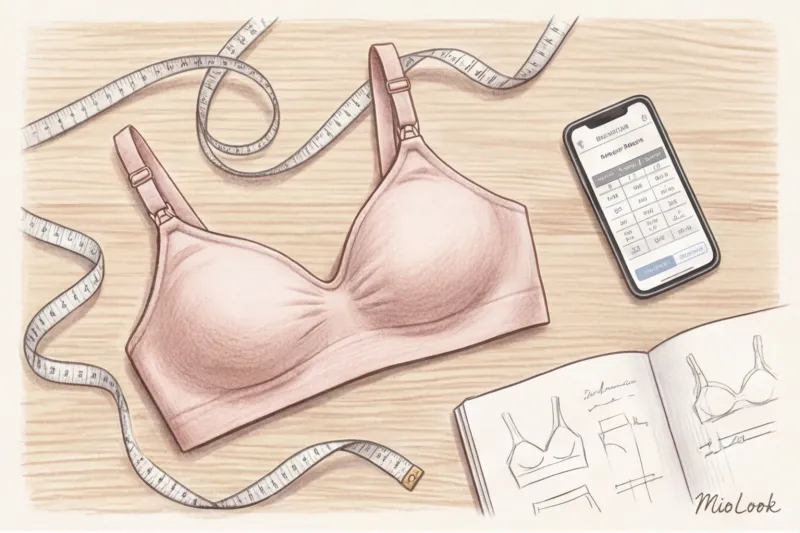
If you are buying a bra in 4-5 months, it should fit tightly the tightest hooks. Why? Because your ribs will spread apart, and you'll need extra length in the band to loosen your grip. But a nursing bra bought in the 8th month should fasten with the freest Hooks - after giving birth, your ribs will gradually begin to return to their original position, and you will need to tighten your belt more tightly.
Milk supply for the milk rush: how to avoid mistakes with the volume
Between 2 and 5 days after birth, your milk comes in. Within 48 hours, your cup size can increase by 1.5 to 2 cup sizes. This is a shock to your body and a challenge for your underwear.
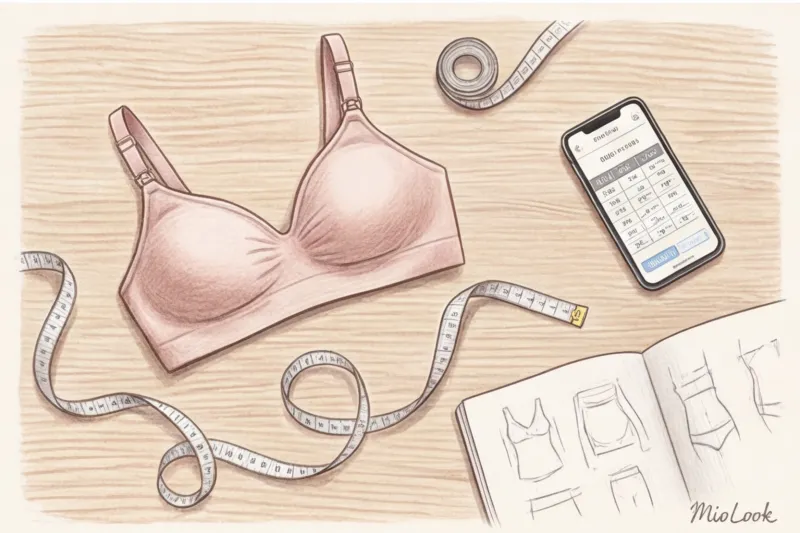
That's why it's absolutely necessary to avoid bras with rigid molded cups during the first few weeks. They're physically unable to accommodate such volume changes, which can lead to pressure on the breast lobes. Look for models with stretch lace or elastic trim at the top of the cup. This design works like a spring: it expands during breast let-down and contracts after feeding.
Your perfect look starts here
Join thousands of users who look flawless every day with MioLook. The smart algorithm will take into account all your body changes.
Get access — €0.99 onceTextile Expertise: Debunking the 100% Cotton Myth
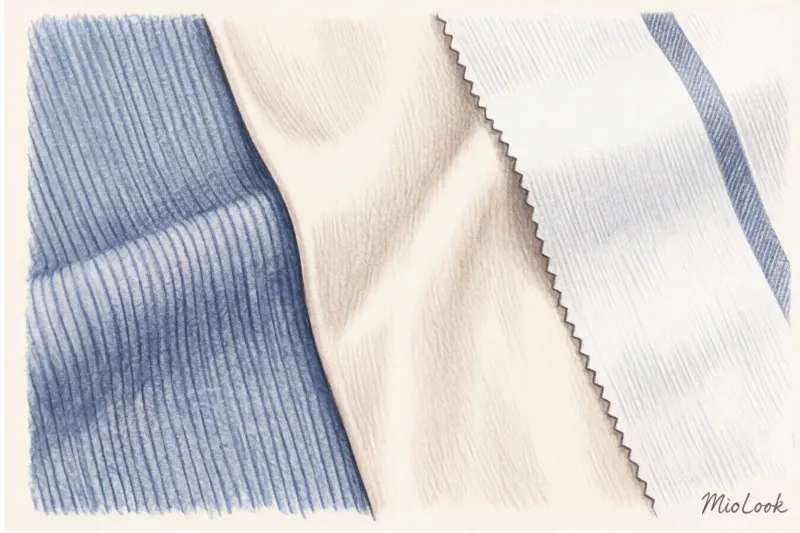
If you open any forum for mothers, the first piece of advice will be: "Buy only 100% cotton, it breathes!" As a textile expert, I have to refute this. For bras that support heavy breasts, pure cotton is the worst choice.
Cotton fiber has a zero recovery rate. According to technical reports from the Hohenstein Institute (2023), pure cotton without additives stretches under mechanical stress after just 4-6 hours of wear. By lunchtime, your 100% cotton bra will be a stretched-out bag that holds absolutely nothing in place. Furthermore, if milk leaks, cotton immediately becomes damp, becomes cold, and takes hours to dry.
What to look for in the composition instead?
- Contains elastane (Spandex/Lycra): Optimally, between 8% and 15%. This is the framework that returns the tissue to its original state after stretching.
- Tencel Lyocell or Micromodal: Eco-friendly wood fibers absorb moisture 50% better than cotton, dry faster, and feel like silk, soothing sensitive nipples.
- Bamboo Jersey: It has natural antibacterial properties and excellent thermoregulation.
Underwear Design on Screen: What to Look for Before Clicking "Buy"
When you buy online, you can't touch the item. But macro photos in the product description will tell the stylist more than a description. That's what I look for when selecting styles for my clients.
Firstly, drop-down clips In the photo, the clip should look smooth, without any sharp plastic burrs. Test it mentally: can you snap this mechanism open with one hand at 3 a.m. while holding a crying baby in the other? High-quality hardware is usually slightly larger and has a soft click (brands in the €40–€90 price range rarely skimp on this).
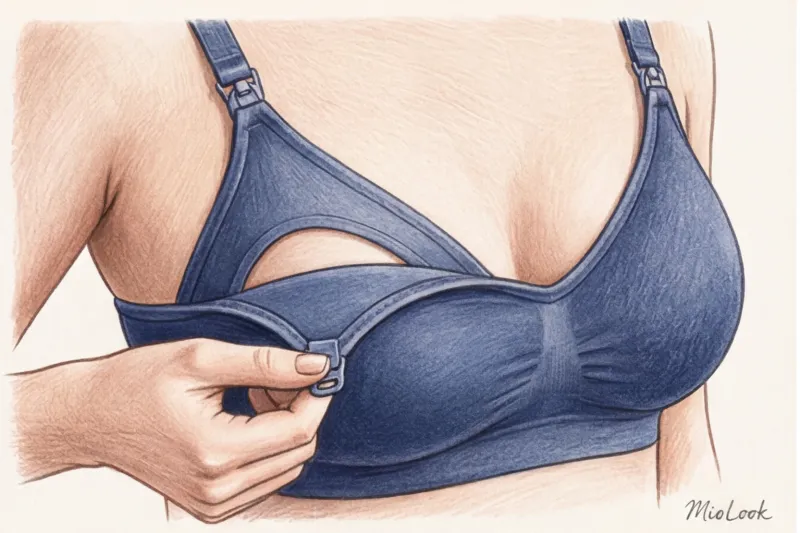
Secondly, pay attention to the hidden design when the cup is detached. There are two main types:
- A-frame: The fabric frames the bust, leaving a window. It provides maximum support and concealment. Ideal for larger and heavier breasts.
- Side sling (Side support): The strip of fabric only goes to the side. It's easier to unfasten and helps center the bust, but it doesn't hold up as well for a D+ cup.
The back should be strictly U-shaped (leotard back). The straight stripe across the back will transfer the entire weight of your heavier chest to your shoulders. The U-shaped cut distributes the load across the latissimus dorsi.
Underwire in nursing underwear: evil or necessity?
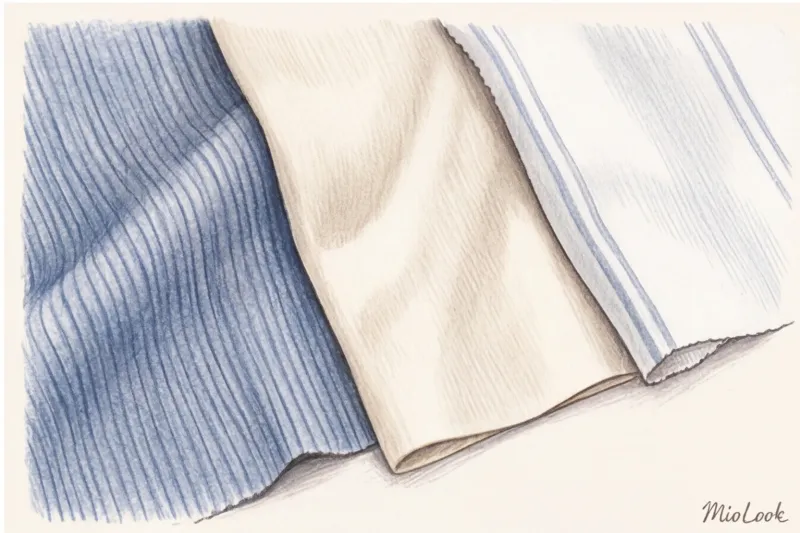
There is a persistent myth that any seeds cause lactostasis (milk stagnation). This is only half true. Lactostasis is caused by hard metal bones of the wrong size , which do not lie on the ribs, but dig into the glandular tissue.
A modern alternative is Flexi-wire (flexible silicone or titanium frames) that bend with your body. However, this advice doesn't work for everyone. Bralettes are absolutely contraindicated for women with an H cup size or larger for daytime wear—without a frame, they simply won't get the support they need and could develop migraines from neck tension.
Ready to get started?
Try a free plan—no commitments. Create your perfect pregnancy and breastfeeding capsule in the MioLook app.
Get access — €0.99 onceMinimalist capsule: how much laundry do you really need?
As an advocate for mindful consumption, I urge you not to buy half the store's inventory. Pregnancy is no excuse to forget the rules of a smart wardrobe. To comfortably navigate your entire pregnancy, you need a well-thought-out capsule collection of five items.
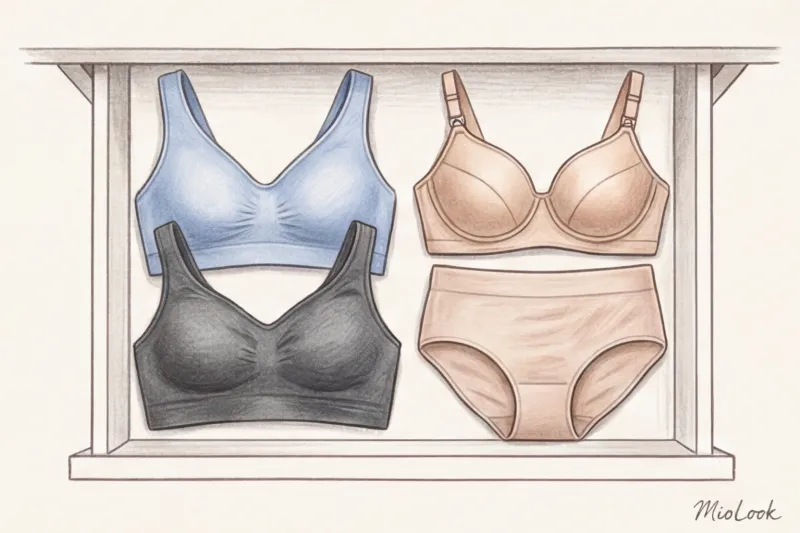
The formula for a nursing mother's basic lingerie wardrobe looks like this:
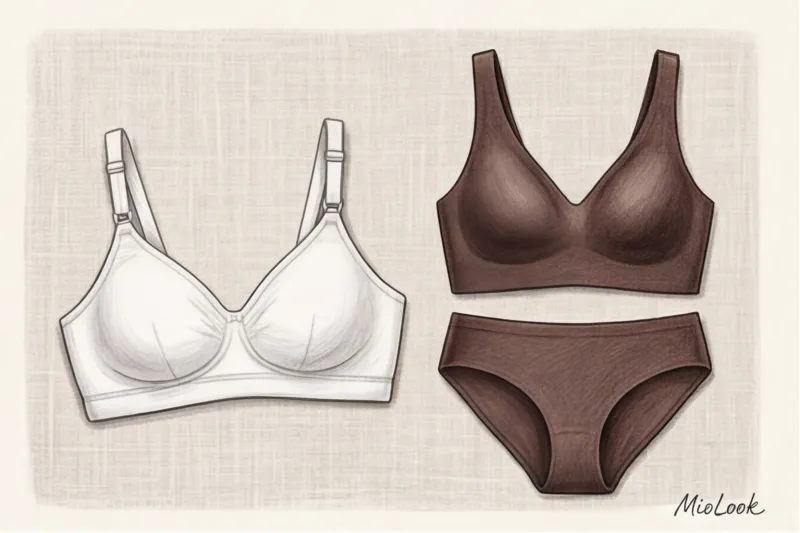
- 2 sleep tops (seamless): Completely seamless, with no back fastenings, you'll sleep in them to hold your breast pads in place.
- 2 everyday bras with support: With flexible underwire or reinforced A-frame profile for daytime activity.
- 1 for the exit (aesthetics): A beautiful lace bralette or structured bra will give you that "I'm a woman, not just a function" feeling when you head out to dinner.
When it comes to maternity panties, there are also two camps. Over-bump styles (which stretch over the belly) provide a slight supportive effect and provide warmth, but in summer they can be unbearably hot. V-waistbands (which sit under the belly) are more practical—they don't put pressure on the uterus and can be worn after childbirth, meaning the cost per wear will be significantly lower.
The End of the Roulette: How AI is Solving the Underwear Fit Problem
Even if you're perfectly armed with a measuring tape, online shopping remains a minefield due to different sizes. You might be a size 75E in a UK brand, but in a French one you'll need a 90F (due to a different measurement system), and in an Italian one you won't find your size at all, as they're marked from 1 to 6.
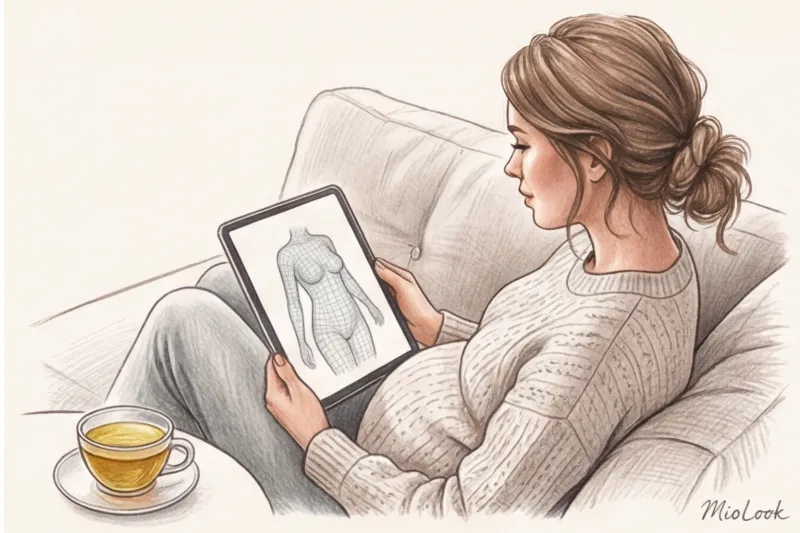
The shift from random shopping to predictable, smart shopping has already happened. App technologies MioLook They take into account not only the raw girth measurements, but also the bust projection, asymmetry, and even the density of the fabric of a particular brand. Artificial intelligence analyzes how the fabric behaves (the aforementioned recovery rate) and compares it with your parameters.
Choosing lingerie during pregnancy and breastfeeding is not a time for compromise. Your body is doing a tremendous job, and clothing should support it, not create new obstacles. Invest in high-tech fabrics, pay attention to the mechanics of fastenings, and trust the calculations to smart algorithms. Let your only concern be choosing between mocha and dusty rose.