Why Pilling Forms: The Anatomy of the Problem and the Softness Trap
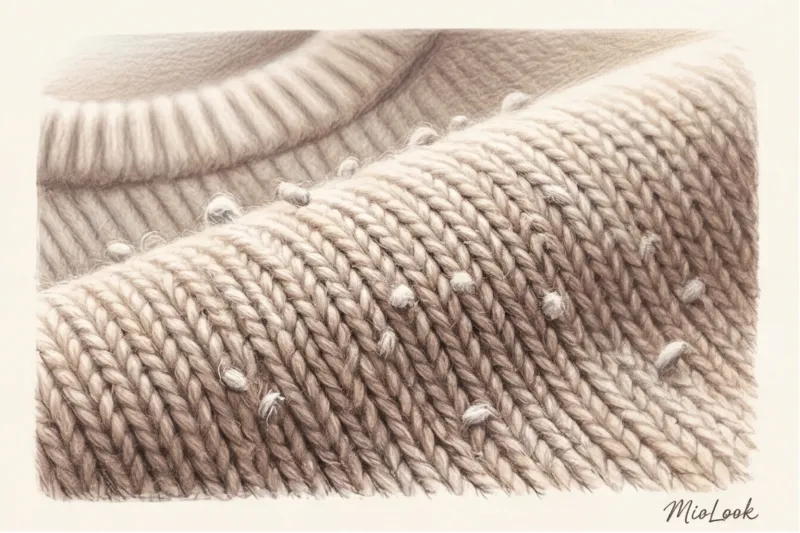
Last year, a client of mine bought a luxurious cashmere sweater for €1,000 before a business trip to Milan. It was incredibly soft, literally melting in her hands. But after one flight and a whole day of wearing it with a crossbody bag, it was covered in pills as if it had endured a decade of harsh use. "Julia, why?" she asked me in despair.
This is the most common question I hear as the cold weather sets in: What kind of knitwear doesn't pill? And how can you stop wasting money on disposable items? We discussed the architecture of a warm wardrobe in more detail in our a complete guide to a basic knitwear wardrobe , but today I want to give you a completely different, engineering perspective on this problem.
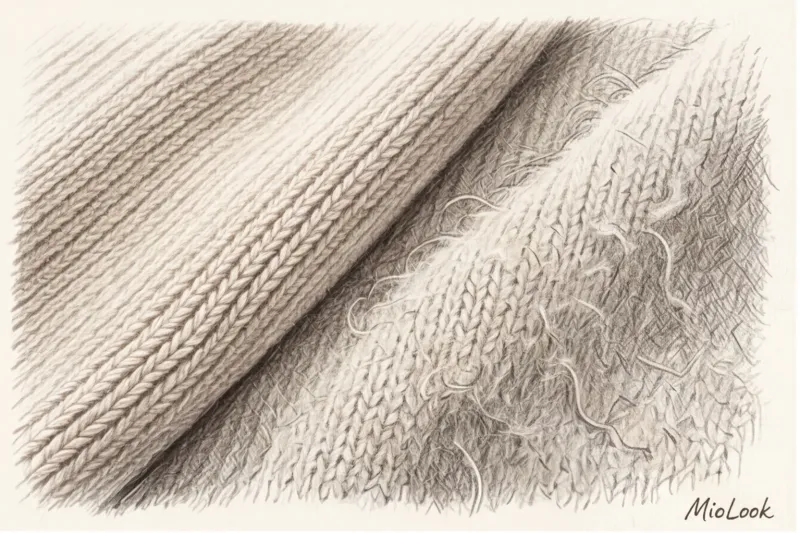
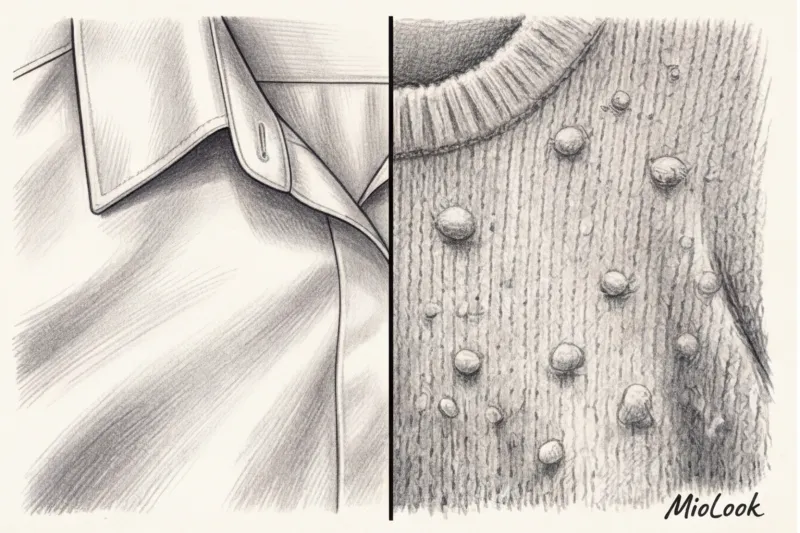
Pilling is a purely mechanical process. Short yarn fibers are released from the thread under friction, tangle, and form dense balls on the surface of the fabric. And herein lies the main pitfall of mass-market fabrics—the softness trap. Brands know you make a purchasing decision within the first three seconds of touching the garment. So they artificially fluff the threads and wash them with enzymes to create a "cloud-like" effect. But such a loose, unsupported structure is destined to pill in areas of high friction: underarms, on the sides (where a bag hangs), and on the inside of the sleeves.
Combed or machined yarn: the secret that brands are keeping quiet about
In textile engineering, there are two fundamentally different methods for creating wool thread. The survival of your sweater depends on them.
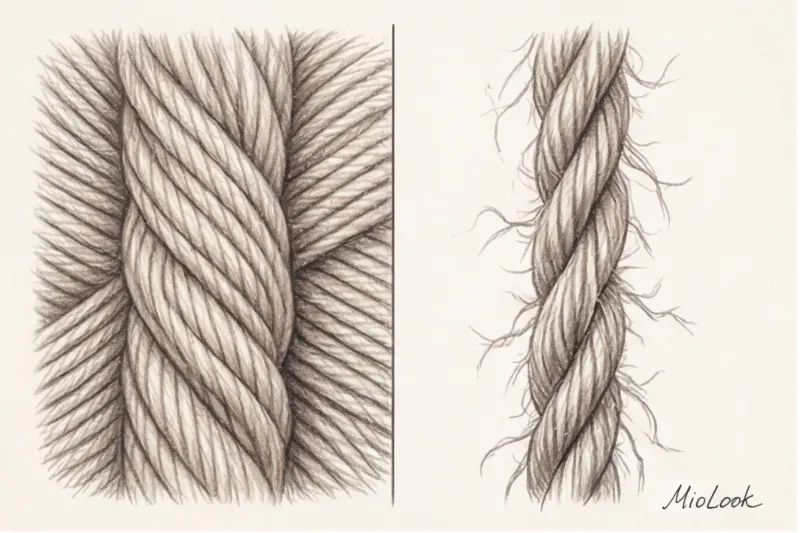
- Worsted yarn: The long fibers are carefully combed, aligned parallel to each other, and tightly twisted. The result is a smooth, silky, and very strong yarn. This knitwear has a structured appearance, a slight sheen, and virtually no pilling.
- Woolen yarn: Short fibers are twisted loosely and randomly to trap as much air as possible for volume and warmth. Yes, such a sweater will be fluffy, but it will begin to lose its "hair" and pill within the first day.
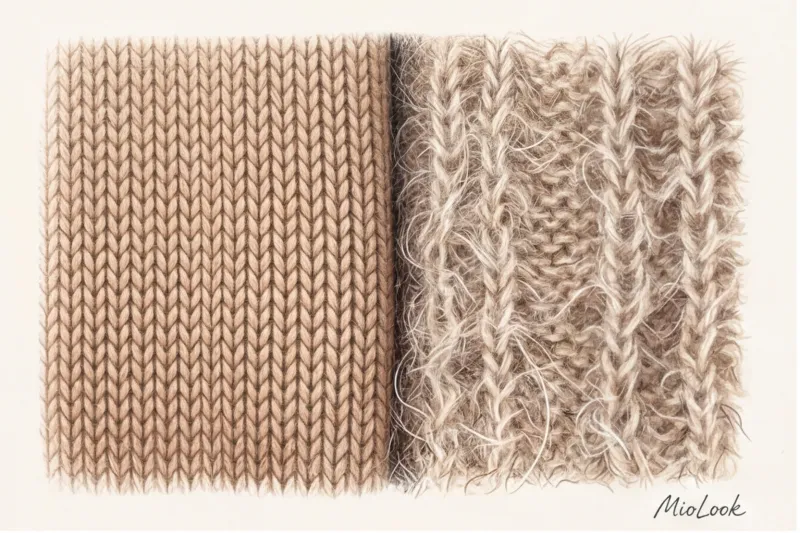
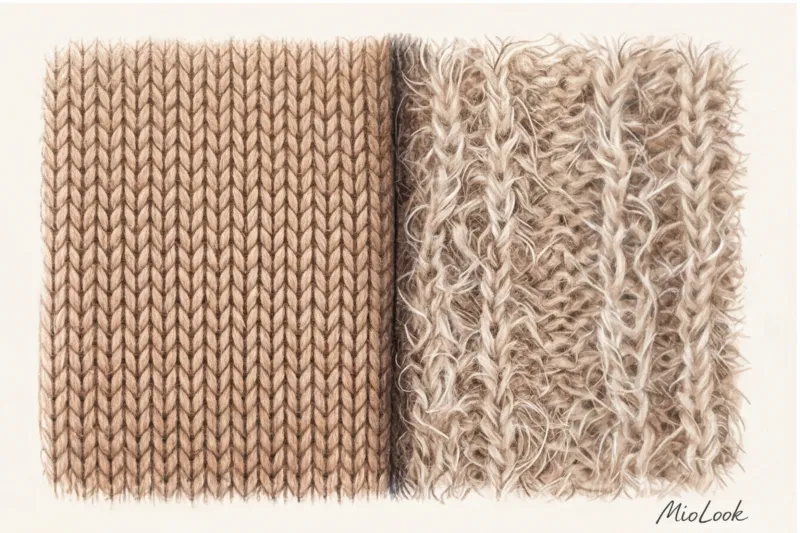
How can you tell them apart visually? Look at the surface of the fabric at eye level against the light. If you see a thick, uneven halo of fuzz, you're looking at a combed yarn. If the surface is smooth and the loops read like perfect geometric shapes, it's a combed yarn, your best investment.
Access to MioLook for €0.99 — one-time payment
A smart AI stylist will select the perfect look for every day and help you put together a flawless capsule wardrobe.
Get access — €0.99 onceWhat knitwear doesn't pill: Read the ingredients like a pro
Many naively believe that the label "100% natural wool" guarantees quality. This is a dangerous myth. Cheap, short-fiber 100% wool will pill catastrophically quickly. To create a prestigious wardrobe, I recommend that clients look for blends with noble fibers.
The absolute champion in pilling resistance is a blend of smooth merino wool and long-staple cotton or natural silk. Silk (even 15-20%) acts as a natural reinforcement, giving the yarn strength and an incredibly beautiful, delicate sheen. Such items retain their original "architecture" for years.
"Cashmere is not all the same. The fiber grade is everything: luxury lies not in the material's name, but in its physical properties."
Cashmere deserves special mention. The fast fashion industry has devalued this concept. According to quality standards, true premium cashmere (Grade A) consists of fibers 34–36 mm long and no more than 14 microns thick. This length allows the fiber to hold up well when twisted. The stuff sold in mass-market stores for €100–150, proudly labeled "100% Cashmere," is often Grade C. This is short tow (less than 28 mm), sometimes even recycled. It's unable to hold up well and quickly clumps into untidy clumps.
Acceptable synthetics: when polyamide saves a thing
Let's debunk the biggest fear of synthetics. Not all synthetics are evil. Acrylic is the evil. Acrylic fibers form very hard pills that cling tightly to the fabric. Trying to remove an acrylic pill often results in the threads pulling out and ruining the garment.
But adding 5-10% high-quality polyamide or elastane to a wool sweater is excellent news. According to research from the Textile Institute, a small addition of this smooth synthetic binder increases tensile strength by 30% and significantly reduces damage from abrasion. Polyamide helps the sweater maintain its shape at the elbows and neck, preventing the "pajama" effect.
Your perfect look starts here
Join thousands of users who look flawless every day with MioLook's intelligent recommendations.
Get access — €0.99 onceA Stylist's Engineering Approach: How to Test a Sweater in a Store
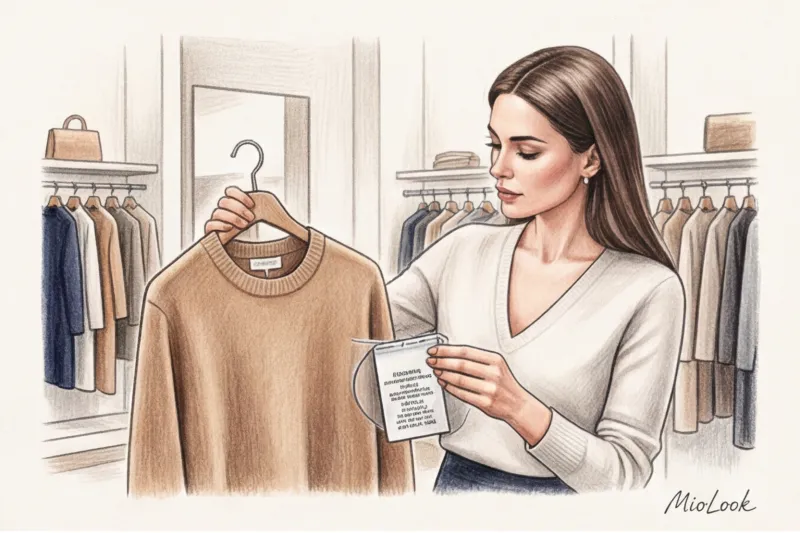
Over 12 years of working as a luxury consultant, I've developed a strict knitwear inspection algorithm that I use at both Loro Piana and COS. Before even looking at the price tag, I conduct three physical tests.
- Twist Test. I carefully spread the stitches on the smooth section and examine the thread itself. If it looks like a dense, tightly twisted cord, the sweater will last a long time. If the thread is more like loose cotton wool that disintegrates into fibers at the slightest touch, I return the sweater to the shelf.
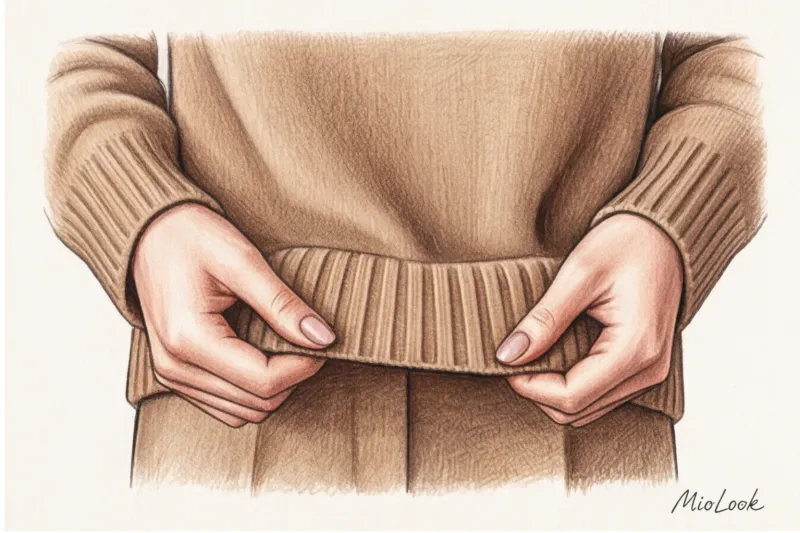
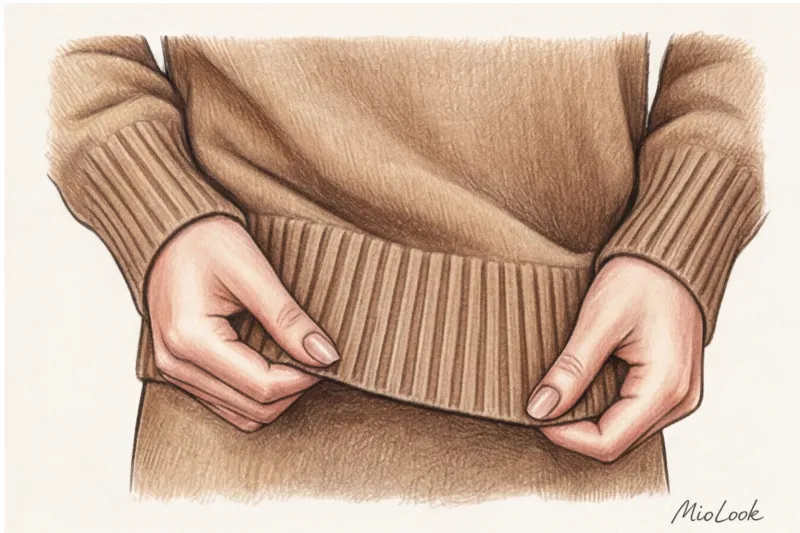
- Rebound Test. I take the elastic on the sleeve cuff, gently but firmly stretch it, and then release it quickly. High-quality knitwear has phenomenal elasticity: the cuff should instantly snap back to its original position, leaving no ripples. If the edge remains stretched, the structural integrity is compromised from the start.
- Density Check. I lift the sweater and look through it at the boutique's lamplight. The fewer gaps between the stitches, the better. A tight knit means the yarns are tightly pressed together, with no room for friction or shifting.
Of course, I must add an important disclaimer: this density test does NOT work for mohair or alpaca items. Their natural knitting style requires an airy, semi-sheer texture. But for basic merino or cotton turtlenecks, this is an absolute rule.
Investing in a Basic Wardrobe: Why Cheap Cashmere Is an Illusion
When we discuss shopping budgets, I always suggest my clients consider the cost-per-wear. A perfectly constructed merino sweater made from high-quality combed yarn will cost you around €250–€300. You'll wear it 100 times over three seasons, and it will stay smooth. The cost per wear is €3.
Three cashmere sweaters from a mass-market store, each priced at €100, will lose their appearance after the second wash. You'll wear them 10 times before relegating them to the "cottage only" category. The cost is €10, plus a constant feeling of insecurity about your appearance.
Premium brands (and mills like Todd & Duncan, which produce yarn for heavy luxury) purchase their raw materials at auctions, strictly controlling the pile length. This is why their pieces create that very "architecture of comfort." When you wear a structured, tightly knit turtleneck to the office, it holds its shape, doesn't sag across the chest, and creates a clean, classy silhouette. To easily manage these investment pieces and create outfits, I recommend digitizing your closet using MioLook — this way you will always be able to see which basic elements you already have and what is really worth buying.
Preventative Care: How to Stop Peeling Before It Starts
Even if you've chosen the perfect knitwear that won't pill by default, improper use can ruin it. According to the Martindale test (an international method for assessing abrasion resistance), any fabric will yield under aggressive, targeted friction.
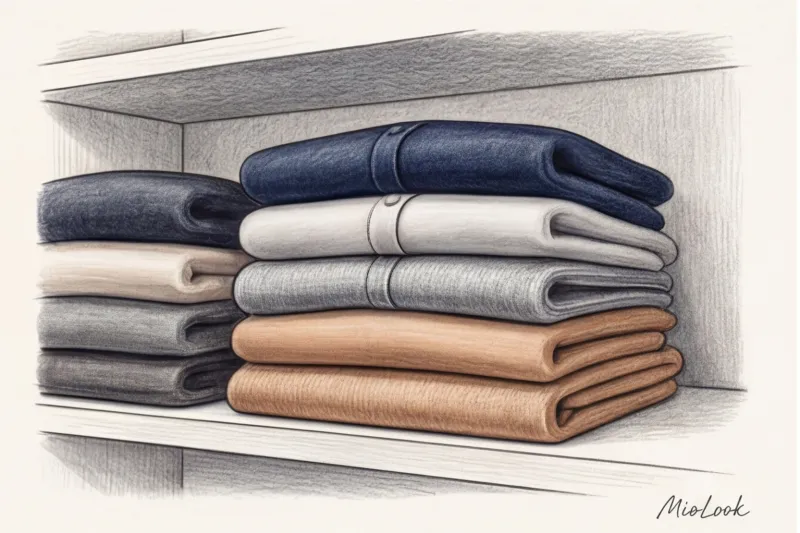
My main care secret is to let wool rest. Natural fiber is hygroscopic. Over the course of a day of wear, it absorbs moisture from the body and stretches. A sweater needs 24–48 hours laid horizontally in a ventilated room for the fibers to dry, shrink, and regain their original elasticity. If you wear the same cashmere three days in a row, pilling is inevitable.
Also pay attention to the lining of your outerwear. The stiff polyester inside a cheap coat will act like sandpaper on your sweater. Choose a coat with a smooth viscose or cupro lining.
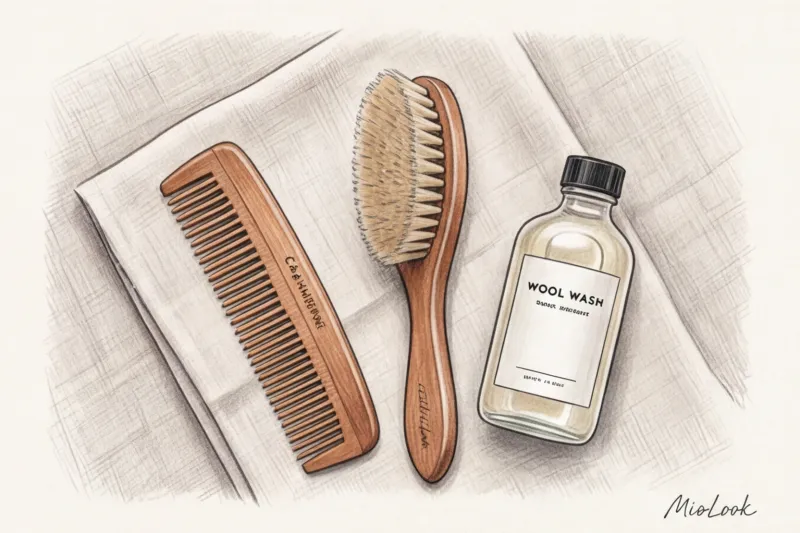
What should you do if pilling does occur (and a few will appear anyway)? Expert warning: forget about electric pilling trimmers on expensive items. The sharp rotating blades often cut not only the pilling itself but also the structural fibers of the warp thread. Over time, the sweater will become thinner and fray. Use only a hand-held cedar comb for cashmere, which gently removes loose fluff without damaging the yarn itself.
Ready to get started?
Try the free MioLook plan—our smart assistant will analyze your wardrobe and offer fresh ideas, no strings attached.
Get access — €0.99 onceChecklist: 5 Steps to Buying the Perfect Pill-Free Sweater
Keep these rules in mind for your next shopping trip. They'll save you hundreds of euros and a ton of stress:
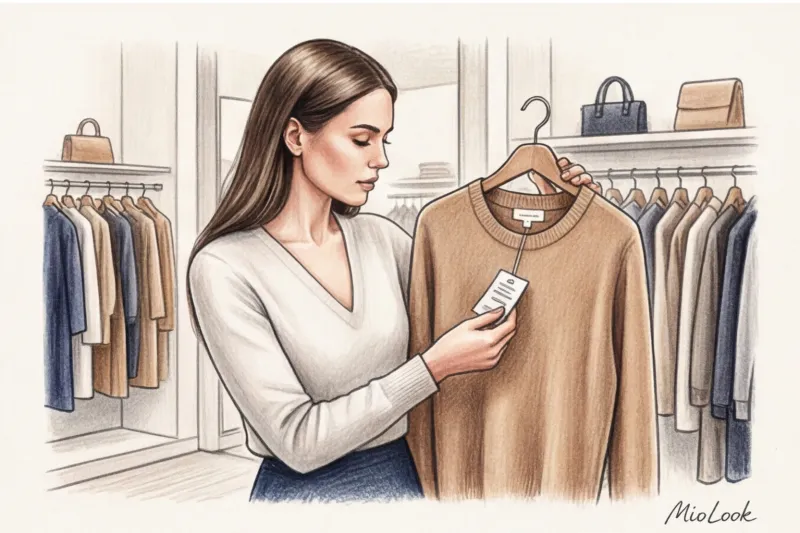
- Study the label: Avoid acrylic (even 15% will ruin a garment). Look for 100% high-quality materials (merino, long-staple cotton, silk) or acceptable blends with up to 10% polyamide added for durability.
- Assess the yarn visually: Choose a smooth, tightly twisted combed thread without a pronounced "hairy" halo if you are looking for a basic piece for every day.
- Perform a light test: The more tightly the loops fit together, the less space the fibers have for displacement and friction.
- Check the architecture: Perform a cuff rebound test. Resilience is the key indicator of durability.
- Consider the scenario: For everyday office wear and constant friction from your desk, bag, and seat belt, choose smooth merino. Save cashmere for relaxed weekends and evenings out.

The perfect wardrobe is built not on the quantity of items, but on their engineering quality. By learning to read the texture of fabrics before even looking at a brand, you gain true freedom from imposed trends and marketing.