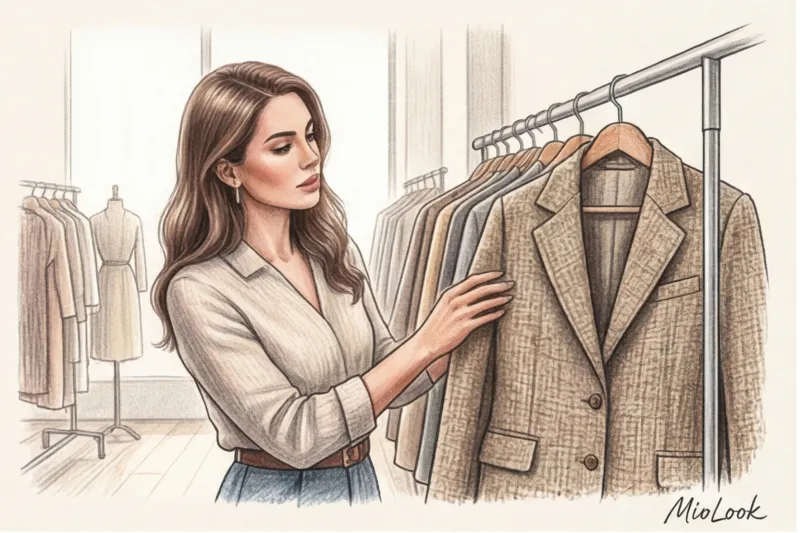
Two years ago, at Paris Fashion Week, one of my clients attracted more street style photographers' flashes than influencers in total looks from famous fashion houses. Guess what she was wearing? A vintage men's jacket without a single tag, bought in the Marais for exactly 20 euros. No logos—just impeccable shoulders, French seams, and heavy, perfectly draped wool.
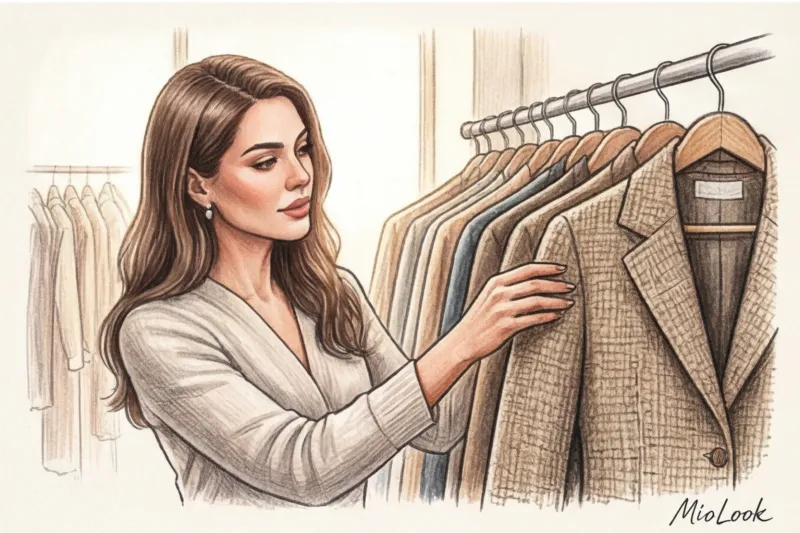
Today, the question is not whether to visit used car dealerships. The question is, How to shop at a second-hand store So you find real treasures, not fill your closet with other people's textile trash. We've covered the philosophy of this mindful consumption in more detail in our complete guide: Conscious Fashion: How to Build an Eco-Friendly Wardrobe.
Forget the clichéd internet advice like "arrive on the day of delivery." As a stylist with years of experience working in European fashion capitals, I'll show you a completely different approach. We'll search for items by hand, ignore modern mass-market tags, and read the garment's history from the inside.
Why Stylists Love Resale: More Than Just Savings
According to the annual report ThredUp Resale Report By 2027, the global resale market will reach $350 billion. According to an analysis by a reputable publication Business of Fashion (BoF) confirms that recycled consumption has long ceased to be "clothing for the poor." A global paradigm shift has occurred.
Why are industry professionals obsessively buying vintage? The answer is simple: the unique cuts and the unmatched quality of materials. If you're looking to incorporate the architectural cuts of '70s Yves Saint Laurent or the austere minimalism of '90s Jil Sander into your look, the modern high street won't help. You either pay thousands of euros for the latest runway collections or find these silhouettes in archives for next to nothing.
Plus, vintage guarantees no "incubator effect." The risk of running into a girl at a party wearing the same jacket as you is reduced to zero. And if you're unsure how to incorporate such an unconventional find into your usual style, MioLook's smart wardrobe feature will help you easily combine it with your modern base before you even leave the house.
Vintage, second-hand, and consignment: what's the difference?
Before we dive in, let's define some terms. Different store formats require different resources and budgets.
- Vintage: Fashion historians agree that vintage is defined as a garment over 20 years old that vividly reflects the spirit, cut, and style of its era. A basic gray turtleneck from 1995 is just that—an old turtleneck. But a neon jacket with exaggerated shoulders from 1988 is vintage.
- Second hand: Classic stores (often bulk) sell items without a strict curatorial selection. This requires maximum concentration, but it's also where the cheapest and most incredible finds are found.
- Elite consignment shops and resale platforms: Curated spaces where items have already been authenticated. Here you'll find Chanel bags or Burberry trench coats from last season at 40-60% off the original price.
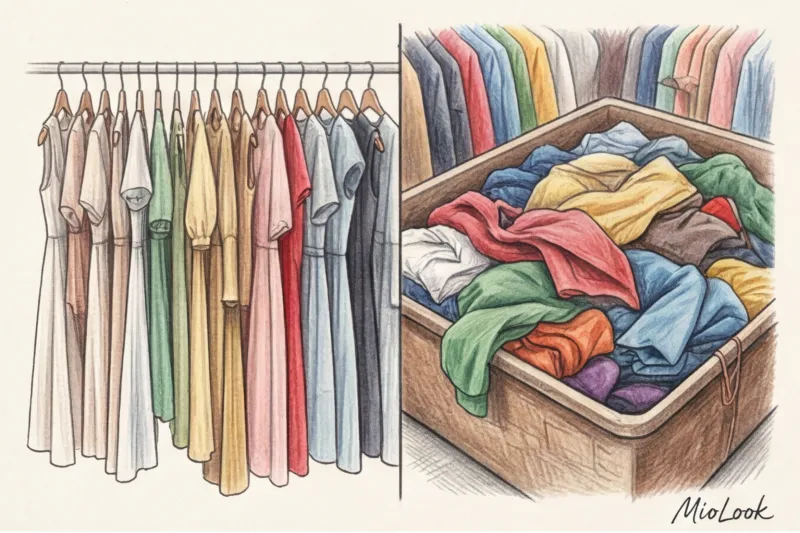
Fair Limit: This type of shopping isn't for everyone. If you're bothered by long searches, the smell of processed clothes, or cramped hangers, don't bother with bulky secondhand stores. Your choice is curated vintage boutiques, where all the dirty work has already been done for you, even if you have to pay extra.
Access to MioLook for €0.99 — one-time payment
A smart AI stylist will find the perfect look for your new vintage finds.
Get access — €0.99 onceExpert Strategy: How to Find Treasures
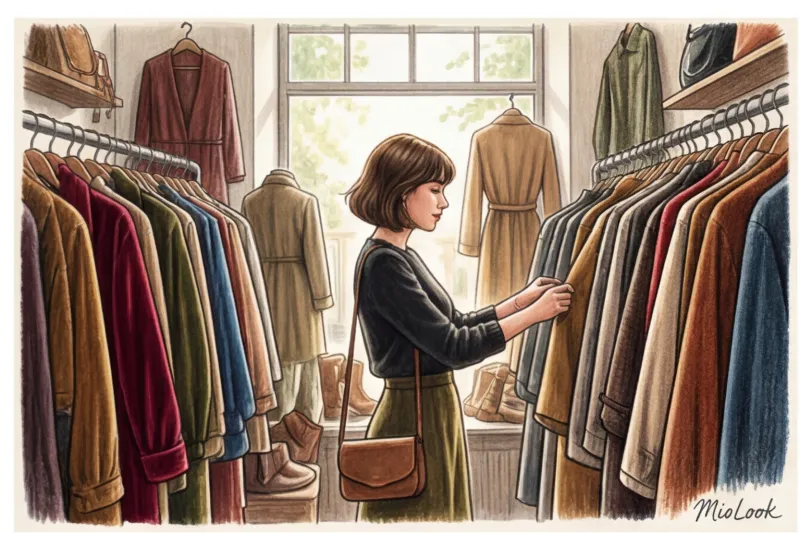
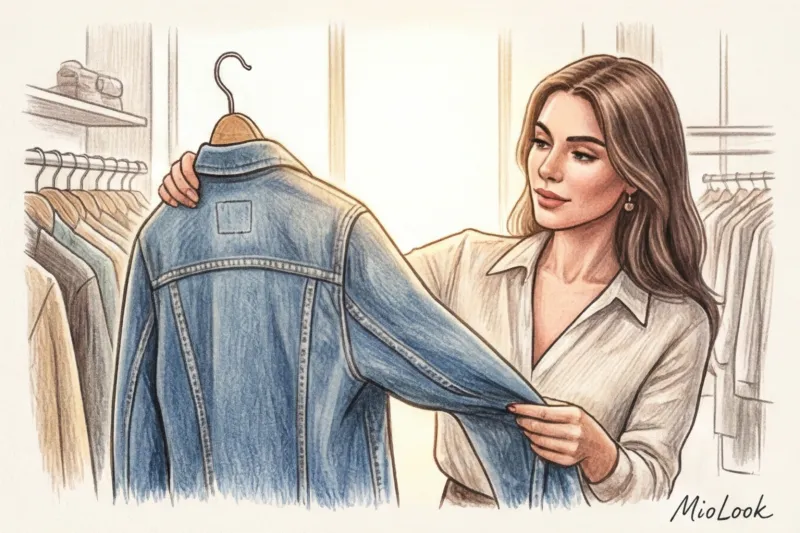
The key to successful resale shopping is focusing on quality fabric and construction, not on the big names on the tags. Before heading to the store, wear fitted basics (leggings and a top). Thrift stores often have trouble fitting rooms, so this "uniform" will allow you to try on jackets, shirts, and coats right in front of a mirror on the sales floor.
Tactile scanning: a blind search method
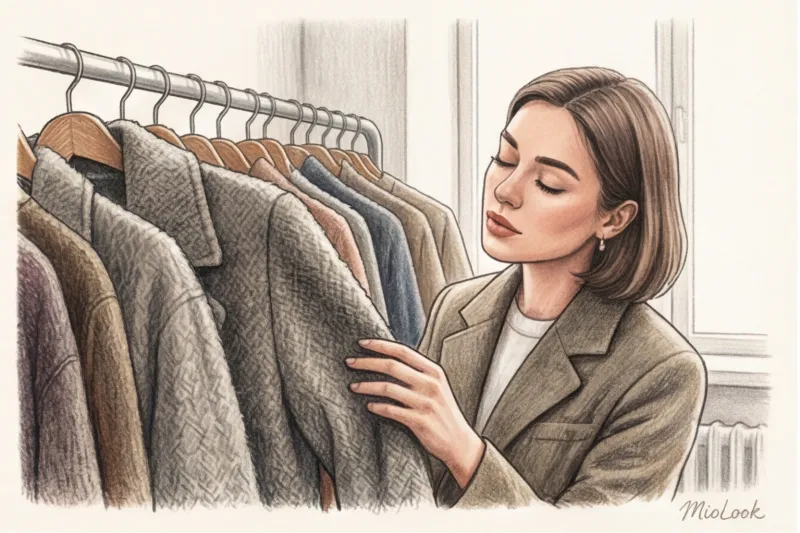
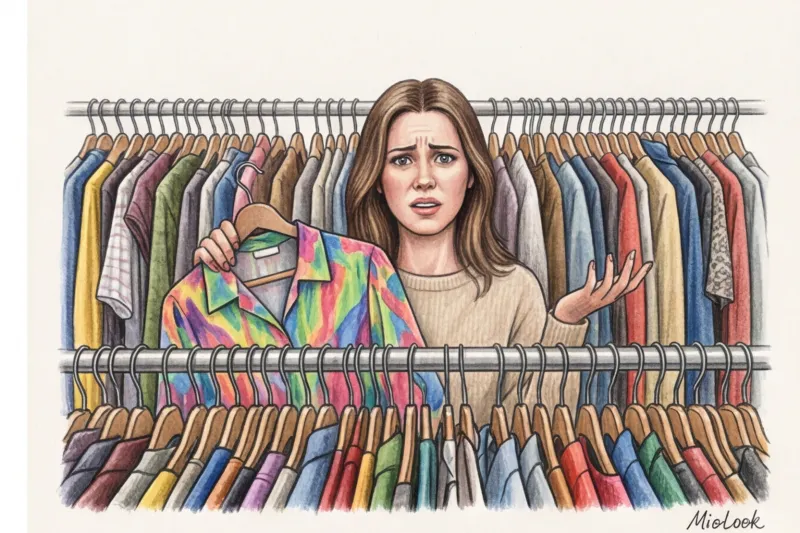
During my shopping tours, I teach clients a method I call "tactile scanning." Forget about examining every single item on the rail—it'll just make your eyes water from the multitude.
I literally ask clients to close their eyes. We walk along a long rail, our hands sliding down the sleeves of garments. Your task is to detect the cool heaviness of thick silk, the softness of cashmere, or the characteristic stiffness of 100% natural wool. Your fingers recognize cheap, squeaky polyester in a split second, saving you from having to reach for a hanger.
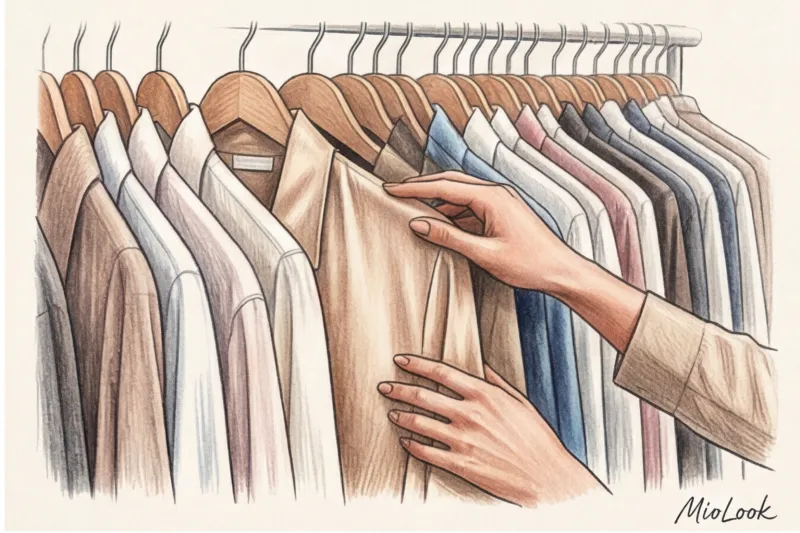
Which departments should I go to first?
Never start with the women's dresses section—it's usually where you'll find the most synthetics from the 2000s. My personal route always starts like this:
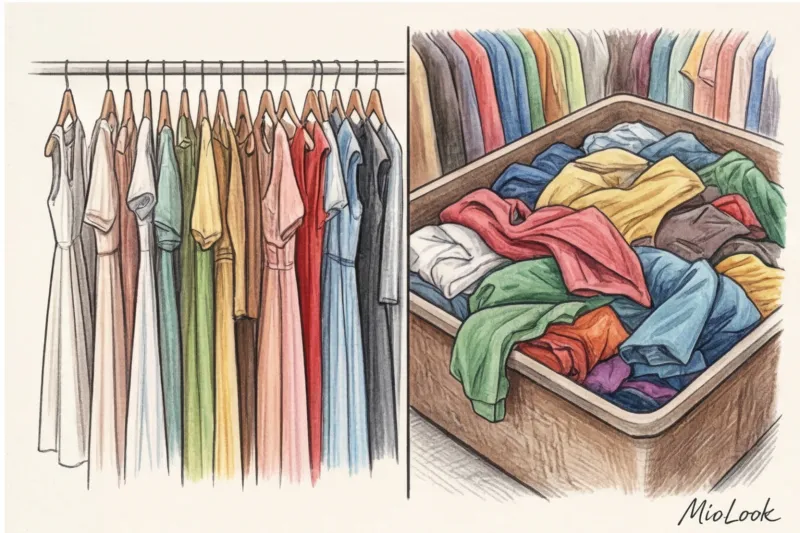
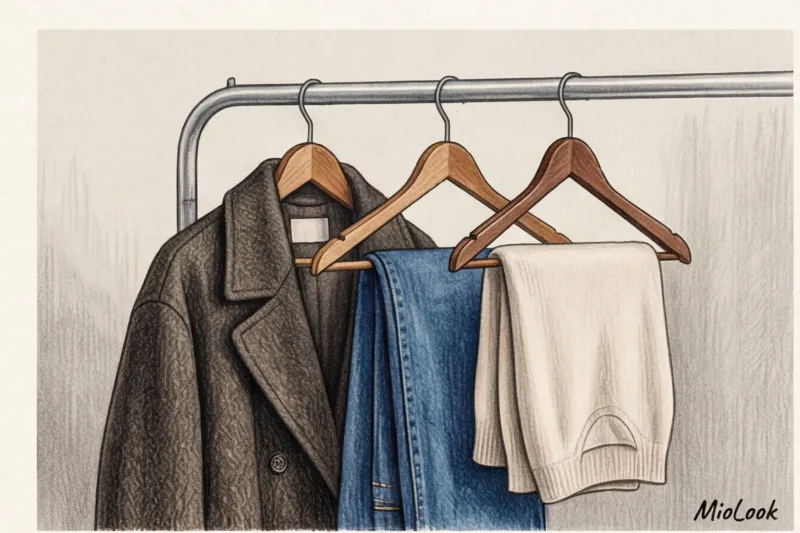
- Men's department: An absolute goldmine. Here we're looking for the perfect oversized straight-cut jackets, heavy cotton shirts (that hold their shape instead of hanging like rags), and men's cashmere sweaters. If you're collecting business capsule wardrobe , the men's second-hand department will cover half of your needs.
- Denim Department: We're looking for jeans without a single percent of elastane. Only genuine, 100% cotton, which will beautifully contour your figure and won't stretch out at the knees after two hours of wear.
The biggest mistake beginners make: why you shouldn't buy used mass-market goods
Perhaps the most counterintuitive piece of advice I can give is this: finding a modern item from Zara, H&M, or Mango with the paper tag still attached at a thrift store isn't luck. It's a trap.
The life cycle of modern fast fashion is set at 10-15 washes. The concept of planned obsolescence works flawlessly: fabrics quickly pill, seams become distorted, and colors fade. If a modern mass-market item ends up in a second-hand store, it's likely 90% worn out.
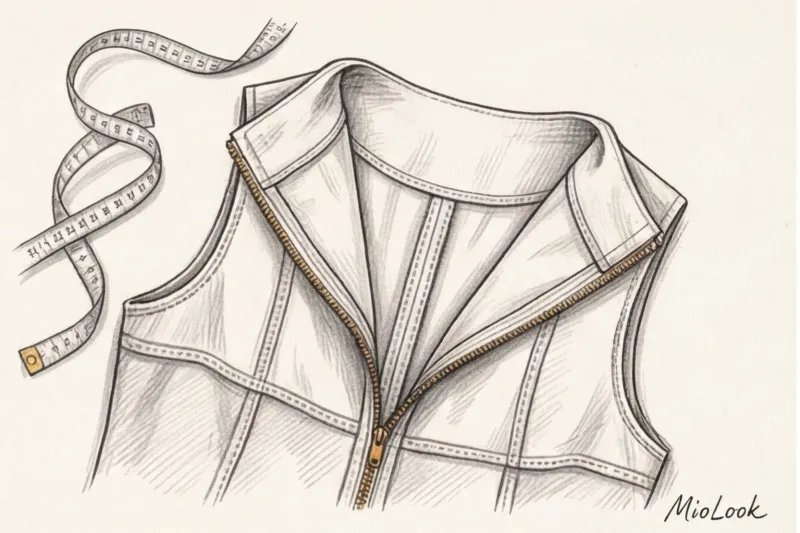
In contrast, items produced before the 2000s have a fabric density that's on average 30-40% higher than today's mass-market offerings. A nameless wool jacket from 1985, which has already survived two decades of wear, will easily survive another three generations. Buy the quality of a bygone era, not the discarded trends of yesterday.
Stylist checklist: how to check an item before buying
Let's say the tactile scan worked, and you're holding a luxurious tweed blazer. What next? Turn it inside out. The inside out can't rotate.
"The quality of a garment is determined not by the logo on the chest, but by the finish of the inner seams that no one will ever see," goes an old tailor's rule that I follow without question.
- Fittings: Metal zippers (especially those with the YKK logo) are a great sign. Horn, mother-of-pearl, or fabric-covered buttons indicate a high-quality product.
- Seams and lining: Look for a "French seam" (where the edges of the fabric are hidden inside the seam). Vintage garments often had a 2-3 centimeter excess in the seams to allow for adjustment. Today, mass-market garments skimp on every millimeter.
- Defect assessment: Distinguish between fixable and fatal defects. A missing button, a loose hem, or sleeves that are too long—these are fixable (set aside a budget for a tailor). But elongated elbows on knitwear, pilling on acrylic, yellow sweat stains under the arms, or a persistent musty smell are fatally We leave the item in the store.
Your ideal image begins Here
Join thousands of users who look flawless every day with MioLook. Plan your capsule makeup easily.
Get access — €0.99 onceVintage Integration: How to Style Without Looking Dated
Buying a great vintage piece is only 20% of the success. The other 80% is how you incorporate it into a modern context. If you wear a vintage blouse with a pussy bow, a vintage midi skirt, and retro shoes, you'll look like you're performing in a '70s theater production. We don't need that.
The golden rule of a stylist: Use the principle of balance and contextual shifts. An outfit should include only one, maximum two, vintage pieces.
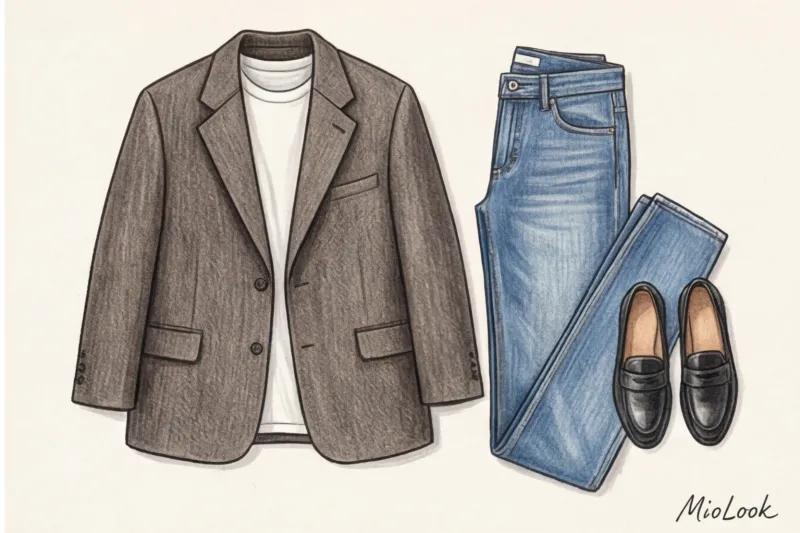
If you're wearing that vintage silk blouse with a pussy bow, pair it not with classic trousers, but with chunky wide-leg jeans and modern chunky loafers. If you've chosen an oversized men's jacket with broad shoulders, layer it over a feminine, flowing slip dress. This contrast of textures and eras adds depth to the style.
And never neglect a tailor! A perfect fit is more important than a brand. A $10 item bought at a thrift store and tailored to your figure (shortened sleeves, re-sewn buttons) for $20 at a tailor will look fantastic. This is how you create a wardrobe that answers the question, How to find your unique style.
Hygiene and care: how to neutralize specific odors
One of the main barriers for newcomers is the characteristic sweet, chemical smell in thrift stores. Many people think it's the smell of "age" or someone else's sweat. In fact, it's the result of mandatory sanitization.
By law, all clothing is gassed (usually with formaldehyde or methyl bromide vapor) before export to kill bacteria and dust mites. This means the items are more sterile than those in a typical shopping mall fitting room. But the odor remains lingering. How can it be dealt with?
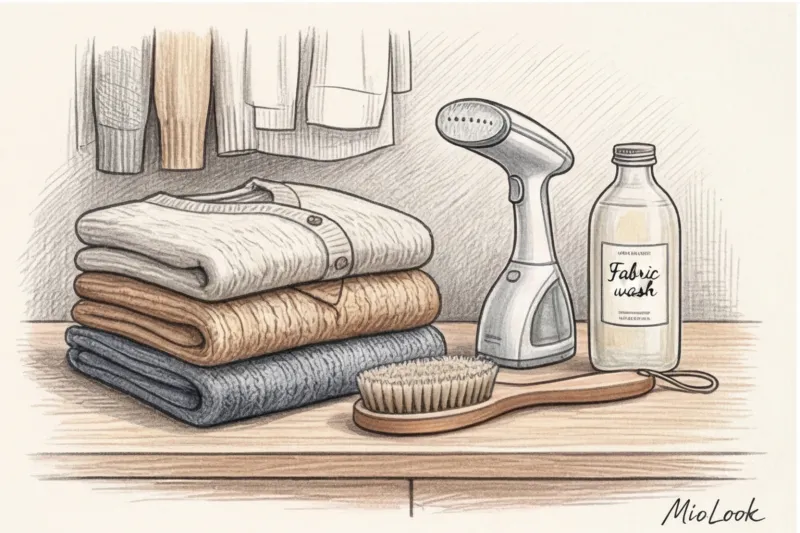
Don't try to mask it with perfume—you'll end up with an unbearable chemical cocktail. Only the laws of chemistry and physics apply:
- Acetic acid: A weak solution of white vinegar (half a cup in the fabric softener compartment during washing) effectively neutralizes the alkaline base of chemicals. The clothes themselves won't smell of vinegar.
- Blast freezing: If the item cannot be washed (for example, a structured jacket), place it in a thick plastic bag and put it in the freezer for two days, then air it out on the balcony.
- Dry cleaning: For dense vintage wool, tweed, and complex silk, don't skimp on professional wet or dry cleaning. This is an investment in the longevity of your find.
Finding gems among hundreds of mediocre items is a skill that can be trained like a muscle. True luxury today isn't about buying the most expensive trend of the season. It's about wearing clothes of exceptional quality, with a history that can't be copied. Start small: next time, visit the men's department, close your eyes, and simply touch the fabrics. I guarantee your fingers will find that treasure on their own.