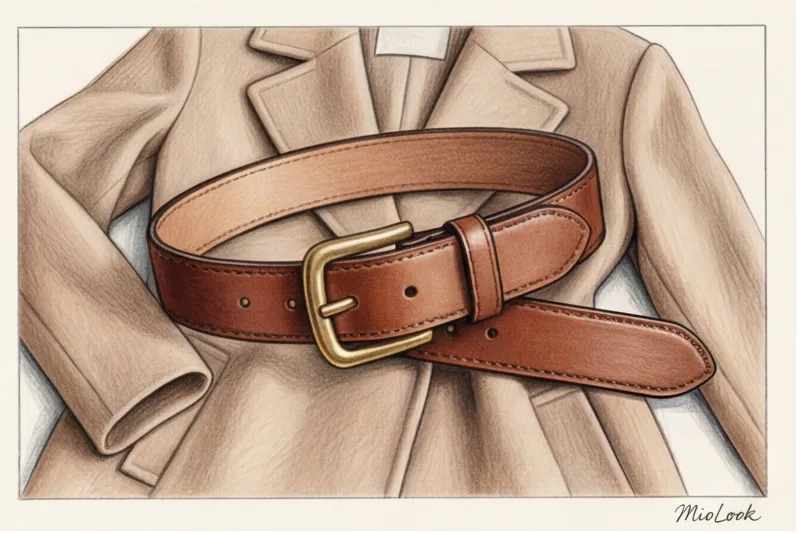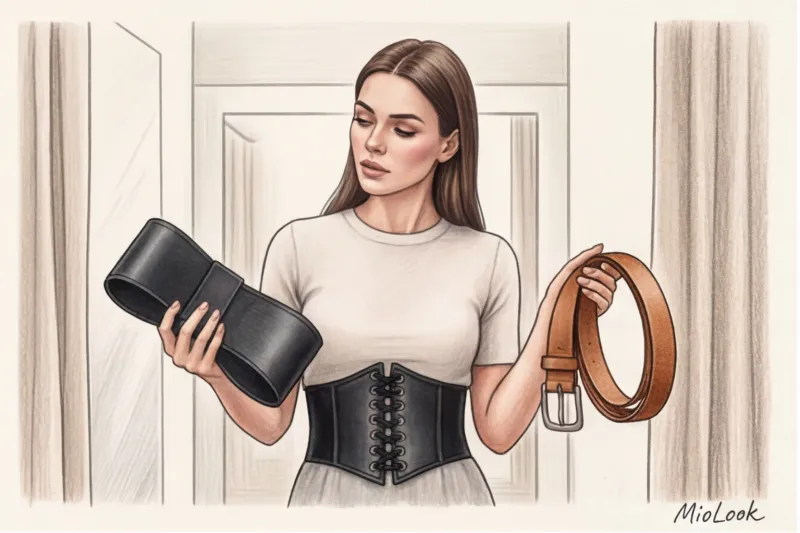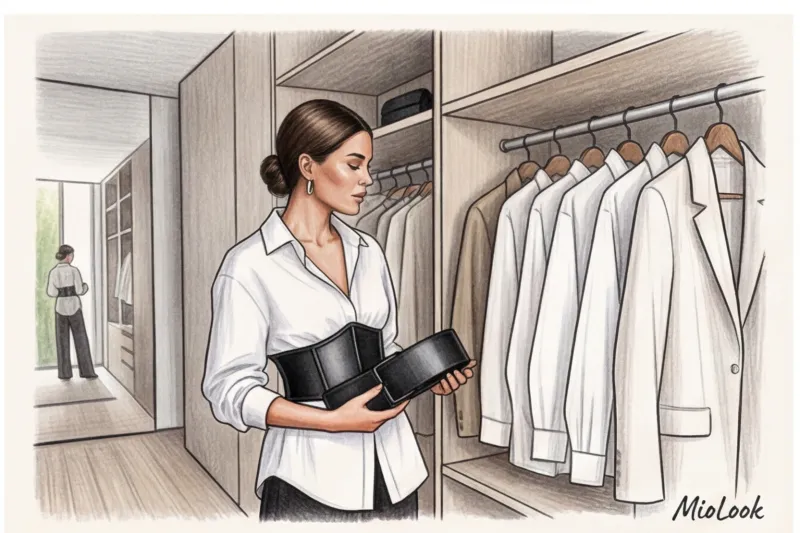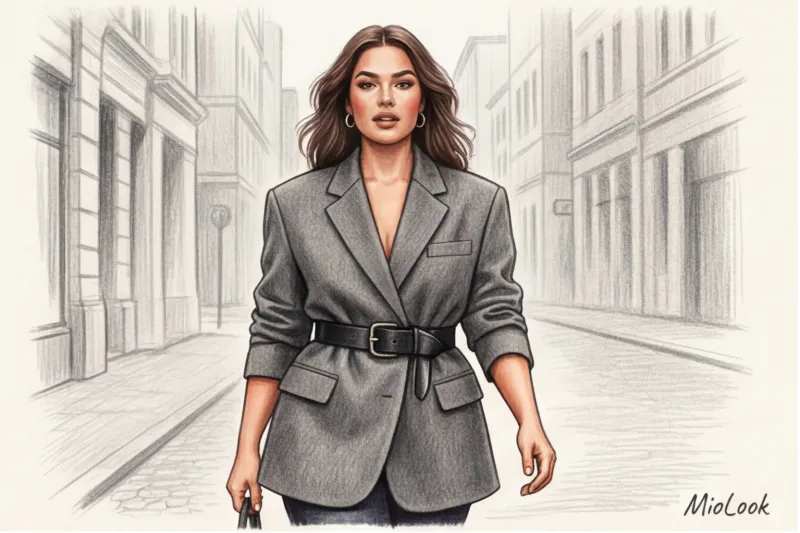
One day, a client came to me for a wardrobe review, absolutely certain she had an apple-shaped figure. She wore soft knit cardigans and thin summer jackets, cinched tightly at the waist with a wide elastic belt. The result? The fabric bunched up in untidy bubbles around her stomach, visually adding two sizes. We removed the knits, dressed her in a thick double-breasted jacket with a defined shoulder line, and added a stiff, 4-centimeter-wide leather belt. And what I call "wardrobe magic" happened—a waist appeared out of nowhere, and her silhouette elongated.
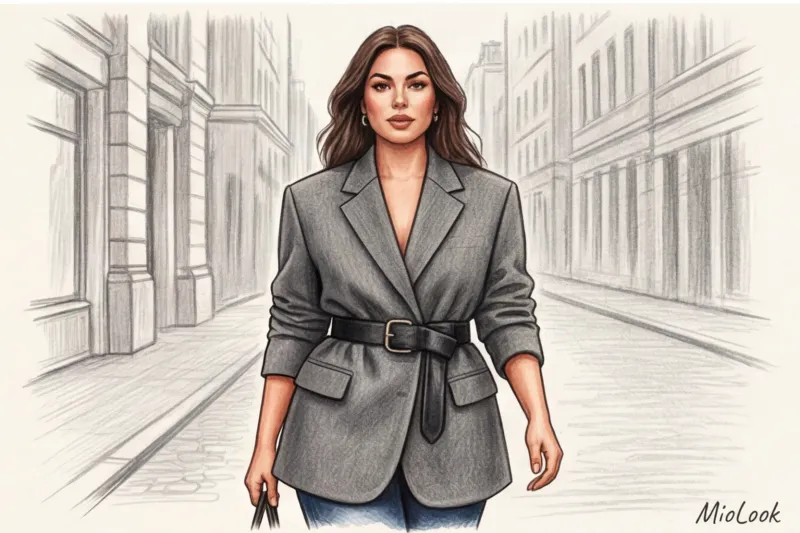
Many people ask me, How to wear a belt with a women's jacket So that it looks expensive and modern. Social media has led us to believe that absolutely anything can be belted. This is a dangerous myth. Today, I'll show you an architectural approach to this styling technique: how fabric density, accessory width, and millimeters of fit work in tandem.
We have already discussed the basic principles of choosing this accessory in more detail in our complete guide to How to choose the right women's belt for your figure Now let's look at a specific and most effective combination: a jacket and a belt.
Silhouette Architecture: Why Wear a Belt Over a Jacket?
When you simply wear a straight men's jacket, you create a rectangular silhouette. This works great for relaxed casual looks. But adding a belt isn't just decoration. It's a strict geometric transformation.
Over 14 years of working as a stylist, I've noticed one pattern: a properly defined horizontal waistline gives the visual effect of "minus 5 kg." The belt acts as a fulcrum. It takes the original width of the jacket's shoulders, narrows the silhouette toward the center, and widens it again toward the hips. You can artificially create an hourglass figure in 10 seconds.
The psychology of this look is also changing. An unbuttoned oversize jacket conveys a relaxed attitude. A belted jacket conveys composure, dynamism, and a hint of aggression, albeit in a positive sense. According to Vogue's extensive tailoring trends report (2024), it is the accentuated waist over structured fabrics that has become the main symbol of modern power dressing.
Your perfect look starts here
Tired of racking your brain over hair combinations? Join thousands of users who look flawless every day with an AI stylist.
Get access — €0.99 onceThe biggest mistake or "lampshade effect": which jackets shouldn't be belted
Contrary to the popular TikTok videos where girls tie everything up with belts, I'll say something counterintuitive: You cannot belt thin summer jackets made of viscose, silk or linen without lining.
The rules of clothing construction are merciless. A belt creates a lot of tension. If the fabric isn't thick (200 g/m² or higher) and doesn't have a frame like interlining on the front, it will inevitably bunch up into unsightly folds. You'll get that "lampshade" or "barrel" effect, visually adding volume where you were trying to hide it.
The second problem is the lack of shoulder pads. Without a firm shoulder line, the belt's tension will simply pull the shoulder seams down, creating a sloping, hunched figure.
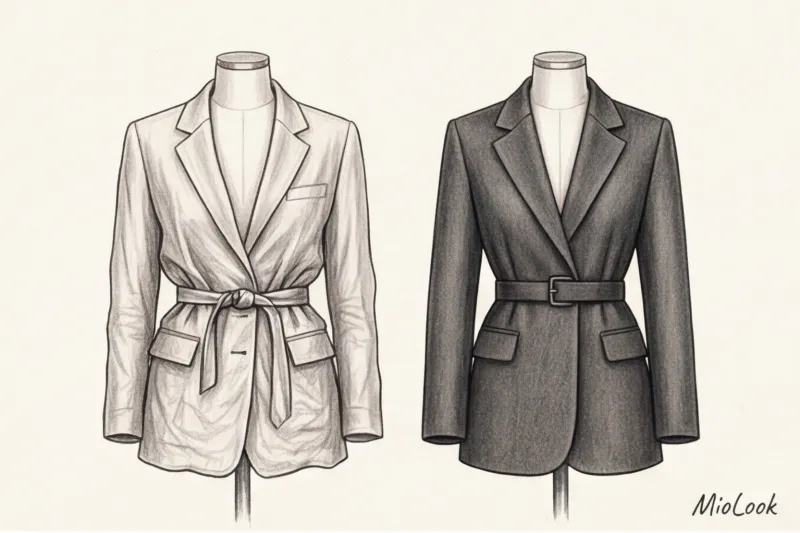
An ideal candidate for a belt
For this technique to work, your jacket must have three characteristics. I discussed the styles in more detail in the article " How to choose a jacket for your body type: stylist tips ", but in short:
- Long cut: The jacket should end below the widest part of the hip. Shorter styles, when pulled in, will create a squared-off torso.
- Presence of lining: It is this that helps the top fabric slide and not get clogged in folds.
- Moderate oversize: By pinching the fabric at the waist with your fingers, you should gather no more than 10-12 extra centimeters. If there's more fabric, the belt won't be able to handle it.
How to wear a belt with a women's jacket: choosing the width and texture
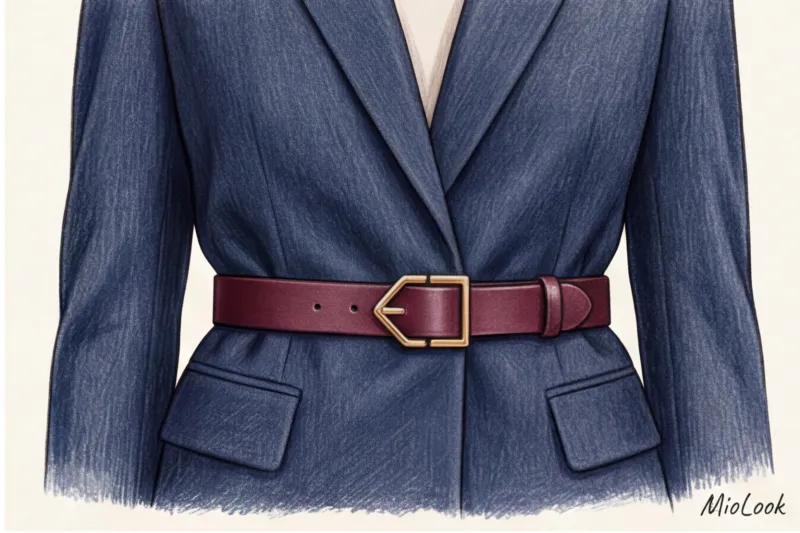
The belt width is dictated by the depth of the darts on the jacket itself, but there are universal standards. I always recommend starting with the basics. Narrow belts (1-2 cm) often look stunted against a voluminous jacket; they simply "get lost" in the folds of the wool.
Universal width is 3-4 centimeters. This is the number one choice of stylists. This width is wide enough to hold thick fabric in place, but not so wide that it becomes a corset that restricts breathing. In European mass-market stores (for example, Massimo Dutti or COS), excellent genuine leather models cost between €40 and €70.
"The main rule of styling when working with suiting fabrics is a clash of textures. Never pair a matte belt with a matte jacket. The look will look flat."
Use the contrast rule:
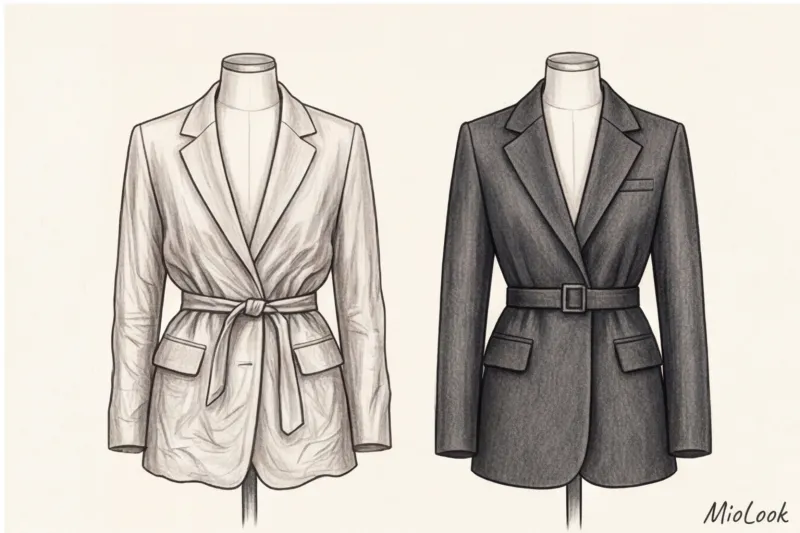
- To the loose textured tweed - absolutely smooth, polished leather.
- For smooth suit wool - suede or leather with crocodile embossing.
- For matte cotton, pair it with a belt with a slight sheen or an accent metal buckle.
The Anatomy of a Fit: Where Exactly Should Your Waistline Be?
Finding the perfect belt position is a matter of working with the golden ratio. Instinctively, we try to tighten the belt at its narrowest point (the natural waist). But this isn't always the right solution.
My favorite styling trick I use on shoots: move the waistline 2-3 centimeters higher Your natural waist (closer to your lower ribs). What does this create? It creates the visual illusion that your legs start higher. We once created a capsule for a client who was 158 cm tall. Just by adjusting the belt, we added about 10 centimeters to her leg length, even when she was wearing flat shoes.
When it does NOT work: Every rule has its limitations. If you have a very full bust (D cup or larger), moving the belt up will dramatically shorten your torso. Your breasts will visually rest directly on the belt. In this case, keep the belt firmly at your natural waist or even lower it by 1 cm, and be sure to choose jackets with a deep V-neck.
Ready to get started?
Try MioLook's free plan—no commitments required. Get a smart wardrobe right on your smartphone.
Get access — €0.99 once5 ready-made formulas for a look with a belted jacket
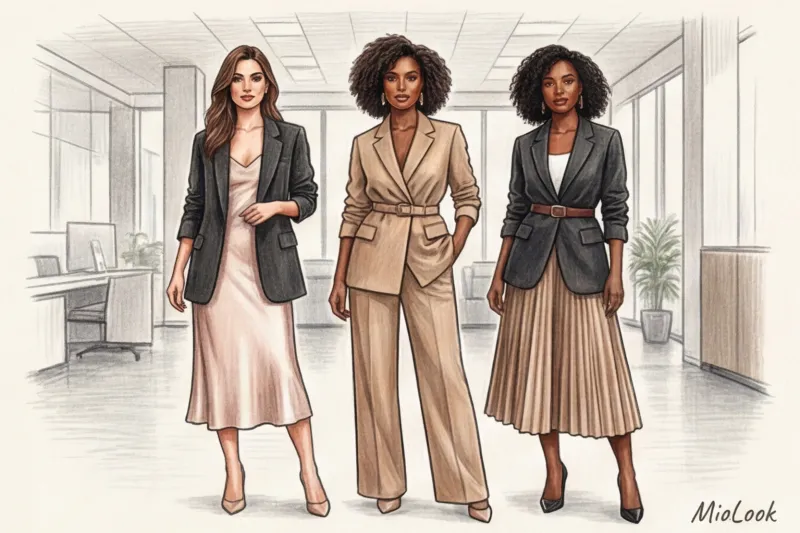
Understanding the theory is great, but let's move on to practice. Here are five scenarios you can try out tomorrow.
- With a slip dress (balance of textures). A rugged men's jacket, a stiff belt, and flowing silk underneath. The belt here acts as a bridge between masculine and feminine.
- With wide palazzo pants. Play with contrasting volumes. A belted top will prevent you from feeling overwhelmed by wide trousers. If you're unsure about choosing the right bottoms, check out our guide " How to choose trousers for your body type: stylist tips ".
- With a pleated midi-length skirt. An ideal option for European autumn or spring. Vertical pleats create a stunning height enhancement when the waist is accentuated. Details on choosing these skirts are available in in a separate material.
- With straight jeans and Cossack boots. Urban chic. A belt with a vintage buckle is best here.
- A jacket as a separate dress. An evening option for long, double-breasted styles. A belt is essential here to prevent the look from looking like you simply forgot to wear a skirt.
For business dress code
If you want to incorporate this technique into business casual, avoid brand logos on buckles—they're considered bad form in a corporate environment. Choose simple, geometric buckles that match the metal of your watch or jewelry. More office ideas can be found in the article " Smart Casual for Women: A Style Guide for the Office ".
Stylist Secrets: Stylish Knots Instead of a Boring Buckle
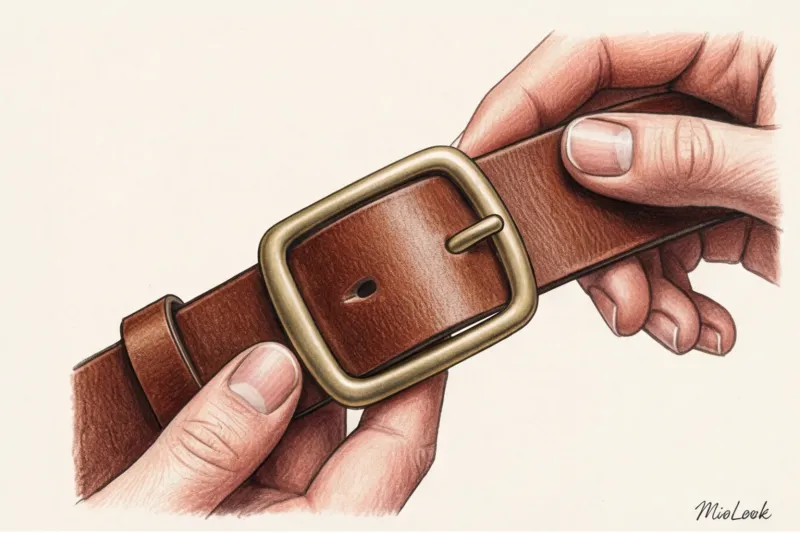
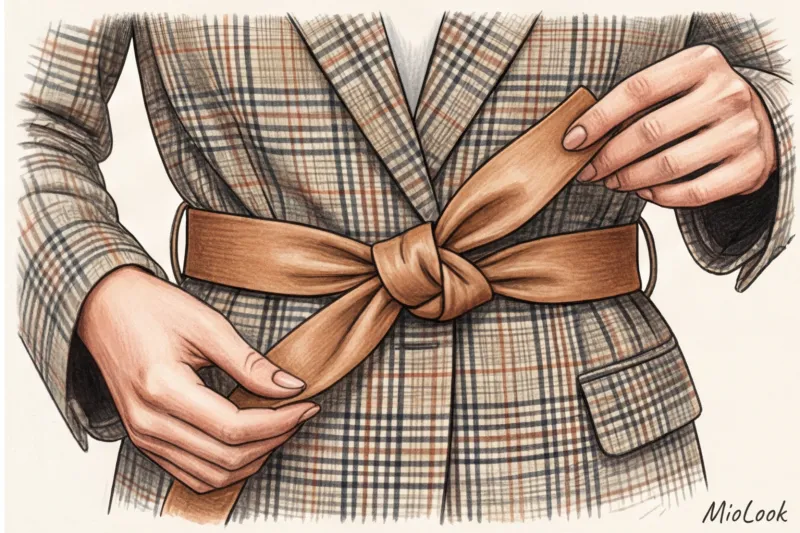
Simply fastening a belt in the right hole is fine, but boring. Over 12 years of practice, I've developed a habit: if a belt is made of soft leather without a backing, I tie it.
The simplest and most effective technique is the loop knot. You thread the belt through the buckle, drape the loose end under the waistband from the bottom up, and then down through the resulting loop. This not only looks casually Italian (sprezzatura style), but also elegantly hides the belt's overly long tail, which would otherwise stick out.
Another micro-trend seen on the 2024 runways is corded belts. These are long leather strips with no buckle at all. Simply wrap them twice around your waist over your jacket and tie them in a simple knot with the ends hanging loose. Perfect for a minimalist aesthetic.
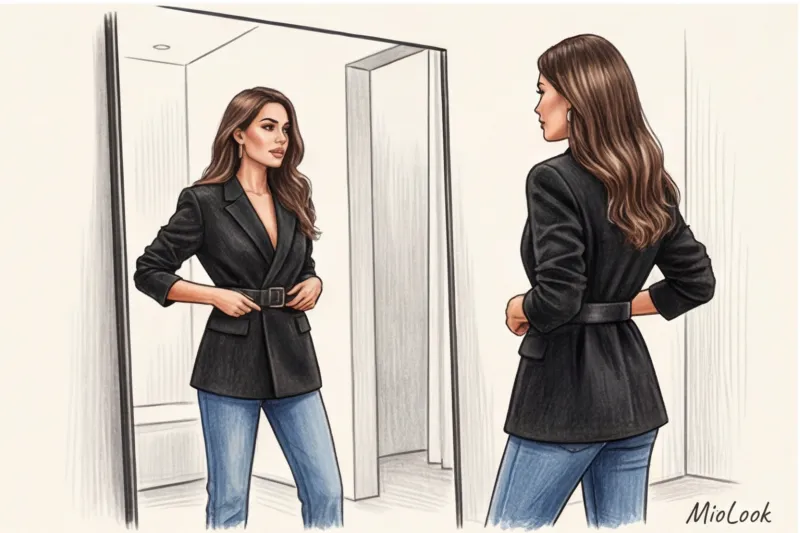
Mirror checklist: checking proportions
Before leaving the house with your new look, take 30 seconds to check out the mirror. This checklist will save you from fashion faux pas:
- Shoulders: Have they started to slide down? If the belt tension is distorting the shoulder line, loosen the belt one notch.
- Stomach: Straighten the folds of the jacket so they flow toward the side seams. The fabric should lie as flat as possible in the front.
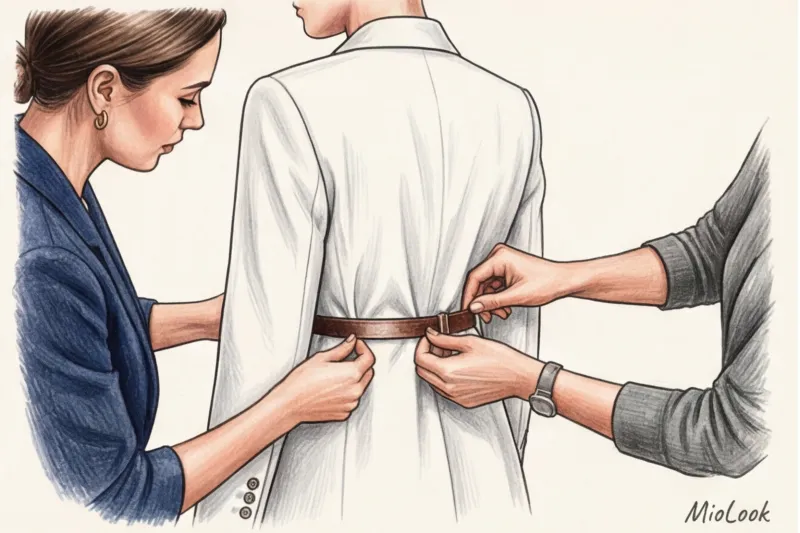
- Back: Turn your back to the mirror. This is the most common mistake! Make sure the fabric at your lower back is evenly distributed and not bunched up in one big bulge in the center.
- Overall balance: If your jacket ends mid-thigh and you're wearing contrasting trousers underneath, a belt will break up your figure into three color blocks. In this case, your shoes should definitely match the trousers to restore the vertical line.
Style isn't a collection of brands you've purchased, but how you manage your shape. Don't rush to buy new pieces to update your seasonal wardrobe. Sometimes, all it takes is simply reaching for your favorite heavy jacket, investing in a quality belt, and spending a few minutes in front of the mirror sculpting your silhouette to perfection.