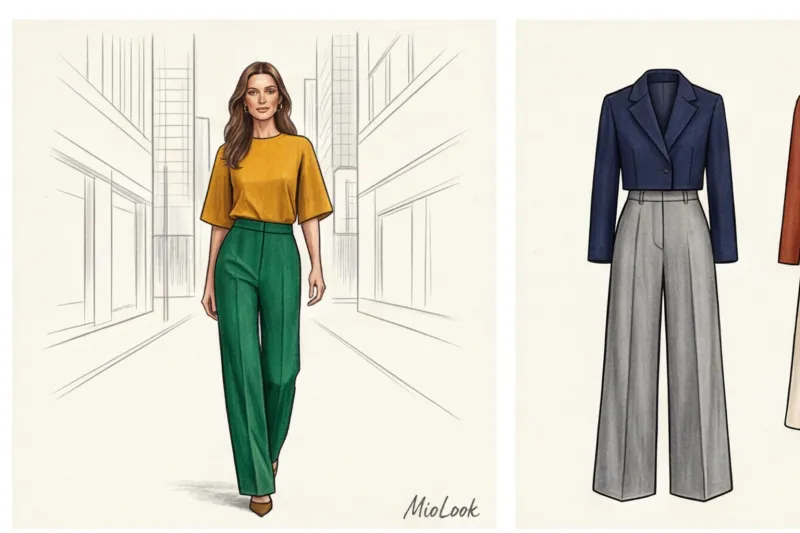
Do you know what search query I see in my blog analytics every week? How to hide your height with clothes "In 14 years of working as a style coach, I've realized one thing: trying to appear shorter is a direct path to slouching and choosing shapeless robes that visually add 5-7 extra pounds.
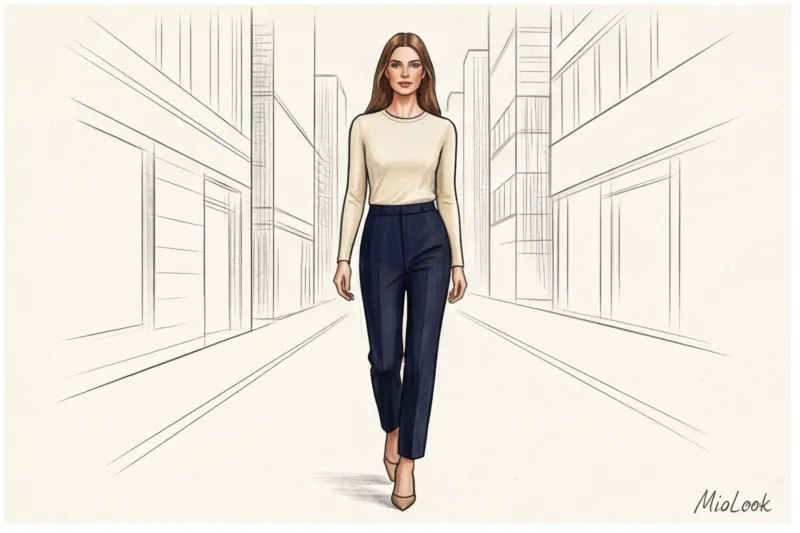
Let's be honest: being tall is a luxury asset. Models on the runway aren't trying to appear shorter. They embrace geometric cuts. Instead of toxic advice like "wear ballet flats and don't draw attention," I offer an engineered approach to style. We'll use the rule of thirds, color blocking, and scaling to create harmonious proportions.
We have already discussed in more detail the psychology of accepting one’s natural abilities and basic mistakes in our The complete guide to perfect clothing for tall girls And today we will deal with the pure mathematics of style.
Psychology and Geometry: Why We Change Vectors
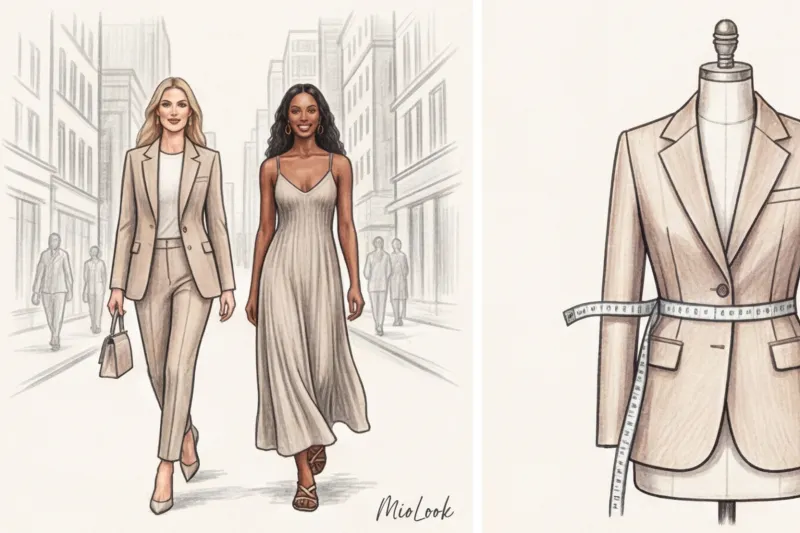
Our eye reads the silhouette in two vectors: vertical (stretching) and horizontal (widening or "cutting"). When a woman over 175 cm tall wears a monochrome, form-fitting suit, she creates a continuous vertical line. The gaze glides from top to bottom without stopping, making the figure appear as an endless string.
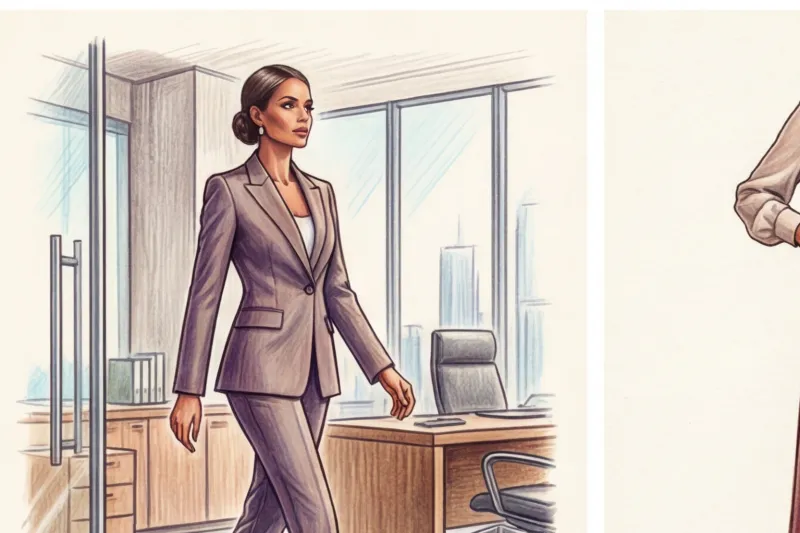
One of my clients, top manager Elena (180 cm), spent years trying to flatter her height with soft, shapeless knitwear. As a result, her silhouette lost its status, turning into a blur. Once we added strong horizontal lines—contrast belts, structured shoulders, and the right lengths—she stopped looking bulky and began to look monumental and expensive.
"We don't hide growth; we create the right architectural framework for it. The eye needs visual anchors to properly appreciate scale."
According to a 2023 study on visual perception by the Fashion Institute of Technology (FIT), the human brain automatically divides any object into segments. If we don't define these segments with clothing, the brain will latch onto the longest line.
The Rule of Thirds: The Golden Ratio for Visual Balance
The biggest mistake tall women make is dividing their figure exactly in half (the 1/2 ratio). For example, a contrasting belt tied exactly at the midsection, or a sweater ending right at the hips. For those taller than 175 cm, this division makes the figure appear "boxy" and visually shortens the figure, but not in a good way.
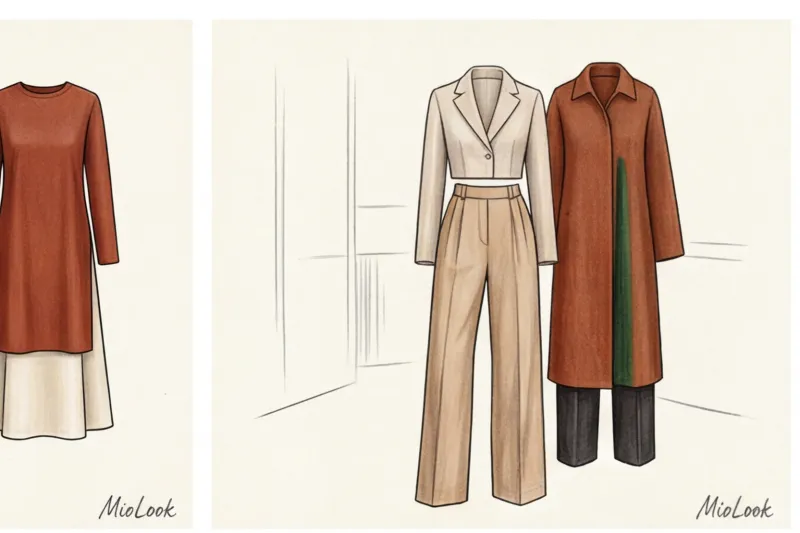
In clothing design, the golden ratio (1:1.618) applies. When applied to wardrobe, this means your silhouette should be divided into unequal parts.
Proportion 1/3 to 2/3 (Short top + long bottom)
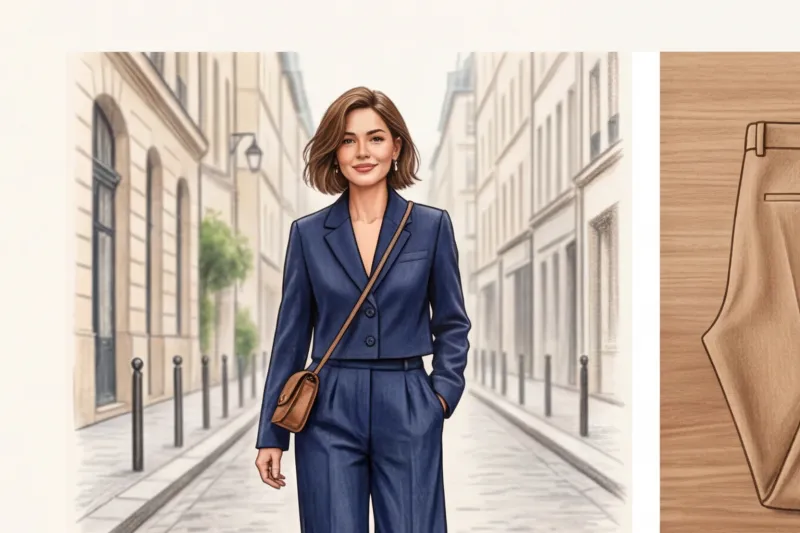
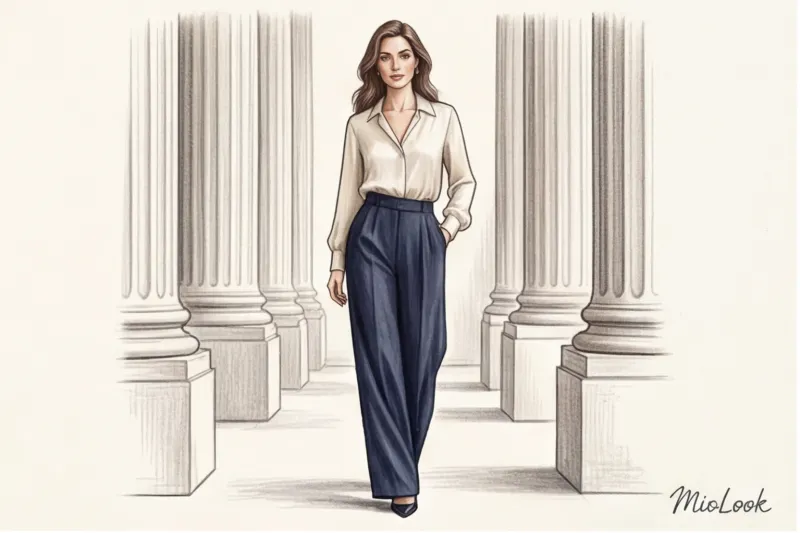
The perfect formula for women with a longer torso. We choose a cropped jacket, a short cardigan, or simply tuck a blouse into high-waisted palazzo pants.
- How does this work: The high waist “eats up” the extra length of the torso, and the wide, floor-length trousers create the right dynamic.
- Specifics: Opt for trousers with pleats—they create extra vertical volume, which perfectly balances out a tall frame.
Proportion 2/3 to 1/3 (Long top + midi)
A long, straight-cut blazer (ending below the widest part of the hip) paired with a flowing midi skirt or culottes.
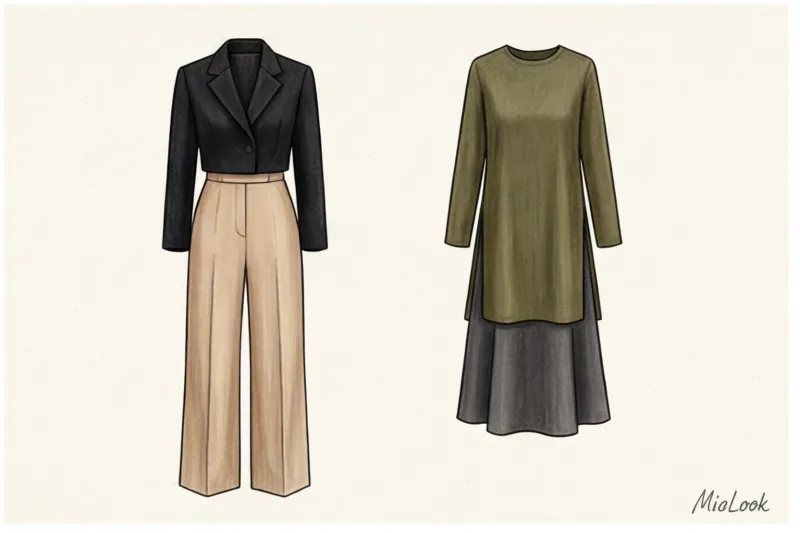
Limitation (when it DOESN'T work): If you're tall and have relatively short legs, this proportion will make them appear even shorter. This technique is ideal for long-legged women who want to slightly "calm" the seemingly endless vertical line.
Access to MioLook for €0.99 — one-time payment
A smart AI stylist will select the perfect look based on your proportions and height.
Get access — €0.99 onceColor Blocking: How to Cut Up the Vertical
Monochrome (total black or total beige) is a tool for petite women who want to elongate their silhouette. We need visual breaks. Color blocking is your best friend.
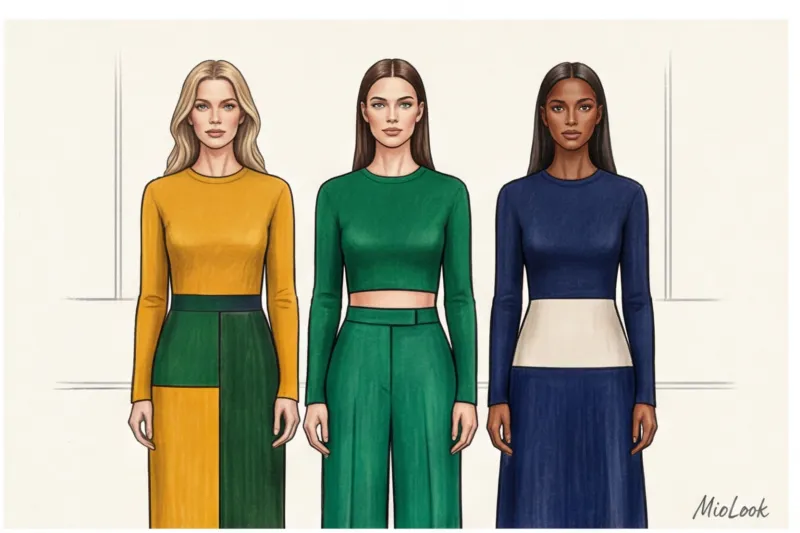
By pairing contrasting colors (for example, an emerald top with navy bottoms, or a cream-colored jumper with chocolate-colored trousers), you create a clear horizontal line. This line draws the eye, breaking up the overall height into easily perceptible blocks.
I often use this technique myself and have long since digitalized it. To avoid trying on half my closet every morning in search of the perfect contrast, I digitized my wardrobe. the "smart wardrobe" feature in MioLook I color-block images on my phone screen in advance. This saves me at least 20 minutes before going out and prevents unsuccessful color experiments.
Cut architecture: which styles can neutralize excessive elongation
The quickest way to look like a gangly teenager is to wear skinny jeans and a thin, form-fitting turtleneck. The thin knit accentuates every curve, while the tight fit accentuates the length of your limbs.
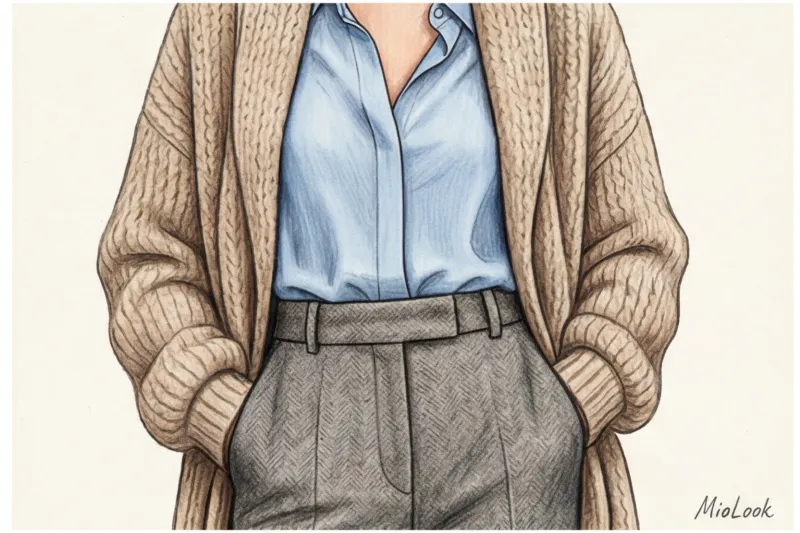
My client Anna, an architect (182 cm tall), adored soft waterfall cardigans and leggings. At work meetings with contractors, she was treated like a student. We completely changed the textures. We switched to heavy cotton (from 180 g/m²), structured tweed, and genuine leather. The stiff fabric holds its shape and creates an architectural frame around the body. You stop being "tall" and become "status."
- Avoid: flimsy viscose, thin acrylic, tight silhouettes.
- Add to your wardrobe: Wide-leg trousers made of thick wool, jackets with defined shoulders, and A-line skirts. Voluminous puff sleeves or shoulder pads perfectly expand the horizontal line, balancing out the height.
Your perfect look starts here
Join thousands of users who look flawless every day with MioLook, planning their style architecture in advance.
Get access — €0.99 onceThe Biggest Mistake: Flat Shoes and Why Ballet Flats Don't Work
Now it's time to debunk the internet's most persistent myth: "Tall girls should wear flat shoes." It's completely counterintuitive, but ballet flats with a completely flat sole (0.5 cm) are your worst enemy.
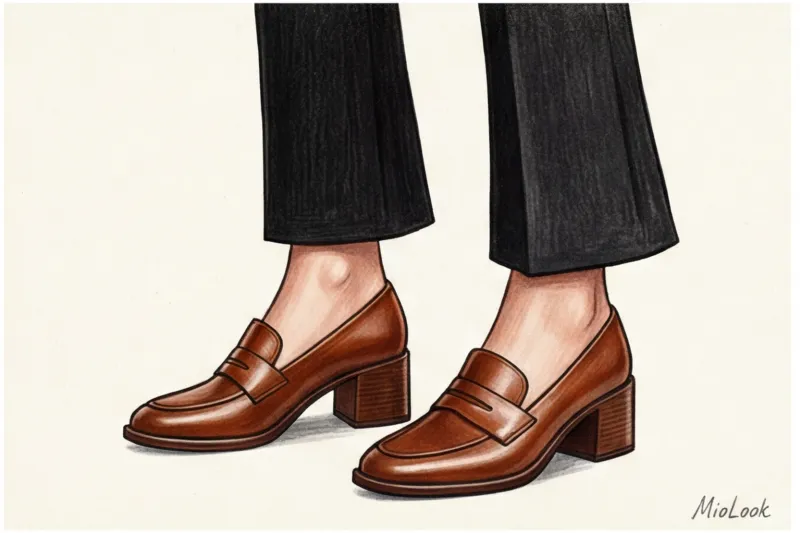
Let's do the math. A tall woman (178+ cm) rarely wears a size 37. It's usually a size 40, 41, or 42. When you wear shoes with thin, flat soles, your foot visually turns into a ski. The lack of instep makes your foot appear longer and more massive.
Moreover, a tall person's weight is anatomically distributed incorrectly on flat shoes, which disrupts the very posture we discussed at the beginning. The ideal compromise is a stable block heel (3-5 cm), loafers with a chunky sole, or elegant kitten heels. A slight instep visually shortens the foot and makes the ankle appear graceful, while a chunky sole is proportionate to the overall frame.
The scale of accessories: the rule of proportionality
Do you know the law of contrast in optics? A small object next to a large one makes the larger object appear even larger. If you're 180 cm tall and pick up a tiny Jacquemus bag or wear a thin strap, you don't become any smaller. You start to look like Gulliver in the land of Lilliput.
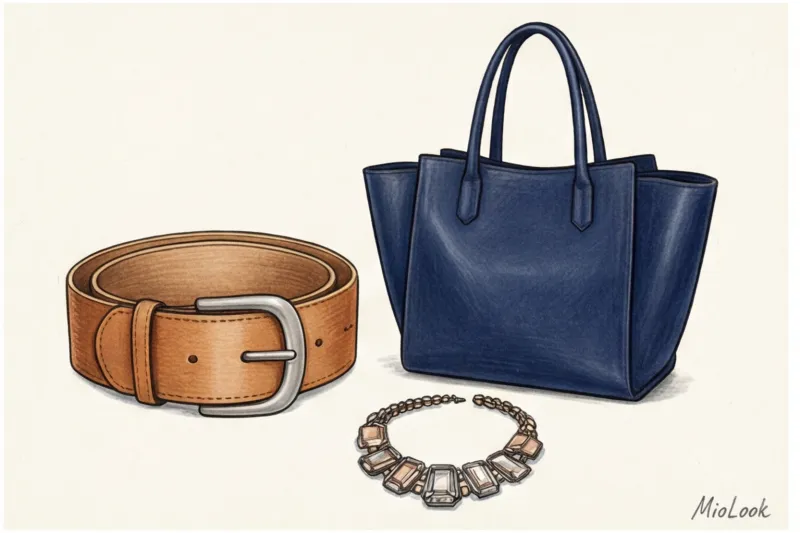
The scale of your accessories should match the scale of your figure. This applies to everything:
- Belts: Choose a width of at least 4 cm with a chunky buckle. Thin belts will be lost against the backdrop.
- Bags: Large structured shoppers, voluminous hobo bags, noticeable clutches.
- Decorations: Chunky chains, large watches. If you like to wear several accessories at once, I recommend checking out our article on How to wear watches with bracelets: stylist tips to create the right visual volume on the wrist.
Checklist: Creating a Harmonious Look for Women 175+
To reinforce this theory, I've put together a quick plan for you. Run through these five steps before leaving the house.
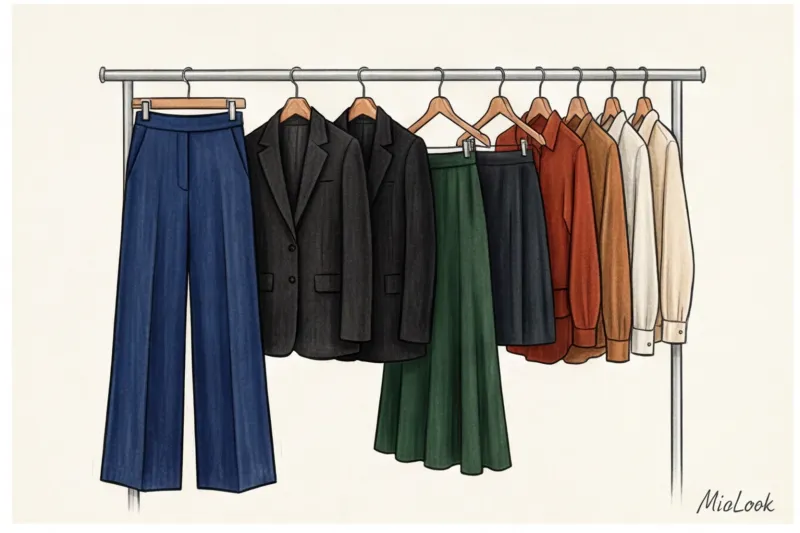
- Checking proportions: Is my silhouette divided into 1/3 and 2/3? Is there a horizontal line exactly down the middle of my torso?
- Contrast point: Is there a color block in the image that visually “cuts” the vertical?
- Fabric texture: Does the clothing hold its shape? Does the thin knitwear cling to my joints?
- Shoes: Do my shoes have at least a minimum lift (3cm or more) to balance the length of my foot?
- Proportionality of parts: Is my bag big enough and does the strap look childish?
Stop googling how to hide. Your height isn't a problem to hide; it's a canvas that demands bold, confident strokes. Implement the rule of thirds and structured cutting for at least a week, and you'll notice a change not only in how you look in the mirror but also in how others perceive you.