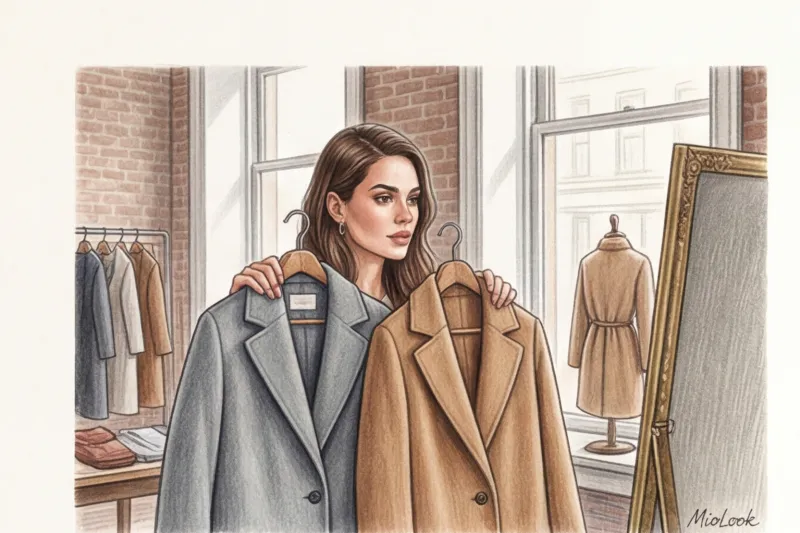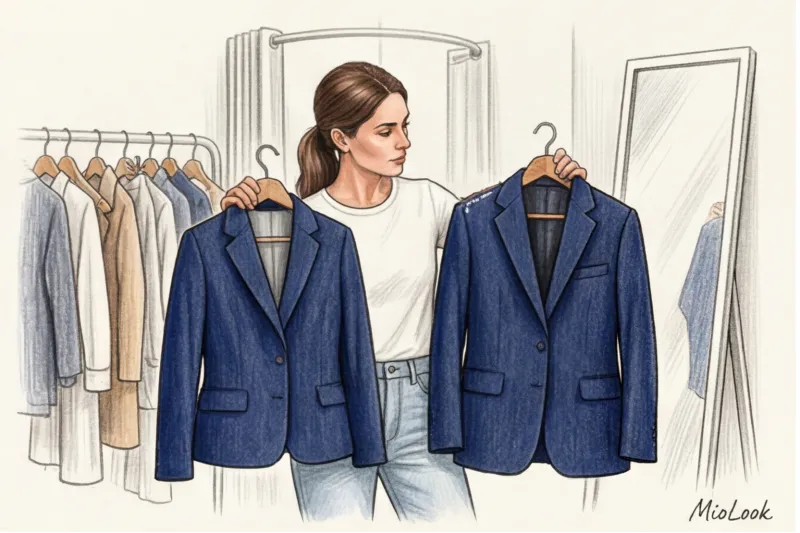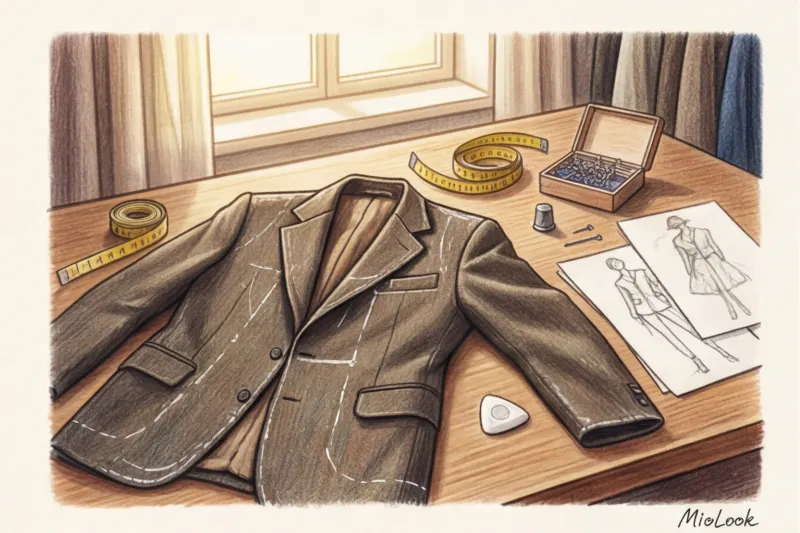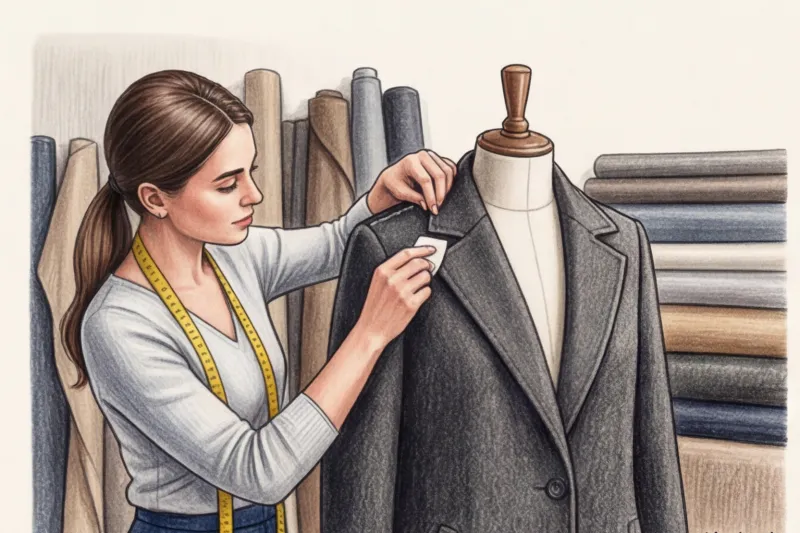
A few years ago, one of my clients came to a wardrobe review in utter despair. She had just picked up a legendary Max Mara camel coat from the tailor, costing almost €2,000. In an attempt to create a more fitted silhouette, the inexperienced tailor, at her insistence, had taken in the armholes and cut off the shoulders. The luxurious Italian cashmere had become a stiff, restrictive sheath, and the signature relaxed drape—the brand's signature—was gone forever. There was no going back: the fabric had already been cut away.
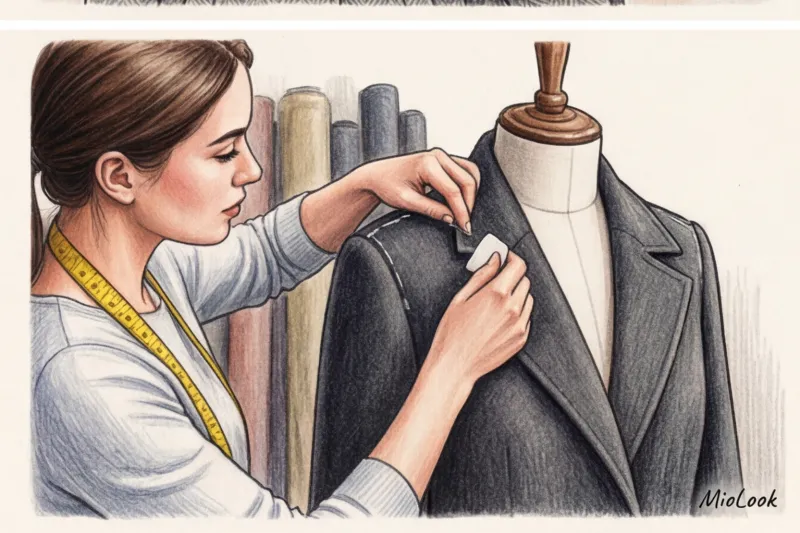
This incident cost her dearly, but it serves as a perfect illustration of the main rule: outerwear is not a spandex T-shirt. Many believe that the question of How to shorten a coat , is solved as easily as fitting a summer dress. But coats and trench coats require a completely different, almost engineering-like approach. We've already covered the basic principles of working with a tailor in more detail in our the complete guide to fitting clothes to your body , however, a demi-season and winter wardrobe is a topic for a separate master class.
The Architecture of Outerwear: Why a Coat Is a Building
When covering Paris and Milan Fashion Week, I always pay attention not so much to the runway as to the editors' street style. Have you ever noticed how stunning vintage men's coats look on them? The secret isn't in magic, but in understanding the architecture of the cut.
Any coat can be compared to a building. It has its own foundation, load-bearing walls, and a cosmetic façade. If you don't understand the difference between a structured cut (think Dior's famous Bar Jacket with its defined waist and accentuated hips) and a relaxed, cocoon-like silhouette (like the Max Mara classic 101801), you risk ruining the garment's proportions.
Load-bearing walls: what absolutely cannot be re-sawn
Any coat has areas where intervention is like demolishing the load-bearing structure. The main one is shoulder seam and armhole.
- Sleeve balance: If a tailor tries to make the shoulder shorter, they'll have to reshape the sleeve cap. This disrupts the garment's original balance.
- Complex collars and lapels: Changing the shape of an English collar often leads to the lapels becoming "bulged" as the tension of the fabric on the chest changes.
- High cost with huge risk: A shoulder girdle recut at a good European tailor will cost you at least €100–€150, and no one can give a 100% guarantee that the garment will fit perfectly.
If your coat is critically big in the shoulders, leave it at the store. This is the "load-bearing wall" that's cheaper to leave alone.
Cosmetic Repairs: What Can Be Easily Adjusted
But the "façade" can and should be addressed. Safe and cost-effective interventions include:
- Shortening the hem and sleeves: The simplest and most effective investment (usually costs around €20–€30). The coat sleeve should reach the base of the thumb, hiding the cuffs of your shirt or jacket.
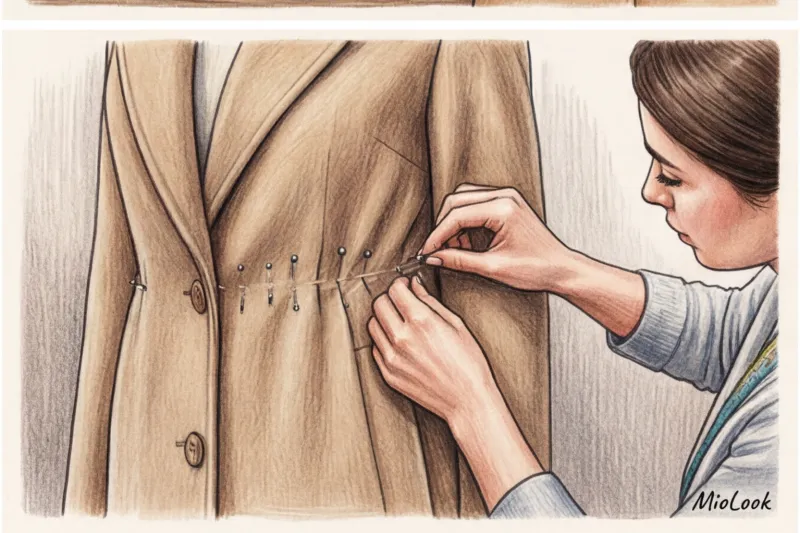
- Working with darts: Deepening the darts on the back helps to emphasize the waist without radically interfering with the side seams (costs approximately 40–60 €).
- Button transfer: My favorite stylistic technique that costs next to nothing.
Your perfect look starts here
Join thousands of users who look flawless every day with MioLook.
Get access — €0.99 onceHow to tailor a coat: step-by-step instructions and fitting rules
The main rule of fitting: never try to tailor a coat evenly on all sides. The human body is asymmetrical, and our goal is to create the illusion of ideal proportions, not to cling to the figure with fabric.
When clients ask me how to shorten a coat's side seams, I always give a specific number: It is safe to remove a maximum of 2–3 cm on each side If you take it in more, the pockets will shift to the back, and the vent (the slit in the back) will begin to spread out into an unsightly "bubble" at the waist.
"A stylist's golden, counterintuitive rule: never buy a coat one size too small as a "motivation" to lose weight. Always buy one size up and have it adjusted. A coat tailored from a larger size will always have a richer, more luxurious drape than a small coat stretched to the limit."
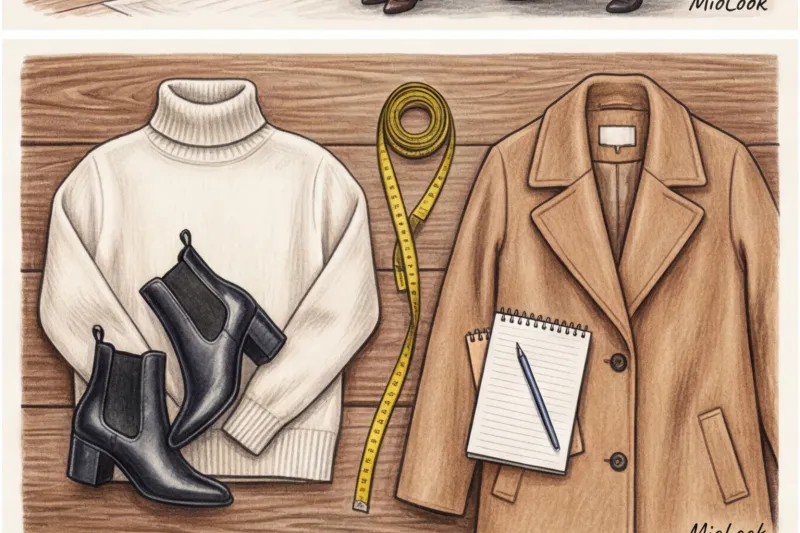
When you come to the atelier for a fitting, don't wear a thin silk blouse. Instead, wear the bulkiest hoodie, cashmere sweater, or heavy jacket in your closet. Leave some room for air to circulate—that's what keeps you warm in the winter.
Trench Coat Transformation: From Mass-Market Basics to Bespoke Effect
A classic beige trench coat is the perfect canvas for customization. Over 12 years as a stylist, I've developed a formula that transforms a basic trench coat from Zara or H&M for €80 into something that looks like it costs €800.
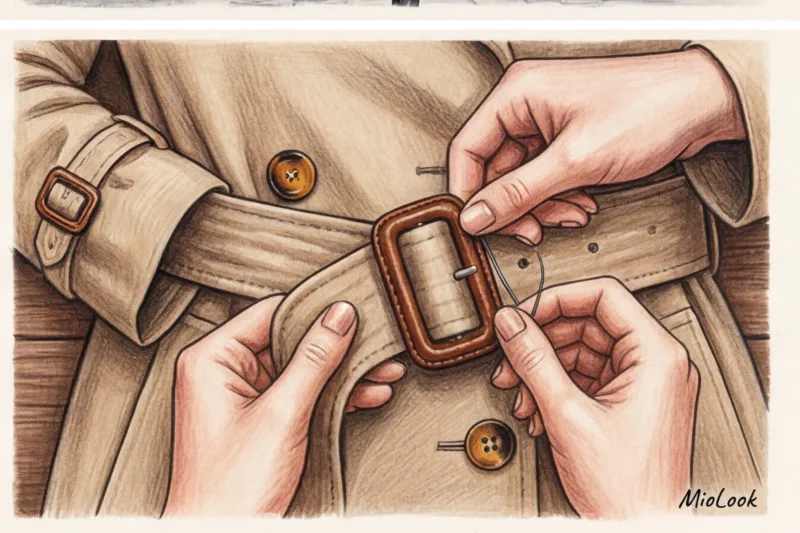
The tricky part about working with gabardine (the material used for trench coats) is that it retains traces of old factory seams. So, instead of re-cutting it, we work with the details:
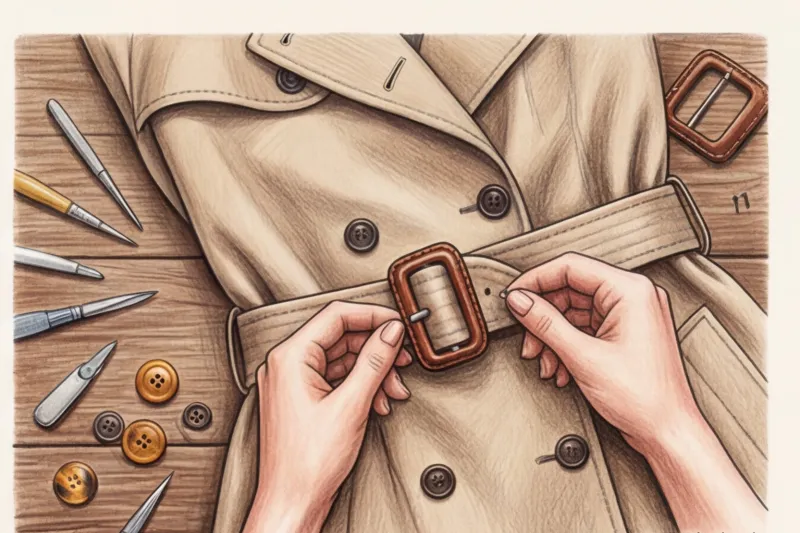
- Replacement of fittings: Cut off the cheap plastic buckles from your belt and cuffs. Replace them with leather-covered ones (they cost pennies at a tailor's). Replace plastic buttons with real horn ones.
- The Two-Centimeter Rule: For double-breasted models, moving a row of buttons by just 1.5–2 cm can radically change the fit of the trench coat without a single cut with scissors.
- London Secret: While at London Fashion Week, I observed the tailors at Savile Row at work. They secure the waistband of a classic trench coat to the back with a couple of hidden stitches. As a result, when the coat is unbuttoned, the waistband doesn't hang loosely, but creates the perfect tension at the back of the waist, creating a flawless silhouette.
Vintage and the Man's Shoulder: Is It Worth Buying a Coat to Have Remade?
Today, mass-market coats made of 80% polyester sell for €150–€200. Meanwhile, in a high-quality vintage boutique, you can find a generously sized men's coat made of 100% wool, cashmere, or alpaca for €50–€80.
This is where the economics of alterations come into play: the formula "cost of the item + cost of the atelier = actual price of the coat." Let's say a vintage coat costs €60, but a thorough alteration (moving the buttons to the "lady's" side, tapering the sleeves from the elbow to the wrist) will cost you another €90. So, for €150, you get luxury fabric and a bespoke fit that you can't find in a department store.
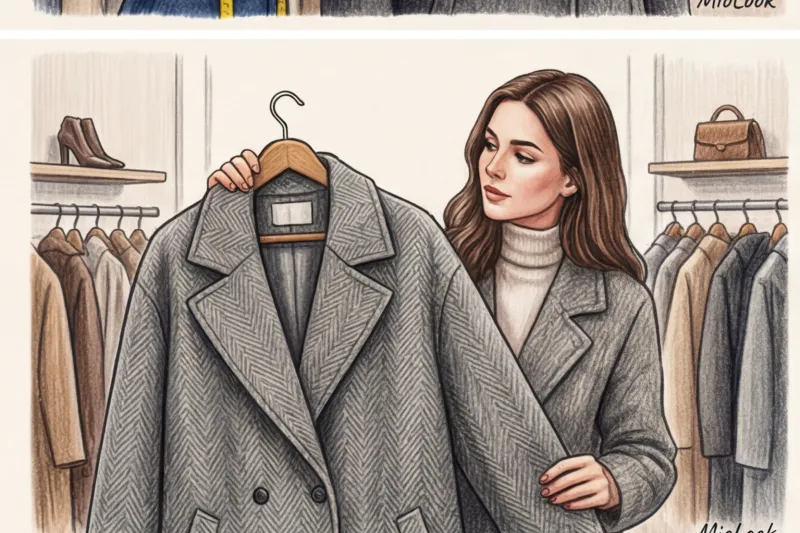
The key to adapting a men's coat is to maintain its exaggerated shoulder line (remember, don't touch the load-bearing walls!), but narrow the sleeves as much as possible. A wide shoulder and a narrow wrist visually make the figure appear more fragile.
When you integrate such a unique, repurposed piece into your capsule wardrobe, I highly recommend digitizing it. Use the "smart wardrobe" feature in MioLook — the app will help you see how your updated coat will pair with your everyday items and generate dozens of unique looks.
Access to MioLook for €0.99 — one-time payment
A smart AI stylist will choose the perfect look for you.
Get access — €0.99 onceChecklist: How to Prepare for a Visit to the Tailor
A visit to a tailor's shop isn't like a trip to a store's fitting room. If you make a mistake at this stage, you'll be disappointed with the result. Here's my tried-and-true checklist:
- Shoes matter: If you're shortening a maxi or midi coat, always choose the shoes (especially the heel height) you plan to wear it with. A floor-length coat without a heel and one with an 8 cm heel are two different pieces.
- Inner layers: Mistake number one is trying on a winter coat over a thin T-shirt. Bring a chunky, oversized sweater.
- References instead of words: The phrase "make it a little narrower" means something different to each tailor. Show a photo of your desired fit (for example, from Pinterest or street style).
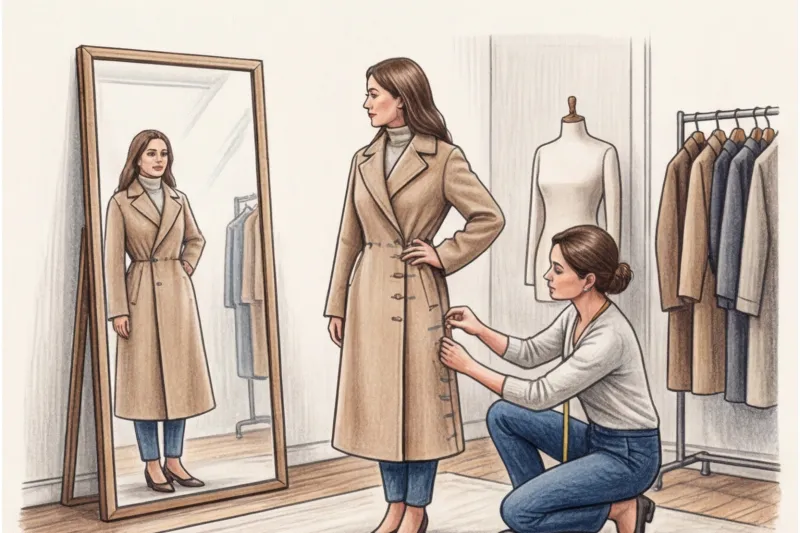
- Move: During the fitting, once everything is pinned, hug your shoulders, raise your arms like a handrail on the subway, and sit on a chair. If the coat is bursting at the seams, loosen the pins.
Custom tailoring as the foundation of a prestigious wardrobe
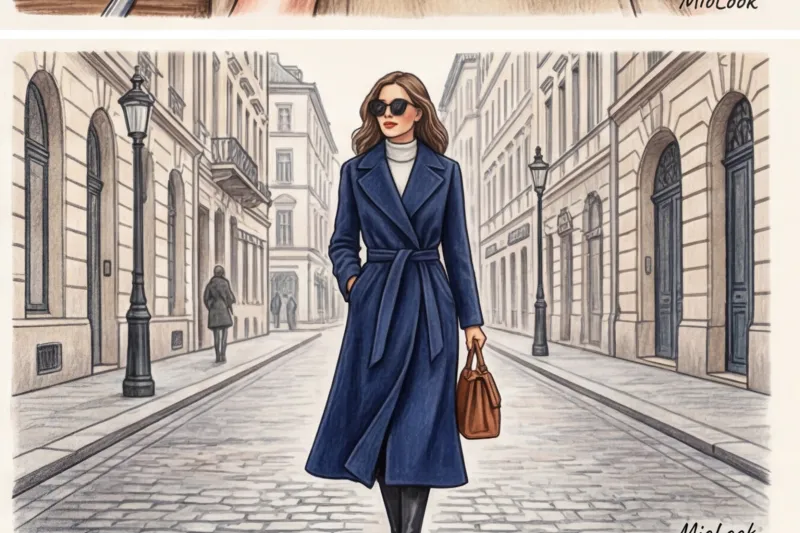
Italians call it Sprezzatura — the art of looking flawless, but as if you didn't try at all. A perfectly tailored coat instantly elevates the style of your entire outfit. You could be wearing simple jeans and a basic turtleneck, but if you throw on a perfectly tailored coat over it, the look is a million-dollar success.
Having clothes altered isn't a sign of frugality; it's a sign of a conscious approach to your style. The tag on the collar doesn't matter if the garment fits poorly. Find your tailor, respect the garment's structure, don't be afraid to buy vintage pieces a size too big, and remember: clothes should fit you, not you, them.
", "tags": [ "clothing fitting", "outerwear", "style", "customization", "trench", "coat", "stylist tips", "essential wardrobe" ] }