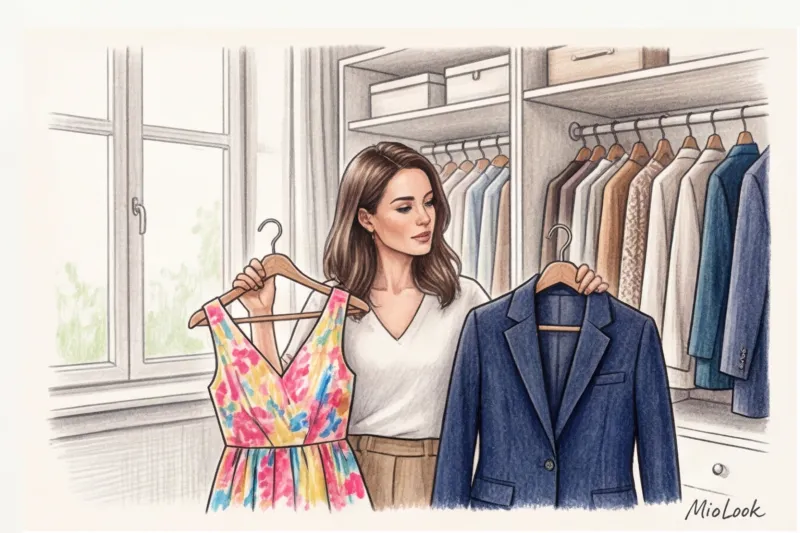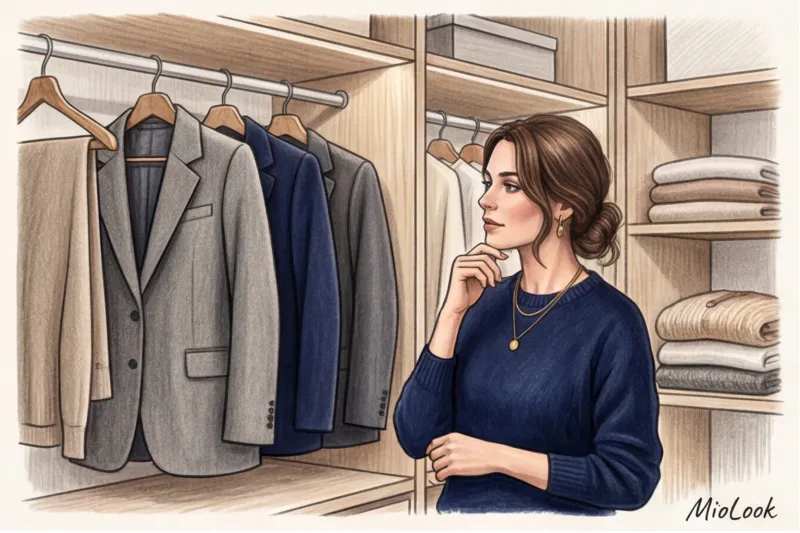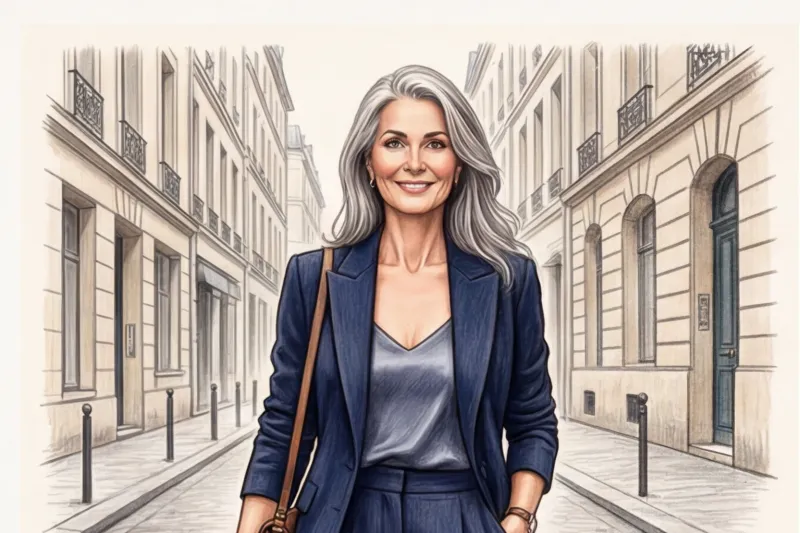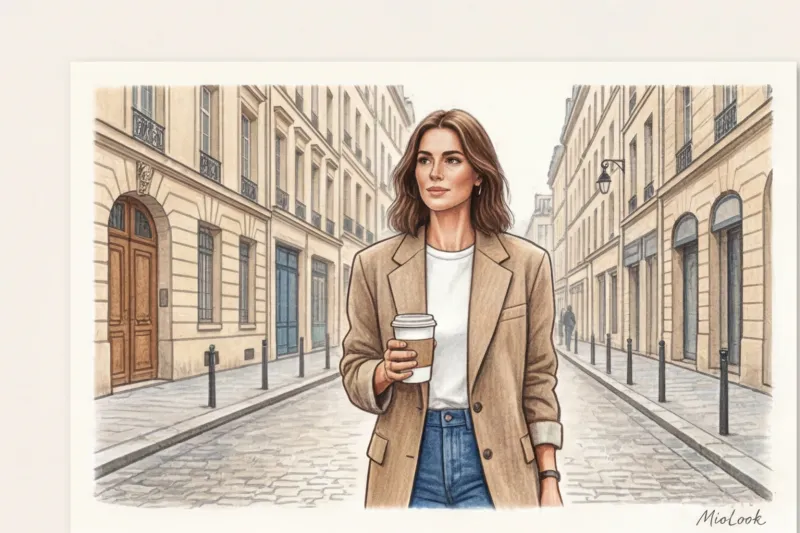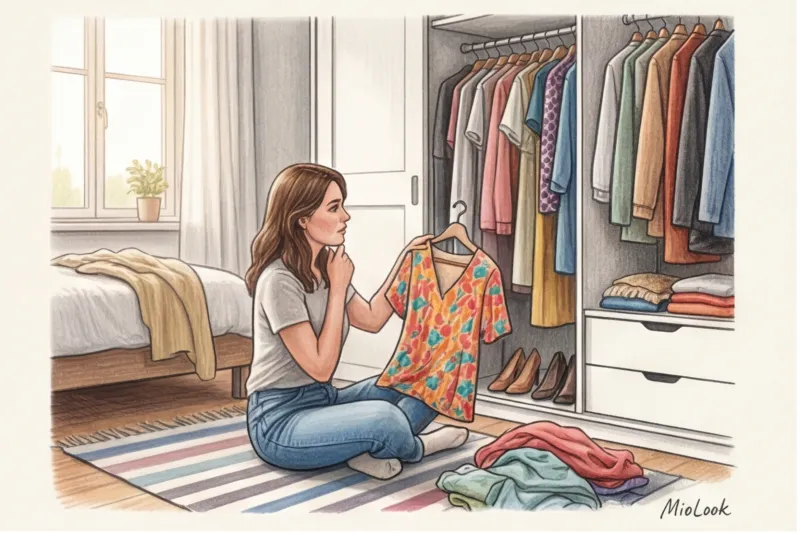
Have you ever wondered why a closet filled to the brim suddenly starts to evoke not joy, but a dull, lingering anxiety? When I first started working as a personal stylist, I thought the problem lay in a simple inability to combine colors. But after 12 years of practice, I realized: How style changes with age , isn't just a change of trend or a switch from sneakers to loafers. It's a painful but necessary "software upgrade" to your personality.
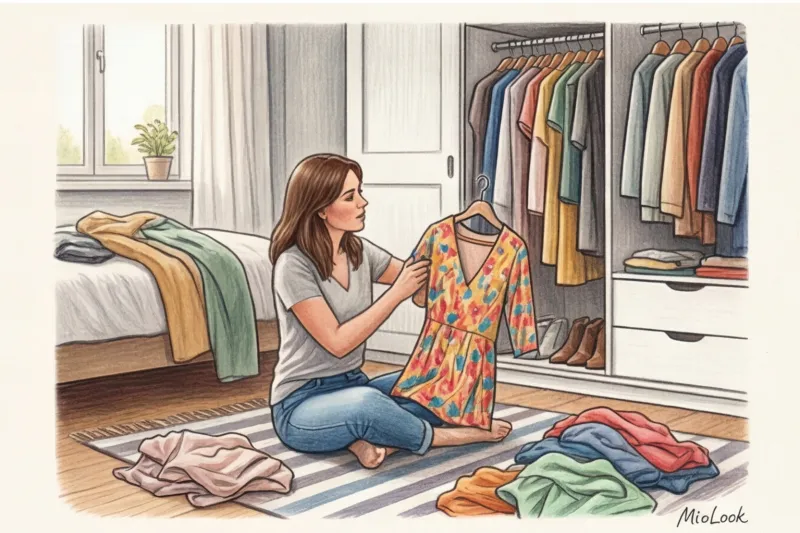
If you open your closet door and feel like your clothes belong to someone else, congratulations – you're having a style crisis. And that's great news. We covered the neurobiology of this process in more detail in our complete guide. The Psychology of Style: How Clothing Changes Mood and Brain , but today we're focusing on specific age milestones: 30 and 40. Why do old formulas stop working, and how can you build a wardrobe that will restore your confidence?
Wardrobe Psychology: Why Do Style Crises Occur in the 30s and 40s?
I had an incredibly revealing case in my practice. A 35-year-old client had just been promoted to head of the IT department. She was brilliant, had a great salary, but her closet still consisted of oversized hoodies, T-shirts with ironic prints, and jeans from a youth-oriented fashion store. At every planning meeting, she physically shrank in her chair, suffering from severe impostor syndrome. She felt like no one took her seriously.
This is a classic example. identity delays Your personality, income, status, and neural connections have all evolved, reaching new levels, while your wardrobe remains stuck in the past decade. During this period, clothing ceases to be simply a piece of fabric covering the body. It becomes a tool of self-presentation and psychological armor.
The symptoms of this crisis are always the same. You start buying the tenth identical black turtleneck because you're afraid to experiment. You refuse to dress up, citing a love of comfort. But most importantly, you look in the mirror and realize, "This isn't me anymore." According to research agency statistics, during these age transitions, actual wardrobe usage drops from 20% to a critical 10%—the remaining items simply hang like dead weight, triggering a subconscious feeling of guilt.
How Style Changes with Age: From Quantity to Quality and Meaning
At 20, we experiment. We buy fast fashion, test out crazy, one-time trends, and can afford to own 60+ cheap items of dubious quality. Dopamine-fueled shopping sprees at Zara or H&M work like a band-aid for a bad mood.
But after 30, this mechanism breaks down. Analysis of user data on capsule wardrobes for 2024 reveals a clear shift: women's budgets shift from quantity to quality. We begin to invest in 30-40 items with premium textures. And this isn't just a matter of status; it's a matter of physiology.
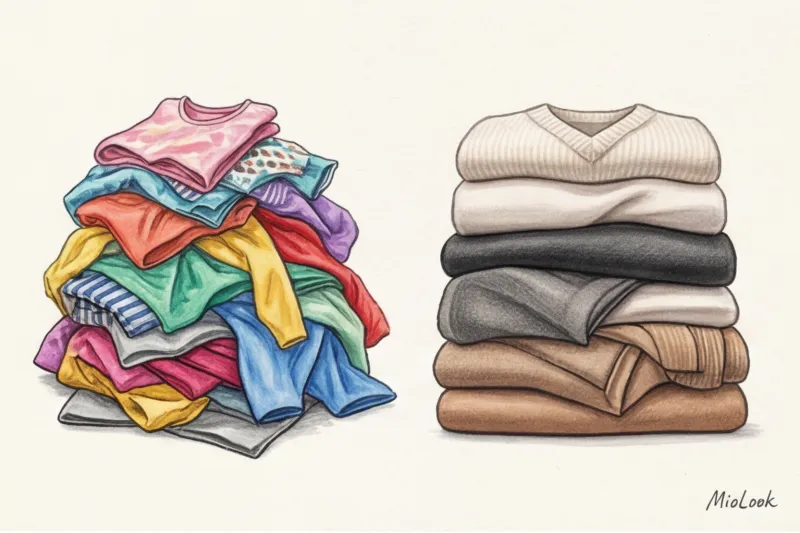
As we age, our nervous system begins to demand impeccable comfort. While as students we could dance all night in shoes with lasts resembling torture devices, at 35, a slightly "biting" acrylic sweater can systematically ruin our mood all day. The focus shifts to tactility: cashmere, thick silk, viscose with elastane, and cotton with a weight of 180 g/m² or more.
It is during this period that stylishly dressed women begin to personal uniform Many people confuse this with boredom. In fact, finding your own look formula (for example, "structured jacket + perfect white T-shirt + wide-leg trousers") is a sign of extreme wardrobe maturity. You're moving from a neurotic desire to impress others to a stable goal—liking yourself.
Access to MioLook for €0.99 — one-time payment
A smart AI stylist will analyze your preferences and help you create the perfect capsule wardrobe for the new decade.
Get access — €0.99 onceFrozen Wardrobe Syndrome: The Main Mistake That Ages Us
Have you ever been in this situation: somewhere in the depths of your closet, there's a dress you wore to a New Year's Eve party in 2014. It's too small, it's hopelessly outdated, but you're not throwing it away. That's what it is. frozen wardrobe — a physical storage of past versions of ourselves in which we were happy.
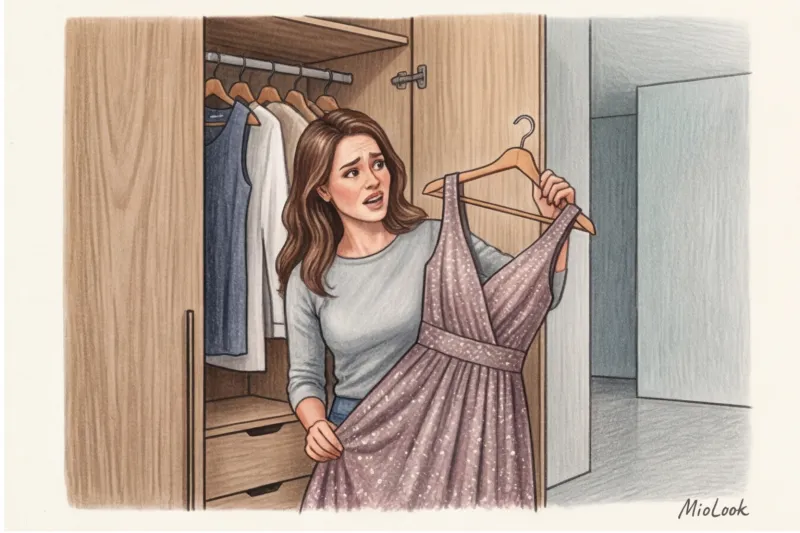
And now for a counterintuitive insight that's rarely covered in glossy magazines. The concept of "dressing for your age" is dead. Forget those "what not to wear after 40" lists. But there's another, far more dangerous extreme. The worst mistake you can make is trying to look younger by embracing the aggressive teenage trends of the Zoomers. A short pleated skirt and a crop top with a childish print won't make you look 20. On the contrary, when contrasted with youthful clothing, your face and body language will betray your true age, creating the effect of a desperate, rejuvenated aunt.
The best and only working anti-aging strategy is absolute relevance of the cut Clothes should show that you live in the present moment, here and now. Slightly oversized cuts, correct proportions, and clean lines are what make the look fresh and dynamic.
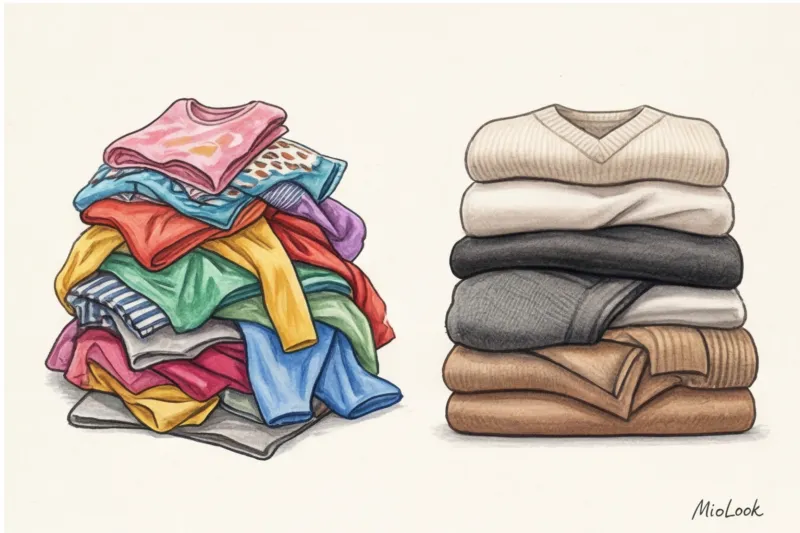
It's worth mentioning separately the "I'll lose 5 kilos and then I'll wear this" type of motivating clothes. Be honest with yourself: they don't motivate. Every morning, they silently reproach you for not being good enough today. Get rid of them. You deserve to look great at your current size.
The "clothed cognition" effect: how clothing helps us experience transformation
Let's turn to science. In 2012, Northwestern University professors Adam Galinsky and Hajo Adam published a groundbreaking study on the effect Enclothed Cognition (Clothed Cognition). They demonstrated that clothing directly influences the wearer's cognitive processes. Subjects wearing white lab coats (associated with the attentiveness of doctors) performed twice as well on concentration tests as those wearing regular clothing.
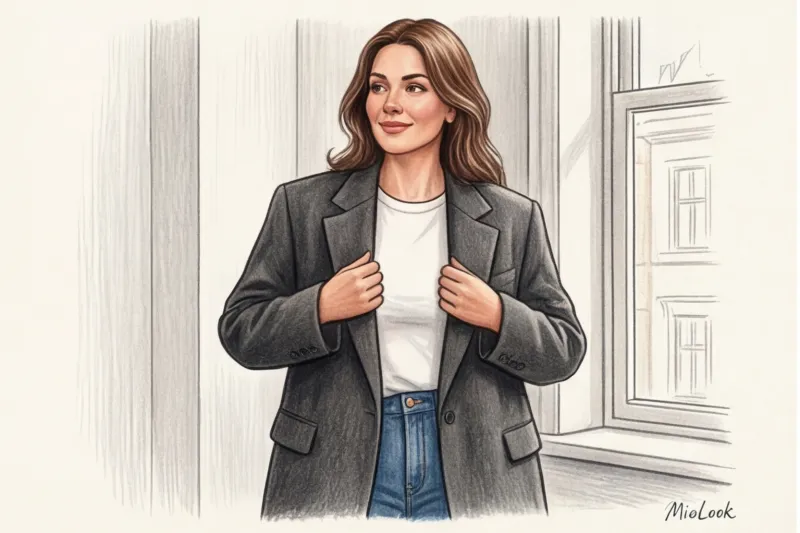
As psychologist Karen Pine notes in her book Mind What You Wear (2014), what we wear can alter our cortisol levels. A well-cut, structured jacket with a defined shoulder line literally forces you to stand up straighter. You take up more space, your voice sounds more confident, and those around you perceive this conveyance of authority.
Use the "Dress for Your Future Self" practice. If you want to get promoted, stop dressing like a rank-and-file employee. Start incorporating wardrobe elements from the role you aspire to. Of course, there's a caveat here: this advice won't work in companies with strict uniforms or in strictly tech startups where the CEO wears flip-flops. But for the classic corporate world, this rule is a must.
Wardrobe Audit After 30: A Checklist for Saying Goodbye to Illusions
When I first digitized my closet, I was shocked: 80% of my items belonged to a "past version of myself." To stop being a prisoner of illusions, you need ruthless filtering. I use the 3-second rule: pick up an item, and if within three seconds you can't remember what you'll wear it with tomorrow, it's a candidate for elimination.
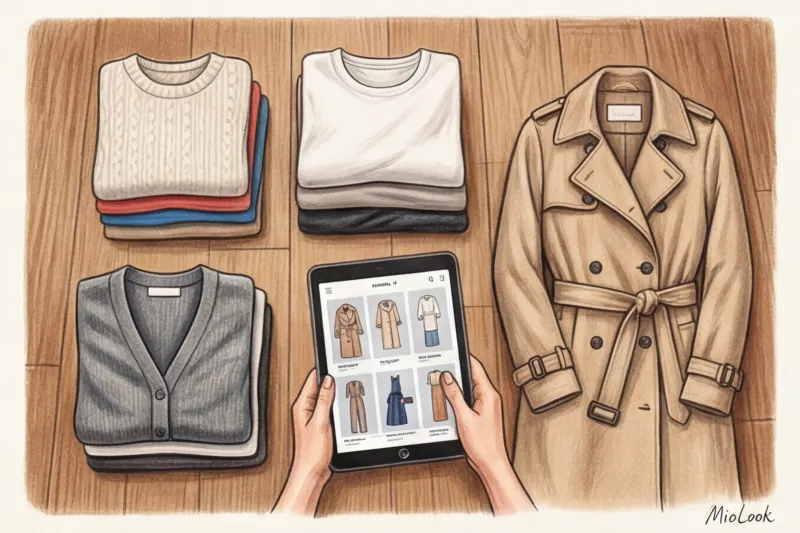
Divide everything into three strict categories:
- "Me today": Perfect-fitting items that you're wearing right now. Unrepaired, stain-free, and in your current size.
- "Memory Archive": A wedding dress or a jacket you wore while traveling around Europe. Put them in vacuum bags and store them on the attic. They serve as a keepsake, not as everyday wear.
- "Disposal": Everything that's outdated, out of shape, or waiting "for me to lose weight." Sell, donate, recycle.
To reduce cognitive load in the future, digitize your updated closet. I recommend my clients upload items to smart cataloging apps. This instantly highlights blind spots (for example, five identical blue jeans but no basic white shirts) and makes it easy to calculate Cost Per Wear (cost of one exit) for future investments.
Your ideal image
it begins Here
Join thousands of users who look flawless every day with MioLook. Digitize your wardrobe in just a few clicks.
Get access — €0.99 onceA New Decade's Capsule: What to Look Forward to After 40
So, we've cleared the space. What to fill it with? In the 40+ aesthetic, cut architecture always trumps logos. A garment without identifying marks, but cut to the correct pattern from a dense fabric, will look a hundred times more expensive than a T-shirt covered in the monograms of famous brands.
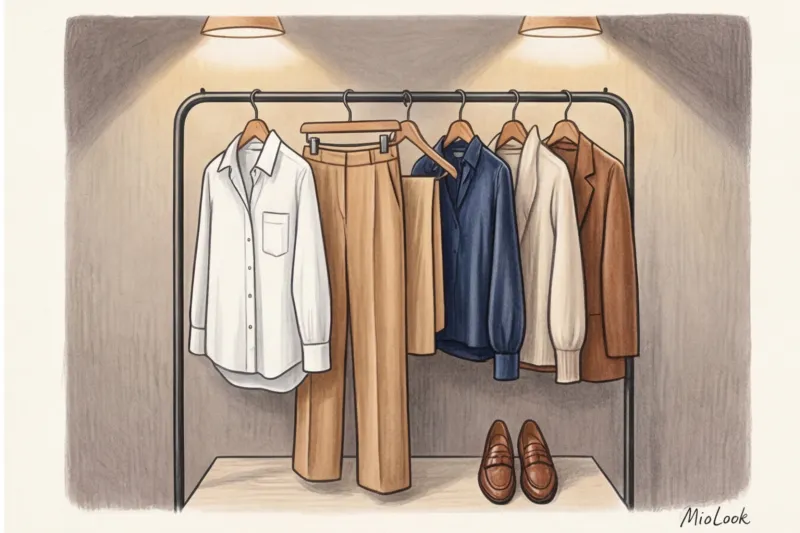
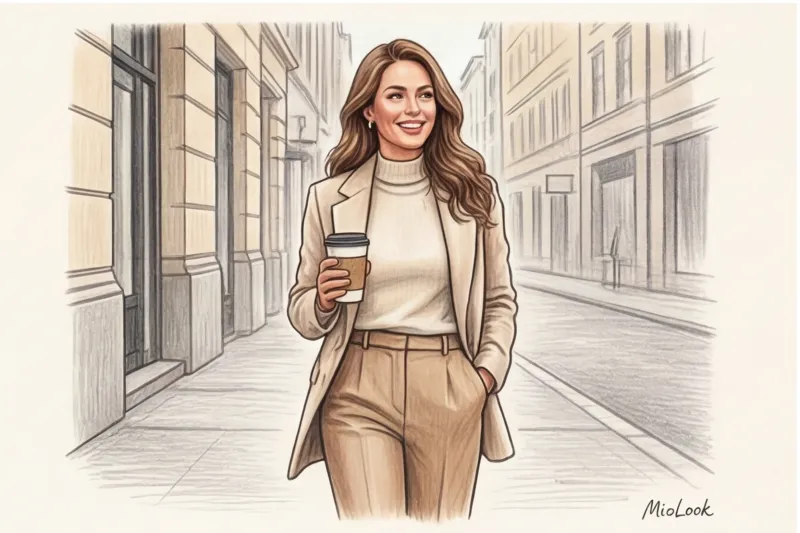
Place your bet on monochrome and "quiet luxury" An outfit composed of a single color palette (for example, shades of caramel, ecru, graphite, or rich chocolate) visually elongates the silhouette and automatically adds status. Brands like COS or Massimo Dutti do this perfectly in the mid-range segment.
There are categories on which it is absolutely forbidden to save after 30-40 years:
- Shoes: It maintains the entire geometric shape of the look. A trendy toe, high-quality leather, and a stable heel.
- Bags: A rigid form (structured bags) always looks more presentable than soft, shapeless shoppers.
- Outerwear: A super 100s wool coat or a thick trench coat is your calling card for the cold season.
- Tailor fit: Even a jacket from a mass-market store will look different if a tailor tailors it to your waist and sleeve length exactly.
Does this mean abandoning trends? Absolutely not. We're simply incorporating fashion in micro-doses: through statement shoes, a complex eyeglass shape, or a trendy belt accessory, while keeping the canvas (clothing) impeccably basic.
Summary: How to Befriend Your New Self
Reaching a new age isn't a loss of youth. It's a tremendous gain in freedom. Freedom from other people's expectations, from the need to prove something to someone by wearing uncomfortable clothes. In your 30s and 40s, you finally have the right to be yourself, with maximum concentration.
Your style should work for you, not you, who should be the one maintaining a complex, capricious wardrobe. I offer you a clear action plan for the coming weekend: set aside three hours, turn on your favorite podcast, and conduct an honest closet audit using the 3-second rule. You'll be surprised how anxiety will disappear along with the excess items, making room for the gorgeous, confident woman you are today.
Ready to get started?
Try MioLook's free plan—no commitments required. Upload your items and let the AI create fresh, stylish looks from what you already own.
Get access — €0.99 once