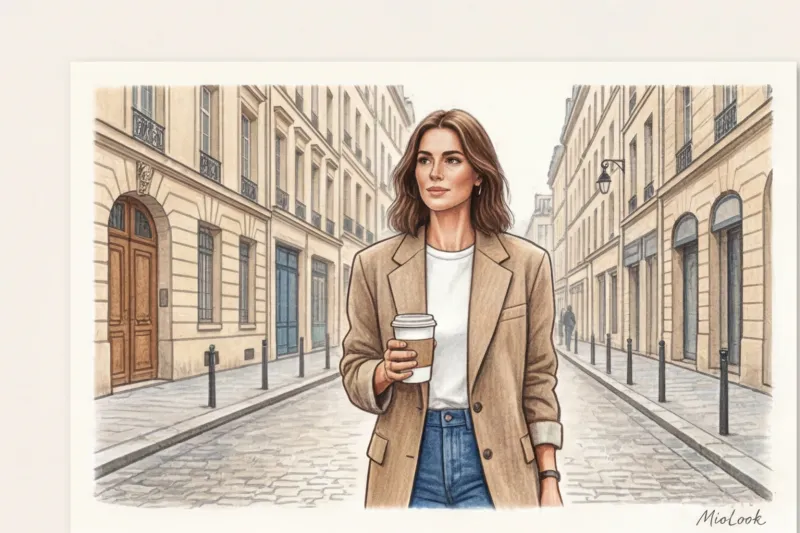
If you've ever found yourself with a closet overflowing with clothes and absolutely nothing to wear before an important meeting, you're not alone. Over 12 years of working as a personal stylist in Europe, I've consistently seen the same picture: most clients fall into the trap of wardrobe adolescence. They continue to buy clothes based on the habits they developed during their student years, even though their bodies, social status, and budget have long since changed.
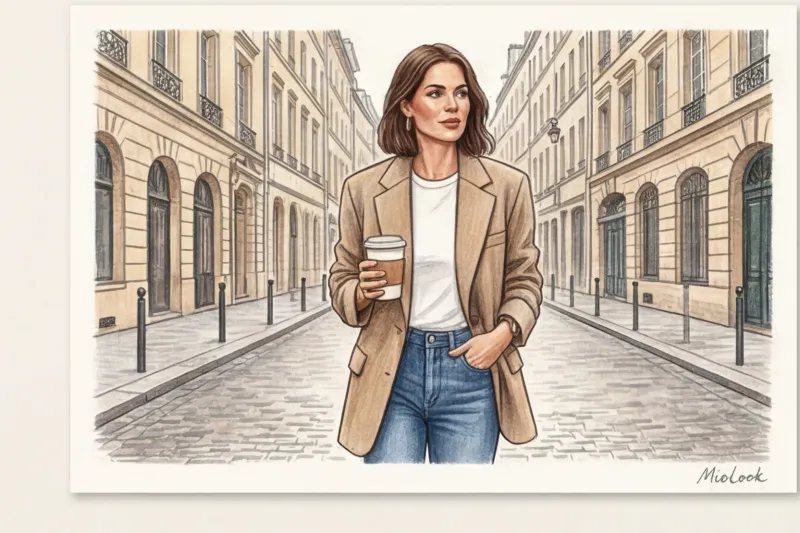
Ideal clothing style for women in their 30s and older—this isn't a dreary set of prohibitions from glossy magazines of the 2000s. You don't need to urgently hide your knees, buy pearls, and change into faceless tweed suits. We've already discussed the basic architectural principles of wardrobe in more detail in our The complete guide to finding your clothing style for women In this article, we'll go further and explore a pragmatic European approach: how to stop wasting money on flashy items and build a wardrobe that works for you, not the other way around.
Age-based dress codes are a myth: why clothing style for women in their 30s shouldn't be boring.
"It's inappropriate to wear miniskirts after thirty," "it's time to switch to classy classics"—where did these rules come from? Most of them hail from the 80s and 90s, when women's social roles were strictly regulated. Today, these stereotypes are hopelessly outdated. Strict age dress codes are a myth that only damages self-esteem.
Another pitfall is blind faith in popular style typologies (like the Kibbe theory). While it's certainly helpful to know your lines, for the modern woman with a busy schedule, these tests often prove out of touch with reality. You might be a Kibbe "Dramatic," but if you work remotely and have a toddler, your architectural jackets with exaggerated shoulders will simply gather dust on the hanger.
The main problem women face in their 30s and 40s isn't their passport number. The problem is that their body proportions and lifestyle have changed, but their impulsive shopping habits remain. True elegance today isn't about the brand name on the tag, but about impeccable fit and appropriateness (what the industry calls relevant dressing ).
"Style after thirty is when you stop trying to prove something to someone with your clothes and start dressing for your own comfort and confidence."
Reality Audit: The 80/20 Formula and Why We Buy Things for a "Fantasy" Life
Do you know where real style work begins? It doesn't start with a Pinterest board. It starts with a brutally honest audit of your time.
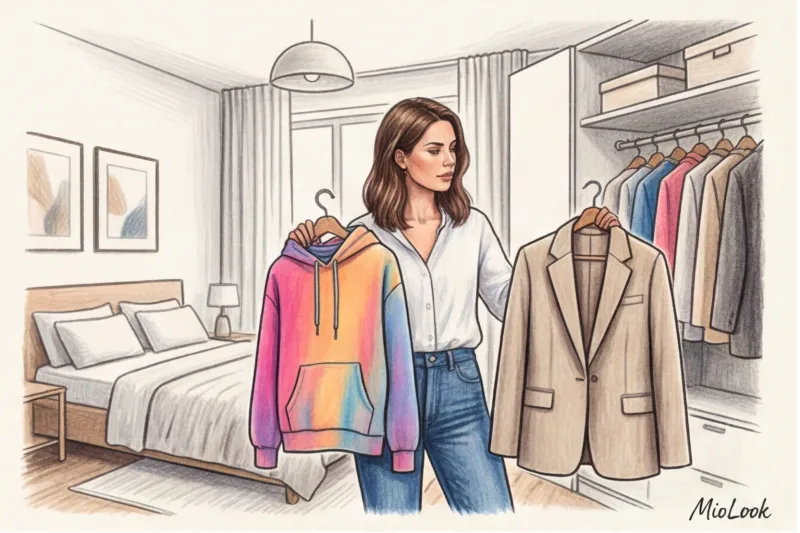
Remember the Pareto principle: 80/20. In the context of wardrobe, this means that we wear 20% of our clothes 80% of the time. The rest is clothes for a "fantasy" life. One of my clients, a top manager at an IT company, complained about constantly feeling "nothing to wear." While sorting through her closet, we found a dozen silk wrap dresses from the French brand Rouje—incredibly beautiful, bought on the influence of social media. The problem? She worked from home three days a week and spent weekends actively exploring the countryside. She didn't need dresses for strolling around Paris; she desperately needed premium athleisure—high-quality cashmere joggers, thick T-shirts, and stylish hoodies.
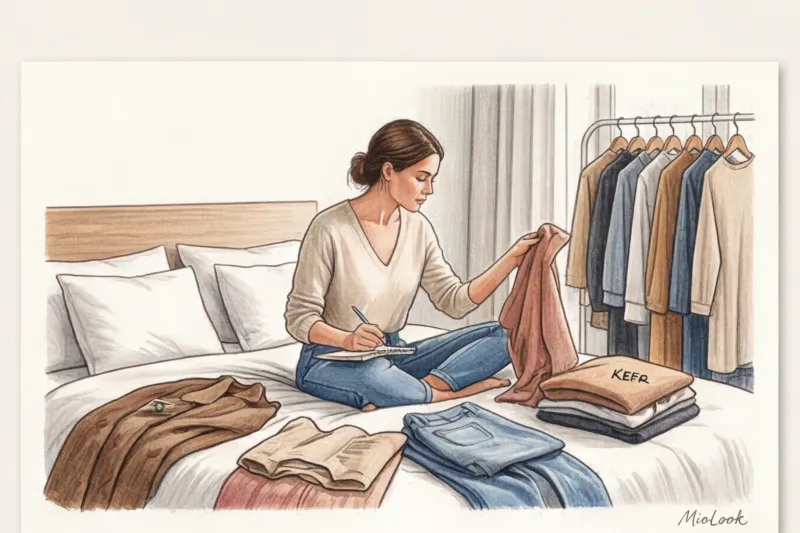
To stop feeling guilty about expensive items still hanging with tags, calculate your personal wearability index before each purchase. Ask yourself, "How many times in the next 30 days can I realistically wear this given my current schedule?" If the answer is "once" or "only if I lose weight/change jobs," return the item to the shelf.
Closet organization starts here
Conduct a digital audit of your wardrobe: upload items to the app and understand what you truly lack and what you buy out of habit.
Get access — €0.99 onceElegance without the extra expense: building a base in European mass-market fashion
After thirty, quality texture officially becomes more important than trendy cuts. You can wear the season's hottest skirt, but if it's made of squeaky, static-prone thin polyester, the whole look instantly becomes cheapened.
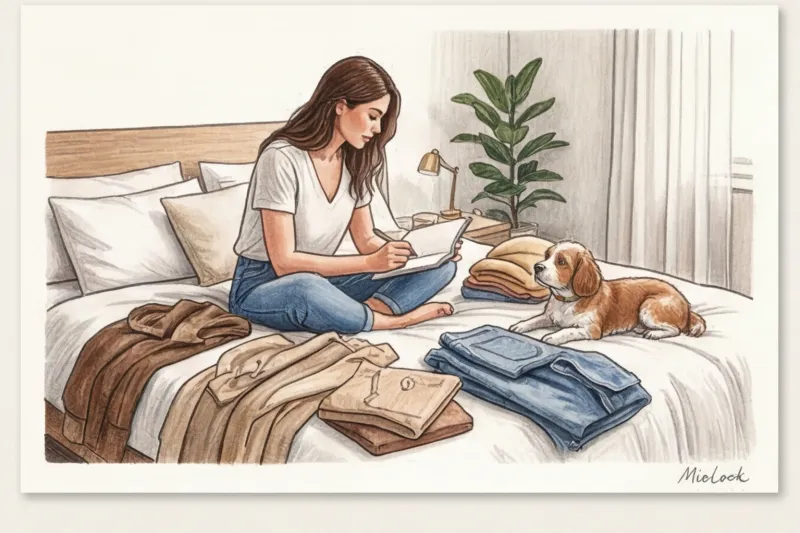
This is where the concept comes into play Cost-per-wear (CPW) — cost per garment. According to a 2024 study by consulting firm McKinsey, conscious consumers have begun to use this metric more often when evaluating their wardrobes. Let's do the math: a basic $150 cashmere sweater that you'll wear 50 times over the winter (CPW = $3) ends up costing less than a trendy $30 acrylic jumper that will pill after three washes (CPW = $10). Investing in the right fabrics always pays off.
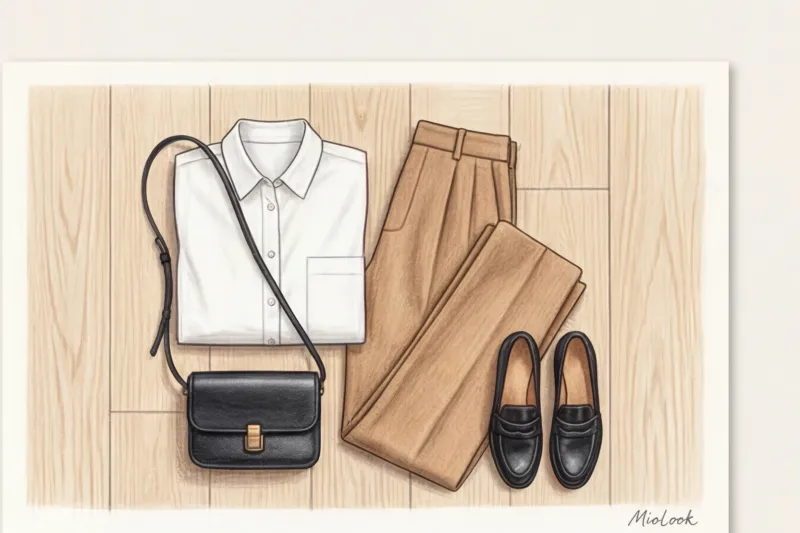
You don't have to buy luxury to look classy. European high-end mass-market fashion does a great job of covering the basics. COS I always send clients for architectural cuts and thick knits. Massimo Dutti — the perfect place for a business capsule: their trouser suits and silk shirts look three times more expensive than they are. & Other Stories It's worth looking for high-quality wool and blouses with interesting prints.
Where You Can and Should Save (Secrets of Zara and H&M)
A smart wardrobe is a balance. There are certain categories of items that are simply not worth spending large amounts of money on, even if you can afford it.
- White T-shirts. No matter how carefully you wash them, white cotton will yellow under the arms and lose its crisp appearance after a season. Buy thick cotton (at least 180 g/m²) from basic mass-market lines and replace them without regret.
- Trendy accessories. A belt with a complex, accent buckle, fashionable this season, will look outdated in a year. Save it for Zara.
- Premium mass-market lines. Look for Zara Studio or H&M Premium Quality collections. They are made from natural fabrics (silk, cashmere, and thick leather). But there is an important limitation: The patterns in these lines are often designed for a very narrow, model-like figure. If you have pronounced curves, be prepared for a disappointing fit.
What to invest in after 30 and 40 years
If you're going to spend serious money, it's on "framework" pieces that hold the entire look together. In my experience, 8 out of 10 looks can be salvaged with the right accessories and top layer.
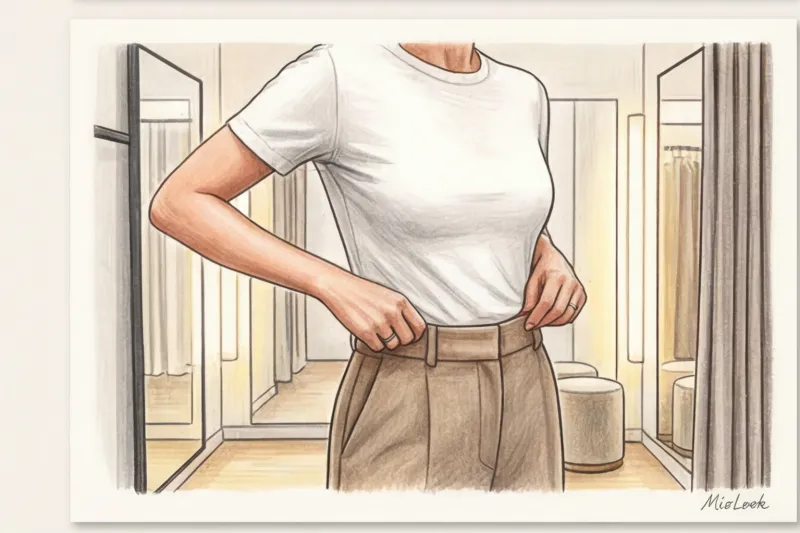
- Structured bag without logos. Soft bucket bags are only forgiving of carelessness in young girls. Older women need a bag that holds its shape—this subconsciously conveys poise and status.
- Shoes of the correct last. Leather loafers, Chelsea boots, or minimalist sneakers. No compromise between style and foot health.
- A perfectly fitting men's cut jacket. It instantly “pulls together” even a relaxed duo of jeans and a T-shirt.
Your perfect look starts here
Tired of racking your brain over hair combinations? Join thousands of users who look flawless every day with the help of an AI stylist.
Get access — €0.99 onceBody types are changing: how to choose clothes and embrace new proportions
Let's be honest. After thirty, and especially after pregnancies or hormonal changes, your body changes. And that's completely normal. The most damaging mistake I see in fitting rooms is women trying to squeeze themselves into their "old size." Buying jeans a size too small with the thought, "I'll lose weight by summer," is a guarantee you'll feel uncomfortable every time you open your closet.
Remember: the size on the tag is just a number—a marketing gimmick. According to industry analysts, a size M in 1990 would be equivalent to a size XS today. Brands actively use vanity sizing to make customers feel better. At Zara, you might wear a size L, while at Massimo Dutti, you might wear a size M. We write more about this in the article. How to choose clothes for your body type without stereotypes.
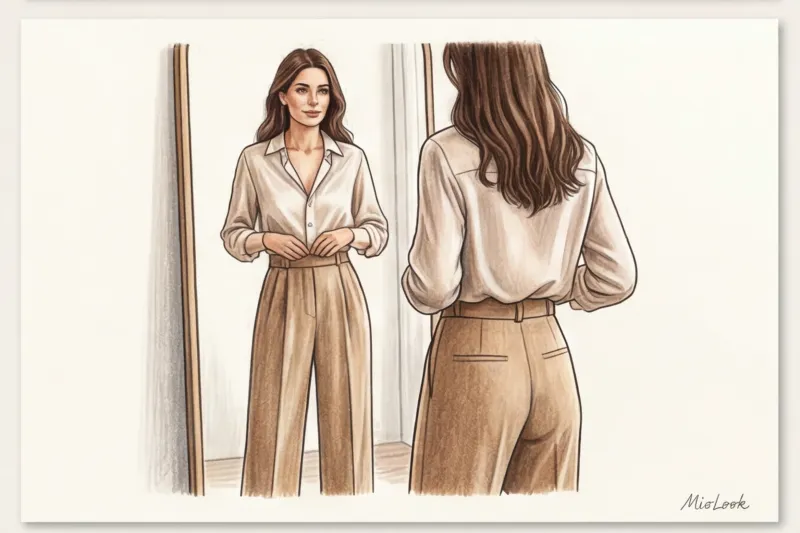
Instead of shapewear that restricts breathing, use smart cuts:
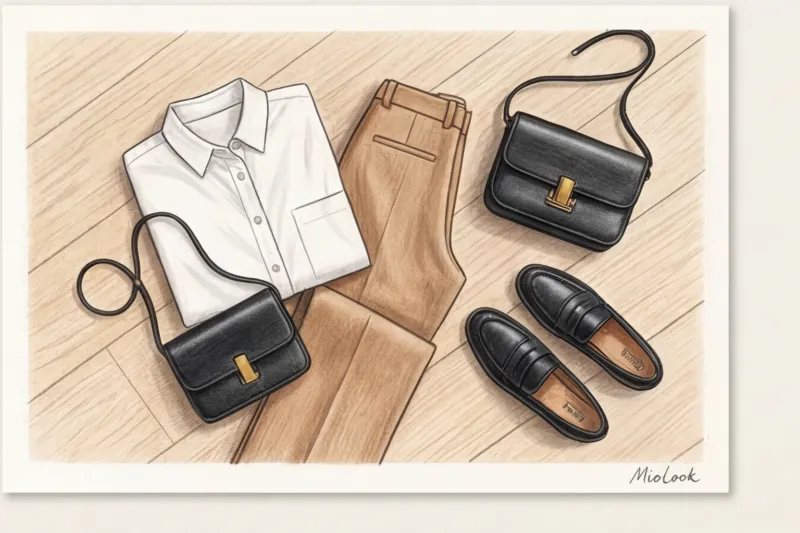
- Bias cut: Silk or viscose midi skirts, cut on the diagonal, glide softly over the hips without clinging to the stomach, and fantastically elongate the silhouette.
- Heavy cotton and denim: Choose jeans made of 100% cotton without elastane. Yes, they'll feel stiff for the first 10 minutes, but they work like a corset, cinching your figure, unlike thin jeggings, which highlight even the slightest unevenness.
- The correct midi length: The hem of your skirt or dress should end at the narrowest part of your leg (usually just below the knee or ankle), not at the widest part of your calf.
Three style hacks that work better than expensive brands
Sometimes the difference between a "just threw it on" look and a "Fashion Week street style look" is a single, unintentionally shifted detail. Here are three styling tricks I use at every client fitting.
1. Monochrome in light tones.
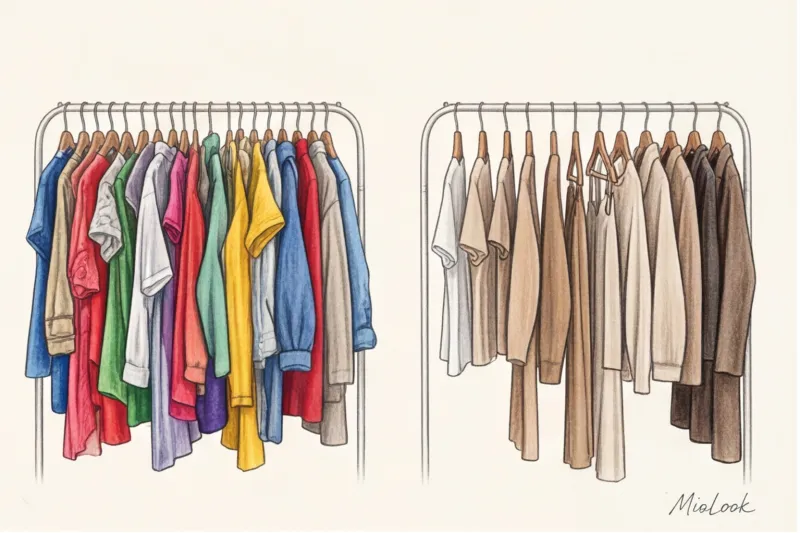
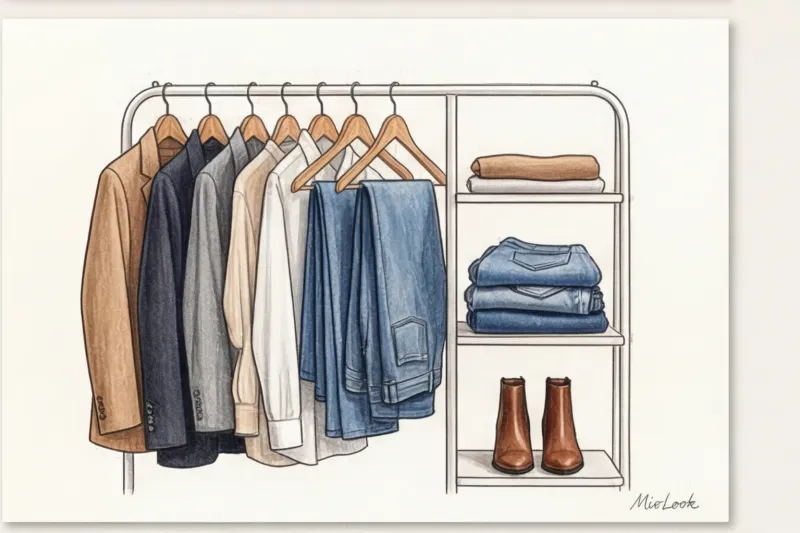
Looks that are put together in a unified color scheme always look more expensive. This is especially true for shades of beige, ecru, off-white, and camel. All-black often highlights fatigue and dark circles on the face after age 35 (unless it's a perfect tuxedo). A suit in a creamy shade, on the other hand, acts as a reflector, brightening the face.
2. The rule of third things.
A T-shirt and pants are just clothes. A T-shirt, pants, and a textured cardigan, jacket, or thick shirt thrown over the shoulders are already image The third layer adds depth, conceals figure features in the waist area, and creates a more complex silhouette.
3. Control of proportions (open wrists and ankles).
A heavy, bulky silhouette can be easily made graceful. Tuck the front of your shirt into your trousers (a French tuck)—this will define your waist and visually lengthen your legs. Roll up the sleeves of your jacket or sweater to reveal your wrists. Wrists and ankles are the narrowest parts of a woman's body. By revealing them, you visually lighten the entire silhouette by 2-3 kilograms.
Checklist: 5 Steps to a Style Update This Weekend
No theory will work without practice. If you want real change, set aside two hours this weekend and go through this checklist. Be ruthless.
- Step 1: Get rid of clones and defects. If you have five identical gray turtlenecks, keep the best one. Any items with pilling, stretched knees, or stubborn stains are recycled immediately.
- Step 2: Remove anything that doesn't fit. Put all the clothes that are too small or too big for you right now in a box. Put the box out of sight. Only wearable items should remain in your closet. this morning and feel great.
- Step 3: Figure out your "uniform". Find 3-5 items you wear regularly and receive compliments on. This is the foundation of your personal style. Analyze why you love them (fabric, color, cut).
- Step 4: Find the gaps. Take out a favorite item you rarely wear (like a great pair of wide-leg pants). What's missing to wear them tomorrow? Shoes of the right height? The perfect basic top? Write it down.
- Step 5: Create a strict shopping list. You go to the store (or the app) only with the list of gaps from Step 4. If the item isn't on the list, you don't buy it, no matter how attractive the discount.
Your style isn't a cage of age-based restrictions, but a living, flexible tool. Explore your new proportions, test out sturdy fabrics, and invest in quality over quantity. When you stop trying to fit into outdated molds or five-year-old jeans, you'll discover that looking elegant and sophisticated can be effortless, effortless, and every day.