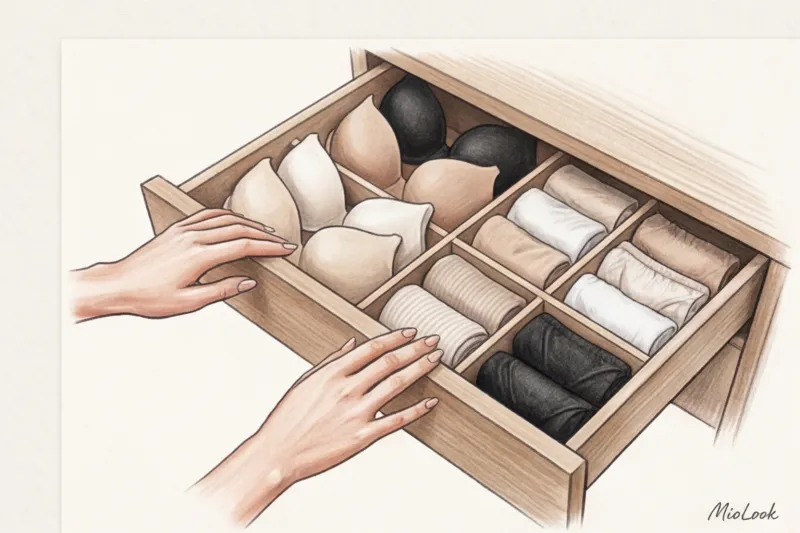
Over 14 years of working as a personal stylist, I've reviewed hundreds of wardrobes. Do you know where most problems like "this dress makes me look fat" or "this jacket fits weird" start? It's not the extra pounds or the brand's cut. The problem lies in the very bottom drawer of your dresser. Where you'll find those "still perfectly fine" bras and stretched-out panties that have long since lost their shape.
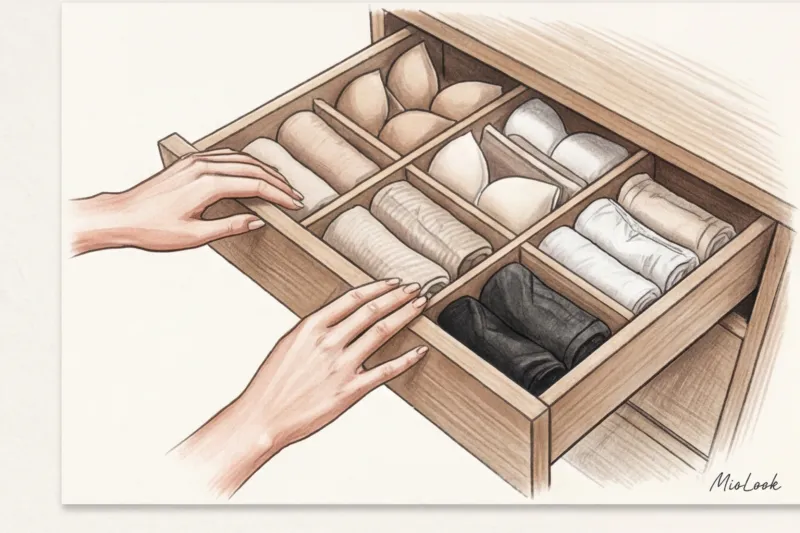
Women's magazines love to scare us with bacteria, claiming that underwear should be thrown out strictly every six months. But let's be honest: high-quality silk or heavy cotton don't turn into biological weapons after exactly 180 days. Much more important is another aspect—how elastane fatigue destroys the geometry of your body. That, How often should you change your underwear? , depends not on the calendar, but on the physics of materials and the mathematics of your wardrobe.
The foundation of any stylish look begins with the first layer. We covered this in more detail in our The Complete Guide to Basic Underwear Today we'll talk about why a worn-out base can ruin any investment in expensive items and how to tell when it's time for your set to retire.
The 6-Month Myth: How Often Should You Really Change Your Underwear?
The "throw away your underwear every six months" rule is a brilliant marketing ploy by fast-fashion brands. If you buy a set of five synthetic briefs for the price of a cup of coffee, they will indeed wear out after a couple of months. But when it comes to quality underwear, the main enemy isn't time, but material fatigue.
According to a 2022 study in the Textile Research Journal, spandex (elastane) fibers begin to irreversibly lose their "structural memory" after 100-120 stretching cycles and exposure to body heat. This means the fabric stops returning to its original state.
This is where wardrobe math and the concept come into play. cost-per-wear (price per wear). The actual shelf life of the kit is determined by how often it is rotated.
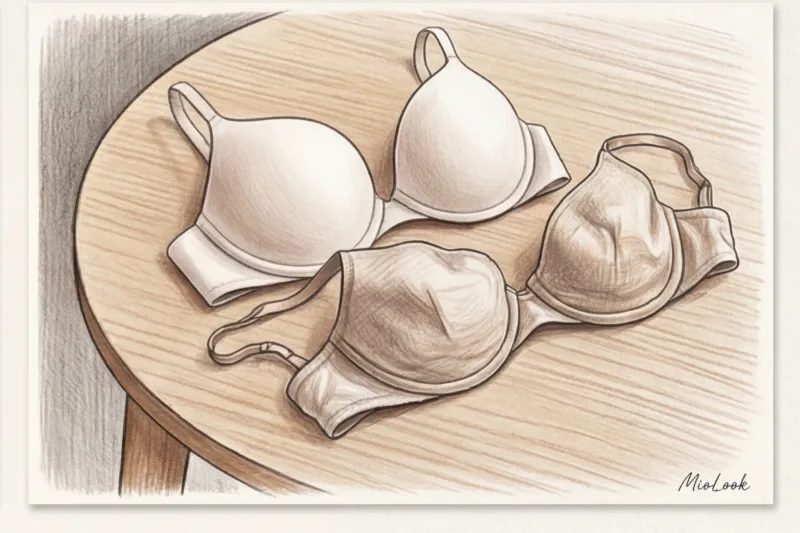
- If you only have 2 basic bras , and you wear them every other day, their elastane resource (those same 120 wears) will be exhausted in about 8 months.
- If you follow the bra-fitting rule of "1 on, 1 in the wash, 1 out" (that is, you alternate at least 3-4 sets), their service life automatically increases to 1.5–2 years.
Stretched underwear is a silent style killer. You can buy the perfect pair of fine wool suit pants for a fortune, but if the elastic has become loose and is digging into your skin, it will create an unsightly roll on your thigh that will be visible through the fabric. A worn-out base layer devalues the entire look.
Your perfect look starts here
Join thousands of users who look flawless every day with the smart wardrobe manager MioLook.
Get access — €0.99 onceBra lifespan: When the frame stops holding its shape
A bra is a complex piece of engineering. The laws of physics are inexorable: in a properly fitted bra, 80% of the breast weight should be supported by the band, and only 20% by the straps.
One of my clients, a senior executive, complained about her “age-related stoop” and that everything status jackets from her business capsule collection There was a tug in her shoulders. When we started sorting through her wardrobe, I asked her to wear the most problematic blouse with a new, thick bra we'd bought the day before, instead of her favorite three-year-old set. The effect was stunning: her posture visually straightened, her breasts lifted 4 centimeters, and the blouse fit perfectly. Her old bra simply stopped working.
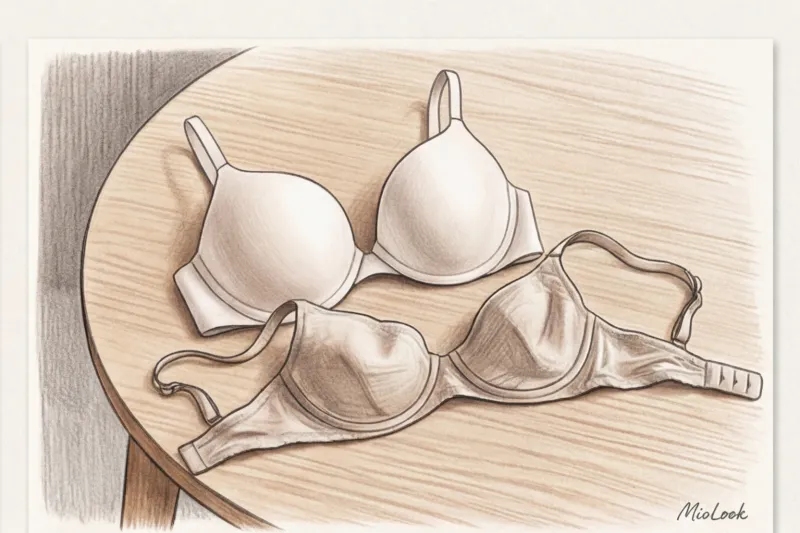
Daily contact with our body temperature (which acts as a micro-iron for elastane), sweat and the chemical components of deodorants slowly but surely destroys the fibers. There is the golden rule of stylists The most prominent point of your bust in profile should be exactly halfway between your shoulder and elbow. If your bust has sagged lower, your bra frame has stretched and is no longer performing its intended function.
3 Sure Signs It's Time to Trash Your Wall Lamp
Don't wait for the pit to pop out of the cup. Here are three subtle but critical signs that it's time to replace it:
- The belt is fastened with the tightest hook, but still rides up on the back. If the belt is not parallel to the floor, but creeps up towards the shoulder blades, the support is irrevocably lost.
- The cups have lost their smoothness. The lace has become wavy, the thin foam has become covered in micro-creases, and the bones have changed their original angle and are cutting into the armpit.
- The straps keep falling off. Even if you tighten the adjuster all the way, by the evening the strap treacherously slides down your shoulder - this means that the elastic band inside it has completely collapsed.
Panties: Hygiene, Comfort, and Lifespan
With underwear, the situation is different. Gynecologists unanimously advise focusing not on mythical dates found online, but on the condition of the gusset. This is the indicator of the garment's hygienic suitability.
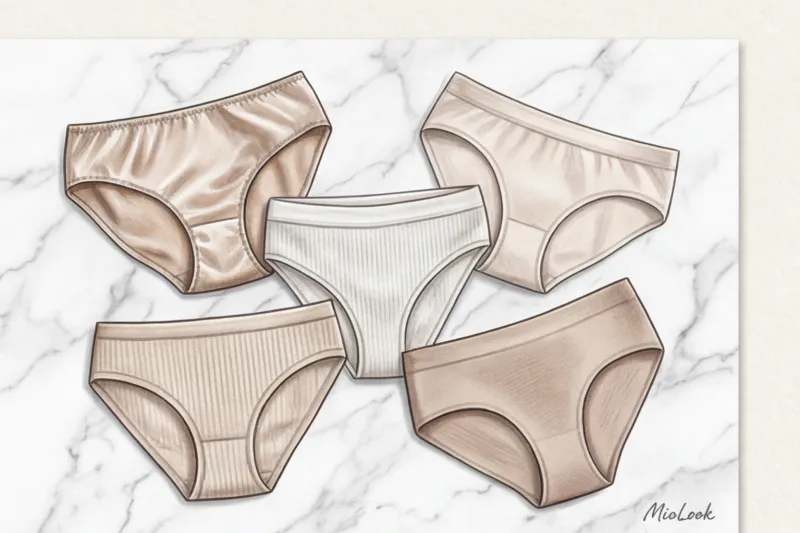
Different materials have dramatically different durability levels. Thin synthetics, microfiber, and viscose wear out the fastest. However, high-quality, dense cotton (from 180 g/m²) or natural silk can last for years with proper care.
"High-quality silk sleepsuits, hand-washed with a special detergent, can retain their properties for up to 3-4 years. However, seamless laser-cut sleepsuits from mass-market stores typically lose their adhesive seams after just 20-30 washes."
Beyond hygiene, there's a huge aesthetic problem with "tired" underwear. Stretched elastic bands not only create a "caterpillar" effect under tight clothing, but they also impair blood circulation in the pelvic area. If you take off your underwear in the evening and see deep red marks from the stitches on your skin, the fabric has lost its elasticity, become stiff, and is causing damage to the skin. This is a clear sign that you need to renew your underwear.
Ready to declutter your closet?
Try the MioLook plan for free—no commitments required. Digitize your wardrobe and plan your purchases wisely.
Get access — €0.99 onceSportswear and shapewear: why you shouldn't skimp on replacements
While we can still compromise with lace brando, functional underwear requires strict discipline.
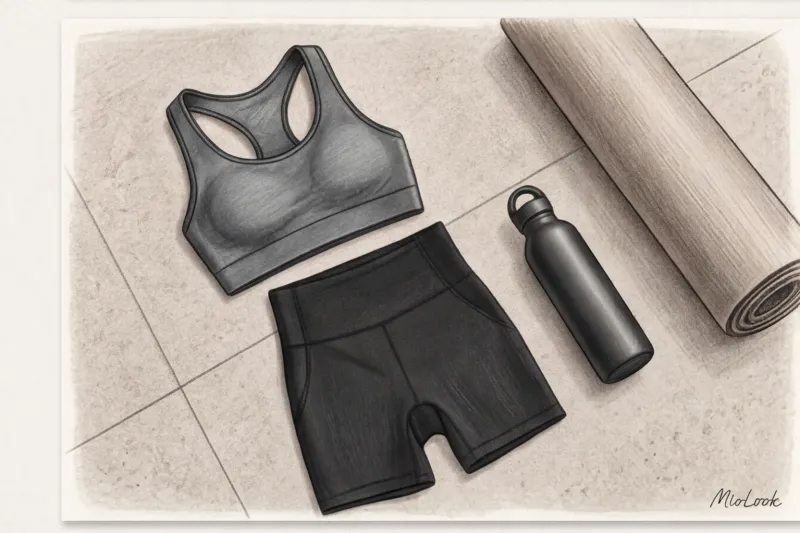
High-impact sports bras for running or CrossFit are subject to tremendous strain. During vigorous jumping, micro-tears in the compression fibers occur. The anatomy of the female breast is such that it is supported by Cooper's ligaments. These are thin connective tissues that do not have the ability to recover If they stretch out because your "tired" sports bra no longer dampens the vibrations, it will be impossible to restore the shape of your breasts.
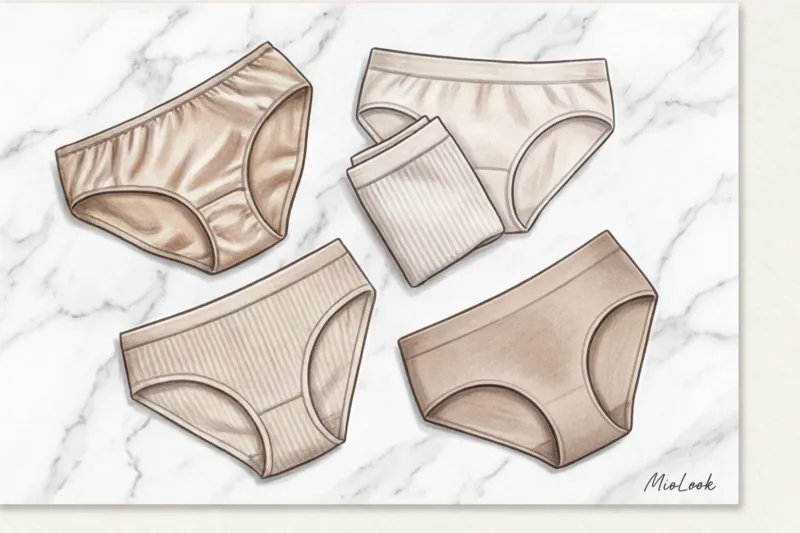
The same goes for shapewear. How do you know when it's worn out? It stops model figure and starts it simply pull Instead of a smooth transition at the hip line, you get sharp, cutting edges.
To be fair, I should note: This rule of tight compression doesn't work for everyone. If you're an AA cup and do gentle yoga in a soft cotton top, it will last you many times longer than a bulletproof D-cup marathon bra.
Stylist Secrets: How to Double the Life of Your Favorite Set
Buying quality lingerie is expensive. Therefore, it's in every woman's best interest to make this asset last as long as possible. Over the years, I've developed three simple yet foolproof rules for care.
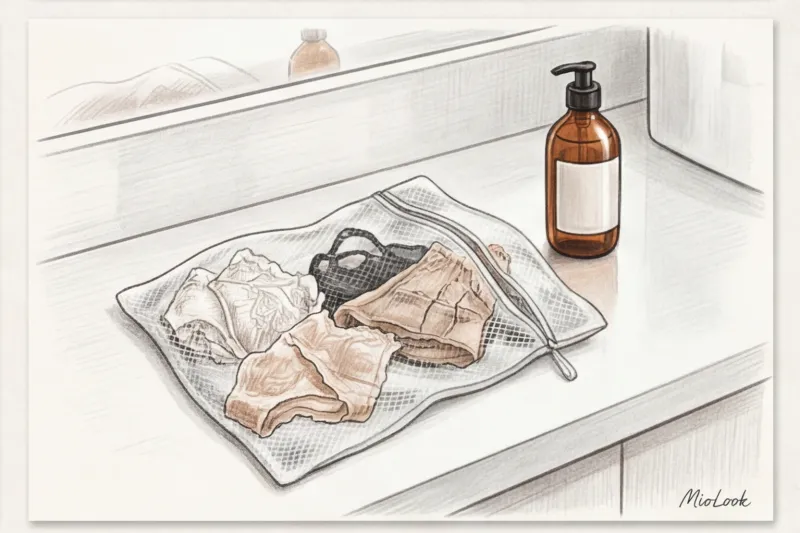
The "rest" rule (24-48 hours). Never wear the same bra two days in a row. Elastane, like your muscles after a workout, needs time to recover. Let your bra sit for at least 24 hours, and you'll be surprised how much longer it retains its elasticity.
Strict temperature control. Washing at 60 degrees Celsius is the death knell for modern stretch lace. Hot water literally "cooks" the spandex, making it brittle and fragile. The ideal temperature is 30 degrees Celsius.
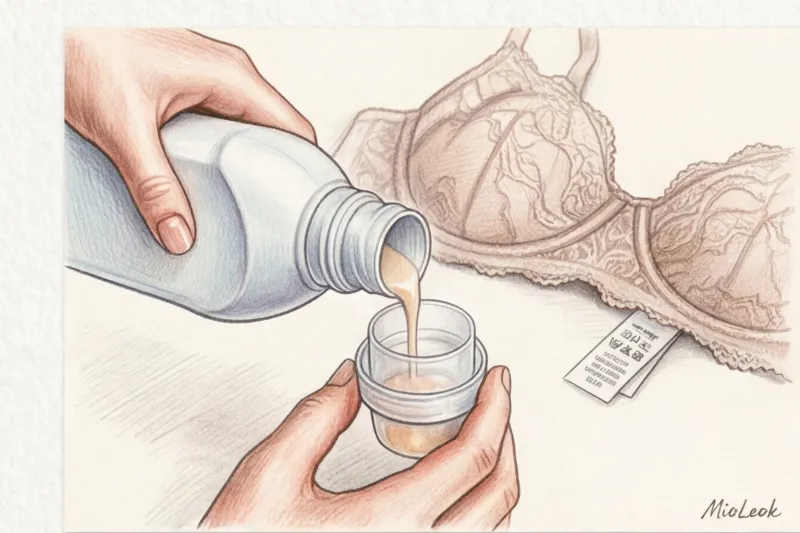
Avoid tumble drying. A tumble dryer is lingerie's worst enemy. Exposure to high temperatures combined with friction can age your bra by up to six months in a single cycle. Dry your bras only flat at room temperature. And always use special, thick mesh laundry bags to prevent the underwire from deforming in the machine's drum.
Checklist: 15-Minute Linen Drawer Review
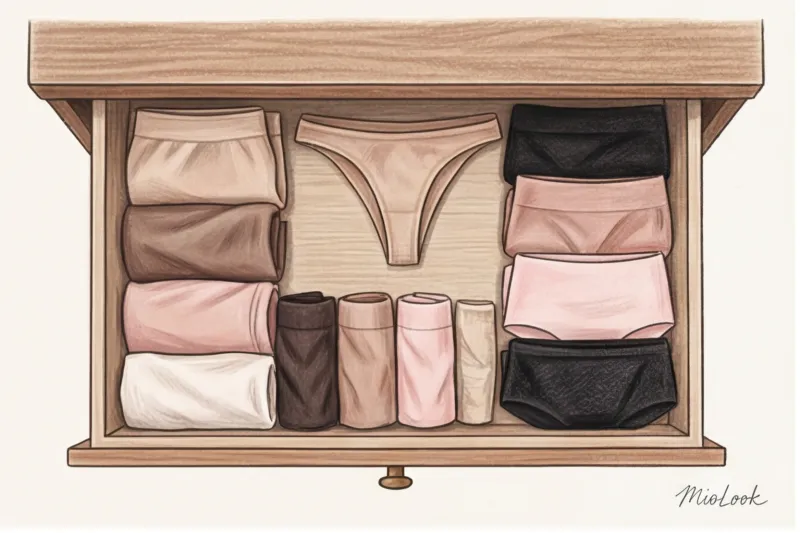
Every change of season, when we are with clients we are dismantling the closet I give them homework—an independent 15-minute laundry drawer audit. Here's my signature three-step method you can use today.
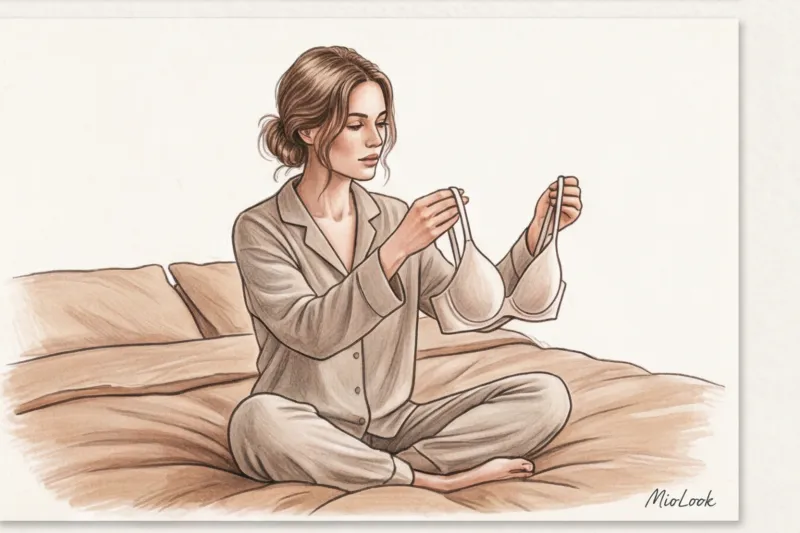
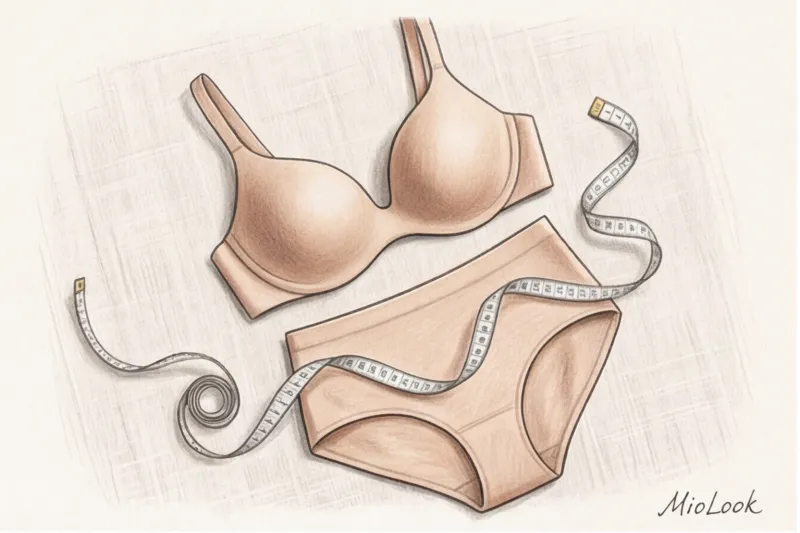
- Step 1: Tensile test. Grab your bra by the waistband (or your panties by the elastic) and tug. The fabric should offer noticeable resistance and instantly return to its original shape with a soft pop. If the fabric stretches sluggishly, like old chewing gum, and returns slowly, the item has outlived its usefulness.
- Step 2: Test for color and texture. Ruthlessly throw into the trash anything that has developed ineradicable pilling, snow-white lace that has acquired a persistent gray or yellowish undertone, or the fabric on the gusset has become thinner.
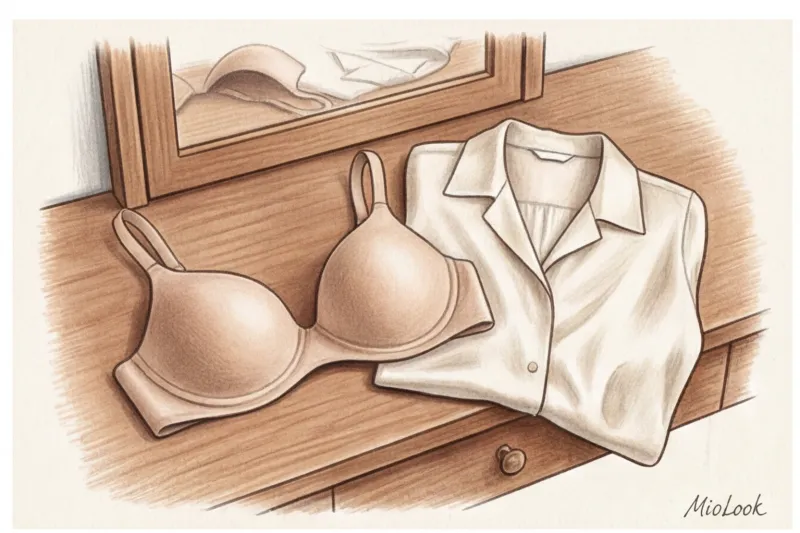
- Step 3: Fit test (honest look). Put on a bra and layer it over your thinnest, most form-fitting basic turtleneck or viscose T-shirt. Stand sideways in front of a mirror. Is your breast shape smooth and rounded? Is there any lace or foam creases showing? Is there a "caterpillar" in your back? If so, keep the bra. If not, throw it away.
To sum it up, I want to emphasize the most important thing: don't think of throwing away underwear as a waste of money. Think of it as freeing up space for high-quality basics that will make all your other clothes fit three times better. Digitize your new underwear essentials in an app. MioLook — this will help you clearly see which sets are missing for an ideal rotation, and make only smart purchases.