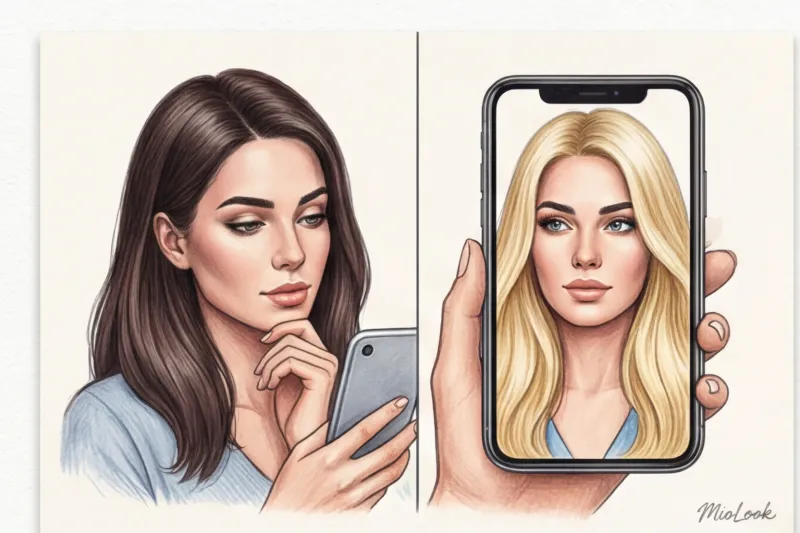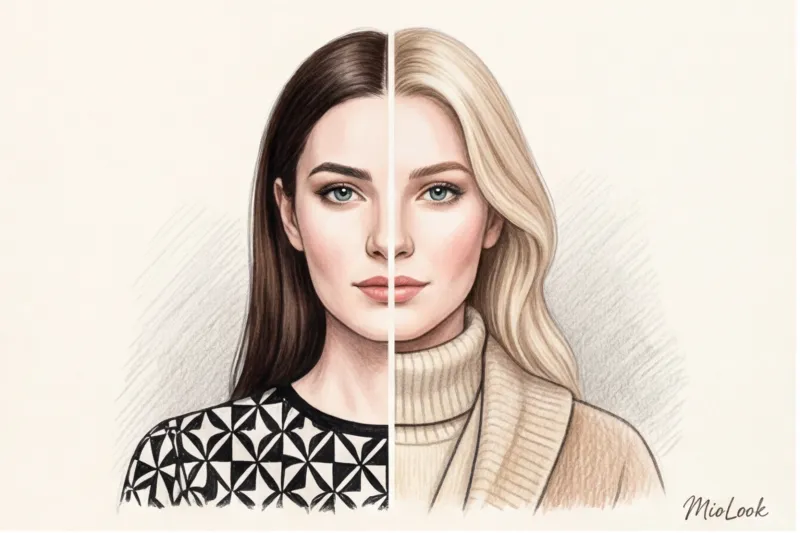
I still remember my client Anna's tears. After spending about €150 at the city's best salon, she transformed herself from a scorching brunette into a perfect platinum blonde. The stylist did a flawless job. The problem was something else: after opening her years-honed capsule wardrobe of graphic black-and-white prints and deep fuchsia jackets, Anna realized she had nothing to wear. Her favorite clothes had literally "eaten" her new, suddenly brighter complexion.
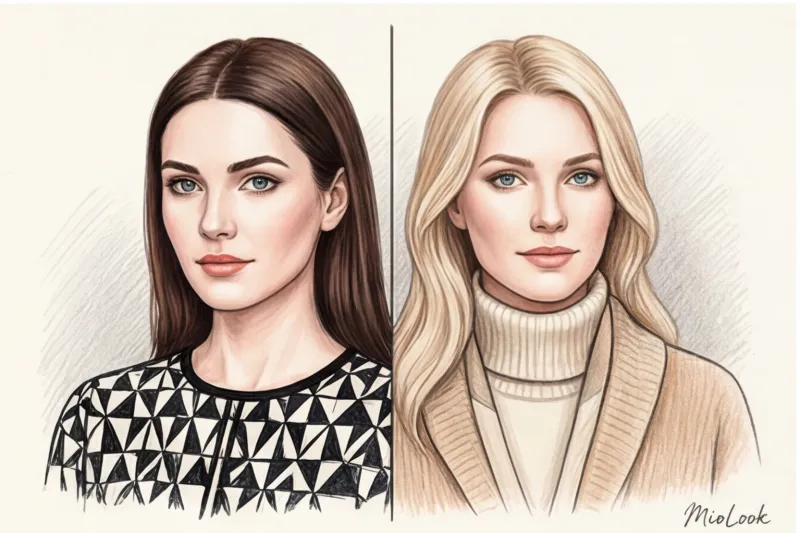
The way hair color affects contrast often comes as an unpleasant surprise. We're used to treating coloring purely as a beauty treatment. In reality, it's a serious structural shift that can, in a single day, ruin 60% of your portraiture. We've covered the basic principles of color selection in more detail in our the complete guide to appearance contrast , but today I want to analyze the mechanics of changing hair color from the point of view of a conscious approach to wardrobe.
The Physics of Color: How Hair Color Affects Facial Contrast
To understand why your favorite sweater suddenly doesn't suit you anymore, you need to look at the physics of color. Albert Munsell's classic color system (Munsell Color System) includes a key parameter called value. Your skin, eyes, and hair form a kind of scale on your face, from the lightest to the darkest.
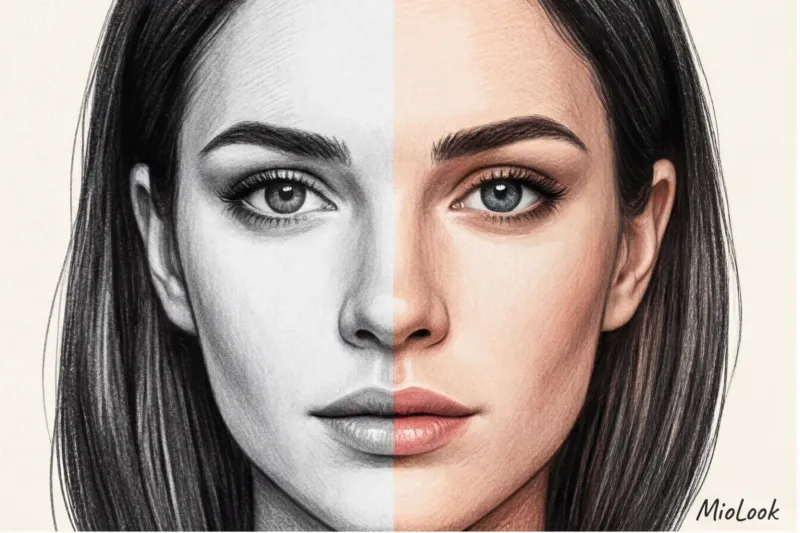
Hair acts as the main "frame" for the face. It is the difference between skin tone and hair color that sets the basic level of contrast. And here lies an interesting psychological nuance.
According to a study on facial perception conducted by psychologist Richard Russell (2009), high facial contrast is subconsciously interpreted by the human brain as a sign of youth and health. As we age, our lips become paler, and our eyebrows and hair lose pigment—contrast naturally decreases.
Therefore, artificially changing this “frame” entails a chain reaction: not only does the color of the strands change, but the way the light reflects off your face against the background of your clothes changes.
The biggest dyeing mistake: a hidden threat to your wardrobe
Spontaneous, emotionally driven coloring is the main enemy of sustainable fashion. You change your hair color in two hours, and then spend months and hundreds of euros trying to assemble a new capsule collection, because the old clothes start to "wear you" rather than you wearing them.
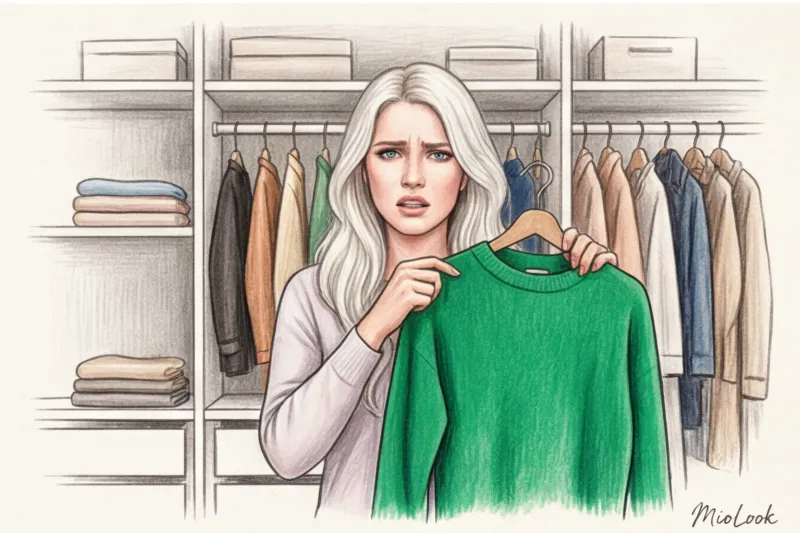
The most dangerous and widespread myth that I have been fighting for years: "Blonde always refreshes and makes you look younger." This is fundamentally wrong.
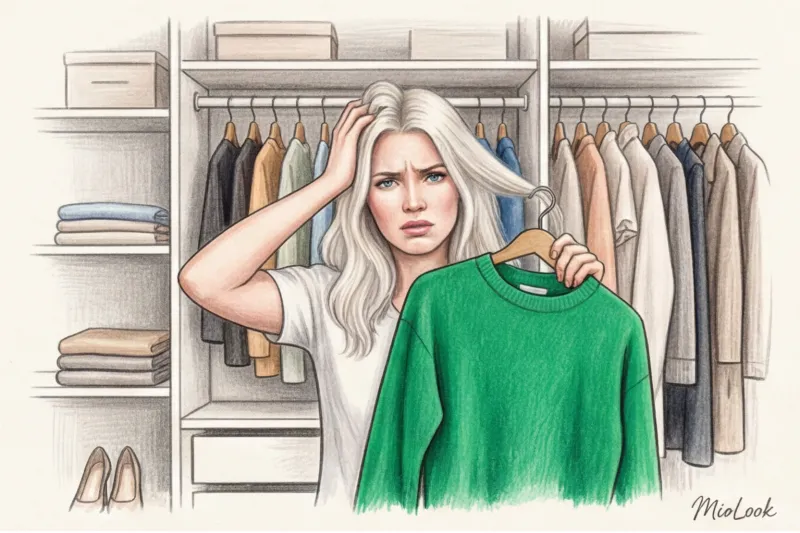
If you naturally have high contrast (fair skin and dark hair), going totally blonde will destroy it. Your face will lose its contours and natural shadows. To compensate and avoid looking "moth-eaten," you'll have to apply aggressive makeup daily. This, you'll agree, is very much at odds with the modern trend for naturalness. By the way, if you're looking for ways to refresh your look without a radical color change, consider Anti-aging haircuts for medium-length hair - Sometimes the right shape works better than any paint.
Your perfect look starts here
Join thousands of users who look flawless every day with MioLook.
Get access — €0.99 onceThree color change scenarios and how they affect your clothes
Let's break down the three most common transformations and how they physically change the requirements for your closet.
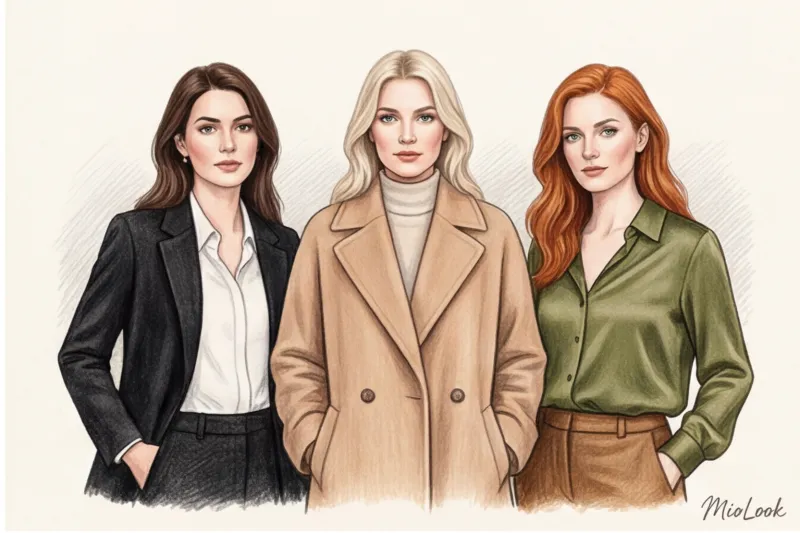
From brunette to blonde: a sharp drop in contrast
When you lighten your hair more than 3 shades, the difference between your skin and hair disappears. Your natural contrast decreases.
- What you will have to give up: Avoid bold geometric prints (classic black and white houndstooth, zebra, contrasting plaid). These patterns will now steal the show. You'll walk into a room, and people will see your dress first, and only then you.
- What to switch to: Nuanced combinations, monochrome, and the aesthetics of brands like COS or Massimo Dutti. Milky, oatmeal, and soft gray shades will become your best friends.
From Light Brown to Dark: Sharpening
By darkening your hair, you increase the contrast. Your face instantly begins to crave cleaner, deeper, and more saturated colors in your clothing.
Those dusty, pastel, and earthy tones that once so beautifully accentuated your blonde aesthetic can now make your face look tired and dull. But now's the perfect time to incorporate bold color blocking (like a deep emerald and sapphire combination) into your wardrobe, which previously overshadowed you.
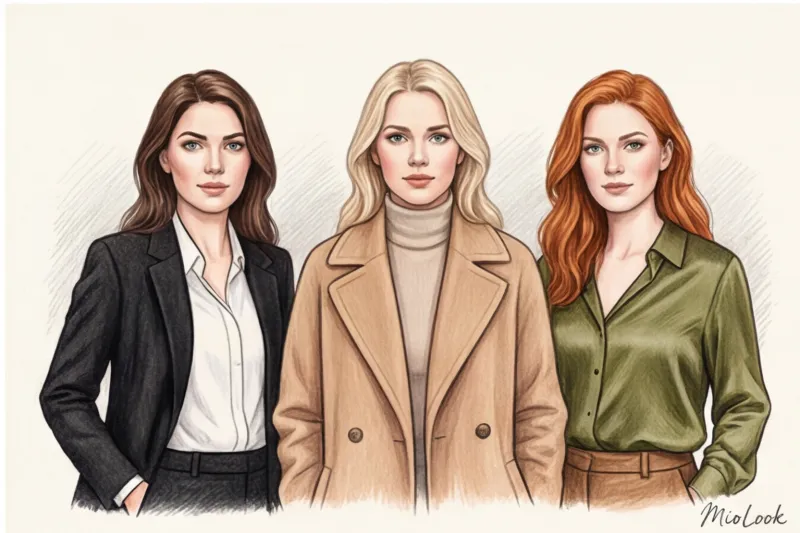
Bright colors (copper, cherry): shifting the temperature focus
When you dye your hair a bright copper or cherry, you gain a strong dominant color. Your appearance is no longer neutral.
Your basic wardrobe palette will begin to behave unpredictably. A simple gray sweater might suddenly clash with your hair if it has a hidden greenish undertone. However, the rules of complementary colors will begin to work fantastically—try pairing a rich blue or deep violet top with copper hair.
Textiles and a new hair color: how fabric texture saves your look
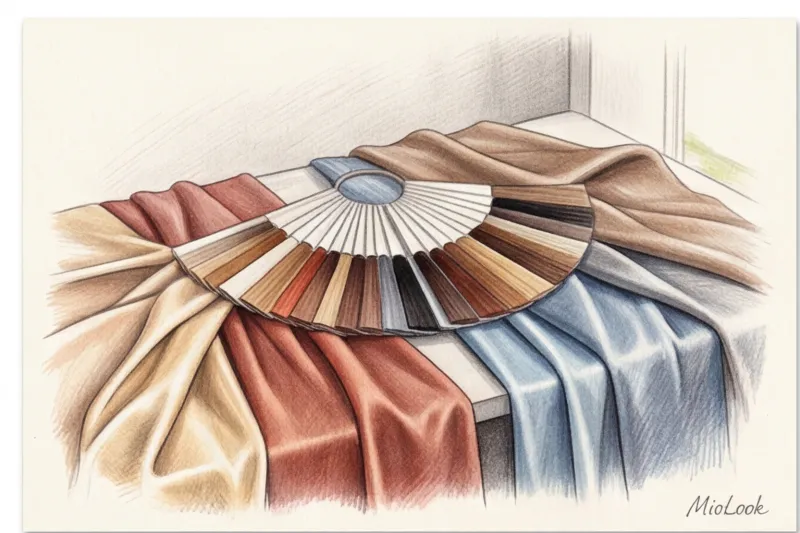
As a fabric expert, I want to share a secret rarely mentioned in fashion magazines: color is only half the story. The light reflectance value (LRV) of the fabric itself plays a huge role.
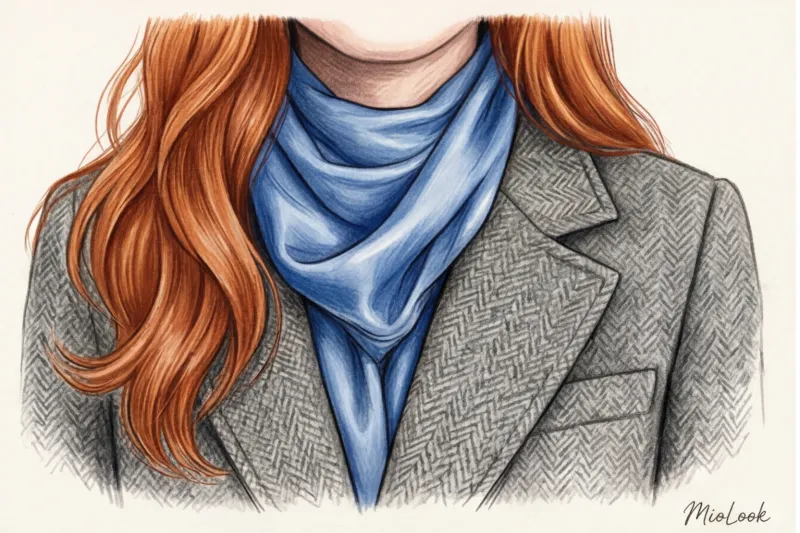
Different textures interact differently with your new contrast:
- Shiny textures (silk, satin, smooth leather) reflect light and visually strengthen Contrast of shades. If you've gone blonde and are worried about being overwhelmed by a burgundy blouse, choose one in a matte finish rather than smooth silk.
- Matte, loose textures (tweed, bouclé, cashmere, thick cotton from 180 g/m²) absorb light. They make any color softer and more refined.
If you've gone brunette and a pure black turtleneck against your face feels too harsh, simply swap out the smooth viscose for a fluffy angora or cashmere jersey. The texture will counteract the harshness.
Access to MioLook for €0.99 — one-time payment
A smart AI stylist will select the perfect look based on your new contrast and fabric textures.
Get access — €0.99 oncePre-salon checklist: an eco-friendly approach to changing your image
To avoid finding yourself in front of a full closet in tears, take inventory of your home before your painter thins the paint.
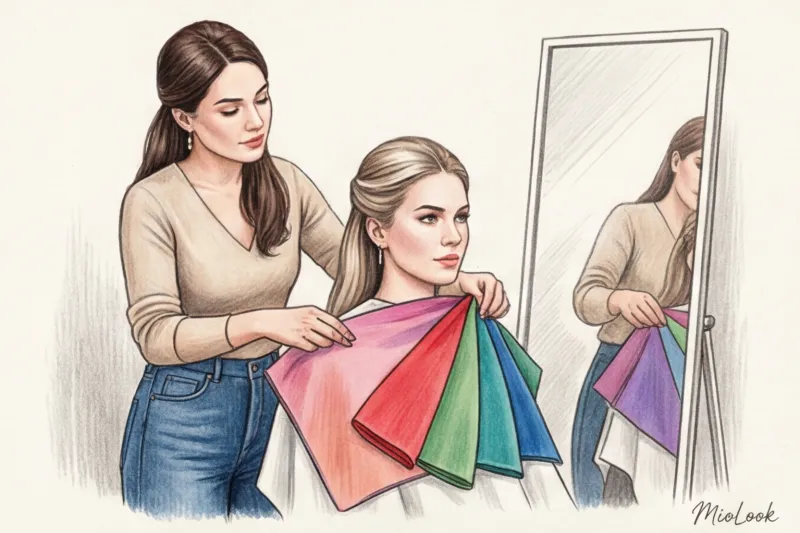
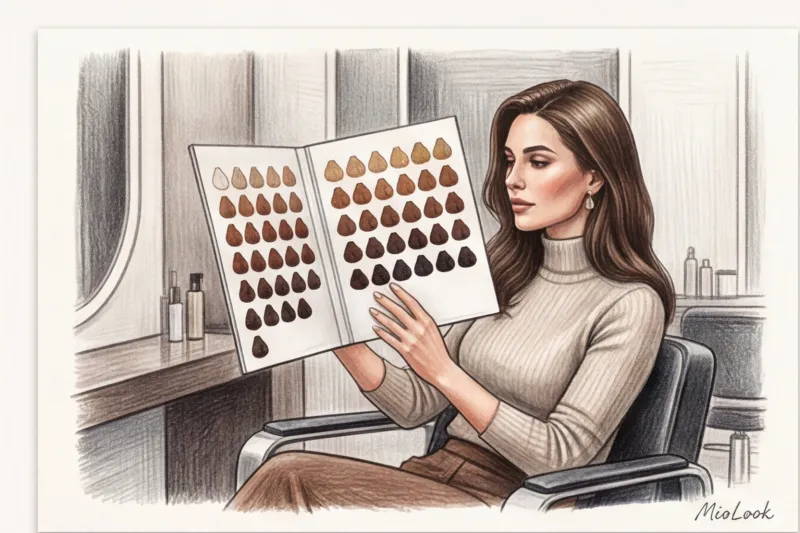
- Do draping without makeup. Pull your hair back and remove makeup. Apply your favorite tops, blouses, and scarves to your face. Then apply a strand of hair from your desired hair color palette to your forehead (or use a quality wig) and apply the same items again. The difference will be obvious.
- Use technology. Upload photos of your items to MioLook app AI-powered simulations of new looks will help you understand how your favorite jackets and dresses will look with a new level of contrast.
- Apply the 30% Rule. If more than a third of your favorite (and most expensive) items in the portrait area clash with the new color, stop. Perhaps you should choose a softer technique: for example, a textured balayage instead of an all-over blonde to preserve the natural root color near the face.
How to Maintain New Contrast with Portrait Zone
What should you do if you've already left the store, and your favorite €250 basic coat is now making you look like a moth? Don't rush to take it to the resale store.
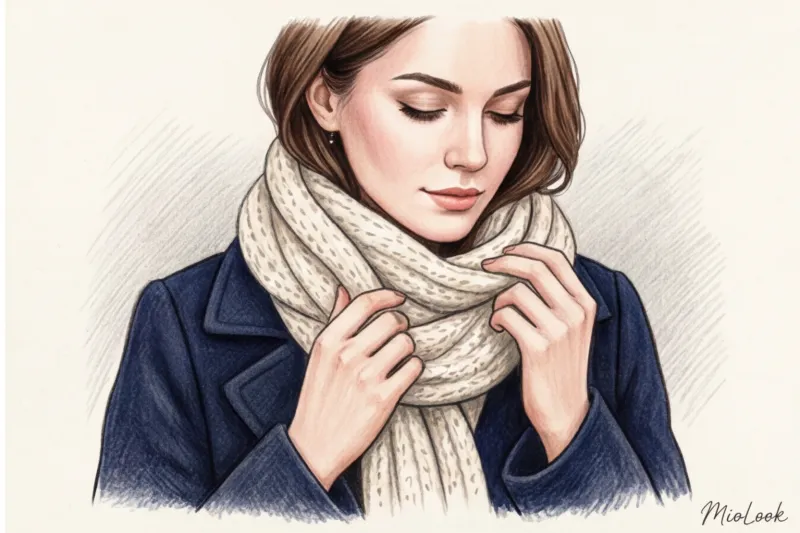
The "buffer zone" technique comes to the rescue. The idea is to create a contrasting element between the off-color clothing and your face. This could be:
- A voluminous scarf in the perfect shade for you;
- A light shirt collar pulled out over a too-dark jumper;
- Massive jewelry near the face (large pearl earrings perfectly highlight the face when the contrast is reduced).
But I'll be honest: this trick doesn't always work. If the item has a very complex, aggressive, or large print that completely overpowers your new look, a thin scarf won't save you. In that case, it's really better to sell or donate the item.
Ready to get started?
Try the MioLook plan for free—no commitments required. Digitize your wardrobe today.
Get access — €0.99 onceChanging your hair color is a fun process that can completely recharge your batteries. But by approaching it with a stylist's expertise, you'll avoid unnecessary expenses. Remember the key rule: a successful coloring shouldn't force you to buy new clothes and tons of makeup—it should give your existing wardrobe a new, unexpectedly beautiful edge.