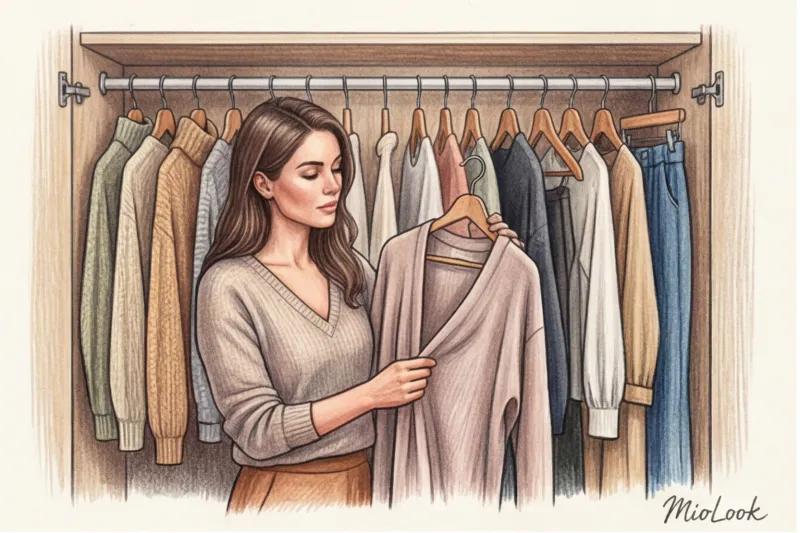
You know what statistic scares me the most as a stylist? Around 80% of women wear the wrong size clothes in the first six months after giving birth. We squeeze into skinny jeans out of psychological denial, or, conversely, hide in our husband's oversized hoodies, hoping to become invisible. Both strategies fail.
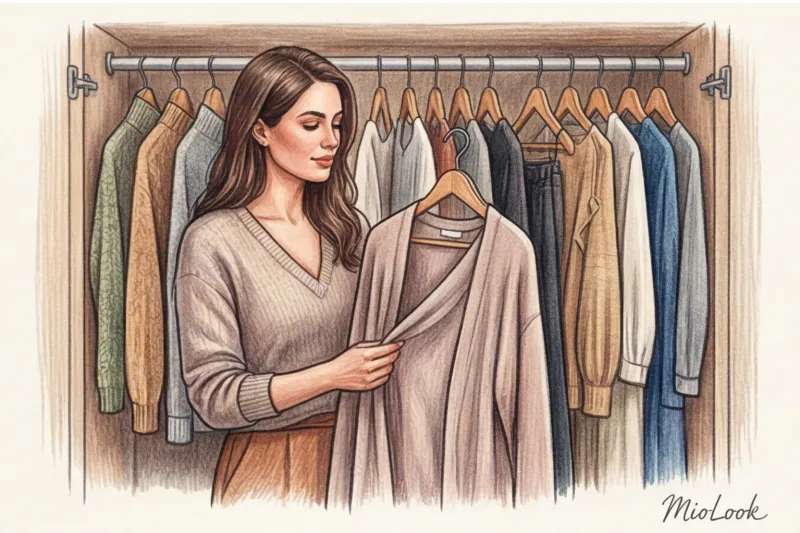
The question of how to conceal a postpartum belly with clothing shouldn't be resolved through the physical pain of a digging belt or the loss of one's femininity in meters of shapeless fabric. We discussed the psychology of accepting a new body in more detail in our The complete guide to postpartum style and comfort Here we'll get down to pure practice. I'll show you an architectural approach to your wardrobe that works as a visual filter while your body physiologically recovers.
Transitional Wardrobe: Why the Old Rules No Longer Work
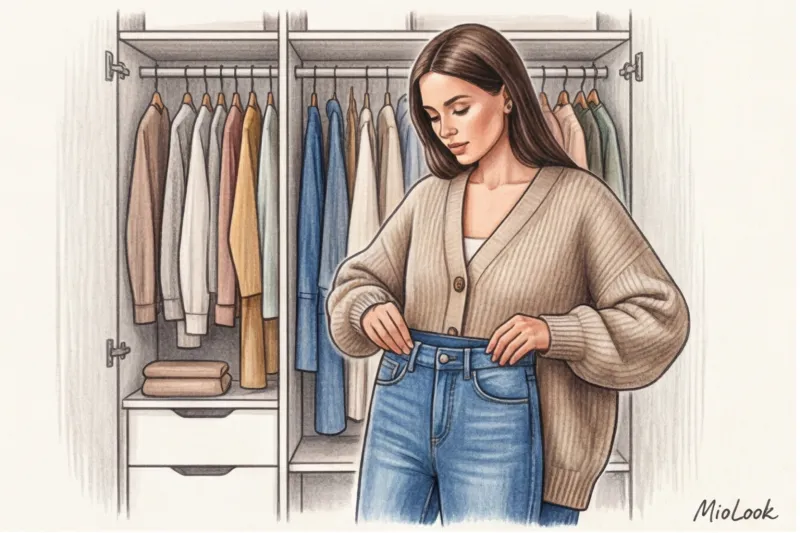
One of my clients, Anna, once burst into tears right in my studio in front of a rack of size 26 jeans. "I just want to be myself again," she said, trying to zip up a zipper that was coming apart at her stomach. It's a classic mistake new mothers make—trying to immediately return to their pre-pregnancy clothes.
In medicine, there's a term called the "fourth trimester." It's the 6-8 weeks necessary for the uterus to undergo basic involution and begin to repair the diastasis. Your body has done an incredible job, and demanding it immediately return to its previous parameters is simply unscientific. Instead of buying maternity clothes (which continue to make you look pregnant) or torturing yourself with old jeans, you need transit capsule.
Over 12 years of practice, I've developed a formula: a transitional wardrobe consists of just 10-12 well-chosen items. This micro-capsule, by my calculations, saves my clients about 45 minutes a week on morning preparation. You don't have to worry about whether a button will fit today—every item in this wardrobe works for you.
Anatomy of a cut: how to hide a postpartum belly with clothes without the "hoodie" effect
The secret to visually shaping your figure lies not in the size of your clothes, but in the density of the fabric and the direction of their lines. According to the Müller-Lyer illusion, vertical lines draw the eye up and down, making an object appear narrower and longer. Our goal is to create these vertical lines with proper tailoring.
We also shift the focus. Every woman has "small points"—ankles, wrists, collarbones. By revealing them, we create scale for the entire silhouette. Even in a voluminous sweater, you'll appear fragile if your thin wrists are visible.
The rule of hard edges and dense textures
Thin, flimsy knitwear is your worst enemy. Thin viscose (especially cheap ones) clings to every fold, mimicking the contours of your body. This doesn't mean you should wear tarpaulin. Look for fabrics that hold your shape: heavy cotton (from 180 g/m²), linen with added viscose for softness, or structured denim.
"Fabric should create an architectural framework around your body, not cling to it like a second skin. The garment should hold its own shape on the hanger," is the basic rule stylists follow when working with volume correction.
Pay attention to your shoulder line and hem. If your shoulders are clearly defined (small shoulder pads on jackets can help) and the hem has a smooth, crisp cut, the entire silhouette will automatically come together.
The magic of smell and asymmetry
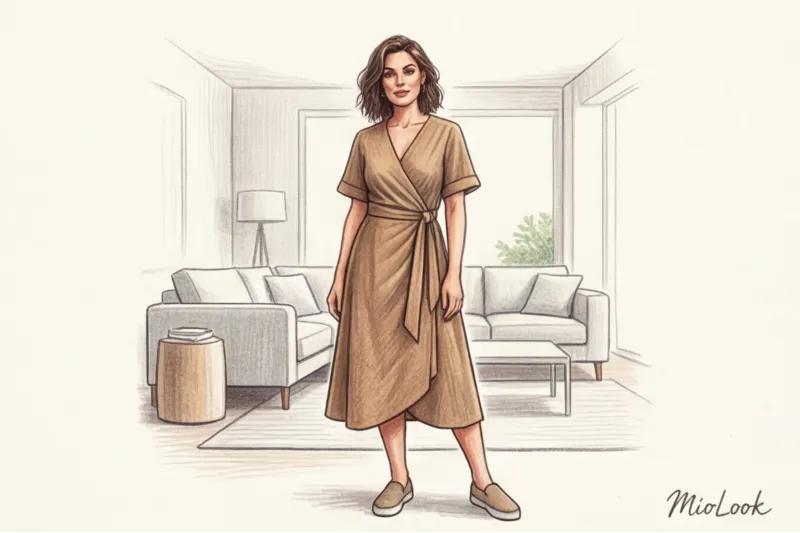
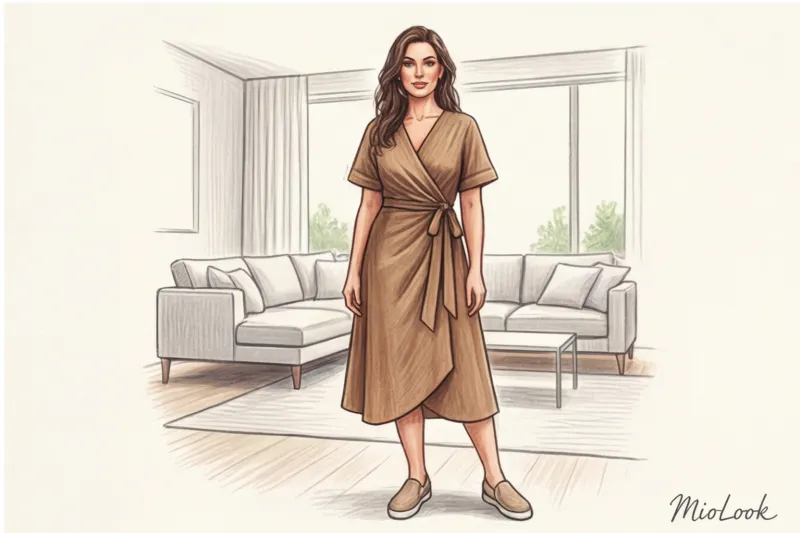
Straight horizontal lines cut the figure and emphasize width. Diagonal lines, on the other hand, break up volume. This is why the wrap cut works so well.
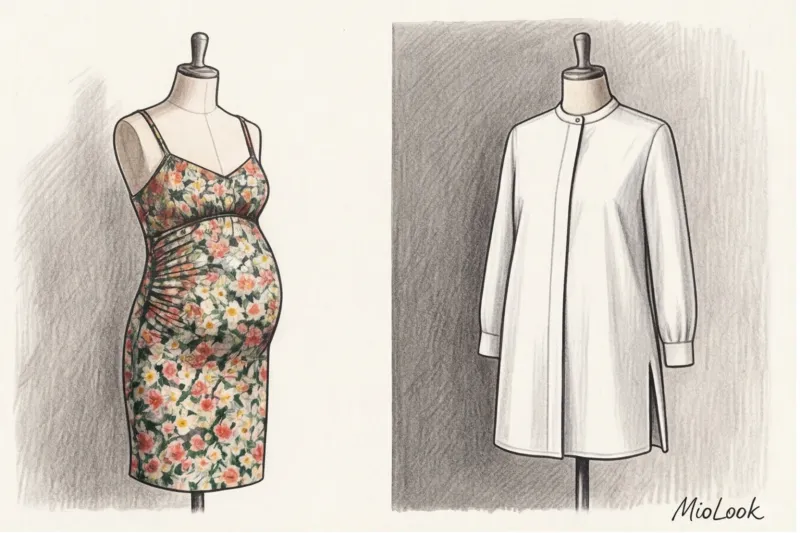
But there's a catch. A proper wrap dress shouldn't look like a dressing gown. Avoid thin jersey with a small floral print. Opt for heavy cotton, architectural cuts like those from brands like COS, and solid, deep colors. The diagonal line should be a clear, geometric line.
Access to MioLook for €0.99 — one-time payment
A smart AI stylist will select the perfect transitional look from your items.
Get access — €0.99 onceThree Toxic Styling Myths About Your Postpartum Figure
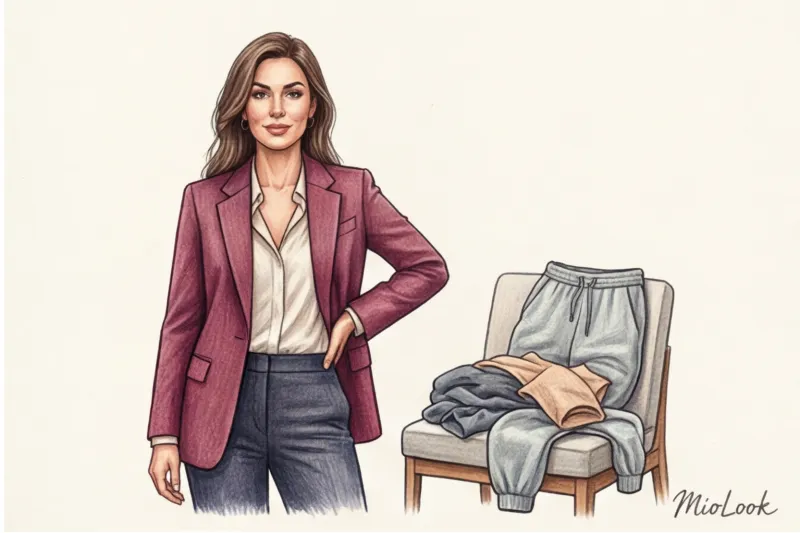
The fashion industry has long fed us stereotypes that backfire in practice. Let's examine three major misconceptions.
- The myth of oversize. It seems logical: if you have volume, you need to hide it under something huge. But giant hoodies and shapeless tent dresses hide more than just your stomach—they also conceal your bust, waist, and hips. Visually, you become a massive square. A semi-fitted silhouette (with 2-3 centimeters of air between the fabric and your body) is much more effective.
- The dangers of shapewear. Rigid corsets and tight compression garments pose a medical risk. They impair circulation in the pelvic organs and can slow the natural contraction of the abdominal muscles by taking over their work. Save radical compression for the red carpet (for a couple of hours). For everyday wear, choose seamless, light-support underwear that simply smooths the skin without compressing the internal organs.
- The misconception about the color black. "Black is slimming" is a mantra we've been hearing since childhood. Yes, black absorbs light. But a solid black monochrome without textured transitions creates the effect of a heavy monolith. A bright or light monochrome (for example, navy blue, deep burgundy, or even beige) elongates the figure much better without creating a mournful mood.
Basic image formulas: comfortable for mom, stylish for a woman
A new mother doesn't have time to stand in front of a mirror for half an hour. Dresses should be easy to put together in three minutes, easy to wash, and, if necessary, provide quick access for breastfeeding.
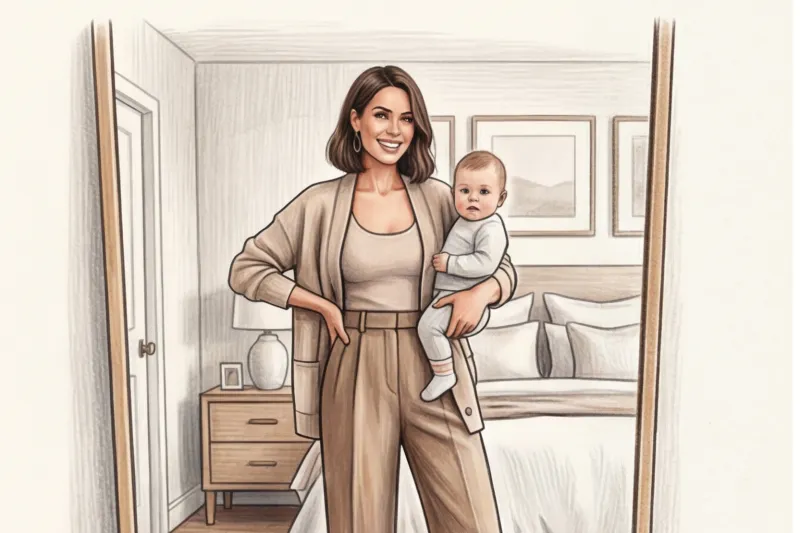
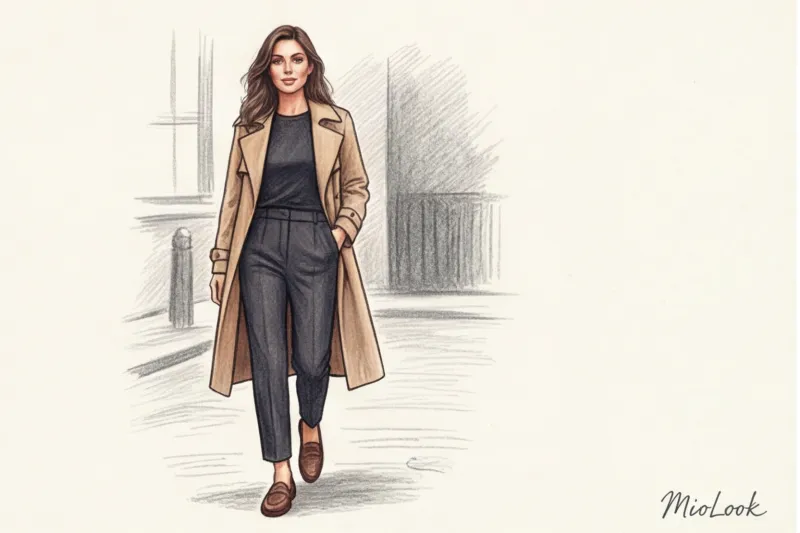
Formula 1: "Column of Color". Put on a top and pants in the same color (this is the first layer). Add a contrasting, unbuttoned second layer on top: a long cardigan, a thick shirt, or a structured jacket. The unbuttoned sides of the second layer create those two saving vertical lines that visually "cut off" the sides and disguise the tummy.
Formula 2: “Volume on top + slim bottom.” Take a loose, shapely men's-style shirt (or a thick tunic) and pair it with tapered trousers or thick leggings. The key rule: be sure to show off your slim ankles (choose cropped trousers or roll up the hem slightly).
Formula 3: Straight cut shirt dress. This is the perfect uniform. The button placket at the front creates a vertical line and is comfortable for nursing mothers. The thick fabric doesn't cling to the waist, and the midi length, paired with loafers or sneakers, looks modern and expensive.
Your perfect look starts here
Join thousands of users who look flawless every day with MioLook, collecting capsules in one click.
Get access — €0.99 onceTrousers and jeans: a fit that doesn't cut into the stomach and seams
If you've had a C-section, you know that tight, high-waisted denim is a torture device. Even after a vaginal birth, a tight belt digging into your belly by evening can ruin your mood and posture.
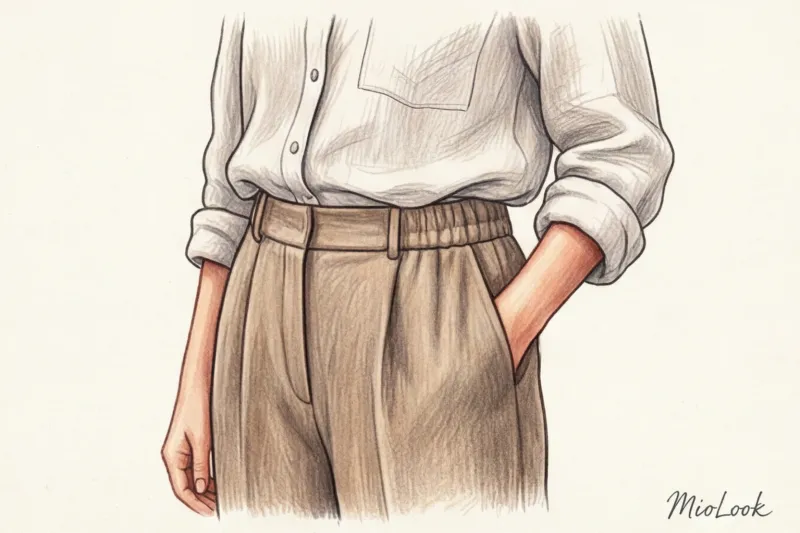
Look for pants with a construction flat front (flat front). From the front, they look like classic tailored trousers with a smooth waistband, while the back features a wide elastic band. These styles can be found in collections by Uniqlo, Massimo Dutti, and many local brands. They adapt to changes in body size throughout the day.
Try the "French tuck" trick. Tuck the hem of your shirt or T-shirt into your pants just at the front, about a hand's width apart, and leave the sides and back loose. This defines your waistline and shows off the length of your legs, but the fabric drapes softly at the sides, hiding your midriff.
Fair Limit: This trick does NOT work on thick, chunky wool sweaters—they will create an unwanted bulge in your belly. Use it only on fine knits, silk, or cotton.
Digitizing a New Body: How to Assemble a Capsule in the App
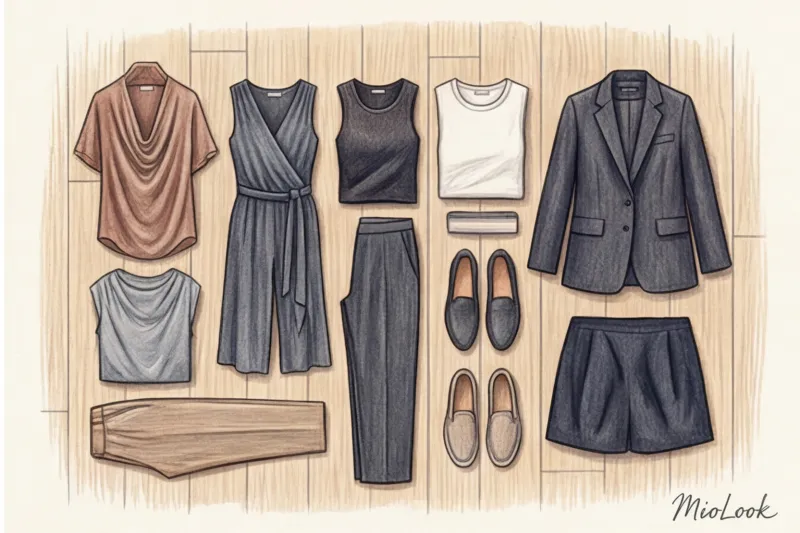
After giving birth, we often fall into a trap: we go to the store and, out of desperation, buy a fifth identical black T-shirt because it's "safe." To break this cycle, you need to visualize your wardrobe.
In my practice, clients breathe a sigh of relief when we transfer their belongings into a digital environment. I highly recommend using the "smart wardrobe" feature in MioLook Take photos of your 10-12 transit items and upload them to your virtual closet.
Create a separate "Transition" tag in the app. Archive all your pre-pregnancy items. When you look at your phone screen and see 15 ready-made, stylish combinations from your current items, your brain stops panicking. You no longer stand in front of a full closet thinking, "I have nothing to wear." The algorithm will automatically suggest new combinations you might not have thought of, masking your stylistic blind spots.
Checklist: 5 Things to Put on the Top Shelf Right Now
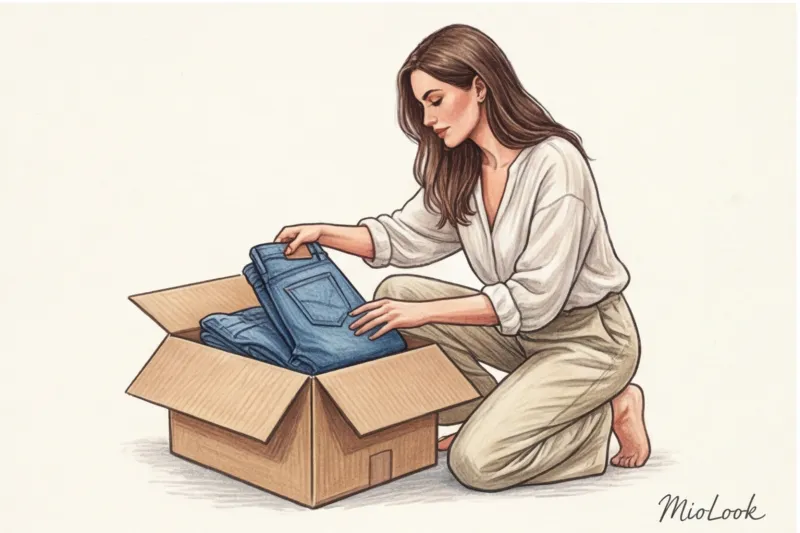
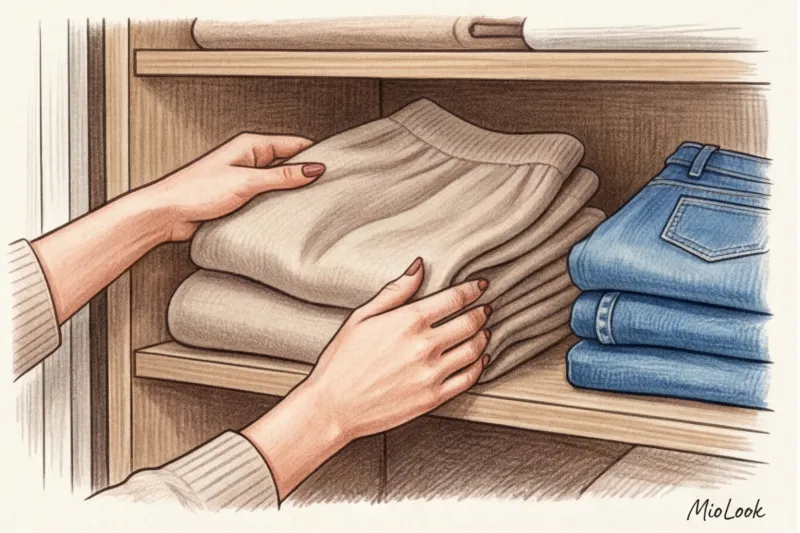
Let's do a quick inventory. This evening, pack a box and put the following items in it (out of sight, out of mind):
- Pre-pregnancy skinny jeans with a stiff waistband. Don't use them as a motivator to lose weight, they only work as a guilt generator.
- Thin, tight turtlenecks. Leave them as a first insulating layer under thick shirts, but do not wear them as a standalone element.
- Items with a large horizontal print in the waist area. Any horizontal stripe in a problem area will make you look at least one size bigger.
- Dresses with a rigid, cut-off belt at the natural waistline. While your proportions are changing, rigidly fixing your waist will only get in the way.
- Any clothing that makes you feel guilty. If an item makes you feel "different," it doesn't belong in your closet.
Clothes should serve your needs, not force you to conform to factory patterns. How can you hide your postpartum belly with clothes? Stop hiding it in bags and start dressing your current body with respect, using dense fabrics, smart tailoring, and modern styling technology.