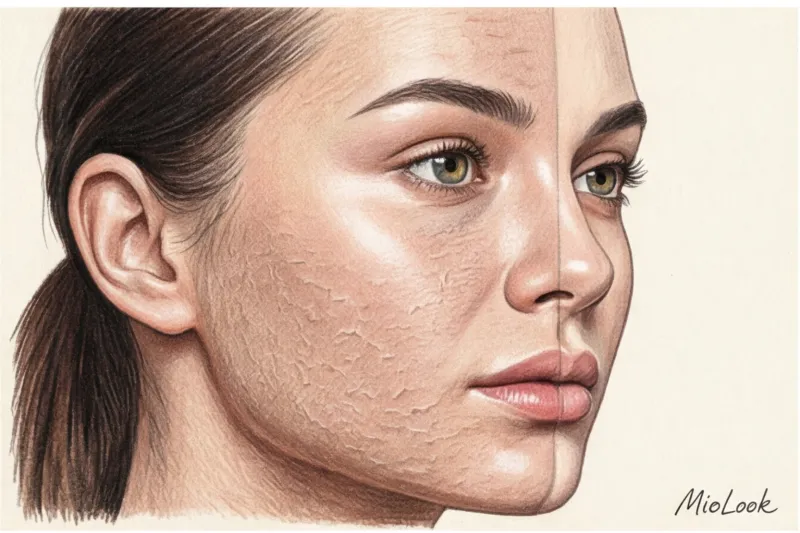
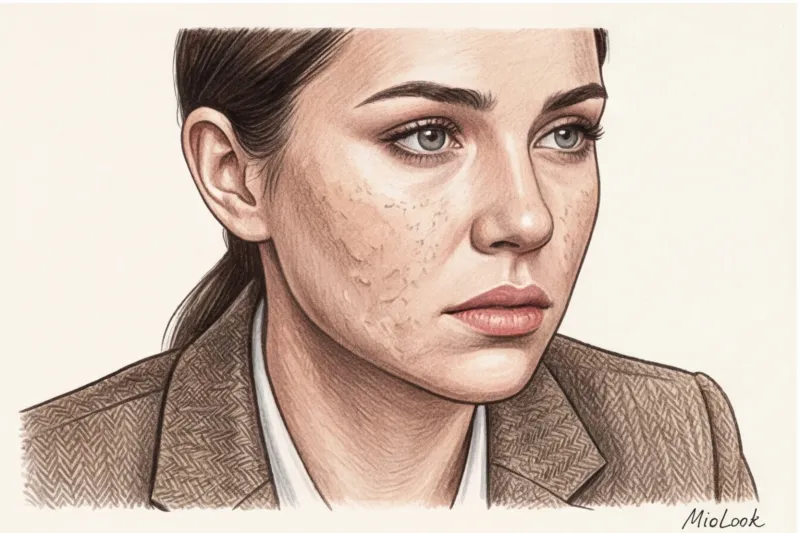
Imagine: it's an important business meeting, you're wearing a flawless, perfectly tailored wool jacket, your hair perfectly styled. You feel like a million bucks until you accidentally catch your reflection in the elevator mirror. The foundation on your cheeks and the sides of your nose is blotchy, settling into microcracks and treacherously highlighting every dry flake. Sound familiar? At times like these, the question arises, How to hide peeling skin under makeup , becomes a question of saving not just beauty, but a professional image.
As an image consultant and colorist, I often encounter women who invest huge sums in their wardrobes but forget about the texture of the canvas on which they are "worn." I discussed this fundamental approach to skin quality in more detail in our complete guide. Basic Facial Skin Care: The Secret to Long-Lasting Makeup Today, we'll take a closer look at the problem: why typical beauty blogger advice doesn't work in real life and how stylists save the day 15 minutes before going out.
Why dry skin and flaking ruin even the most prestigious image
One of my clients, a top manager in the IT sector, once came in for a consultation in utter despair. She was wearing a fantastic Jil Sander wool suit, costing around €2,000. It had a perfect, architectural cut and a sophisticated shade of dark chocolate (which, by the way, was a stunning match for her complexion). But her look was clearly falling apart. The reason was her face: stress and the dry air in the office had left her skin severely dehydrated, and her expensive, heavy foundation had settled on the flaking skin like an uneven plaster.
The law of image is inexorable: texture is everything. It's not the absence of logos on clothing that cheapens, but dissonance. When the smooth, expensive fabric of a suit contrasts with the uneven, patchy texture of skin, the brain interprets this dissonance as unkemptness. Skin is your most important and noticeable "accessory."
Texture Physics: Why Makeup Doesn't Last
To understand how to combat the problem, you need to know your enemy. Any liquid foundation is an emulsion. Roughly speaking, it's a suspension of pigment in a mixture of water and oils. What physically happens when this emulsion comes into contact with dehydrated, flaky skin?
As Dr. Michelle Wong (2023) notes in her study of cosmetic chemistry, dry skin acts like a sponge. It instantly sucks out all available moisture from foundation. As a result, the emulsion disintegrates right on the face: water is absorbed, while dry pigment and heavy oils remain on the surface, clinging to the raised edges of dead skin cells. This is why foundation can last up to 8 hours without changing on moisturized skin, while on dry skin, it oxidizes and becomes blotchy after just 2 hours. Studio lighting or harsh office fluorescent lamps act like a magnifying glass, exaggerating every unevenness.
The Biggest Mistakes: Why Trying to Cover Up Peeling Skin with Makeup Only Makes It Worse
Over the course of 12 years of work, I have noticed that women, in a panic before an important event, commit the same destructive actions in an attempt to save the situation.
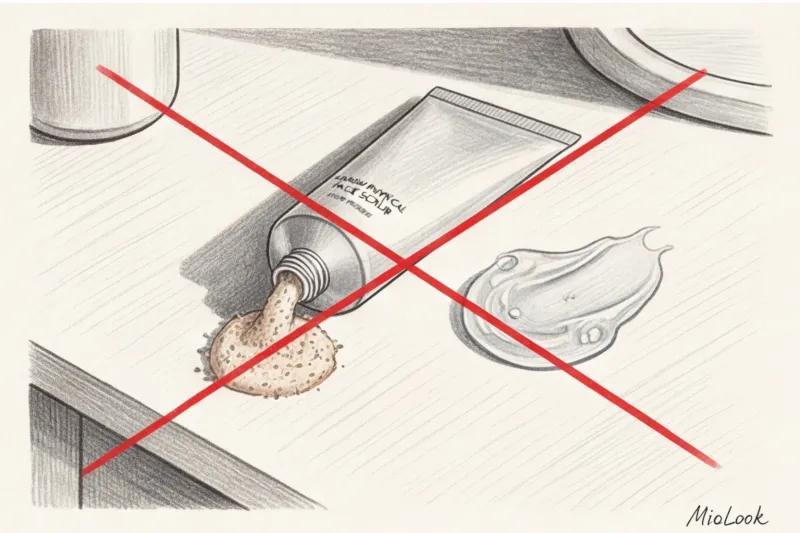
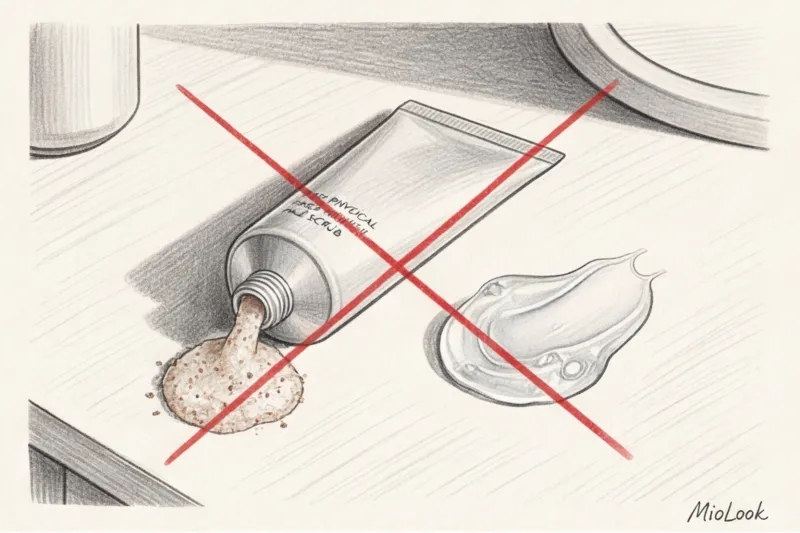
- Mistake 1: Harsh scrubs before makeup. It seems logical: if your skin is flaking, you should scrub it off. But scrubs containing apricot kernels or sugar remove flakes unevenly. They leave micro-injuries with jagged edges. Foundation pigment will become trapped in these micro-injuries, and your face will look not just flaky, but inflamed.
- Mistake 2: Silicone primers-grouts. This is the most harmful myth perpetuated by social media. Thick silicone gel (dimethicone) works great for filling enlarged pores on oily skin, but it works differently on dry skin. It doesn't "glue" the flaking skin shut, but creates a slippery film over it. Foundation simply rolls off this film in dirty pellets.
- Mistake 3: Choosing a mattifying foundation and powder. The urge to set makeup that's "running" on dry skin with powder is a deadly gambit. Talc and silica in powders draw out residual sebum, turning your face into parchment.
Access to MioLook for €0.99 — one-time payment
A smart AI stylist will select the perfect look based on your individual characteristics and color type.
Get access — €0.99 onceSOS Preparation: How to Quickly Moisturize Your Skin Before Applying Foundation
If you have an hour left before going out and your skin feels like the Sahara Desert, we follow the protocol of professional makeup artists. Forget the usual "wash your face and apply cream."
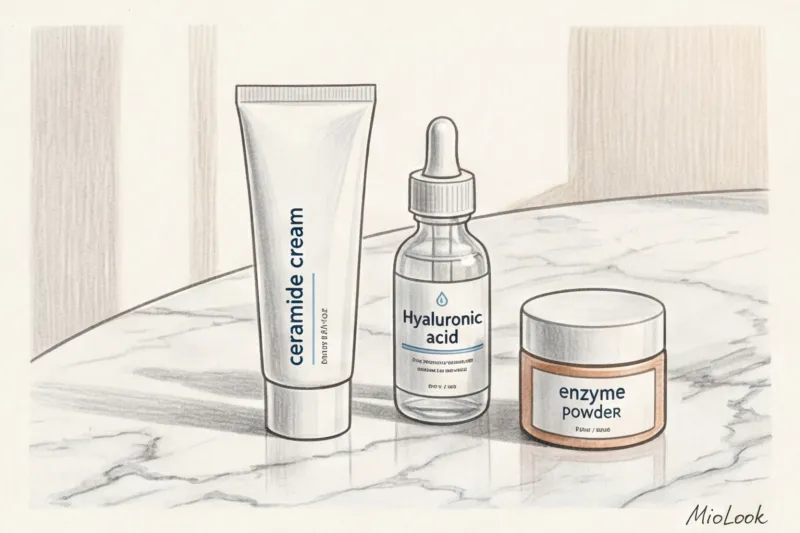
Step 1: Gentle exfoliation without trauma. We need to dissolve the bonds between dead cells, not peel them off. Use enzyme powder (with papaya or pineapple enzymes) or pads with PHA acids (gluconolactone). They act as a solvent, gently smoothing the texture.
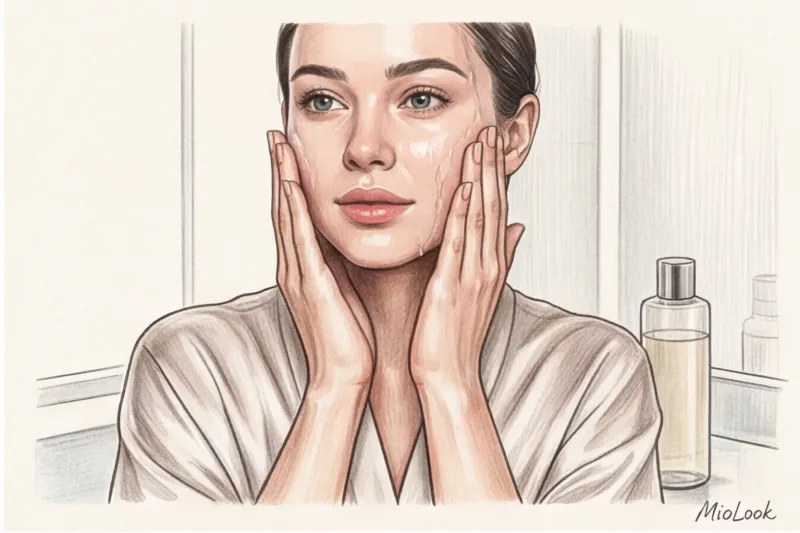
Step 2: The Layer Cake Method (7 Skin Method) This is a Korean technique that's adored on film sets. Take a basic hydrating toner (no alcohol or acids, just water and hyaluronic acid) and apply it to your face with your hands, patting it in. Wait 30 seconds. Apply a second layer, then a third and a fourth. Your skin should feel moist and plump, like a hydrated sponge. Important caveat: This does NOT work if you have active acne or rosacea in the acute stage—too many layers of liquid textures can cause a greenhouse effect.
Step 3: Sealing the moisture. Water will evaporate quickly if left uncovered. A cream with ceramides, squalane, or light lipids is needed. These act as cement, sealing moisture inside the cells and smoothing the stratum corneum.
How to Conceal Peeling Skin Under Makeup: A Professional Foundation Application Technique
What you apply foundation with is even more important than what you apply. The main rule for flaking: put the brushes away Any bristle, even the softest, works like a micro-broom. By dragging the brush across your face, you lift the skin flakes against their growth direction. As a result, after 10 minutes, you'll achieve the effect of a terry towel on your cheeks.
Backstage at fashion weeks, when models arrive with chapped, tired faces after a dozen shows, we always use a damp sponge (or beauty blender). Legendary makeup artist Val Garland often demonstrates this technique, calling it "stippling."
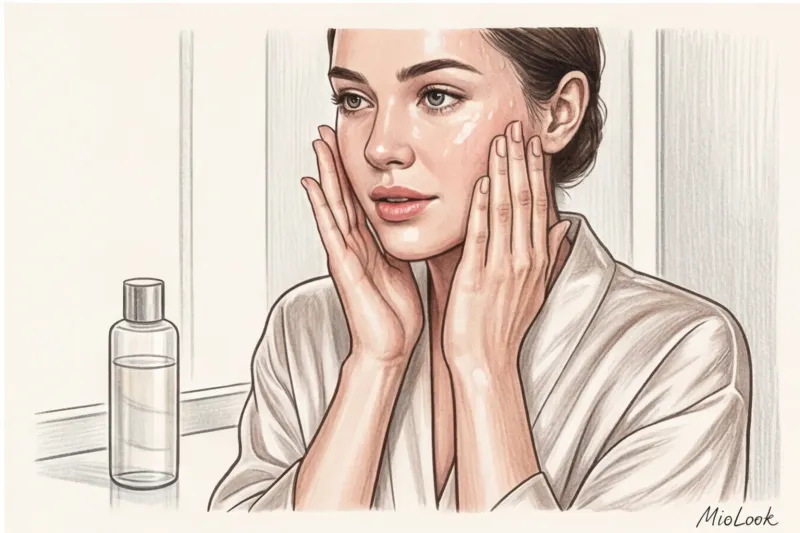
How to do it correctly:
- Wet the sponge so that it increases in volume and squeeze it out firmly (there should be no excess water in it).
- Squeeze the foundation onto the back of your hand. Tip: Add one drop of a hydrating serum or lightweight facial oil (like rosehip oil) and mix. This will make the texture as flexible as possible.
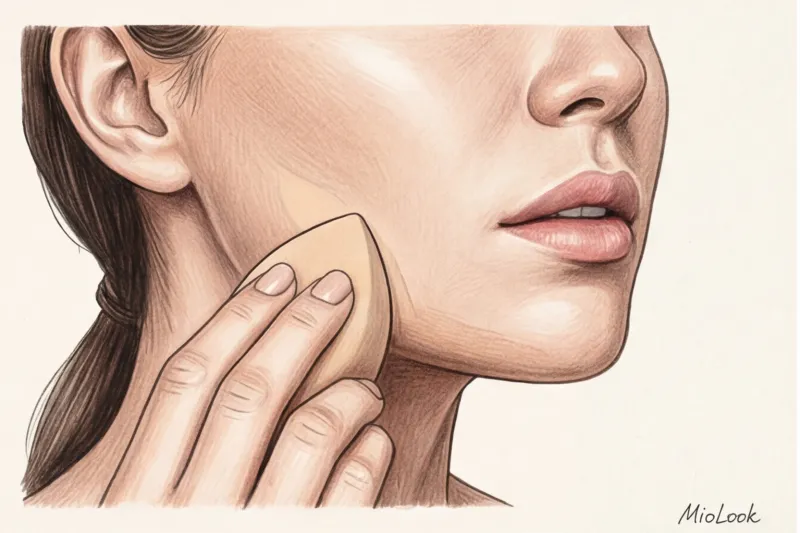
- Use a sponge to pick up the product and apply it to your face evenly. with pressing, stamping movements You should literally press the scales onto the skin without moving the sponge to the sides.
What foundations do stylists choose for dry skin?
Long-lasting matte foundations are absolutely not suitable for flaky skin. Your choice is water- or serum-based formulas. Pay attention to the finish: it should be satin or dewy. There are excellent examples in the price range of €15 to €60, from the budget-friendly L'Oréal True Match to the premium Armani Luminous Silk. They contain moisturizing ingredients that prevent the emulsion from breaking down. If you're unsure about the right shade and coverage, I recommend checking out our article. How to choose foundation online using AI - this will save you a lot of time.
Your perfect look starts here
Join thousands of users who look flawless every day with MioLook's intelligent tips.
Get access — €0.99 onceChecklist: 5 steps to perfect, flake-free skin tone
Save this quick cheat sheet for those mornings when nothing goes according to plan and you still need to look your best:
- Step 1. Washing with an ultra-soft, SLS-free cleanser (foam or milk).
- Step 2. Enzyme powder for 1-2 minutes (only on areas with obvious peeling: wings of the nose, between the eyebrows).
- Step 3. 3 layers of basic hydrating toner applied with hands at 30 second intervals.
- Step 4. Cream with ceramides. Necessarily: Let it soak in for at least 10 minutes before applying makeup!
- Step 5. Apply liquid or serum foundation with a damp sponge, using only “patting” movements.
Long-Term Strategy: From SOS Measures to Healthy Skin
The emergency measures we've discussed really do work. They'll save your face before a board interview or an important corporate photo shoot. But true status is built on consistency and discipline. You can't spend 40 minutes every day applying multiple layers of moisturizer and meticulously applying foundation.
Building a quality basic skincare routine is an investment comparable to buying a good classic watch or the perfect cashmere coat. It's something that saves you time every morning. When your skin is healthy, has a strong lipid barrier, and isn't dehydrated, you don't need to search for "that perfect foundation." Almost any foundation will do, and you can apply it with your fingers in two minutes.
To create a harmonious overall look, where skin, makeup, and clothing work together, use modern tools. In the app MioLook You can not only create capsule collections but also analyze how your beauty look matches your chosen style. Upload your portrait photos and see how different fabric textures (from matte wool to glossy silk) illuminate your face in different ways.

Remember the most important thing: peeling is not a cosmetic defect to be covered up. It's your skin's cry for help. Quench it with the right prep, swap harsh brushes for a damp sponge, and your makeup will look luxurious and flawless from early morning until late evening.