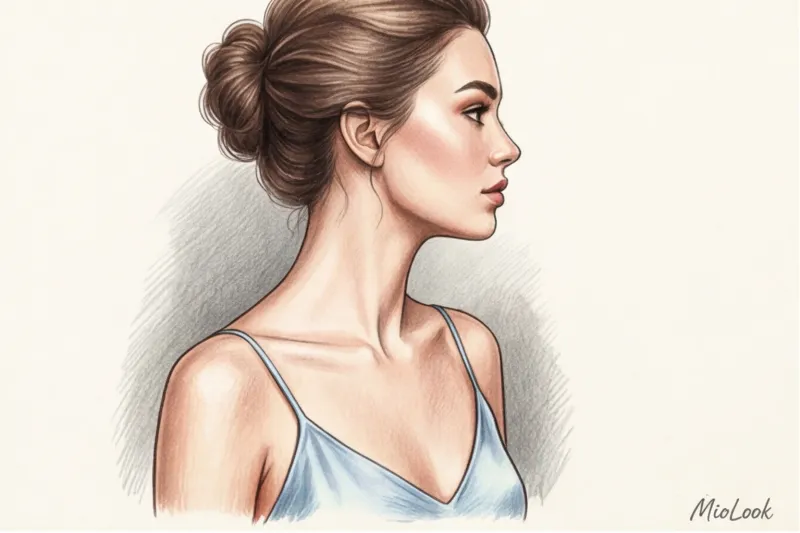
Silhouette architecture: why hair can "eat up" the length of your neck
"Sofia, I need to lose weight urgently. My neck has become so short and my shoulders look like a swimmer's," a client told me last spring. We didn't bother with her diet. We simply chopped off 25 centimeters of her heavy, straight hair, creating a textured bob. The result? She visually "lost" 5 kilograms and "grew" a couple of centimeters.
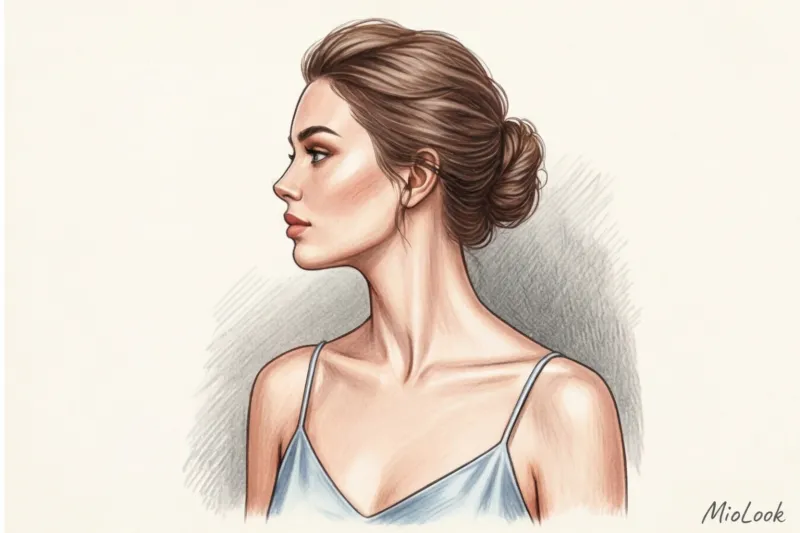
Most women view their haircut solely as a frame for their face. This is a huge mistake. In styling and Gestalt psychology, a different law applies: others perceive our silhouette as a single architectural composition. In this structure, hair acts as a visual "roof" for our body. We've already covered how to create proportions for your entire look in our basic guide. Haircuts for your body type: how to choose the right length and volume Today we'll focus on one critically important area—the cervical spine.
In design, there's the concept of "negative space"—the empty space around an object. In fashion design, negative space is exposed skin: the neck, collarbones, and wrists. These areas lend a lightness to the entire silhouette. Covering them with heavy fabric or a solid sheet of hair instantly makes the figure appear bulky.
The biggest beauty myth: straight long hair is considered vertical
According to research by the British beauty agency WGSN (2024), over 70% of women with short necks stubbornly continue to grow their hair. Why? Because of the popular, but completely false, stereotype that long, straight locks create a saving "vertical" that stretches everything.
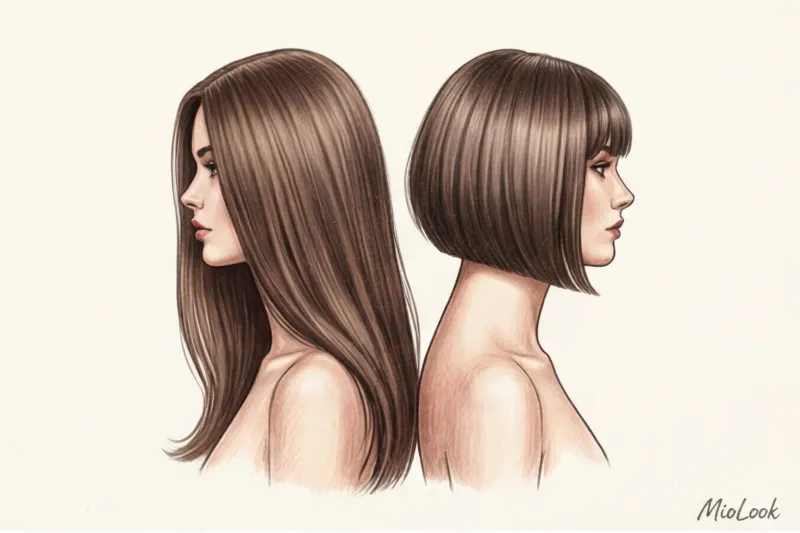
Let's face it. A static, thick curtain of hair below the shoulders doesn't act as a vertical line. It acts like a thick theater curtain. When the ends of the hair fall onto the shoulders and back, they completely blur the anatomical line between the jaw and the shoulder girdle. The neck visually disappears, and the shoulders appear larger, especially if you have thick, heavy hair.
Your perfect look starts here
Join thousands of users who look flawless every day with the help of artificial intelligence.
Get access — €0.99 onceThe Anatomy of the Perfect Shape: How Neck-Lengthening Haircuts Work
To determine the right length, professional stylists rely on bone structure. At the legendary Vidal Sassoon Academy, the haircut shape is always based on the geometry of the skull and jawline.
There's a brilliant and simple 5.5-centimeter rule, developed by renowned hairstylist John Frieda. It helps you determine whether a short haircut that exposes your neck will suit you. Place a pencil horizontally under your chin and a ruler vertically under your earlobe. If the distance from your earlobe to the pencil is less than 5.5 cm, a short haircut is guaranteed to elongate your neck and make your face look more graceful. If it's longer, it's best to opt for medium-length haircuts (up to the collarbone).
"The geometry of the lines is everything. The diagonal cut from the back of the head to the chin draws the viewer's eye downwards, creating the illusion of a swan-like neck even where there isn't one anatomically."
Another important aspect is the golden ratio (proportion 1:1.618). By revealing the collarbone area (the so-called V-zone), we restore the correct proportions of perception: the face appears thinner and the neck longer.
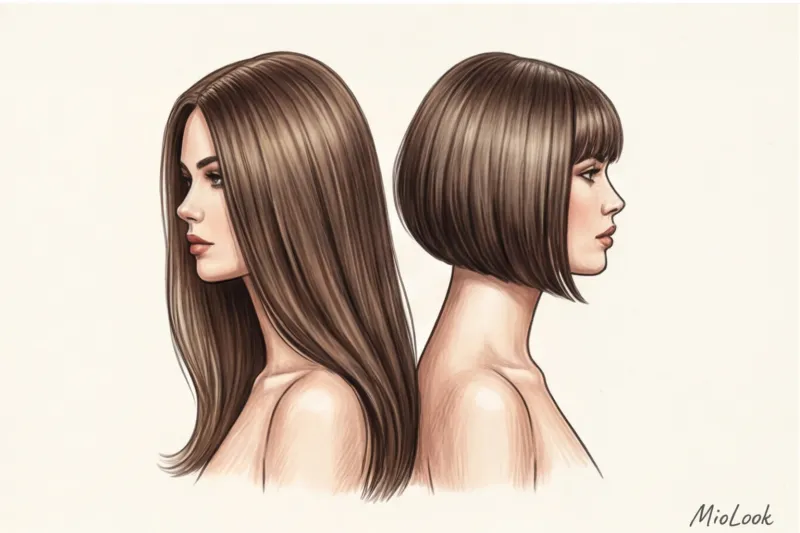
5 Proven Options: Haircuts That Lengthen the Neck
As a practicing expert, I can say frankly: there's no one-size-fits-all "magic" haircut. The shape needs to be tailored to your hair thickness, growth pattern, and cheekbone shape. Below, I've compiled five architectural solutions that do the best job of visually elongating the neck. These neck-lengthening haircuts have been tested on hundreds of clients.
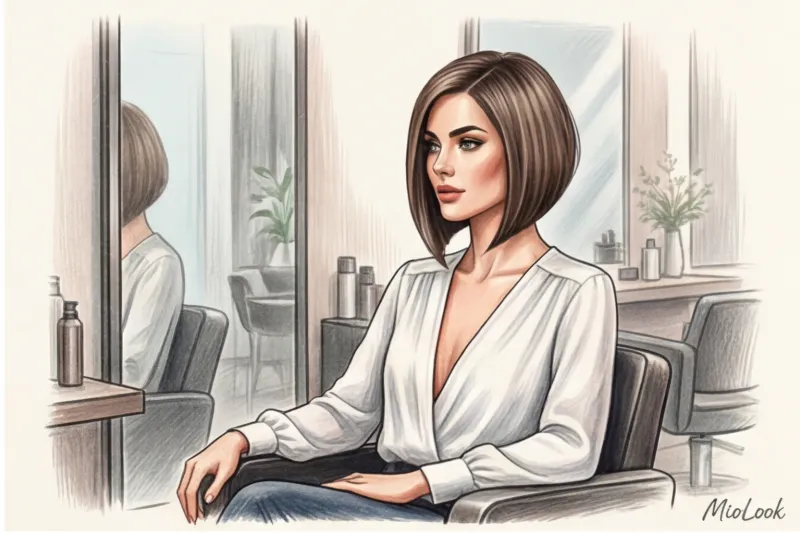
1. Asymmetrical bob (A-line Bob)
The essence of the shape lies in the contrast: the back of the head is cut short (sometimes with slight graduation), while the strands towards the face are clearly lengthened.
Why it works: An asymmetrical bob is a pure optical illusion. The short back completely exposes the nape of the neck, showcasing its natural curve. The longer strands in front create a downward-pointing V-shape. The eye involuntarily follows this diagonal line. It's an ideal choice for women with thick hair who want to remove excess volume from their shoulders.
2. Pixie with an open back and volume on the crown
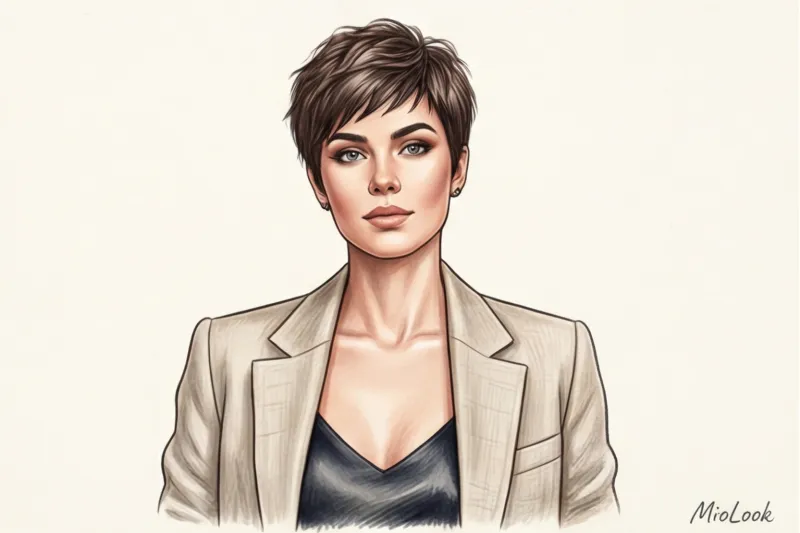
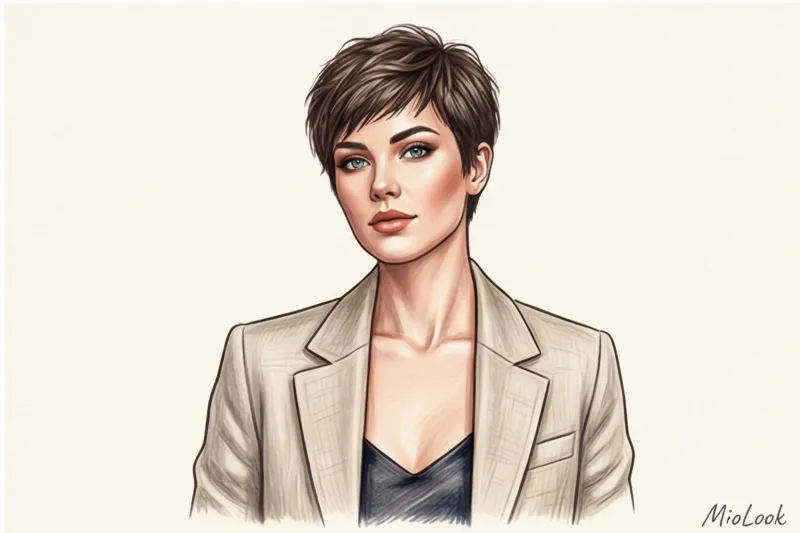
An ultra-short or even shaved back combined with textured strands on the crown.
Why it works: The pixie shifts all the visual weight and center of gravity upward. In contrast to the voluminous crown, the neck appears incredibly thin and fragile. However, there is a strict limitation here. This solution It doesn't work For plus-size women. If you get an ultra-short, sleek haircut on a fuller figure, you'll create a "small head" effect, making your figure appear even larger.
3. Graduated bob (on a leg)
A classic that requires masterful execution. Volume is concentrated at the nape of the neck, and the length tapers off at the hairline.
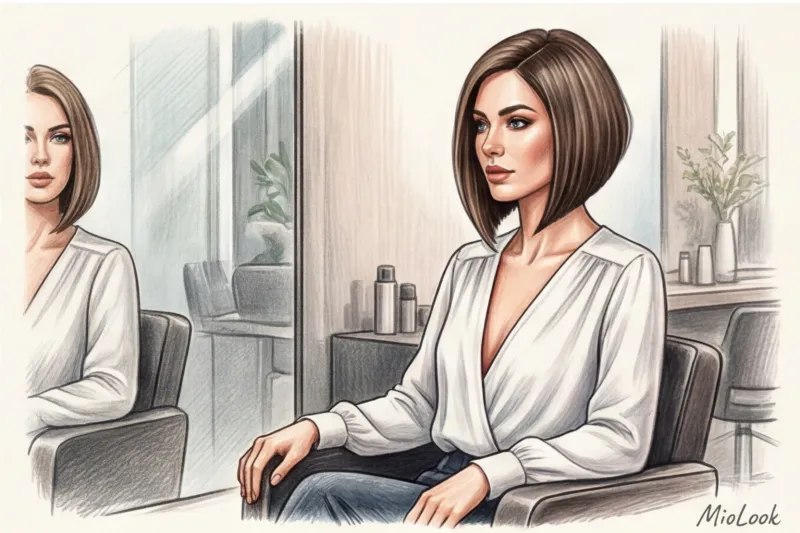
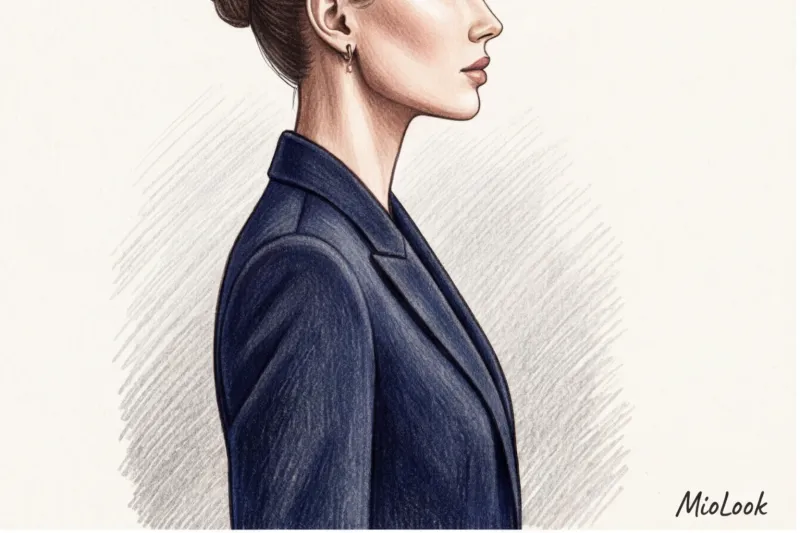
Why it works: The graduation creates the perfect angle in profile. Instead of a flat back, a rounded shape appears, accentuating the grace of the neck. An important technical detail: the stylist must create a perfect edging. If you have a low hairline at the back (hair growing far down the neck), this cut will require trimming every 2-3 weeks, otherwise the effect will quickly become sloppy.
Ready to get started?
Upload a photo to MioLook and see how different haircuts change your proportions in real time.
Get access — €0.99 once4. Extended Shaggy (Shag) to the collarbones
A wonderful alternative for those who aren't psychologically ready to part with their length but want to correct their proportions. The shape is built on strong layers and jagged, textured ends.
Why it works: This is where negative space comes into play. Unlike a straight cut, which hangs like a blank wall, a shaggy cut allows air to flow between the strands. The skin of the neck shows through the layers, creating a sense of lightness. The movement of the choppy strands draws attention away from the width of the shoulders.
5. Cascade with layers below the collarbone line
A solution for those who love truly long hair. The trick is where exactly the first layer begins.
Why it works: If you're creating a layered cut around the face, the first cut should never end at mid-neck level—this will cut horizontally. The first shortened layer should begin just below the sternal notch (the collarbone). This way, the face-framing gently draws the eye downward, visually elongating the entire neck.
Fabric, collar, and haircut: how not to ruin the illusion
My experience working at the intersection of clothing styling and hairstyling proves one thing: even the most brilliant €150 haircut will be ruined by the wrong sweater. Hair and collar are a single microcosm.
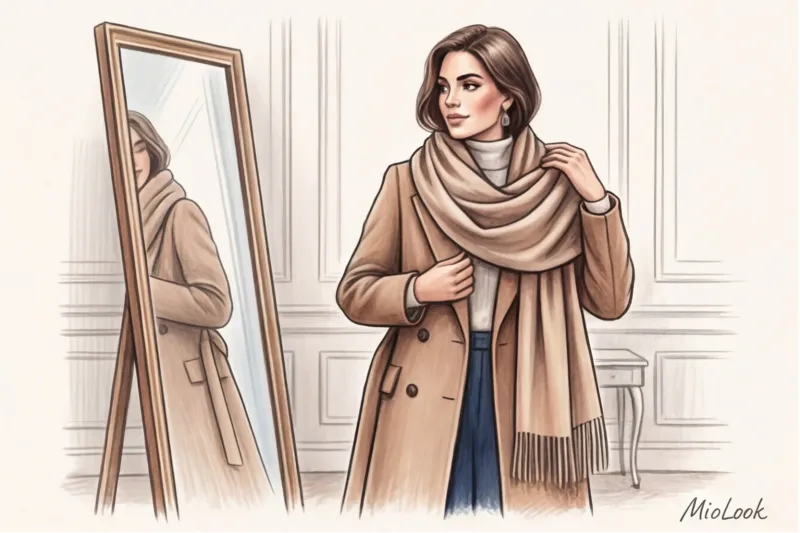
If you've achieved the perfect mid-neck bob, you'll have to rethink your relationship with stiff fabrics. Heavy cotton (180 g/m² and above), starched shirt collars, or thick tweed will clash mercilessly with the cut. The ends will start to curl, the hairstyle will lose its structure, and your neck will sink into folds.
Here are three golden rules from a stylist:
- Soft fabrics are your allies. Viscose, silk, and high-quality cashmere drape softly and don’t compete with the fresh cut of a bob.
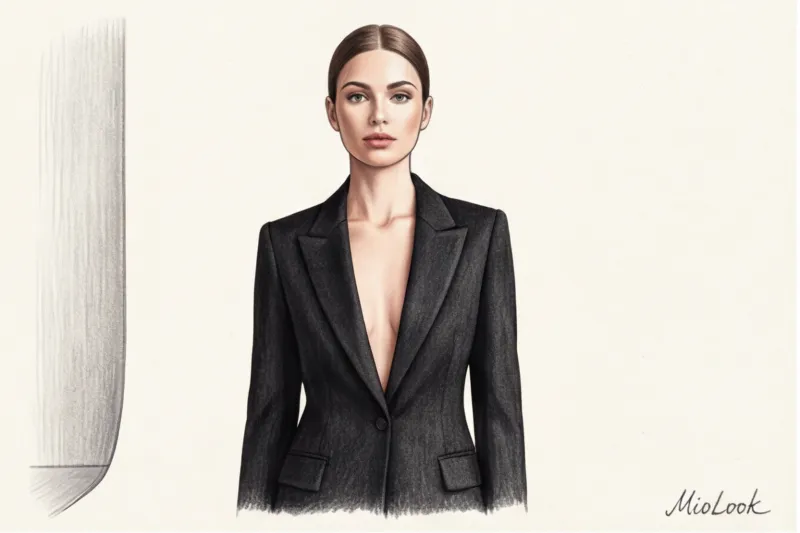
- The V-neck rule. This is the perfect pairing for any short haircut. The V-neck geometrically continues the diagonals of a bob or layered cut, doubling the lengthening effect. Unbuttoning the top two buttons of your shirt is the easiest trick.
- The dangers of turtlenecks. A high, ribbed turtleneck naturally flatters your neck. If your hair falls right to the edge of the collar, your head will appear to rest directly on your shoulders. If you love turtlenecks, consider slicking your hair back or opting for a pixie cut.
Salon Checklist: How to Set a Task for a Hairstylist
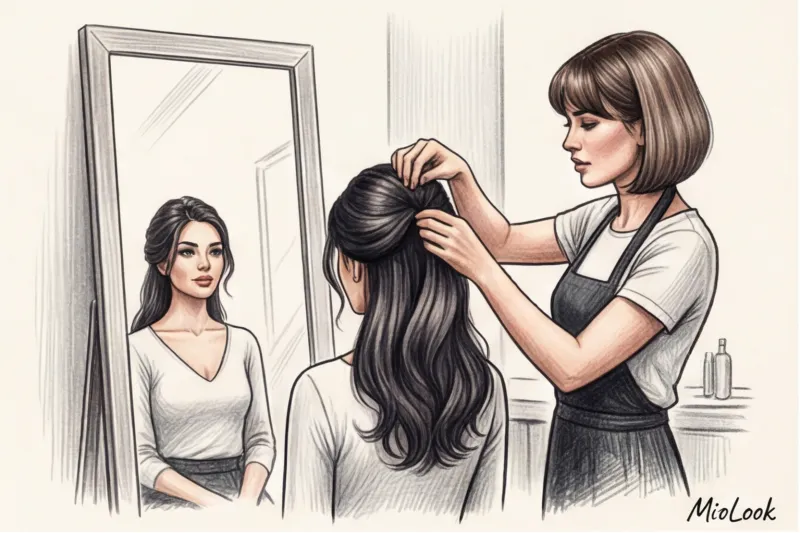
Over the course of 12 years of working, I've heard dozens of stories about women asking for a "longer neck" and receiving a shape that disfigured it. To ensure a successful salon experience, you don't need to explain it in simple terms. Here's how to write a good specification:
- Don't just bring a photo of your face. Show your stylist a full silhouette reference. It's important for the hairdresser to see how the cut sits across the model's shoulders and back.
- Ask to evaluate the hairline. This is critical. If your hair grows low, a short bob will look sloppy within a week. An experienced stylist will suggest slightly lengthening the back to conceal this.
- Discuss your wardrobe. Say directly, "I work in an office and wear jackets with sharp lapels five days a week." The stylist should cut the hair so that it doesn't touch the jacket collar. This is a basic principle that many people ignore.
- Honesty test. Ask yourself: are you ready to style your hair every day? A graduated bob doesn't forgive laziness. If you wash and dry your hair naturally, opt for a textured shag, which looks great even with a little tangled hair.
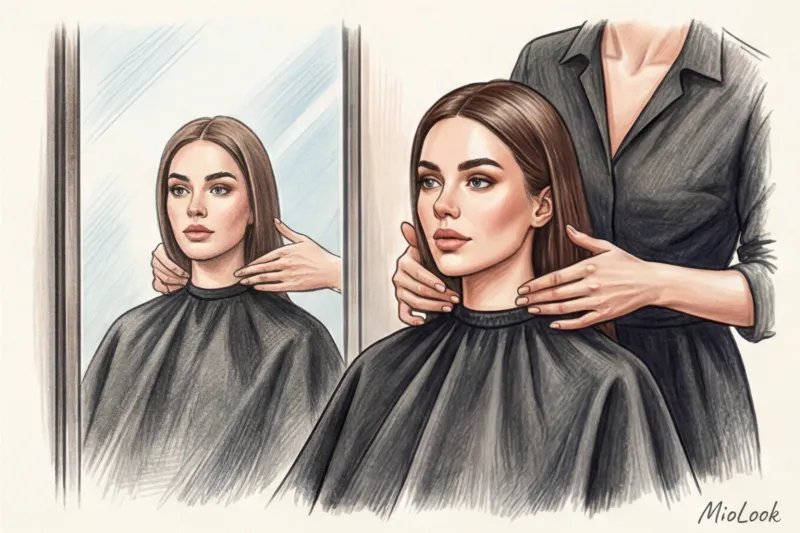
A haircut isn't just a fashion statement; it's a tool for managing your own proportions. By revealing your neck with the right lines, you not only change the profile of your face but also add poise and grace to your entire silhouette. Treat your hair as architecture, not just material.