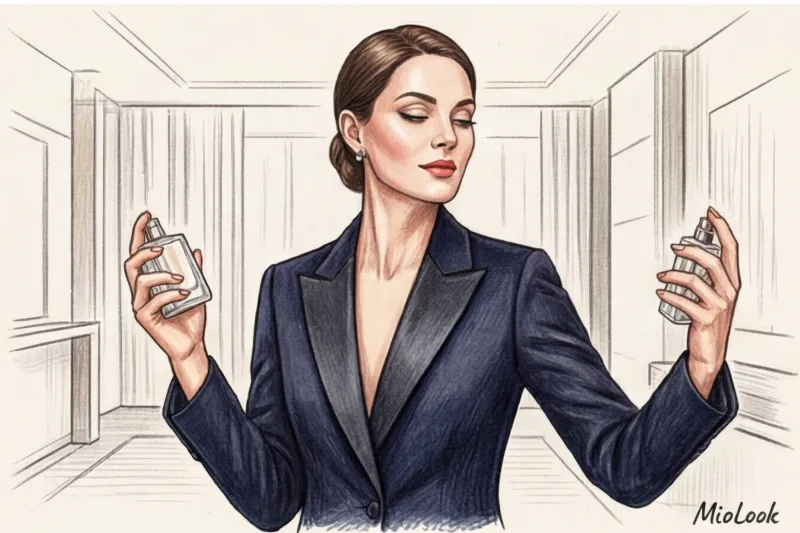
A year ago, a client, the CEO of a major tech company, approached me. We found her an impeccable wool and silk tuxedo from Armani Privé, costing around €5,000. She looked the very embodiment of power and elegance until, at the final fitting before an important board meeting, she pulled out the bottle and applied three generous sprays of a sweet, frivolous "compote" with notes of strawberry and praline. The entire look, all the status quo she'd built up, fell apart in a second.
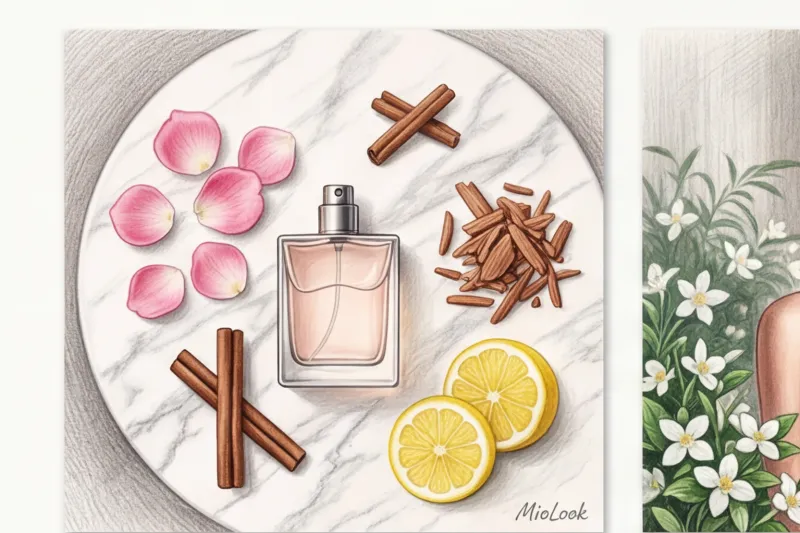
Fragrance is your invisible accessory. It can elevate a basic T-shirt and jeans look, or completely ruin the impression of the most expensive suit. To avoid such mistakes, it's important to understand fragrance families in perfumery and be able to select them as masterfully as you choose the texture of the fabric. We've already discussed how to create your base in more detail in our complete guide to perfume wardrobe , and today I propose to dissect the very matter of smells.
The Anatomy of Fragrance: How Notes Work and Why We Smell Perfume Differently
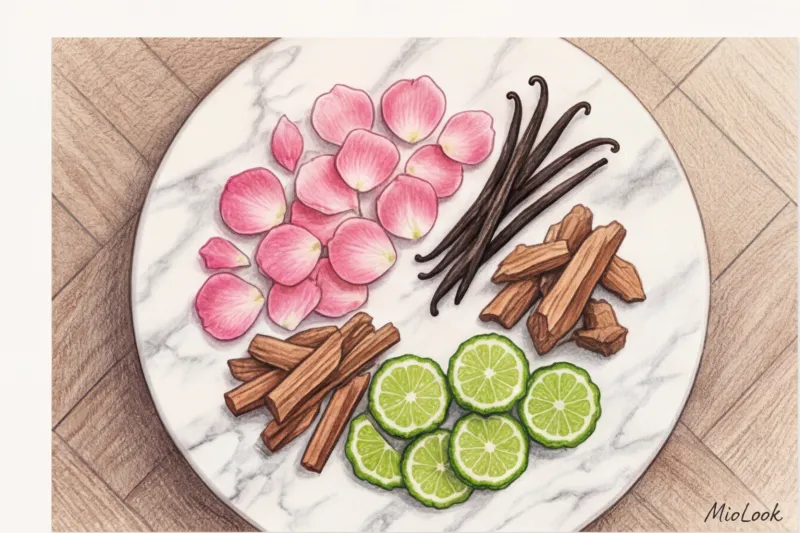
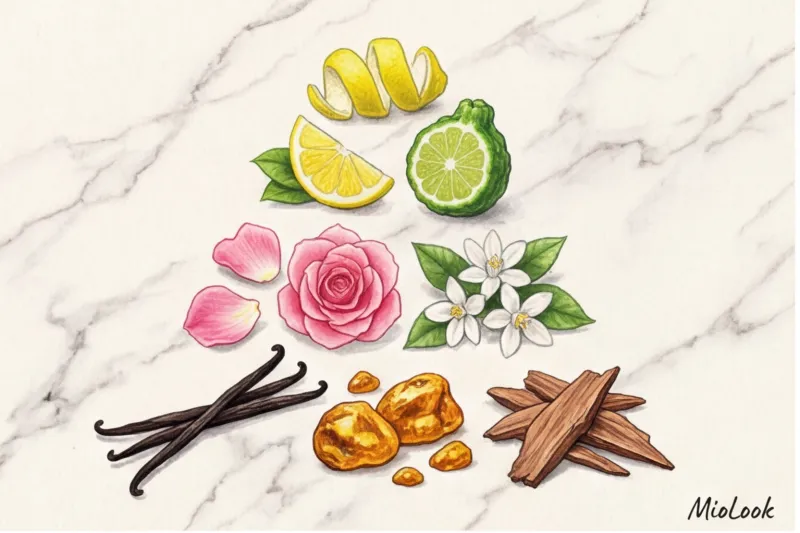
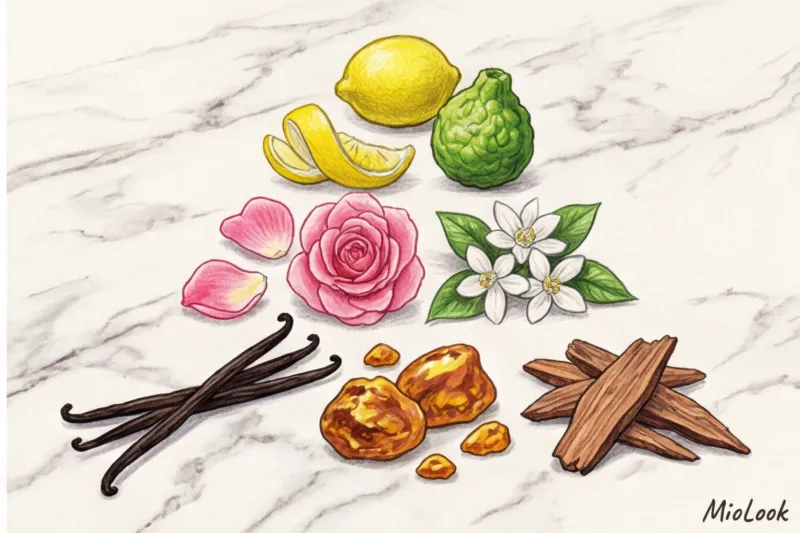
During my trip to Grasse, the world capital of perfumery, I spent several hours in the laboratory of one of the oldest houses. The brand's chief "nose" explained to me a fundamental rule ignored by 90% of buyers: fragrance is not a static image, but an architectural structure built over time. And it is constructed according to the principle of the olfactory pyramid.
The physics of molecular evaporation is merciless. Top notes (bergamot, lemon, mint) are composed of the lightest molecules. According to the International Fragrance Association (IFRA), citrus essential oils last 15 to 30 minutes on the skin. Buying a perfume based solely on this initial, vibrant burst is like buying a house based solely on its beautiful front door.
The heart of the fragrance (florals, spices) unfolds after half an hour and lingers for 3-4 hours. The base (woods, resins, musk) is made up of heavy, fixative molecules. They can linger on your cashmere coat for weeks.
"Never judge a fragrance in the first 10 minutes. You're only testing the volatile top notes, which will disappear before you even get home from the boutique."
Moreover, your skin temperature and pH level alter the creator's intentions beyond recognition. A 2023 study by Givaudan confirms that on "hot" skin with more active circulation, sweet notes crystallize faster, while woody notes can develop an unexpected bitterness. On "cool" skin, citrus notes linger for hours, but heavy oriental resins may never fully develop, remaining a flat, prickly patch.
Your perfect look starts here
Join thousands of users who look flawless every day with MioLook, choosing a perfume to suit their mood and wardrobe.
Get access — €0.99 onceThe Main Fragrance Families in Perfumery: Your Invisible Wardrobe
In 1992, perfume expert Michael Edwards created his famous "Fragrance Wheel," and the Société Française des Perfumes (SFP) established official classification standards. But for my clients, I always translate this dry, chemical language into the language of fashion and texture.
Knowing your favorite family is your insurance against impulse purchases at duty-free, where your hand is drawn to a beautiful discounted bottle. Treat it as an investment: you wouldn't buy a neon pink polyester top if your basic wardrobe consisted of beige cashmere and gray wool, would you?
Floral and fruity: from flowing silk to heavy velvet
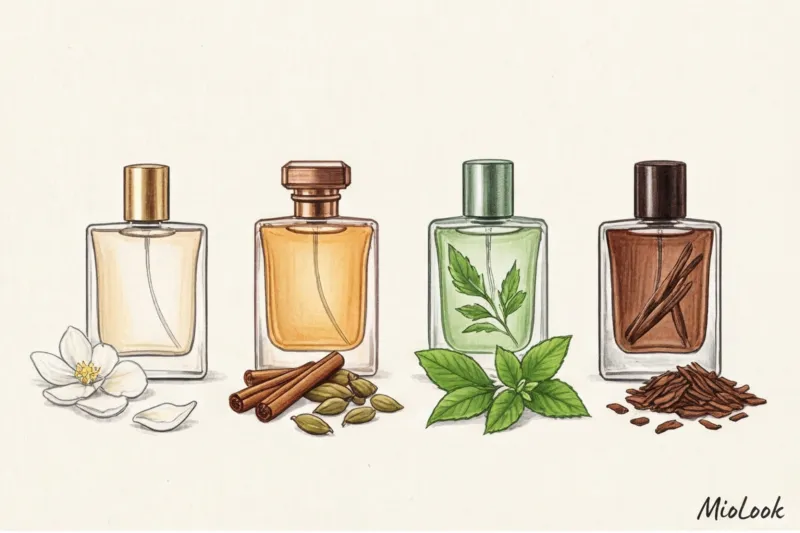
There's a dangerous stereotype that floral fragrances are always about tenderness, spring, and romance. This is only partly true. Light white floral compositions (lily of the valley, freesia, peony) truly resemble flowing silk or chiffon. They're ideal for daytime events.
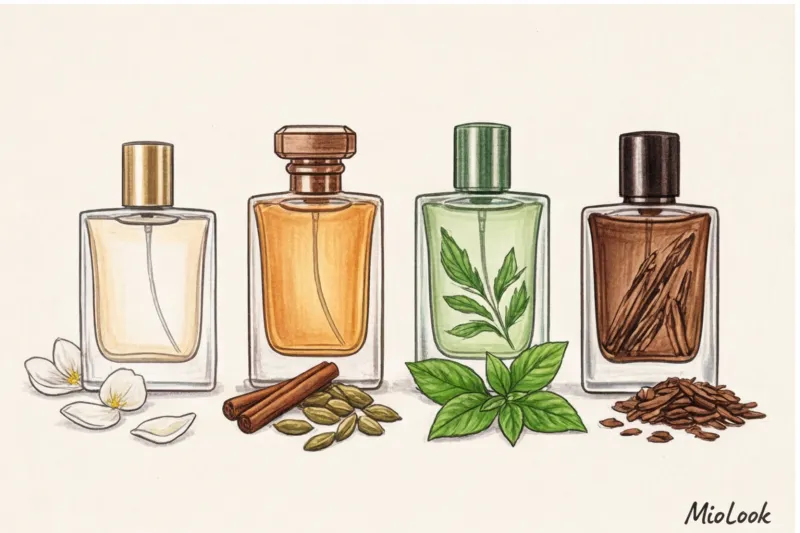
But there are also indolic flowers—tuberose, jasmine, and deep burgundy rose. In high concentrations, they convey an animalistic, predatory quality. They're the perfume equivalent of heavy velvet or a corset. Such scents are a powerful tool of dominance. I often recommend a dense, cool rose for tough negotiations, when you need to reveal a steely character beneath a flawless exterior.
When it comes to fruit, there's a clear line between mass-market and niche. In the sub-€50 segment, fruity notes often sound synthetic (like shampoo fragrance). In the premium segment, fruit is dry, tart, or slightly fermented—for example, the plum note in cognac or the bitter cherry pit.
Woody, Leathery, and Chypre: A Tailored Suit
Chypres are the scent of old money, power, and absolute distance. Built on the contrast of sparkling bergamot, a floral heart, and bitter oakmoss in the base, they sound prickly and distant. If you're a boss and need to establish chain of command without a word, wear a classic chypre.
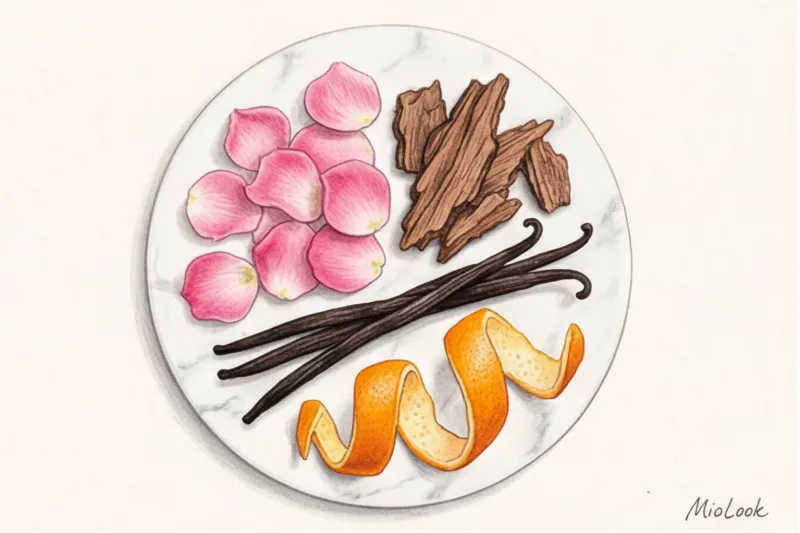
Woody notes (sandalwood, cedar, oud, vetiver) are the olfactory equivalent of an expensive wool suit or the perfect Loro Piana turtleneck. They pull the look together and add structure. Sandalwood imparts a creamy softness, while cedar adds a dry, pencil-like shaving. I discussed more about how to wear this category in the article about woody perfume for women.
Leather fragrances range from the finest Italian suede (with notes of iris and violet) to rough tarpaulin and tar. This is an accent accessory that requires perfect tailoring and minimalist details.
Oriental and gourmet: luxurious brocade and fur
Spices, viscous resins, amber, and natural vanilla. The oriental family boasts maximum longevity and mile-long sillage. These include heavy fabrics, brocade, fur, and deep wine and emerald shades.
But there's a catch here that I must warn you about. Gourmand scents (a subcategory of oriental scents with notes of coffee, caramel, chocolate, and pastry) work brilliantly on a November date, creating an aura of coziness and a desire to get closer. However, this categorically does not work in the office The smell of a candy factory in a conference room destroys your professional credibility, reducing your image to the level of infantilism.
Fresh, citrusy and fougere: the crisp cotton of a white shirt
Fresh fragrance families in perfumery are your basic white poplin. A perfectly ironed shirt, smart casual style, morning freshness. They're indispensable in the summer heat and in confined spaces like airplanes.
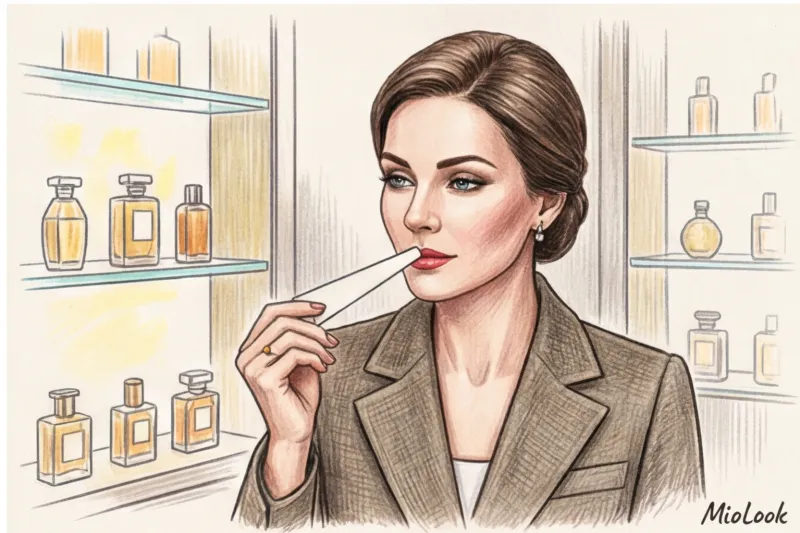
Wine glasses (lavender, moss, coumarin) deserve special attention. Historically a barbershop classic, wine glasses have become a fashion staple for women today. Cool lavender with a metallic undertone is incredibly refreshing and adds dynamism to your look.
Access to MioLook for €0.99 — one-time payment
A smart AI stylist will create the perfect look to complement your favorite woody or floral perfume.
Get access — €0.99 onceThe Gender Myth: Why Dividing Notes into "Masculine" and "Feminine" Is Outdated
Walk into any niche perfume boutique (like Le Labo, Byredo, or Frederic Malle), and you won't find "Pour Homme" or "Pour Femme" written on the bottles. Gender-based fragrance classification is a marketing construct from the 1950s.
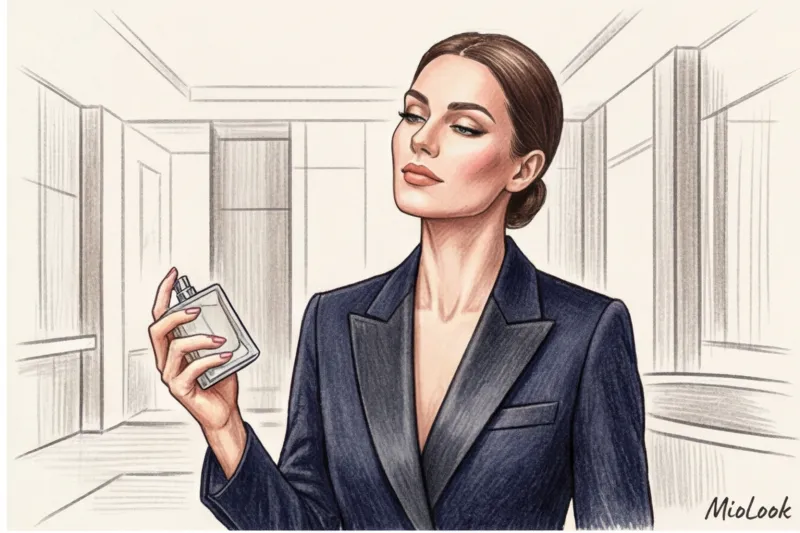
There's no such thing as masculine wood or feminine petals in nature. One of my banking clients spent years trying to find her groove in sweet peony scents because "that's what a woman is supposed to do." Exactly one month after I suggested she switch to a dry, masculine vetiver from Tom Ford, she was promoted to CFO. Of course, she was promoted for her professionalism, but the austere, collected fragrance changed her own flow and delivery.
Today, men confidently wear luxurious dark roses with oud, while women choose tobacco, rum, and juniper to emphasize their independence. Contrast always makes a woman look more precious: the rough skin on a fragile woman's wrist creates that intrigue that money can't buy.
How to read a sales pyramid (and avoid being misled by the salesperson)
My clients' biggest disappointment is when they buy perfume for the advertised orchid note, only to find a vague sweetness at home. I'll let you in on an insider secret: the pyramid you read in a press release or on a store's website is marketing, not a chemical formula.
In perfumery, there's the concept of "fantasy notes." Poppy, orchid, tulip, and bellflower don't have extracts or essential oils. Their scents cannot be obtained in nature. What you see in the pyramid description is a synthetic accord, an olfactory illusion created by a perfumer in a lab. A poppy illusion from Kenzo and a poppy illusion from Jo Malone will smell completely different.
Moreover, the price of raw materials in haute perfumery is colossal. Florentine iris absolute costs around €100,000 per kilogram—more than gold. So, if a mass-market brand for €30 promises you "natural iris in the heart," rest assured it's synthetic ionones, which smell flat.
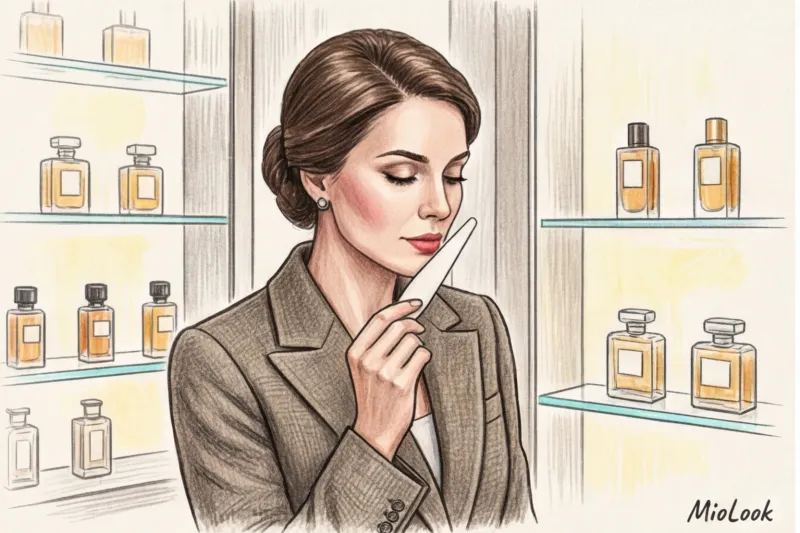
To choose a worthy fragrance, I always apply the rule with my clients blind test We eliminate the influence of brand, price tag, and bottle design. I apply the fragrance blindly to the blotter. Only then can you honestly answer: does this perfume smell worth the asking price?
Checklist: How to Test Fragrance Families in Perfumery
Professional buyers and stylists never select a perfume in 15 minutes. It's a methodical process. If you want to choose a scent that will become your signature scent, follow this algorithm:
- Blotter - for screening only. The paper strip is only needed to determine whether you like the scent or not. The paper is cold and will never reveal how the perfume will blend with your body.
- Skin is the final judge. If the scent has passed the casting on paper, apply it to your wrist (without rubbing! Friction breaks the molecular structure of the top notes).
- 24-hour test. Leave the store without buying anything. Experience the scent for a while. See how it feels in the wind, in a warm room, after a shower. How does it smell on the sleeve of your jacket the next day?
- Olfactory fatigue. Try a maximum of 3-4 scents at a time. And forget about those cans of coffee at the store! Coffee contains volatile essential oils, which further overload your receptors. To "clear" your nose, simply drink plain still water or get some fresh air.
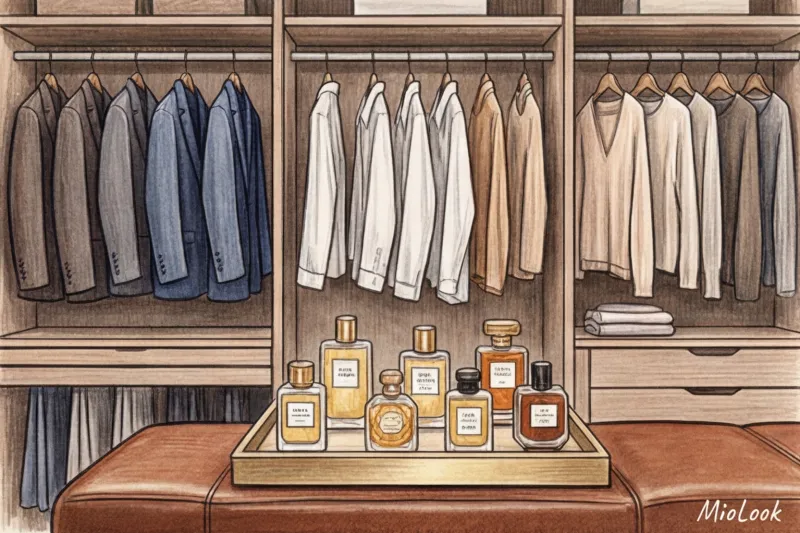
If you're used to planning your wardrobe in advance, I highly recommend digitizing it. In the app MioLook You can collect capsules for different occasions, and mentally associate each capsule with its own perfume profile: chypres for formal business sets, light fougères for casual weekends.
Perfumery is the art of manipulating impressions on a subconscious level. Knowledge of olfactory families puts you in control of how others perceive you. Don't let chance or an inexperienced consultant decide whether you'll sound like a cheap candy or like a woman who owns the world.