What is glitter?
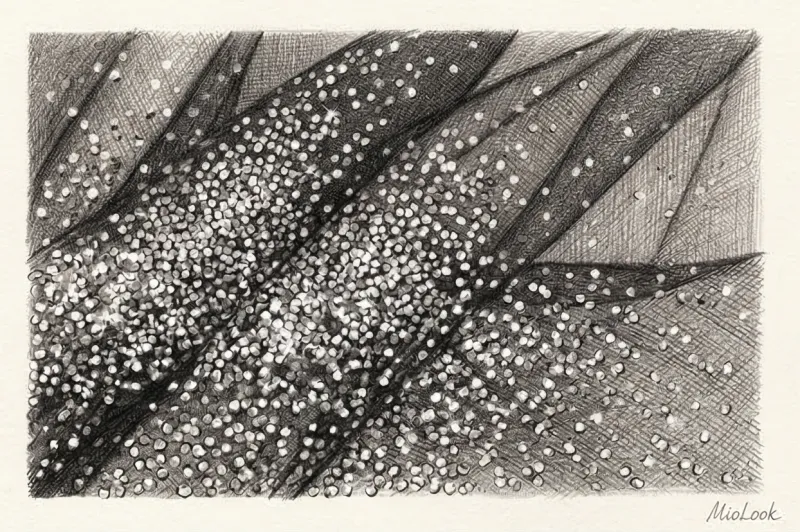
Glitter (from English) glitter — "to shine", "to sparkle") is a decorative element in the form of many small reflective particles that create a shimmering effect.
In fashion design, glitter is used to decorate fabrics, leather, shoes, bags, and accessories. The particles are made from polyethylene terephthalate (PET), metallized foil, thin glass, or synthetic mica.
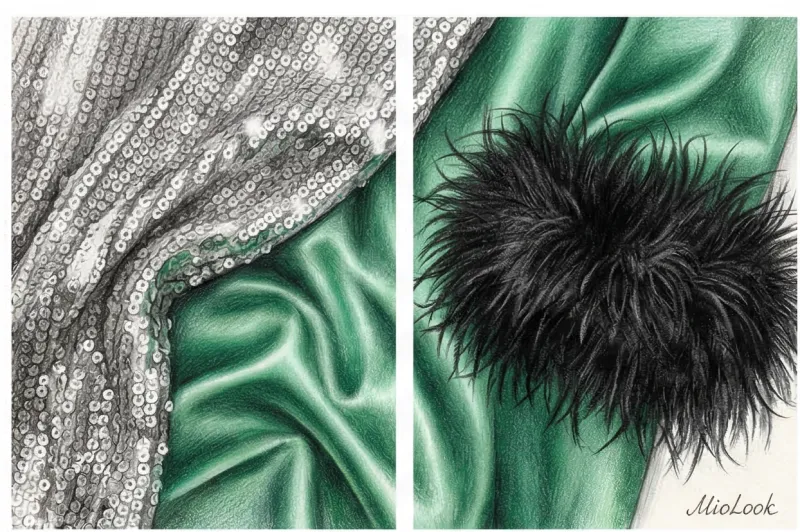
The main difference between glitter and sequins and rhinestones is their size and method of attachment. Sequins are sewn to the fabric with thread, rhinestones and crystals are applied pointwise, whereas glitter is applied to the material as a continuous layer using a special adhesive or is embedded directly into the structure of the synthetic fiber during production.
Main types of glitter
Based on particle size, decorative glitter is divided into microglitter and coarse glitter. Microglitter creates the effect of a smooth metallic coating or delicate shimmer. Coarse glitter consists of noticeable flakes of various geometric shapes (hexagons, diamonds), which create a distinct textured surface.

The visual effects of glitter depend on the coating of the particles. Metallic glitter imitates classic gold, silver, or bronze. Holographic glitter shimmers with all the colors of the rainbow when the light hits it at different angles. Iridescent glitter produces a translucent pearlescent sheen, reminiscent of a film of gasoline or a soap bubble.
Based on the method of integration into the material, glitter is classified as either adhesive or cast glitter. Adhesive glitter is often applied to textiles, such as tulle or mesh, but this method is prone to shedding when rubbed. Cast glitter consists of glitter sealed within transparent PVC, silicone, or acrylic. This technology is used to create wear-resistant footwear and molded clutches.
What to combine with
When styling glitter pieces, the rule of texture balance is observed. Shiny elements are harmoniously combined with matte, light-absorbing materials: thick suiting wool, denim, matte leather, and smooth cotton.
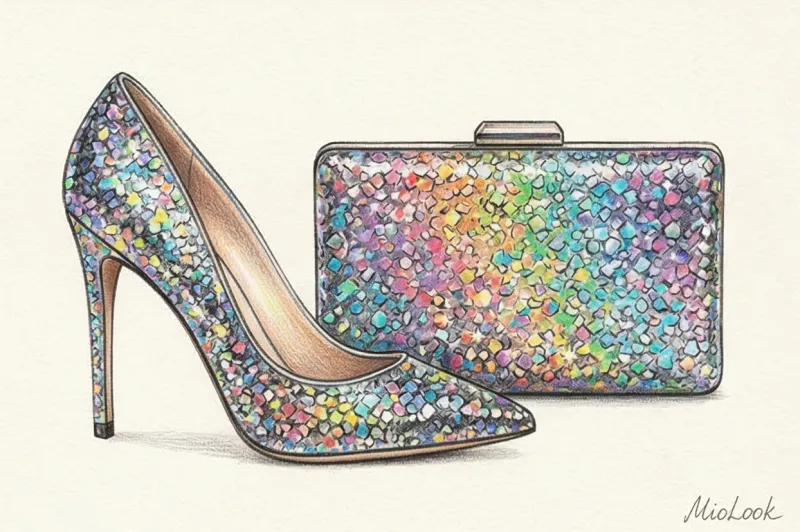
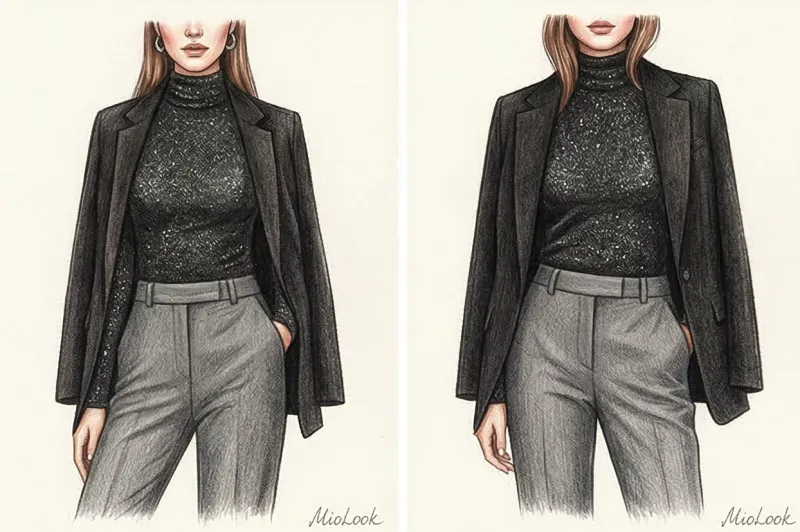
In everyday wardrobes, glitter is used as a singular accent. Ankle boots with a glittery coating are paired with straight-leg blue jeans and a voluminous, solid-color jacket. A shimmery top or turtleneck is integrated into a tailored pantsuit, toning down the formality of the look.
In evening looks, dresses or suits completely covered in glitter act as standalone elements. They require minimalist accessories without excessive shine: smooth leather shoes and no large jewelry.
Clothes with adhesive glitter require delicate care, preferably dry cleaning. Machine washing and vigorous mechanical abrasion will cause the glitter to quickly fade. It is recommended to store such items in individual covers to prevent the hard particles from damaging adjacent clothes in the closet.