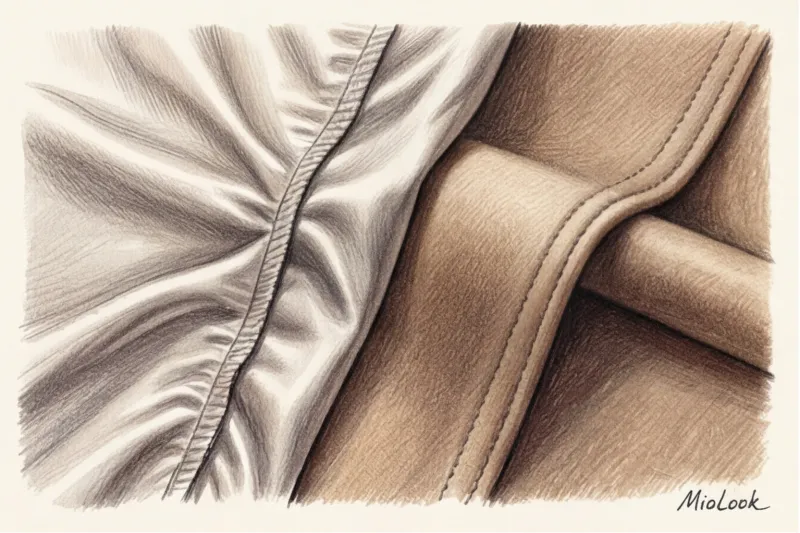
The Anatomy of a "Cheap" Look: Why the Price Tag No Longer Matters
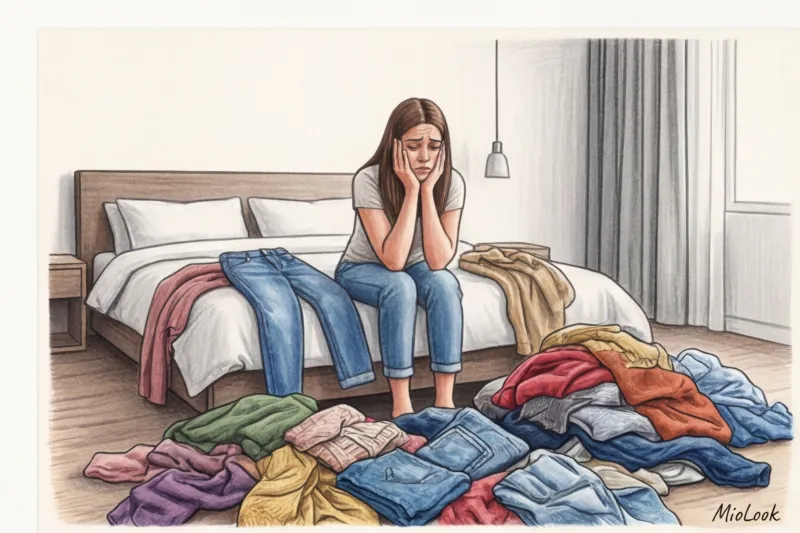
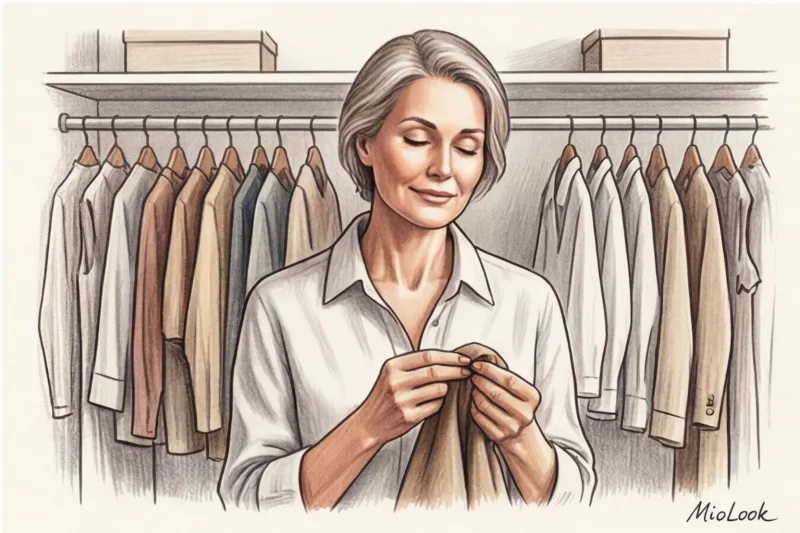
I recently conducted an experiment with one of my clients, a top manager at an international IT company. I asked her to close her eyes and simply run her hand along the hangers in her closet. In two minutes, she blindly pulled out five blouses and two dresses. Do you know what these items had in common? They were the ones that always ruined her look, making her look insecure, even though they cost a pretty penny.
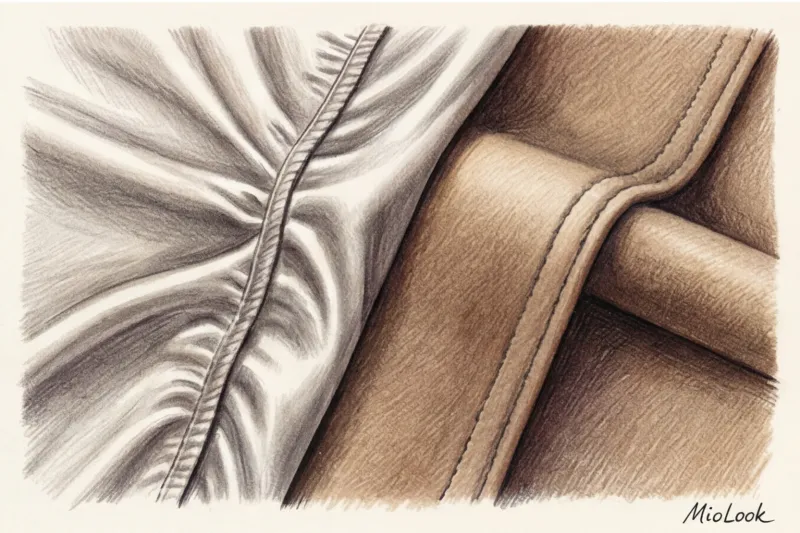
It's no longer about how much you paid at the checkout. If you want to understand how to get rid of things that cheapen your appearance, forget about price tags and brands. The problem always lies in the architecture of the cut, the twist density of the thread, and the physics of the fabric itself. We discussed these fundamental principles in more detail in our a complete guide to a status wardrobe in adulthood , and today we will engage in a ruthless, but smart practice.
According to the analytical agency WGSN (2024), the key macro trend of the current decade has become "visual tranquility." What does this mean in practice? A prestigious wardrobe no longer tolerates fuss. A €40 mass-market blouse can look several times more expensive than a €350 designer one if the former has the right, dense texture, while the latter is made of flimsy, clinging polyester.
"We wear only 20% of our wardrobe 80% of the time. Pareto's principle works flawlessly in fashion. Those items that sit idle most often subconsciously repel us precisely because of their tactile inadequacy."
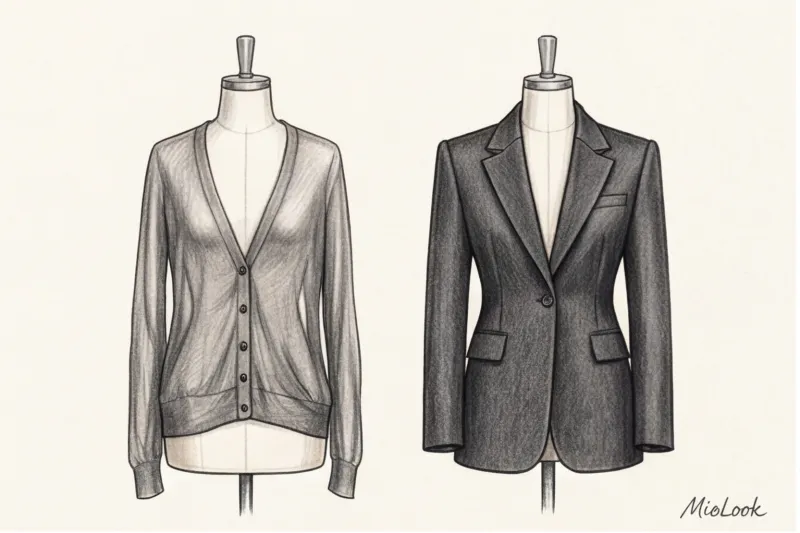
To be fair, this strict architectural approach isn't always necessary. If you're building a relaxed vacation capsule for a seaside resort, a slight creasing and translucent feel is appropriate. But for everyday city living, meetings, or an office with a hybrid schedule, compromising on density is unacceptable.
Step 1. The "Architecture" Test: How to Conduct an Audit with Your Eyes Closed
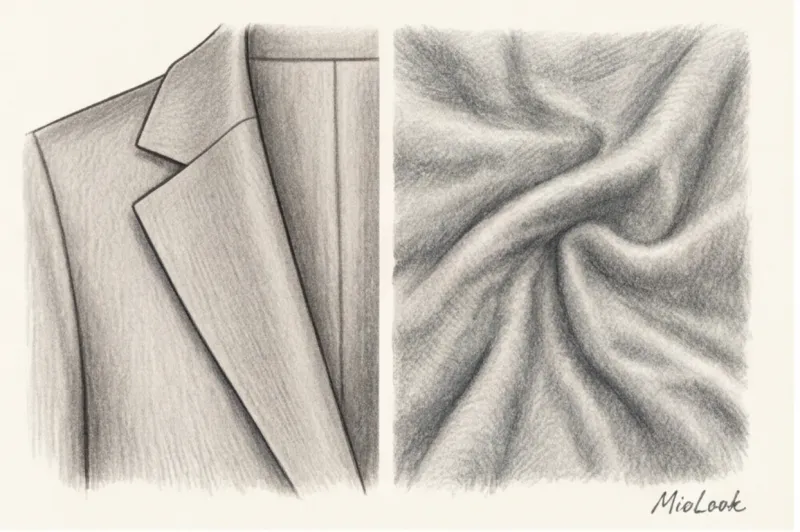
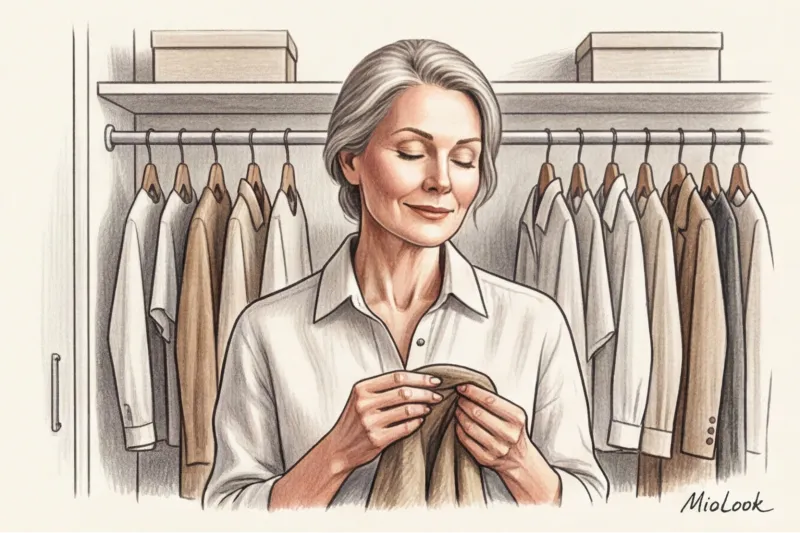
My favorite and most effective closet review technique is a tactile audit. I always tell my clients: if a garment doesn't hold its shape on a hanger, it certainly won't hold its shape on your body. Give your eyes a rest and engage your sense of touch.
Run your hand down a row of garments. You'll immediately spot the "offenders." These are fabrics that feel like gauze, are excessively slippery, or feel too thin. Thin knits weighing less than 200 g/m² (the kind often found in seasonal sales) are guaranteed to lose their shape after just 3-5 washes.
The rule of tight edges and seams
To definitively confirm the garment's condition, examine the technical knots. The quality of the stitching is always revealed by the tension of the threads in the seams. Gently tug the seams in different directions: if you see gaps and loose threads, the fabric will soon begin to unravel.
Pay special attention to the areas around zippers and the hem. If the fabric near the zipper is finely wrinkled and the hem is wavy, this means the threads used in the factory production have shrunk after the first wash, while the main fabric remains intact. No steamer can fix this asymmetry.
Ready to get started?
Try the free plan—no commitments. Build a wardrobe that works for you.
Get access — €0.99 onceStep 2: Visual Noise and Hardware: The Devil Is in the Buttons
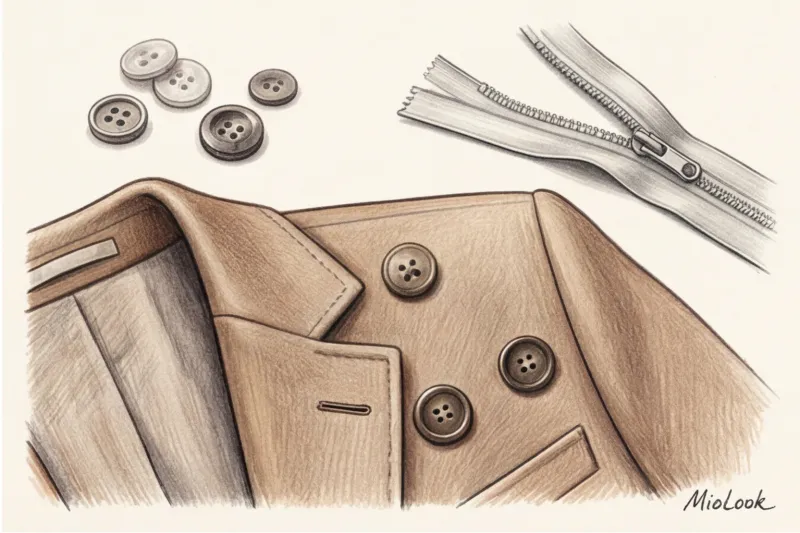
You can buy a perfectly tailored jacket made of premium wool, but shiny plastic buttons will instantly reduce its visual value to the level of a 2000s mass-market item. It's all about the physics of light reflection.
Cheap materials (thin plastic, low-quality lurex, acrylic rhinestones) have an uneven, very harsh, and "rattling" shine. Expensive materials, on the other hand, have a soft, diffused glow. Natural silk, matte horn, mother-of-pearl, or heavy metal absorb light differently, creating that same visual calm.
A life hack from my experience: sometimes you don't need to give something away or throw it away. Simply take a basic trench coat or mid-range jacket (€80-€120) to a tailor and have the basic hardware replaced with horn buttons. The cost won't exceed €15, and the item will acquire a premium shine.
Step 3: Fit Review: Clothes That Don't Respect Your Boundaries
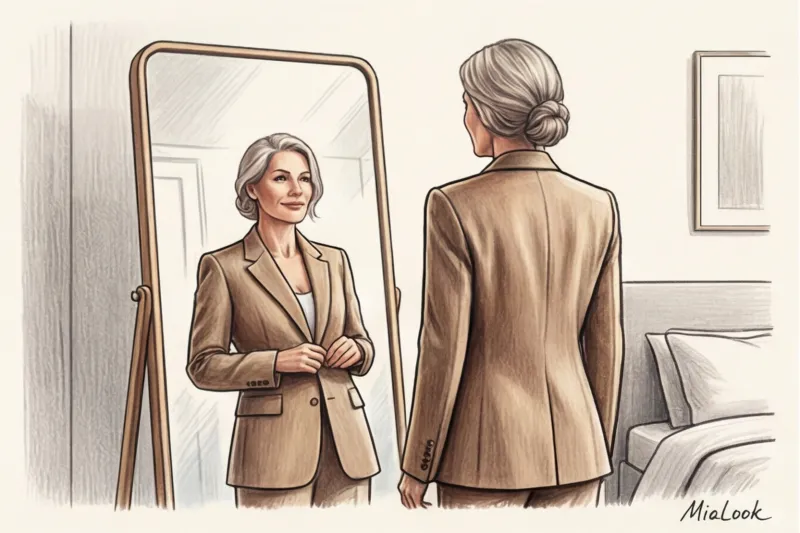
Over the years of working with women's wardrobes, I've noticed one common trend: women often cling to items they "can still fit into." But there's a huge difference between "buttoned" and "fitting perfectly." Clothes that are too tight always look less classy than those that are a little looser.
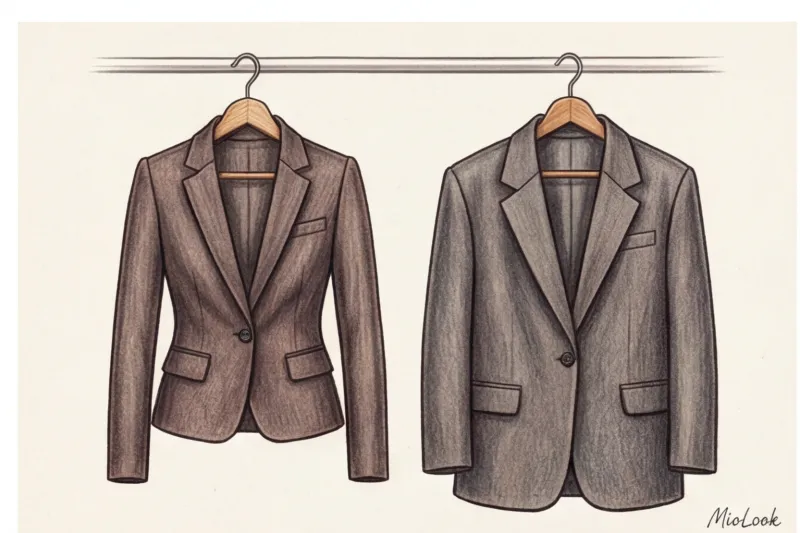
There should always be some air between your body and the fabric. This small gap creates a sense of dignity and freedom of movement. If horizontal creases (called "tension lines") form at the hips of a pencil skirt, it's too tight. The fabric screams that it's been over-stretched.
The second indicator is a loss of shoulder structure. Elbows protruding from sweaters, armholes deformed, and sagging collars on shirts are clear signs of a breakup. The shoulder girdle is the foundation of your look; if it's sagging, the entire silhouette becomes sloppy.
Your ideal image begins Here
Join thousands of users who look flawless every day with MioLook. Digitize your closet in just a few clicks.
Get access — €0.99 onceA counterintuitive approach: which synthetics should be left?
Now let's bust one of the most persistent myths. For years, many glossy articles have been insisting that "expensive means only 100% natural fabrics." Because of this, women mercilessly throw away perfectly good blended items, leaving behind thin, perpetually wrinkled 100% linen or loose, low-grade cashmere that pills after just a second wear.
Synthetics aren't always bad. It's not the synthetics themselves that make them cheaper, but the thinness and looseness of the fabric. Technology has advanced greatly today. Look at the collections of COS, Massimo Dutti, and luxury brands: they actively use high-tech fabrics.
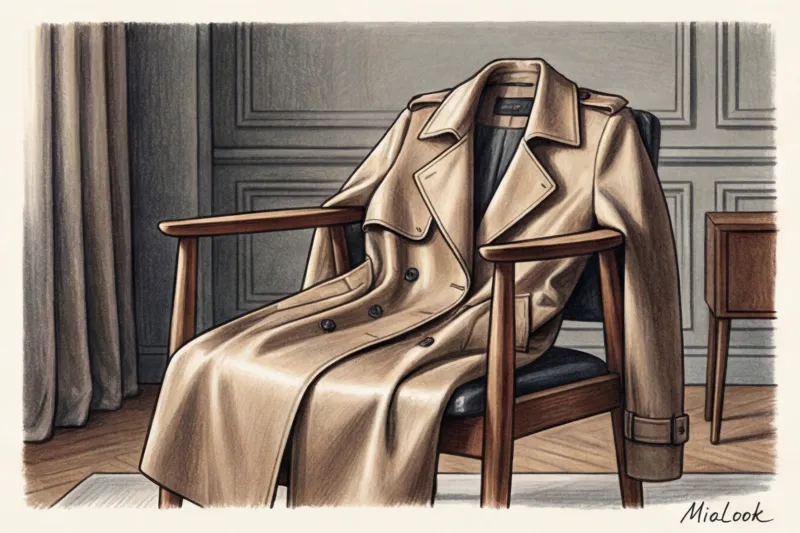
Japanese factories are now producing premium synthetics that are more expensive than many natural materials. Triacetate, dense recycled nylon, and polyviscose (when polyester and elastane are added to viscose) hold their shape phenomenally. They don't wrinkle in the washing machine, don't stretch out at the elbows, and look as flawless in the evening as they do in the morning. If you have such structured blended trousers or trench coats in your closet, treasure them—they're a staple of your work wardrobe.
Final Checklist: 5 Signs It's Time to Put Something Away
To prevent the decluttering process from turning into hours of self-doubt, I suggest using a simple, straightforward checklist. If an item meets even one of these criteria, it doesn't belong in your active capsule:
- Uncontrolled translucence: The fabric shows the contours of your underwear where the design doesn't suggest it (a classic scourge of thin cotton summer office shirts).
- Ineradicable pilling: Pilling formed not only in areas of friction (underarms, sides), but throughout the entire garment due to the short, cheap fiber used. This item will need to be shaved with clippers every day.
- Broken Geometry: The side seams on my T-shirts have become crooked and are slanted toward the stomach or back. This is a common cutting issue in budget-priced fabrics (under €20) and cannot be fixed.
- "Tired" color: The shade looks washed out, the fabric has lost its original depth, and the print has become dull.
- Physical discomfort: The item forces you to constantly tug at the hem, adjust the collar, or slouch due to an awkward armhole.
An eco-friendly solution: how to properly dispose of discarded items
According to the Ellen MacArthur Foundation (2023), every second around the world, an entire truckload of textiles is sent to landfills or incinerated. Simply throwing discarded items into a trash bag is counter-trend and irresponsible.
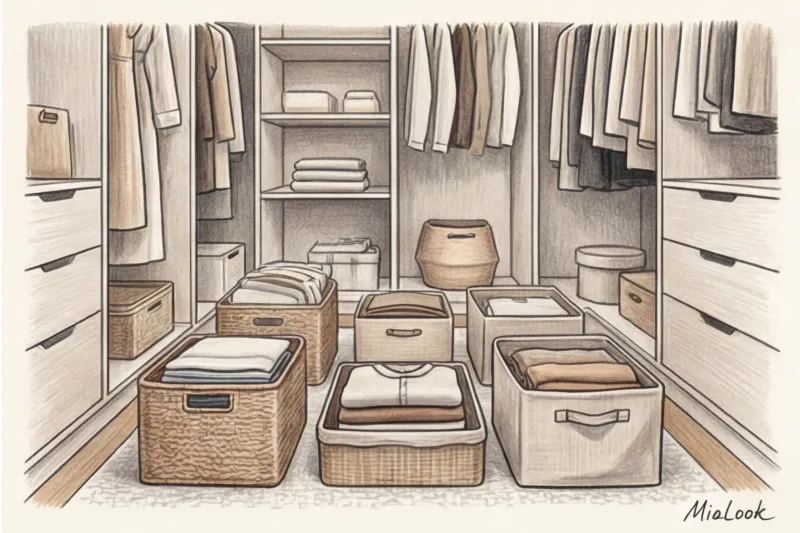
I recommend dividing confiscated items into three clear categories. The first is processing Items with stains, holes, or severe pilling are placed in special boxes (available at H&M, Uniqlo, or local collection centers) for recycling into rags. Second — charity These are the clothes that are in excellent condition, but have become outdated or too small for you.
The third pile is - resale High-quality designer pieces that simply don't fit into your new architectural wardrobe concept can be sold on platforms like Vinted or Vestiaire Collective. The proceeds, ranging from €50 to €200 per item, are a great investment for a single, yet impeccable, basic piece.
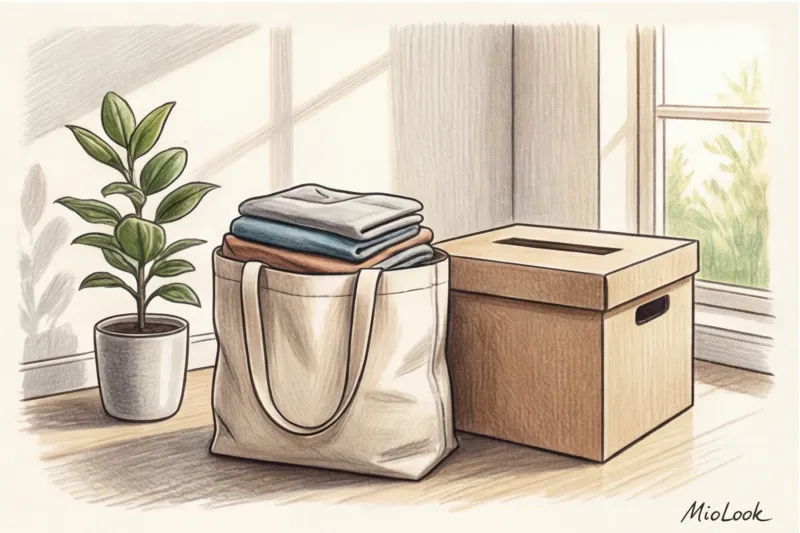
Clearing your closet of visual clutter isn't a one-time spring cleaning; it's about fine-tuning your internal style filter. When your wardrobe is filled with only those items that hold their shape, have the right density, and reflect light with graceful calm, the problem of "nothing to wear" disappears. And to create perfectly working formulas for every day from the remaining items, use the "smart wardrobe" feature in the app. MioLook Invest in quality, trust the touch, and demand that your clothes work perfectly for your image.