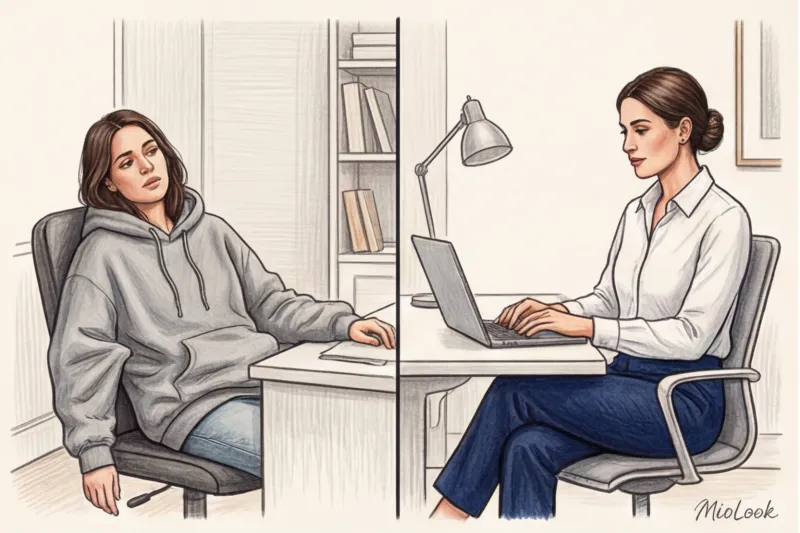
Over 12 years of working as a stylist and colorist, I've heard this phrase hundreds of times: "I'm going freelance so I can finally work in my pajamas with my laptop in bed." And you know what? Six months later, these same people come to me with questions like: "Clients are pushing me on prices," "They don't take me seriously on calls," "I feel exhausted by noon."
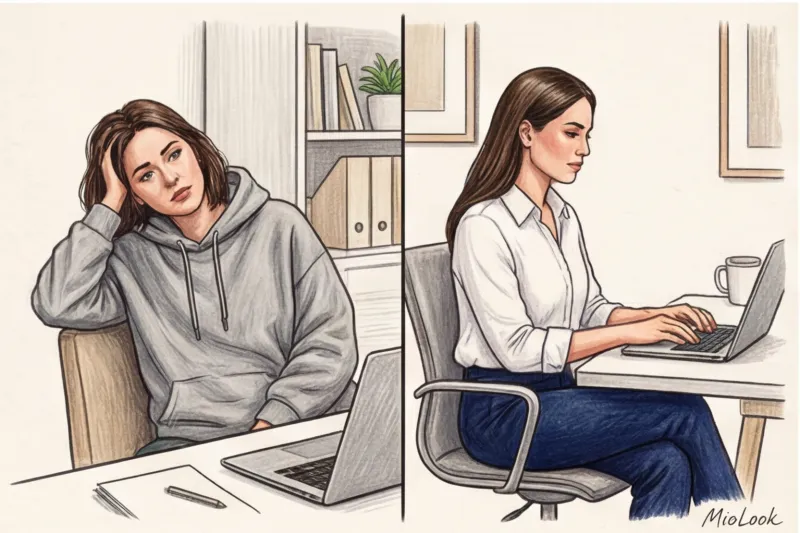
Freelance dress codes were long considered urban legends, even jokes. But the pandemic-induced relaxation is over. Today, what you wear on Zoom directly impacts the final price you can offer. If you're just adjusting your life to remote work, we've covered the basic principles in detail in our article. The Complete Guide to the Perfect Freelance Wardrobe (Hybrid Capsule) In this article, we'll go deeper and segment remote workers by profession, because the wardrobe of a freelance illustrator should be radically different from that of a financial consultant.
Why "Freelance Dress Code" Is No Longer an Oxymoron
Let's start with the hard truth: you can't fool your brain. There's a popular myth about the so-called "Zoom-mullet"—business on top, pajamas on the bottom. Sounds like a perfect setup, right? You put on an ironed shirt while wearing soft fleece joggers.
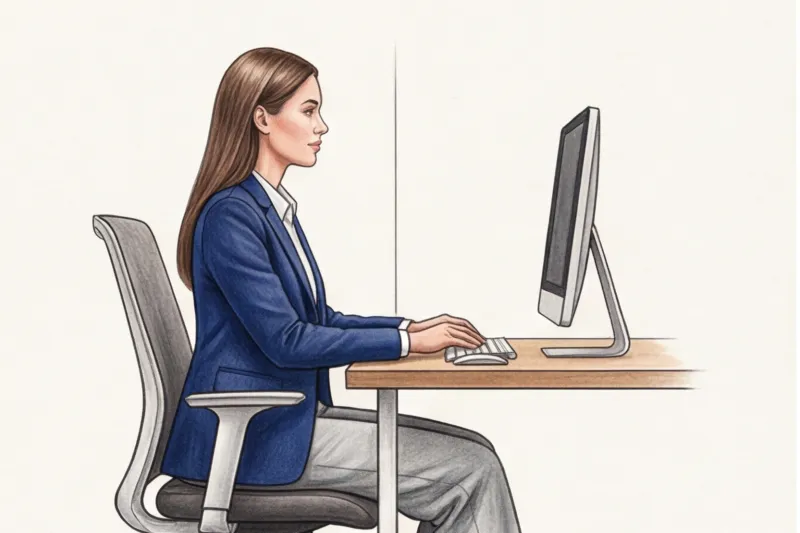
This is a huge mistake. The lack of structured bottoms and shoes physiologically alters your posture. In soft pants, you involuntarily "slide" across the chair. Your diaphragm contracts, your breathing becomes shallow, and your voice loses depth and firmness. When it comes to discussing a €5,000 budget, your voice trembles uncomfortably simply because your legs don't feel firm.
This phenomenon has been scientifically proven. In 2012, researchers from Northwestern University (USA) introduced the term Enclothed Cognition (Clothed Cognition). Their experiments proved that shapeless loungewear impairs our analytical abilities, and our attention span drops by 15-20%. When you put on something associated with professionalism, your brain automatically switches to work mode.
"One of my clients, a Senior UX designer, had been struggling to break the €4,000 income ceiling for months. We audited her work calls. She'd been on the line wearing a cozy, yet shapeless, oversized hoodie. Once we swapped the knitwear for structured casuals (heavy T-shirts and straight-cut blazers), her presentation changed. Two months later, she closed a contract for €6,500 because she began projecting confidence not only verbally but visually as well."
Don't forget Albert Mehrabyan's famous rule (7-38-55): even through a webcam, 55% of trust is still formed visually. Clients aren't just buying your hours of work; they're paying for their peace of mind, their status, and your confidence.
Access to MioLook for €0.99 — one-time payment
A smart AI stylist will select the perfect look for your online meetings and organize your wardrobe.
Get access — €0.99 onceCreative Cluster: Dress Code for Designers, Illustrators, and Stylists
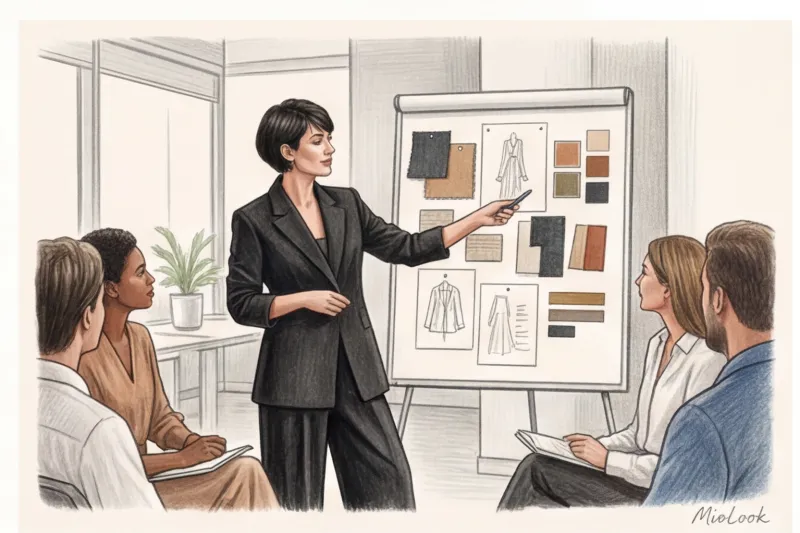
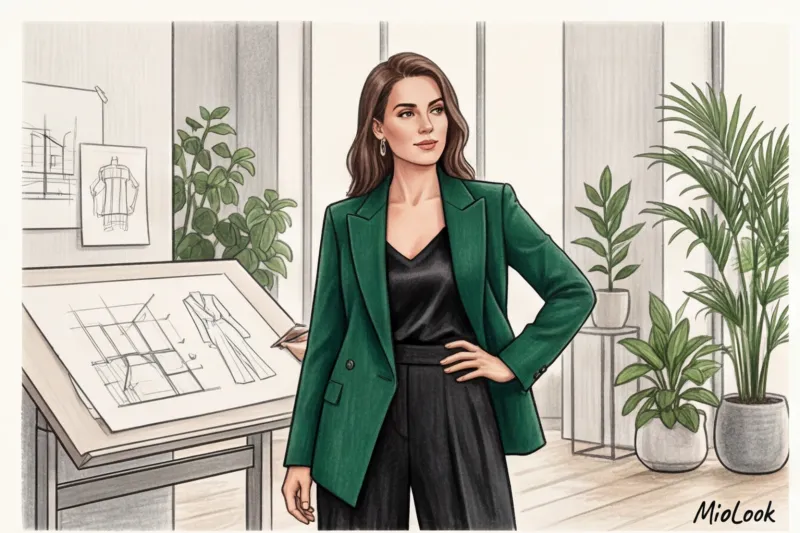
If you're selling visual taste, you have to convey it. The main goal of a creative freelancer's wardrobe is to demonstrate a keen eye and awareness of trends, without stealing the spotlight from your portfolio.
Forget about crazy prints - they often "ripple" on camera (moire effect) and tire the interviewer. Opt for architectural cut An asymmetrical shirt hem, an interesting fabric texture (like crushed cotton or thick linen), or an unusual collar shape—it's these micro-details that speak louder about your professionalism than brand logos.
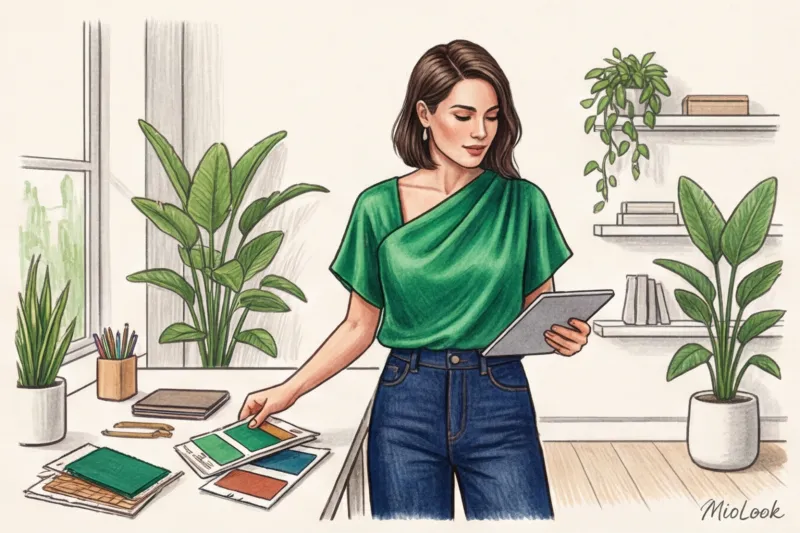
As a colorist, I often encounter the cliché: "All designers wear all black." On camera, black is your worst enemy. Camera algorithms try to even out the exposure, making black clothes look flat and overexposed, highlighting every shadow and dark circle under the eyes. Replace black with complex shades: sage, deep terracotta, cobalt, or dusty rose. Complementary colors in portraits subconsciously reassure the client of your sophisticated sense of color.
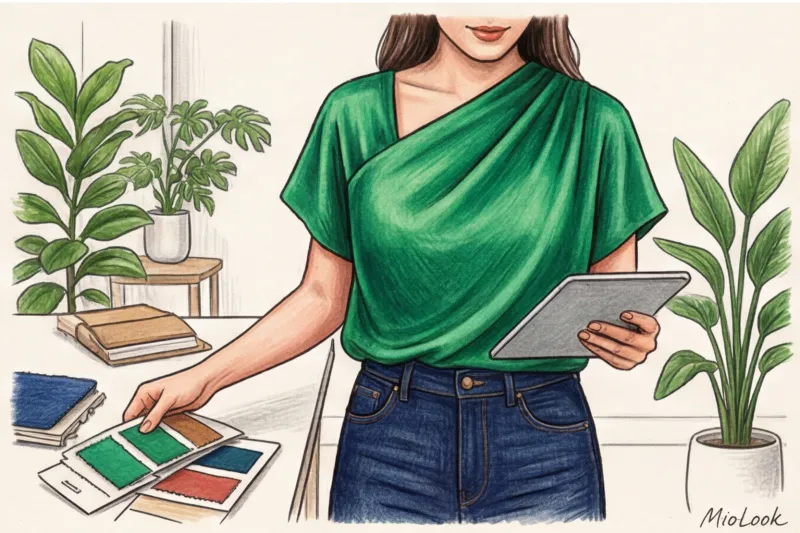
Accent details as a marker of creativity
Works great for creators one accent rule If you're wearing a basic, thick T-shirt, add a pair of statement-making glasses with thick, horn-rimmed frames (even without prescriptions—they're a great way to frame your face) or a chunky, minimalist chain necklace. If your blouse has a complex geometric pattern, stick to simple stud earrings.
Texts and meanings: marketers, copywriters, PR specialists
Professionals working with concepts and budgets have a delicate task. Your on-screen appearance must convey balance. An overly "corporate" look in a formal suit will turn off a client seeking unconventional creative ideas. And an overly casual look (a coffee-stained T-shirt and a bun) will make them question whether they can really trust this person with a €10,000 advertising budget.
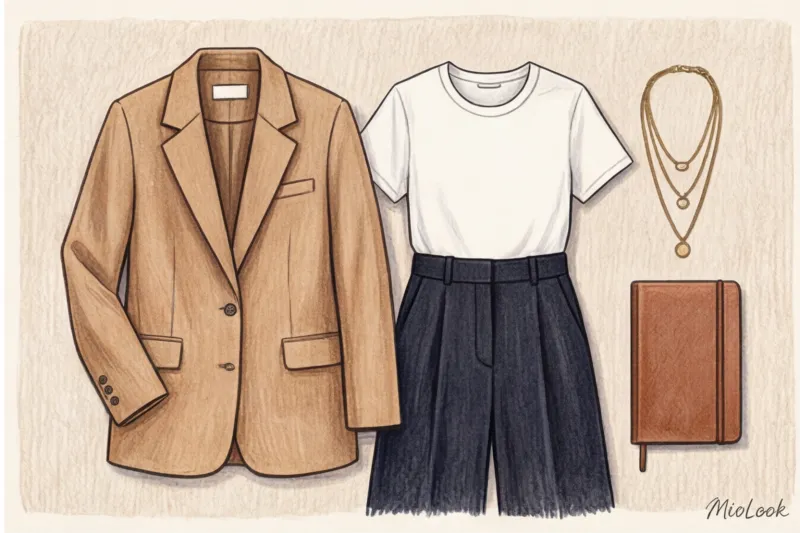
Your base is modern Smart Casual It's built on a mix of structured and relaxed elements. For example, an oversized men's blazer over a basic, premium white T-shirt. Note: not a thin, translucent tank top, but a heavyweight cotton of at least 180 g/m².
Harness the power of layering. The camera eats up volume, making flat looks look boring. Layer a chunky knit cardigan over a classic striped shirt or wear a trendy suit vest over a high-quality turtleneck. This creates depth in the frame.
Your perfect look starts here
Join thousands of users who look flawless every day with MioLook. Create a Smart Casual capsule wardrobe in just a few clicks.
Get access — €0.99 onceIT and Development: Programmers, Data Scientists, Analysts
It's time to dispel the stereotype of the "typical programmer in a stretched-out Star Wars hoodie." Yes, that worked in 2015. But today, Senior Developers and Team Leads regularly interact with investors and international clients. Your visual status directly impacts the level of trust you have with your international partners.
Of course, this rule doesn't work for everyone. If you're an indie developer who writes code at night and communicates with clients exclusively via Telegram stickers, no one will force you to wear cashmere. But as soon as we turn on the camera to defend the project in front of stakeholders, the rules of the game change.
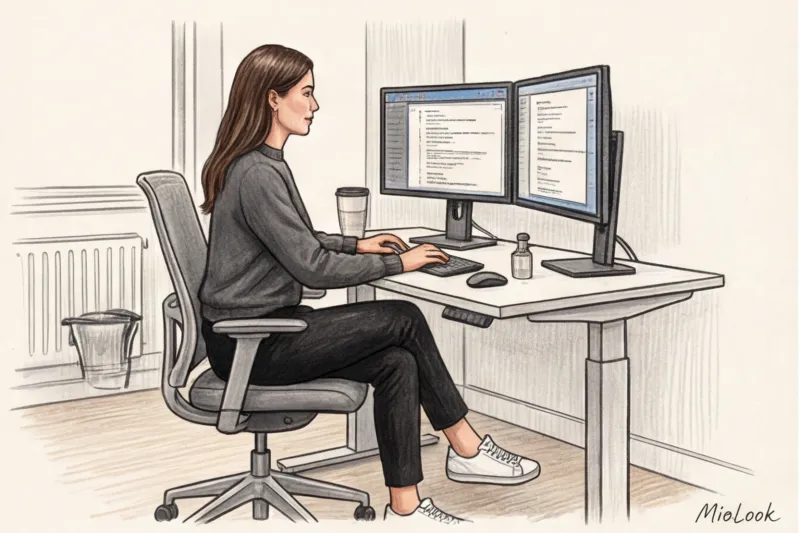
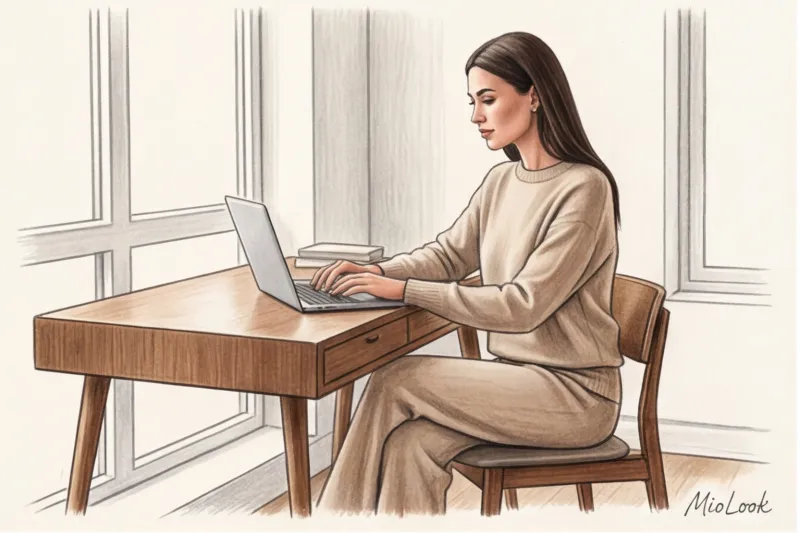
The style of the IT elite today is intellectual minimalism (Normcore) No flashy logos or complicated details. Clean lines, calm monochrome. The emphasis is on the quality of the materials. A cashmere jumper, a merino wool sweater, or a thick, unbrushed sweatshirt made of three-thread fleece. In the budget segment (€30–€80), such items can be found at Uniqlo or COS. They are tactilely pleasant, comfortable for sitting in front of a monitor for eight hours, but on camera they look expensive, neat, and put-together.
Finance, consulting, and law: remote accountants, lawyers, and coaches
When other people's money, taxes, or legal risks are at stake, creativity takes a back seat. The primary goal of your wardrobe is to convey absolute reliability, stability, and impenetrable expertise.
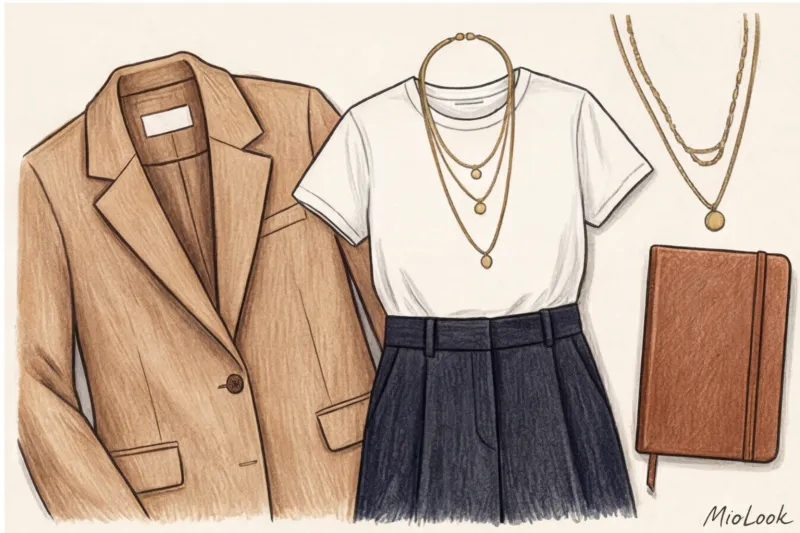
Does this mean you have to sit at home in a stiff wool three-piece suit? No. Your secret tool is soft tailoring Opt for knit jackets, chunky cardigans, or jersey blazers. They feel like a cozy lounge sweater, but the lapels and shoulder structure make you look like a polished business suit to your Zoom caller.
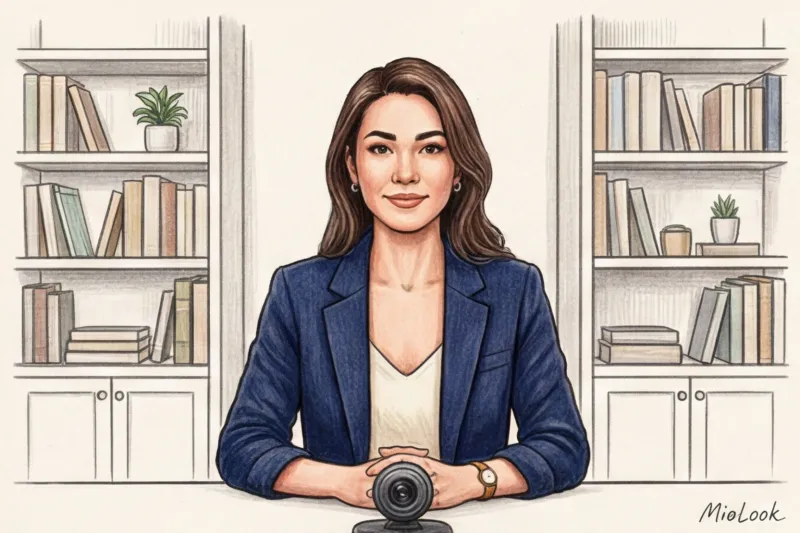
Color psychology is everything here. As I mentioned above, avoid total black (unless you have professional studio lighting). Replace it with deep blue (navy blue) Research in color psychology shows that blue is associated with financial security and logic. Graphite gray and rich chocolate (espresso) also work well.
Details that shape the status in the frame
When consultations are expensive, there are no trifles. Shirts and polo collars should be straight and not curl. Knitwear should be free of pilling (finally buy a hair removal machine!). Women should wear light makeup (even skin tone and subtle contouring to avoid flattening the face in the camera) and a clean, neat hairstyle. Hair pulled back into a tight, low bun conveys a more formal look than loose curls.
Checklist: 5 Rules for Creating a Freelance Work Wardrobe
Whether you're coding or balancing the books, there are universal rules for adapting clothing for remote work:
- The "from the threshold to the camera" rule. Your work clothes should be something you wouldn't be embarrassed to wear if you were to open the door for a courier, suddenly go on an urgent video call, or go downstairs for coffee. If you're embarrassed to wear them to the stairwell, take them off.
- Matte vs. gloss. Cheap silk, satin, and shiny fabrics look disastrous on a webcam. They glare, create unnecessary visual noise, and often cheapen the look. Choose matte textures: thick ponytail, high-quality viscose with 5% elastane (to prevent creasing when sitting), or matte cotton.
- The concept of "work uniform". Create 3-4 ready-to-wear outfits exclusively for work. This will prevent you from feeling decision fatigue in the morning. Changing into this "uniform" will become a psychological trigger for the start of the workday.
- House shoes matter. Returning to our first point about posture, swap out fluffy, shapeless slippers for leather mules, house loafers, or structured slip-ons (like Birkenstocks). A firm sole provides support, straightens your back, and changes your inner sense of self.
- Kink test. Squeeze the edge of the fabric in your fist for 10 seconds. If it's heavily wrinkled, you'll look unkempt after two hours in an office chair. Choose blended fabrics.
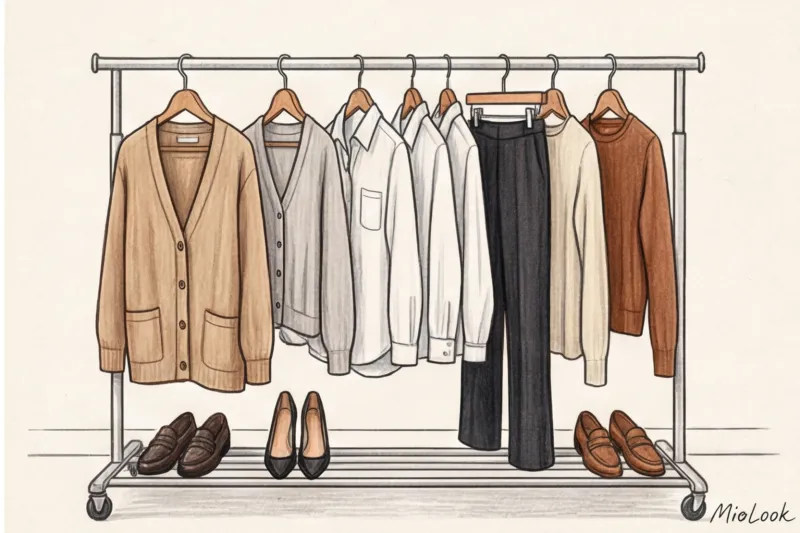
Ready to get started?
Try MioLook's free plan—no commitments required. Upload your belongings, and AI will help you create the perfect remote work capsule.
Get access — €0.99 onceA freelance dress code isn't an attempt to force you back into corporate confines. It's a tool for managing others' perceptions and your own well-being. The clothes you choose for working from home should serve you: support your posture, convey expertise to clients, and allow you to confidently quote high prices for your services. Choose clothes as if you were already earning the amount you're aiming for—and you'll be surprised how quickly reality will catch up with your image.