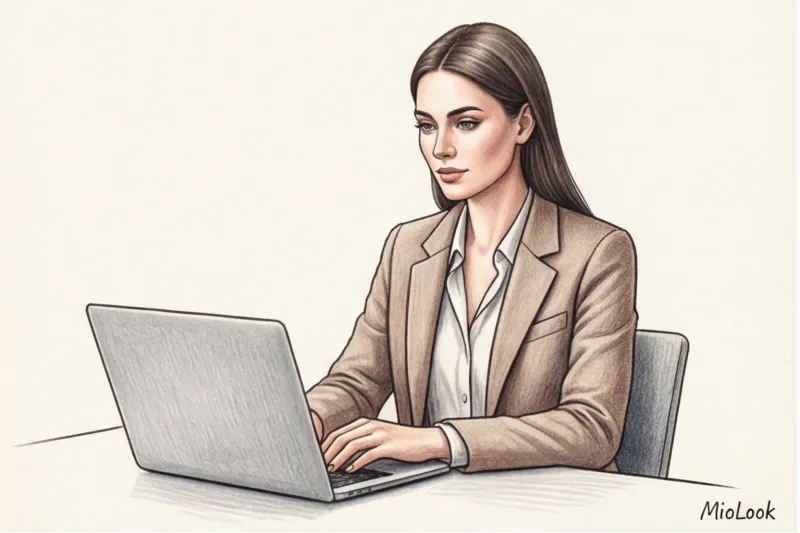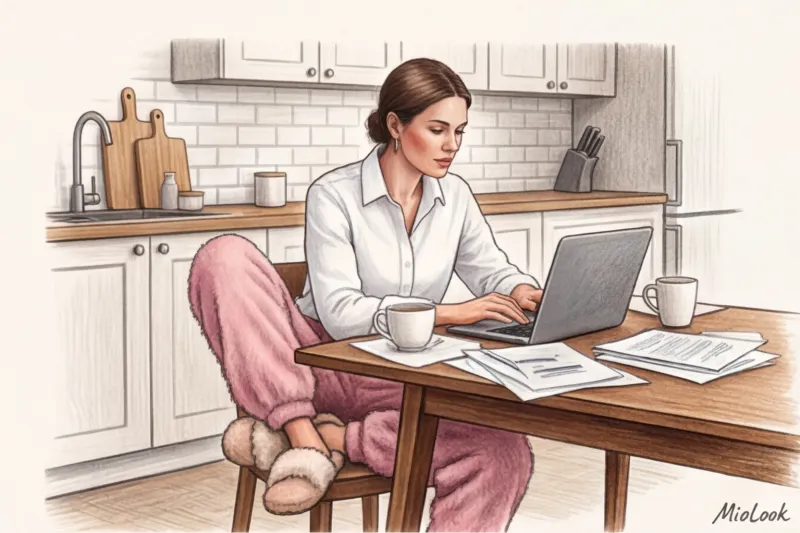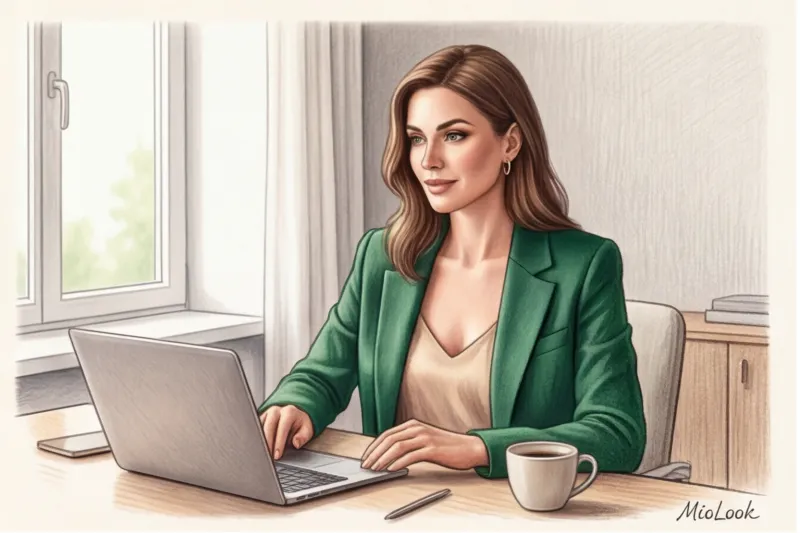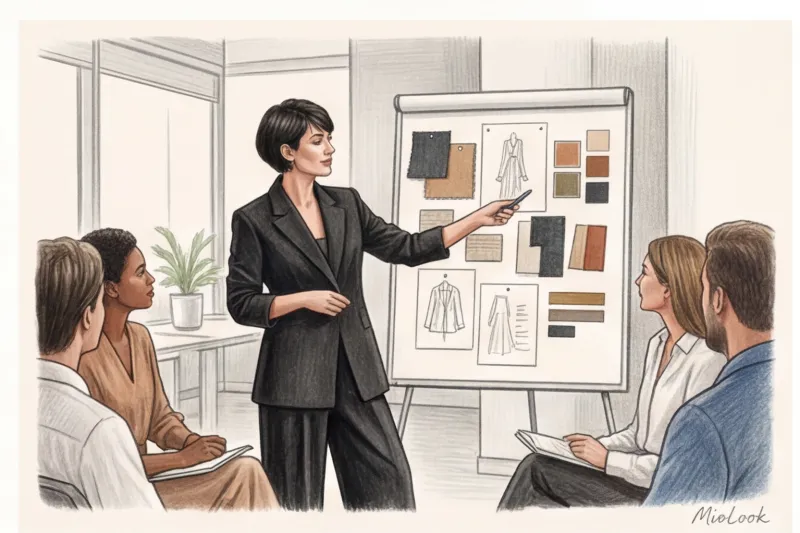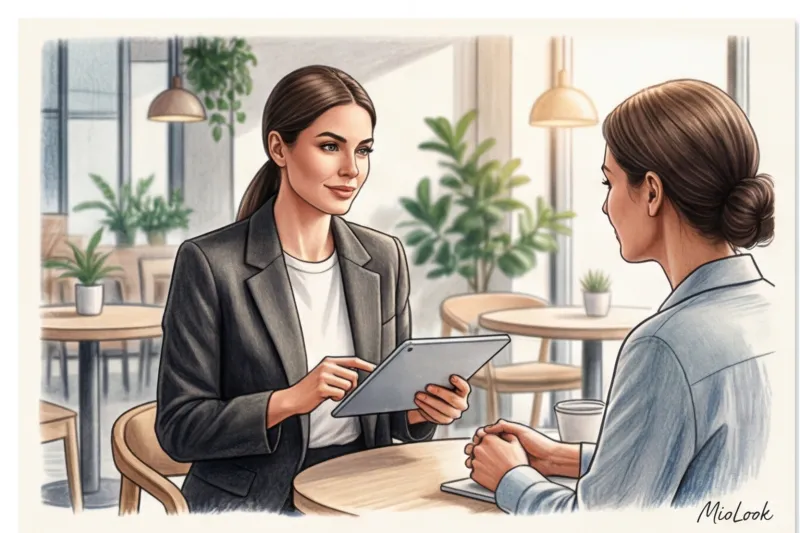
Have you ever noticed how some freelancers get approved for estimates without even looking at them, while others are required to justify every penny? Over 12 years of working as a stylist and image consultant, I've discovered a clear pattern. The difference often lies not in technical skills, but in the first seven seconds of a Zoom call. It's during this time, according to the seven-second rule, that the client's brain unconsciously makes a decision about your status and the approximate cost of your services.
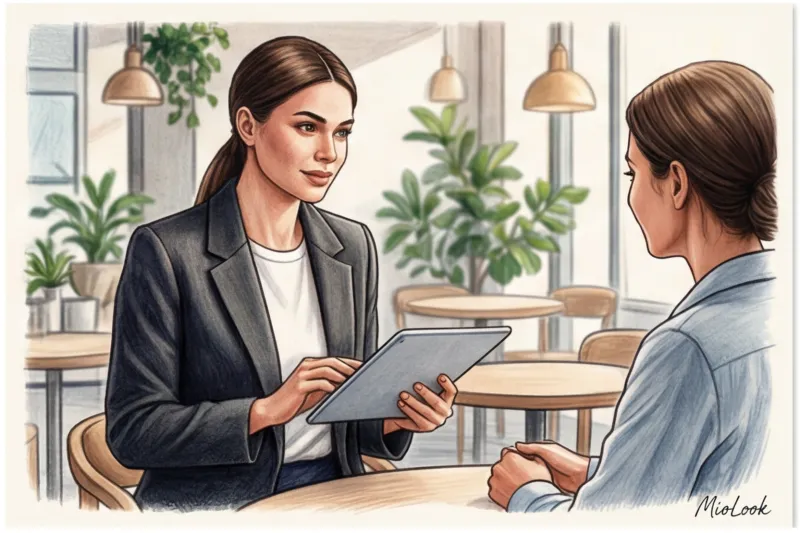
Dressing appropriately for a client meeting isn't just a matter of adhering to a forced dress code. It's your first and most powerful selling point in price negotiations, even before you open your mouth and start delivering your presentation.
Why 'Freestyle' Is Stealing Your Money: The Psychology of High Checks
"I work from home, why should I dress up?" is the most common objection I hear from new freelance clients. Hoodies, favorite joggers, and a stretched-out T-shirt seem like a symbol of freedom, the very reason many leave their jobs. But as your income scales, this can actually work against you.
It's not just how others see you, but how you feel about yourself. In 2012, Northwestern University researchers Hadjo Adam and Adam Galinsky coined the term Enclothed Cognition (clothed cognition). Their experiments proved that clothing physically changes how our brains work. A doctor's coat increases concentration, while a structured jacket makes us stand up straight, our voice sounds deeper, and our arguments sound more confident.
"Your paycheck depends not only on what you do but also on how safe the client feels when handing you money. A relaxed, homely appearance conveys unpredictability, and clients pay a premium for peace of mind."
I had a very revealing case in my practice. Marina, a senior UX designer, approached me. For months, she had been struggling to break the €4,000 per project income ceiling. Her portfolio was impeccable, but she showed up to briefings in cozy oversized turtlenecks. We replaced the knitwear with a basic capsule collection: thick T-shirts and straight-cut jackets (budget segment up to €150). The result? She closed her next project for €6,500. Clients stopped seeing her as a "freelancer" and began viewing her as a partner.
We've covered more details on how to build such a base without spending a fortune in our complete guide. The Perfect Freelance Wardrobe: A Hybrid Capsule.
Access to MioLook for €0.99 — one-time payment
A smart AI stylist will select the perfect look for your meetings and organize your wardrobe.
Get access — €0.99 onceIdeal attire for a client meeting: a formula for relaxed business style
For a freelancer, a formal corporate suit is as inappropriate as pajamas. Your golden mean is business casual or smart casual. The essence of this style lies in balance rule: We mix relaxed elements with structured ones.
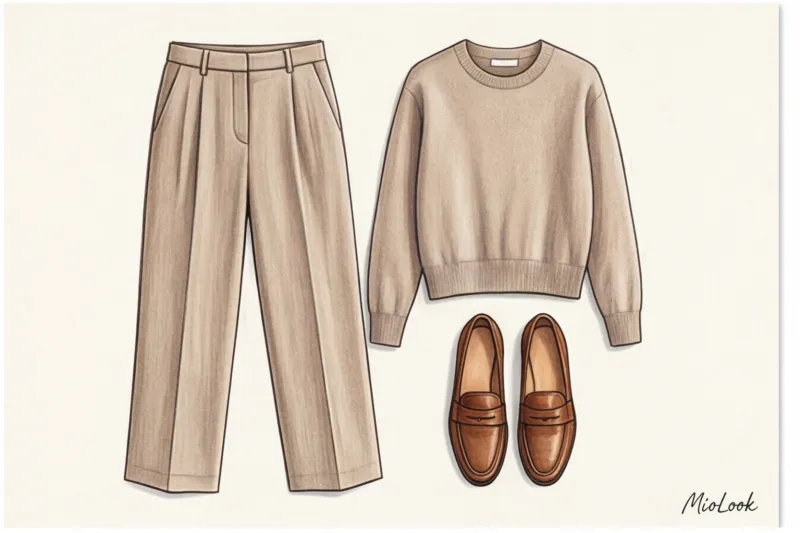
How does this work in practice? If you're wearing a comfortable basic T-shirt (relaxed), layer it with a jacket or a thick cardigan (structured). If you're choosing jeans, pair them with classic loafers rather than running shoes.
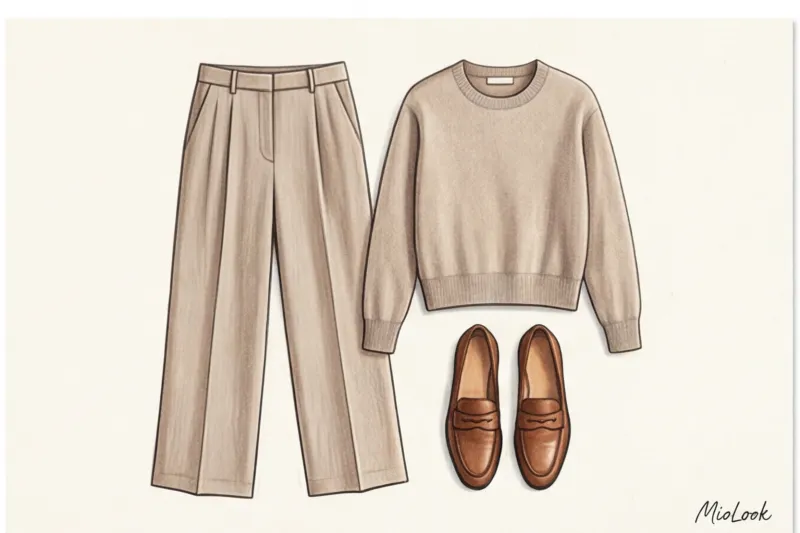
Critical to online meetings portrait zone The zoom camera eats up textures and makes us look flat. Therefore:
- Choose dense fabrics. Cotton with a density of 180 g/m² or high-quality viscose looks classy. Thin, translucent knitwear cheapens the look.
- Pay attention to the geometry of the collar. A V-neck, a crisp shirt collar, or a simple crew neck work better than plunging necklines or shapeless cowls.
- Add one focal point. It could be a watch, a minimalist pendant, or glasses in a stylish frame.
Adapting Your Style to Your Niche: Creatives, Strategists, and IT
There's no single "freelance wardrobe." What's perfect for a developer will kill a creative director's sales. Your clothes should support your professional legacy.
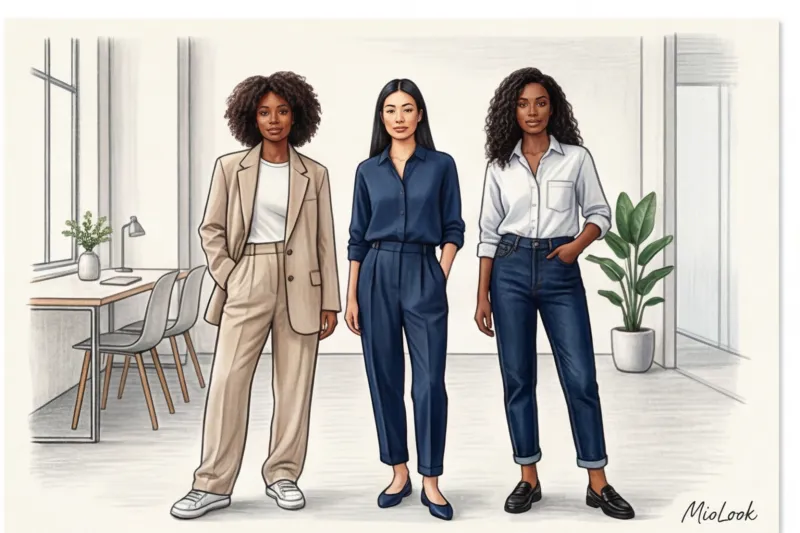
Creatives (designers, photographers, illustrators)
You have a difficult task: to demonstrate taste without alienating your client with excessive avant-garde. Choose a sophisticated cut but neutral colors. An asymmetrical shirt hem, a jacket with exaggerated shoulders (in the style of COS), or chunky jewelry against a black long-sleeve. You're conveying: "I know the trends, but I keep them under control." More ideas can be found in our article about style for creative professions.
Strategists (marketers, producers, copywriters)
Your superpower is structure, analytical thinking, and the ability to count other people's money. Your visuals should be as focused as possible. Monochrome looks, straight-cut menswear jackets, classic trousers with creases, and high-quality leather shoes. No frivolous ruffles or floral prints—only clean lines.
IT and analytics (developers, data scientists)
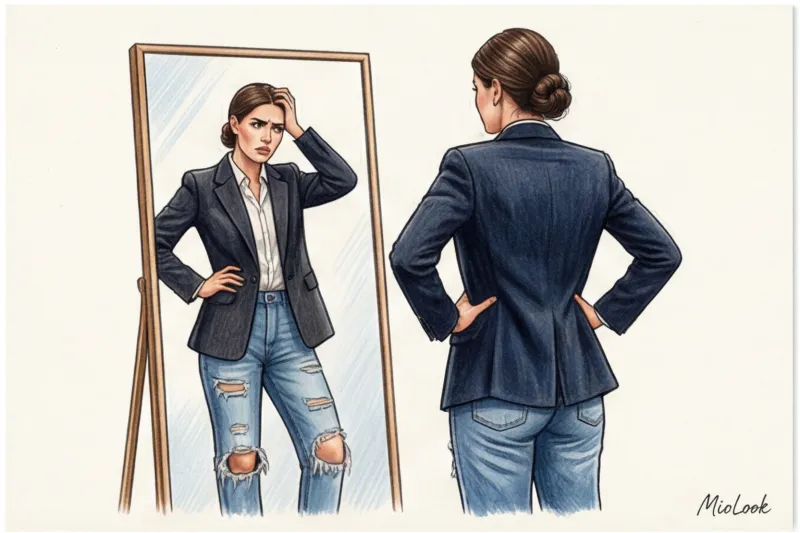
Maximum comfort is acceptable, but it should be "elevated." Swap out your stretchy T-shirt for a thick cotton polo or a fine-knit merino wool jumper (brands like Uniqlo do a great job here). Jeans should be dark denim, free of rips and holes. You're communicating, "I'm focused on the code, but respectful of business boundaries."
Your perfect look starts here
Join thousands of users who look flawless every day with MioLook.
Get access — €0.99 onceColor as a Manipulative Tool: What to Wear to Difficult Negotiations
As a certified colorist, I can talk for hours about the impact of color on the psyche. If you're facing a budget or a difficult negotiation for a higher salary, forget about randomly choosing shades. Color is a tool for manipulation.
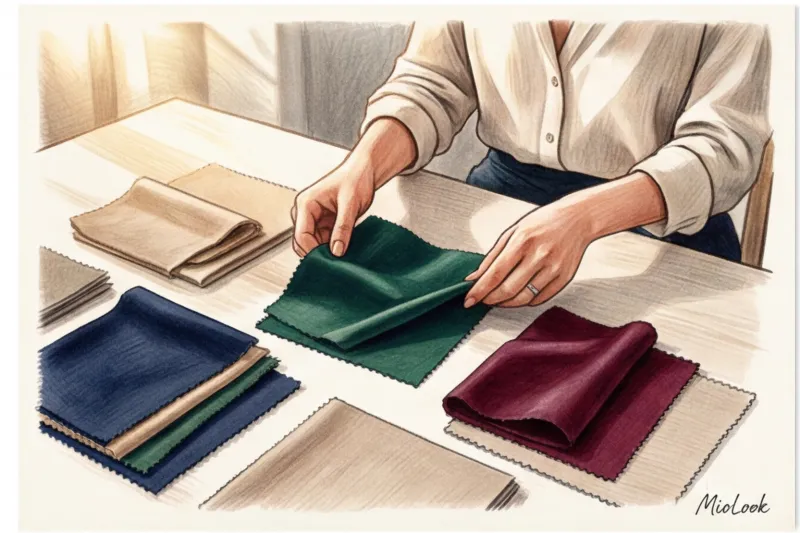
- Dark blue (Navy). The absolute king of the business wardrobe. According to the PANTONE Color Institute, classic blue is associated with reliability, intelligence, and stability. Wear it when you need to prove you won't miss a deadline.
- Emerald and deep green. The colors of money, growth, and tranquility. They work great for financial advisors and marketers.
- Burgundy. Conveys authority, but without aggression, unlike pure red.
And here it is total black It should be avoided if you're communicating with a new client. Black creates psychological distance. Flashy red, on the other hand, triggers an adrenaline rush and can provoke unconscious aggression in the client during the pricing process. To find the perfect shades for your appearance, I recommend exploring 12 Color Types of Appearance: A Guide to Choosing a Palette.
Fatal Mistakes: What Not to Wear to a Client Meeting
Let's bust the biggest freelance myth, which I call "Steve Jobs Syndrome." Yes, Jobs wore a turtleneck and jeans. Yes, Mark Zuckerberg wears gray T-shirts. But the billionaire rule doesn't apply until you become one. They no longer have anything to prove. You do.
Another extreme is - overdressing Evening makeup, stilettos, or a crisp three-piece suit for a morning meeting at a coffee shop are interpreted as desperation. The client subconsciously senses that you're trying too hard to please, meaning you're desperate for the order. This is a weak bargaining position.
Too much "creative" chaos (wrinkled shirts, ripped jeans, dirty shoes) creates a direct correlation in the client's mind: "If he can't get himself together in the morning, how will he get my project done by the deadline?".
And finally, clothing with prominent brand logos (a full-chest Gucci or a huge Nike Swoosh). You're selling your personal brand and your brain. Don't become a free billboard for other companies while you're selling.
Checklist: Putting together a capsule for in-person and Zoom meetings
You don't need a huge closet filled with things. It's enough to select 5-7 items that will serve as your "negotiation armor." This will save you morning energy.
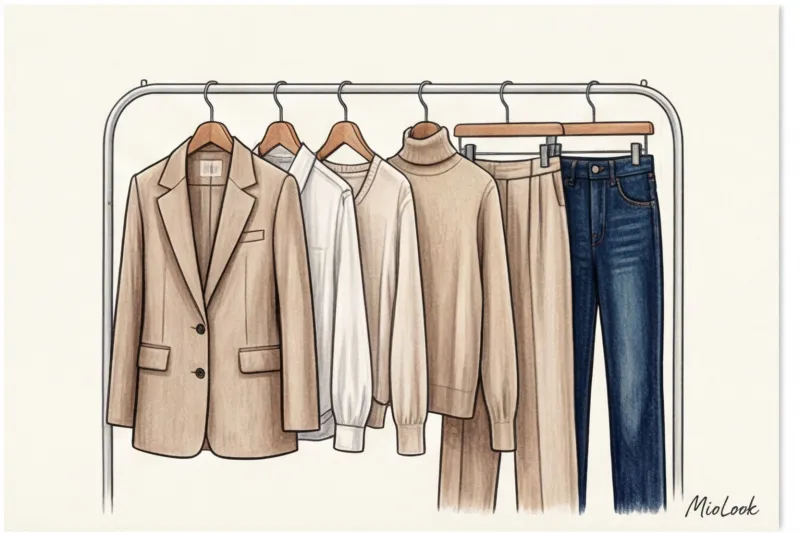
Basic capsule (budget 200–400 € for everything):
- Structured jacket or blazer (neutral colors: graphite, camel, navy).
- Two basic T-shirts made of thick cotton (white and black).
- A loose poplin shirt (not tight!).
- Straight trousers with a mid or high waist.
- Dark jeans (no fading).
- Minimalist leather sneakers or loafers.
Of course, this advice doesn't work for everyone. If you're a unique, highly specialized coder being coveted by industry giants, you might as well show up to a meeting in your pajamas. But if you're in a highly competitive market, your attire is a trust filter.
To ensure these items always coordinate, I recommend digitizing them. Upload a photo of your capsule to MioLook , and artificial intelligence will help you create the desired image in one click, five minutes before an important call.
Conclusion: Your appearance is also part of your portfolio
Style is no substitute for expertise. If you're missing deadlines and producing poor work, no cashmere sweater will save you. But the right outfit opens the door for that expertise to be respected and appreciated.
Review your work wardrobe this evening. Remove items that make you slouch or feel too casual. Treat a good jacket or quality shoes not as a splurge, but as an investment in your personal brand. This investment is guaranteed to pay off with the first big contract you sign.