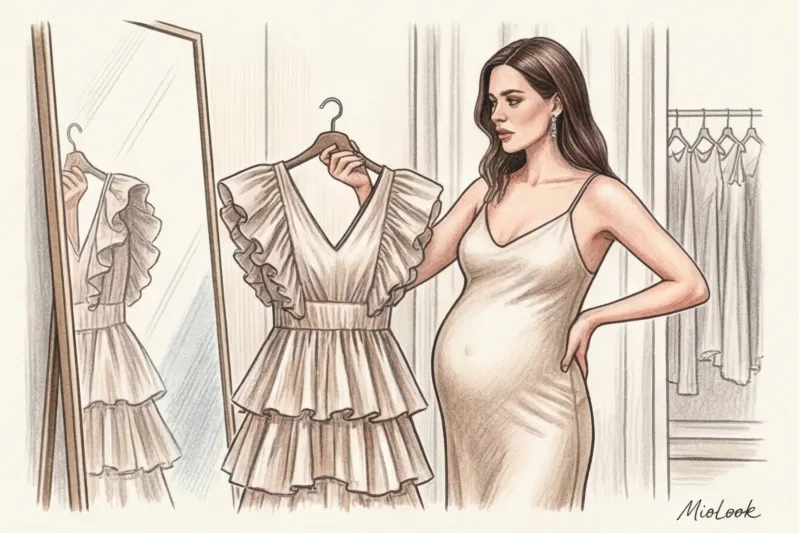
Imagine a situation familiar to many: you are seven months pregnant, you feel heavy, you get tired quickly, and then your best friend sends you a wedding invitation with the note Black Tie You head to a boutique specializing in maternity wear and... cry in the fitting room. The racks are lined with either shapeless tank covers or childish, meringue-style dresses made of shiny synthetics. You buy one for a hefty price, wear it exactly once, swelter all evening, and the next day, hide it in the back of your closet. Sound familiar?
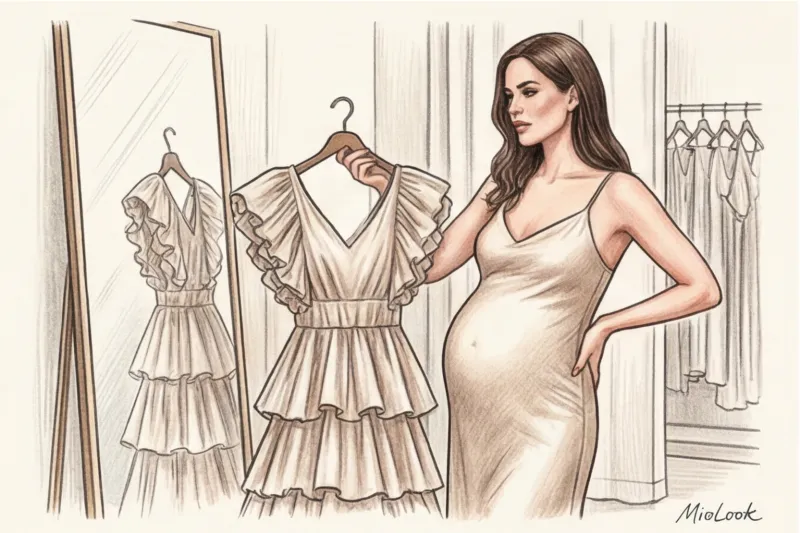
In my 12 years as a stylist, I've seen this scene dozens of times. My main, and for many, unexpected, advice: to find the perfect elegant dresses for pregnant women , you need to forget the way to the departments forever maternity Instead, we'll be looking for the right "cut architecture" in the collections of mainstream brands. Such pieces will not only fit your changing figure beautifully but will also remain in your wardrobe for years to come. We've covered more about how to create a smart wardrobe during this period in our guide. Basic Maternity Wardrobe: A No-Bust Checklist.
Why Maternity Dresses from Specialty Boutiques Are a Financial Trap
Let's be honest: the maternity fashion industry is often built on manipulating our fears. Brands understand that you only need something for a short time, so they intentionally skimp on fabrics and patterns, maximizing their margins on a "disposable" product.
According to a 2023 report by the independent UK organization WRAP (Waste and Resources Action Programme), the active life of maternity eveningwear is only 1.2 wears. This is a disaster for both the environment and your wallet. Let's calculate the brutal math of style—the index. Cost Per Wear (cost of one output):
- Scenario A: You buy a chiffon dress at a maternity boutique for €120. You wear it once, to a wedding. The cost of the outing = 120€.
- Scenario B: You invest €300 in a luxurious, minimalist column dress made of thick knit from a regular premium brand. You wear it to a special occasion with statement earrings, then wear it to the office with a jacket after giving birth, and then to the theater a year later. Over five years, you've worn it 30 times. Cost to exit = 10€.
Moreover, specialized brands love to use 100% polyester for their dressy lines. Why? It's inexpensive and holds the shape of ruffles and frills well. But for a pregnant woman, polyester in evening wear is like a personal sauna, which we'll discuss in detail in the textile expertise section.
Your perfect look starts here
Join thousands of users who look flawless every day with MioLook. Its smart algorithm will help you create a capsule wardrobe from the items already hanging in your closet.
Get access — €0.99 onceCut Architecture: Styles That Work for You Before, During, and After Pregnancy
Avoid the infantile "Natasha Rostova" style—those dresses with a slit just below the bust and a full skirt. This style visually transforms a woman into a monumental rectangle, depriving her figure of grace. The secret lies not in the stretch of the fabric, but in the way it's cut.

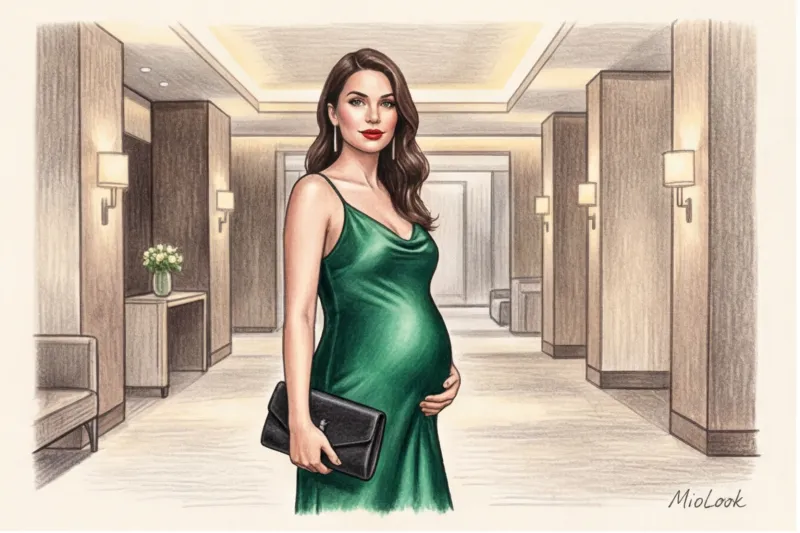
Bias cut - silk luxury
In the 1920s, the great Madeleine Vionnet revolutionized fabric production by inventing the technique of cutting fabric at a 45-degree angle to the grain. This technique imbues even the most inextensible, dense silk with incredible natural elasticity.
Last year, I was getting a client ready for a corporate event. She was seven months pregnant and absolutely didn't want to accentuate her belly with bandage fabrics. We chose a heavy silk slip dress, cut on the bias, one size larger than her usual. The fabric gently hugged her belly, creating flowing folds without tugging at her skin. Today, a year after giving birth, she wears the same dress, cinched in at the waist with a belt, as we detailed in the article. How to transform a daytime look into an evening one without unnecessary items.

Column dress made of premium knitwear
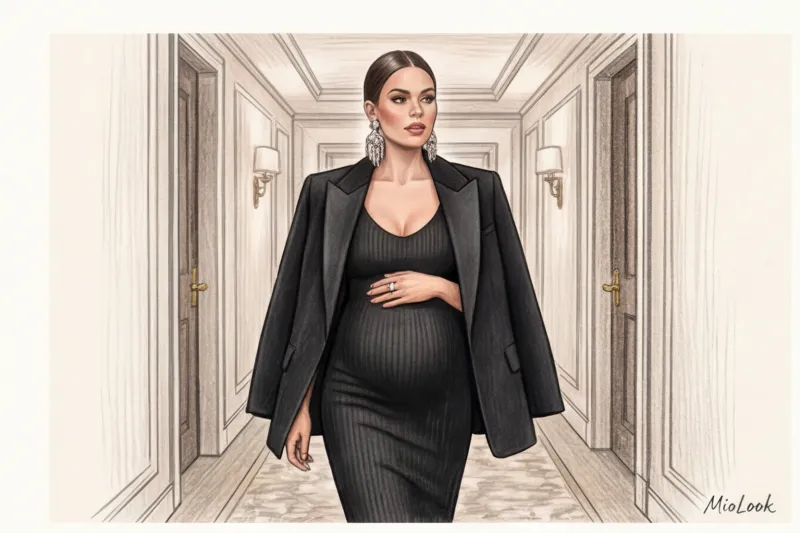
An important clarification: we're not talking about flimsy viscose that highlights every fold and panty line. We're looking for a dense, textured ribbed knit. The vertical lines of the ribbed knit create an optical illusion, elongating the silhouette and offsetting the horizontal bulk of the belly. A column dress is the perfect blank canvas. You can style it with statement pumps and a chunky necklace, and it'll become a classy evening staple.
Pleated and corrugated fabric: ideal concealment and dynamism
Pleating has a unique biomechanical property, once elevated to absolute perfection by Issey Miyake. The pleats fan out precisely where there's volume (on the stomach and chest), but remain flat and gathered where there's no volume (under the bust, on the shoulders). This creates a complex, architectural silhouette. Look for dresses with heat-sealed pleats on a high-quality base to ensure they stay in place after washing.
Textile expertise: which fabrics are safe and comfortable for expectant mothers
Consider your fabric choice from a physiological perspective. In the third trimester, blood volume increases, and a woman's basal body temperature naturally rises. A tendency to sweat is a normal response. By wearing elegant maternity dresses made of 100% cheap chiffon polyester, you're literally wrapping yourself in greenhouse-like plastic film.
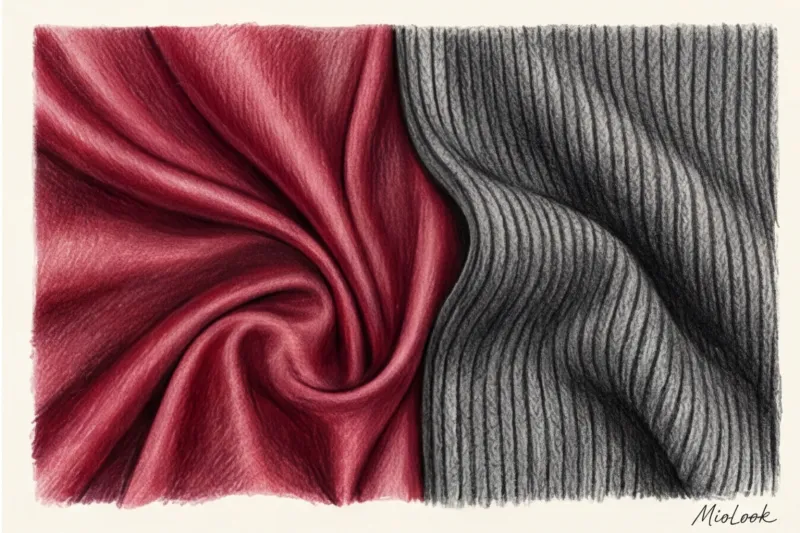
Polyester fibers are hydrophobic. They don't absorb moisture, but trap it between the skin and the fabric. This causes discomfort, red spots on the skin, and the urge to leave the party within an hour.
What to look for on the label:
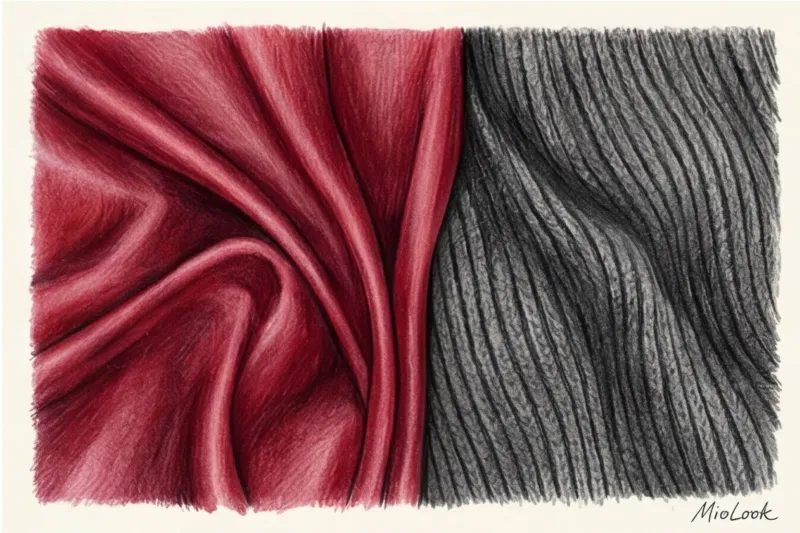
- Cupro (vegan silk): Regenerated cellulose. Molecularly, it breathes like cotton, but flows and shines like silk. The perfect evening option.
- Tencel (lyocell): Eucalyptus wood fiber. Excellent moisture wicking and a luxurious matte finish.
- Thick viscose: Be sure to add 3-5% elastane (no more!). If the elastane content is more than 5%, the garment will quickly become misshapen at the elbows and buttocks.
- Heavy natural silk: With a density of 19 momme and above, it won't be see-through and will enhance your look.
"At the store, try a simple test: squeeze the hem of your dress in your fist for 10 seconds. If the fabric remains tightly wrinkled after you release it, leave it on the hanger. You'll be sitting down at the reception, so you don't want deep creases on your stomach and hips."
Length and Proportion: Balancing the Silhouette for a Special Occasion
One of the main secrets stylists use when working with plus-size figures or during pregnancy is the "exposed thin areas" rule. No matter how large the belly becomes, a woman always has graceful areas: the collarbones, wrists, and ankles. These are the areas we should highlight to visually lighten the silhouette.
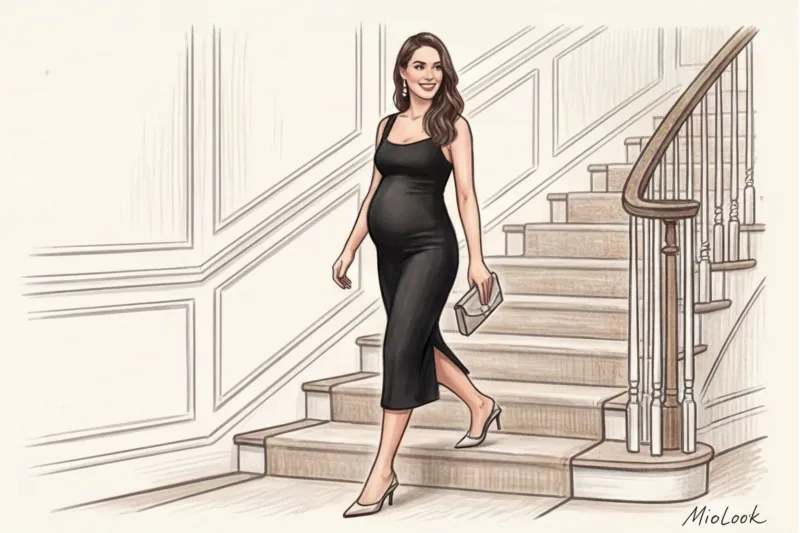
Knee-length is your worst enemy. Your belly inevitably eats up a few centimeters of the front length, causing the hem to rise, breaking the horizontal line. A knee-length dress then turns into a skimpy tunic. Choose confidently. midi (to mid-calf) or maxi to the floor.
Also, consider asymmetrical hems, where the back panel is slightly longer than the front—this is a great way to compensate. For portraits, opt for deep V-necks or strict square necklines. They create a geometric shape that draws attention away from curves and elongates the neck.
Not sure which length is right for you?
Upload your photo to MioLook, and a smart stylist will select the perfect proportions and styles based on your individual features.
Choose an imageFrom weddings to corporate events: styling your dress to suit your dress code
A well-chosen column dress or silk slip dress are chameleons. It's all about styling and accessories.
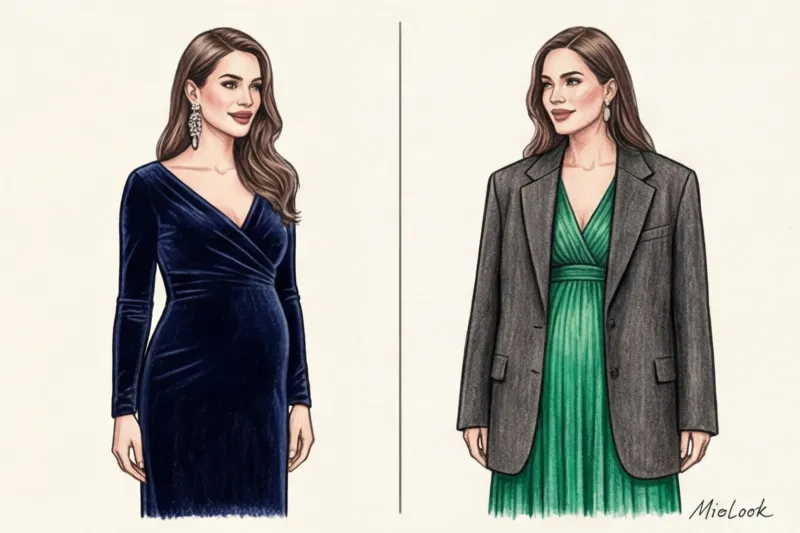
Black Tie and Formal Weddings:
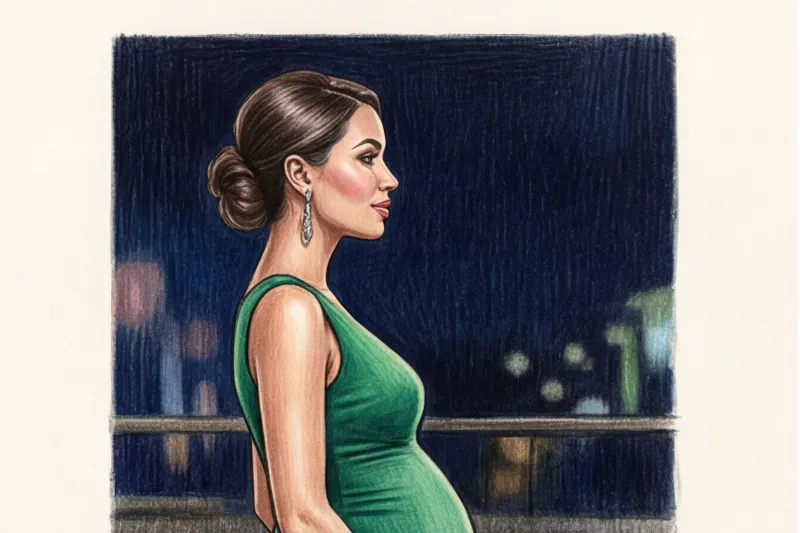
Take a bias-cut silk maxi dress. Add statement jewelry (like a strand of pearls or large crystal earrings). Layer a tailored tuxedo or oversized jacket over the top. The jacket's crisp shoulders structure the look, preventing it from becoming too casual. (For more ideas, check out our guide.) What to wear with an oversized jacket ).
Cocktail parties:
A pleated midi dress is ideal here. Pregnancy isn't a reason to give up beautiful shoes, but 10cm stilettos can be dangerous due to the shifted center of gravity. Elegant mules with a small architectural heel, kitten heels, or velvet slippers are excellent alternatives.
New Year and office corporate parties:
Many people shy away from complex textures like sequins or velvet, fearing they'll add too much volume. But that doesn't always work. Matte sequins on a straight column dress in graphite or dark emerald will make you the star of the evening. We wrote about how to balance dressiness with professionalism in this article. What to Wear to a Corporate Party: Style and Business Etiquette.
A conscious shopping checklist: checking your outfit before the checkout
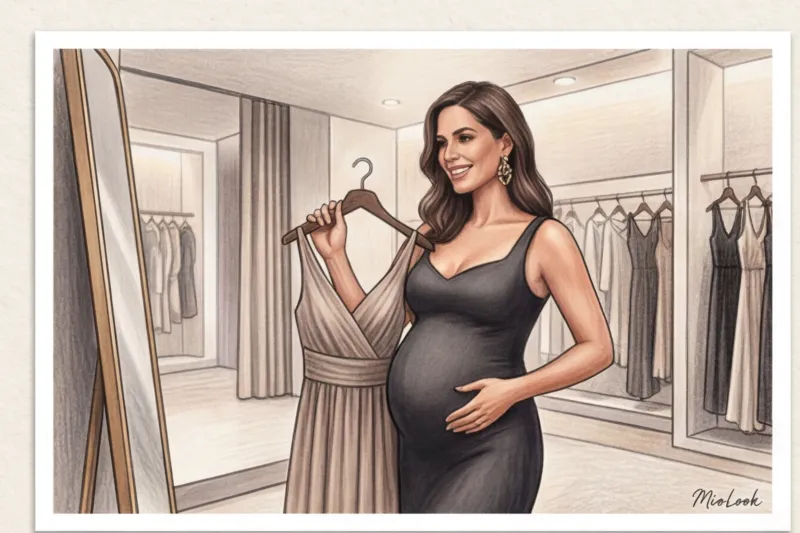
Before paying for your purchase, do a final inspection of the item right in the fitting room. When we're tired or euphoric, we often forgive clothes for their fatal flaws. Check out these points:
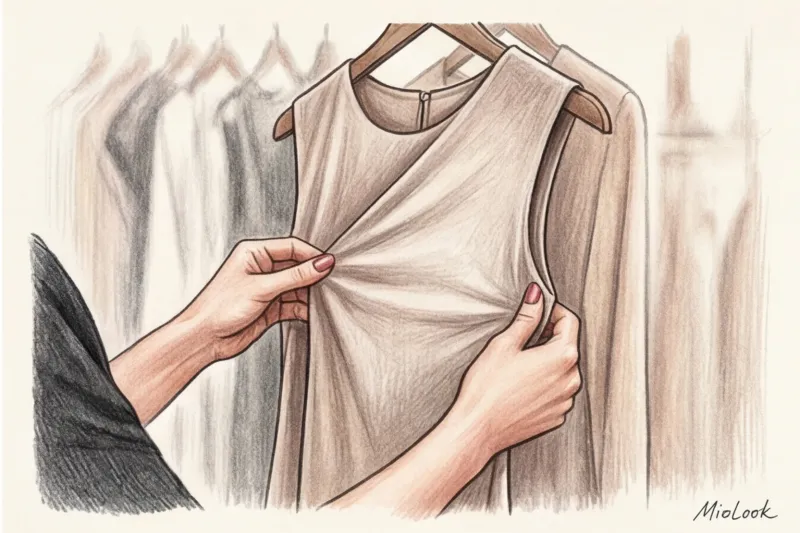
- Life After Test: Ask yourself an honest question: "Will I wear this dress in a year when my belly goes away?" If the answer is "no," put the item back on the hanger. This is marketing, not style.
- Checking seam tension: Sit on a pouf in the fitting room. Pregnancy puts extra stress on the side seams. If you see the threads stretching and glowing in the seam, your dress will come undone at the most inopportune moment of your wedding.
- Armhole architecture: Armholes shouldn't dig into your armpits. Pregnant women often experience swelling, and what was tight in the morning can dig painfully into your skin in the evening.
- Lingerie compatibility: Regular thin lace bras often don't accommodate growing breasts. Your outfit should allow for secure, supportive underwear with wide straps that don't show through the neckline.
Maternity fashion shouldn't be a compromise between style and comfort. By stopping searching for "special" maternity dresses and focusing on the quality of fabrics, historical patterns, and clever tailoring in regular collections, you'll not only save money but also stay true to your personal style during this exciting time of life.