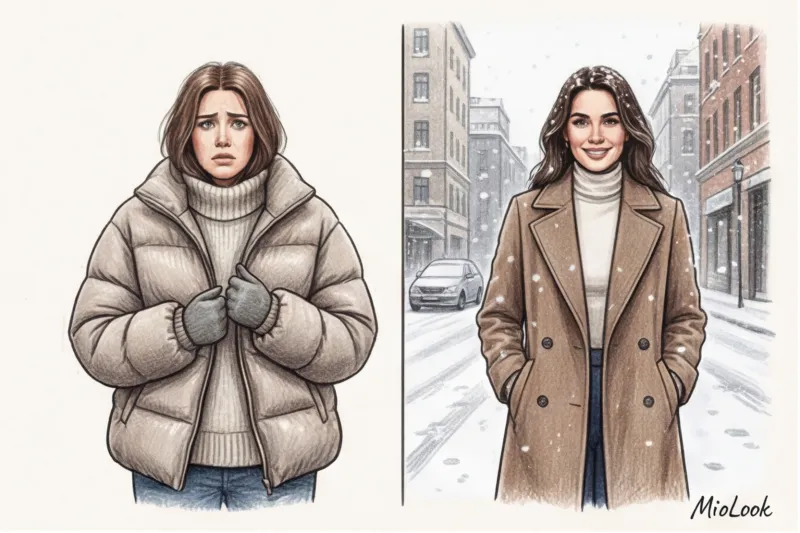
February. Milan Fashion Week. A piercing wind from the Alps blows through Piazza del Duomo. Tourists are bundled up in giant down jackets, reminiscent of an Everest expedition. And right there, fashion editors and buyers stroll past them, wearing open, formal coats, thin cashmere turtlenecks, and pumps. For a long time, I stared at this in bewilderment: do these women have a different physiology? Don't they get cold?
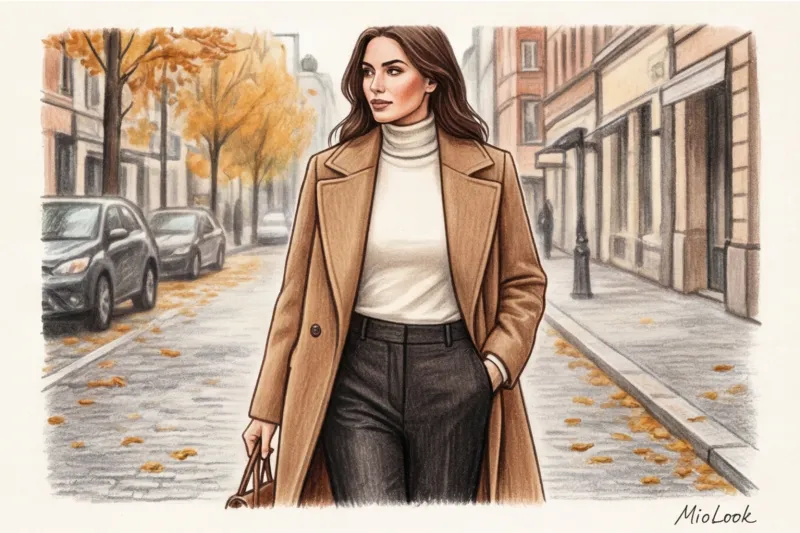
I discovered the answer when I became a stylist myself and started working backstage at fashion shows. The secret wasn't in superpowers, but in "thermal architecture"—the clever use of invisible high-tech and natural layers. They warm you better than any synthetic parka, while maintaining a flawless, defined silhouette.
Paradigm Shift: Why a Basic Fall Wardrobe for Women Over 30 Requires New Rules
In terms of style, transitioning from your twenties to your thirties always involves abandoning impulsive fast fashion in favor of an investment approach. We covered this in more detail in our complete guide. A Basic Wardrobe for 30-Year-Olds: How to Assemble a Capsule Wardrobe But it's precisely during the cold season that this transformation is most painful. A sharp conflict arises: how to look prestigious and professional without freezing to death at a bus stop or on the way to a taxi?
One of my clients, a 32-year-old marketing director, came to me with a problem. During off-site winter meetings with partners, she was losing all her authority in the dressing room. Her male colleagues were taking off their perfectly tailored wool coats, while she was struggling to get out of a shapeless, shiny down jacket from a mass-market brand, bought "just to survive the winter." The psychology of style is unforgiving: bulky, student-style clothing subtly undermines your confidence and status in the business world.
This is where the Cost-Per-Wear (CPW) formula comes into play. A high-quality double-breasted coat made of thick wool can cost three times as much as a trendy puffer jacket. But you'll throw the jacket away after a season when it loses its shape after washing (CPW = 1,500 € per wear). A classic coat, on the other hand, will last you five to seven years, reducing the cost of each wear to mere pennies.
Access to MioLook for €0.99 — one-time payment
A smart AI stylist will select the perfect look based on your wardrobe and the weather outside.
Get access — €0.99 onceThe Myth of the Michelin Man and the Concept of Thermal Architecture
The biggest mistake women make when putting together a winter capsule is believing that the thickness of a garment is directly proportional to its warmth. This is a fundamental misconception. According to the principles of textile engineering, it's not the fabric itself that provides warmth, but the air , which gets trapped between its fibers and between the layers of your clothing.
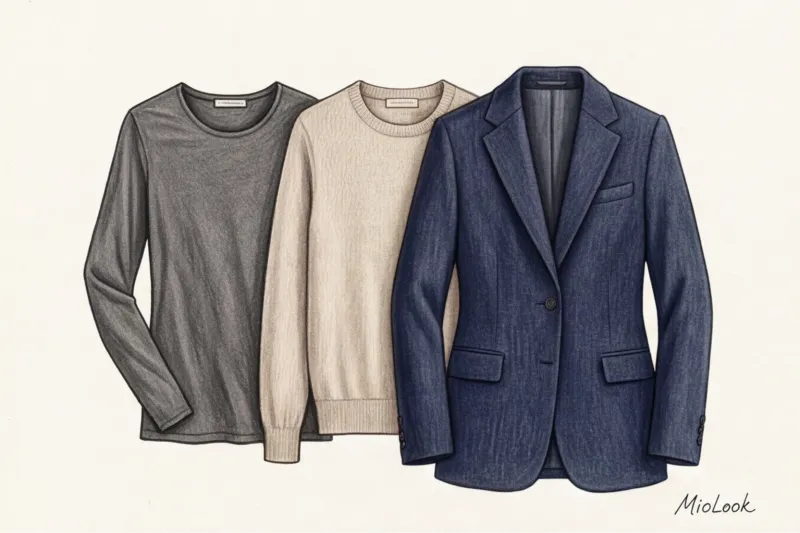
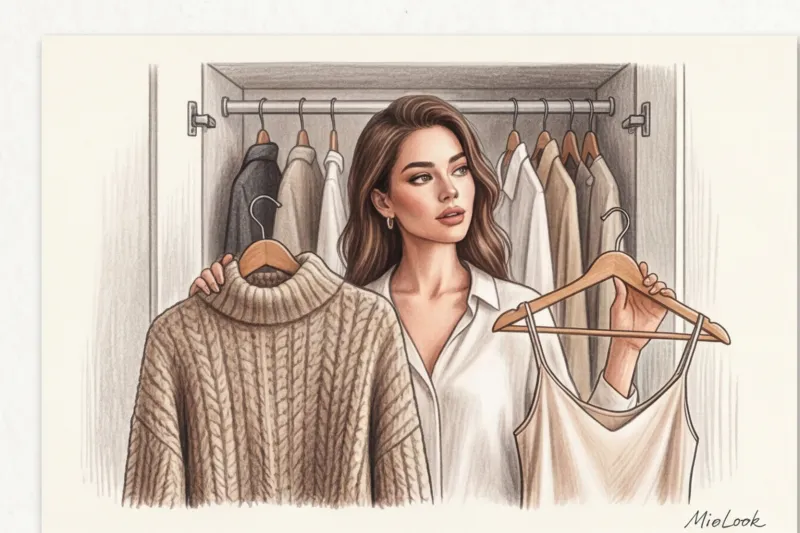
Two thin layers—for example, a silk T-shirt and a smooth merino wool jumper—create a layer of air that acts as a powerful insulator. They don't add a single centimeter of bulk. Let's compare the numbers: the finest natural cashmere insulates eight times better than standard thick acrylic of the same weight.
"By abandoning hyper-oversize clothing in favor of micro-layering, you can wear structured jackets and fitted coats even at minus fifteen degrees Celsius while maintaining your figure's proportions"—that's the main rule I teach my clients.
Invisible Base: Next-Generation Thermal Underwear
When we say the word "thermal underwear," our minds conjure up images of thick synthetic snowboarding tights. Forget it. The modern city woman's choice is the finest blends of natural silk and merino wool (look for wool & silk lines at premium and mid-range brands).
A thin, low-cut long-sleeve top made of this material becomes your "second body." It's invisible under office shirts and thin jackets. Important: never buy white thermal underwear under light-colored clothing—it will show through with a harsh outline. The ideal base layer should blend with your skin tone (nude, caramel, mocha).
Your perfect look starts here
Join thousands of users who look flawless every day. Upload your items, and algorithms will suggest the best combinations.
Get access — €0.99 onceThe Holy Trinity of Outerwear: What to Invest in After 30
A basic fall wardrobe for women over 30 can't rely on one "universal" jacket that you can wear for walking the dog, going to the office, and going to the theater. That's a utopia. Your capsule wardrobe should include three strategic pieces.
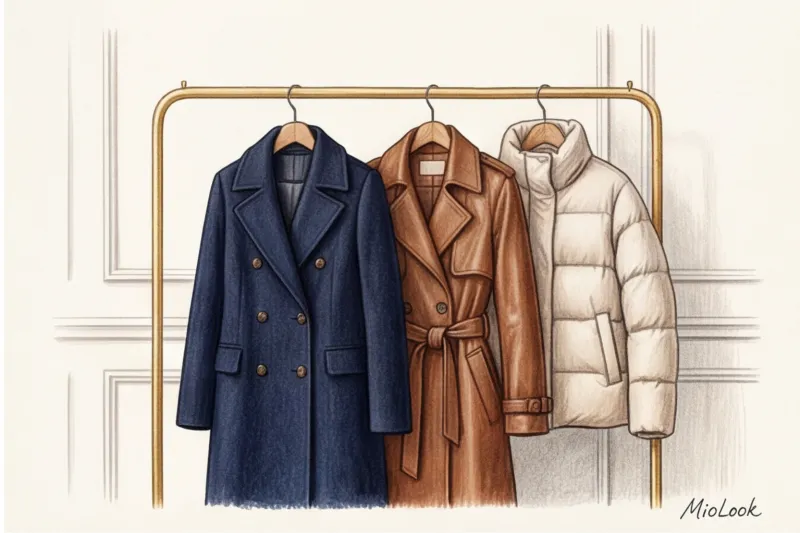
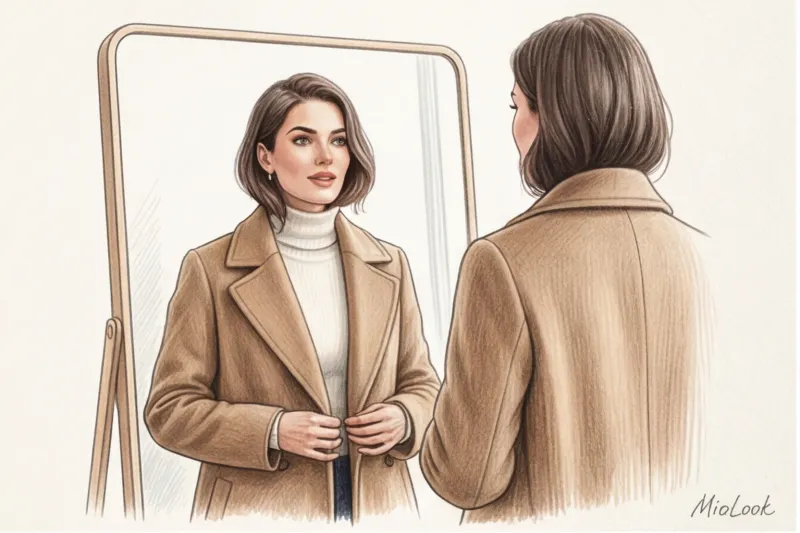
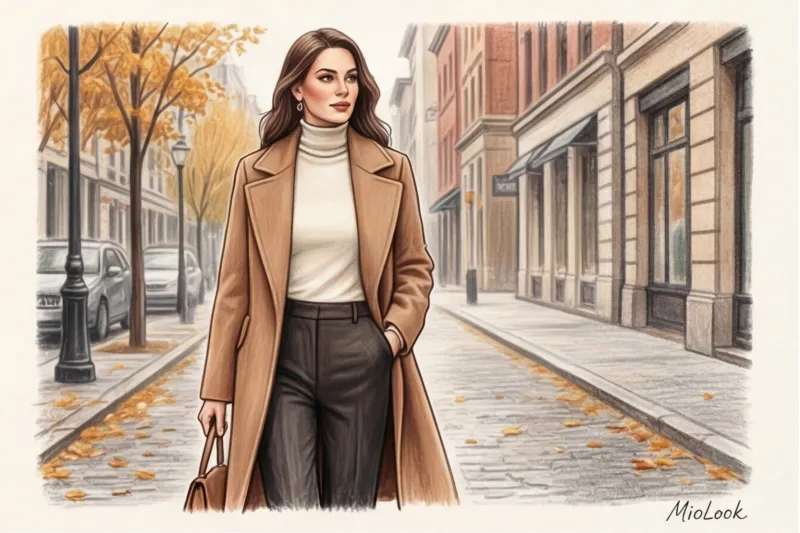
- The Power Piece (structured coat). This is your business shield. Choose a cut with a defined shoulder band and a midi or maxi length (it should completely cover skirts and dresses). In my experience, 8 out of 10 women are fooled by the "Wool Blend" label on a mass-market coat. Turn the tag over and you'll see 80% polyester and 20% wool. Such a coat won't keep you warm. Look for a blend of at least 70-80% wool, and ideally with some cashmere or alpaca for softness.
- A status down jacket or sheepskin coat. For weekends, brunches, and informal gatherings. The main rule for those over 30: no shiny, oilcloth-like textures, flashy logos, or excessive metal hardware. Matte fabric (ideally coated), a simple straight or slightly oversized cut, and hidden zippers.
- Transition layer (shacket or trench coat with lining). For the treacherous weather of late September and October, when a coat is still too hot but a jacket is too cold. A heavy shirt coat or a classic gabardine trench coat with a removable wool lining.
Knitwear: Moving from fast fashion to noble fibres
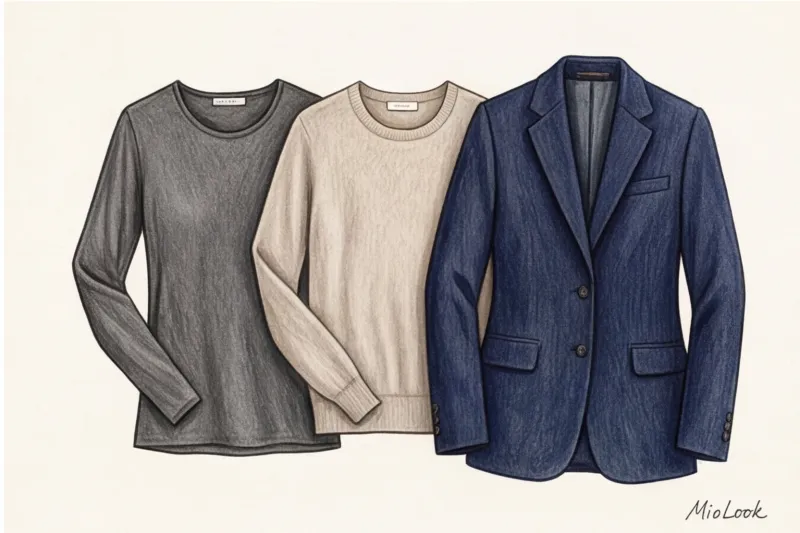
Now I'm going to say something that contradicts 90% of fashion blogs: Buying a thick, chunky cable-knit wool sweater is the worst investment you can make in your basic wardrobe. Yes, it looks cozy in Pinterest photos with a cup of cocoa. But in reality, it's incredibly fattening, unbearably hot in a heated office, and, most importantly, it's physically impossible to wear an elegant structured coat over it without ripping the armholes.
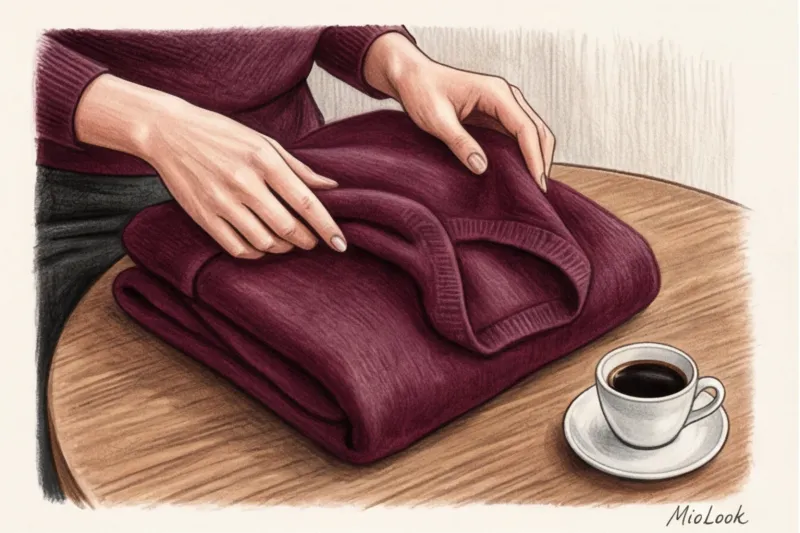
The future belongs to smooth textures. Data The Woolmark Company Confirm: a 100% merino wool jumper has unique thermoregulation properties. The fiber actively responds to body temperature, wicking away moisture indoors and retaining warmth outdoors. It's the perfect balance.
A cashmere turtleneck is a separate issue. How can you tell the difference between one that will last for years and one that will start pilling in three days? Always look at the twist density. A quality indicator is two-ply yarn. If you gently tug the fabric in the store, it should instantly return to its original shape.
For those who prefer a relaxed business style (smart casual), I highly recommend swapping out a classic suit jacket for a thick, smooth-knit cardigan. It holds its shape but allows for freedom of movement. By the way, to avoid getting confused about which sweaters go with which pants in your base, you can digitize your items in MioLook — the application will automatically assemble capsules from them, taking into account the textures.
Autumn/Winter Shoes: How to Maintain Your Style When It's Slushy Outside
Winter footwear is always a painful compromise between "pretty but cold" and "warm but ugly." To break this vicious cycle, invest in the right fit.
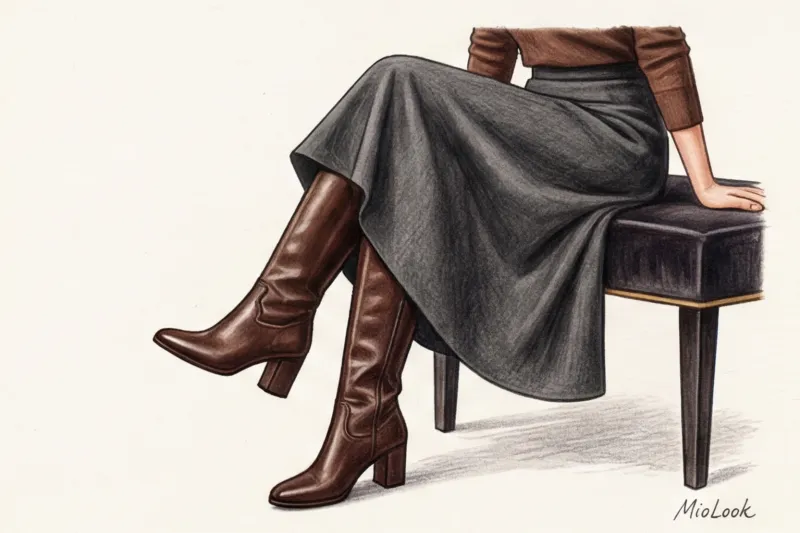
- Knee-high tube boots. A straight, non-calf-length shaft. Why is this the best investment? Because the hem of these shoes elegantly folds under the hem of a midi skirt or dress, creating a continuous vertical line that visually elongates the height.
- Ankle boots with a stable block heel. Save the stilettos for the taxi. Urban chic calls for a square or almond-shaped toe. They work perfectly with cropped straight-leg jeans and wool trousers.
- Chelsea boots with thick soles. Note: thick, not overly chunky. Bulky track soles are going out of style, making way for a moderate, slightly chunky platform.
Insider care tip: in Russian and European cities drenched in chemicals, regular shoe wax won't save your prestigious leather. Use nano-sprays based on fluorocarbon resins—they create a molecular barrier that allows salt water to simply roll off without penetrating the pores of suede or smooth leather.
The Street-Office Dilemma: A Temperature Change Checklist
It's a familiar situation: it's -10°C outside, but the office is 25°C from the merciless radiators. If you're dressed warmer at home, you'll sweat and lose concentration at work.
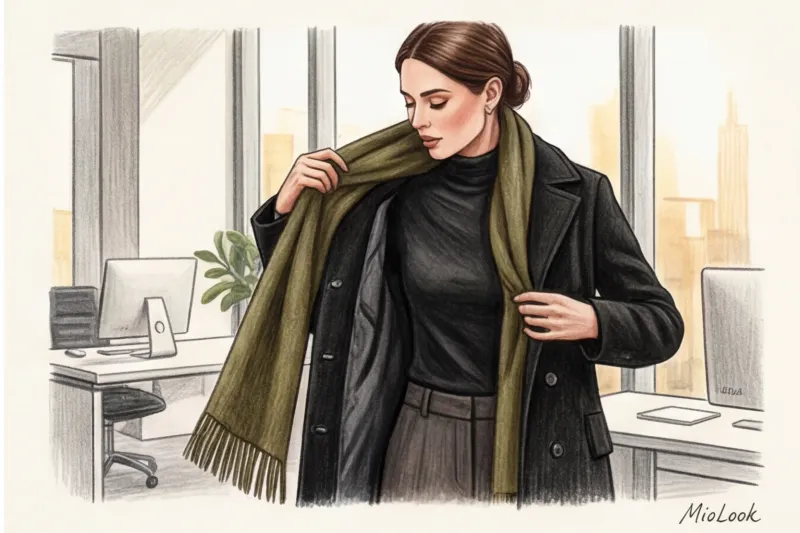
Works here unbuttoned coat rule Your inner layer should be aesthetically complete and lightweight enough. To achieve this, we use the "release heat" technique.
- Wear wide wool stoles and cashmere bibs (detachable collars) over a thin silk long-sleeve or shirt. Outdoors, they protect your neck and chest better than any sweater. At the office, you can remove them with an elegant gesture in a second.
- Vests made of suiting fabric or fine wool. Wear them under a jacket outside (an extra layer of air) and take them off indoors, leaving the blouse on.
And please, avoid thick brushed wool trousers. They're the killer of an elegant silhouette. Thin wool suit trousers (made from so-called "cold wool") paired with discreet silk knee-highs or thermal tights will solve the cold problem while maintaining a perfect crease and shape.
A Luxury Palette: Colors That Make a Winter Base Look Luxurious
From November to March, the streets are immersed in total black and dirty gray. Breaking out of this mold is the easiest way to look more expensive. According to WGSN analysts and PANTONE forecasts for 2024-2025, classic base colors are increasingly gravitating toward complex, natural shades.
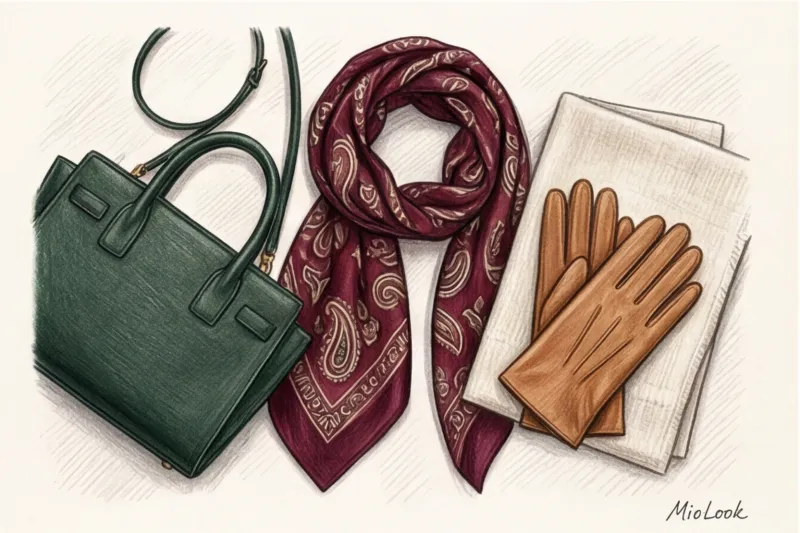
Integrate deep tones into outerwear and knitwear: burgundy, dark chocolate, bottle green, rich camel. A black down jacket is a uniform. A dark chocolate down jacket is a fashion statement.
But the true pinnacle of a high-status wardrobe (and my favorite styling trick) is light, monochrome winter looks. The combination of ecru, oatmeal cookie, cream, and cool beige shades looks incredibly aristocratic against a slushy backdrop. The secret to preventing this look from looking flat is a play of textures. The formula is simple: smooth matte leather + fluffy mohair (or alpaca) + dense matte wool. Due to the difference in light reflection, the same color will play with facets, creating depth without any prints.
Of course, it's worth acknowledging: light cashmere monochrome and thin silk layers aren't the best choice if you're spending three hours building a snowman with your kids in a snowdrift or walking through the woods. Active outdoor recreation requires completely different, utilitarian pieces. But for the urban rhythm of the "home-car/metro-office-restaurant" route, thermal architecture works flawlessly.
A woman's winter wardrobe after 30 isn't just a cold-weather blanket. It's a smart system where every detail is tailored to your comfort and status. Invest in the right materials, not the right volumes, and you'll notice how, along with those extra pounds of padding, your winter self-doubt will disappear.
Ready to get started?
Try the MioLook plan for free—no commitments required. Create your perfect fall/winter capsule wardrobe now.
Get access — €0.99 once