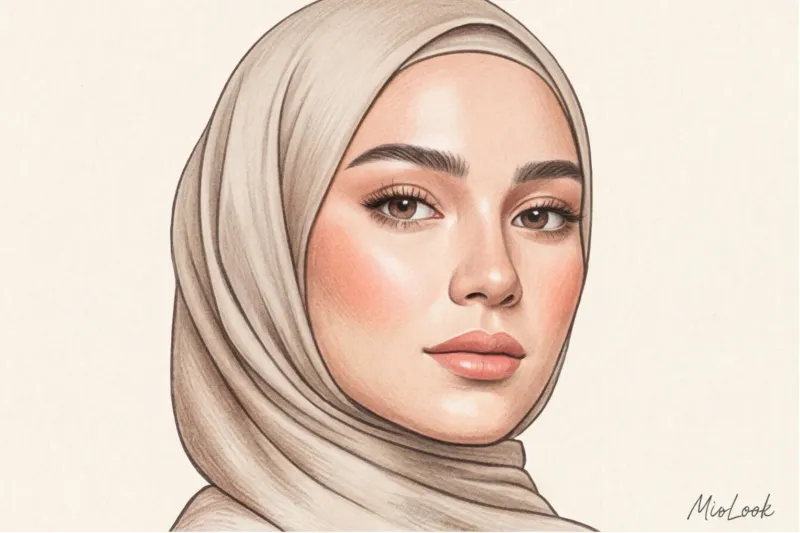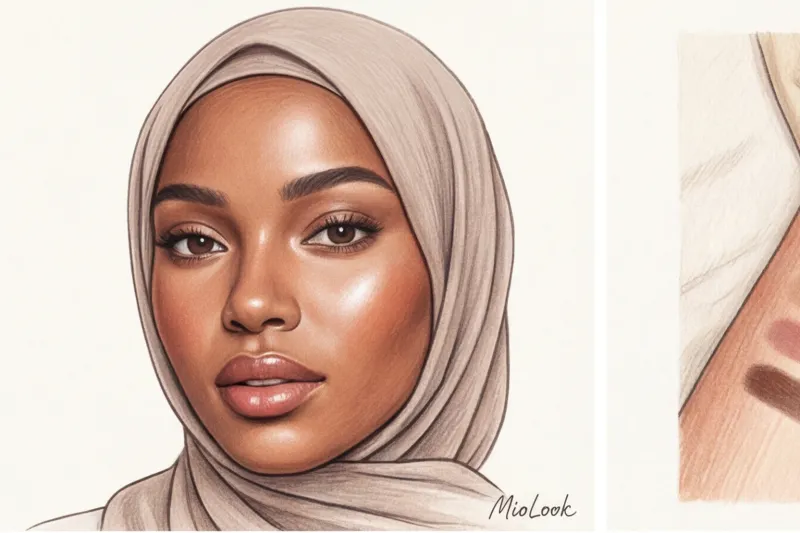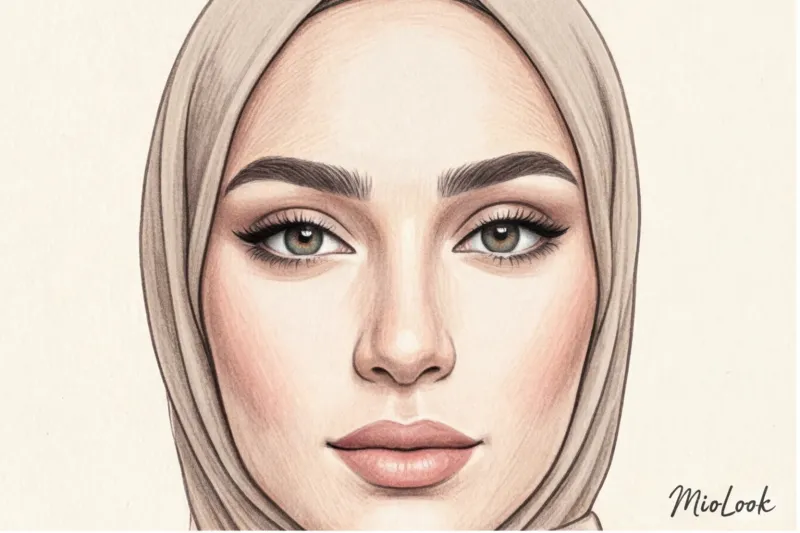
A few years ago, a local disaster occurred backstage at Dubai Fashion Week. A model in a luxurious emerald silk hijab came out for the final runway, and under the spotlights, her face suddenly looked tired and her eyes visibly smaller. The problem wasn't lack of sleep or poor lighting. The mistake lay in the pearlescent eyeshadow, which clashed violently with the shimmer of the fabric.
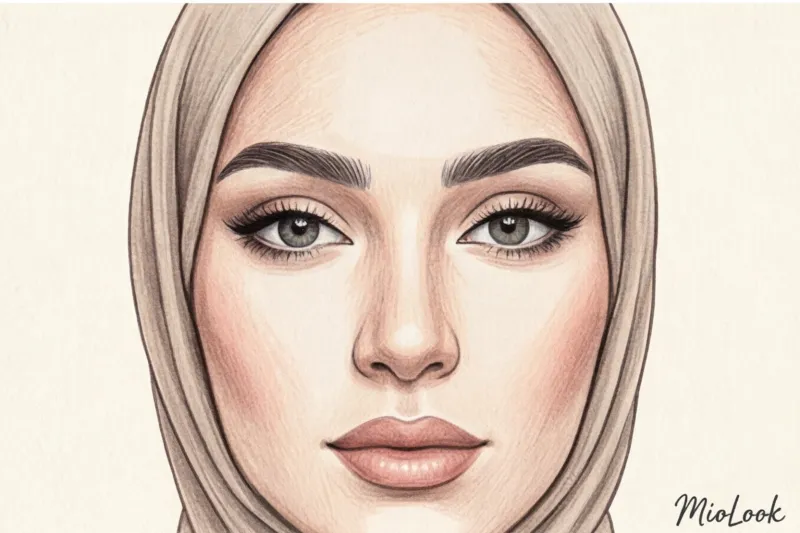
This incident forever changed my approach to my work. When applying eye makeup for a hijab, we work not just with a palette, but with architecture. Fabric changes the geometry of the face, redistributes shadows, and acts as a powerful reflector. We discussed in more detail how a head covering affects facial sculpting in our The complete guide to hijab makeup Today, I'm going to explore the most important area—the eyes—and look at them through the eyes of a stylist, not just a makeup artist.
Why does eye makeup for a hijab require a special approach?
When we hide our neck and hair under fabric, we create a "passe-partout" effect. In art, a passe-partout is a smooth cardboard border that frames a painting and directs the viewer's eye directly to the center of the composition. The hijab works in exactly the same way.
Without the usual visual counterbalances (like loose curls or an open neckline), European makeup techniques falter. The familiar smoky eye looks too heavy, and a light nude instantly fades against the thick cotton.
"According to eye-tracking research (an adaptation of heat maps from Nielsen Norman Group, 2023), when the contours of the neck and hair are closed, 80% of the interlocutor's visual attention is firmly fixed on a third of the face—the area from the eyebrows to the cheekbones."
What does this mean in practice? Any carelessness in shadow blending or asymmetry in eyeliner becomes three times more noticeable. Your gaze takes on the entire meaning of the image.
Texture Conflict: How Scarf Fabric Dictates Shadow Finish
Over 12 years of working as a stylist, I've come up with a golden rule that beauty bloggers, for some reason, keep quiet about: The finish of your eyeshadow should always be opposite to the texture of your scarf..
Satin silk and viscose produce a powerful light reflection. Adding shimmer to the eyelids instantly cheapens the look, creating an overloaded, glare-laden effect. Even expensive, luxury cream eyeshadow (in the €60-€80 range) will look out of place when paired with shiny silk. The shimmery fabric calls for a completely matte, deep makeup look—it will tone down a complex look.
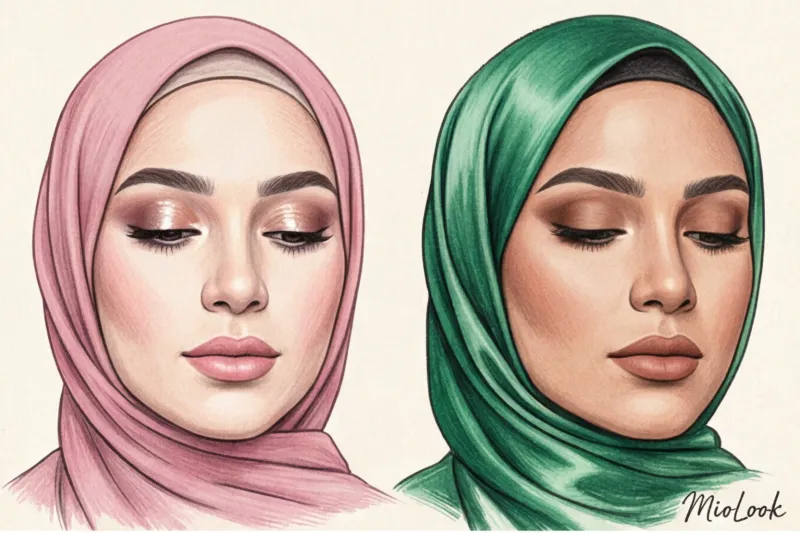
Conversely, matte cotton, thick linen, and crepe chiffon absorb light. If you wear a dull matte makeup look with such a scarf, your face will appear flat and dull. Here, a dewy sheen on the lid, a subtle satin highlight in the inner corner of the eye, and a delicate highlighter literally save the day, restoring volume to the face.
Your perfect look starts here
Join thousands of users who look flawless every day with MioLook. A smart AI stylist will select makeup and clothing to suit your personality type.
Get access — €0.99 onceLine Geometry: How to Match Arrows to Hijab Folds
One of my clients, a corporate lawyer, complained for a long time that by mid-work she looked "like a sad spaniel," even though her makeup never blew. We analyzed her headshot photos. It turned out she had been using a classic straight winged eyeliner, drawn toward her temples, but was wearing a tight turban with lines rising at a 45-degree angle. This visual dissonance was throwing off the proportions of her face.
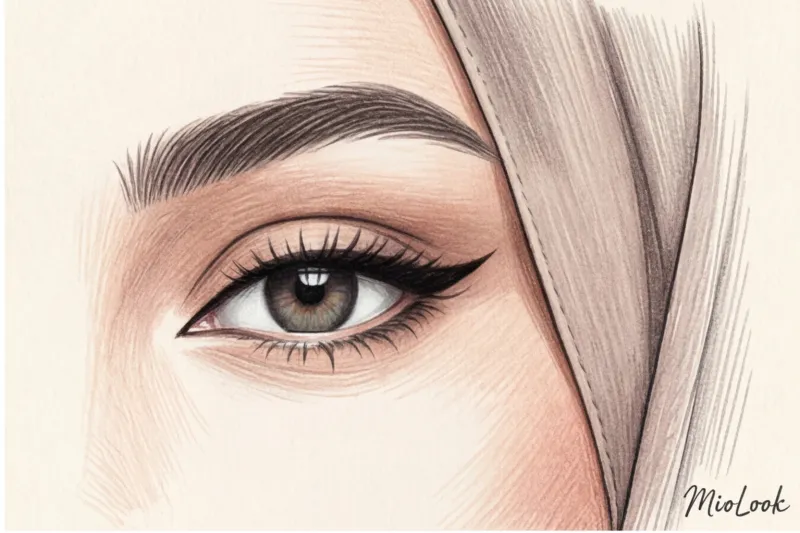
So we come to law of parallels: the angle of the classic arrow should echo the drapery line at the face.
- If you wear a scarf that fits tightly around your face: Avoid graphic, long horizontal lines. They visually "cut" the face frame. A softly shaded line pointing diagonally upward is your best bet.
- If you are wearing a loose drape (loose hijab style): The cascading folds of chiffon require a clear, graphic frame on the face. A sharp eyeliner is ideal here, offsetting the softness of the fabric.
Palette Selection: Contrast Over Fusion
I'm here to bust the biggest myth of modest fashion. Many people believe, "If I'm wearing an emerald scarf, I need to add a green eyeliner to my lower lid." No, you don't. Monochrome takes away depth from the face.
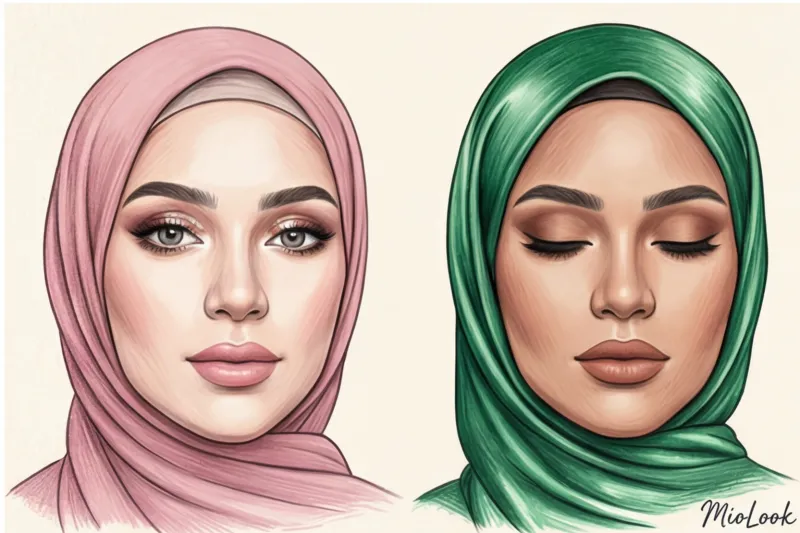
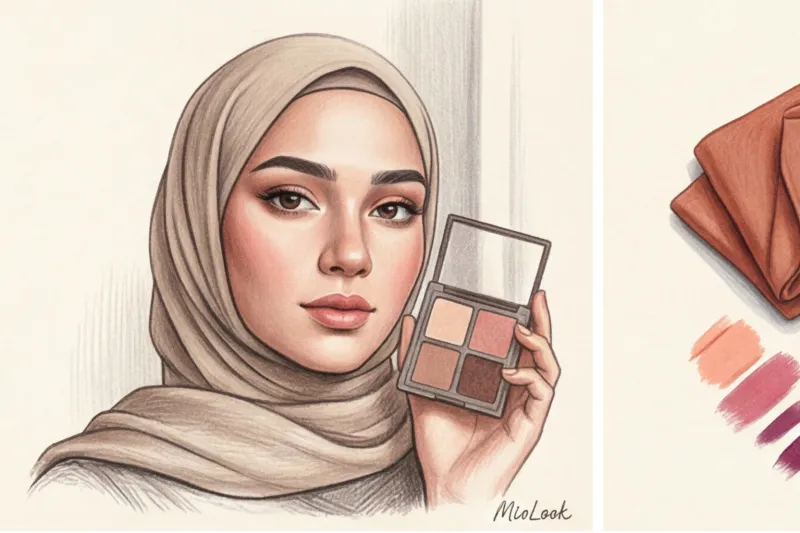
Applying Johannes Itten's theory of color contrast (the foundation of coloristics) to modest fashion, we employ the rule of complementary contrast. The color of the scarf acts as a reflector—it will already cast its own shade onto your skin. Our goal is not to duplicate it, but to enhance it.
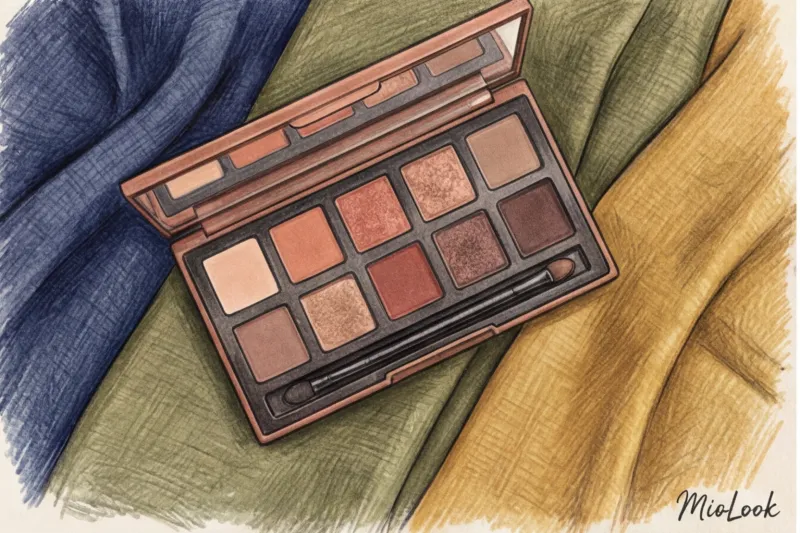
If your scarf is a cool blue or light blue, use warm peach, copper, or gold eyeshadow. Deep terracotta or burgundy shades are ideal for emerald silk. And basic, "safe" palettes that look expensive (café au lait, cool taupe, dusty rose) work as a universal neutralizer for any bold print.
An important limitation from practice: The contrast rule doesn't work for everyone. If you have pronounced hyperpigmentation or dark circles under your eyes, using red or terracotta eyeshadow against a green hijab will only highlight your tired appearance. In this case, stick to a neutral beige-brown palette.
Eyebrow shaping: upper border of the "frame"
Eyebrows are the top frame of our image. When wearing a hijab, they should never be too dark or harshly graphic (a "marker" effect). The more defined the scarf line on the forehead, the lighter and more transparent the eyebrows should be. Use the "soap brow" technique or light powder shading to create a balance between the rich eye makeup and the soft contour of the face.
Practice: How to avoid prints on fabric and maintain durability
The theory is great, but let's talk physics. The main enemies of makeup under a hijab are microclimate and friction. Breathing into the scarf (especially in cold weather when wearing pashmina stoles) increases the humidity around the face. According to statistics from professional cosmetics brands, the longevity of makeup on the temples and outer corners of the eyes is reduced by 40% when exposed to fabric.
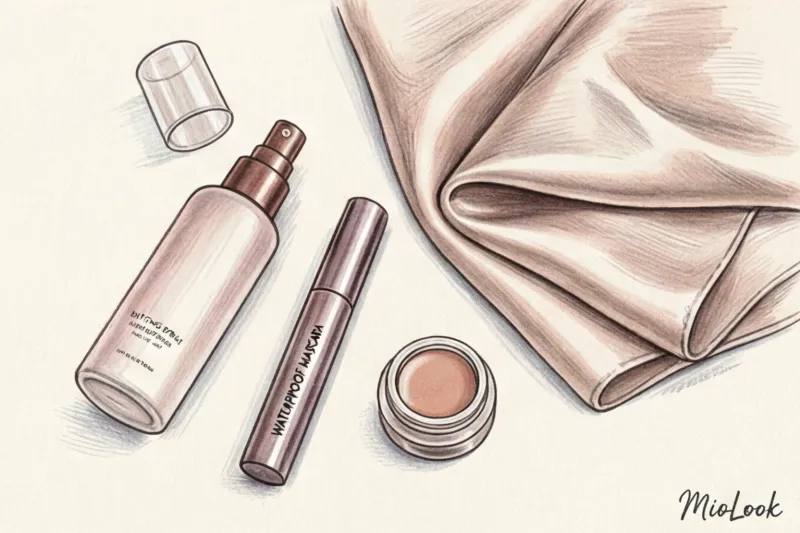
Your essential arsenal should consist of three elements:
- Eyelid primer (not concealer!). Concealer contains oils and will settle under a hood or a tight scarf within a couple of hours. A high-quality primer (in the €20-€30 price range) will firmly "glue" the pigment in place.
- Thermal mascara (tubing mascara). This is a lifesaver for Muslim women. It's impervious to moisture from breath and sebum, but can be easily removed with warm water during ablution (wudu). Good options range from €15 to €35.
- Fixative spray. Apply dots to the outer corners of the eyes to prevent the eyeliner from leaving marks on the light edge of the scarf.
Access to MioLook for €0.99 — one-time payment
A smart AI stylist will analyze your wardrobe and suggest the perfect combination of textures, shades, and makeup for every look.
Get access — €0.99 onceDouble Challenge: Eye Makeup for Hijab and Glasses
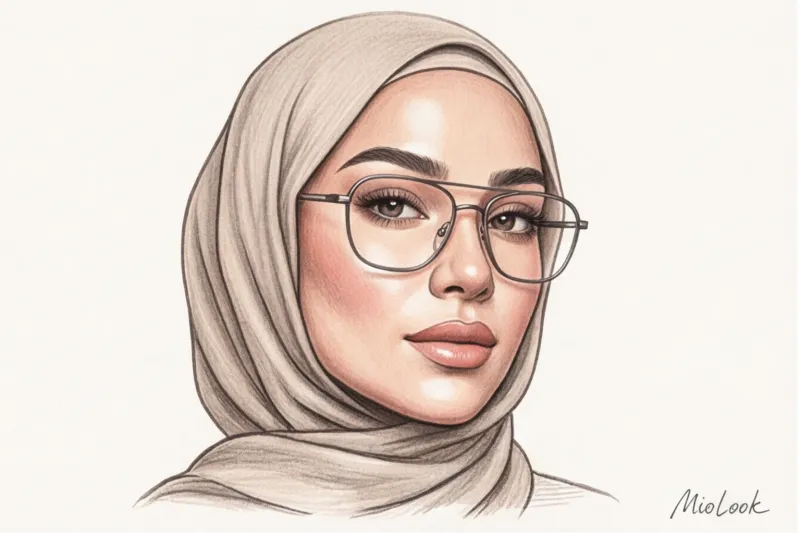
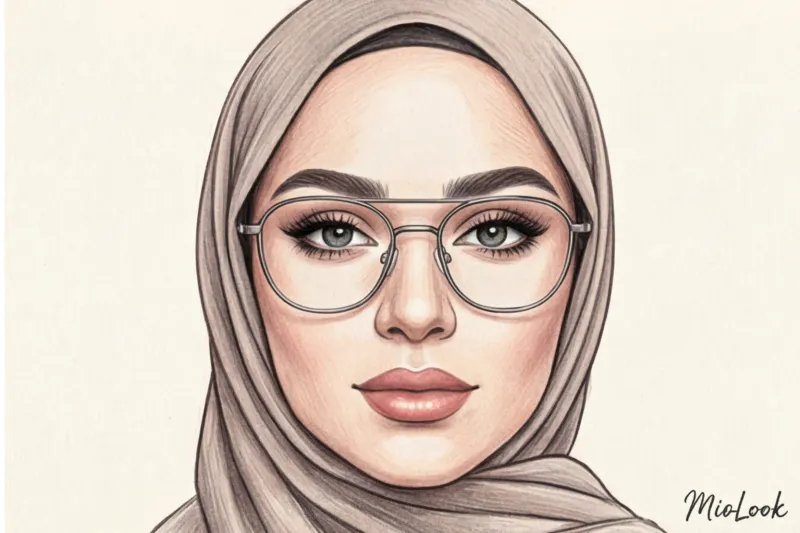
For those who wear glasses, the task is doubly difficult. The frames and the way the scarf drapes over the face create a colossal risk of visual noise. Add in a bold smoky eye look, and the face will simply get lost in the layers of accessories.
Insider tip: follow the one-focus rule. If you have chunky acetate frames (like popular models from Celine or Tom Ford), keep your eye makeup completely nude. Focus on perfectly separated lashes and highlighting the inner corners of your eyes. A highlight in the inner corner casts a shadow from the frame and opens up your eyes, making them look fresh even through lenses with anti-reflective coating.
Step-by-step plan: business vs. evening eye makeup
Context is everything. When choosing the intensity of your makeup, consider the dress code and lighting.
Daytime (office) option
For an IT interview or everyday office work, a clean, put-together look is essential. Use a matte base in your skin tone and contour your lashes with a dark brown (not black!) pencil. This will create the illusion of thicker lashes without the need for aggressive eye contouring. For this look, it's best to choose a smooth, fold-free scarf.
Evening Option: The 30% Rule
In the evening lighting of restaurants or banquet halls, faces appear pale. Plus, textured evening hijabs (velvet, heavy silk, brocade) visually "eat away" makeup. The rule of thumb is to apply eye makeup 30% more intense than your usual maximum. Deepen the crease with a darker shade, use false eyeshadow in the outer corners, and don't be afraid of vibrant, shimmering pigments in the center of the lid.
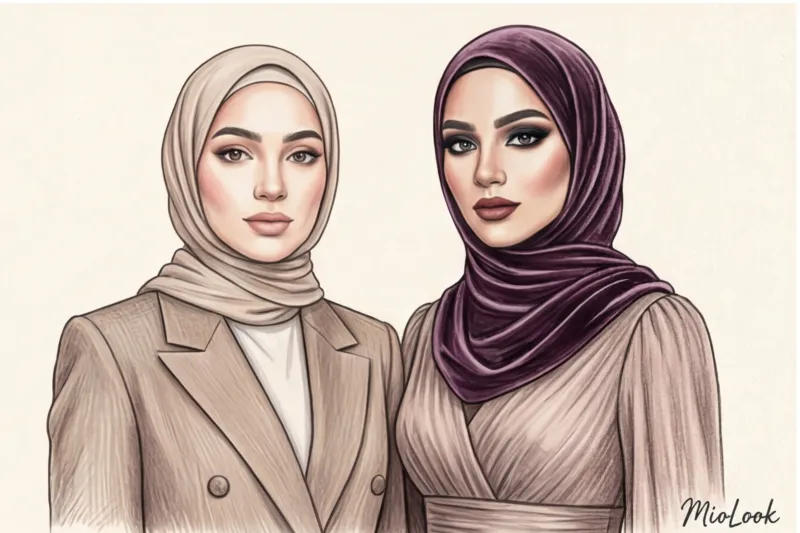
A hijab isn't a restriction; it's your personal lighting director. The fabric you wrap around your face dictates where shadows fall and where highlights appear. Next time, before opening your makeup bag, take a look at your headscarf. Understand its texture, appreciate the angle of the drape—and only then pick up your tassels. It's in this sequence that a truly precious and deliberate look is born.