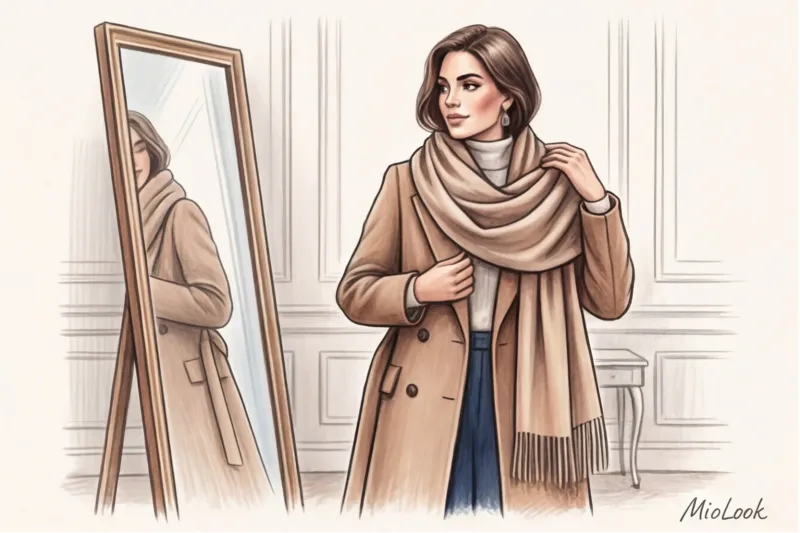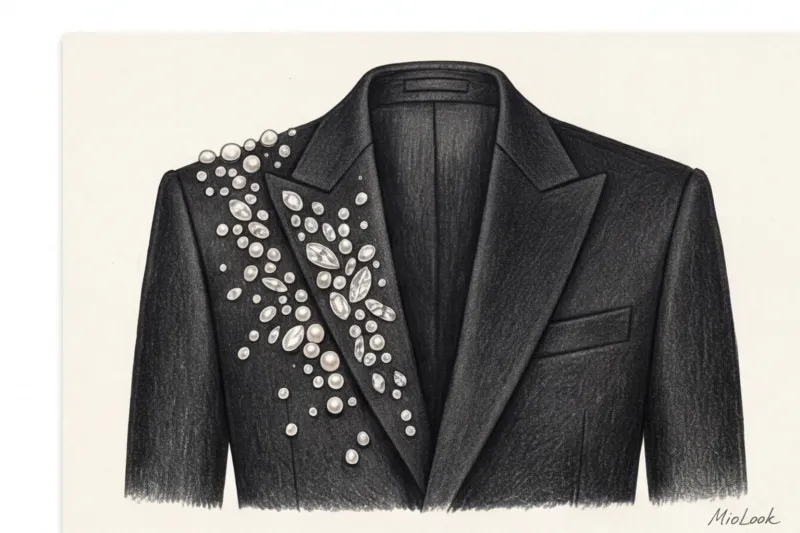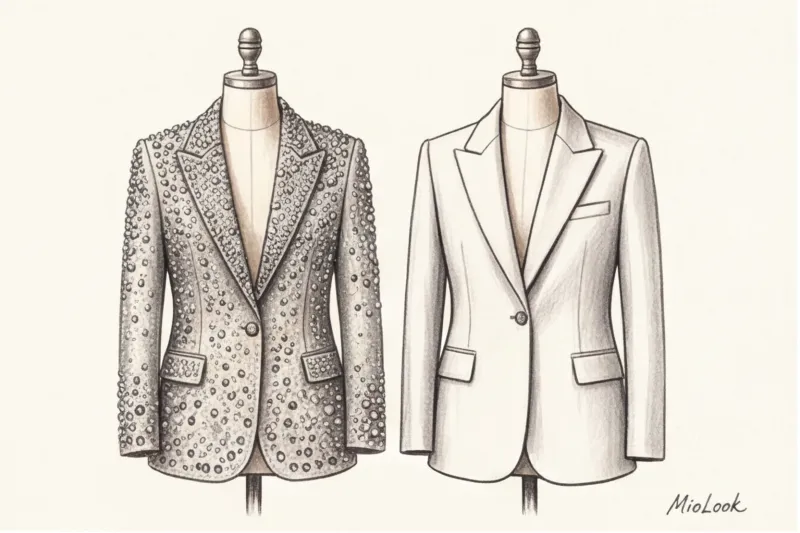
If you pick up a basic T-shirt made of thick, structured cotton at Zara and a thin viscose blouse generously strewn with plastic pearls at the same store, you might be surprised by one fact: the minimalist basic item is often more expensive. Why? Because excessive embellishment on clothing is the main cost-cutting tool in the fast fashion industry.
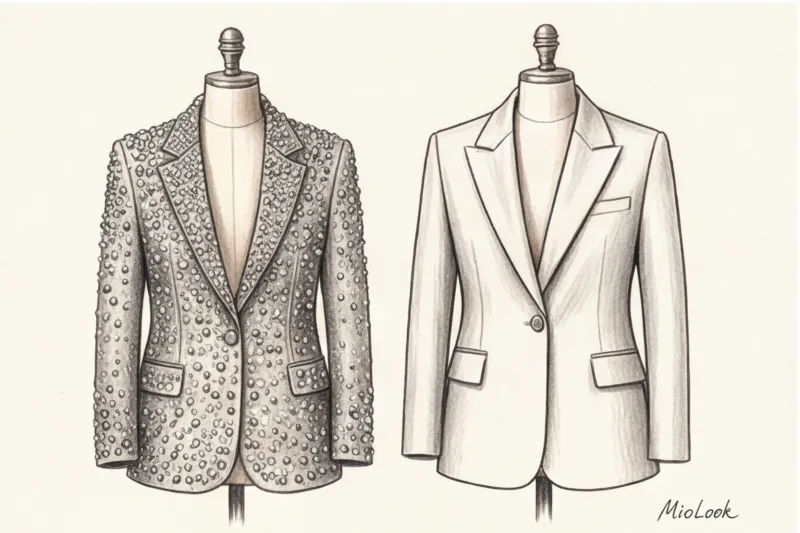
Mass-market manufacturers find it much more profitable to hide crooked seams and cheap fabric behind the glitter of sequins than to invest in high-quality patterns. But the problem isn't just economics. The real trouble begins when this chaotic shine and jumble of details meet your face. We discussed in more detail how the physics of light and texture influence the perception of age in our the complete guide to style mistakes that make you look older Today, I propose to analyze the anatomy of "cheap elegance" and understand why rhinestones and frills steal your elegance.
The Anatomy of Cheapness: How Excessive Clothing Decor Ruins the Geometry of a Look
Clothes don't age you on their own while they're hanging on a hanger. It's the way they interact with your skin and silhouette that adds age. Analytics Business of Fashion The 2023 data clearly demonstrates the downside of manufacturing: sewing a rhinestone appliqué onto a shapeless piece of polyester is 18–22% cheaper than developing a proper anatomical dart that will fit the garment to the figure.
In the budget segment, embellishments almost always serve as visual noise. They distract from the tight armholes and the static-like texture of the fabric. But what happens when you put one on? The chaotic shine of cheap hardware and the abundance of small details disrupt the light and shadow. Instead of the smooth, soft glow you get from, say, high-quality matte silk or thick cotton, you get a "dirty filter" effect. Light fragments against the plastic stones and casts micro-shadows on the subject, highlighting the slightest imperfections in the skin and signs of fatigue.
Rhinestones, sequins, and glitter: why glitter adds age
Let's immediately draw a line between evening couture beadwork and a daytime knit sweater with polyurethane rhinestones. These are pieces from parallel universes. Daytime glitter on everyday clothes is an unmistakable sign of a lack of style expertise.
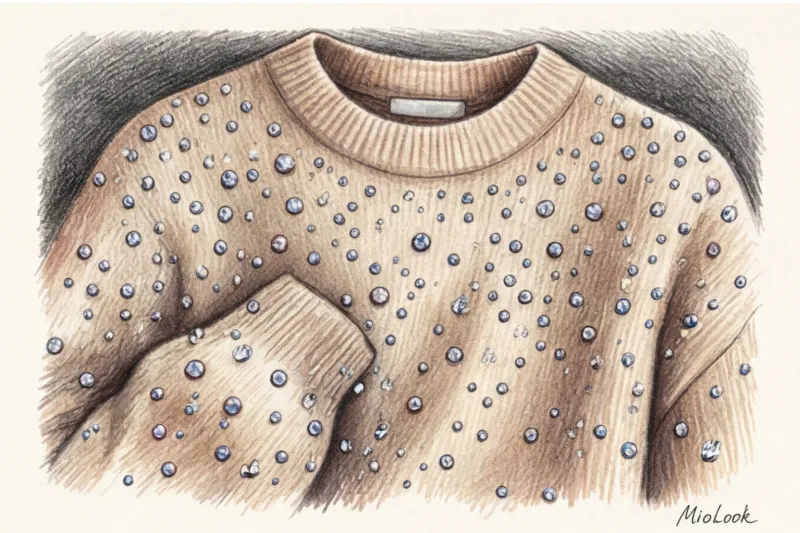
As we age, our face's natural microcontrast diminishes: contours become less sharp, and skin tone loses its adolescent uniformity. And at this point, many people make a fatal mistake: they try to "refresh" their faces with shiny blouses. The physics of reflection work against you: cheap plastic glitter creates cold, harsh highlights. These highlights act like a merciless studio light directed upwards: they instantly highlight pigmentation, nasolabial folds, and puffiness.
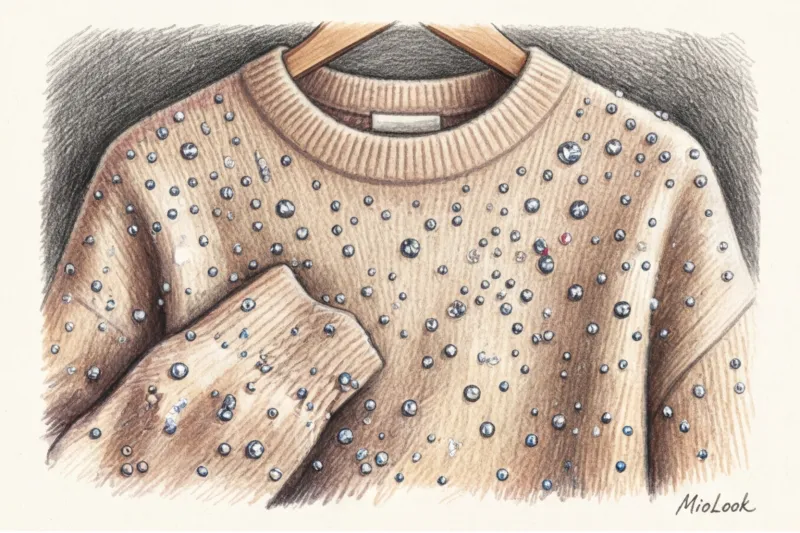
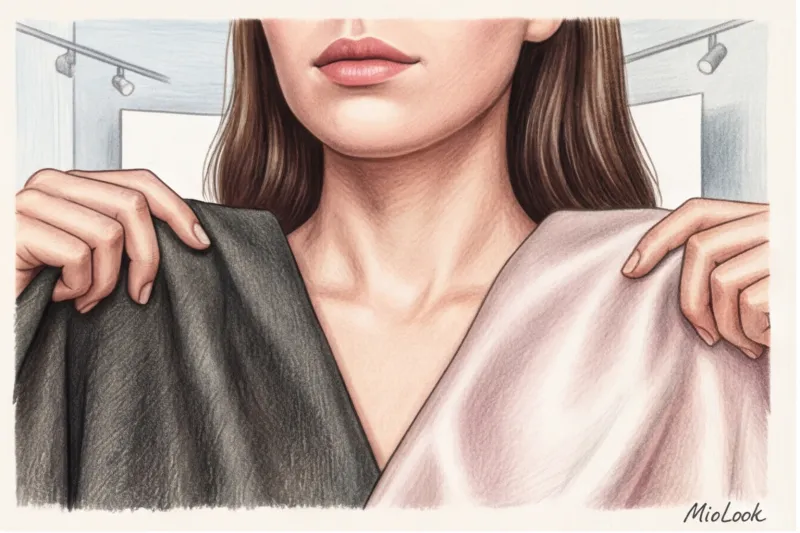
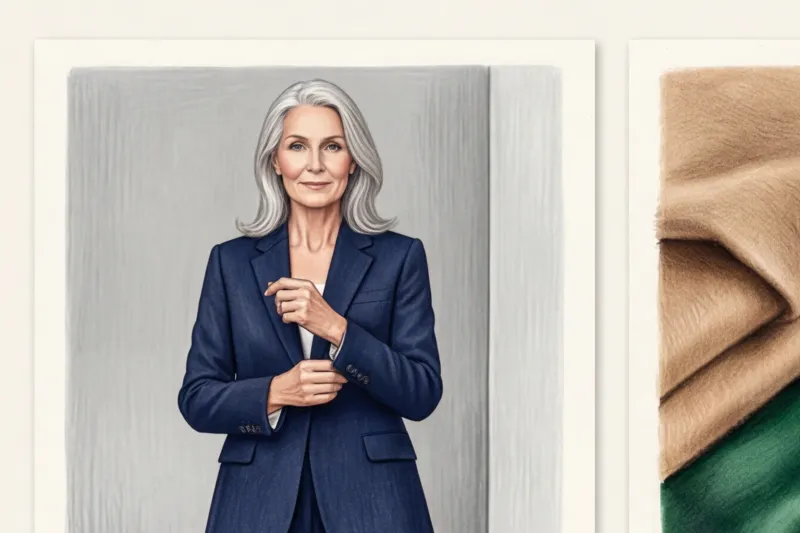
"Complex, aggressively shiny textures on the face require flawlessly smooth, youthful skin. After age 30, the best 'reflector' and anti-aging filter is not glitter, but fine fabrics: cashmere, dense viscose, smooth wool," emphasizes coloristics and the physics of light.
If you are still not ready to give up shine, I recommend studying our material on this, How to wear sequins during the day without compromising the respectability of the image.
The illusion of "smartness": a costly mistake
The myth that a blouse with sequins looks more "festive" stems from times of austerity, when any embellishment was considered luxurious. Today, luxury is defined by clean lines and depth of color. According to the WGSN (2024) report, the global trend toward "quiet luxury" has firmly established the rule: status is conveyed through the density of the fabric and the fit, not by the number of sequins applied per square centimeter.
Your perfect look starts here
Join thousands of users who look flawless every day with MioLook. Our smart AI stylist will help you eliminate excess and create a functional look.
Get access — €0.99 onceRuffles, flounces, and bows: false romance that ruins your figure
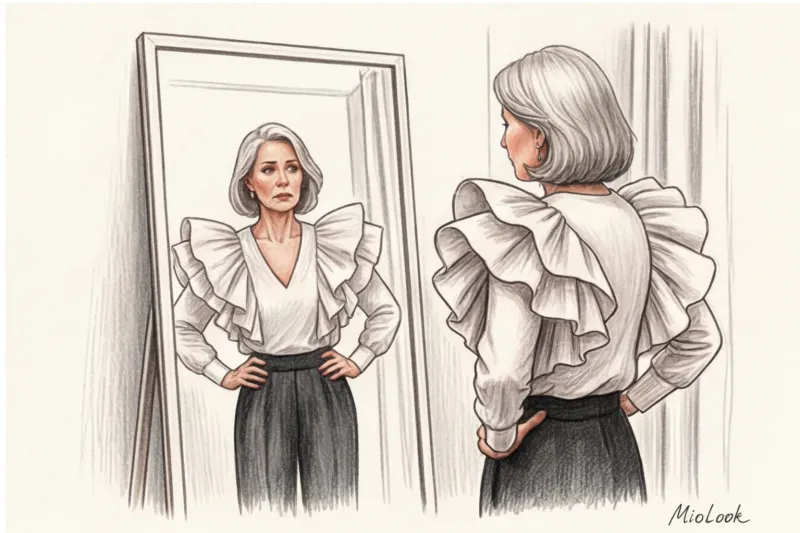
Ruffles and frills don't make you look younger or more delicate. This is a counterintuitive fact that's hard for lovers of romantic style to accept. On the contrary, the "childish" cut clashes sharply with mature facial features. When a woman with a confident, mature face wears a babydoll dress, it creates the effect of an attempt to "look younger," which paradoxically makes her look five to seven years older.
I worked with a client, Anna, a top manager with an inverted triangle body shape (broad shoulders, narrow hips). She sincerely believed that blouses with massive ruffles on the shoulders made her look softer and more feminine. In reality, we achieved an optical illusion: the multi-layered fabric on the shoulders transformed her graceful torso into the silhouette of a rugby player.
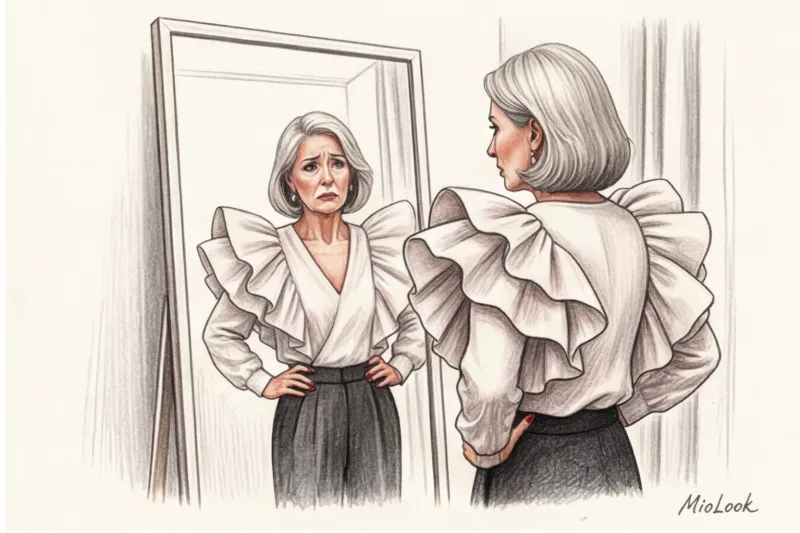
Bows on the chest work on the same principle. If your bust size is larger than a B cup, a voluminous bow or frill made of cheap, flowing fabric will create the effect of a monolithic, bulky top. It will visually shorten your neck, and your chin will appear heavier. If you're looking for a way to add femininity without compromising your proportions, consider a clever combination of textures in clothing , where silk is adjacent to coarse wool.
Cheap accessories and logomania: the hidden enemies of a prestigious wardrobe
Excessive embellishment on clothing isn't limited to sewn-on flowers or rhinestones. It also includes giant plastic buttons with gold accents, zippers with imitation jewels, and fake buckles. Nothing betrays a garment's true (and sometimes understated) value faster than jingling, flimsy hardware, whose metallic paint begins to peel off after a couple of washes.
Huge, garish brand logos on the chest or belt buckle fall into this category. In 2024, turning yourself into a free advertising billboard is bad form, cheapening even the most well-thought-out outfit.
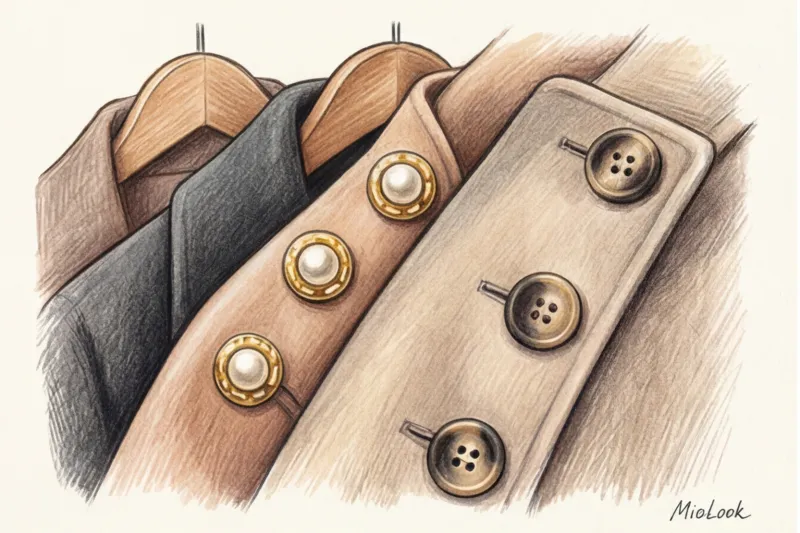
Life hack from a stylist: Over 12 years of working with European mass-market fashion, I've developed the perfect formula for upgrading a wardrobe. Buy a basic, well-tailored jacket from H&M Premium or Massimo Dutti (in the €80-€130 range) with awful plastic buttons. Then go to a fabric store, buy high-quality horn, mother-of-pearl, or heavy metal buttons (this will cost around €10-€15), and have them altered at a tailor's. The visual value of your jacket instantly rises to mid-upper-class levels.
The Focus Rule: How to Wear Accent Pieces (Without Looking Like a Christmas Tree)
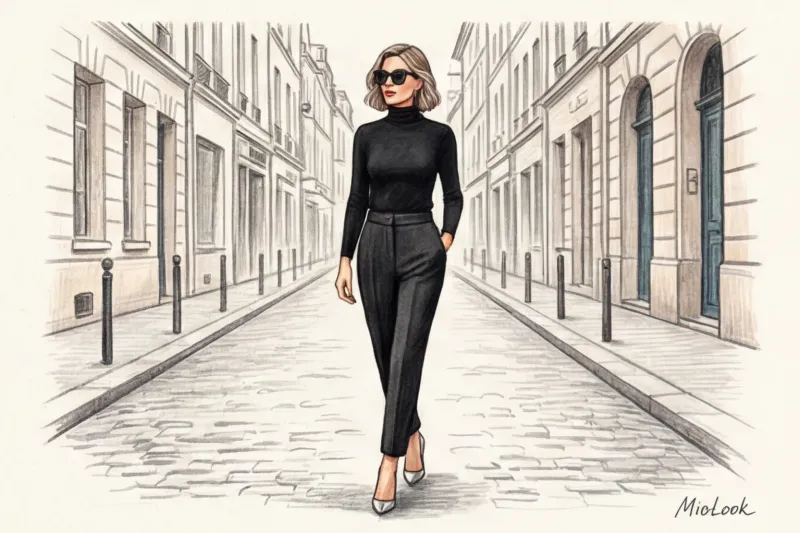
Does all of this mean you should now only wear gray turtlenecks and straight-leg black trousers? Absolutely not. Minimalism doesn't mean boredom. The best alternative to overdone embellishments is architectural cuts and asymmetry. But if you truly love accent details, remember the strict "one focal point" rule.
There's a formula for a harmonious look in styling: 80% a calm, perfectly fitting base (clean lines, deep colors) and 20% an accent. And it's best to keep this accent away from the portrait area. Choose a simple outfit, but accessorize it with shoes with a statement buckle or a bag with an intricate design.
Of course, there are exceptions to this rule (when my advice DOESN'T work). If we're talking about evening wear, a structured, rigid taffeta bow on the back of a cocktail dress will look stunning. But the key word here is structural It is part of the outfit's architecture, rather than hanging on it like a shapeless rag.
Ready to get started?
Try the MioLook free plan—no commitments required. Upload your items to the app, and the AI assistant will suggest which items are outdated and which ones are worth keeping.
Get access — €0.99 onceA stylist's checklist: audit your wardrobe for excess decor
Let's get down to business. I give my clients this step-by-step guide before we begin our independent closet cleaning. Be rigorous, ruthless, and effective. If you use the virtual wardrobe feature in MioLook , remove these things from the digital capsule first.
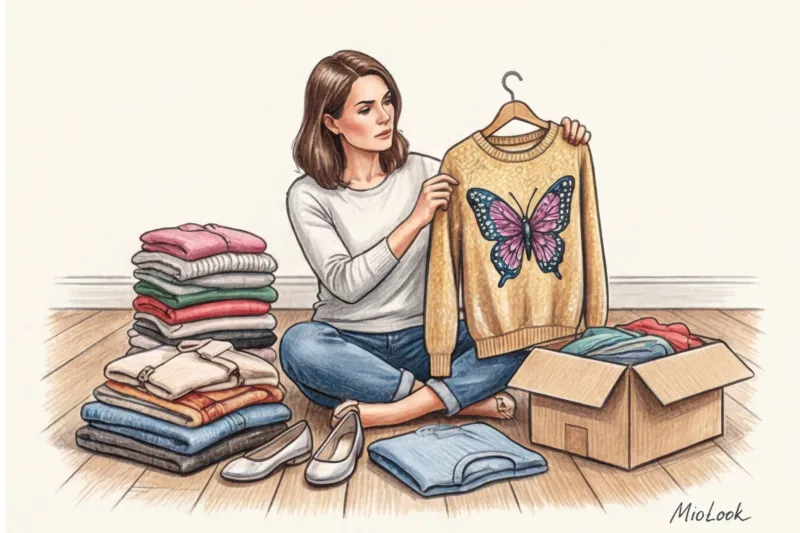
- Step 1: Knitwear with a "surprise". Get out all your sweaters, cardigans, and t-shirts with glued-on pearls, rhinestones, and glitter prints. If an item has lost its original appearance after 2-3 washes (and fast-fashion statistics are relentless: glue doesn't hold up for long), it's time to recycle it.
- Step 2: Inspection of fittings. Inspect the buttons on your coats, trench coats, and jackets. If they're plastic, worn, too shiny, or look like "royal gold," make a list of replacements. A trip to the haberdashery for matte metal or horn will make all the difference.
- Step 3: Proportion test. Wear blouses with bows and ruffles, and take a full-length selfie in daylight. Compare the width of your shoulders to the width of your hips. If the ruffles make you look a size bigger, it's not for you.
- Step 4: Replace with an invoice. Set a goal: replace every discarded "decorative" item with one basic item made from a complex fabric. Instead of a rhinestone-embellished blouse, a top made of thick silk. Instead of a sequined sweater, a jumper made of high-quality fuzzy alpaca or smooth cotton.
By removing excess embellishment from your clothing, you avoid becoming a "gray mouse." You clear the space so that your own facial features, beautiful posture, and the quality of the fabric come to the fore. Elegance doesn't need to shout about itself with a scattering of rhinestones—it speaks quietly, but it's always heard.
", "tags": [ "wardrobe analysis", "style mistakes", "excessive decor", "clothes that make you look older", "basic wardrobe", "stylist tips", "choosing accessories" ] }