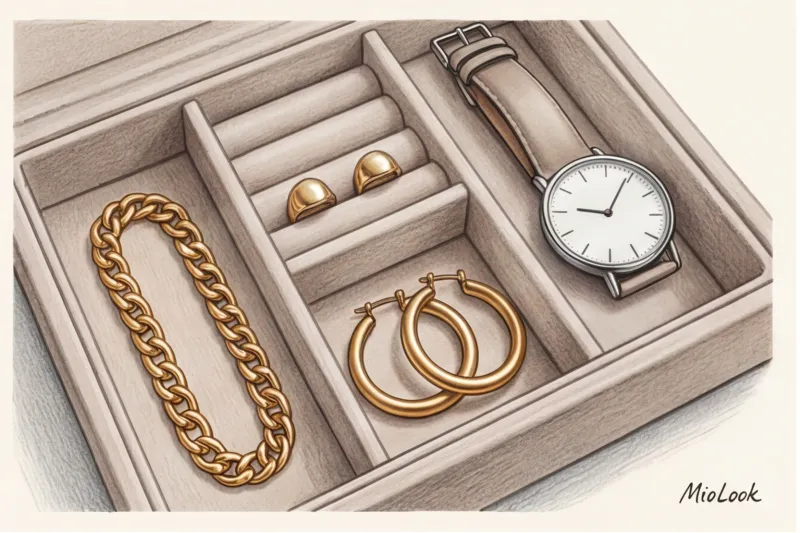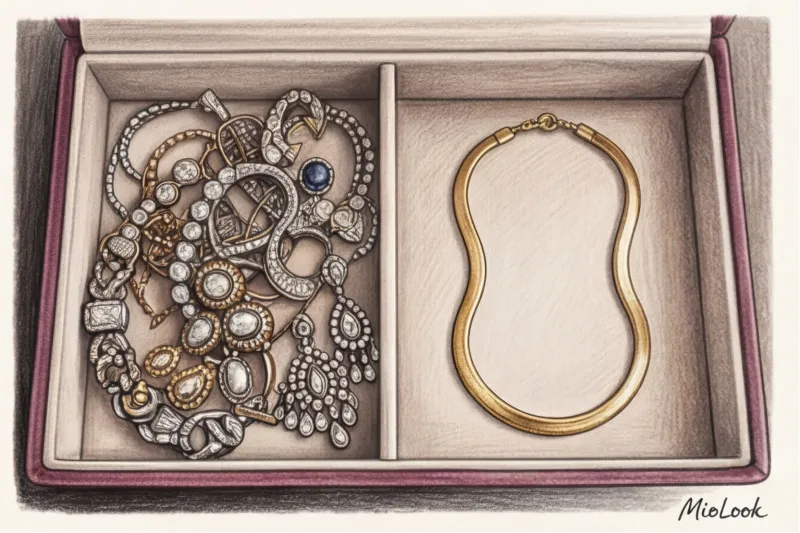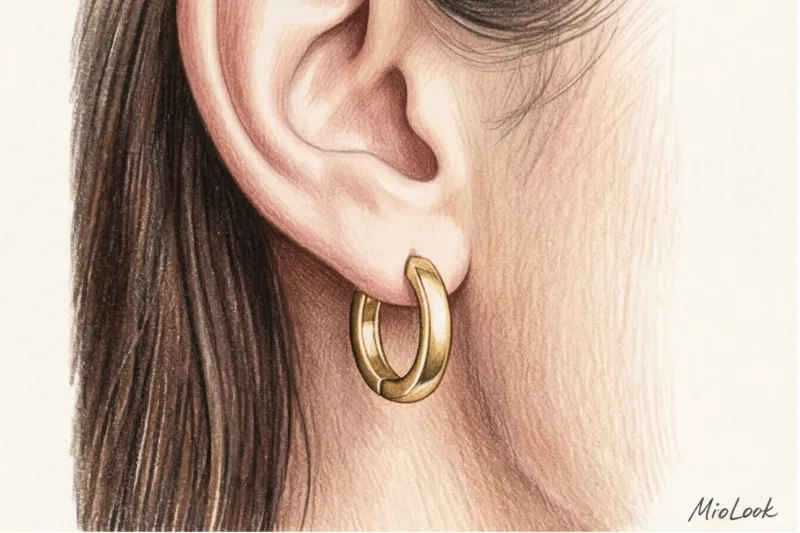
Six months ago, I conducted an experiment: I digitized my entire jewelry box and began meticulously tracking every item I wore in an app. Guess what the numbers showed after six months? 82% of the time, I wore the same pair—medium, smooth, yellow gold tube hoops. The other fifteen pairs of statement chandeliers, long chains, and vintage clip-on earrings simply collected dust.
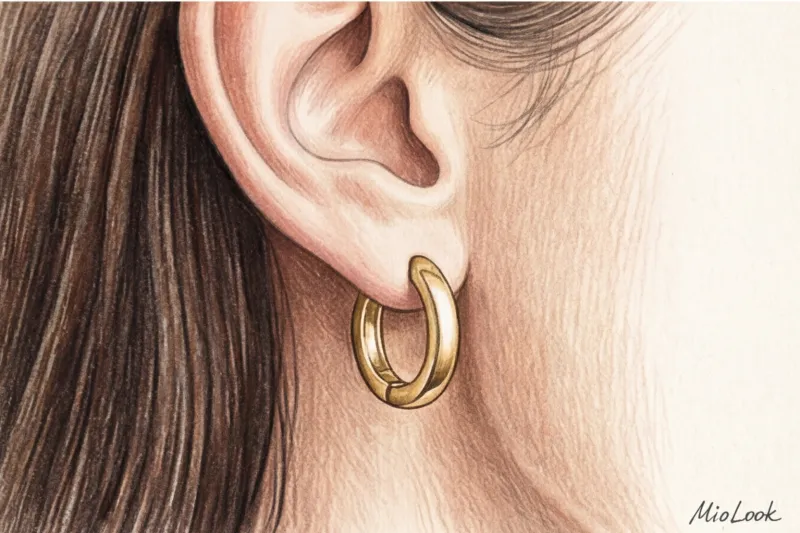
We talked about the concept of a rational approach to jewelry in more detail in our complete guide about Basic jewelry wardrobe: a capsule for every day But if you want to instantly streamline your style, you need to start with your ears. basic earrings for every day It's more than just a pretty accessory. It's a functional tool that works like a good white T-shirt: it ties your look together, brightens your complexion, and doesn't require a second thought in the morning.
The Anatomy of the Perfect Base: 3 Signs of Everyday Earrings
When I review new clients' wardrobes, we ruthlessly eliminate "pseudo-essentials." Earrings may look minimalist, but if they give you a headache by the end of the day, they're not essentials. In my experience, the perfect everyday pair always passes three strict filters.
"A basic piece of jewelry should be so comfortable that you only think about it when you catch your reflection in a shop window."
Safe weight. According to the Association of Professional Piercers (APP, 2023), a safe weight for daily, long-term wear should not exceed 3–4 grams per ear. Anything heavier, with regular wear, can lead to micro-tears and irreversible stretching of the earlobe (ptosis). If the earring is pulling on the piercing so much that a gap is visible, remove it immediately.
The correct lock. For an active lifestyle, an English clasp is superior to screw-on studs. Screws tend to loosen from friction against clothing, and their threads often damage the piercing when inserted. A smooth English clasp with a distinctive click or a congo clasp (where the bail is hidden within the earring itself) is the most secure and anatomically correct choice.
No clinging elements. Over 12 years of work, I've developed a golden rule: the "sweater test." Run a piece of wool over the earring. If it snags, it's not suitable as an everyday base. This is why prongs (the tall prongs that hold the stone) often ruin turtlenecks and scarves. Look for a bezel setting, where the metal smoothly hugs the stone.
Access to MioLook for €0.99 — one-time payment
A smart AI stylist will create the perfect look based on your basic accessories.
Get access — €0.99 onceTop 5 models: which basic earrings for every day will replace your entire jewelry box
The statistics from my clients in the app are relentless: those who wear these five models cut their morning routine by an average of 4 minutes. You don't need to reinvent the wheel—just choose the right geometry.
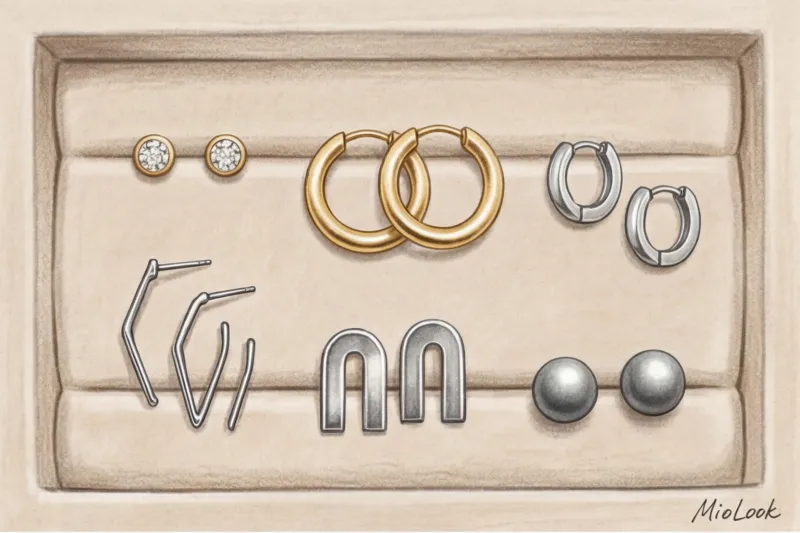
Huggies (rings): from micro-haggis to medium tubular rings
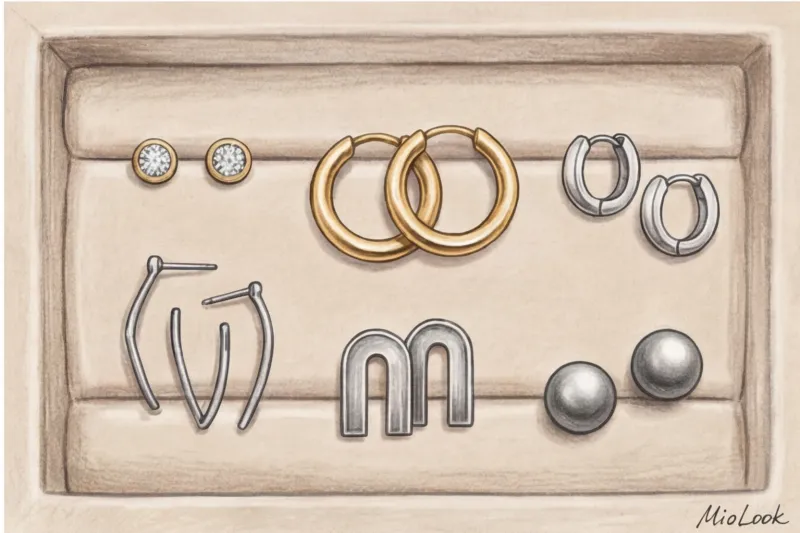
Smooth or slightly textured hoops, 1.5–2.5 cm in diameter, are the "white shirt" of the jewelry world. They fill the space between the jawline and the shoulder, visually slimming the neck. For those who prefer the ultimate minimalism, there are huggies—tiny rings that snugly hug the earlobe.
Laconic studs, but with geometry
It's time to ditch the childish flowers and butterflies. A modern foundation demands precision. Matte spheres, strict squares, or metallic stripes look much more expensive. By the way, Classics by Larson Geometric stud earrings with clean lines that support facial symmetry are especially flattering.
Staples and climbers: a new generation of minimalism
Climbers (earrings that "climb" up the earlobe) are a brilliant invention for those with only one piercing but want to create the illusion of sophisticated styling. They anatomically follow the curve of the ear, don't droop, and don't interfere with active movement.
The Pearl Myth: Why Classics Sometimes Age and What to Replace Them With
And now for a counterintuitive insight that many are willing to dispute. The perfect, round, white pearl in the classic stud format is no longer a universal staple. For many modern women, especially those with strict corporate dress codes, it acts like a time machine—visibly adding five to ten years to their age, making their look overly conservative, almost mothballed.
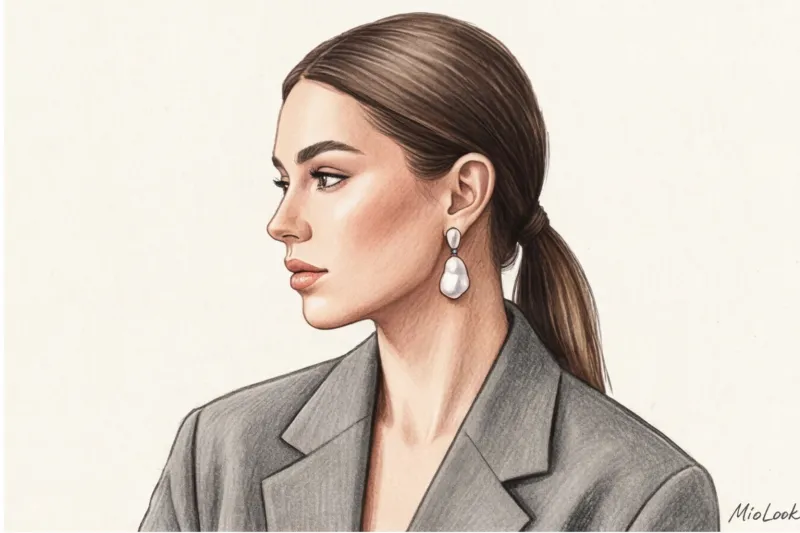
One of my clients, a 35-year-old top manager at a fintech company, couldn't understand why her work portraits made her look too stern and outdated. We simply replaced her round pearls with irregularly shaped baroque studs. The formality was toned down, her face became more dynamic, and she immediately looked fresher.
What can replace classic pearls?
- Baroque pearls. Its imperfect, lumpy shape takes the edge off formal office suits.
- With crumpled metal. Gold or silver earrings that imitate the shape of a pearl with a crushed effect reflect light more interestingly than a smooth surface.
- Stylistic contrast. If you do wear round pearls, pair them with overtly masculine or sporty pieces: oversized hoodies, leather jackets, or men's blazers.
Your perfect look starts here
Join thousands of users who look flawless every day with the MioLook AI app.
Get access — €0.99 onceHow to choose basic earrings based on your face shape and haircut
A stylist's main secret when choosing earrings is the rule of opposites. If you have a round face, avoid perfect spheres and hoop earrings; elongated rectangles and chains are your best friends. Those with square jaws, on the other hand, should choose softening lines: ovals, hoops, and teardrop shapes.
But your hairstyle is equally important. The size of your basic earrings should be proportionate to the volume of your hair.

If you wear voluminous curls (typical for the type straight romantic ), micro studs will simply get lost in the mass of hair. You need a more substantial base—for example, wide tubular hoops. However, for a sleek bob or pulled-back hair, massive earrings can be too much for everyday wear; here, delicate geometric shapes work best.
Important limitation: This rule has exceptions. If you have an ultra-short pixie cut, chunky earrings can be a great accent, replacing makeup, even if they technically seem too big for your face shape.
Glasses and earrings: rules for conflict-free coexistence
Glasses are a powerful accessory in portrait photography. Have you ever noticed how your face sometimes appears overloaded? If your frames are made of wide plastic or brightly colored, keep basic earrings in the background (choose micro studs or thin huggies). If you wear thin metal frames, the ideal solution is to match your earrings to the metal of your glasses.
Gold, silver, or bimetal: breaking stereotypes
The outdated rule of "never mix gold and silver" is officially dead. In a modern capsule wardrobe, bimetallic basic earrings for everyday wear are the smartest investment.
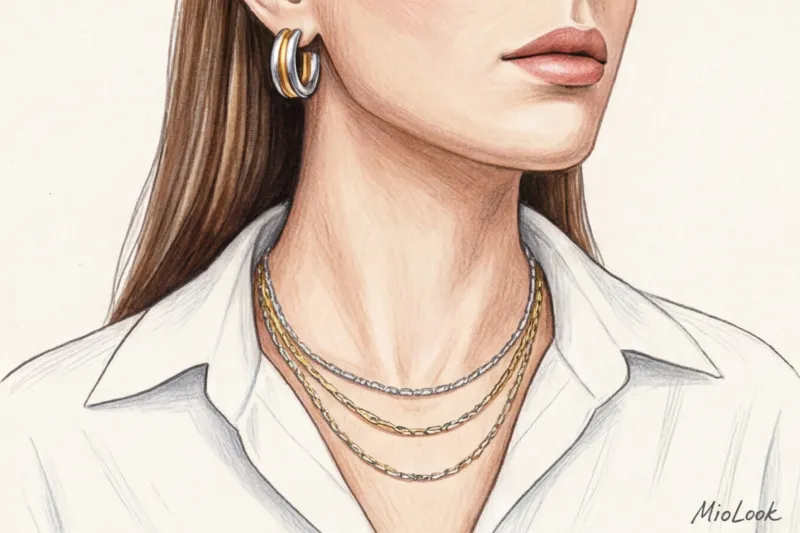
Why? Because a pair of earrings that blend gold and silver instantly solves the problem of mismatched earrings. They serve as a visual bridge between your gold chain, stainless steel watch, and silver bag buckle. In the €80–€150 price range, you can now find excellent bimetallic options made from high-quality alloys.
Speaking of alloys, if you have sensitive ears, avoid any unknown compounds. Look for implant-grade titanium (ASTM F136) or medical-grade steel (316L). These resist oxidation during daily contact with sweat, cosmetics, and water.
Ready to get started?
Try the MioLook free plan—no commitments. Digitize your wardrobe in just a few clicks.
Get access — €0.99 onceFrom the Office to Zoom Calls: Basic Earrings for Different Dress Codes
The pandemic has forever changed the way we dress for work. A 2024 study by the WGSN trends agency showed a steady rise in the "above-the-keyboard dressing" concept. Only your face, shoulders, and ears are visible in the camera frame.

The earrings act as a built-in ring light. The smooth metal near your face reflects the light from your monitor, illuminating your skin and visually erasing signs of sleep deprivation. But be careful: webcams distort shiny, faceted stones, turning them into cheap, shimmering pixels. Matte or polished metal looks much more refined on camera.
Another no-noise for work calls (both audio and video) is earrings. Any earrings that jingle when you turn your head are picked up by sensitive headset microphones and are incredibly annoying to your callers.
Checklist: How to Select and Integrate a Base (Cost-per-Wear Formula)
Before purchasing any basic item, I teach my clients to calculate Cost-per-Wear (CPW)—the cost per wear. The formula is simple: divide the item's price by the expected number of days it will be worn per year.
Basic earrings pay for themselves the fastest. If you buy the perfect, simple hoops made of high-quality alloy for €120 and wear them four times a week (about 200 days a year), the cost per wear will be only €0.60. That's cheaper than your morning coffee.
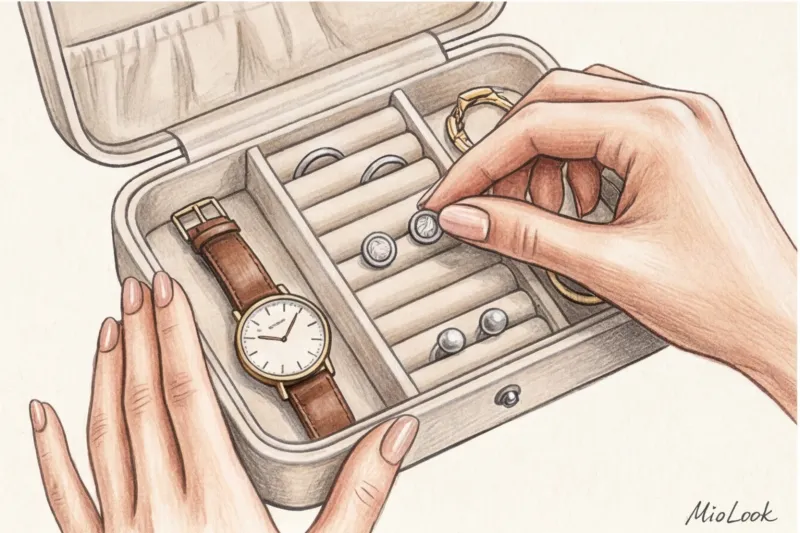
Before you go to the checkout, ask yourself 3 questions:
- Can I accidentally fall asleep in them without the risk of waking up with an earache?
- Do they go with both my favorite distressed jeans and a smart office jacket?
- Do they weigh less than 4 grams (do they pull down the earlobe)?
If you answered "yes" three times, go for it. And to make sure this pair really works for your everyday style, I recommend taking a photo of it and uploading it to MioLook app The smart wardrobe algorithm will automatically suggest this basic pair to you in combination with various outfits, reminding you that style is built on functional details.
Stop buying statement earrings for a one-night stand until you've found the perfect base. Your best investment is something you wear every day, not something patiently waiting in a closed box.