
Have you ever wondered why a good cappuccino at a European coffee shop often costs more than a basic T-shirt on sale at a mass-market store? The math just doesn't add up. If cotton has to be grown, picked, spun into thread, woven into material, dyed, cut, sewn, packaged, and shipped halfway around the world—who's really paying for the difference?
Spoiler alert: it's not giant corporations. This difference is paid for out of pocket by people working on the other side of the ocean for pennies, and by the ecology of our planet. My name is Katarzyna Nowak, and over the years as a personal stylist, I've seen hundreds of closets filled with things that don't bring joy. Today we'll talk about ethical clothing brands — without rose-colored glasses, guilt, or eco-fanaticism. We'll explore how to make your style more conscious without sacrificing budget and aesthetics. We've already covered the basic terms and concepts in more detail in our the complete guide to conscious fashion , but in this material I want to give you purely practical tools.
What are ethical clothing brands really hiding?
The fashion industry masterfully juggles terms, and it's easy for consumers to get confused. Let's get this straight. Sustainability is about respect for nature: carbon footprint, recycled materials, water conservation. Ethics, on the other hand, is always about people and animals. An ethical brand guarantees that basic human rights are respected at all stages of production: fair wages, safe working conditions, standardized working hours, and an absolute ban on child or forced labor.
The numbers are sobering. According to the global Clean Clothes Campaign (2024), less than 2% of garment workers worldwide earn a living wage. When you buy a dress for 20 euros, the seamstress's wage often accounts for only 0.5% to 3% of that total. That's about 0.10-0.60 cents.
I had a telling case in my practice. A client brought in a mass-market T-shirt with a crooked side seam for analysis. She exasperatedly snapped, "Why can't they sew it properly?" I explained to her the reality of factories in Bangladesh, where the production quota for a seamstress can be 100-150 T-shirts per hour. A worker literally has seconds to complete a single stitch. A crooked seam isn't a sign of laziness; it's physical evidence of a sweatshop.
Ethics vs. Ecology: What's the Difference in Practice?
Can something be eco-friendly but not ethical? Absolutely. Imagine the perfect basic T-shirt made from 100% certified organic cotton (grown without pesticides—a plus for the environment). But if that T-shirt was sewn by women locked in a stuffy, unventilated workshop for 14 hours a day, it can't be considered ethical.
The opposite is also true. A sweater may be knitted from innovative recycled plastic, but if a brand carefully conceals the names and addresses of its subcontracting factories and refuses to undergo independent audits, that's a red flag. True sustainability requires a balance of both.
Access to MioLook for €0.99 — one-time payment
A smart AI stylist will help you create a capsule wardrobe of your items and suggest what you're missing to avoid impulse purchases.
Get access — €0.99 onceHow to Recognize Greenwashing: 5 Signs of a Pseudo-Ethical Brand
Marketers have long understood that the prefix "eco" sells better. Greenwashing—the deliberate misleading of consumers about the eco-friendliness or ethicality of a product—has emerged.
As a stylist who regularly monitors European brands' collections, I've identified five red flags that should alert you:
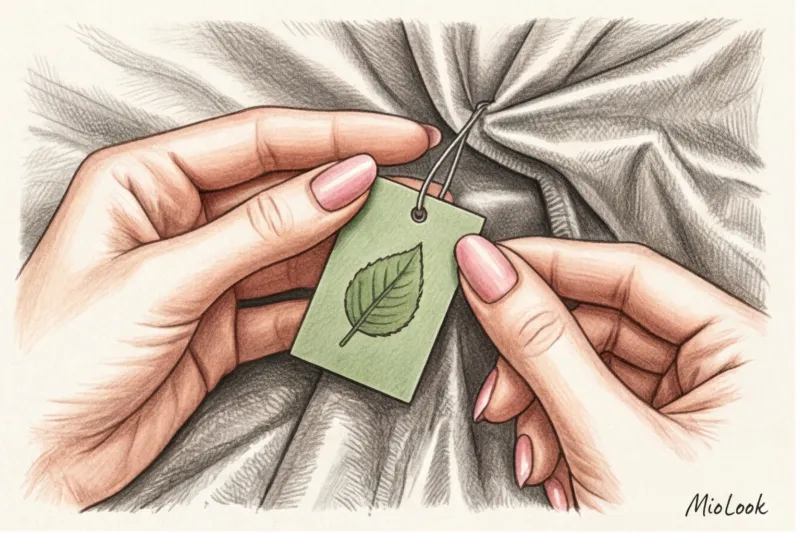
- Speculation on the color and texture of tags. The brand prints labels on slightly rough green or beige kraft cardboard, with the words "Natural" or "Conscious" written in bold letters. But if you read the fine print on the sewn-in label, it's 80% virgin polyester.
- Lack of specific certificates. The words "eco-friendly" mean nothing legally. Look for real certifications: GOTS (for organic cotton), Fair Trade, OEKO-TEX Standard 100 (free from harmful chemicals).
- Microcapsules against the backdrop of mountains of garbage. The brand proudly releases a capsule collection of 15 "recycled" items, while churning out 10,000 new fast-fashion items every week. This is marketing, not ethics.
- Lack of transparency in the supply chain. Check out the brand's website. If they boast about "loving the planet" but don't list specific Tier 1 and Tier 2 factories, the brand has something to hide.
- Unrealistically low price for organics. An organic cashmere sweater can't cost 30 euros. If it costs that much, it means they're saving on people's wages or on the welfare of farm animals.
Mass Market and Ethics: Zara, H&M, COS – Where is the Truth?
Here I want to express an idea that often angers radical eco-activists: boycotting all mass-market products at once is utopian. Firstly, it's beyond the budget of most women. Secondly, reality is more complex than a black-and-white picture.
According to the 2024 Fashion Transparency Index report (which assesses the openness of brands), the paradox is that some mass-market giants, such as H&M Group, are much more transparent in publishing data about their factories than many luxury fashion houses, which hide production in Eastern Europe under the guise of “Made in Italy”.
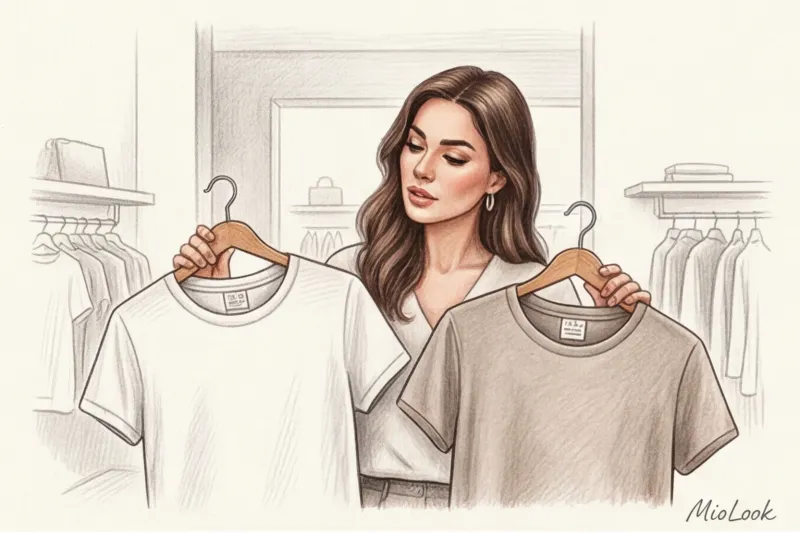
However, within a single corporation, brands vary greatly. As a practitioner, I always advise my clients to look for premium lines or higher-end brands within holdings. For example, COS, Arket, and Massimo Dutti are structurally mass-market, but they offer a completely different approach to fabric quality and cut compared to the basic lines of H&M or Zara. Thick wool, high-quality viscose, and even seams—items from these stores can last 5-7 years with proper care. And therein lies the secret: a durable item from a high-quality mass-market brand is much more ethical than a T-shirt from a small, local eco-brand, which will stretch out after the first wash and end up in a landfill.
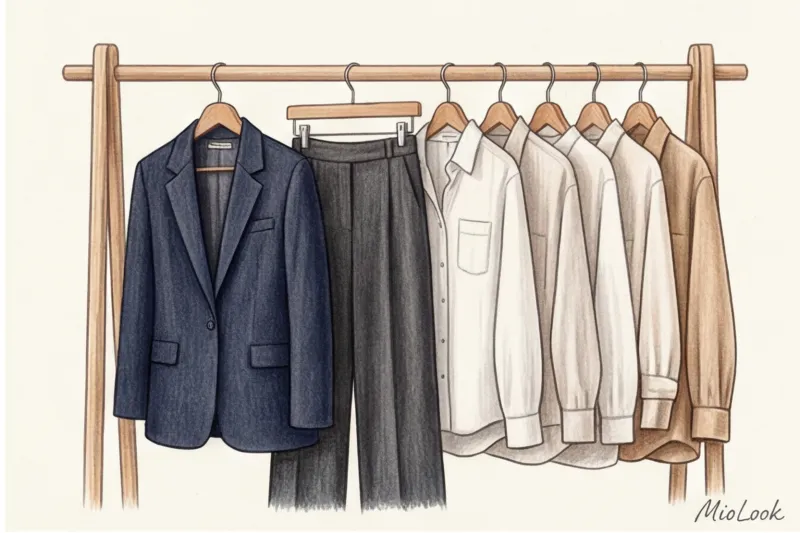
But the main ethical problem with mass-market fashion remains unchanged: overproduction. Releasing 52 micro-collections a year (one each week) is inherently unethical, as it fosters a culture of disposable clothing.
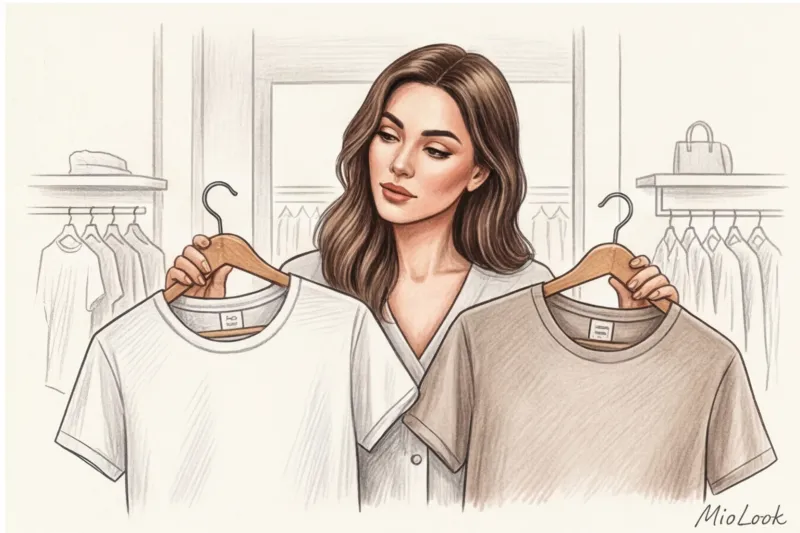
Vegan Leather and Other Pitfalls: A Stylist's Perspective
It's time to talk about the biggest marketing scam of the last decade. "Vegan leather." Sounds noble, right? You buy a jacket and feel like you saved a cow.
The problem is that 90% of the time, mass-market leather is sold under the guise of "vegan leather"—meaning, it's actually polyurethane (PU) or polyvinyl chloride (PVC)—petrochemical products, essentially plastic. I've seen dozens of cases where clients took such a skirt or jacket out of their closet after a season of storage, only to have it literally crumble onto their hands in tiny flakes. This material doesn't breathe, quickly cracks at the creases, can't be repaired, and will decompose into microplastics over hundreds of years, poisoning the oceans.
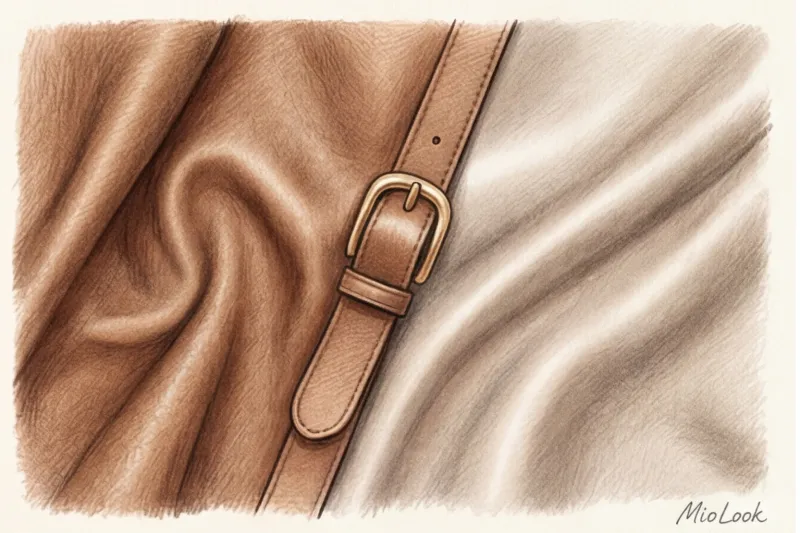
Contrarian, but honest fact: buying one vintage genuine leather jacket or investing in quality leather shoes that you will wear for 10-15 years, taking to a workshop for heels, much It's more ethical and better for the planet than buying a polyurethane "vegan" replacement every year that ends up in a landfill within six months.
If you're adamant about not wearing animal leather, look for brands that use innovative materials: AppleSkin (leather made from apple pomace), Desserto (made from cactus), or Mylo (made from mushroom mycelium). While ethical clothing brands using these technologies are more expensive, they're a true investment in the future, not a plastic bag that costs the same as a jacket.
Your perfect look starts here
Join thousands of users who look flawless every day with MioLook. Digitize your wardrobe and create stylish combinations in one click.
Get access — €0.99 onceWhy Ethical Clothing Costs More (and How to Deal With It)
Pricing in ethical fashion often becomes a major barrier. "Why should I pay 120 euros for a basic wool cardigan when it's 35 euros at the next store?" is a question I hear regularly.
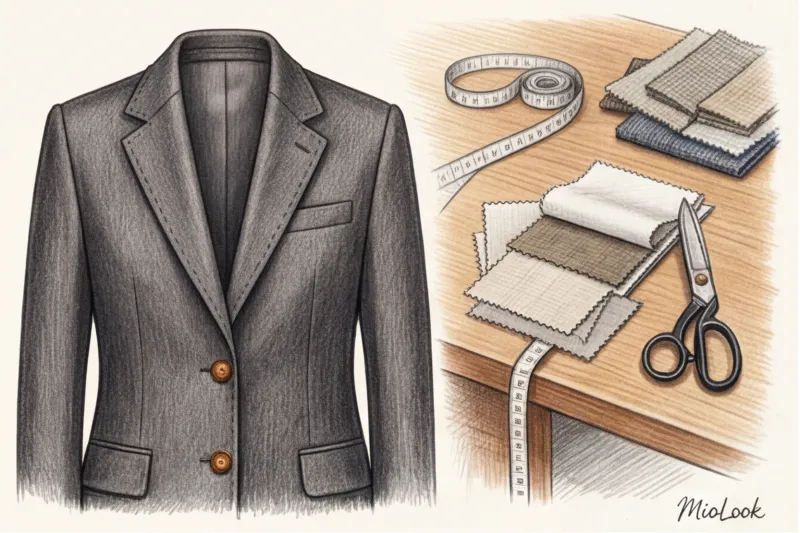
Let's break down those 120 euros. It includes: purchasing high-quality merino wool (which won't pill into felt boots after the first dry cleaning), safe dyes (which won't pollute rivers), decent wages for the cutter and seamstress, high-quality fittings, and, finally, fair taxes.
How can I stop being afraid of these numbers? I teach my clients to use a formula. Cost Per Wear (CPW) — the cost of one exit. This is the basis for those who want to know How to look expensive , without spending millions.
- Scenario A (Fast fashion): You buy an acrylic cardigan for 35 euros. You wear it five times, after which it becomes covered in pills, loses its shape at the elbows, and you relegate it to the "cottage" category or throw it away. Your CPW = 7 euros per wear.
- Scenario B (Ethical Brand): You buy a thick wool cardigan for 120 euros. Thanks to the quality of the fiber and the perfect cut, you wear it 30 times per season for four years (120 times in total). Your CPW = 1 euro per wear.
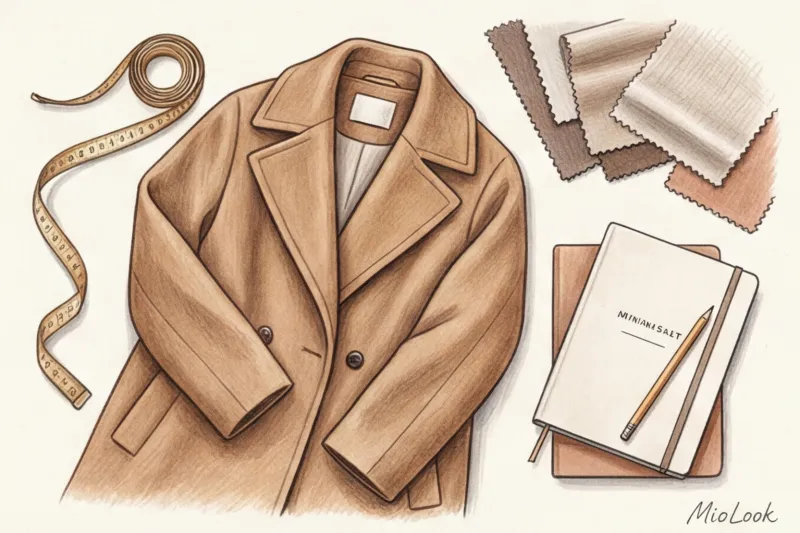
The math is ruthless: cheap clothes cost you seven times more in the long run. The psychological barrier disappears when you stop treating clothes like fast food.
Checklist: How to Transform Your Wardrobe into an Ethical Lifestyle
One day, a client named Anna came to me with a sparkle in her eyes: "Katarzyna, I watched a documentary about ecology. Tomorrow we're throwing out all my Zara and buying a completely ethical wardrobe!" That's the worst thing you could do. Throwing away a good thing that's already been produced means devaluing the planet's resources and human labor.
Here is my step-by-step algorithm for real life, which we analyze in detail when creating the right capsule wardrobe:
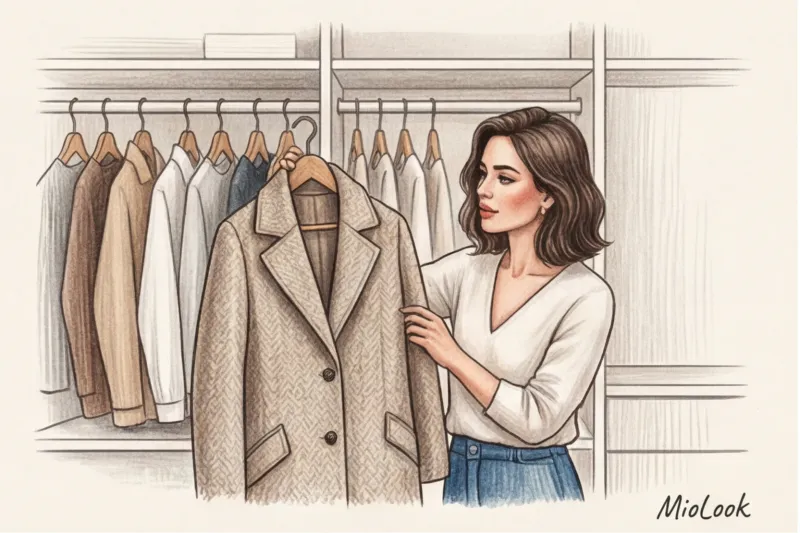
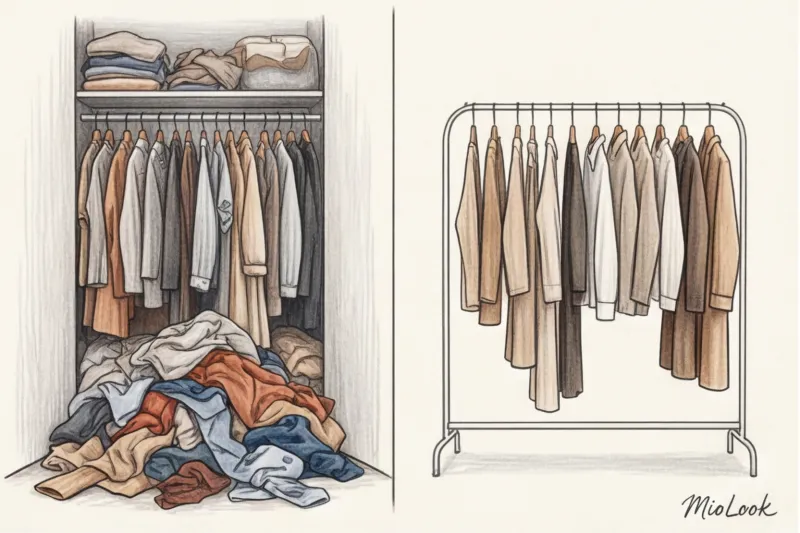
- The most ethical thing is the one that is already hanging in your closet. Start with an honest inventory. Fix what needs repair, take your coat to the dry cleaner, have your trousers tailored. Digitize everything you own—an app is great for this. MioLook , where the "smart wardrobe" function will show you how many looks you can create from existing items without purchasing anything new.
- Use aggregators to check brands. Before you pay for your shopping cart in an online store, enter the brand name into the app Good On You It evaluates brands on three criteria: their attitude toward people, the planet, and animals, providing a clear rating from 1 to 5.
- Discover resale and vintage. Platforms like Vestiaire Collective, Vinted, or local vintage boutiques are the perfect way to get premium-quality wool, silk, and cashmere at mass-market prices, without creating any demand for new production.
- Apply the 30 Wears Test. Before you go to the checkout, ask yourself one question: "Will I wear this item at least 30 times?" If the answer is "no," hang it up.
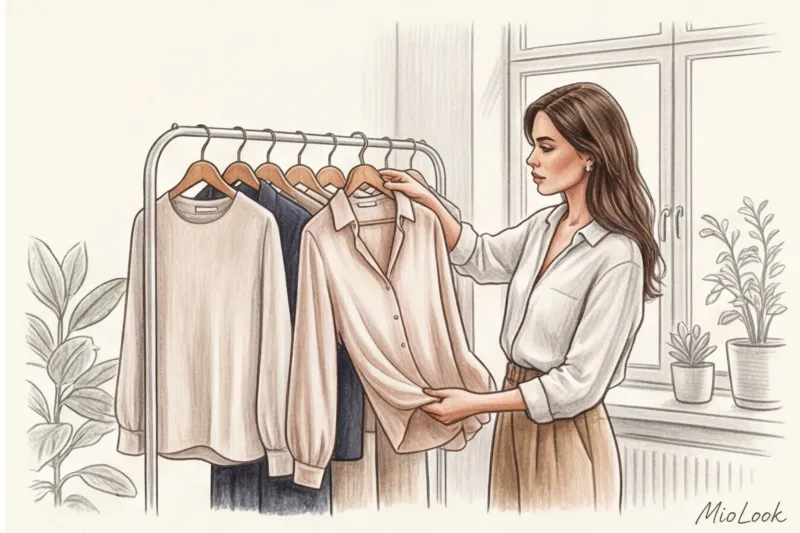
An important caveat: this approach may not work if your budget is tight right now and you need the item urgently (for example, a down jacket for a move to a cold climate). And that's okay. Ethics is a spectrum, not a closed club for perfect people. Do what you can at the moment.
Summary: Ethics as Part of Your Personal Brand
Forget the stereotype that ethical clothing is exclusively shapeless linen bags in dull earthy shades. Today a status wardrobe for the office could very well be 100% ethical and local brands offering impeccable architectural cuts, rich colors, and premium textures.

Your wallet is your loudest voice in the modern world. Every time you scan your card at the checkout, you're voting for how you want the world to be: a world of single-use plastic and sweatshops, or a world of quality and dignity. Start small: forego that next impulse buy of a €5 T-shirt in favor of one truly high-quality investment.